
Translated material
In a plundered country
Travel notes from foreigners are highly valued by historians, primarily because a foreigner pays attention to details that a local resident takes for granted. Russia - be it Muscovy, the Russian Empire or Soviet Russia - has always been suspicious of foreigners and was reluctant to let them in, and was often offended by their writings. Sworn Russian historian Vladimir Medinsky, who has made a career out of “refuting” foreign evidence about Russia, believes that they slandered out of innate Russophobia or on a political order. Let’s not go to the other extreme - taking at face value everything written by foreign travelers about Russia. Let's try to look without anger and partiality at the book of an American who visited the Soviet Union in 1927.
This book was never reprinted and was lost on the distant shelves of a used bookstore, where it was recently discovered by my colleague and friend Alex Grigoriev. He collects travelogues about Russia.
– Sasha, where does this hobby come from? Perhaps from my own nostalgia?

“Of course, that’s why I got interested in it.” I had some memories of Soviet life. Relatively speaking, I remember that there was bread for 14 kopecks or a loaf for 22 kopecks, the metro cost five kopecks in Moscow, and the trolleybus cost four, and the tram - three. How much did a liter of gasoline cost, for example, or exactly how much did a car or bicycle cost? I accidentally saw, I go through all these old books, I saw a guide to the Soviet Union, it seems, from 1982 or 1983, I bought this book, the prices were the same. Then it all just took off, I started reading it all. At first I only bought guidebooks, and then I started reading travelogues, they turned out to be much more interesting. I understand one thing: I’ve been living in America since 2000, but my past, the “scoop”, I don’t know, the trauma, the legacy, the tail that I left there, it hasn’t fallen off anywhere, I’m trying to remember it and trying to remember the history of the country from which I moved here. Basically, that's how it all started.
– Well, what is the most interesting thing for you in these essays?
The Mausoleum smelled of old wooden dust
– The most interesting thing for me is the description of things that we once did not pay attention to. Smell. What it smelled like, relatively speaking, in a 19th century city. What sounds did people hear? When I started reading this, I began to understand the story better. Why were there wipers everywhere? Because everyone rode horses, horses naturally produced manure, which had to be removed immediately, otherwise it would be trivial to neither drive nor walk through the streets, because everything would be in heaps of manure. Naturally, the cities smelled of manure. In Russian cities in winter, the constant sound was the creaking of snow underfoot, under hooves or under the runners of sleighs and the ringing of bells. There were so many bell towers and it was all so loud that the ringing of the bells hung in the air, it amazed foreigners. More about the smell. I recently recalled the first Lenin Mausoleum, a wooden one, which was first built and then replaced with granite. And so the Frenchman got there. He describes the smell of damp old wood. I personally have never been to the Mausoleum and probably never will, but for some reason it seemed that there must be a smell of some kind of chemicals, formaldehyde, or something. And there it smelled of wood, old wood dust. Or tactile sensations. What did the brocade feel like? Relatively speaking, when people came to the market, they began to feel the brocade, what did they experience? Or canvas. In museums this has been preserved to some extent, of course, all this is there, some specially authorized people can touch it, but the vast majority of us cannot, “not touch it with our hands.”
– The authors of those travel accounts about Soviet Russia that I read unanimously note the smell of shag and cheap perfume that reigned everywhere in the first years of Soviet power. Let's introduce listeners to our today's hero. Edward Newman was a film producer and author of numerous documentaries. His parents were Hungarian immigrants. And his genre is precisely travel. Travel documentaries were shown in movie theaters before movie theaters and were a huge hit with audiences who had lost the ability to travel due to the Great Depression. Americans in those years turned into film travelers.
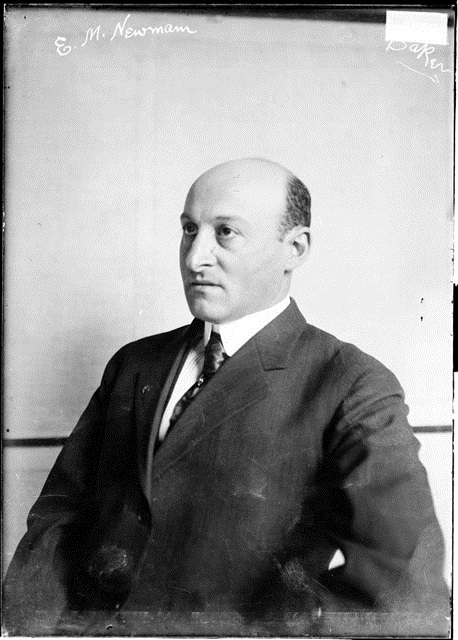
– Apparently, he was a Hungarian Jew, Edward Manuel Newman. I've read three of his books. Everywhere he pays great attention to the Jewish theme. He was, of course, one of the first people who made a name for themselves and earned money on their ability to travel, because travel at that time was extremely expensive, difficult, nervous and often dangerous. Tibet and the Amazon, and by and large many civilized countries, were quite dangerous places. The same Soviet Russia of the late 20s. It was physically very difficult to get to many places. This book is from 1928 and describes his 1927 journey. At that time, the Soviet government did not allow in large numbers of bourgeois tourists, it only allowed in some proletarians, communists, brothers in the communist religion, but the bourgeois, especially people who were just going to see, were allowed in with great difficulty, they tried to keep them at most in Moscow, Leningrad, Kharkov, and some deeper travel, as a rule, was not allowed. Newman tried for two years to get a visa, especially since he had a negative karma: he had been to the Russian Empire before the revolution - naturally, they understood that the person would come to compare.
– By the way, a foreigner could be expelled from the country for bad behavior. In August 1921, Lenin signed the decree of the Council of People's Commissars "On the procedure for the expulsion of foreigners from the RSFSR." Paragraph 1 of this decree states: “Foreign citizens whose lifestyle, activities and behavior are found to be incompatible with the principles and way of life of the Workers’ and Peasants’ State may be evicted from the borders of the R.S.F.S.R. by decision of the All-Russian Extraordinary Commission or by verdict of the judicial authorities of the Republic.” Newman writes in the preface that he did not travel to Soviet Russia to praise or condemn the Soviet regime, that in his descriptions he tried to maintain a neutral intonation so that the reader could form his own opinion. Did he speak Russian?
– He knew a little Russian, apparently. In the book, he hints that he understood what was said around him sometimes. About three quarters of the book he actually describes tourist attractions: in such and such a museum you can see this and that, in the Kremlin there is the Tsar Cannon, the Tsar Bell. The usual tourist attractions that simply cannot be left out of a guidebook.
"Today in Russia." Film magazine Pathé Gazette. 1930
– Three years since Lenin died, there has been a fierce struggle for power at the political top...
– 1927 is the Trotskyist-Zinoviev opposition, political life is in full swing in the Soviet Union. In the book this is completely unnoticeable, that is, he lived on his own in Soviet Russia, and the country lived apart from him. But why is he interesting? He compared how life had changed compared to the tsarist old regime. Not much time has passed at all, 10 years after the revolution. He writes that in the palaces - he was in some palaces before the revolution, they were stunning buildings with some incredible wealth - the wealth was looted or taken to some centralized museums. Palaces, as he writes, are pale shadows of themselves, ghosts of themselves, shabby, with broken windows, windows blocked with plywood. But they have schools where children study, or in the south there are sanatoriums for workers, or rooms have been made from these palace halls, and the proletarians live there, huge communal apartments, which I also saw while living in the Soviet Union. Indeed, in these palaces on Nevsky there were communal apartments, and they gradually began to be resettled.
He traveled a lot, there he has, for example, descriptions of travel by rail. My Soviet experience of traveling by rail suggests that railroad food was always disgusting and terrible. He, as a person who, by the way, traveled on American and European railways, writes that under the Tsar the food on the train was amazingly delicious. After the revolution, the quality of food definitely dropped. In addition, it was difficult to eat in many places, the prices were crazy, you couldn’t find coffee at any price. Because, as it turned out, I didn’t know this, since coffee was an imported product, the Soviet government decided that it was a luxury item, the proletarians did not need coffee, and coffee could not be bought anywhere. He couldn't get used to it.
– Quote from Newman’s book: “Moscow is no more a Russian city than New York is American.” Does he give any political assessment to what he saw?
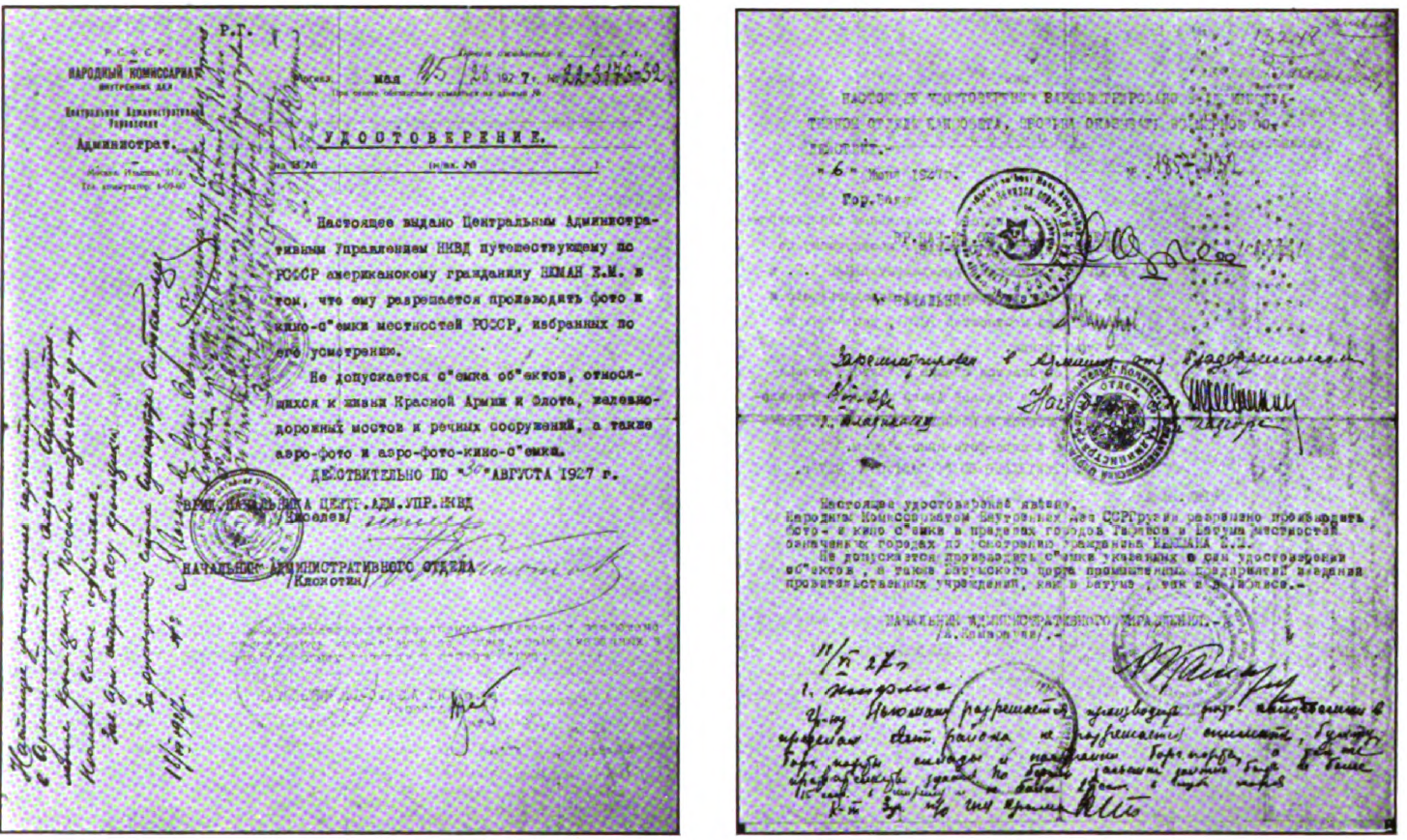
- No, he records. He describes a very interesting country. This is, first of all, a travelogue-guide for a person who wants to make this trip. He describes how he received a visa in Paris, what he did when he arrived in Moscow, and in Moscow he first had to go to the People's Commissariat for Foreign Affairs, tell him that he had arrived, get permission to take photographs, from the Commissariat for Foreign Affairs they sent him to the NKVD, from the NKVD they sent him somewhere else, they drove him around...
– By the way, this is an interesting question, permission to film. It was possible to bring a camera, but you couldn’t take pictures of almost anything. And the shot but undeveloped film was supposed to be left at customs when leaving. They then developed it, looked at what was in the photographs, and sent it to the owner. But Newman's book is full of photographs, it's 380 pages long, and almost every page has a photograph on it. It's practically an album. How did he manage to get permission?
The policeman explained that the Kremlin is a fortress, and therefore a military facility
“He writes that he deceived, that is, he didn’t deceive, but he kind of played it like that.” When he went to the Soviet Union, he warned that he would take photographs. He was given a traditional list of what can be photographed and what foreigners cannot photograph; this list survived until the last days of the Soviet Union. For example, it was forbidden to photograph any means of transport. Relatively speaking, photography at a train station is prohibited, photography of a railway bridge is prohibited. It is forbidden to photograph any means of communication - you cannot take pictures of a telegraph station or telegraph pole. On the streets, people tried to take pictures so that the telegraph poles would not be included in the frame. Naturally, no military facilities. Newman does not have a single photograph of the Kremlin; he has one crooked photograph of the gates of the Spasskaya Tower - there is a man standing and a guardhouse. He somehow managed to save it. All of Red Square is there, but the Kremlin is not.
– As Newman writes in the book, the policeman explained to him that the Kremlin is a fortress, and therefore a military facility.
– When he had to leave, he was obliged to show everything he had filmed to some Soviet censors. Among the censors there was one from some city that Newman visited and filmed. Newman slipped him a packet of photographs from this city. He began to look at it, became emotional, and said: “Lord, what a beautiful city I had, it turns out, how beautiful it has become, how I like it. Okay, everything is fine, go.” And so he took everything out.
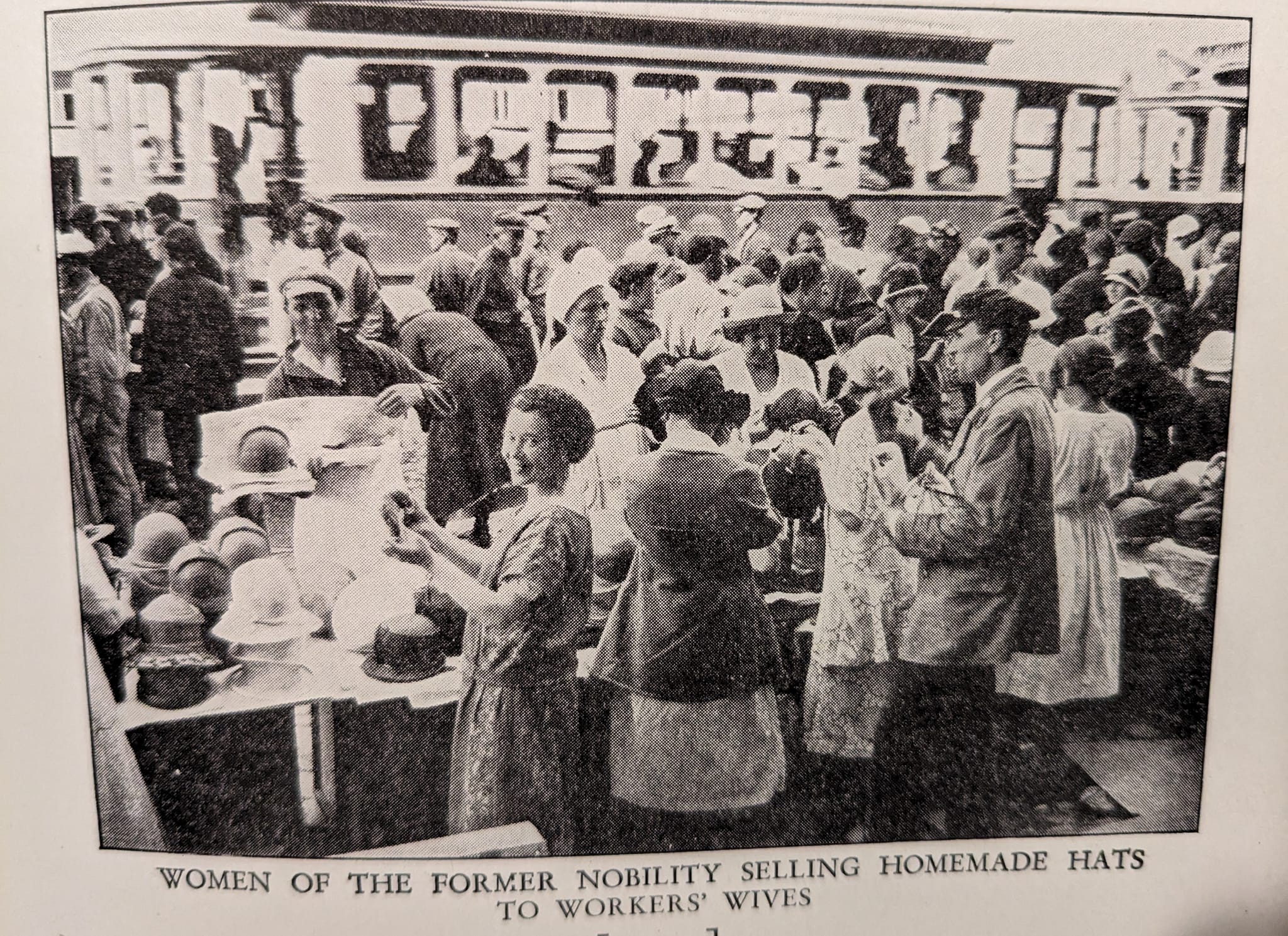
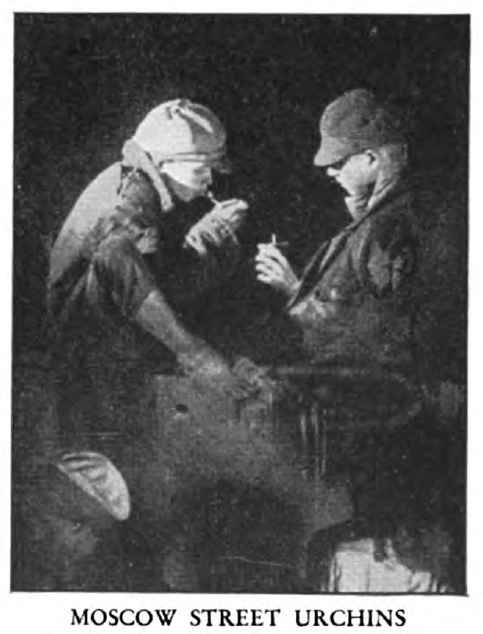
By and large, there is no particular horror in these photographs, at least in those posted in the book. There, for example, there are beggars, unfortunate street children who sleep in asphalt boilers on the streets, steal, and beg. There are representatives of the former high society, some noblewomen who have lost everything, and now they make some kind of hats, paper flowers, sew some blouses, and sell this business to proletarian buyers, because this is the only way for them to survive.
Another important point. Later, when foreigners began to be attracted to the Soviet Union, a news infrastructure was created for them. There was no television, the radio was local, foreigners had no right to import radios that could pick up London or Berlin. They had to receive information about what was happening in this world from the Soviet media. But most of them did not know Russian. Therefore, the publication of newspapers and magazines in foreign languages was started. “Moscow News” is probably the most famous example, they appeared around that time, they were made by communists who lived in the Soviet Union. In the 60s and 70s, they began to import the communist foreign press, L'Humanite, Daily Worker, Morning Star - newspapers that were published largely with Soviet money in France, the USA, Great Britain, plus the press of the GDR, people's democracies.
– I remember that all this was sold in hotels where foreigners lived. But not only - in ordinary newsstands in the center of Moscow too. I even came across a funny article from one of the British newspapers about one of the first Soviet television adaptations of Conan Doyle: they say that Watson is a hidden communist because he reads the Morning Star instead of the Times. Apparently, the Times was unable to obtain props.
Fear, hysteria, horror gripped all of Russia
– A foreigner arriving in the Soviet Union in 1927 found himself in a complete information vacuum. Naturally, the guides told him something, but the guides also did not risk talking about political events. This was prohibited, the guide who worked with foreigners, naturally, was under the complete control of the special services, he was selected, they were all probably OGPU agents, they were all obliged to report how the foreigners behaved, what they asked, and so on. And they were afraid to say something seditious. Newman notes that he had the feeling that all Soviet officials were in a state of horror, they were afraid of everything, afraid to make a decision, they were trying to push the hot potato away from themselves somewhere far away so that someone else would deal with it.
“This is not the machinations of individual officials, this is a general state of mind that explains their actions. Fear, hysteria, horror have gripped all of Russia.” This is how Newman puts it in his book.
– Due to this, paradoxically, they become susceptible to pressure. He was arrested almost everywhere with a camera. He was arrested in Kazan. The chief of police - as he emphasizes, unshaven - promised to shoot him on the spot as a spy, and Newman told him: “It’s not me who will be shot, but you who will be shot, because you do not respect the Moscow papers that were given to me by the most competent authorities.” And he let him go.
– How did he even get settled in a country where there was no Intourist yet? How did you book hotels, buy train tickets, arrange meetings?
– Also an interesting point. The hotels still retained a significant number of staff from tsarist times, that is, trained according to Western, world standards, and the hotels in Russia were very good, this is again described. There were wonderful restaurants there, there were wonderful maids, there was clean linen, everything was very comfortable. There were, of course, cheap hotels, but there were also hotels at the highest world standards. There were specialists there who were brought from abroad. And many of these specialists continued to work, but served a completely different class of clients. But foreigners, especially those with the papers Newman received, were still able to check into these usually overcrowded hotels.
– The phrase “Foreigners are supposed to live in the Metropol” refers to more recent times. And at that time, the Metropol was more like a hostel or a large communal apartment with washed clothes on lines and primus stoves in the rooms.
“Then he gave a tip, asked the man, the footman, who served him at the hotel, to buy him a ticket. He went to the station, bought him a ticket, and helped him get there. For tips. It was simple enough. Tipping is one of the inevitable responsibilities of a traveler. To whom should you give, how much should you give, how much should you pay the taxi driver, how much should you pay the waiter, so that all this is correct, not too expensive and not too cheap - such recommendations appeared in later travelogues and guidebooks. And in the early Soviet period, until about the end of the 30s - early 40s, tips were not accepted. In cafes and restaurants there was a notice that we do not accept tips, tips are an insult to the waiter. Nevertheless, some employees accepted tips, although this risked them getting into trouble.
Russia is the most expensive country I have visited
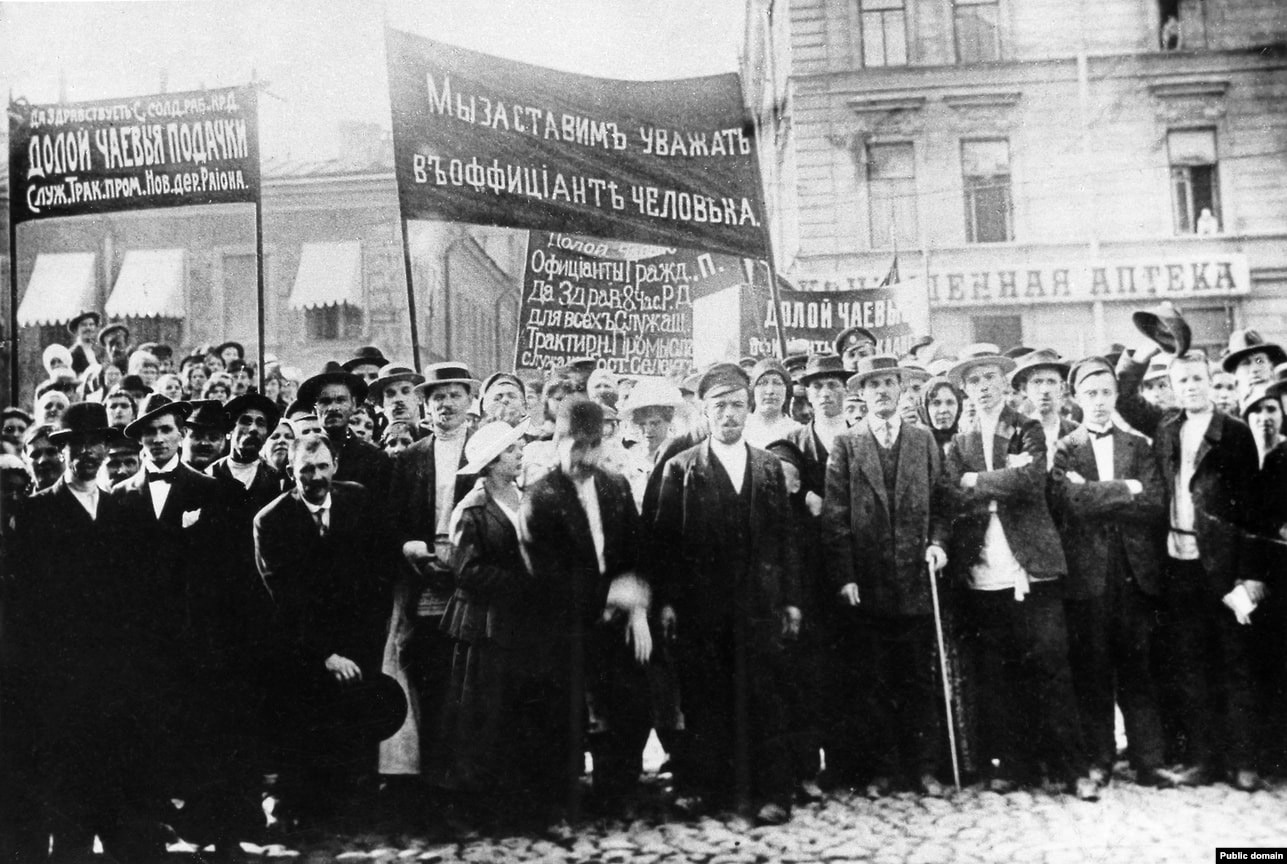
– It is generally accepted that the fight against tips began under the Bolsheviks, but this is not so. In the Russian Empire, “tavern employees,” as waiters, floor servants and footmen were collectively called, received no salary; their earnings consisted entirely of tips. After the February revolution, they began to create their own trade unions, whose demand was to switch to wages. Restaurant owners did not agree to this condition, and then in June 1917 a general strike of waiters began, which lasted for several weeks. That was the point of not tipping. Well, under the Soviet regime, salaries became bad, and tips gradually began to be taken again. Newman arrived just at the moment when the campaign against tipping began again, but under ideological slogans.
"Moscow. Cinema-eye run." Film by Mikhail Kaufman and Ilya Kopalin. "Sovkino". 1927
– In general, tours to the Soviet Union, travel to the Soviet Union were very expensive by Western standards.
“I found Russia to be the most expensive country I have visited,” Newman writes. How long did Newman’s journey last, and where did he visit? In general, what did he see, what was he interested in?
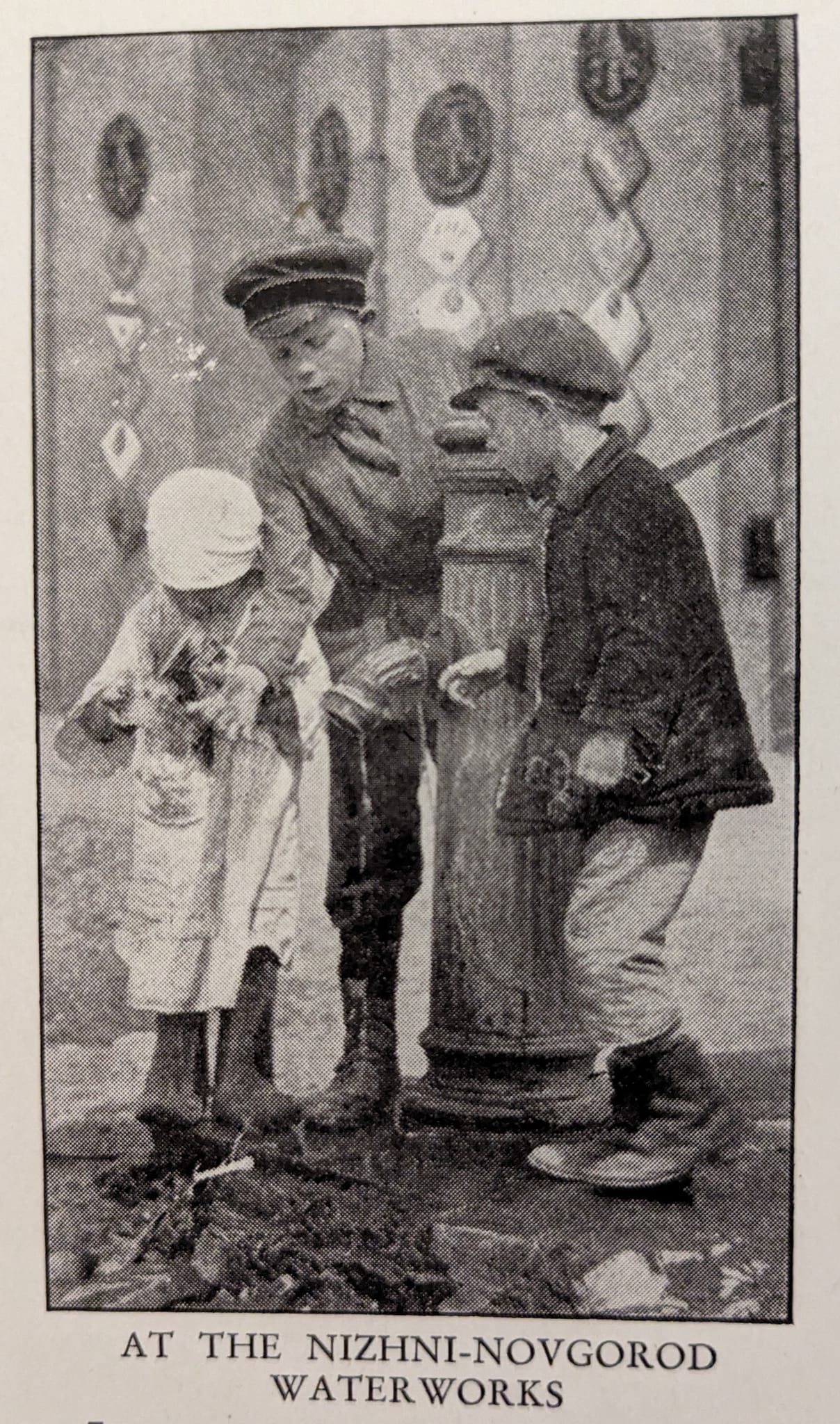
– It took about three and a half months. He was in Moscow, he was in Leningrad, he was in Nizhny Novgorod. He went down the Volga by steamship, respectively, from Nizhny Novgorod to Astrakhan. Then he sailed from Astrakhan to Baku, and from Baku he went to Batumi. Before this, he made a foray into Vladikavkaz and Tbilisi. As he explains, this happened not because he planned it that way, but because there was no longer any way to buy train tickets from Baku. He bought to Vladikavkaz, from there he got to Tbilisi, and from Tbilisi he got to Batumi, from Batumi he sailed to Crimea, to Yalta. After that, he returned to Moscow and left Moscow for Berlin.
He lived in Moscow for about two weeks, in Leningrad he lived for about 10 days. He stayed for some time in these cities, trying as much as possible, as all tourists do, to run around all the sights. The book is largely about museums. Museums make an amazing impression on him. He did not go to theaters or concerts. All tourists coming to Moscow should go to the Bolshoi Theater, see "Swan Lake" or whatever is on at the Bolshoi Theater. No, he didn't go there. He describes the Bolshoi Theater from the outside, but he did not go inside. He was at some performances during tsarist times. Obviously he was not in this area.
– He does describe one political event. When he was in Vladikavkaz, it became known about the murder of the Soviet ambassador Voikov in Warsaw. Within 35 minutes of receiving this news, thousands of soldiers and workers gathered in a meeting at which speakers accused England of inciting the assassination attempt. Newman photographed the rally. But even here he pointedly refrains from making judgments. Did he meet with any members of the government, high-ranking officials?
– He met only with Kameneva, the wife of Lev Borisovich Kamenev - it seems that she headed the bureau for relations with foreigners.
– And the sister of Lev Davydovich Trotsky. She was the chairman of the board of the All-Union Society for Cultural Relations with Foreign Countries (VOKS). This was the predecessor of Intourist, and she organized it.
- VOX, yes. She really helped him get permission to take photographs. She was then shot, it seems, as far as I remember.
– After the execution of Zinoviev and Kamenev, whom, by the way, she divorced in 1927, she was first exiled. Then she was arrested, but there was no trial, she was simply kept in prison, in the Oryol Central. And they shot her along with several dozen other prisoners in September 1941, when the Red Army was preparing to retreat from Orel.
“But he didn’t run into anyone else.” Moreover, when at the initial stage he spent two weeks in Moscow in search of a certificate, which he was eventually given, he came across an infinite number of officials, none of whom knew how to help him, he was sent further, to another official, who was also scared, did not know what to do in this situation, because, as I understand, most of them had never seen a living foreigner at all, the devil only knows who he is, why he ended up here in the first place, what the hell he needs paper.
- “When he comes, he’ll either spy like the last son of a bitch, or he’ll wear out his whole soul with his whims.”
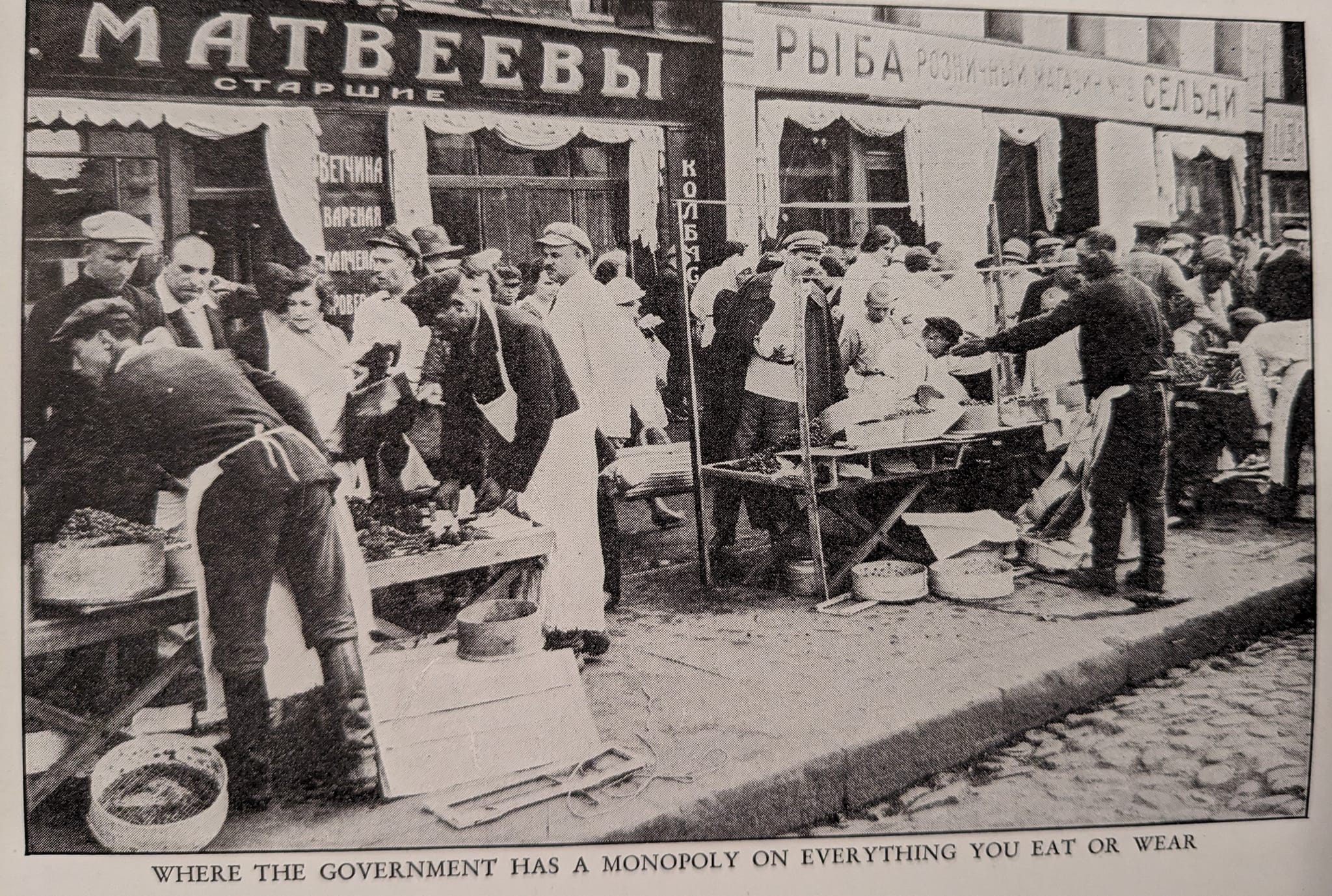
- Yes, yes, yes. There are a surprisingly large number of officials who regulate absolutely everything; permission is needed for everything, for the slightest act. I really liked one of the examples. At that time the NEP was already in decline, but the NEP still existed. So he writes that yes, you can open, for example, a private bakery, but you do not have the right to start selling bread before 10 am, because all state bakery stores open at 10 am, and you cannot sell hot buns, relatively speaking, at 7 am to people who go to work.
– Did he feel like he was being watched?
– He didn’t feel it. In my opinion, this is amazing. Once some security officers in civilian clothes burst into his cabin and interrogated him for a long time. He was regularly arrested on the streets by police. Although I understand that at that time of total surveillance this was commonplace, everyone expected it. Either this surveillance was very good, he did not notice anything, or he chose not to mention it for some reason, or it did not exist. That is, there are three possible options, I don’t know which one is correct.
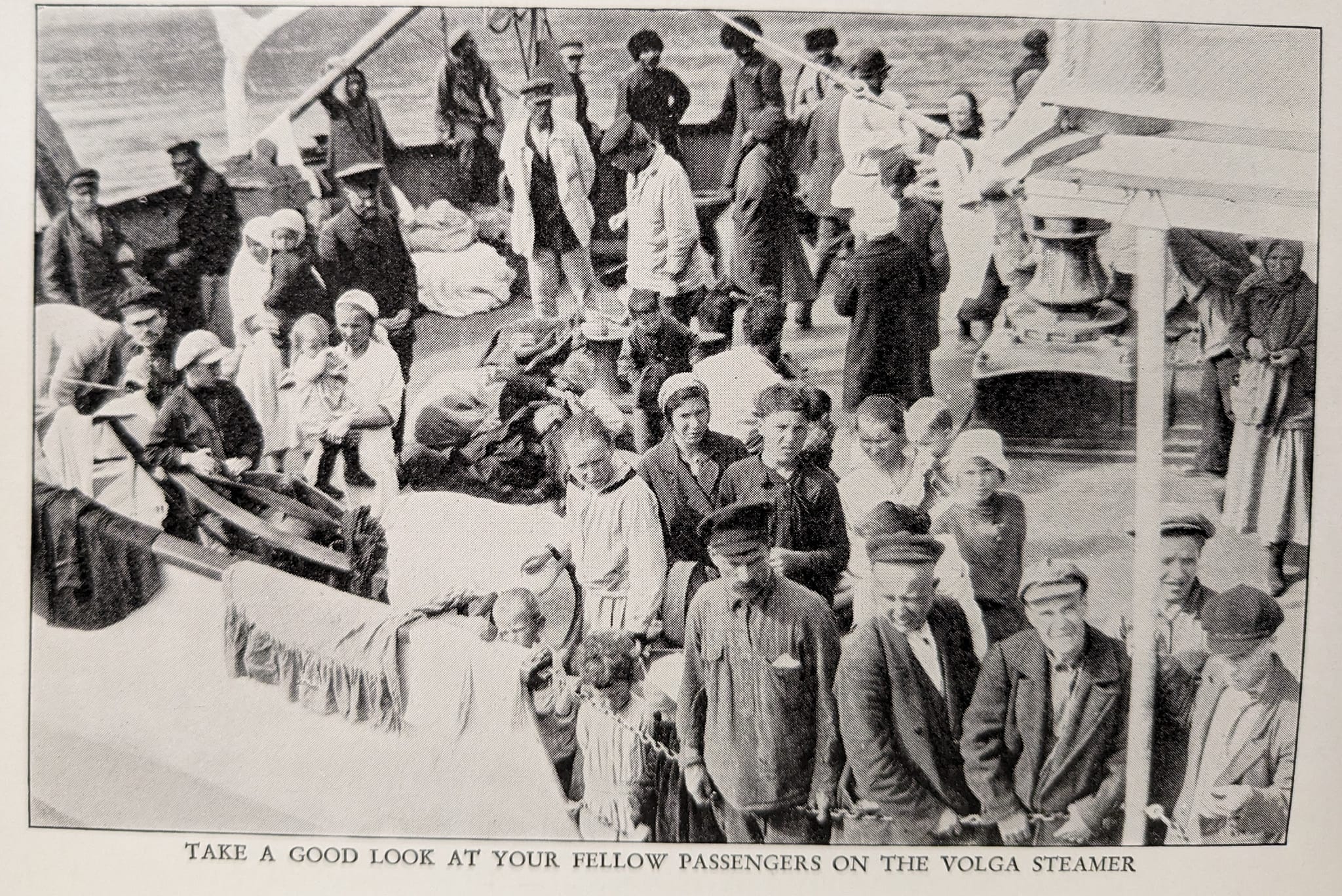
Another interesting thing is this. He writes that in the Western press they tell some horrors about Soviet life: the nationalization of women, complete devastation. He says: no, in fact, life is getting better little by little. Of course, not Tsarist Russia, then everything was three orders of magnitude better, but everyone is taught to read and write, even some churches are open, although of course there are fewer of them, people don’t go to church. The book is quite complimentary to the Soviet regime. You can go there, it’s difficult, but it’s very interesting, because you’ll see something that you really won’t see anywhere else.
- Well, did he communicate with the people?
Collective farms were not named after Lenin or Stalin, but after Warburg and Rosenwald
“He went to the people, he asked questions. For example, he visits Jewish communes in Crimea. From the beginning of the 20s, Jewish communes began to appear in Crimea. These were very different communes. Some of them were created by Zionists who wanted to prepare Jewish youth for agricultural work, like if you work on a farm for a year, you can go to Eretz Israel and there, accordingly, raise the agriculture of the Promised Land. There were socialist and communist communes that established contacts with American philanthropists. The most famous is the Joint, but there were other charitable organizations that helped Jews who suffered terribly during the World War, the Civil War and everything else, somehow improve their lives.
– There was such a project for the “agrarianization” of Jews, primarily in Crimea. There was a Committee for the Land Arrangement of Jewish Workers, and so it organized this resettlement. There was a proposal to establish Jewish autonomy in Crimea, but Stalin established it in the Far East instead of Crimea.
Cultural film "Jews on Earth". Screenplay by Viktor Shklovsky and Vladimir Mayakovsky. Directed by Abram Room. On behalf of the Land Management Society for Jewish Workers. All-Ukrainian Photo and Film Administration. 1927
– He traveled through two colonies, which, by the way, were named after a New York banker and a Chicago businessman, the founder of the most famous until recently Sears corporation, which was at one time the “Amazon” of the 19th century.
- This is amazing. Jewish collective farms were not named after Lenin or Stalin, but after Felix Warburg, whom conspiracy theorists consider one of the leaders of the world behind the scenes, and co-owner of Sears Julius Rosenwald. Both of them were donors to the project, and Warburg personally visited Jewish settlements in Crimea and Ukraine in 1927.
“Colossal amounts of money were given for the purchase of tractors, livestock, and construction. These colonies began to feed, rise, prosper. And Newman describes that he talked with the leadership of the colonies, talked with officials who were involved in agriculture, talked with people who were involved in culture. Because he was interested in cultural life, what people do in their free time. He was pleasantly surprised to see that there were many libraries there and that people were reading books. Of course, he could not judge the contents of these books.
– From the text of the permit issued to Newman by the NKVD, it follows that he had the right to conduct not only photography, but also filming. And he took advantage of this right. His film about Soviet Russia was shown in American theaters in 1932, but does not appear to have survived. His last films, already in color and sound, about travels to Singapore, Indonesia and Siam, present-day Thailand, were published in 1938. During his life, he made several trips around the world, witnessed many historical events and captured them on film. After his film career ended, he continued to write books, give public lectures, and died in 1953 at the age of 83.