
Translated material
The first tall troll
The absurd comedy "Daaaaaali!" about, in fact, Salvadora Dali, in the Russian rental
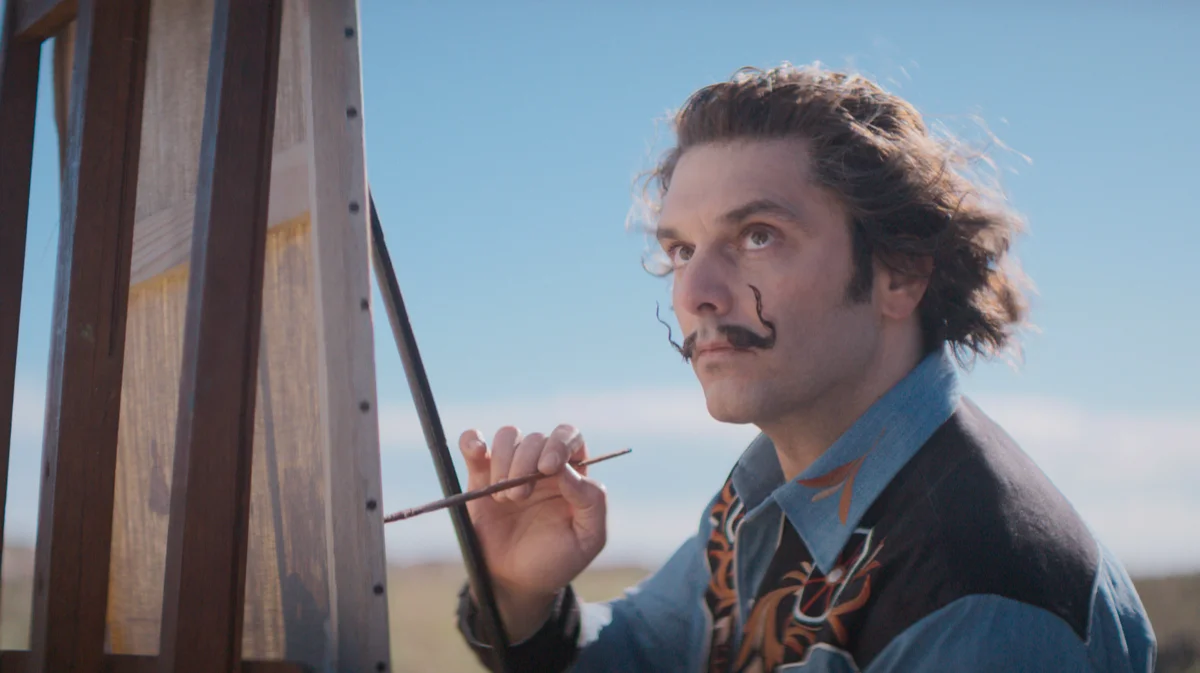
Photo: Diaphana
In Russia, the absurd comedy “Daaaaaali!” Continues to go, the next small humorous masterpiece of the French director Quentin Dupier about the unrequited film of a novice journalist - in which the Dali was talking about Salvador himself. Director Quentin Dupier, a musician and fan of surreal cinema, author of Reality, Deer Skin and Ground, in recent years he took a peppy rhythm, regularly removing a one and a half hour film calls in the spirit of Luis Bunuel and Spike Jones.
Film critic Oleg Tundra talks about the film and understands the method of one of the most striking, independent and specific European directors who made nonsense with a consistent author's strategy.
The young and still unauthorized journalist Judit (Anais Demusti), on the instructions of the editor, should make an interview with the great and terrible Salvador Dali, who lives in his lifetime cult status. Like all daffodils and eccentrics, he believes that the world is spinning around him, and a young journalist has half an hour of his precious time. Producer Jerome (Romain Duris) decides to put a press on Judit so that she unfolds a short print interview in a long -term documentary project with great financing, and an inexperienced journalist decides to get involved in this adventure as an interviewer and presenter. "The largest movie camera in the world will be removed!" -The artist’s producer is attracted to the Dolgostroy project. The problem, however, is that Salvador Dali (not one, but as many as five of his incarnations - 5 different French actors play them) eludes, stubborn, sabotages the project and every now and then is washed off from filming under various pretexts. Judit becomes the object of an endless joke Dali, which is overgrown with force majeure, inconsistencies and oddities. Some characters are clearly not created to fit in the film format, and the extravagant tricster Salvador Dali-clearly of their among them.
The reason for the fertility of Quentin Dupier, who clearly caught inspiration and in the last five years released as many as seven completely different films - in his exceptional independence. On most projects, he is not only a screenwriter and director, but often an operator and director of installation: Dupier knows how to quickly write a script and make a film. It is really better not to postpone absurd ideas for a long time, because if you’re hesitating, then stories about the exciting man with a suede jacket (“deer leather”), superheroes named after chemicals in cigarettes (“smoking causes a cough”), a gigantic trained carnivorous fly (“grub”) and an angry viewer of a theatrical setting, taken up after Weapons ("Yannik") could not have happened. Dupee comic sketches, parodying different genres, but shot in the same faded palette, stand out from the first minutes: the author clearly found his pace, his ironic intonations and scenario techniques that you can’t confuse with anything.
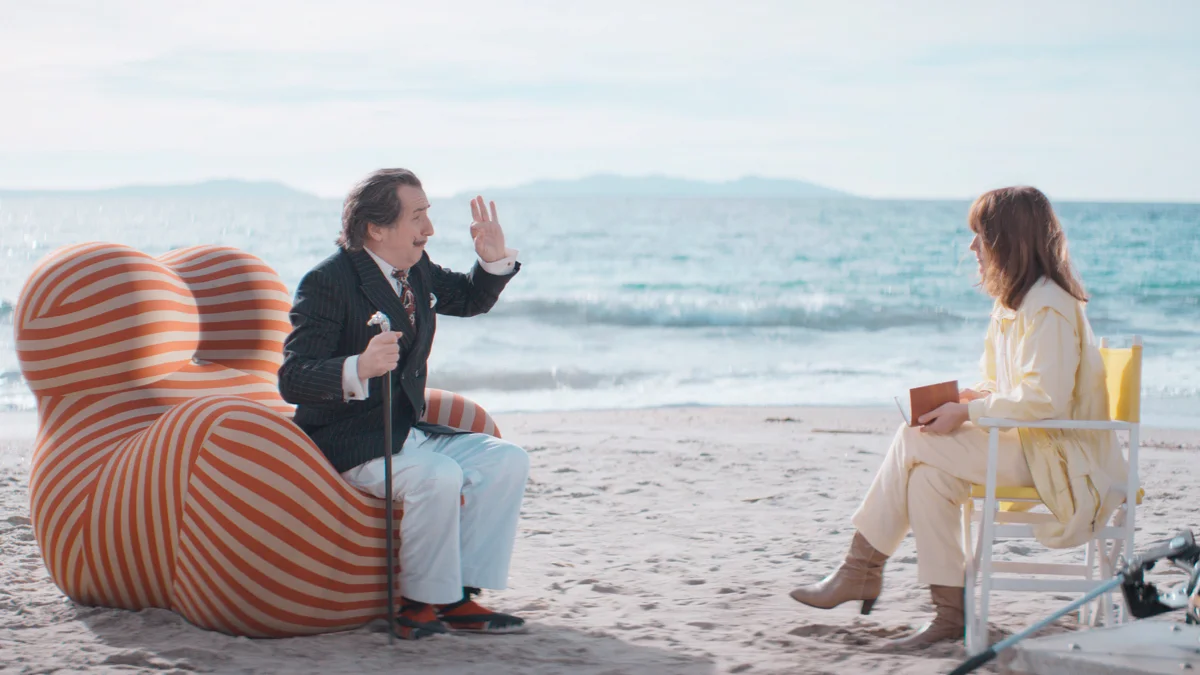
In many ways, inheriting the directorial approach of Michel Gondri (“The Eternal Lights of Clean Mind”, “rewinding”, “Book of solutions”) and the scenario fantasy of the co-author and friend Dali-Luis Bunuel (“Angel-fighter”, “The modest charm of the bourgeois”, “The ghost of freedom”), Dupee is mocked in his films over human stupidity, chaos Reality, creative pride and cliches of mainstream cinema. And his self -illegal intonation without moralizing and admiration for the cinema with a capital letter provided him with audience trust: it is not necessary to be a well -read fan of Ionesko, Beckett or Harms to plunge into the illogical world of Dupier, populated by the characters of jokes. Light, but not frivolous, simple, but not primitive - Quentin's films found a small but faithful army of fans.
The cult of Salvador Dali is a very suitable topic for deconstruction. Quentin Dupier, like a real demolition, is mocked at the lifestyle of the artist and his wife Gala, visual plots of paintings and secular behavior gave in decades of his unconditional glory. The twisted mustache, a cane, a gaze from top to bottom and all, meaningfulness and rejuvenation of their own self: the pop cultural figure has long earned frying, but no one had enough agility to do this.
Dyube is not afraid, because he feels: they also gave everything that the mass culture absorbed from him is the alloy of plastic celebrity-image, ubiquitous reproductions, pathos confessions from the “Genius Diary” and an interview in glossy magazines.
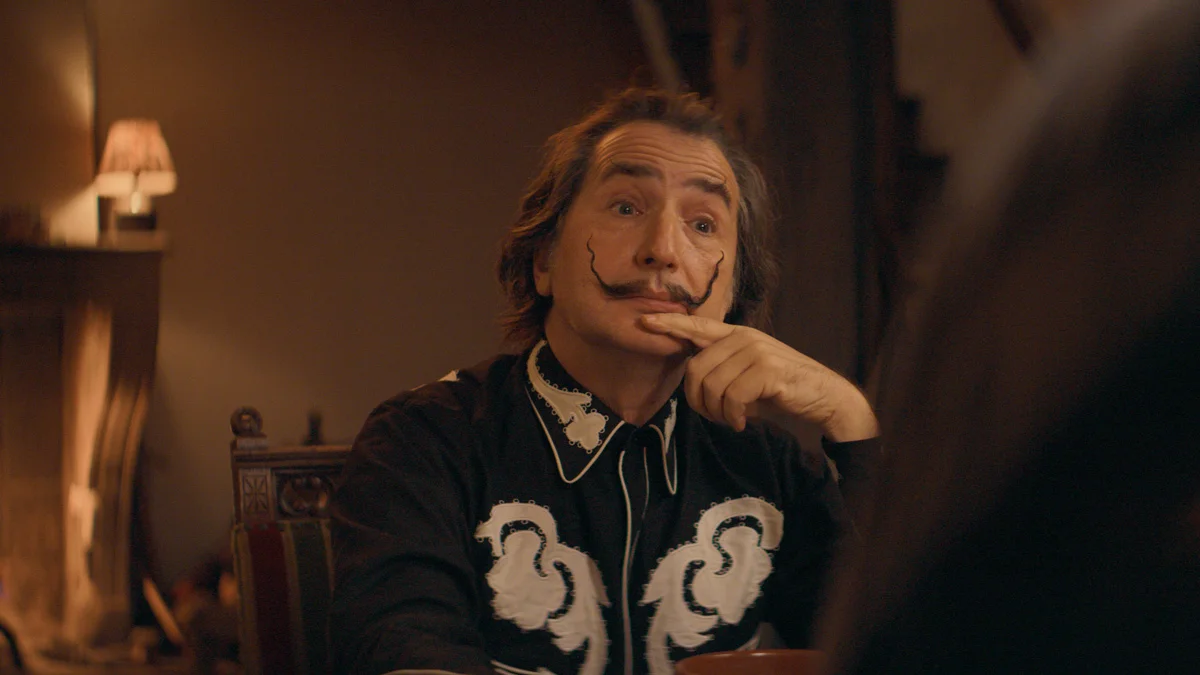
Dali is one of the first high-lobed trolls and beneficiaries of the celebrity-culture-in the film Dupier comes up with polite and impolite refusals in order not to act in the project about itself, but the media does not stop.
Walking about the artist, in order to sell the project more expensive, the producer and journalist get involved in hide and seek without the beginning and end, so that they would soon be charged from the manner, nature and works of art in their eyes.
Dali in five faces invented by Dupier, he played himself and himself for a long time became confused in his images, conceit, myths and poses, and lures the naive journalist into the labyrinth of reflections. There are endless corridors for which it is impossible to reach the goal, the modeling in the ditches, constantly delayed shootings, mysterious extinction and stew from the goat head. The constant re -winging of the personality, creative process, the film - cinema on this difficult topic Dupee shoots relaxedly, playfully, gently chuckling at all the creators: from canonical gave to modest.
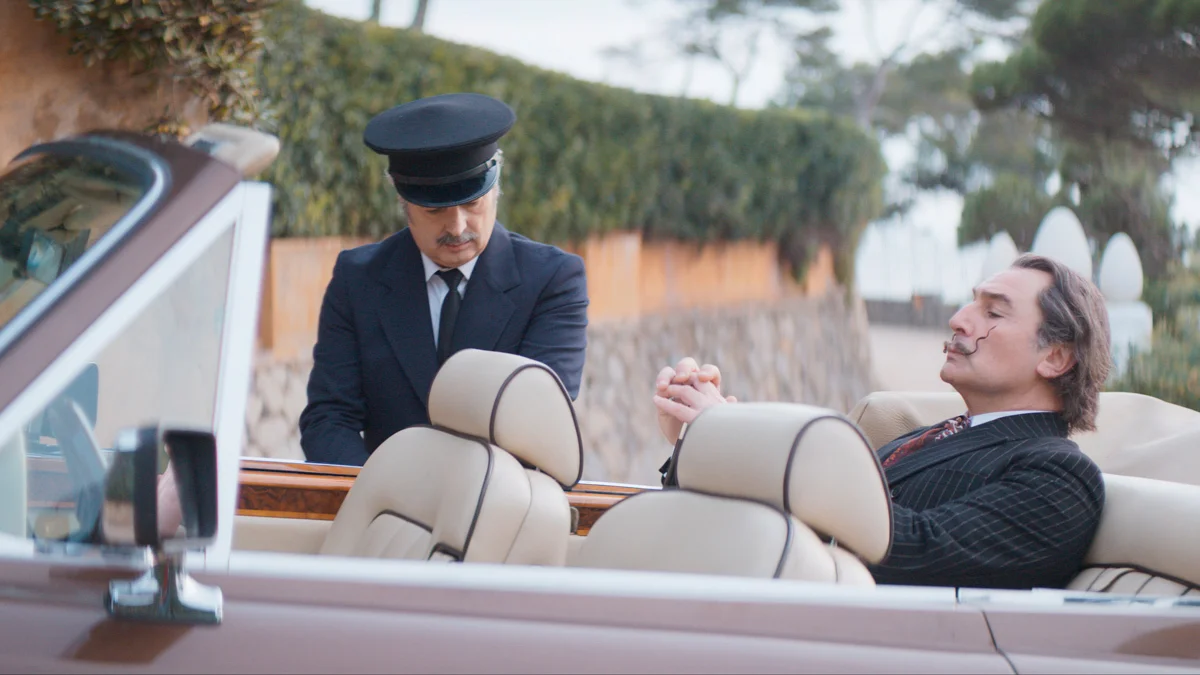
The most annoying thing that could be done by telling about Dali is to shield Wikipedia step by step; The best thing is to get a ball of studies, associations, diverging paths and artist’s subscriptions, who did not leave the house without a carefully thought -out and supervised image. After the film, Dupier, you will not learn about gave anything new, but you feel the comedic and vulgarity of the world that he tried to describe with spreading clocks, elephants on supports and book pages that turn into flying seagulls. It seems that Salvador Dali himself would be completely delighted with the fact that a director finally appeared in Europe, who grabbed him on the fly and handed over the entire gloss, idiocy and tyranny of the most famous surrealist for weightless 80 minutes.