
Translated material
Flickering path
Finland announced his readiness to open a border with Russia, but only after she accepts a controversial anti -migrant law. Can both have occurred?
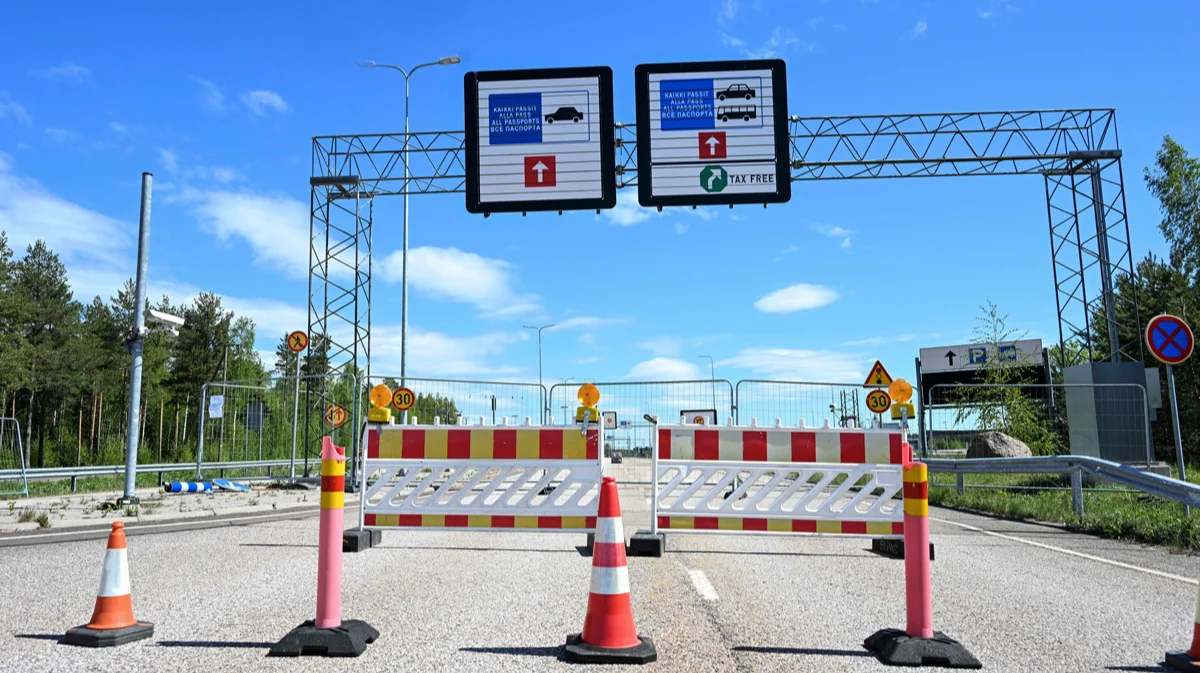
On the Finnish-Russian border in Baalimaa, Finland, May 22, 2024. Photo: Kimmo Brandt / EPA-EFE
For six months now, the Finnish-Russian border remains one of the hottest topics in the Finnish media. After in November 2023, Finland accused Russia of artificial creation of a crisis with refugees on the border and closed it, Finnish politicians regularly declare a threat to security from the eastern neighbor and deliberately go to the checkpoints to evaluate the situation.
One of the last such visit was made by the new President of Finland Alexander Stubb: as soon as he took office, he went to the closed car checkpoint NIRAL. However, despite the intense media background, on May 19, Finnish Prime Minister Peteri Orpo suddenly stated that the issue of “careful” opening the border with Russia was being considered. This is due to the possible adoption of the Helsinki of the "Law on Exiting", according to which Finnish border guards will be able to decide on the deportation of migrants directly at the border. Is the Finnish government really intended to change the course of what the decision on the border has to the anti-migrant agenda of the right and whether the border will still be open-the observer of European politics Andrei Smolyakov was versed.
Controversial signal
Since the full -scale Russian invasion of Ukraine, the Finnish border has remained one of the few available ways to leave Russia to the EU. However, in November 2023, due to the sudden influx of refugees from third countries, the Government of Finland decided to suspend the work of the checkpoints.
According to the main version of the Finnish authorities, the current situation was the result of a provocation from Russia. According to them, the Kremlin deliberately sent asylum of refuge from Syria, Somali and other countries to the border. In turn, the Russian authorities denied this and claimed that, passing the migrants, the border guards only fulfilled their duties, but before such a situation did not arise, since the agreement on border cooperation was in force, now terminated .
This crisis eventually led to the complete closure of the border : first for two weeks, and then, after several temporary extensions and attempts to partially open it, for an “indefinite period”.
At the same time, in Finland, the beginning of work on the new bill “On the Combat of Installed Migration”, which the Finland, introduced the parliament for the coordination on March 15, was announced in Finland.
The law provides for quite radical measures : it allows you to consider the application for asylum directly on the border, instantly reject them and immediately deport the applicants back to Russia, even if Russia refuses to accept them.
Although how exactly this should work, remains unclear.
Formally, the law is temporary and will act within a year from the moment of adoption, and in addition, can only be applied in conditions and in the presence of evidence of the same “instrumentalized migration”, that is, provocation from the Russian (or any other foreign) side.
However, part of the Finnish opposition, especially the “Left Union” and “Green”, still considers the bill violating international human rights agreements. The same was stated in a number of NGOs. So, UNHCR believes that the bill is contrary to international and European norms regarding human rights and migration. Some experts-legal experts within the country also spoke out critically: the law, they believe , contradicts the Constitution of Finland.
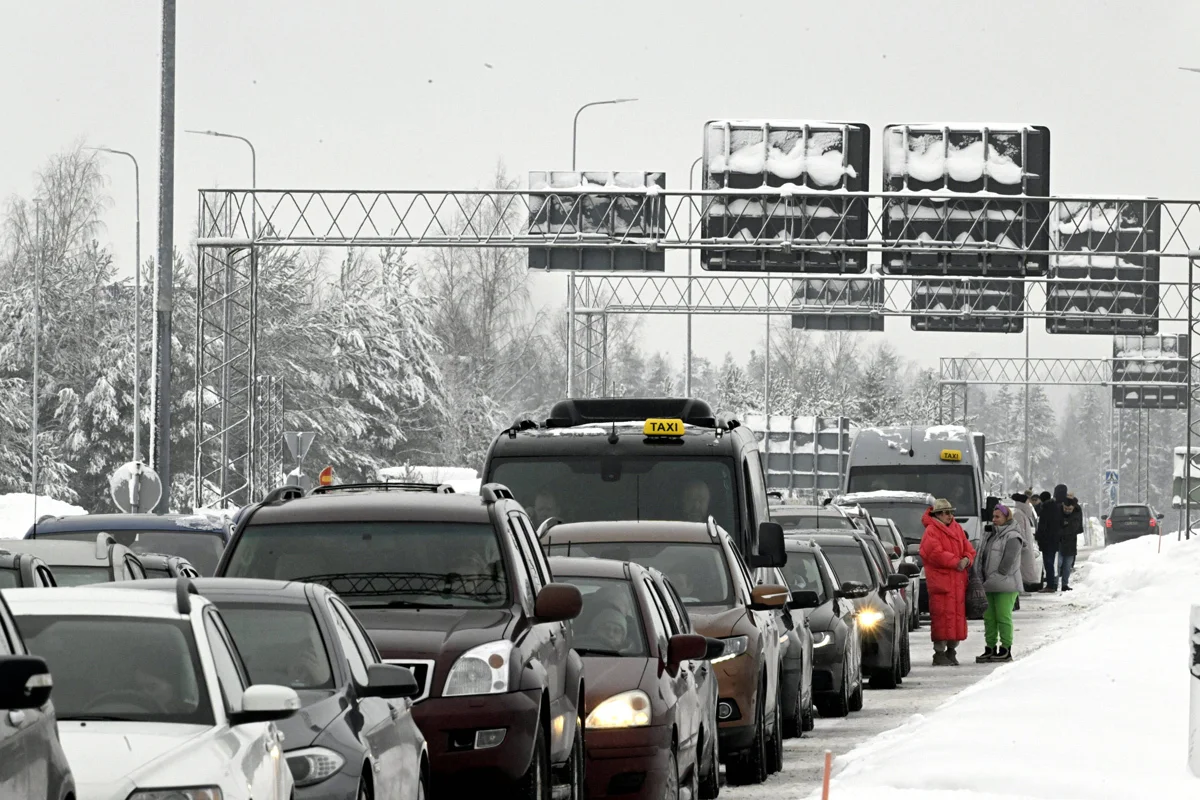
Due to the disputes arising, the adoption of the law was delayed: despite the fact that the government hoped that it would begin to act in the spring, when new provocations from Russia were expected, the final version was sent to the parliament only on May 21. The further fate of the bill is foggy: since the law is considered emergency and temporary, according to the Finnish constitution, 5/6 of the parliament deputies should vote for its adoption. The ruling party coalition does not control so many places in the legislative body.
At the same time, starting in May, Finnish politicians have been making publicly with statements, albeit contradictory, about the possible opening of the border. So, on May 19, Finnish Prime Minister Peteri Orpo in an interview with Yle said that there is a probability of a “careful” opening of the border with Russia. True, almost immediately after that , the head of the Ministry of Internal Affairs of Finland, Marie Ranananen, who appreciated such prospects much more restrained.
On the part of Finnish politicians, the decision to open the border is the step is not obvious. There is no corresponding request from the company: according to polls, two -thirds of voters supported the decision to close the border. There is also no new provocations on the border itself, despite the fears of the Finnish authorities. Nevertheless, the conversations that the border can be open again is in paradoxically.
Border - from ideal to closing
Historically, with the entry of Finland, the Finnish border was a record holder in the number of Russians who arrived and lefting to the EU - only the Estonian border could compare with it.
Both local and tourists evaluated the safety of passing, the quality of work and the friendliness of the Finnish border guards are so high that this practice of managing the border with countries outside the EU was a de facto ideal for pan-European policy.
It is not surprising that the same border turned out to be one of the hottest points after a full -scale invasion. During the first six months of the war, 1.303 million Russians drove through Finland into the EU and 1.273 million went back. After the start of mobilization, cross -border traffic increased expectedly - almost 30%. Soon after a sharp increase in emigration from Russia, a number of countries, including Finland, introduced restrictions on entry for Russians on “insignificant reasons”, mainly for the purpose of tourism.
It is curious that in Finland the decision was openly described as "not related to national security issues." The measure was considered more likely as one of the types of sanctions in connection with Russian aggression against Ukraine and as the support of the international image of Finland. Although other countries (Estonia, Latvia, Lithuania and Poland), which on September 19 closed the entrance for Russians with tourist visas, unlike Finland, saw this not only sanctions against Russia, but also protection of national security.
After the restrictions entered into force, the daily intersections traffic, which at that time was 10-15 thousand people, was reduced , but the border still remained extremely lively: people with dual citizenship, student or working visas, a residence permit, permanent residence, as well as the petitions of the shelters could still cross it. As a result, every day through the checkpoints continued to pass an average of 2 thousand people, and in the first six months of restrictions, the Finnish border guards missed about 1 million people .
After a crisis with refugees and closing the border, the stream was completely stopped. In the last six months, no movement on the border has been observed, but in the media field it still remained a hot point. Back in February, Peteri Orpo said that the opening of the border with Russia is not expected. Then Marie Rananan supported him: there is no point in stepping on the same rake of Finland, she thought. In April, a similar statement sounded again - this time from President Alexander Stubba. He referred to the data that Russia is still capable of and, most likely, will try to use migrants again to create an artificial crisis on the border.
At the same time, the Government of Finland reported that calm guarantees only a closed border, and continued to increase staff there and strengthen security measures. So, for example, the European agency Frontex, which has long been cooperating with Finland, decided to continue to help the Finnish border guards track the situation on the border and recently again sent their security experts there.
At the same time, in order to combat illegal crossings, Finland continues to cooperate with Russian services, as the head of the border service of Finland Marco Saarers said .
According to him, Russian and Finnish border guards regularly exchange information - and this, oddly enough, remains one of the main reasons why illegal transitions almost does not happen.
Why Russia, despite previous attempts to create a crisis on the Finnish border, is now actively cooperating with foreign colleagues, remains unclear. In addition, cooperation continues even despite the fact that the relevant agreement is terminated by both parties . But the intensity in the media and the rhetoric of Finnish politicians regarding the Russian border, this did not reduce over the past six months.

In the interests of the right
In general, the course with the closure of the border fits well into the internal policy of Finland itself. On the one hand, he solves an obvious problem with the threat of national security , on the other hand, it is quite consistent with tough antimigrant sentiments in the current government. Based on both of these reasons, in Helsinki should be interested in leaving the border closed. But for some reason, conversations about her discovery, as well as the adoption of an “emergency law”, are still underway.
The formal reason, in the commentary of the Novo-Europe, explains the Finnish political scientist and researcher of the Foreign Policy Institute (FIII) Yuri Lavikainen , is that the threat of Russian provocations on the border has not disappeared and Finland to protect its own national security is a more stable solution than simply closed boundaries.
“The question is not so much that right now is happening on the border, but that the Russian authorities, apparently, are not going to cease to engage in provocations,” he explains.
-You need to make sure that even if the borders have once to open and Russia will continue its operations, Finland will have tools to somehow fight this. This is a matter of long -term national security. ”
The new bill is adopted by the filing of “true Finns” - the extreme right party, which is included in the coalition with the legal entities who came to power in 2023. At the same time, the new “emergency” law fits very well into the plans of the new government (especially “true Finns”) to limit immigration, cutting the number of refugees accepted, complicating the process of obtaining citizenship, and so on.
So, back in June 2023, almost immediately after the elections and long before the crisis on the border, the chairman of the True Finns Riikka Purra promised the “shifts in the paradigm” of the migration policy. Indeed, one of the first sets of bills introduced by the government was a large package to limit immigration and a sharp reduction in the number of refugees that Finland can accept.
The new bill on the border, although it is considered separately, will also be discussed against the background of a whole package of bills on restrictions in the field of immigration, which the government submitted to parliament on April 18. This package implies an increase in the requirements for obtaining Finnish citizenship, a ban on asylum to the petitioners to switch to educational or work visas, a strong reduction in the term of international protection itself.
And he will allow you to keep people who are led to the refuge in special zones on the border and consider their cases in an accelerated manner, if there is any reason to assume that the presentation is "not justified." Against the background of the Dragon “emergency” border law, these measures do not look something excessive and do not receive appropriate lighting in the media, but they are much more long-term. Although the temporary law, if necessary, can also be extended, as it happened, for example, during the pandemic period.
It is interesting that the “true Finns” as an active part of the extreme right wing of European politics before the war were often associated with pro -Russian forces in the EU, albeit not as unambiguously as some of the right -wing parties, like the Italian “League” or “Alternative for Germany”.
On the one hand, in 2015, “True Finns” supported the introduction of a mandatory study of the Russian language in the municipalities bordering Russia. And in 2019, a candidate for the European Parliament from the party called for an exit from the Schengen agreement and establishing a visa -free regime with Russia instead of a visa -free regime. On the other hand, over time, the “true Finns” began to reject the possible associations with Russia, and in the same 2019, Purra accused the Russian Federation of imperial ambitions and violation of international law.
After the full -scale invasion of Russia to Ukraine, “True Finns” from these ties began to distance themselves even more actively, including reducing contacts with other extreme right -wing parties, which were somehow convicted of “Friendship” with Russia. Moreover, “true Finns” actively supported the entry of Finland into NATO.
Against the background of this, it seems somewhat ironic that they are now again, although not directly, they get benefits from Russia: the crisis on the border, apparently, played into their hands.
Tool for the future
However, Yuri Lavikainen believes that the matter is not only in the interests of “true Finns”. Of course, first of all, the tough measure of the complete closure of the border affected the Russians. In Finland, many people with dual citizenship of the Russian Federation and Finland continue to live : more than 37 thousand people from 5.5 million of the population of Finland. Many of them regularly crossed the border - for example, to meet with relatives living in Russia. As a result, after closing the checkpoints, many families were divided, which even led to protests, although not too loud.
But to say that for the Finland itself and the Finns itself this measure was completely painless is also impossible.
Finnish entrepreneurs also counted on open borders: in some of them, the share of Russians as consumers reached 70%. Also, “trade tourism” was also distributed from the Finnish side: the low ruble exchange rate made purchases in Russia very profitable.
So closed boundaries negatively affected the economy and well -being of border regions. That is why the forecasts of the political scientist regarding the opening of the border are positive: "I assume that if the law passes, then the border will be opened."
In addition, Yuri Lavikainen believes that this bill cannot be considered the initiative only “true Finns”, no matter how well he fit into the paradigm of the ruling party coalition. Opposition parties are also understood to understand its importance to ensure national security, the expert explains. Criticism and long discussion for emergency law are caused by the fact that Finland traditionally attaches great importance to human rights.
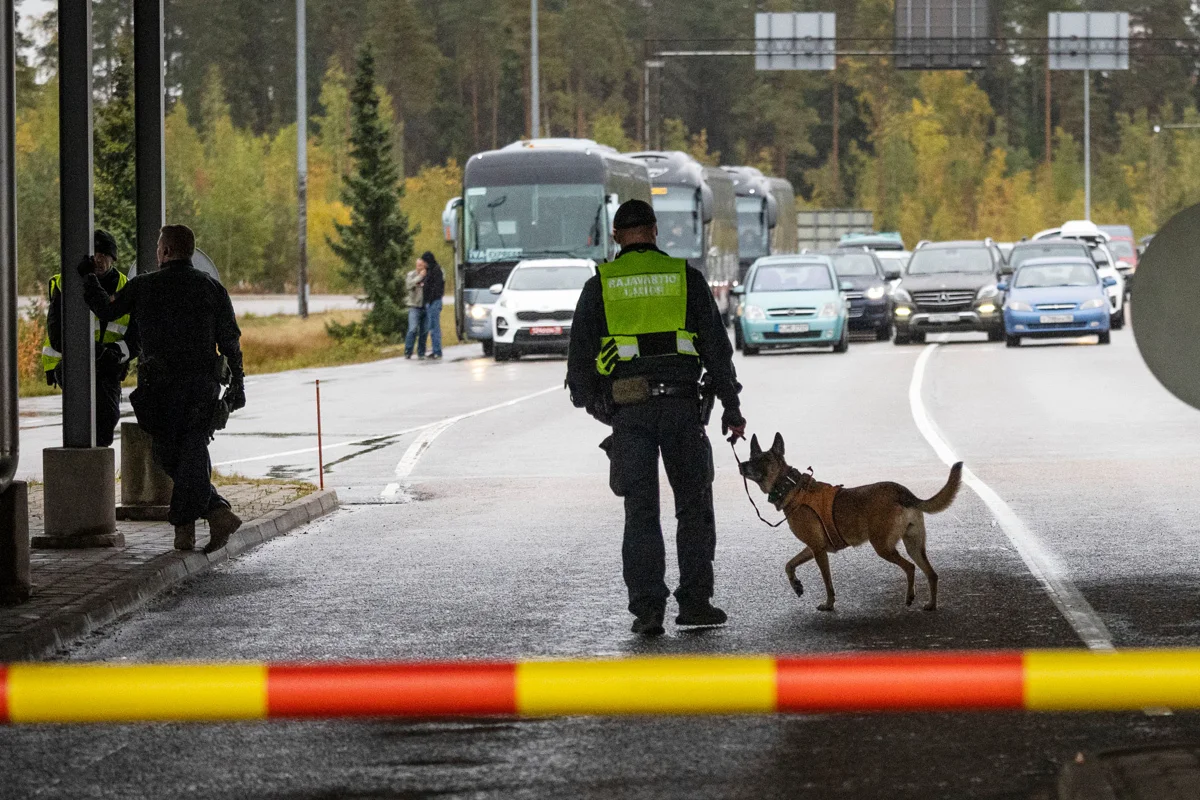
“The whole complexity and ambiguity of this law is the need to choose between human rights and security,” says Lavikainen. “Of course, some parties look at the law more carefully and critically, because for them human rights are more important, but the law does not cause any clear party separation.”
As a result, a new bill and the possible opening of borders with Russia turned out to be a point of crossing several processes at once in Finnish politics. On the one hand, in the adoption of this law it is not difficult to consider the agenda of the new right -wing government and “true Finns”. Even if the temporary, this law fits perfectly in the new paradigm of immigration, and other initiatives stand out against its background; And in extreme cases, the action of even temporary law can be extended. On the other hand, it cannot only be explained by this: in this case, the bill would not have a chance.
Although the crisis on the border with Russia was decided to be solved by closing the checkpoints, this approach can not be called stable. Therefore, the Finnish government considers the new bill as a very pragmatic, albeit controversial, answer to a very real problem.
The border cannot remain closed forever: it carries difficulties for the economy, and for people with dual citizenship, and for mixed families.
And for refugees, this is perhaps the worst of the possible options - even in comparison with the unprecedented hard measures that the government is working on.
So now the Finnish government is trying at the same time to find a reliable solution to the urgent national problem, and continue to develop its anti -immigrant agenda. And the constant attracting attention to the border from politicians helps them to enlist the support of both society and opposition parties.