
Translated material
The same tablet
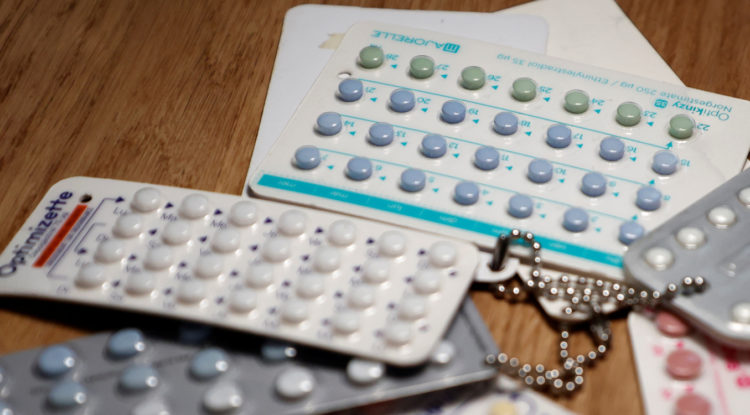
Male contraceptives are safer and almost do not cause side effects, but they still can not buy them. Explain how it happened and when it changes
All over the world, 28% of pairs of reproductive age rely on “male” methods of contraception: condoms and vasectomy. At the same time, research on male contraceptives has been conducted for decades, but they are still not represented on the market. "Cold" tells why it happened and is there any chance of changing the situation.
In order not to miss the main materials of the "cold", subscribe to our Instagram and telegram .
First experiments
The development of male contraceptives began in the 1970s. Then the international group of researchers under the World Health Organization (WHO) conducted animal tests. Scientists made them injections of various combinations of androgens (male hormones) and progestogens (female hormones), which significantly reduced the number of spermatozoa. However, scientists began to suspect that this method of contraception increases the risk of prostate tumor . The assumption was not confirmed, but the tests were stopped.
In parallel, studies of the effect of taking chlorinated sugars, which reduced sperm mobility. However, when research on monkeys in 1976, scientists came to the conclusion that large doses of the drug are toxic . The tests were stopped, and the research group at WHO was disbanded.
Six years later, the group was collected again and repeated experiments with a combination of male and female hormones in the form of injections. This time, scientists achieved high efficiency on monkeys, and then in public. Most of the tests took place in Western countries. However, the US National Institute of Health did not approve : among side effects, mood swings, increased aggression, sleep disturbance were noted, so they refused the drug.
And what are the side effects of women?
The first oral contraceptives of Enovid (COC) entered the market in the USA and Great Britain in 1957. Initially, they were sold as a means for treating menstrual cycle disorders. They were officially allowed to use for contraception only in 1960.
In those years, any support for research associated with contraception caused the Vatican’s protests, so the side effects of the reception were investigated in a small sample and were compared with the risks that the female body carries during pregnancy. Only since 1961, when the data on tens of thousands of women accepting COC had accumulated, it turned out that the consequences could be quite serious, up to deaths against the background of thrombosis - the first case of the death of a woman after taking “Enovid” was described. The most common side effects were hormonal malfunctions, acne, mood swings and sleep problems.
Will not be popular
In the 1980s, a new approach to male contraception studies was undertaken in China. After the start of the program “One Family - One Child” in 1979, China appealed to Western countries with a request to include them in the WHO research program and the UN Foundation for the Population (UNFPA). Soon, Chinese researchers joined in the study of the safety and effectiveness of existing and new vasectomy procedures.
In the course of the study, it turned out that the surgery has slightly reduced the risk of cardiovascular diseases, but with the reverse operation it must be borne in mind that the cross-country cross-country can not return to 100% . In addition, the restoration of vuls in the flows is more difficult: this required a more serious intervention, so Vasectomy did not become the main method of contraception.
And now?
Over time, the procedure has become safer, and its popularity has grown in developed countries. For example, in France in recent years - eight times .
Hope was also on the plant substance gosipol, which was extracted from the cotton. He also reduced spermatogenesis in people in China, but in 22% of cases he led to infertility, so the tests were stopped. Similarly, the drug from the TriptyGium Wilfordi plant used in Chinese medicine was considered unreliable for contraception.
In 1987, it was accidentally revealed that sulfasalazine affects the maturation of sperm - a means that is used to treat rheumatoid arthritis. The combination of T-Bucket hormones was also investigated, which was enough to introduce every three months. However, the pharmaceutical companies refused to cooperate with scientists and conduct the third phase of testing: it was assumed that the drugs would not be popular due to the presence of a large number of existing drugs for women.
In 1997, a group of scientists, who worked on research of male contraception, was released by the Weimar manifesto , in which it urged to increase the financing of the region and continue research. Later, other researchers published similar manifestos: in London in 2012 and in 2016-in Paris. They noted that pharmaceutical companies are not interested in registering male contraceptives due to probable unprofitability. Researchers also complained about an unclear procedure for registering drugs for launching the market and the lack of uniform requirements.
A bright future
Not a single remedy has yet received permission to industrial production, but right now in the later stages of testing there are several new drugs at once.
To date, according to the results of tests, the most promising way of male contraception is the NES/T gel (Nestoron + Testosterone), which must be smeared under the shoulder blade or on the forearm every day. This is a hormonal drug that sharply reduces the number of spermatozoa, while additional testosterone helps to preserve libido. Development is carried out by an American contraception development program (CDP) under the leadership of Dr. Diana Blyite.
The effectiveness of the gel is comparable to the reversible contraceptives for women (coca, uterine spirals) - Nestoron is already used in female vaginal rings. In 2022, annual tests of the product were completed in 100 pairs. As a result of the tests, the researchers came to the conclusion that, unlike female oral contraceptives, the gel has a minimum number of side effects (after taking a quarter of the participants, acne could have appeared). Also, libido does not suffer, and four months after the end of the reception, the number of spermatozoa of the subjects returned to the initial level.
The developers predicts the exit of the drug to the market after the end of the third phase of testing - no earlier than 2027. According to them, couples participating in the study are asked to repeat them in order to get the gel again .
In 2023, another drug showed high efficiency (99%) during animal tests: contraceptive tablets YCT-529. The tool blocks access to vitamin A and thereby stops the formation of sperm, without violating the hormonal background-the effect of vitamin A on spermatogenesis has been known since the 1930s. For more than two decades, Gunda Georg from the University of Minnesota is working on the method. At the end of 2023, researchers announced the beginning of the first phase of testing in public , so the “same tablet” became more than ever real.
Other research
Among the new methods, minimally invasive vasectomy is also considered. This is a more sparing intervention than a traditional operation, since the eryuspect shallows do not dissect with a scalpel, but is clogged with a special gel, which, moreover, kills spermatozoa. In this case, it is easier to carry out the reverse operation - just remove the gel by injection.
Two more options are offered by scientists from the United States - the Parsemus Foundation in the USA has developed a patented Vasalgel polymer, which also contains a product that kills spermatozoa. While the gel has passed the tests on rabbits and macaques-roses, and for 2024 the start of testing in public is planned. The second ADAM drug developed by Contraline is dissolved over time. His tests in humans have already begun in Australia in 2022 , but the results are known so far for a small sample: in 23 patients , after a month of input of the drug, the number of spermatozoa was reduced by 99.8–100%.
In the course of research, scientists have found that their own organism can also act as a “contraceptive”. For example, after vasectomy in men, antibodies to their own spermatozoa can begin to be produced. A group of scientists from Boston University in the United States began developing contraceptives based on this feature.
In women, such “human contraceptives” (HCA) also have. The antibody film is able to capture sperm and thus prevent pregnancy, so the researchers suggested using a vaginal film with these antibodies.
So far, no means combines the functions of protection against STDs and contraceptive. Currently, this problem is proposed to be solved using implants (spirals and rings) with drugs that prevent infection, as well as combined injections of contraceptives and drug prevention.
Cultural revolution
Success in male contraception studies are associated not only with the development of bioengineering. The scientific journalist and graduate of Harvard PHD for microbiology Katherine J. Wu in April 2024 released in The Atlantic an article under the loud heading “ The Coming Revolution in the Field of Control over Birthday ”.
Wu claims: the role of men in family planning is changing. Fathers take an increasing part in the life of the child and take on more responsibility - including for contraception. As Wu later noted in a podcast dedicated to the discussion of the article, “men say that partly the reason why they want to participate in the tests of contraceptive means, is that they observe how their partners pass through side effects and difficulties associated with the use of contraceptives.”
According to Wu , the problem is also that there are no celebrities that would promote male contraception methods. Some risks that the methods will not take root are also from women - not everyone is ready to trust partners in such a way as to assign responsibility for protection.