
Translated material
From Oppenheimer to Putin
Review of the 9-hour documentary epic Netflix “Turning point: atomic bomb and cold war”, which gives the chronicle of one of the most dangerous conflicts in the history of mankind
Screenshot: Netflix / YouTube
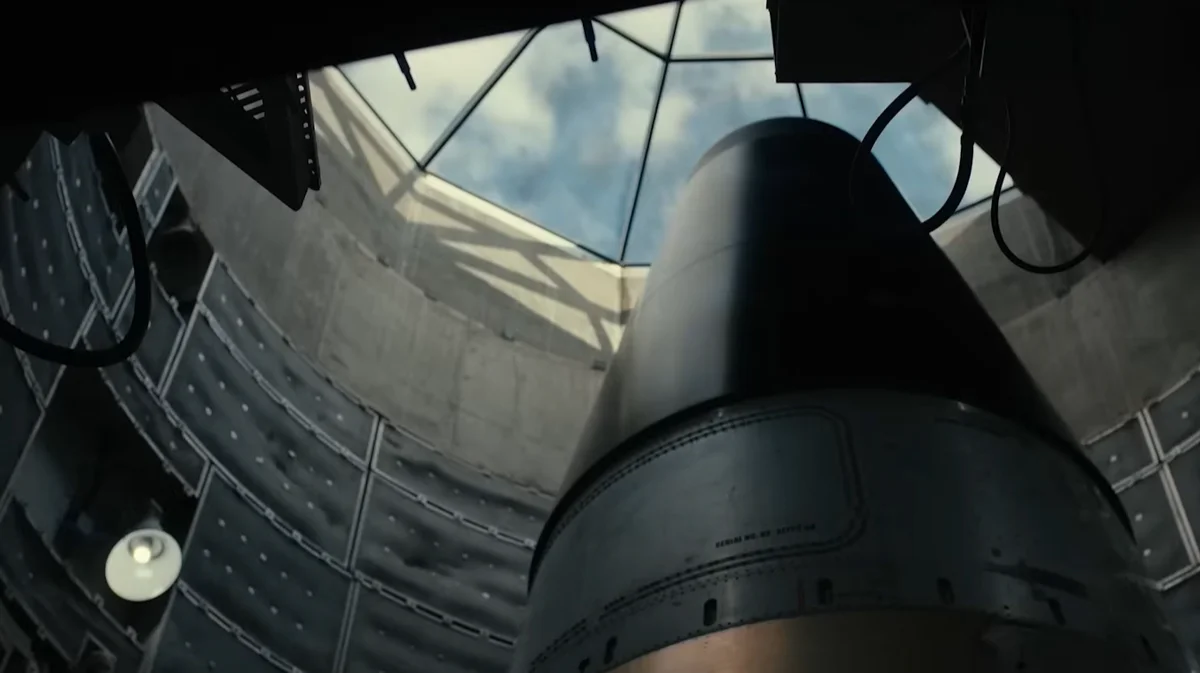
On January 28, 1992, speaking to Congress with the annual message, the 41st US President George Bush Sr. said that communism had died, and America won the Cold War with God's help. But the documentary series, which was published on Netflix in mid-March 2024, telling about that very cold war, begins with NATO tank exercises in the fields and in the forests of Lithuania, next to the Belarusian border, in 2022. It turns out that the Cold War continues? So believes one of the experts of the series, Columnist The Atlantic and Honorary Professor of the US Naval Academy Tom Nichols:
“If the Cold War is a state of conflict in which we do not conduct direct military operations with an enemy with nuclear weapons, but we remain enemies, then we have a new cold war with the Russians,” says Nichols.
The next frame: Mother Mother's hands raising his hands with a shield and a sword over the lit dawn sun Dneprom. Kyiv. February 2022. World television channels are transmitting news about the tightening of Russian military equipment to the Ukrainian border.
The action of the series does not begin chronologically, with the Potsdam conference and the signing of the Parisian agreements, and here and now, during the invasion of Russia to Ukraine. It does not dwell on the “death of communism” and the collapse of the country, which was called the “Soviet Union”. In an interview with CBS News, the director of the series Brian Nappenberger says that he and his team have been studying for two months in what condition the nuclear arsenals of the world powers are currently located: when February 24th and the full -scale invasion of Russia in Ukraine began. It was this that determined the point of entry and the exit of the narrative - in modern Ukraine.
The nine-hour fabric of Nappenberger (the series requires strength and exposure, each series goes for more than an hour) performs essentially the same task as the main battle around the 90s-“traitors” of the FBK and Maria singers. It only does this at a different depth: touching both the Holodomor, and collectivization, and even the October Revolution of 1917, to answer the question "how the world was at the point and time where we are now." Or, the words of the American historian Timothy Naftali: "Without knowing the Cold War, it is impossible to understand Vladimir Putin." As in the series of FBK, they say about the collateral auctions and corruption of the Yeltsin time: a whole series is dedicated to it, and Mikhail Khodorkovsky acts as one of the experts. In addition to him, Ekaterina Kutrikadze, Mikhail Zygar, David belt and Michael McFoll talk about the events of the nineties, zero and tenths. But the 90s and the beginning of the new century are only the last chapters. The creators of the series are not too interested in how the oligarchs plundered Russia, and Putin came to power by the methods of terror and intimidation (although we will be shown personnel, where the young Patrushev tells about bags with “Ryazan sugar”).
These are a chronicle of events, and they, important for the inhabitants of one sixth of the land, become in a row with the tragedies and triumphs of other countries built in calendar chronology.
Spectators see the scale of history and the scale of people: protesting in Soviet Poland, protesting in Berlin and Leipzig in the GDR, protesting and executed for protest on Tiananmen Square in Beijing, protesting in still Soviet Vilnius, in August Moscow, in Khreshchatyk. But at the same time as the struggle for freedom, the other side is shown: the expansive side of the force holding the finger on the nuclear button.
The series was made by the American production company Nappenberger and his partners, funded by Netflix. The American lens, but to say that the Americans are shown by good guys, and the Soviet, red communist world - embodied evil, is impossible. Here, both sides embody evil, expressed in neglect of ordinary people, including their own people.
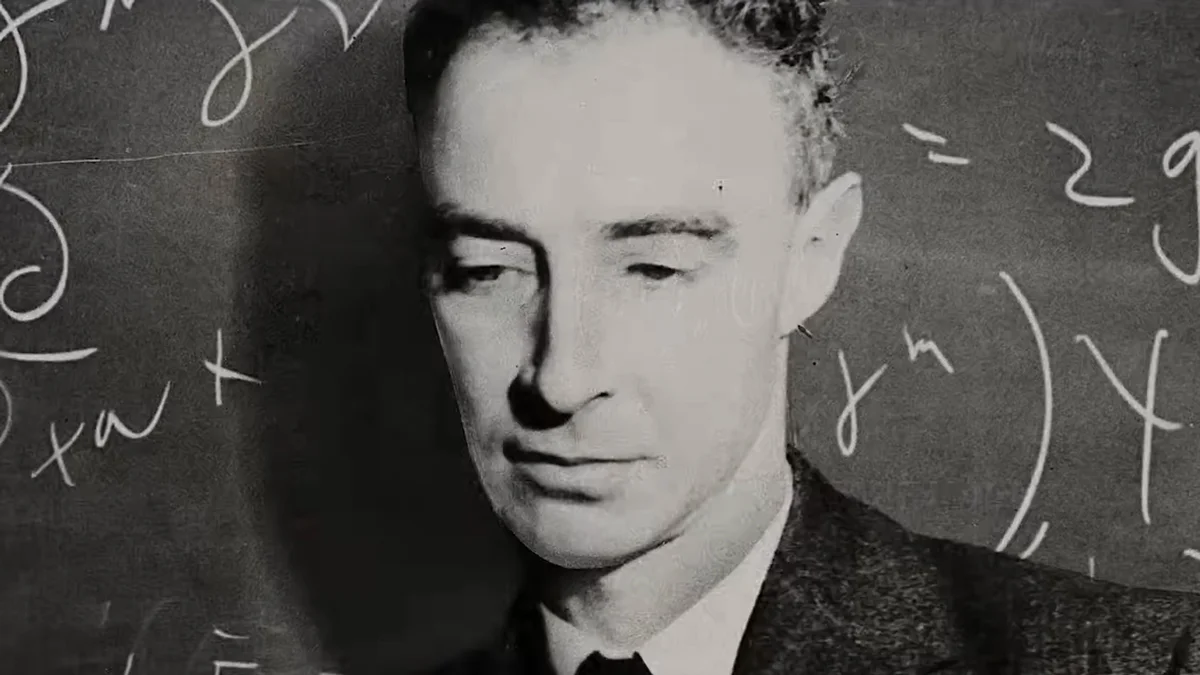
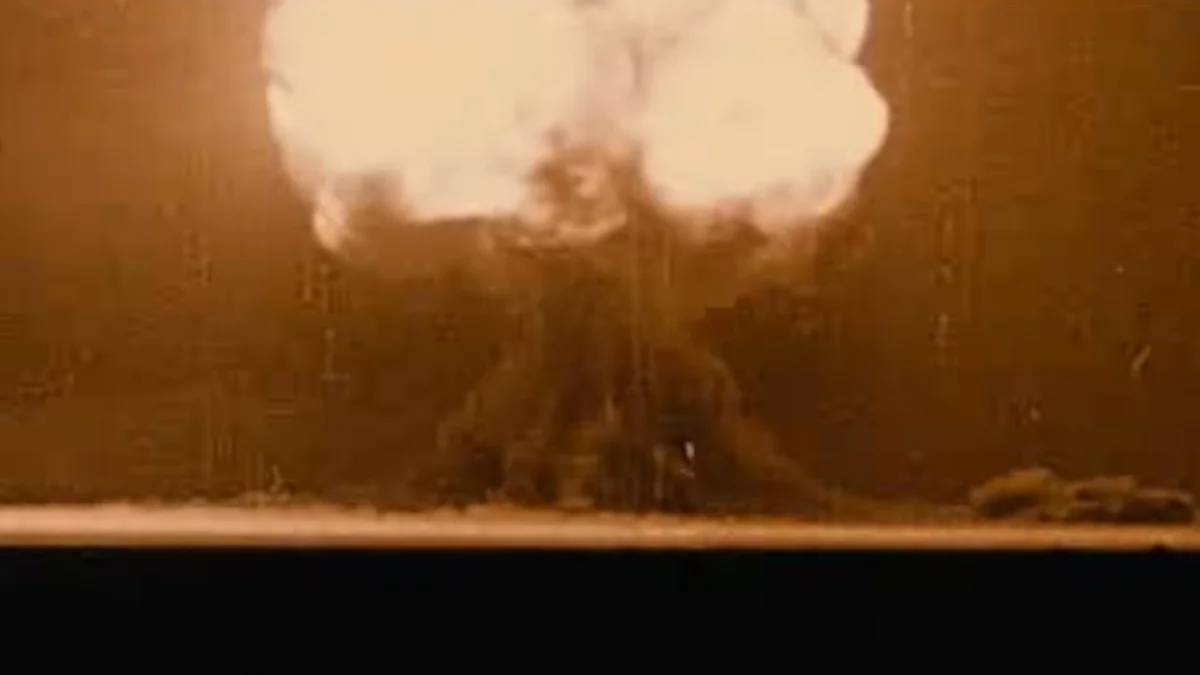
The first series of the "atomic bomb" expands the space of the "Oppenheimer" Christopher Nolan. A week after the scientists opened that the atom can be split, Oppenheimer developed the outline of the atomic bomb. Nolan's film showed in detail the nervous race of ambitious scientists and the military with the main goal - to get ahead of Nazi Germany. But he did not talk about the victims of tests in the United States themselves and did not show what happened to people in Hiroshima and Nagasaki after the explosion. The series - and Nappenberger speaks of this with particular pride - gives an interview with the atomic bomb surviving after the explosion, witnesses of the disaster (at that time - small children). This series lasts as a full -length film, twenty -hour, and there is an expert that calls America’s actions a war crime, and an expert who argues why it was justified to drop a bomb on densely populated cities without large military enterprises.
The series covers the Caribbean crisis in detail. Today, he begins to be perceived not as an inverted page of history, but with a sense of horror from a disaster, capable of literally, in direct conditionally, destroy the world (as we know it).
The landing in the Gulf of Pigs and a failed coup in Cuba, the construction of the Berlin wall and its crash - how much pain, life and acute emotions in events perceived by lines from the textbook.
The nuclear tests of America, their plans and the development of scenarios of nuclear war with Russia and China, which included the assessment of the victims, starting from 275 million people (and this is before the precipitation of nuclear precipitation) also amaze. On the Web you can find many negative reviews on the series that are indignant, for example, that “participation of Victoria Nuland in the events of Euromaidan” is not shown, but such claims are more likely to issue Russian bots. The US government in the series of Nappenberger is a cold -blooded manipulation machine, and the CIA is almost the main apparatus that organizes coups in Latin America and the Middle East and send agents to all corners of the world. Daniel Ellsberg, a military analyst, economist and activist who declassified the Pentagon's documents in 1971, says that Stanley Kubrick’s film “Dr. Streinzhlav, or how I stopped worried and fell in love with an atomic bomb”-a satire about bloodthirsty politicians starting a nuclear war-looks like a documentary for him.
But, as Nappenberger says in the CBS podcast, at that time the threat was always felt as a threat, and now we are observing the host of state Russian television, which tells how easy it is to bomb London “Sarmatians” and erase it from the face of the earth. We all know the name of this presenter. The everyday life of such statements is shocking the director.
Of the pleasant surprises of the series for spectators from Russia, two should be noted. Firstly, it was clearly said that Khrushchev agreed to withdraw missiles from Cuba in exchange for a similar act of Americans in Turkey, where their bases are located, which, although it is publicly available information, is not known to everyone. Secondly, the figure of Mikhail Gorbachev in the series is shown through the eyes of Europeans, first of all, the inhabitants of East Germany: this helps to understand his image and significance in the West, and also-how different from how they perceive the first and only president of the USSR in post-Soviet Russia. Gorbachev in the series is not a weak politician who forbade alcohol, who eventually ruined the USSR and starred in an advertisement “Pizza Khat”, and a reformer young and open to dialogue. It is contrasted with an anachronous honekker, and the silence of Moscow during the collapse of the Berlin wall is shown as a courageous gesture of goodwill.
Only one KGB officer in Dresden was perceived differently: as a weakness and betrayal of national interests.
Politicians, researchers and journalists, witnesses and participants in the most important historical events - Napperberger and his team interviewed not only from Hiroshima and Nagasaki, not only from the people from East Berlin, who were the first to cross the wall on November 9, 1989 (one of them calls this day the happiest in their lives), but also from politicians and intellectuals. Historian Anne Applebaum tells about the Holodomor. Estonian Prime Minister Kaya Kallas recalls a trip with his father to East Berlin. Former US Secretary of State Kondoliza Rice reports that the legendary phrase of George Bush Jr. that he saw “soul” in the eyes of Vladimir Putin was not “naivety”. Ex-President of Ukraine Viktor Yushchenko talks about poisoning. “It just so happened that I am the president, so I will just fulfill my duties,” says the current president of Ukraine Volodymyr Zelensky in the last series. The only one that Nappenberger could not persuade for an interview was Hillary Clinton.
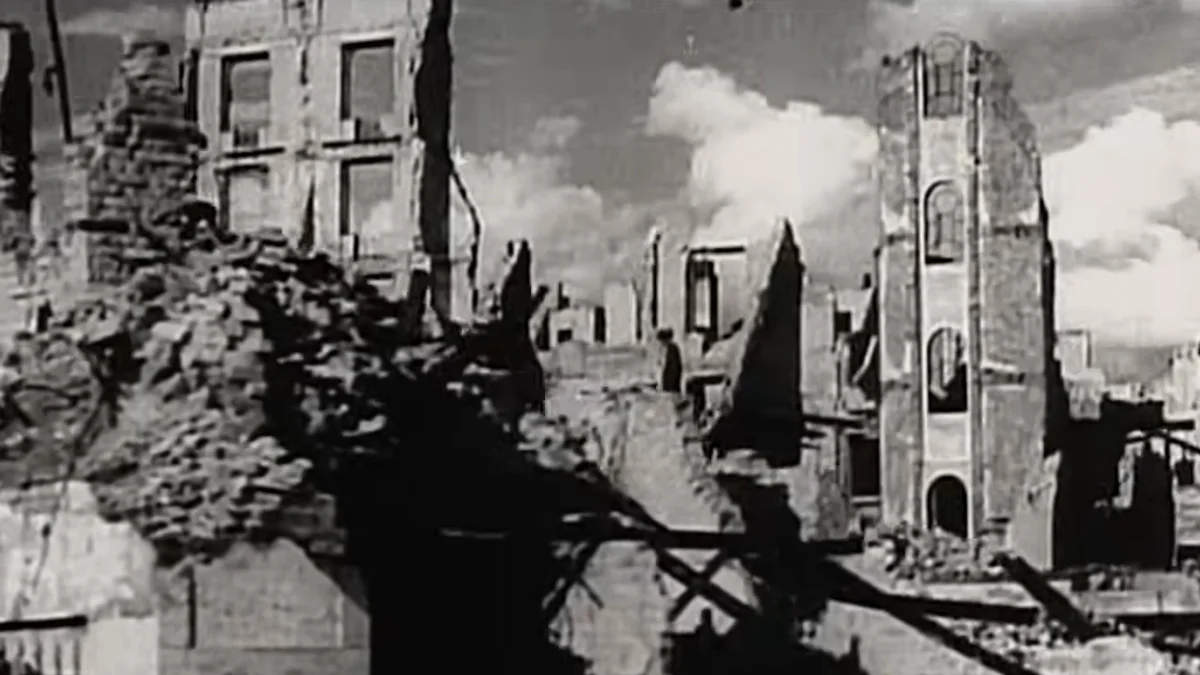
Discussing the results of the completed Cannes Film Festival at Stream at Evgeny Kiselev, producer Alexander Rodnyansky said that the war in Ukraine imposes on everyone, filmmakers and spectators, special demands: “We must speak on topics that somehow explain the war, concern war and can reveal [something new] in our ideas about what Russia has turned into and how it turned into this turned into this turning Walked. " Nine hours of the “atomic bomb and the Cold War” of Nappenberger fully comply with this criterion.
Outline series:
The 1st series “The Great Sun has risen” : the Manhattan project, nuclear trials, the confrontation of Japan and the USA, victims of explosions dropped on Hiroshima and Nagasaki atomic bombs.The 2nd series “Poisoning the Earth” : the formation of the early USSR: repression, Holodomor, collectivization. According to the results of the Second World War, the world is divided into eastern and Western blocs, the United States perceives the USSR as an ideological enemy, the hunt for the “Reds” begins. The case of Rosenbergs. "Witch Hunting" in Hollywood. McCartism.
3rd series "Institutional madness" : a race of weapons between the USA and the USSR. America begins thermonuclear trials. CIA introduces agents and intervenes in political processes around the world. The overthrow of the Mosaddyk regime in Iran.
The 4th series “Wall” : in 1961, the construction of the Berlin Wall began, in 1962 the USSR was transferring missiles to Cuba, the United States was subjected to the island of the blockade. 13 days of the Caribbean crisis.
The 5th series “Military Games” : the time of Brezhnev and Reagan, the USSR is shot down by the Korean passenger aircraft, Gorbachev at the age of 52 becomes general secretary of the Central Committee of the party. Chernobyl.
The 6th Empire is insolvent : national liberation movements in the Eastern Bloc are shaking the Soviet Union. The fall of the Berlin wall. Conclusion in Foros and Belovezhskaya Pushcha.
7th series "End of history" : Yeltsin's coming to power. The first Chechen war. 1990s.
The 8th series “Moscow will not be silent” : the end of the Yeltsin era, the 2000s, Vladimir Putin becomes president, the second Chechen war, explosions of houses, the formation of a new ideology.
The 9th series “Shri did not die” : Putin’s speech at the World Safety Conference in Munich. Russia makes invasions of Georgia and Ukraine. Annexation of Crimea. February 24. The nuclear threat remains.