
Translated material
The nanny is dear
Novyevropa recalls the cult series of the mid-2000s, in which Anastasia Zavorotnyuk played a major role
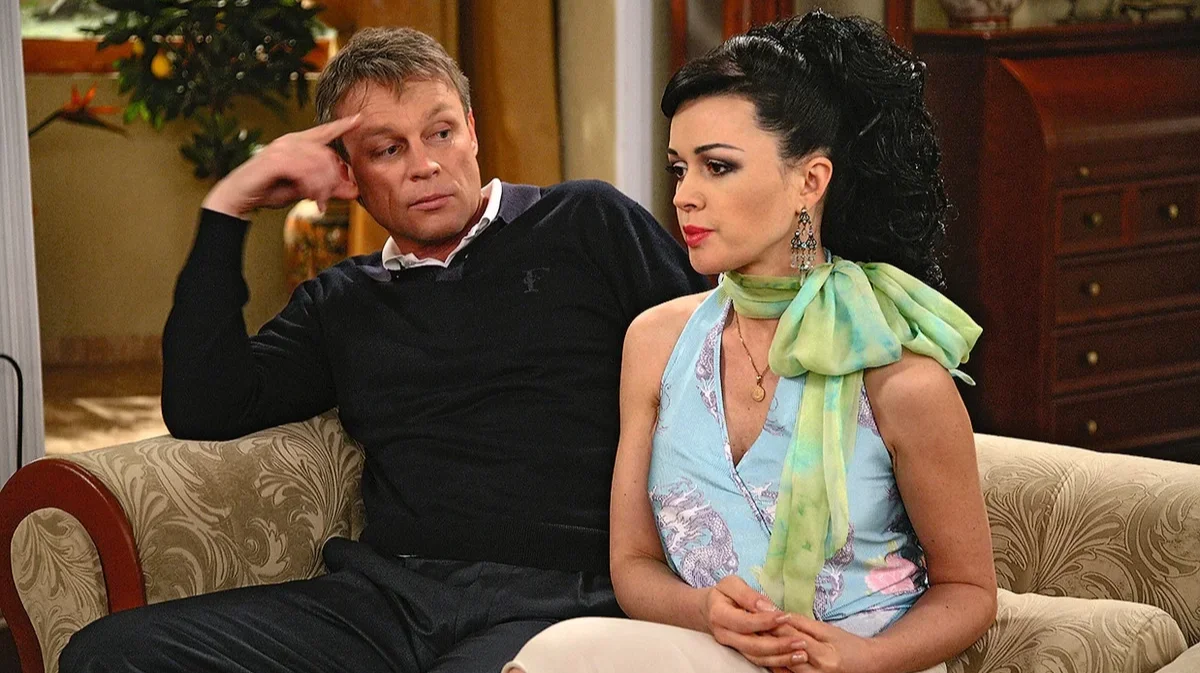
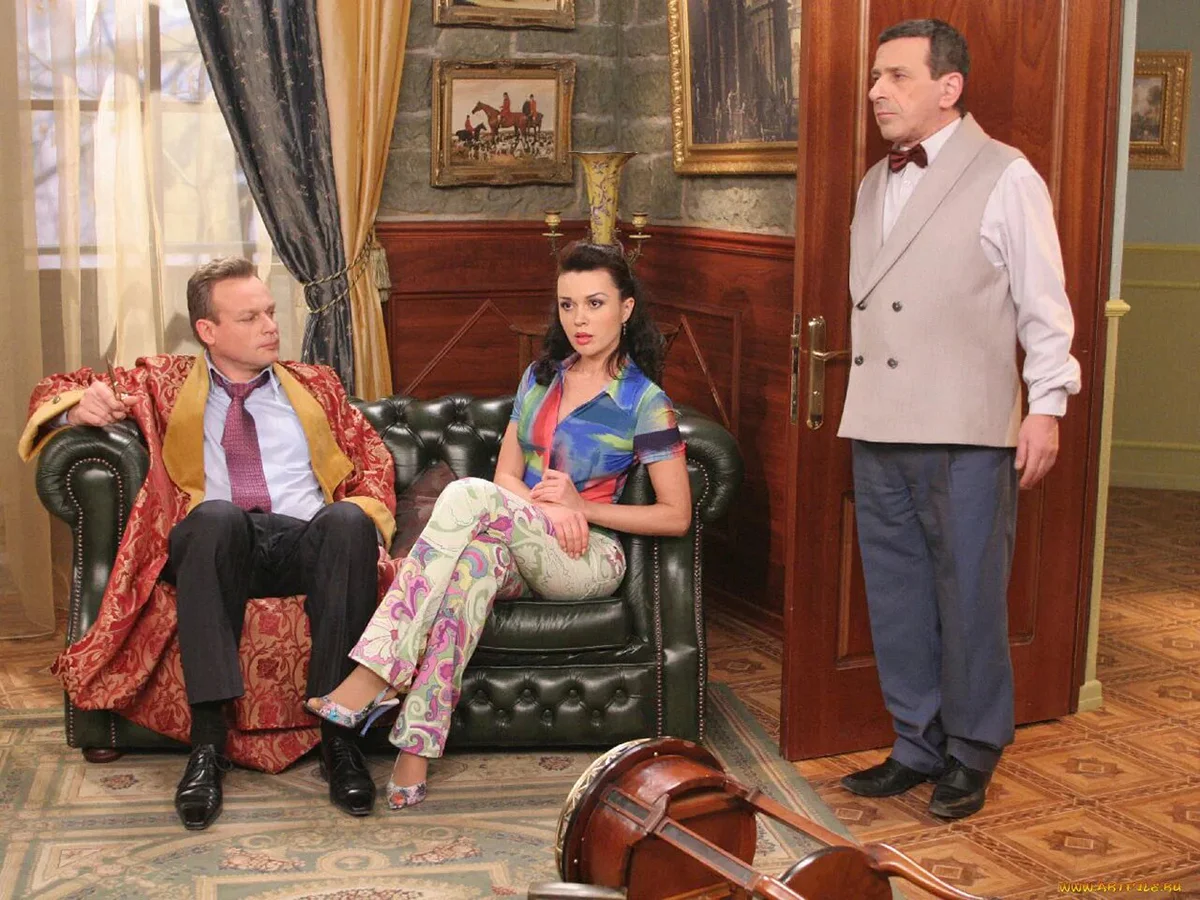
Sergey Zhigunov and Anastasia Zavorotnyuk in the series “My Beautiful Nanny”. Shot from the series / kinopoisk.ru
After a long illness in the 54th year of life, Anastasia Zavorotnyuk died, an actress, who became known after the role of Nanny Vicki in “My Beautiful Nanny”.
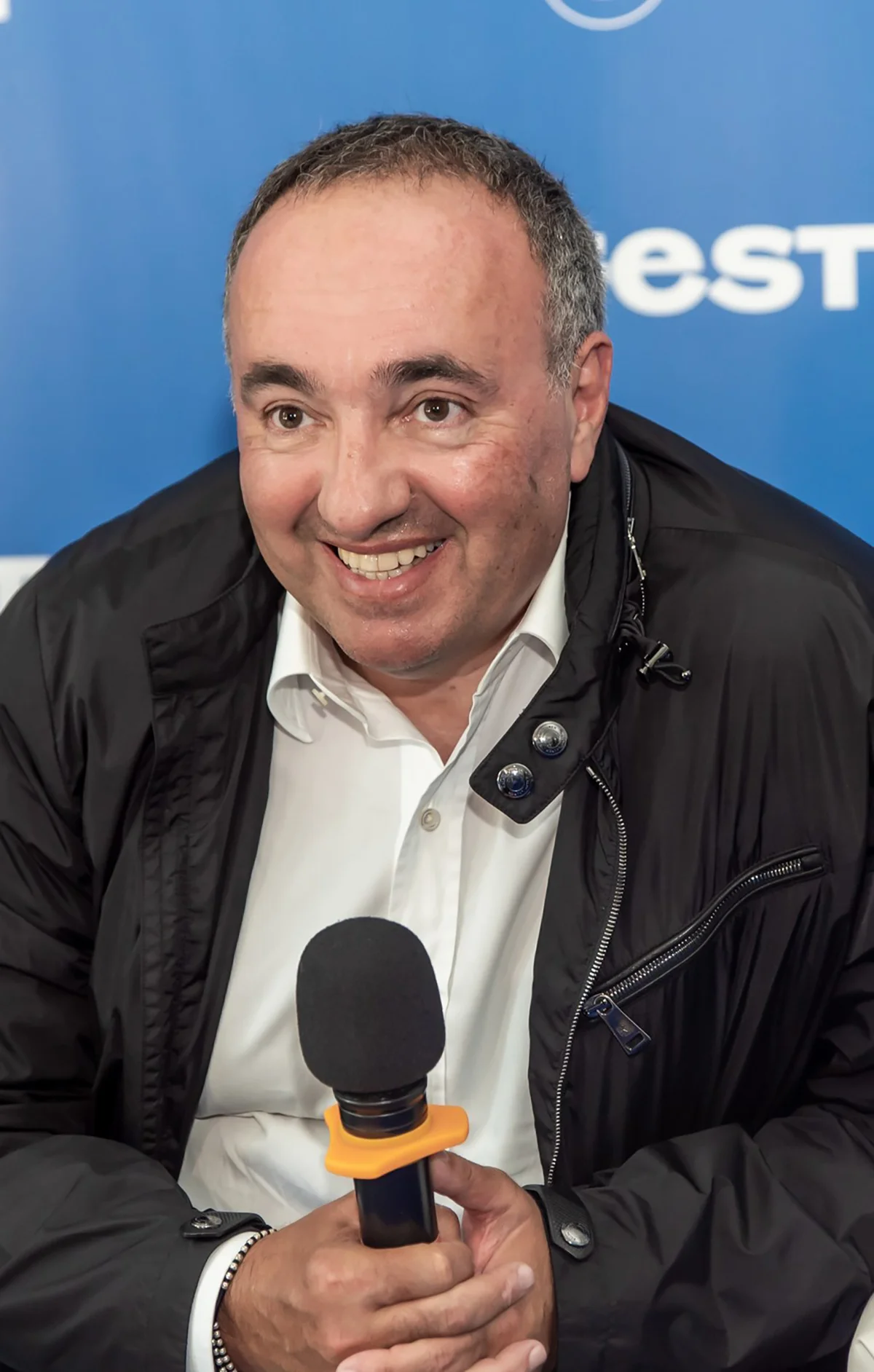
One of the creators of the series, producer Alexander Rodnyansky wrote that the actress and her work in the Nanny became a symbol of childhood for an entire generation: “I will not list her roles in the theater and cinema. She remained “nanny wika” for many millions of people. And they will remember her like that. ” The actress herself also recalled that it was the role of Nanny Vicki that became a turning point in her career. During the filming of the last episode, Zavorotnyuk said: “I came here [to the casting of“ my beautiful nanny ”] went an actress, who, in principle, is not very needed in the theater, with the question of whether it is worth staying in the profession, maybe it is worth changing something? Today I will close it. On the one hand, it is joyful that another life begins, a rehearsal of new projects, everything is fine. On the other hand, there are tearful eyes, because I am scared to part with our group. They taught me, they helped me, put me on my feet ... ”But the turning point was not only for the actress, but also for all Russian television. The New Gazeta Europe recalls how Sitkom has become a cult in the post -Soviet space, and then “well -aged” not only in Ukraine, but also in Russia.
"Success was stunning"
The series, published in 2004, was the adaptation of the American series “Nanny” (1993–1999) - in it an extravagant Jew from Cuins with a strong accent accidentally becomes a nanny for children of the famous Broadway producer living in Manhattan. In the Russian -language version, the nanny - Victoria Prutkovskaya - was made by a Ukrainian from Mariupol, living with his family on the outskirts of Moscow, in Biryulyovo. The famous producer Maxim Shatalin (Sergey Zhigunov) lived in a two -story apartment in Tverskaya in the center of the Russian capital.
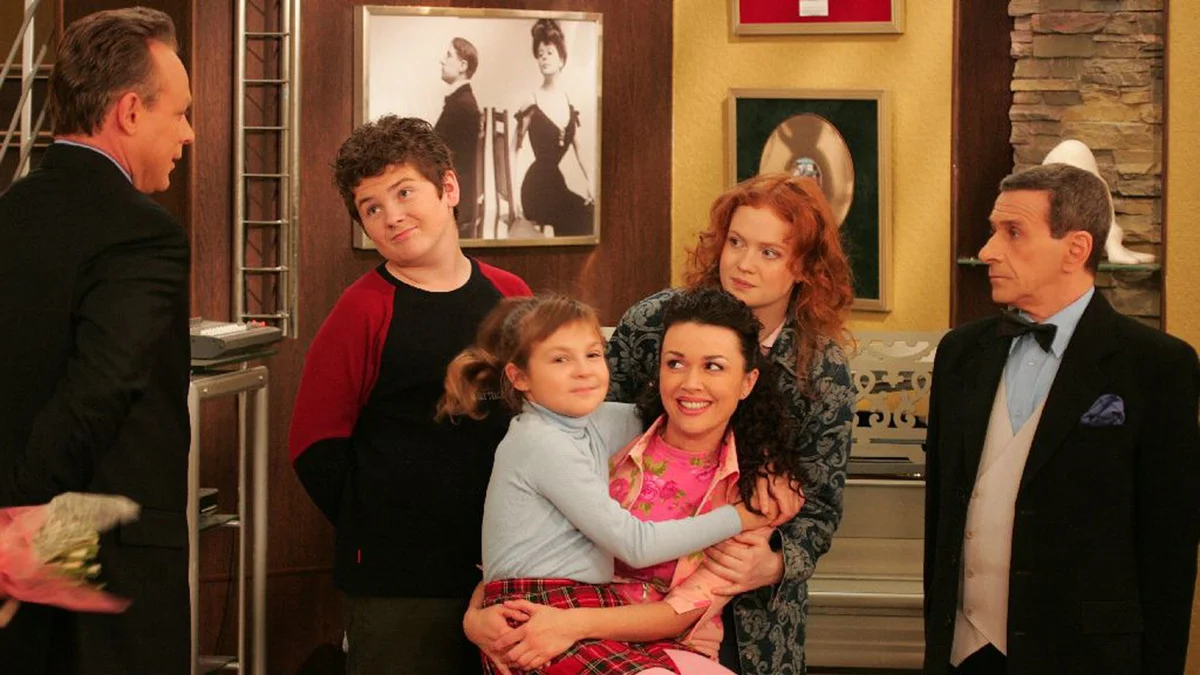
Maxim is a widower raising three children: shy Masha (Ekaterina Dubakina), Hooligan Denis (Pavel Serdyuk) and a strange Ksyusha (Irina Andreeva). Maxim even has a butler - a lover of gossip and sarcasm Konstantin (Boris Smolkin), as well as a partner (Sha) by business - Zhanna Arkadyevna Izhevskaya (Olga Prokofieva), which has long and unrequitedly in love with Shatalina himself.
The confrontation between Jeanne and Constantine is one of the most important plot lines of the series: they constantly play and tease each other, and in the end, of course, admit their feelings and decide to get married.
A loud and direct mother of Vicki (Lyubov Polishchuk) and the extravagant grandmother Nadia (Alexander Nazarova), as well as invited stars, often appear in the House of Shatalanins: both in the role of themselves and playing original characters.
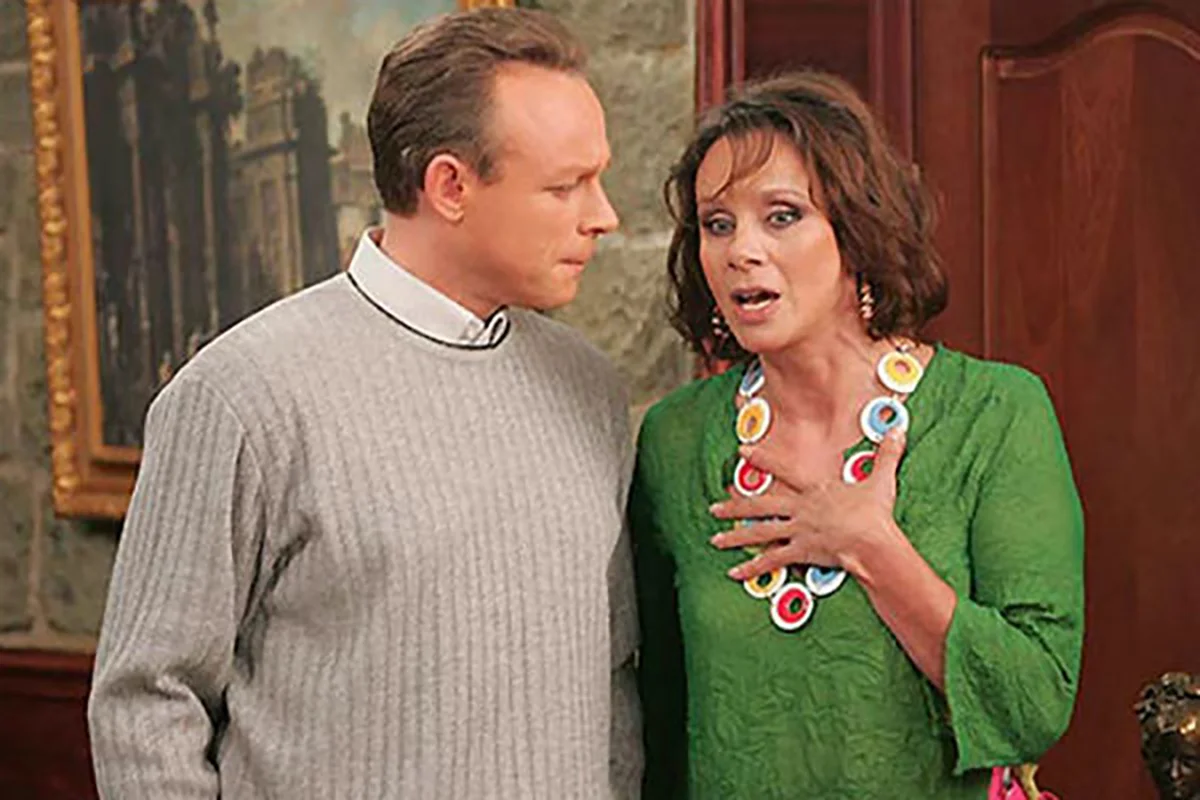
The number of stars appearing in the sitcom grew along with the rating. Among them were: Dmitry Malikov, the Prime Minister Group, Red from Ivanushki Andrei Grigoryev-Apollonov, Fedor Bondarchuk, Sergey Penkin, Alexander Peskov, Armen Dzhigarkhanyan, Tatyana Lazarev, Mikhail Shatz, Tarzan and Natasha Koroleva, Alexander Tsekalov and Philip Kirkorov.
“The success was stunning. Some incredible. Absolutely popular. In Russia. In Ukraine. In all the former USSR. All over the world where people who understand Russian live. We looked everywhere - both in villages and in cities. Everyone watched: workers, university teachers, adults, and children, ” recalls Alexander Rodnyansky.
It was “My Beautiful Nanny” that became the first in a truly popular sitcom in Russian, after which this genre was fixed on both STS and other Russian television channels.
The creators joked that if Anastasia Zavorotnyuk had to go to the presidential election shortly after the release of the series, she would certainly won, she became so popular in two years, while the series was released.
The main plot is spinning around the relationship of Shatalin with Vika - in fact, the nanny of his children. The indecisive and avoiding love after the death of his wife Maxim almost immediately falls in love with a cheerful, charming and direct Vika, which resonates with an intelligent and stiff society in which he is used to living. For 130 episodes and six seasons, the heroes go around the bush, but Maxim does not dare to take a step and, even admitting love, immediately takes his words back.
But in one of the episodes, when Vika is going to leave, Shatalin says that he can no longer work if “someone constantly does not open the door and does not break into the office”, does not sit on the table and does not “shock” and does not “geek”. “And in general, this is for“ what? ”, The producer says in one of the series, criticizing the speech of the other heroine in favor of Vika.
Series in two days
The first six seasons of the series were shown with speed unusual for modern cinema and television production: the first series was released on September 27, 2004, and the last, 133rd-October 12, 2006. The actors complained about the frantic rhythm of filming and the inability to combine real life with the need to live almost around the clock in the pavilions “without fresh air and rays of light”.
“It was necessary to rehearse, rehearse, rehearse and then only start shooting. This lightness [in the frame] is achieved only in this way, ” said Olga Prokofieva.
Producer Alexander Akopov said that the American series was shot, spending six days on a series, while the shooting of the series took only two days. “In America, they are completely wrong in America,” the creative producer Konstantin Naumochkin agreed. - They shoot one series for a week, put it on the air once a week, shoot only 24 episodes a year, and then for six months they go to the islands, bathe, sunbathe and spend a lot of money that they receive for their work. ”
The director-winner Alexei Kiryushchenko admitted that he was waiting for him to "die, fall or lose consciousness." The first 2-3 months, members of the film crew did not get enough sleep, and many have started health problems.
“The Americans who were present on the set were surprised,” Kiryushchenko recalled.
“They remove everything from two takes, and the fact that we had new reactions and emotions after 15 duplicate, the actors could still perceive something directly, it was a shock for them.”
As in the American version, the series telling about the life of a couple after the wedding, they no longer had such success. In 2006, the sixth season was released, at the end of which Vika and Maxim finally got married. Then the creators said that they would not repeat the mistake of Western colleagues and take off the sequel. Nevertheless, in 2008 the seventh season was released, which did not become equally popular. The main plot was no longer (about) romantic relations of Vika and Maxim, but their move to Rublevka and attempts to have a child.
In the new season, there was no one of the brighter heroines - Mom Vika Lyubov Grigoryevna, since Lyubov Polishchuk, who played her, died shortly after the end of the filming. Lyubov Grigoryevna was remembered by the audience with a loud voice, a bright accent, love of delicious (often Ukrainian) food and attempts to sit on a diet, shocking outfits and behavior, as well as constant experiences because of her daughter’s age and her husband. Her "Ne Mamkai!" She became the hallmark of the series. Mom was “replaced” by the father of Vicki (Alexander Filippenko), who had previously remained in the series behind the scenes, but he could not become the same “folk” character.
"Find out"
They tried to make a Georgian, Armenian and the Baltic States from Vicki, since the original series had many jokes related to the accent, the creators of the series said in 2006. The Ukrainian decided to stop due to the fact that the series was going to broadcast on the Ukrainian television channel 1+1, Rodnyansky recalled in an interview with Irina Shikhman: "Everything that we produced then was in two markets." According to him, if not for this, then Vika could become a provincial girl from any Russian region, and "nothing would have changed."
But in the end, Vika, like her mother, had a pronounced Ukrainian accent: she says “sho” and “he”, distorting the Russian language and constantly pronounces “find out” and “mother dear”. Anastasia Zavorotnyuk said that the nanny approved such an emphasis when the actress was able to demonstrate to American producers (who controlled the course of work on adaptation), how the character and “sound presentation” of the character, talking on Surzhik, changes.
Answering Shikhman's question why they didn’t make a girl from the Russian hinterland, and the musical producer - a resident of the center of Kyiv, Rodnyansky indicates, in this case the heroes would have to speak in Ukrainian. This would be possible if the main customer was the Ukrainian channel, not Russian: “Therefore, we did it in such a way that it somehow united the audience.”
In addition to the emphasis, among the distinctive features of Vika there were her bright appearance with scarlet outfits and screaming makeup (she especially contrasted with elegant janan), a loud voice, experiences due to age, desperate attempts to find a husband, a large number of (often annoying) relatives and enormous appetite. All this was also taken and adapted from the American version.
At the same time, the creators of the Russian said that many jokes and situations could not be adapted: they had to be rewritten almost completely, since they did not go to the Russian context at all.
So, in the American version there were many jokes on religious topics, because the Jewish family is located in the center of the plot.
In one of the series, humor is built on the fact that the main character eats a pork hamburger in the synagogue, the creators of the Russian adaptation recalled. According to them, humor about the Orthodox Church was "absolutely meaningless." At the same time, another food product often appears in the series, which also confuses the heroes, but not because of the religious connotation, but because of the smell and inappropriateness of its consumption in official techniques. It is, of course, about Sal.
The producers also did not imagine how to adapt a large amount of black humor for a light family picture. For example, in the United States, the ex-boyfriend of the nanny dies in one of the series, and she goes to the funeral. The creators of the adaptation “difficult to imagine such a situation”, playfully told by the Russian viewer. Instead, in the domestic series there was an episode in which Vicki's mother introduces her daughter to a “promising groom” - a tomb, who, as it turned out, dreams of working a clown. And if Vika could still come to terms with the “gloomy” side of the life of the potential husband, then the new profession was too much for her.
The children watched the series, and had to abandon the jokes “below the waist”, although some hints remained. According to the creators, the audience was unhappy that they had to explain obscene jokes to the children: for example, why all the heroes were embarrassed when Baba Nadia offered to kiss the place that fell ill with the son of Shatalin Denis after the football ball got between his legs.
Scandals
After the full -scale invasion of Russia to Ukraine, the series began to be criticized for manifestations of imperial thinking of Russians, ridicule the manner of speech of the main character, its non -education and “low social status”, shown against the background of a successful Moscow producer.
A derogatory attitude to the motherland (Mariupol is a place where the heroine is afraid to return, and among her fellow countrymen there is criminal authority and a nurse, who does not know which side the heart is on) and attempts to become a “Maskvichka” really look at least inappropriate today. There were various political jokes in the show: say, references to the Orange Revolution. “In Ukraine, orange is now in fashion”, one of the heroines needs an embroidery - “either on the holiday of the accession of Ukraine, or disconnection”, “hide [cigarettes], until the dad has come out. You know, I still want to live, find out how the case ended in Ukraine, ”“ I have a savings bank in Mariupol. That's right, Nadezhda Mikhailovna, Ukraine now needs your investment more than ever. ” Commented on the situation with gas (“Vika, you steal things in stores like Ukraine of Russian gas”), and numerous approving statements towards Putin also sounded.
The producer of Rodnyansky - a citizen of Ukraine and the critic of the Putin regime who stopped working in Russia after February 24, - in the same interview , Shikhman notes that the “nanny” is the most criticized and hated project of those that he did. In his opinion, focusing on the negative aspects of the image of Vika and jokes, critics forget that in fact the Prutkovskaya is the most intelligent and most charming, the most disposable, who fell in love with the whole audience and the Moscow producer, and conquering this world “completely and finally”.
Many commentators also agree with Rodnyansky (though it seems, most of them are Russians) under the plot of the Rain television channel dedicated to the scandal with the series in Ukraine.
Many write that they have never seen a negative heroine in the nanny, on the contrary, she was an example to follow in childhood.
And by origin, many perceive it more as a “resident of Biryulevo” (which is also sung in the title song of the series) than Mariupol.
In the post dedicated to the death of Zavorotnyuk, Rodnyansky calls her heroine “witty, charming and winning Ukrainian”, while Shatalina is “an indecisive and successful Muscovite who does not go beyond the garden ring”.
Rodnyansky notes that the series was successful both in Ukraine and in Russia: "He defeated everyone and everything." However, after the conflict began and a new generation has already grown in Ukraine, for which everything related to Russia causes a negative reaction.
“People react painfully when they see the character of the Ukrainian character not in the form in which they themselves want. <...> The same thing said about “Leviathan” ( the film by Andrei Zvyagintsev, who produced Rodnyansky. - Approx. Ed. ): That the Russian people [actually] do not drink. But I do not accept such claims, I understand them psychologically, but I don’t accept them, ”says the producer.
The symbol of the era
In 2024, the series would hardly have arranged the Russian authorities. And the point is not that the screen shows a love line between the Russian and the Ukrainian. Jokes about Ukraine are really perceived differently: more acute and inappropriate, they, as they say, "greed down badly."
Having reviewed the series a few months ago, the author of this material noted that in fact there are not so many direct jokes about Ukraine for all six seasons (unless, of course, Vicki’s appearance is attributed to the “ridicule” of Ukrainians).
It is surprising, however, that the heroes of the show do not live in the vacuum of a lacquered TV series, as the characters of the current Russian comedies, but constantly make references to events from real life-including socio-political. The heroes of the series are discussing the scandal between Philip Kirkorov and the journalist in the “Pink Boker” (by the way, the singer himself appears in this series), they talk about voting in the elections, mention the problems of salaries, taxes and pensions (“Have you already chosen a cumulative fund? In vain, the word is still a word, and I will pay him a black cash salary”).
The series also mentions the Russian president. But here, however, everything is stable - mentioned with aspiration. Although some jokes about Putin were born out of attempts to adapt the American show. In the first series, when trying to get a job at the famous producer from the nanny, they ask for a resume. She quickly writes him with lipstick, and her potential employer attracts one point:
-Did you work for the Queen Mother (Queen Mother)?
- No, we are talking about my mother from Queens (Mother from Queens).
In the Russian version, the joke sounds like this:
- You are among the guarantors mention GDP from St. Petersburg, are you familiar with?
- How can I not know my daddy.
- Is he your father?
- Well, yes, I was born in St. Petersburg: Vladimir Vladimirovich Drutkovsky.
In the series there are also LGBT characters, the heroes are not shy in smoke in the frame, without any smashing of the rainbow and squeezing cigarettes. Journalists ask Shatalin how he relates to same -sex love, in magazines they print articles with the name “100 signs, how to recognize gay”, and one of the heroes is a “real man”, who really likes the “courageous” group “Lube”, flirts with Konstantin.
And if you look at the series with such eyes, it becomes clear: this is not so much the product of “imperial thinking” (according to some of the critics who became one of the reasons for the current war), but, on the contrary, a monument of time to the departed. In which, between the Ukrainian and the Russians, love eventually won.