
Translated material
"A shot - and there is no single space." Translator Mark Belorusets
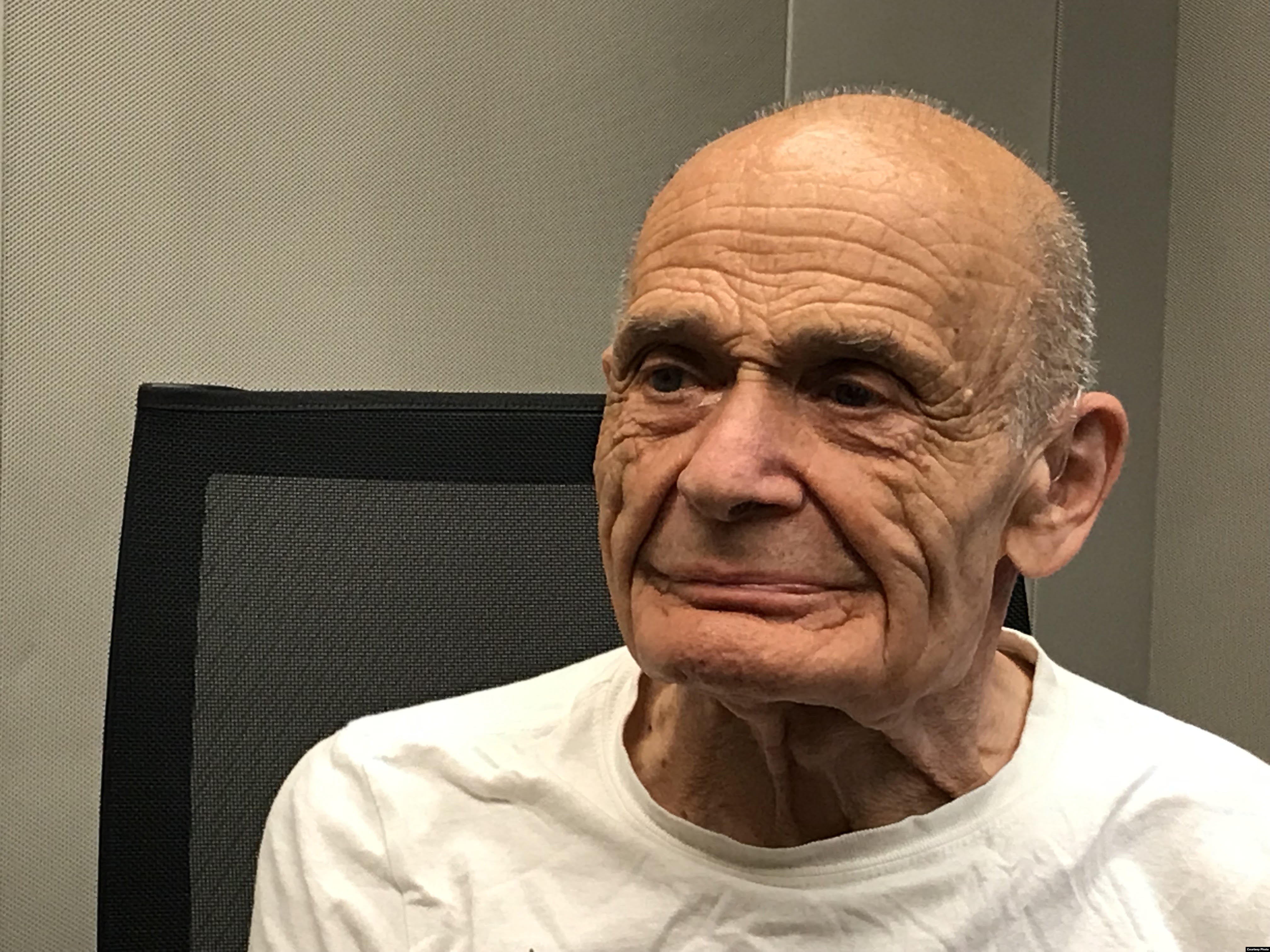
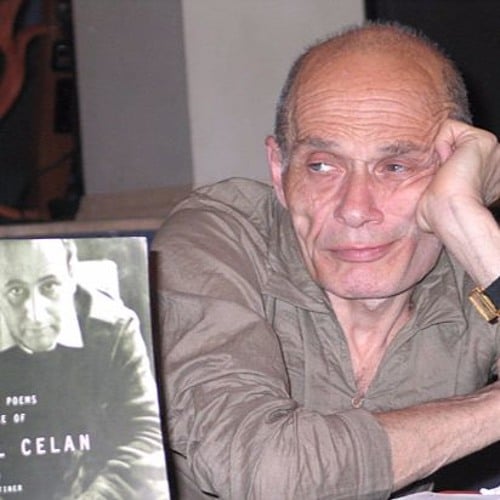
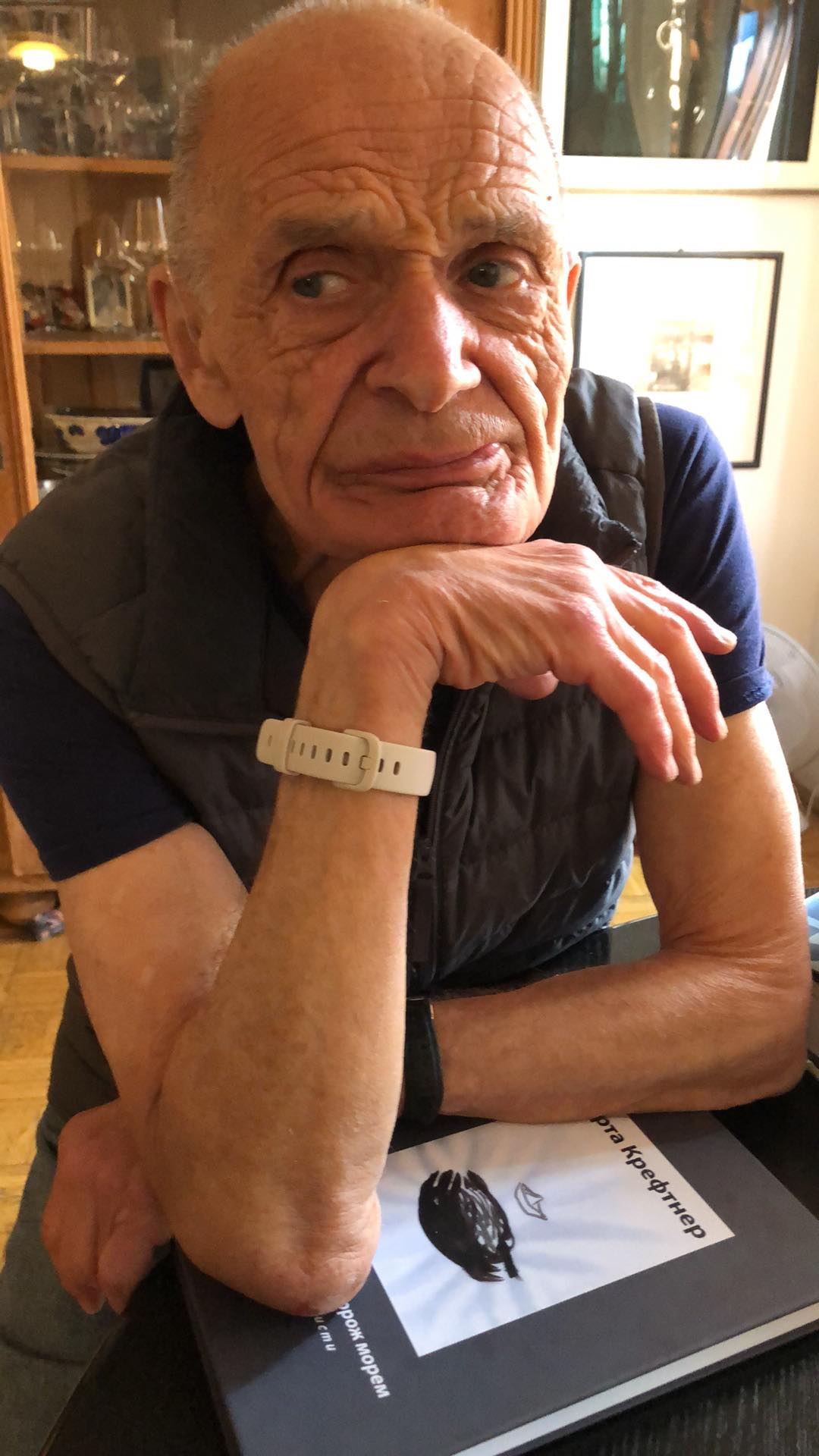
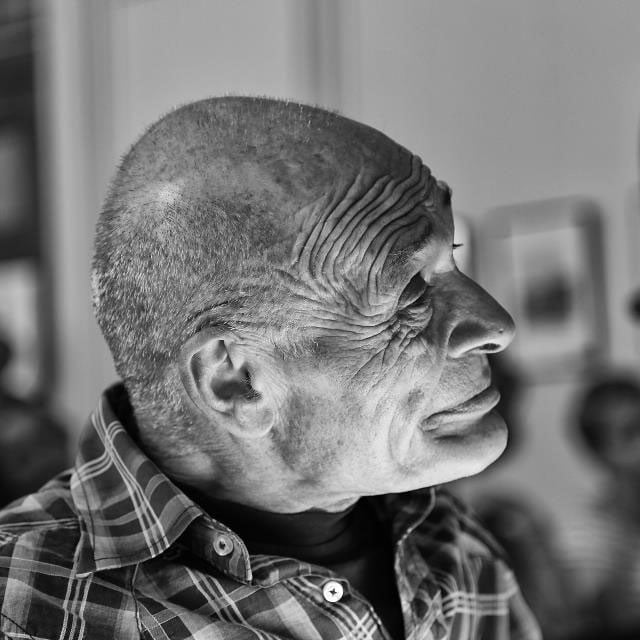
Our guest is the Kyiv translator of German literature, now living in Berlin, Mark Belorusets

How to bypass the blocking?
read >Igor Pomerantsev: Mark, let’s remember the mid-70s, Kiev. I remember that hundreds of pages of samizdat passed through your hands and you even exchanged samizdat. Moreover, it was not only Moscow samizdat - it was also Ukrainian. I remember you read Ivan Dziuba’s “On Russification”, you read the poems of Igor Kalynets, Vasyl Stus. These people, I’m talking about you first of all, and maybe partly about myself, were called internal emigration. What kind of abroad is this - internal emigration? How, for example, did Kyiv internal emigration differ from Moscow?
Our guest is the Kyiv translator of German literature, now living in Berlin, Mark Belorusets
Mark Belorusets: Internal emigration is a foreign country where there are very flexible and very vague borders, through which it is easy for other forces to penetrate, say, into your foreign country. For example, the KGB can penetrate your internal emigrant space and, for example, not imprison you, as in my case, but defeat you. This distinguishes it from abroad, where some borders are still stable unless a sabotage and reconnaissance group breaks through.
Who was I? I conveyed something, signed a couple of letters
As for the difference between the Moscow diaspora and the Kyiv diaspora, the difference is at least that the Moscow diaspora has the flimsiest borders, of course, but there was simply more space there then. There were “kors” there, as we said, that is, Western correspondents, and there were more people to penetrate and seize, there were more people in these foreign countries. I think it wasn’t my turn there just to take care of me. Who was I? He handed over something and signed a couple of letters. There were bigger pikes there, they were taken, starting from Kovalev, not even from Kovalev, God knows who you can start with in the Moscow crowd, the intra-emigrant crowd.
Igor Pomerantsev: Were there any national specifics?
Mark Belorusets: There was a national specificity - Ukraine, a sore spot, the Achilles heel of the Soviet Union. At that time, Ukrainian separatism was under suspicion; not only the Russian tsars, but also the first secretaries of the Central Committee dreamed of it at night. They didn't like everything.
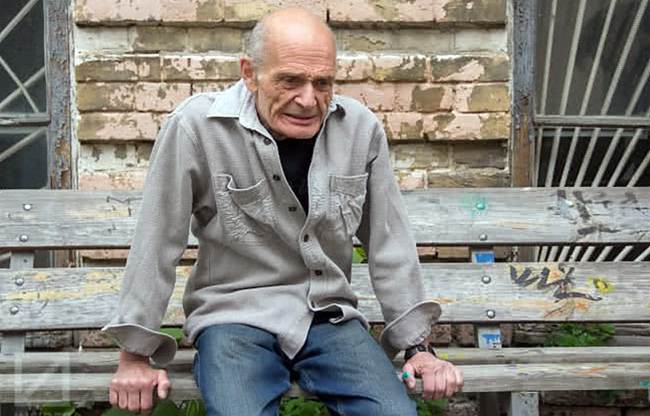
Actually, my samizdat began from two positions: the first was literary. The poetess Valentina Borisova brought to Penza, where I was studying then, Tsvetaeva’s unpublished samizdat, typewritten poems - “The Swan Camp”, a glorification of the White Guard. And my second samizdat was “Internationalism or Russification?” Ivan Mikhailovich Dzyuba. For me, a Russian-speaking Kyiv Jew, it was a discovery that there is a Ukrainian culture that is suppressed and to which I, it turns out, belong. That is, I considered myself part of it—there was nothing else I could do. This was my difference from the Moscow emigrant crowd. There were Russian nationalists there, Osipov was there, his “Veche”, in addition to the “Chronicle of Current Events”. There were a lot of different things there. In Ukraine everything was much simpler: there were general democratic movements and there was a Ukrainian democratic movement, they were still together. Of course, I was on their side, I had no other side.
Ivan Tolstoy: Mark, let me ask you an investigative question: in your internal emigration, what were the connections with external emigration? Was there mutual penetration? Have you read samizdat, did you send it, did you know people who sent samizdat abroad?
Penetration was mainly from one side - from the outside to us, into our internal emigrant abroad
Mark Belorusets: This is the right question. Penetration was mainly from one side - from the outside to us, into our internal emigrant abroad, to continue this terminology. They penetrated us, yes. I read Stus’s first poems in Tamizdat. The collection was published thanks to Anna Gorbach, who published Ukrainian literature in Frankfurt am Main. I just read Stus’s collection and received it through fifth hands.
Of course, I don’t know, someone brought, maybe her son Mark, who was captured in Kyiv, a boy, he later repented on TV, it’s unclear what. He was afraid that he would not be allowed back into Frankfurt am Main.
Various books came from there. And there - the routes were all through Moscow; little went through Kyiv, as far as I know, almost nothing. We sent some materials to the "Chronicle", materials from the camps came to Kyiv, whatever happened, we then transferred them to Moscow, where they were translated, so-called "xivs", they were twisted into small tubes. Don’t ask me where they were hidden, it’s clear where. We transferred them to Moscow, from there they went to the West. As far as I know, nothing like this went through Kyiv to the West. Maybe through Lviv, Poland is nearby, from there it was possible through Poland.
Igor Pomerantsev: Mark, you are a civil engineer by profession, but by vocation you are a Germanist and translator of German poetry. A foreign language, at least when you started your literary career in Kyiv, is a foreign language a kind of foreign language?
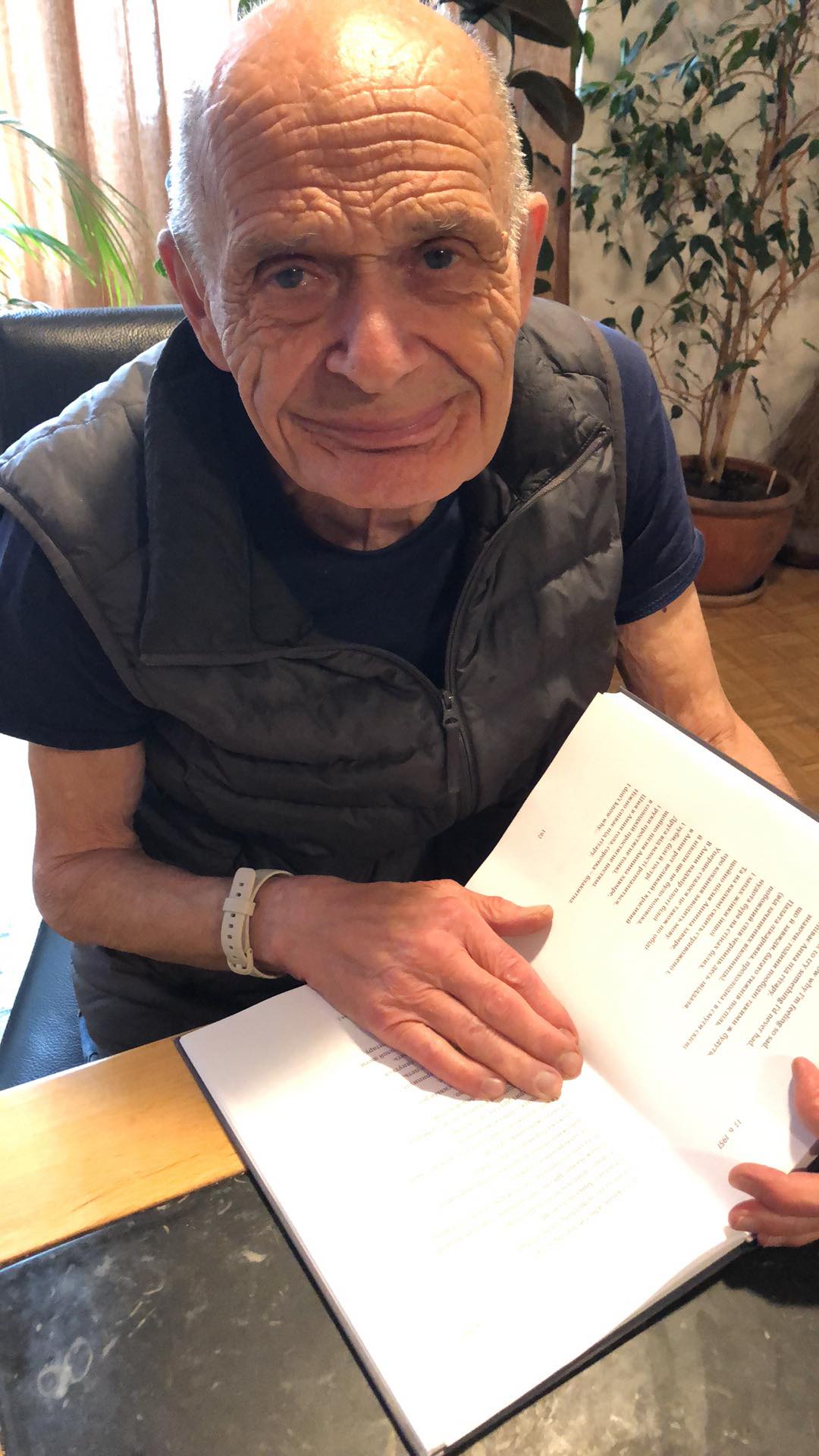
Mark Belorusets: I would not say that a foreign language is a foreign language. A foreign language is a different life, life in a different language, it’s like living differently, doing things differently. You live your life in the Russian language, in the Ukrainian language - this is one living, and you live your life or try to live it in a literary language, for example, in German - this is a different living. This language determines everything, right down to your gestures.
Igor Pomerantsev: What did you discover in Kiev thanks to the German language?
The legendary lady Rosa Solomonovna Cooper
Mark Belorusets: In Kiev, thanks to the German language, I strangely discovered a lot of things. Firstly, I discovered my German teacher at our three-year German state courses, then we became friends for life - this was the legendary lady Rosa Solomonovna Cooper. On the other hand, he came to visit her, she had extensive German acquaintances, she corresponded with Böll, a German actor came to visit her, she invited several people to listen. He read us a couple of stories by Borchert, a wonderful German poet and writer who died very early. In the year of his death, the group “47” arose; he died in 1947. He was a very significant post-war figure.
So he read Borchert to us, there were different people there, including Evgen Sverstyuk, then in Kyiv I walked along the street named after him. Dissident, literary critic, absolutely wonderful person. Then he received 7 and 5, as we used to say: 7 years in camp and 5 “on the horns,” that is, 5 years in exile. This is what I discovered in Kyiv.
We told everything about the Holodomor, won’t we be shot after?
After reading, we rode with him on the subway, returned from Rosa, we talked with him, then met again. The first time a delegation from the BBC came here, they were allowed, in 1987 he just came out, they were allowed to film about the Holodomor, Zhenya went with them. The old women told them about how it was. Then they approached Zhenya, the foreigners did not understand anything, the accompanying secretary of the district committee was also clear who they were, they approached Zhenya, he was wearing an embroidered shirt, a Ukrainian embroidered shirt, they asked him, these old women: “We told everything about the Holodomor, we told how it all happened. Tell me, won’t they shoot us after?”
Ivan Tolstoy: Mark, you said that another language is another life. Ukraine is a multilingual country. Does this mean that Ukraine lives different lives?
Mark Belorusets: Yes, even with one language, Ukraine manages to live different lives. Eastern Ukraine lives one life, because it is mainly Russian-speaking, especially large cities such as Kharkov, now almost non-existent, Mariupol, Donbass cities, Donetsk, they live one life, I would say, a Russian life.
The center of Ukraine lives a little Russian, a little Ukrainian life. Western Ukraine lives its own Western Ukrainian-Polish life, which is very different, even according to some words.
Guys from Western Ukraine came to us when I was still working at the plant, they all spoke differently, we didn’t speak like that, we didn’t know this language, the endings were different, a different dialect, slightly different, in central Ukraine they didn’t speak Ukrainian like that. And separately Bukovina. Bukovina is the former Austria-Hungary, they retained some Austro-German customs, morals, cuisine, in the end, this very strudel, their Bukovinian dialect was also different. Here are several lives in at least one language, although it was also Czech. There were Czech villages, Romanian villages. During the war, all the Germans were taken to Kazakhstan; there were also Ukrainian Germans, naturally, before.
Igor Pomerantsev: You did not name the Crimean Tatars.
Mark Belorusets: Yes, sorry. I’m not really talking about the Crimean Tatars - this is a completely different Ukraine, a completely different life, even under the sign of the same God, only he was called differently, as we guess.
Igor Pomerantsev: Mark, in Soviet times you were restricted from traveling abroad, although even then you were translating German poetry. When you first came to Germany, did the image of Germany that you had in Kyiv coincide with reality?
I had a very high horizon of expectations
Mark Belorusets: I remember very well this moment of arriving for the first time in my life in the GDR - it was 1987, I was finally released. I submitted an application to the OVIR several times to be allowed in by private invitation, and, due to the concerns of the KGB, they apparently refused me all the time. And then in 1987 they suddenly let me in.
I had a very high horizon of expectations, naturally. I arrived there by train Kyiv - Berlin, got off, the train left, I was left standing on the platform with my bag and the samovar, which I had smuggled. I felt either apprehension or regret inside me, something sank inside: what a pity that the train left, now I have to speak German. I really wanted to speak German, that’s what I came for.
I was immediately hit on the head with a gun, and I left. I asked him: how can I get to such and such an area, which was indicated on my invitation. They told me: “We don’t know,” we don’t know the second, the third. I approached the policeman and said: “How do I get to such and such an area?” He told me: “There is no such area in Berlin.” “How can it not? I have an invitation and there is a stamp of the police department on it, this area is marked there.” He says: "Show me the invitation." I showed it. It says: "Panks". The policeman said: "Panko. There is a tram in Panko." One letter, and no one understood me.
Germany's anticipation turned into a German Shepherd's smile
I understood that things were bad. I came to Germany, I used to communicate with Germans - this is true, but my literary German was a different Germany. Then it was some kind of semi-Soviet Germany, there was the GDR. I walked down the street and spoke obscene words to my companion loudly in German; in the GDR this was indecent. I say: “Everyone says: wall, wall. Where is the wall here? I don’t see any wall.” He says: “Yes, here is the wall.” I looked: there was a rather low wall, in front of the wall there was a pipe of such a huge diameter, between the wall and the pipe there was a policeman, and next to him sat a healthy police German shepherd, and this shepherd was smiling at me. This is Germany’s expectation, and what it turned out to be is the smile of a German shepherd.
Ivan Tolstoy: What does today's Ukrainian emigration represent in literary and cultural terms, in literary expectations?
Mark Belorusets: For me, Ivan, sorry, this is a very difficult question. Because the current Ukrainian literary emigration consists of several people who fled from the war or left earlier, who then cannot return because of the war. This is a poet who writes in Russian, very Ukrainian, by the way, a poet who is incredibly Ukrainian in his inner convictions - Boris Khersonsky. Everyone else leaves, comes, leaves, comes. Modern Ukrainian poets and writers go to the West, rest a little, take a break and go back to Ukraine. It’s a shame, there’s a war there, it’s not good to sit here all the time, chilling out. Those who are constantly there are still the same old ones, some professors sitting in America, but they were here before, Ukrainian professors.
Igor Pomerantsev: Mark, you translate mainly from German into Russian. Russia now is an enemy of Ukraine, an aggressor, an occupier. In Ukraine, the Russian language is the language of the enemy. Do you have somewhere to publish, where to perform?
Mark Belorusets: And before the war it was not entirely simple. The war began in 2014, before 2014 it was easier, in 2014 the war began, it entered its wider and more acute phase in 2022. Previously it was not entirely easy, but it was possible to print. I wanted to do, and my colleagues wanted to do, Russian-Ukrainian books. That is, everyone knows two languages, Ukrainian and Russian, books with parallel or non-parallel texts, part of the book in Russian, part of the book in Ukrainian, foreword in Russian, afterword in Ukrainian, or both in Ukrainian, and some texts in Russian, in Ukrainian. This was published.
Towards the end, closer to the war and during the war, I was refused one book that we were making, also Russian-Ukrainian, four publishing houses refused me: no, we don’t publish that, we don’t want it. Still, we found a publishing house in Kyiv, and it published one of our books and published a second book - these will be Russian-Ukrainian books, translations from German.
There is no performing at all. For 10 years, even 11 years, I was a translator at the Meridian poetry festival, we translated poems by Austrian, German, Swiss poets into Russian, Ukrainian, and read them together with the Ukrainian translator Pyotr Rykhly. Now that’s it, they announced to me, wrote: there won’t be a single Russian word at the festival, therefore, I won’t be there, I’m no longer there.
Ivan Tolstoy: Mark, it is clear that while the war is going on, while the guns are talking, the muses at least turn away from this disgrace. But nevertheless, every war ends with one or another victory or defeat, and there comes a time of reflection, reflection, and a look back. Do you think that if the war ends on terms that Ukraine accepts, that are acceptable to Ukrainian society, some kind of rapprochement with the Russian language, with Russian culture, with Russia is possible - and on what conditions, in what form? Let's get a little futuristic. I understand that now may not be the time, but we are now under the protection of the peaceful Czech wings, we can dream.
Mark Belorusets: Let's start with some reality, let's not go too far into memories of the future. Let's start with the fact that there is Russian culture in Russia, the Russian language in Russia, and the Russian language in Ukraine. I mentioned that there are huge cities in the east, there is a huge space that speaks Russian, there is and was literature there, people writing in Russian. And in Kyiv there were people who wrote in Russian, for example, the same Viktor Platonovich Nekrasov was always a resident of Kiev.
And I know many of them. I'm not even talking about such iconic names for many as Boris Chichibabin - this is a Kharkov phenomenon. And in the future? Yes, today the scope of the Russian language is rapidly narrowing - not only because the Russian army is destroying cities in eastern Ukraine. They came to save the Russian-speaking population, but, apparently, they understand this salvation in a very unique way. Russian-speaking Ukraine is suffering the most from this war - it has the most casualties. In addition, many Russian-speaking people both in Odessa and Kharkov are trying to switch to Ukrainian; they see in this their internal resistance, resistance to Russian expansion, the expansion of Russia.
I don’t think they will completely succeed in this, because it’s a language, it’s not something to joke with. You will speak the last things in your native language, even if you are not a philologist at all. You will shout “mama” in Russian. I think that the Russian language will survive. I don’t know, literary connections with Russia and literary connections with Russian culture are very much in question. If they arise again, then now this single space no longer exists. It turned out to be so fragile and thin that it was easy to interrupt. One small rocket, one short burst of machine gun fire - and the common cultural space no longer exists. When it happens again, these threads, these connections will appear - it will take, in my opinion, many years.
Igor Pomerantsev: You have been living in Berlin for two years now. Are you going to return to your native Kyiv? When? Waiting until the end of the war or earlier?
Mark Belorusets: Basically, I'm going to come back. I'm here in Berlin for some personal reasons. I really want to return, I hope that I will have somewhere to return. I hope that Kyiv will accept me, and I hope that I can accept it. I think that I can always accept him, but will he accept me? Will I feel like this space is pushing me out? I don't know this. But I really hope to return to this city, because this is my city, this Russian language is my Russian language, the Russian language is not in general, but the Russian language in Kyiv, in Ukraine.
Igor Pomerantsev: Mark, maybe you will read some translation, your favorite translation from German poetry?
Mark Belorusets: On the issue of internal emigration: I will read a poem by Gottfried Benn - this is one of the most significant German poets of the last century, he called himself an internal emigrant during the Third Reich. At the end of the 20s, he had an affair with the nation, he spoke on the radio with an apology for National Socialism, the National Socialist Revolution, there was his article “The Future” in the newspaper, where he tried to pass off expressionism as a movement close to National Socialism. But then he was quickly found out, expelled from the writers' chamber in 1934 and banned from publishing in the Reich. So he was fine. He called himself in his letters an internal emigrant. And the poem of these years of internal emigration, it is called “Asters”, written in 1935.
Asters, languid palaces.
The days are filled with ancient charms.
The gods do not move the scales,
For the moment is a dark gift.
Once again golden flocks.
Sky, light and haze smoke.
Whom will the old man nurture tomorrow?
Under your lethal wing?
Once again the intoxication of passion.
You're touching these roses.
And this slope froze in rapture,
And the killer whales glide diagonally.
Once again the existence that reads,
Having lost faith, he waits.
Killer whales scribble in the air,
Stitching night and flight.
Igor Pomerantsev: Mark, thank you very much! And see you in Kyiv.
Ivan Tolstoy: Thank you very much, Mark, for the conversation! Good luck!
Mark Belorusets: Thank you!