
Translated material
Anton Dolin - Alexander Rodionov: conversation on top of the border | Colta.ru
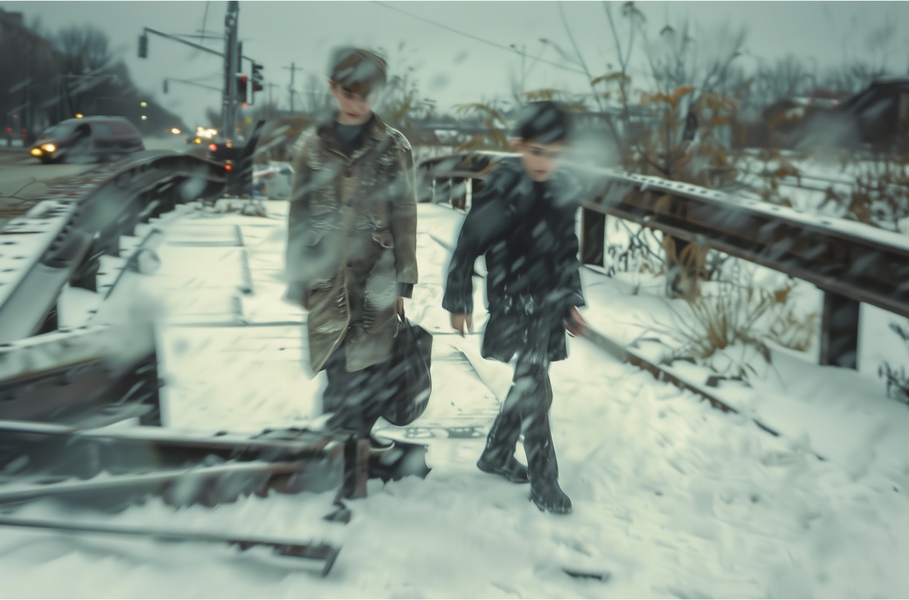
The obvious problem that arose along with mass emigration after the outbreak of war is the lack of a direct dialogue between those who left the country, and those who decided or were forced to stay at home. All that we were supposed to be content in these years is an exchange of blows and mutual accusations of social networks, a barren, monotonous and deeply destructive.
Recently, even these imaginary discussions as a whole have come to naught. All words were spoken, all rhetorical techniques are crowded to complete insensibility. But this does not mean that the problem has gone. On the contrary, according to the editorial office, the moat between both groups becomes only deeper, and the transition to silence is not an answer.
Therefore, the first thing we wanted to do in the project “in separation ” was to step over the invisible, but all a compacting line. And to invite people on different sides of the borders of the Russian Federation to start talking to each other about a new life on parity foundations.
The first such conversation was the meeting in the online of two old friends from childhood - film critic Anton Dolina (recognized as a foreign agent in the Russian Federation), who left after threats to his address at the very beginning of the war, and the screenwriter, the head of the "theater.doc" Alexander Rodionov, who was working in Moscow.
Ksenia Leonova was talking, she also draws all the illustrations for the project with the help of neural networks.
***
Ksenia Leonova: In general, this conversation about what is happening now with you and generally with those who have left. Anton, how did you react to the very idea of a public dialogue with people in Moscow?
Anton Dolin: I have absolutely no desire to say anything to anyone there, in Russia, I have no need to say: “Oh, damned or beautiful, hold on, be well done.” I do not think that these revelations need to listen to someone. We see how sometimes it looks caricatured, no matter what pain is dictated. And I do not understand how the notorious dialogue between the remaining and those who left.
I had a lot of conversations in this kind. Me: "Well, I left, it's hard, we are doing this." They answer me: “And you know, I decided not to leave. My business is Russia, my children here go to school, it is important to me. ” And you think so: that's how, really, for me it turns out, it doesn’t matter. And you say: “Listen, old man, I understand everything in general. But estimate, if tomorrow they will tell you: your children are expelled from school, you yourself are fired with a wolf ticket and whether to put you, in principle, to prison? Will you be faithful to your homeland to the last? " And in response to me scared: "No, then I will leave tomorrow." I say: "Ah, I see."
One of the big discoveries that I made for myself is how peculiarly people understand the principles. There are no people who are ready to recognize themselves as unprincipled. But the only principles-in my eyes, of course, are those for which you are ready to sacrifice something. And I am observing that different people from my close professions are not ready to sacrifice for the sake of principles absolutely nothing, even an extra weekend or a salary for a salary and a fee for a film that had yet been carried out, because they need to feed the family.
For example, I can tell a story without naming names. A person from my workshop, Kinocritic, makes an act that I find vile. The act is not secret, public, checked by Google. And I write about it. I do not use these words “vile act”, God forbid, I just state, but, of course, I do it so that it causes someone's condemnation. And the person writes to me, but writes in a personal: "You are a bastard, a scoundrel, and you are a non -state critic, we always knew it." And here I am absolutely vulnerable, uncomfortable, I cannot bear it in a public field, since it will be another muck, I just have to eat it and tolerate it.
And when you understand that you sacrificed some things to maintain loyalty to the principles, and you are talking about it aloud, you immediately feel like a monster. Immediately, a crowd of people perceives it as if you personally spat in their face.
Is there a way out here? There is only one way out - to be silent. And there is no need to evaluate anyone, and anyone should not become an object for your statement. It’s better not to speak out even about your own actions, just commit them as quietly as possible, hope to stay alive and not feel shame when looking in the mirror.
But, of course, when you lose at home, relatives, friends, work, an audience, a renome that I had quite solid in Russia, and outside it, zero, except for small emigrant communities ... When you go to big sacrifices for the sake of untreating, coercion to silence, so as not to hurt those who do not want to sacrifice anything, absolutely drives crazy. Here is the main paradox, in the insolubleness of which I have been living for two years.
And, to put it mildly, such things do not contribute to dialogue, understanding, turn them into impossibility. And it is very disappointing that this impossibility does not arise because some for the war and for Putin, but others against. All against the war, for free art, against censorship and for the beautiful Russia of the future, but at the same time everything is with each other, b ** dies, are incompatible.
Alexander Rodionov: This is terrible, because it is a huge part of the vital in a person to say what you want to say. Yes, this is a problem that I have never thought about - I have no voice that is heard, and I cannot try on this terrible feeling of the weight of a public word. And you are a person who is heard, this is your path, your story, you are a voice. When you say something, it sounds because it is, you said. Do not regret anyone and say, here is my opinion.
Dolin: Thank you for your opinion, but do most of the thinking Russians are not in exactly the same position now, these are people who are used to living at the expense of their voice, his sound, and in the last two years it has become dangerous to talk?
Leonova: Sasha, are you closing your eyes so as not to look around?
Rodionov: No, that you, on the contrary, look with enthusiasm. Why squint? If you squeeze your eyes, you will miss everything.
Leonova: But you cannot further describe everything what you saw.
Rodionov: You know, I thought about it many times. A layer of background, but free, but not internally, but truly free statements in Russia more than it seems. The number of small documentary or home -made films about reality, about the war, about the uninfected world itself ... I do not assume, I know that they are surprisingly. And there are places where you can watch. True, sometimes the announcement is not clear ... Such a strange life.
The path that is now allowed by the system should not be something bright, noticeable, which can be interpreted protesting-this path is achieved by selective rigidity, electoral dictatorship-to do so. But the truth is that the selectivity leaves vast territories on which, contrary to external or internal, more or less resistance, it is not the same to act as you seem to be proposed.
At the same time, I understand that when bad things are done loudly, and good things are quiet, because otherwise they will not work, the inertia of bad things will still win. The only question is when it becomes so massive that everything else will somehow begin to die.
For myself, I do not believe that the difference between people is determined by the person left or stayed-that this is some kind of ethical indicator. In February, the twenty -second year, there was a moment of great shock, when a bunch of people suddenly felt ethical things that usually do not bother anyone; Then, for a moment, a scale of values suddenly appeared and this arose: what is good, what is bad.
The worst thing is if not because of fear, not because of the reasons from the outside, but because of the sincere rethinking, which is important and what doesn’t matter, insensibility comes back to a person. For me, let the person do not know, does hell know what, but let him even feel that he is doing something wrong. The worst thing is if this insensibility begins to return.
Dolin: Well, she reigns with might and main, this insensibility, let me tell you about it with complete confidence. I talk to people, I move from the side, and this is very visible. And the notorious Aesopov language is also bitten. Or am I wrong? Sandrick, tell me what you think about it.
Rodionov: The problem is also that Aesopov himself is a terrible road. He becomes a wonderful mirror for the viewer, which looks into the fog of the scene and finds there suddenly an accurate reflection of his worries. This is an effective statement, but there will be no real prints of current life, loaded with our eternal concerns. Our worries and experiences are eternal, but life is not. And when you see on the screen, on the stage without addiction, openly and sincerely shown life, the viewer has a chance to understand a little and notice himself in this reality. Signs of exactly this year, exactly this day, this noise of life is actually the most fragile thing, but real and precious. Aesopov language gives a sharp decrease in these signs in these two years that we have lived, and this is a special trouble and loss for everyone.
Anton, I'm sorry I will tell you this now. I was terribly delighted as a reader and a fan when you left because I thought: how great, you start a way in a new world, a path that you do not know. Not because I would think that everyone in the world needs to leave and who remained - a fool or vice versa. Just in our world and then and now you are not just a critic, but you are a critic-meme, the same Anton Dolin, whom everyone knows. Whatever happens to you, everything would be a gesture. And, having left everything that you built and what you did, you made a gesture that-I remember this feeling-then I felt like something important to me. No less than it seemed important to me to feel about other people that they, on the contrary, remained. I don’t know how to explain this, so that it is clear and does not seem to be a paradox. And still, when I read your “Sirano” newspaper and I think about your life, your path, for me there is an ongoing sense of support: the feeling that the light did not converge with a wedge on humility.
Dolin: Yes ... Thank you, Sandrik, I am terribly pleased to hear it. I missed these words. There is such a paradox, funny as in Spielberg’s film “Indiana Jones and the Last Crusade”, where Indiana is looking for the Grail bowl. And for him this is a question of literally life and death, his father dies ... By the way, my father died a week after our departure, and I could not come to his funeral. Here, but I am distracted ...
Indiana should step into the abyss, and only then from there will the bridge come from, but until you take this step, there is no bridge. That is, the step causes the appearance of the bridge.
In general, any knightly symbolism, attributes have always been significant for me, and knights are people who make absurd gestures. The confrontation of Roland alone is a whole army, which, of course, he cannot defeat is an absurd gesture. Actually, the search for the Grail bowl is also an absurd gesture.
I can’t say for other people, I can only for myself - but the departure for me was such a step into the darkness, in the void and the deprivation of the support. I had this support in Moscow, there was a magazine “The Art of Cinema”, at that moment not with public financing, it was in no way affiliated with the state “Karo”, where all the premieres were. But with them I parted not by mine, but according to their will - at the moment when I left. On the day of my departure, our relationship ended.
I really do not like to complain, and now I am embarrassed to do it. But actually, we found ourselves with non-working cards, without delayed money in a foreign country, whose language we do not know, in a country whose authorities are not too friendly towards Russian citizens, where, despite the working contract in the Latvian media, Medusa (recognized as a foreign agent and an undesirable organization in the Russian Federation.- Ed. ), We were denied a residence permit. My wife and adult son still do not have medical insurance or accounts in the Latvian bank, they have not appeared in these two years. In our family, out of four people and a dog living in a rented apartment, one person works - this is me. When I go with various meetings and lectures around the world, this is also because you need to live on something.
Rodionov: I understand you, yes.
Dolin: That is, in a wandering knight, I did not turn from romantic reasons. Although I more remind myself to a wandering Jewish preacher, a madman who was kicked out of his Shtetla, because he was trying to preach something unknown there, but now he hopes that his teachings would be heard somewhere else.
By the way, I just spoke in Helsinki, and a rented place for the performance, imagine, friends, there was a temple of the Army of Salvation. So I went to the place of the preacher, took the microphone ... And all this would be funny if it were funny.
But, in principle, I took a step into the void. Like in a cartoon, where the cat Tom should fall into the abyss, but he so quickly sorts his feet in the air that he does not fall. During these two years, the soil did not appear under the feet, the bridge did not occur, and you can’t get oil from the air. As they say in "Alice in the afterlife": "How quickly you need to run to stay in place." So I quickly run for two years to stay in place.
And, of course, the strangest, wild, paradoxical is how many people ... Now it will sound like absolutely shameless boasting, but I convey what they say to me - how many people are coming to me with the words that I am supporting what I am doing. That is, I create a completely imaginary, illusory, but soil under the feet of others, without creating it for myself. Now my life is felt that way.
The remaining are in an unequal position with those who left - a priori. And, of course, when the people living in Russia under the oppression of censorship, fearing arrests every day, tell me that compared to them I am in a favorable position, I do not want to argue with them, of course, but I want to shout in response to them, while you have the ground under my feet, you do not understand that this is a privilege. While you sleep in your apartment, you go to work in the same place where you went before, you see the house that you saw in childhood, you can go to the park that is connected with your memories, or go to the cafe and eat a sandwich that you remember for a long time is all the soil under the feet, which I am now deprived of.
And, to be completely honest, every day I am less and less imagine the situation in which I will return back to Russia. I do not want it to sound like intentional dramatization. This is how I feel today, although maybe I'm wrong.
Rodionov: And I recall another bridge from the movie - “Bridge over the Kwai River” - and a person who works so that this bridge appears. I think the most terrible is not a cartoon character who does not catch the bridge underfoot, but the situation of a person who does something good and important qualitatively, but this is a bridge over the Kwai River. Honestly, I often think about this poor thing when I think to myself, about my life and my all kinds of work. I think, to what extent I, without noticing it myself, too, maybe ... because: the bridge is like a good thing? To do something that seems important to me, a good serving, some verbatim about reality is like too ... But how much is the logic of the colonel from this film is a question. And I do not know the answer to him. In short, if you suddenly feel that you have no soil under your feet, think: “But I am not building a bridge over the Kwai River” (laughs).
Dolin: Well, this is a very good thought. The construction of a bridge is always a very noble task. When they periodically ask me why film critics are needed, I reply that they are busy with the same as any priests and priests who build a ladder to heaven, this ladder of Jacob, that is, connecting a person with the sky. And film critics associate a person with art, in which there is also a mysterious need, as in heavenly.
And now we live in a film about the war where the bridges are blown up or burned behind their backs instead of building. And the builders of bridges like you and I find themselves in a very disadvantage.
And, by the way, still about knights. It seems to me that recently the main knight for me was not one of the great warriors such as Roland, who, apparently, was an unbearable person, but still Don Quixote. I sincerely believe that this is the greatest romance in world literature, a book about what fantasy is and what literature is, about how it acts on people. For example, Cervantes has a subtle observation that any love is always a love of a nonexistent person. In the two volumes of the Roman Dulsinei, it never appears once, and therefore Don Quixote is so faithful to her - he never saw her. But in the film adaptations of Dulsinea, it is always very material. And since it is material, then material and giants, who are actually mills, and hordes of enemies, who, in reality, are a herd of rams. But maybe Don Quixote is more healthy than we are?
When a huge number of my friends used the word “demshiz” and shouted at the now deceased Novodvorskaya and other donkeys of our politics that they are too idealistic, that they are too condensed, they are too unequivocally separating good from evil and declare evil that evil is only situationally, and that there is no good and evil at all, and finally, everything is not so definitely, often everything is often. More definitely than we think, much.
И для Дон Кихота все было однозначно, он видел суть вещей. Он видел зло и добро и верил в то, что он должен работать на благо добра и сражаться со злом. И можно сказать, что он потерпел поражение. Но у Набокова есть очень хорошая книжка — «Лекции о “Дон Кихоте”», где он рассматривает роман как теннисный матч и считает, сколько у Дон Кихота было побед и поражений. А с кем он сражается-то при этом? Не с драконами же. Он сражается с реальностью, и это непобедимый враг. Так вот, по мнению Набокова (а он был довольно точный счетовод), у Дон Кихота с реальностью ничья. Это неслабо, это покруче, чем у Зигфрида и Роланда, которые совершили какой-то там свой подвиг, но немедленно потом погибли.
Так вот, мне скоро 50. Сколько Дон Кихоту, мы не знаем, всегда казалось, что это какой-то старикашка, но ему тоже около пятидесяти. В общем, я ощущаю себя в этой донкихотской своей фазе очень уютно.
И еще эта участь странствующего рыцаря — он всегда одинок. Это человек, у которого нет почвы под ногами и не может быть. У него нет дома. И очень часто то, что он ищет, — это буквально пойди туда — не знаю куда, объект, который находится неизвестно где.
И это меня очень утешает, потому что донкихотство легитимизирует тебе жизнь в воображении в каком-то смысле без необходимости отворачиваться от реальности.
Леонова: Слушай, а какие у тебя были поворотные точки в эти два года?
Долин: У меня поворотная точка была ровным счетом одна. Когда я уехал, я почувствовал, что потерял абсолютно все: авторитет, работу — но даже и сам смысл своей деятельности. Я почувствовал, что дело, которым я занят, — абсолютная и бесповоротная фигня. И это чувство было очень четким, здравым и совершенно неистерическим. И осознавать это было очень тяжело, гораздо тяжелее — для такого, как я, — чем потеря дома и денег.
Мне помог Джафар Панахи, я очень его люблю. Я стал думать: ну вот теперь в России точно конец? В том, какой стала Россия, невозможно делать честное, свободное кино и вообще искусство. Ну невозможно. Потом вспомнил про Панахи, стал пересматривать и настолько увлекся, что подумал: было бы круто написать про него книжку. А потом ударил себя по рукам: книжка про иранского режиссера, серьезно? Я без работы, у меня нет денег. Who needs it?
А потом ко мне обратилась — и это такое чудесное было провиденциальное нечто — Парижская синематека, у них, оказывается, есть программа «Пауза» для исследователей, оказавшихся вне дома. Я приехал туда, три месяца работал в архивах, пересмотрел все фильмы, перечитал всю прессу и написал книжку.
Зашел между этими писаниями в Риге в магазинчик русской книги, который называется «Новая Рига», и рассказал им, что такое вот случилось чудо — пишу книгу, которую давно хотел, только издавать негде. И они такие: «О, а давай мы» — и издали.
В Россию она невъездная, эта книга. Там не написано, что я «иноагент», и таможня отказывается ее ввозить, хотя магазины пытались заказывать.
Но в России за это время выпустили другую мою книгу, там написано, что я «иноагент». Книга называется «Сказки», она про сказочное, фантастическое кино, и, учитывая успех «Чебурашки», думаю, это очень актуальная книга.
В общем, теперь я не просто странствующий проповедник, а еще и с котомкой с книгами, со своим учением в виде книги про Панахи, блуждаю по разным местам, приезжаю туда, где раньше не был, например, в Кишинев, или вот был сейчас в Варшаве и Любляне, приезжаю и привожу с собой котомку книг.
А недавно мой друг, директор фестиваля «Золотой абрикос», привез мне письмо от Панахи. Странная история: когда я сел за книгу, Панахи в очередной раз закрыли. А когда сдал ее в типографию, Панахи выпустили, и теперь он на свободе. И он написал такое письмо, я коротко его суммирую: «Конечно, книжка красивая, я не понимаю в ней ни слова, очень жаль. Но я так счастлив, что на другом краю Земли есть человек, которого я могу назвать братом. Спасибо тебе, брат!» Я подумал: как хорошо.
Леонова: Саша, а у вас за эти два года появлялось ощущение бессмысленности?
Родионов: Ну, специфического не было, потому что у меня оно бывало всегда (смеется). Возможно, это связано с тем, что я сценарист, а это профессия, которая, казалось бы, имеет дело со смыслами, с главными вещами в фильме, но при этом она служебная, придаточная. Так что дополнительного к этому большому ощущению бессмысленности у меня не появлялось. Куда уж больше, мне кажется.
А так нет, честно говоря, впервые за много лет, наоборот, появилось какое-то ощущение смысла: понятно, что надо делать.
Леонова: А поворотные точки за этот период у вас случались?
Родионов: У меня есть чувство, что это кусок времени, который начался и продолжается. И я боюсь однажды обнаружить, что мне станет казаться, что все это в прошлом, что начинается новая жизнь, где можно ничем не грузиться.
Не скажу, что я помню это по детству, хотя, наверное, помню, потому что я был ребенком, который читал, я рано научился читать. Это было время, когда двойная жизнь была вариантом нормы: человек рисует картинки в детских книжках, а на самом деле он занят авангардной живописью. Или он пишет книгу про разложение западной буржуазной философии, но в середине незаметно есть кусок настоящего знания…
И если, например, ты будешь должен однажды всякую книгу начинать обязательно с цитаты из Ленина, а каждый театр будет должен непременно иметь в репертуаре что-то на тему борьбы за мир в ее современных формах, если окажется, что это стало нормой… Этот способ сохранить свободу под прикрытием деятельного отречения от свободы, наверное, был бы качественно другим оттенком в сравнении с сегодняшним положением вещей, когда свобода может быть только тихой и плата за нее — это не активная перековка, а только тишина. Но пока этого не случилось — и, не дай бог, однажды случится…
Леонова: Вы в 2021-м и вы сейчас — это два разных человека? У вас, например, Саша, ничего не поменялось? Может, вы стали осторожнее?..
Родионов: Ничего со мной не поменялось, наверное, из-за того, что я так связан с «Театром.doc», у которого случилась много лет назад взаимная глобальная размолвка с государством и не было никаких системных его присутствий. Я очень давно живу в представлении о мире, в котором государство не то чтобы дружелюбно ко мне и к тому, что мне дорого.
Еще, наверное, проблема в том, что у меня не было никогда гражданского сознания, никогда не складывалось писать на гражданские темы. Я не верю, что искусство может быть активистским, мне всегда казалось это самообманом. Это моя личная проблема, я считаю, что это недостаток мой. Нет, я всегда верил только в то, что документальное искусство — это особенная вещь, чудо, что это доказательство, что на свете есть кто-то кроме тебя самого. И это тоже не изменилось ( смеется ).
Долин: В моем случае, я думаю, все довольно модульно. Есть такая формула, простая. Выбор, поставленный передо мной, может быть предопределен моими предыдущими словами и поступками. И этот выбор выглядел так: или остаться собой, но принципиально изменить свою жизнь, или минимально ее менять, но изменить себя или изменить себе. И этот выбор я быстро сделал.
Моя жизнь очень сильно изменилась, радикально, но я не изменился совершенно. Мы говорим с Сандриком, и он знает меня буквально всю жизнь, может, не очень близко, мы не так часто общаемся, но всю жизнь. Он может засвидетельствовать: я абсолютно тот же человек.
И я повторюсь: это тот случай, когда нужно бежать очень быстро, чтобы оставаться на месте. Чтобы не меняться, необходимо сейчас очень много усилий. Плыть по течению сегодня означает меняться, а оставаться собой — это плыть против течения.
В «Хагакурэ» написано: нет цели, есть только путь. Каждый раз, когда я думаю о драматическом сокращении горизонта планирования, я напоминаю себе эту фразу. Я знаю свой путь, но цели я не знаю вообще, не вижу, не представляю, она в тумане. Но путь — это направление, по которому ты определенным образом идешь, и это для меня супервнятно. Мне кажется, и Сандрик наверняка со мной согласится.
Родионов: Я думаю, это самое верное.
Долин: Помните, Дон Кихот постоянно искал шлем Мамбрина и решил, что это тазик, который он отобрал у цирюльника? Мне кажется, воображение — это такой специальный фильтр, позволяющий видеть в мире метафору, в мельницах — великанов, а это и есть наш «шлем Мамбрина». Он действительно волшебный, он правда оберегает нас от цинизма, от прагматизма, от осознания непобедимости зла. Мы продолжаем действовать и жить, потому что у нас есть «шлемы Мамбрина». И, конечно, «Театр.doc» с его населением маленького замка, который не сдается врагам, — это такой московский Монсальват, последняя крепость, которая отказывается пасть. Да, это тоже такой «шлем Мамбрина».
Родионов: К счастью, не последний, есть и другие …
Долин: Но каждая обороняющаяся крепость обычно лишена связи с другими, ей кажется, что она последняя. И, честно говоря, думаю, это правильное сознание, оно помогает ее удерживать.
Родионов: Золотые слова.