
Translated material
“Cadaurus” - anti -utopia about Russia of the future, where, after a mysterious catastrophe, dead children covered with salt become the cause of new disasters
The third novel by Alexei Polyarinov, the author of the Center for gravity and Reef
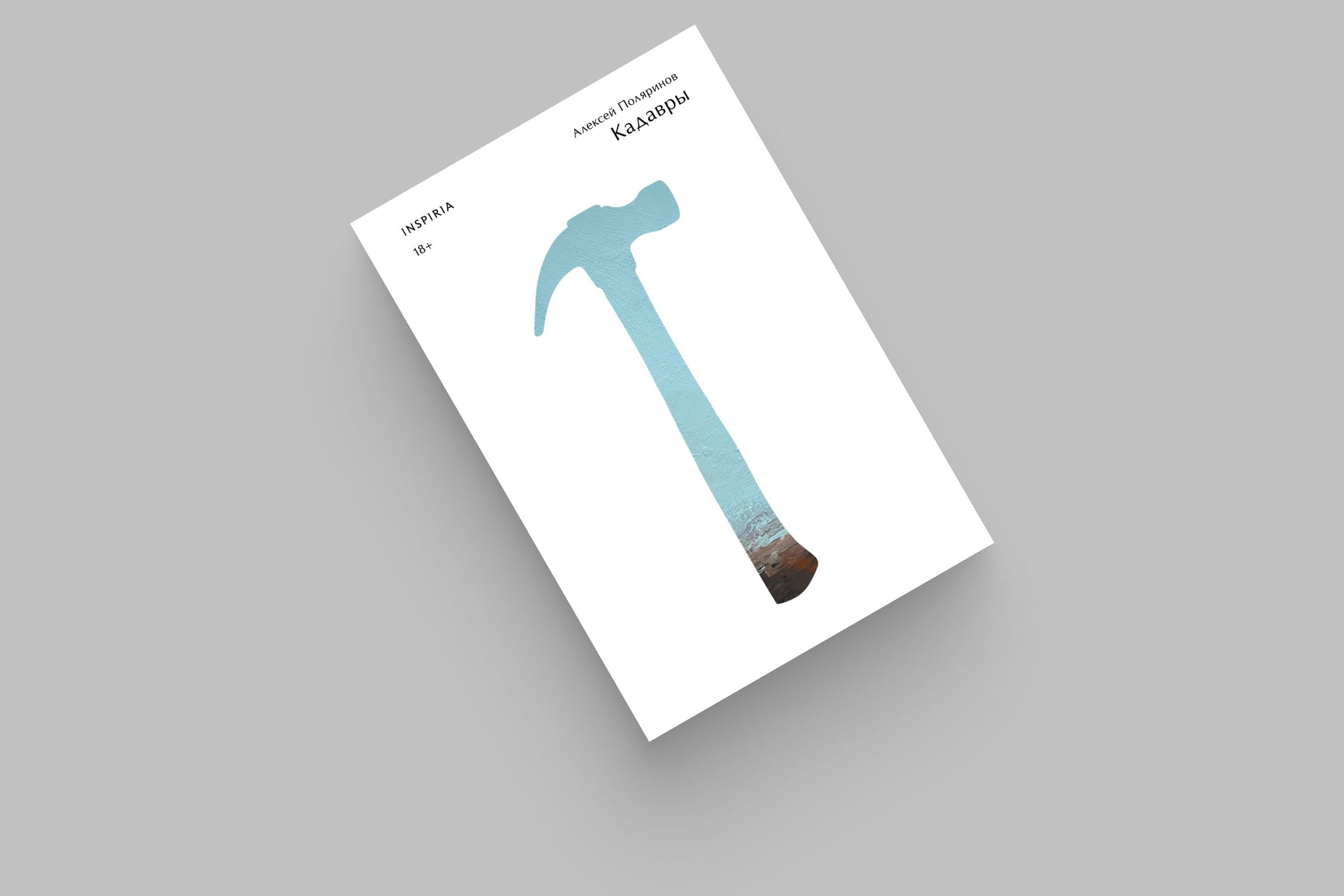
At the end of the spring, the publishing house of Inspiria (the exim unit) was released by Alexei Polyarinov’s new novel “Kadavra”-anti-utopia about Russia of the late 2020s. According to the plot of the book, a mysterious disaster occurred in the 1990s: figures of dead children covered with crystals of salt began to appear throughout the country. Any attempt to interact with them turns into new disasters. The main characters - brother and sister traveling around the south of Russia (who are now controlled by China) are trying to understand what these cadaurus are. The literary critic Lisa Birger talks about the novel about alternative Russia, in which real Russia is clearly read.
The Kadaavra Alexei Polyarinov is one of the main Russian -speaking novels of this year - full of witty references to modern Russian realities. But he talks not about today's Russia, but about Russia not a very distant alternative future. Through the anti -utopia about the collective misfortune of Polyarin, he finds a way to talk about a personal grief: it is the suffering of a single person who is combined in the book of the inhabitants of Russia - whatever it is called and whatever fantastic events in it occur.
And things happen amazing - in the reality invented by the writer, there are cadavres, or the language of the Russian officialdom, which Polyarinov so masterfully parodies, “Mortal anomalies”. These are dead children covered with crystals of salt. They do not move, it is impossible to move them, and each attempt to harm them leads to the fact that everything is covered with a salt crust that destroys the field (and in the Kuban, for example, it completely caused a civil war). Why Russia has become like that, the author does not explain. The heroes of his novel, whose action unfolds in 2027, is the researcher of the “Mortal anomalies” Dasha and her brother Matvey - go to the south of Russia, describing and studying the cadavres in remote villages.
Although the setting is incredibly important for this story, and small details are of great importance, the “cadavers” begin as leisurely as possible - as if at the disposal of the heroes all the time of the world. They go from the village to the village, are lost on the way, the car stalls, the travelers are trying to change the wheel under the scorching sun for half a day, laying out lunch on the hood, chew sandwiches with sausage and mustard and for a long time - set the camera on a tripod. The space and time on this trip are almost infinite, deprived of events. A microphone is brought to the cadreas - but they do not make sounds; They are shot on video - but they do not move.
In the novel, there is enough Saspens, a constant stressful expectation of a catch, but the most important thing has already happened-in the early 1990s, when, according to eyewitnesses, the cadavers began to appear in Russia. “The end of the world still has come, it just came not in the world, but in the territory of a separate country,” says one of the secondary heroes. “And it still continues, it happens right before our eyes, spreads to the neighboring countries, and we look in the other direction, we pretend that in general everything is not so scary, it could be worse, simply because we don’t know what to do and how to react.”
The temptation is very great to look for a metaphor of what is happening now in the “cadre”. Moreover, in the novel there are a lot of references to the Russian modernity, albeit in an alternative dimension: from the mass departure of the intelligentsia to Europe to the letters of the Political Zyaks, which the main character writes. The Institute for the Study of Mortal Anomalies, where Dasha once worked, has long been declared an “undesirable organization”, and the heroine herself has been living in Berlin for five years.
But for a trip to the southern regions, she is not threatened with criminal prosecution: this region is managed by the United Russian-Chinese administration, the Orc (there are much more Chinese than the dead nearby, it is borne in Russian fields). Everything that many of us still hurts in the present is already in the “cadre” has already grown grass and covered with salt.
Cadaurus stand in the scorched space of this long journey as an expression of collective unconsciousness. At the same time, there are many and very real dead children in the novel, not fantastic. The burning parents are experiencing SSG - a shifted grief invented by the polarine syndrome - and begin to see their dead children in the cades. Following the legend (of course, invented by the writer), the Russians build a new mythology around them, even religion, and literally drive nails into the heads of cadaurus - supposedly the dead children will resurrect. And they try to undermine them, although it is known in advance that any shot in them will be in the leg.
Medusa publishing house publishes books that, due to censorship, cannot be printed in Russia. Now in our "Magaze" you can buy not only paper, but also electronic versions of books. This is one of the easiest ways to support the editors and our publishing project.
In his books, Polyarinov has been discussing for many years about why it is easier to get into a sect in Russia than to heal from personal and collective - including historical - injuries. In 2018, in the novel “The Center of gravity”, he told the history of writing, which was both a family drama, and anti -utopia, and cyberpunk. In 2020, in the novel “RIF”, exploring the plot about painful collective and personal secrets, the writer first began the conversation that it is impossible to continue to live without understanding historical memory.
In the "cadre" there is a point where the private and historical converge. This is the appearance of the personal “cadre” of the main characters - the death of Nastya, the daughter of Matvey and the niece of Dasha, in which they both consider themselves guilty. Studying the history of the appearance of salt figures covered with salt and their significance in the context of the Russian hinterland, Matvey and Dasha involuntarily study themselves: their guilt, personal responsibility and grief that they try to ignore. It is important that Nastya dies in 2022, and it is this death that becomes a reference point for the novel. It is unlikely that this indication for the time appeared uninhabited - nothing in Polyarinov’s novel does not seem to be random, from the name of part of the country managed by the Chinese, orc, to a detailed excursion into alternative Russian literature, in which their Dmitry Bykov, Vladimir Sorokina and Maya Kuchsky write about the cadreas.
“Cadaurus” is an ideal example of how to express a simple thought in a difficultly arranged text. Genres and plots in the novel are intertwined: this is a study, then a historical excursion, then a traverse with leisurely auto -packet, then a family drama. But at all levels, like crystals on the skin of the cadaries, grief and wine are manifested. Polyarinov shows that we will always try to turn away and get away from them - but to leave, no matter how hard you are, nowhere.
Lisa Birger