
Translated material
Forget Midzoguti
About the novel by Yukio Misima "Golden Temple", about talent and its absence, as well as from where violence comes from
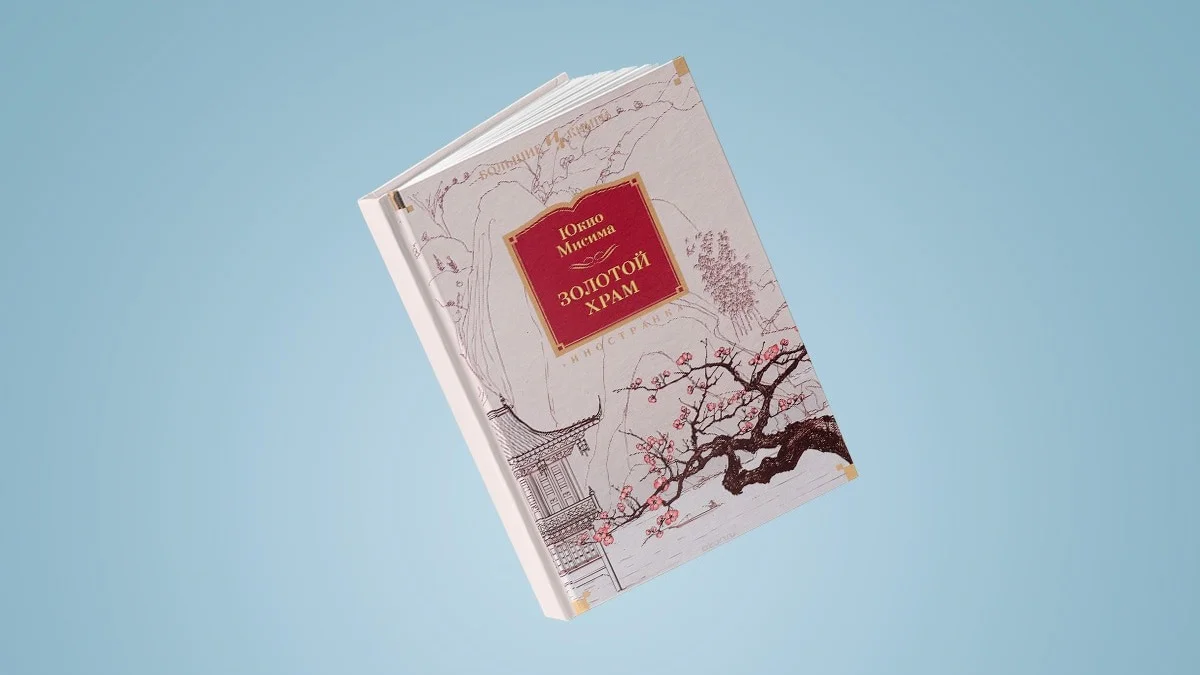
The cover of one of the publications of Yukio Misima "Golden Temple"
The news that Japanese classic Yukio was recognized as a “ino -agent” widely dispersed on the outgoing week in one individual Book of Voronezh, itself looks quite everyday. On the one hand, we are all so accustomed to the absurdity of censorship and self -censorship that there is almost nothing to surprise us, and on the other hand, it is clear that Mishima owes the appropriation of the “title” to his translator Grigory Chartishvili, who is recognized not only by the “ino -agent”, but also by an extremist and a terrorist. Nevertheless, the excitement around this news makes it stop and do with marked books what it is necessary to do with all the good books in general is to re-read them. Moreover, Mishima himself and his texts are very consonant with today's Russian day.
The most famous fact of the whole world from the life of Misima is his death:
He made Harakiri after a failed political coup, the leader of which he tried to become. At least, this is one of the most common interpretations of his act.
In fact, according to Mishimovs, it was to play the role of a role given to itself: another study of the connection between life and death.
This study of Mishima spent years for years and described it from Roman to Roman - including the most popular and readable “golden temple” (which the author was attached to the author’s “foreign agency”).
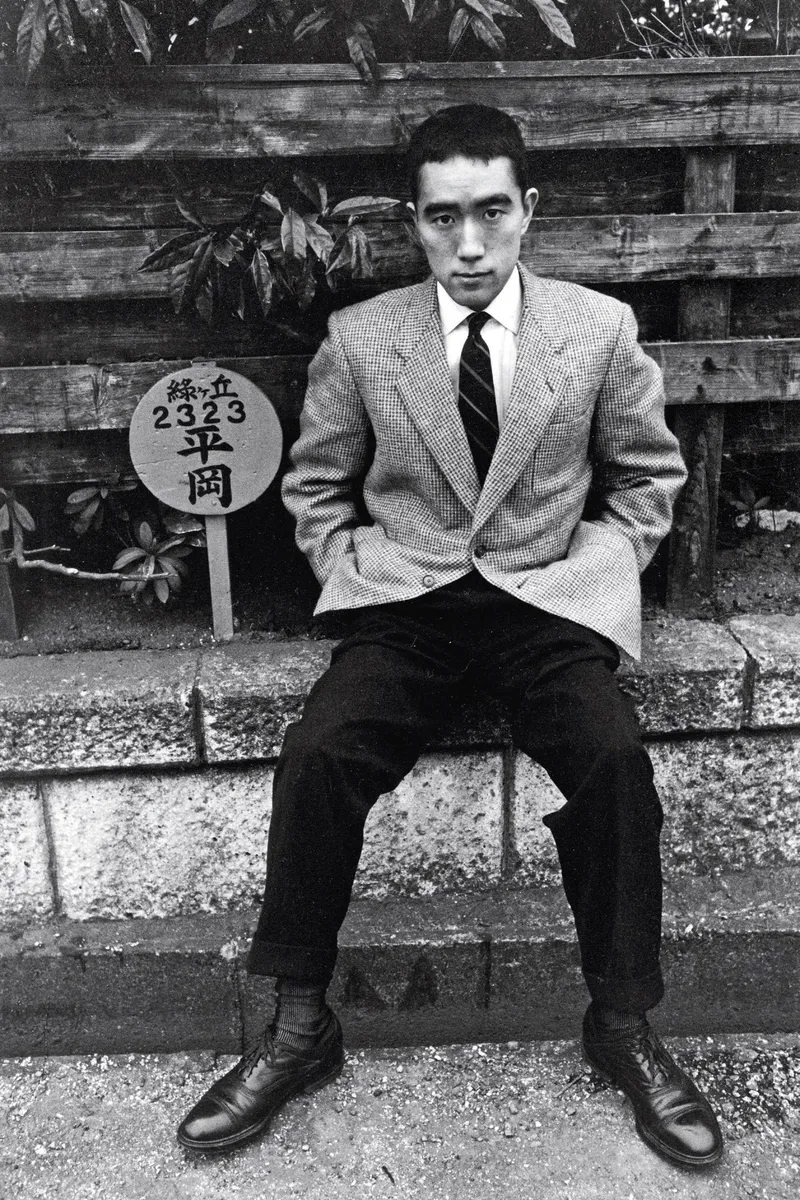
The novel “The Golden Temple” was based on a real event: in 1950, the monk burned the temple in Kyoto, and this was so struck by Mishim that he decided to describe the arson on the face of that monk. It turned out a rather Faustian story about where cruelty and craving for destruction come from, as well as how insignificance cannot get along with greatness. The boy Midzoguti, the novice of the Golden Temple, has a complete set of problems, the names of which modern psychology came up with: he is a stacked, and hence children's injuries, bullying at school, focus on his defect, sociophobia - and all this gradually develops into the “chosen one” syndrome.
Midzoguti does not shine with either talents or a special mind, but because of his eternal separation from the world, he gradually begins to consider himself a special, more “precious” person than the rest, by a certain mission.
The formation of such an attitude is helped by his friend who, from his defect - her legs injuries - was able to make a semblance of dignity: he learned to manipulate others due to his injury, learned to be successful with women who fell in love with sympathy into it.
Midzoguti did not learn to use his injury-and began to look for the opportunity to compensate for something:
“There is nothing strange in the fact that in the adolescence I was harassed by seductive and conflicting dreams of power, or rather, about two different types of power. That, having read historical novels, I imagined myself as a powerful and cruel lord. He stutters and therefore is almost always silent, but how are the subjects who live in constant fear of this silence tremble, how timidly look into the face of their master, trying to guess what awaits them - anger or mercy? To me, the sovereign, to justify my ruthlessness with smooth and sonorous phrases, will explain my silence and justify any cruelty. I imagined with pleasure, as I commanded to betray the fierce execution of teachers and classmates who tormented me in the gymnasium with one movement of eyebrows. And I also liked to imagine himself a lord of a different kind - a great artist, lord of souls, silently contemplating the universe. So, despite my miserable appearance, deep down, I considered myself richer and more gifted than all peers. ”
In other words, a subconscious desire for domination, for tyranny, for violence is born in a hero due to understanding of its own inferiority.
On the one hand, the boy wants to take revenge on the ridicule of peers, on the other hand, to convince himself of his chosenness, of his superiority over the others. All this happens under the roof of a golden temple - personified beauty, beautiful in the flesh. The whole text is built in contrast: the inferior hero is against the perfect work of art, the mortal - against the eternal house of the gods, dirty in the soul and in thoughts - against absolute purity. Midzoguti is aware of this contrast very clearly - and not only realizes, but also constantly sharpens.
Finally, all these private relations are built inside a large framework: there is a war. At first, both people and the temple are threatened by one thing - death under the bombs, and although the terrain is almost not fired, this threat, as it were, equalizes in the rights of an imperfect Midzoguti and a perfect temple.
And while this global threat exists, the hero lives not just calmly, but even happily: he dreams of a tragedy that finally equates him to the rest of the world.
“I was completely absorbed in the dreams of a gigantic heavenly press, which with the same power will crush living and ineffective, ugly and beautiful, will bring down unimaginable horrors, misfortunes and tragedies into the city. At times, the unbearable radiance of the spring sky seemed to me a sparkle of the blade of a huge ax, brought above the ground. And I could not wait until this ax sinks - with such swift speed that you won’t have time to think about anything. ”
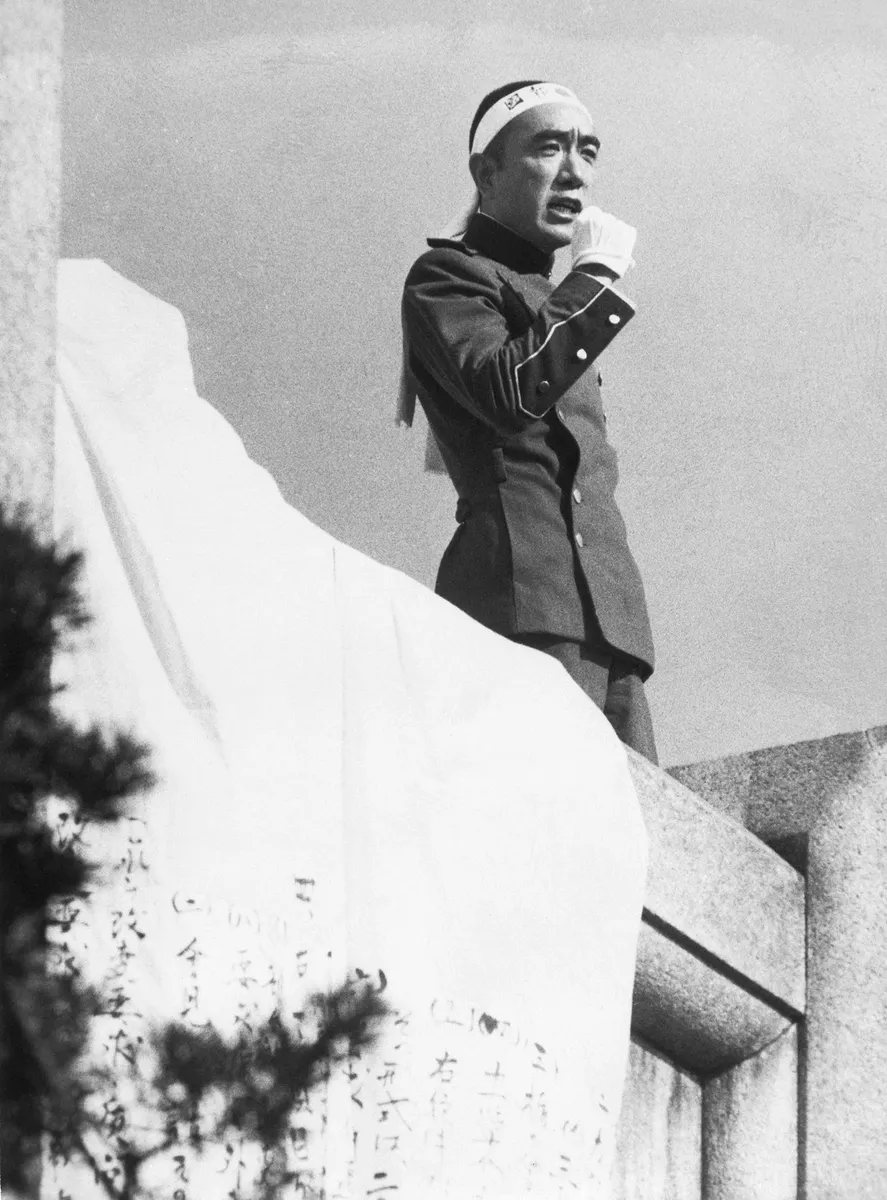
But the war ends. The beauty remains inviolable and eternal, and the inferiority is temporary. Mediocrity remains mediocrity, and greatness - grandeur. And here's how to survive in these conditions, the hero no longer knows: “But if the temple was not threatened with mortal danger, the very meaning of my life was lost, the whole world I created was scattered.”
And this is how violence is born. When the threat of universal disaster disappears, the inferiority no longer feels equal to beauty, and since it cannot create anything, it begins to destroy. At first, Midzoguti becomes indifferent to the temple, then begins to hate it, and then decides that the temple must be burned.
And he begins from afar - with "small sacrileges" that allow him to feel free. So far, it finally does not reach the main thing - the murder of God.
This whole plot, of course, cannot but remind the story of another arsonist of the temple - the ancient Greek heroostrass. In the play of Gregory Gorin “Forget Herostrata”, even a line from the text of Misima is almost repeated - the hero Gorina also preaches the sacrilege as a synonym for freedom:
“ The theater man (thoughtfully repeats). “Do what you want, without fear and, regardless of people ...” Do not rush to brush up from these words, Cleon. They have attractive power.
Believe me, I lived for more than two thousand years more than you and I know how such arrears can dope heads millions. You are standing at the origins of the disease, which subsequently brought grief to humanity. <...>
He ( Herostrat. - V. A. ) was, there is and, unfortunately, will be born again ... You know, Cleon, in the distant time to whom I am a contemporary, the world will take up many problems. But even then, from time to time, he will appear on Earth - a man named Herostratus. He will again proclaim: "Do what you want, without fear and not reckoning with people!" And fires flare up, blood will spill, innocent will die. And many will spread their hands: “Where does this attack come from, where from? ..” And she has been superfluous for two thousand years! Its begins here in Ephesus. ”
In both stories, the destruction of the temple as an absolute, as an image of eternity and beauty is the result of what is commonly called a resentim. Destruction is the result of mediocrity and inability to create at least something worthwhile. Violence is an awareness of its own inferiority. In Mishima’s novel, the main character, initially opposing war and destruction, gradually becomes war and destruction - and this is the result of the fact that the insignificance is aware of the lack of his right to the beautiful.
And the history of the temple in Kyoto in 1950, and the history of the Artemis Temple in Athens speak only about one thing: the origins of violence are always the same. Therefore, Herostratov and Midzoguti, of course, should not be forgotten - otherwise anyone will remind you of where these sources come from. But if Mishima’s novel ends with a fire, then Gorin’s play ends with the sound of hammers, clogging piles for the new temple, and the voices of the crowd of nameless builders.
And these voices, when they sound with us, will also need to be remembered - and remove the labeling of “foreign agents” from them.
QUOTE:
“The war is over. Listening to the workshop, as the imperial decree on the cessation of hostilities is read on the radio, I only thought about the golden temple.In Tokyo, hearing about the end of the war, crowds of people with sobs rushed to the imperial palace; We, in Kyoto, had the same thing, although the Kioto palace had long been empty. However, in the ancient capital there are enough Buddhist and Shinto temples, where you can go cry on such an occasion. I believe that on this day it was full of people everywhere. Only no one has come to my temple except me.
Only my own shadow glided over the heat of crushed stone. I stood on one side, the golden temple towered opposite. It was enough for me to look at him once to understand how our relationship had changed.
The temple was immeasurably higher than the military collapse and the tragedy of the nation. Or pretended? Yesterday Kinkakuji was different. Well, of course, avoiding the threat of death under the bombs, the temple again found the former appearance, as if to say: “I was always here and I’ll be here forever.”
“Our connection broke,” I thought. - The illusion crumbled to dust that we were living with him in the same world. Everything will be as before, only more hopeless. I am here, and the beautiful-somewhere there. And so it will always be now, until the end of the century ... "
The defeat in the war meant for me immersion in the abyss of despair-for a single reason. To this day, I see in reality an unbearably bright sun on August 15, forty -fifth year. They say that all values collapsed that day; For me, on the contrary, eternity was revived, perked up to life and established itself in my rights. Eternity told me that the Golden Temple will always exist. ”