Date
Author
Андрей Смоляков, Михаил Комин
Source

Preserved copy
Translated material
To the right, but not ultra
Novyevropa sums up the results of the elections to the European Parliament. What is changing the victory of the right parties? How did the "pro -Kremlin" candidates? Will this affect the help of Ukraine?
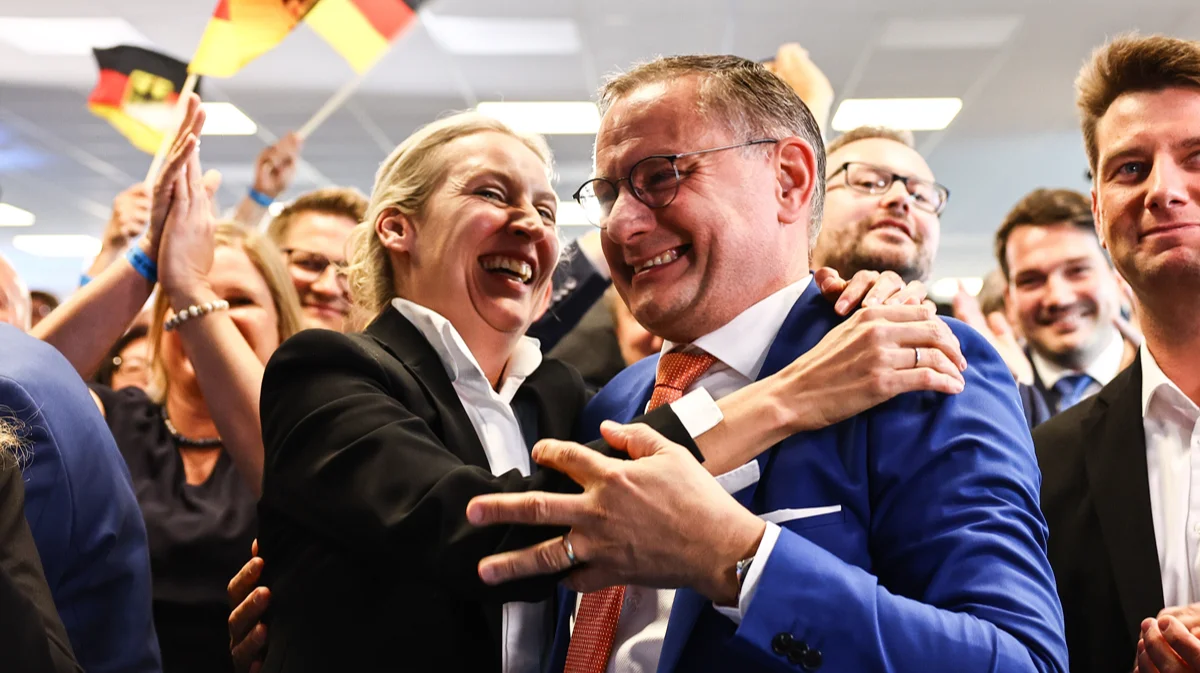
The co -chair of the Right Political Political Party “Alternative for Germany” (AFD) Tino Khopall (right) and deputy chairman Alice Vaidel (left) during the election meeting “Alternatives for Germany” (AFD) in Berlin, Germany, June 9, 2024. Photo: Filip Singer / EPA-EFE
The dissolution of the French National Assembly announced by Macron, although it became the most loud of the consequences of the election in the European Parliament that has just ended, but in fact speaks more about the problems within France itself than about trends at the level of the EU.
The radical strengthening of the ultra -right forces promised on the eve of the euro devices did not occur. For the first time, they entered the leaders in only 2 of the EU countries: in France, where the party Marin Le Pen “National Association” gained twice as many votes than the Macron Renaissance, and in Austria, where the local ultra -right Party of Liberty received a quarter of votes. In several countries - for example, in Hungary and Italy - the ultra -right for a long time dominate politics and are part of the government. The main winners of the elections were the right -centers from the European People's Party (EPP), which is also represented by the current head of the European Commission Ursula von der Layen. In addition to Germany, EPP received the majority of places in nine EU countries, which brought her 11 deputy seats more than in the last election. It seems that at the last moment voters in most European countries still preferred to cast their vote right, but more moderate: those who advocate strengthening control over migration, but not its complete stop, for strengthening the EU power, and not its collapse, for the priority of the economy over the ecology and, finally, for the unconditional support of Ukraine in the war with Russia.
Source: europeelect.eu
Read more about pan -European factions in the European Parliament
Despite the fact that on the Bulletins themselves, on the day of elections to the European Parliament, voters vote for their usual national parties, at the level of the European Parliament these parties are united in pan -European factions. They are also called pan -European political groups.
In 2024, seven such party groups are presented in the European Parliament:
The right -centric European People’s Party (EPP) is the largest faction, consisting mainly of Christian democrats, including Germany. The most recognizable person of this party in recent years was the chairman of the European Commission Ursula von der Lyain.
Social Democrats from the “progressive alliance of socialists and democrats” (S&D) are traditional levocentric forces, the basis of which in the European Parliament are parties from Spain and Portugal. The first four convocations of the European Parliament, from 1979 to 1994, it was they who controlled most places, but then lost leadership positions. On most issues, they occupy similar positions with the centrist colleagues from EPP.
The liberal group “Renew Europe” - advocates the most decisive reforms of the EU, strives to strengthen the European Union, but at the same time pays much attention to the issues of observing human rights and civil freedoms both within the EU itself and in third countries.
“Green” (Greens/EFA) - combine environmental and, oddly enough, federalist and regionalist parties. They advocate the priority of ecology over the economy, fight for the green transition and are often perceived as a fraction, which most of the young generation’s interests reflects.
“European conservatives and reformists” (ECR) is one of the two fractions of the European Parliament, which is often attributed to ultra -right forces and nationalists. They advocate a sharp restriction of migration and the reduction of EU authority, often defend conservative values on gender policy, abortion, LGBT rights, etc. The leader of the faction is the Prime Minister of Italy George Melony.
“Identity and Democracy” (ID) - the second ultra -right fraction of the European Parliament, differs from ECR by a much more stringent position both on migration and future EU and gender rights. An essential part of the deputies acted earlier or continues to advocate the exit of their countries from the EU. The leader of ID is the main opposition force in France, the National Association party Marine Le Pen.
“European left” (The Left) is the ultra -stroke and smallest fraction of the European Parliament. He acts with socialist, and often communist positions.
In addition, there are deputies in the European Parliament who have not joined any of the factions. Most often these are representatives of small populist parties. However, at the time of the elections of 2024, among the non -aligned ones, the largest German ultra -right party “Alternative for Germany” and the Party of Viktor Orban “Fides” ruling in Hungary.
Minus green and euro reformers
The main losers at these European fees are green and liberals.
The former lost at once 20 seats in the European Parliament, receiving the most painful blows from Germany, France and Scandinavian countries. Although in the elections in 2019 it was the green winners who increased their pan -European faction by almost a half times. This made it possible for the last five years to talk about a “green turn” in Europe and make plans at the EU level in accordance with the famous “green pact ” and the goal of achieving climatic neutrality by 2050.
But in 2024, voters refused green in support. Pandemia and the war in Ukraine led to this, in such a situation, Europeans chose to cast their votes for an early improvement in the economic situation
And postpone environmental initiatives until better times.
The second, which greatly lost in these elections, the pan -European faction is “updating Europe” (re). This is a young party group formed only in the past elections in 2019, the core of which is the party of French President Emmanuel Macron Renaissance and the allies of the famous European politician and the former Prime Minister of Belgium Guy Verkhofstadt.
The key goal of their unification in 2019 was the holding of decisive reforms of the European Union, which would ultimately turn the EU from a rather amorphous confederation of states into a much more monolithic structure close to ordinary federations. This project is also often called the United States of Europe , bearing in mind that as a result of the EU, in its political system, it will become much more similar to the United States.
But in these elections, voters refused to support the Euro reformers. The group “Refresh Europe” lost 18 mandates at once and barely retains third place in number among the fractions of the European Parliament.
Right nationalists from "European conservatives and reformists" breathe in their backs. Their leader, Italian Prime Minister George Melony, managed to strengthen the representative office of her faction in the European Parliament in these elections at once.
Coalition of right -wing conservatives?
The strengthening of the Euro-conservatives and at the same time the weakening of the Euro reformers Macron raises the question of who will most often enter the coalition as a younger partner with the two largest centrist parties: the right EPP and Social Democrats from S&D. Together, these two fractions in the new convocation of the European Parliament will control 326 seats out of 720. To most, they lack 35 seats.
Unlike national parliaments, a stable coalition in the European Parliament, as a rule, is not created. Temporary unions are more often formed to ensure the majority under certain bills. In the past convocation, the main partners in such unions with the centrists were just liberals and green.
However, as the new-Europe already wrote earlier,
This time there is every chance that the right -wing nationalists from the ECR under the leadership of Georgi Melony will become an important political force, often entering the coalition with the right -industry.
And the first check of this coalition will take place very soon - when voting for a new head of the European Commission. Last weeks, in fact, the only large European leader who did not support the extension of the powers of Ursula von der Layen in this post was Emmanuel Macron. The French president is greatly unhappy that von der Layen runs the EU with a hard hand and makes independent decisions, not always before this achieved the consent of all key participants in the association, and, above all, Paris.
Therefore, which strengthened his representative office in the European Parliament Ursula von der Layen, which has strengthened, can well respond to this criticism by the fact that for its re -election it will build a large right -wing coalition with the participation of Meloni conservatives, and not macron liberals. If this happens, then in response, the European People’s Party will give the conservatives and the Melony itself the opportunity to take important posts in the European Parliament (for example, guaranteeing them the place of the vice speaker).
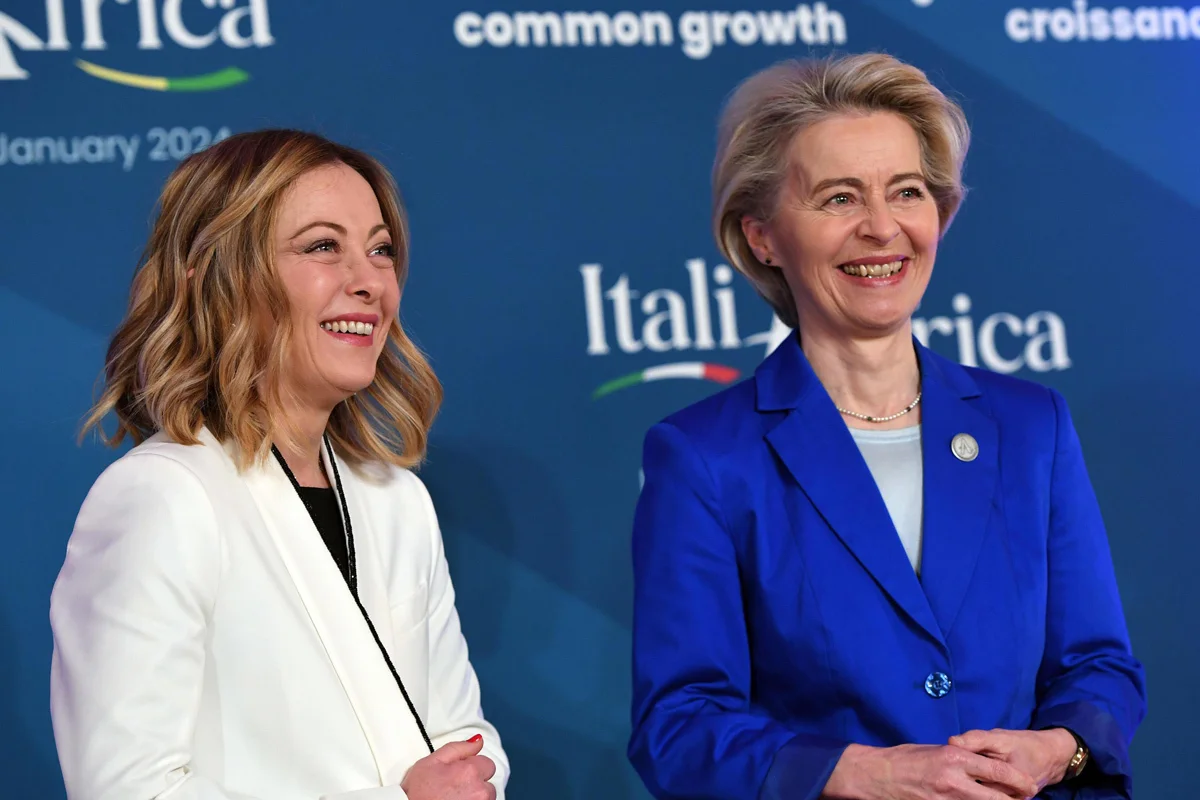
All this will make the rapprochement between the right -wing nationalists with an increasingly frequent script for other votes of the tenth convocation.
The position of conservatives and ultra -right forces will be increasingly audible at the pan -European level, which will lead to a sharp tightening of the EU migration policy, turning green initiatives and a much greater emphasis on issues of internal European security.
Of the unknown in the Prochrevsky
The series of scandals on the eve of the pan -European elections led to the fact that this time the number of so -called "independent" deputies - those who did not join any of the factions - became the largest over the past few convocations. At the moment, this category immediately includes 77 people who received mandates. The status of “non -aligned”, as a rule, deprives the Eurodepol of resources: he will not get a significant post in the committees of the European Parliament and he will not have the opportunity to act as a speaker at a plenary meeting on the most important topics.
According to the results of these elections, the number of such people who have not yet joined the Ultra -right “Alternatives for Germany” (AFD), which took second place in the country and overtook the batch of the current chancellor Olaf Sholets. AFD used to be included in the ultra-right faction “Identity and Democracy”, but on the eve of the elections due to the scandalous interview of the AFD leader Maximilian Kra, in which he said that not all Officers of the Nazi SS should be considered criminals and expelled the party.
Not one of the fractions also belongs to the Party "Fides" of the Hungarian Prime Minister and the old ally of the Kremlin Viktor Orban. Previously, it was part of the right -centric European People’s Party, but in 2019 it was excluded from it with the wording “for the spread of misinformation about the institutions of the European Union”. Then, between Brussels and Budapest, another scandal flared up, in which the EU tried to convince Victor Orban to stop destroying Hungarian democracy.
The entire last convocation of the European Parliament "Fides" spent among the non -aligned. But this time, 10 euro deputies representing a party have every chance to join the ranks of “European conservatives and reformists”. At least this opportunity was actively discussed by George Melony and Victor Orban on the eve of the election.
Also at the end of May, Viktor Orban tried to advance the idea of a large ultra -right faction, which, in fact, would unite nationalists from ECR and ID in alliance with Fides. This right supergroup would have 152 mandates in the current convocation of the European Parliament, that is, more than 21% of the European Parliament.
On the other hand, AFD also does not plan to stay away. The leaders of the “Alternatives for Germany” would like to unite with other nationalists and Euro -attacks from Poland, Bulgaria, Slovakia and the same “Fides” from Hungary.
If this happens, then the third ultra -right faction will appear in the European Parliament, which at the same time will stand on pro -Russian positions and oppose European support for Ukraine.
Despite the fact that the AFD itself has quite a lot of euro deputies, this faction will still not and will be able to control a maximum of 50 mandates.
Therefore, in any scenario - both in the formation of the main coalition, led by the European People’s Party and Ursula von der Lyain, and during the redundigu of the ultra -right groups, the European consensus for the Russian war in Ukraine is not threatened. Strengthening the right in the European Parliament will not affect a pan -European policy towards Kyiv.
Another thing is that the sticks into the wheels, for example, on the issues of Ukraine’s entry into the EU or the introduction of another sanctions against Russia and before, was inserted not by the European Parliament, but by the national governments of Hungary and Slovakia. And they are quite able to continue to do this at meetings of the European Council and the Summites of the European Union.