
Translated material
“Is the art of a democratic territory? No!"
The Khudruk of the Vienna festival Milo Rau - about the abolition of the performance of Theodore Krentzis, the political theater and the return of authoritarianism
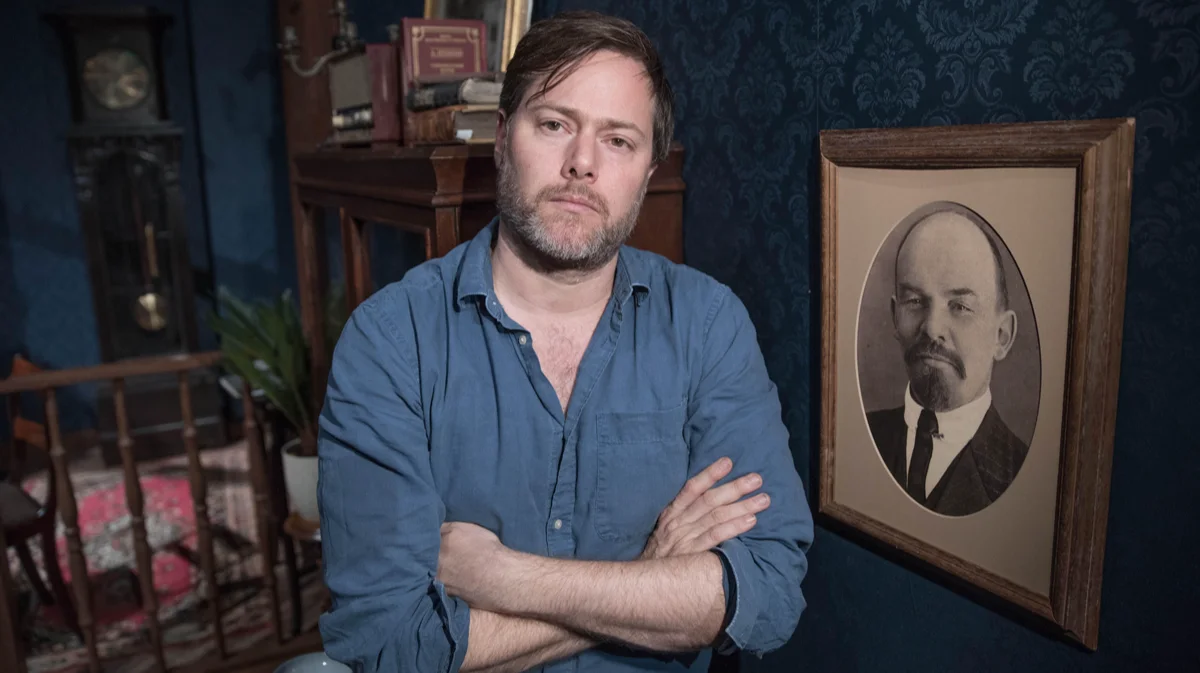
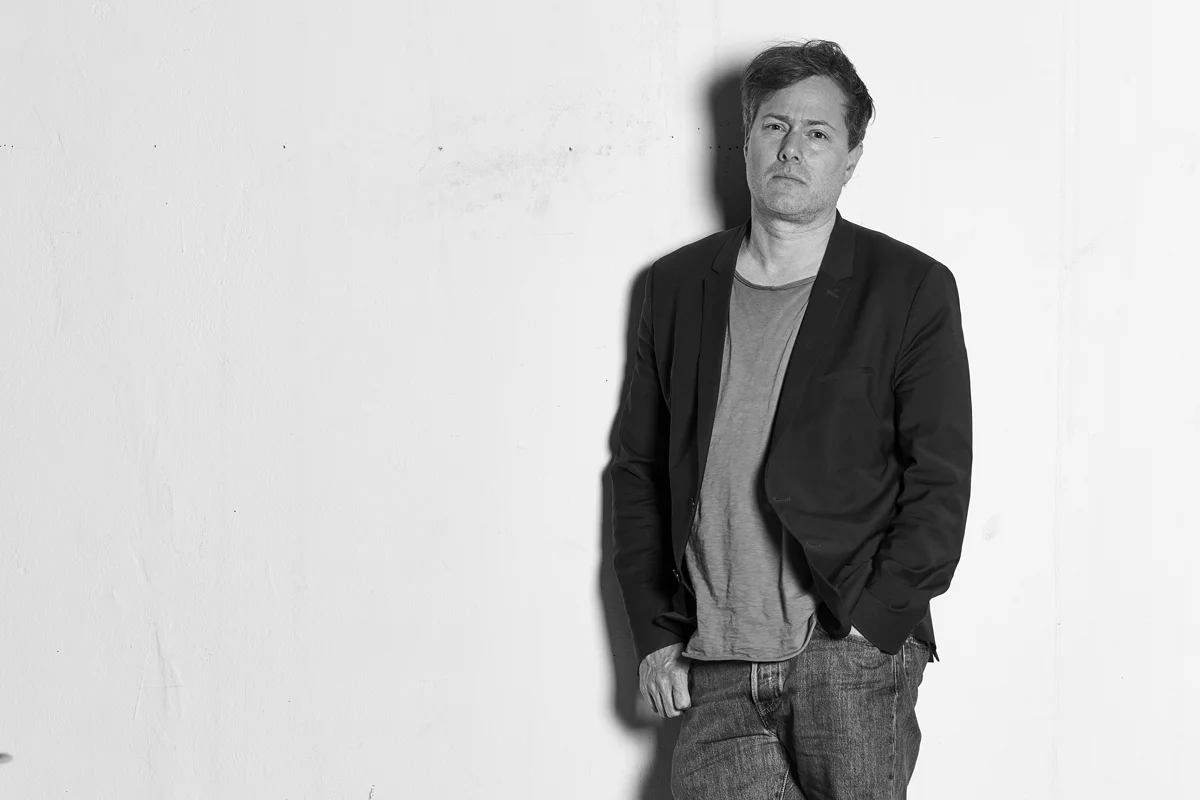
The director is Milo Rau. Photo: Jörg Carstensen / DPA / Alamy Live News / Vida Press
Since this year, the intensity of the Viennese festival - one of the main world theatrical views - became the Swiss director Milo Rau. One of the first informational reasons forced to talk about the festival was the abolition of the speech of Theodore Krentzis, although the performance of Kirill Serebrennikov, for example, remained in the program.
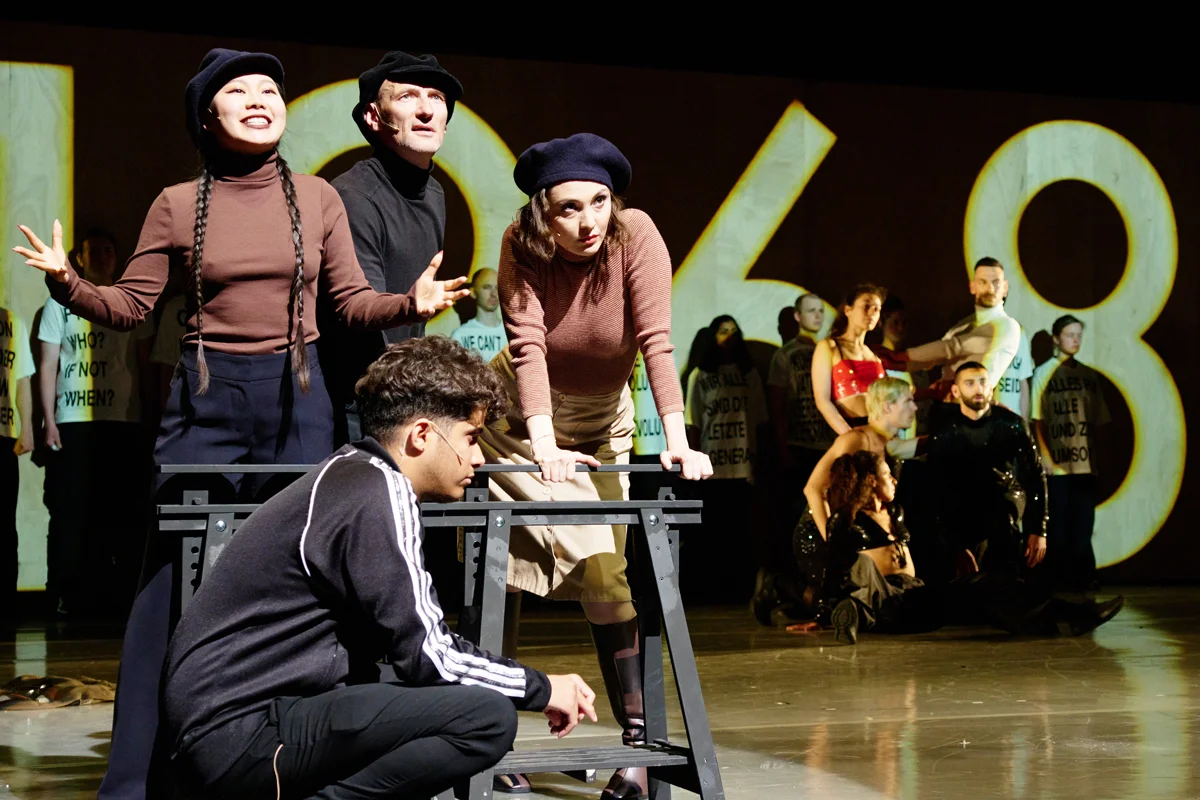
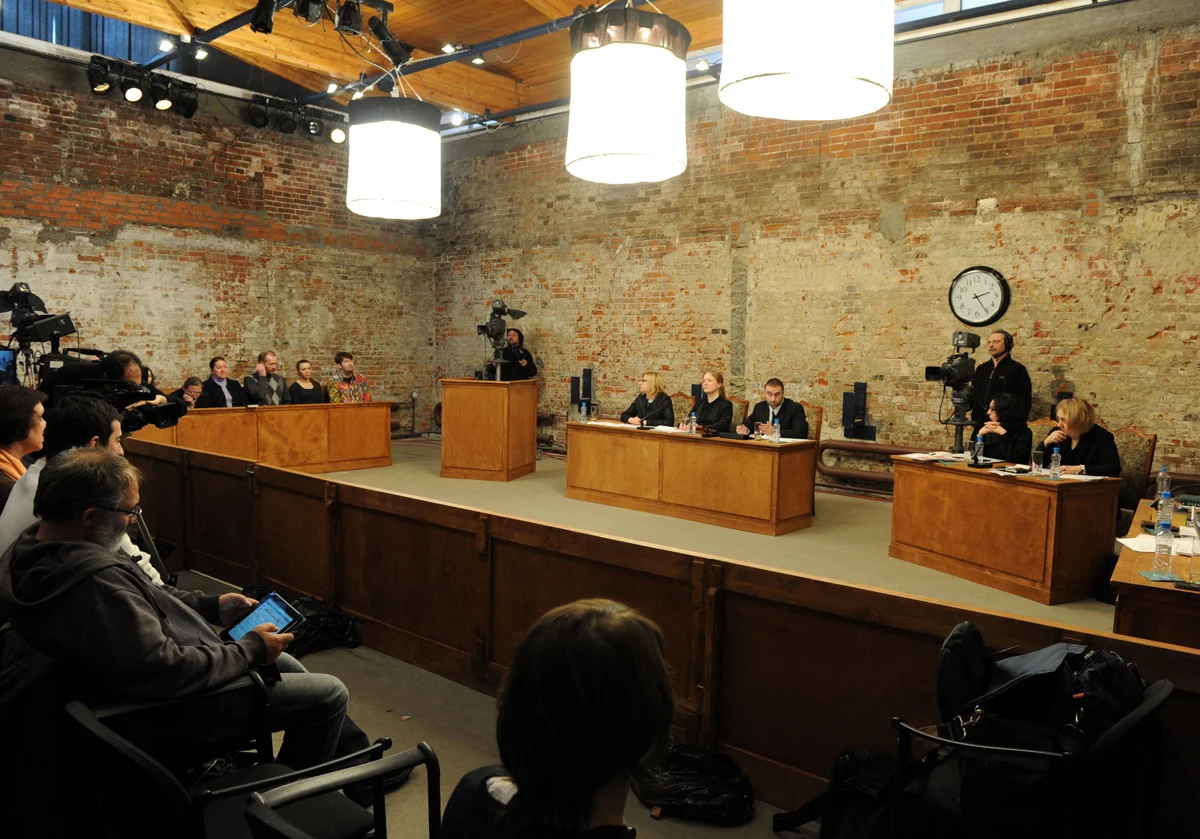
The beginning of a career is dear to Russia. In 2013, he staged “Moscow processes” in Moscow-three performances that restore the course of trials over the creators of the exhibitions “Caution, religion!”, “Forbidden art” and participants in the Pussy Riot campaign in the Cathedral of Christ the Savior. The processes held in the Sakharov Center (closed and deprived of the premises in 2023) were an event that everyone granted-from the best journalists to Cossacks with Nagikes and officials from the Federal Migration Service, checking on what basis RAU is in the Russian Federation. Then his documents were in order, but after that it became a cute. The performances made by the director, who have already become a celebrity, toured in Russia without his participation. The result of “Moscow processes” also became the “International Institute of Political Murder” - so cute called his theater. He puts performances on acute socio-political topics: “Radio hatred” (2011, about the genocide in Rwanda), “Compassion: The History of one Weapon” (2016, the Red Cross in Africa), “Revolution: The History of the Theater” (2018, Homophobia), “Five Light Plays” (2019, the history of the victims of the Belgian maniae of Dutra) and so on. The last three were published in the city theater of Genta, which RAU headed from 2018 to the end of this season. The Viennese festival under his leadership also resembles a performance: throughout the city, at all venues of the festival, stretching with calls in English and German hang: “Fear of post -colonial colonialism!” And “We owed the world a revolution!”, And Rau himself and his team established the “Vienna Free Republic”. Jokes jokes, and familiar crowns say that Rau seriously provokes the right. And his further fate as the artistic director of the Vienna festival is still unclear. He himself runs in a jeans suit and sandals in all festival venues, represents performances to the public, conducts discussions - and so almost 24 hours in knocks. Lera Peshkova met with RAU at the headquarters of the festival and discussed with him the notorious abolition of Russian culture and the situation with the performance of the Curenstins. As well as plans to reorganize the Vienna festival and commitment to the ideas of the revolution.
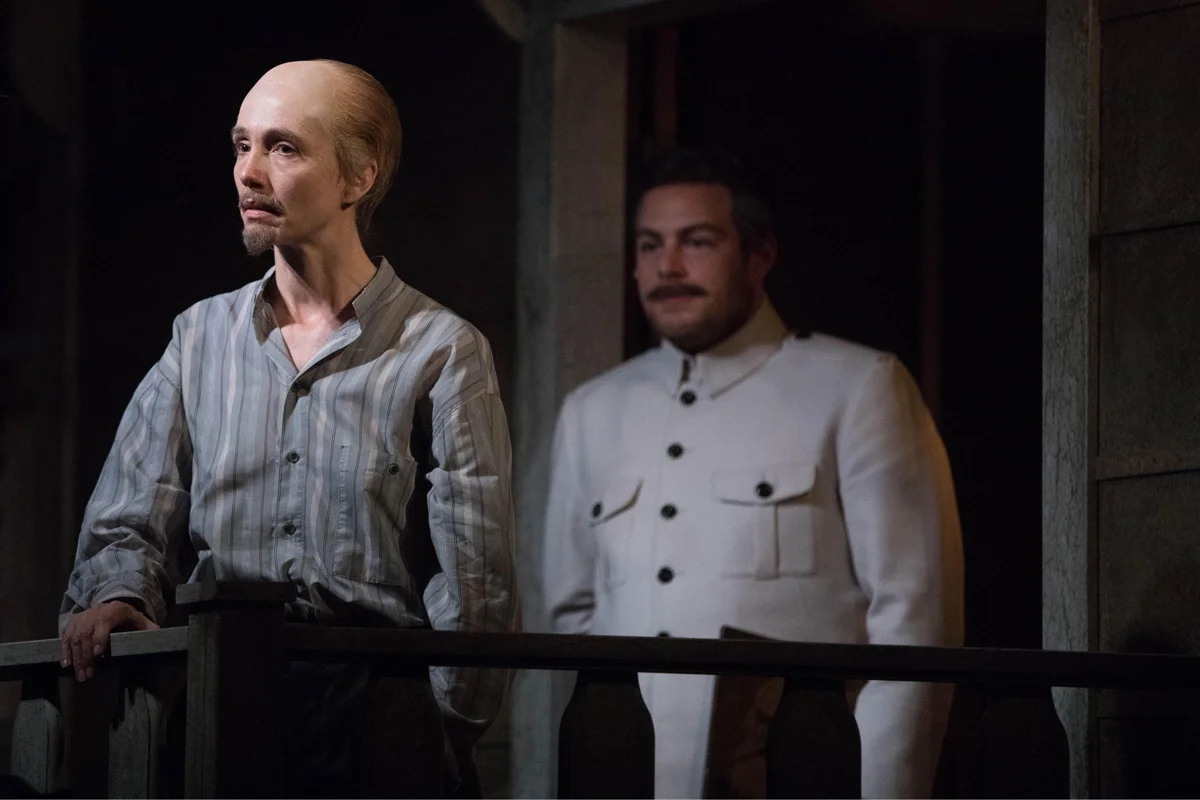
- By the centenary of the October Revolution, your performance “Lenin” was published in the Berlin “Shaubun”. Honestly, he struck me. And the magnificent Ursina Lardi, who before our eyes turned into a dying Lenin, and your theater study of the revolution of 1917 and its consequences-all this contained one day of a person who lost not only power over the country, but also over his own body. Where do you get such interest and such knowledge about Russia?
- There was always interest. I began to teach Russian tender, but did not finish. I was impressed by Russian literature and culture in general. You have not only Dostoevsky with Tolstoy - the great poets, say, Mayakovsky follow them. And then the whole era of the avant -garde is incredibly interesting! Well, I was impressive that Russia, by the way, was Germany, easily went to these global social experiments: “O'Kay, let's all become communists and build a communist state.” Yes, it resulted in a tragedy, but perhaps this bloody story is the reason for the emergence of such a great art in Russia.
- Perhaps this is precisely the problem: our culture as a whole, our literature and especially the theater grew out of our bloody history and centuries -old slavery. Slavery and humility are very suitable for mass arts - for ballet, for example.
- This is true. But remember the System of Stanislavsky or Mikhail Chekhov - this is all supervoidal. On the other hand, your drum in the ballet and in music - let's call it a Chinese approach. And at the same time, we recall the history of Russian poetry, there is nothing to compare with, poetry of such a level was not in any country!
-It is believed that this is all due to the structure of the Russian language: it is very convenient for poem. And yet, from confessions in love for our art, I would like to go to the topic more unpleasant. How do you feel about the notorious abolition of Russian culture?
- You probably noticed that there are many Russian artists in our program. The artist who came up with the whole design of the festival is Victoria Lomasko, in the poster - Baroque Kirill Serebrennikov and so on. My ties with Russian artists have not disappeared anywhere. Many of them found themselves in exile - and I try to support them. I also tried to find a platform on which Russian and Ukrainian artists could cooperate. In the case of Theodore Curentsis and Oksana Lyniv ( conductor from Ukraine. - Approx. Ed. ) This did not work. However, at the opening, Ukrainian director Stas Zhirkov and two Pussy Riot participants worked together. In my opera, the “Mercy of Titus” was occupied by singers from Ukraine and from Russia. In general, I am against Kanseling. But in the case of Curentsis, I had to abolish his performance. So, if you ask me if the art is a democratic territory, I will answer: no.
Now, given everything that happens in the world, it is no longer, because it does not allow different opinions.
Everything would be clear if Krentzis was a fan of Putin, but he is not. And still, his performance had to be canceled. I believe that this is wrong: there should be red lines, and inside them is a space for conversation, tolerance and solidarity. There is a war between Russia and Ukraine, between Palestine and Israel - and in this case the festival should become a platform on which the exchange of views is possible. This is my position. But in the case of Oksana Lyniv it did not work: Oksana explained to me that the musicians of the National Symphony Orchestra of Ukraine will not arrive if the festival is working in Russia in Russia. And I realized that I could not make a decision not in favor of the Ukrainian orchestra - just out of solidarity with this country.
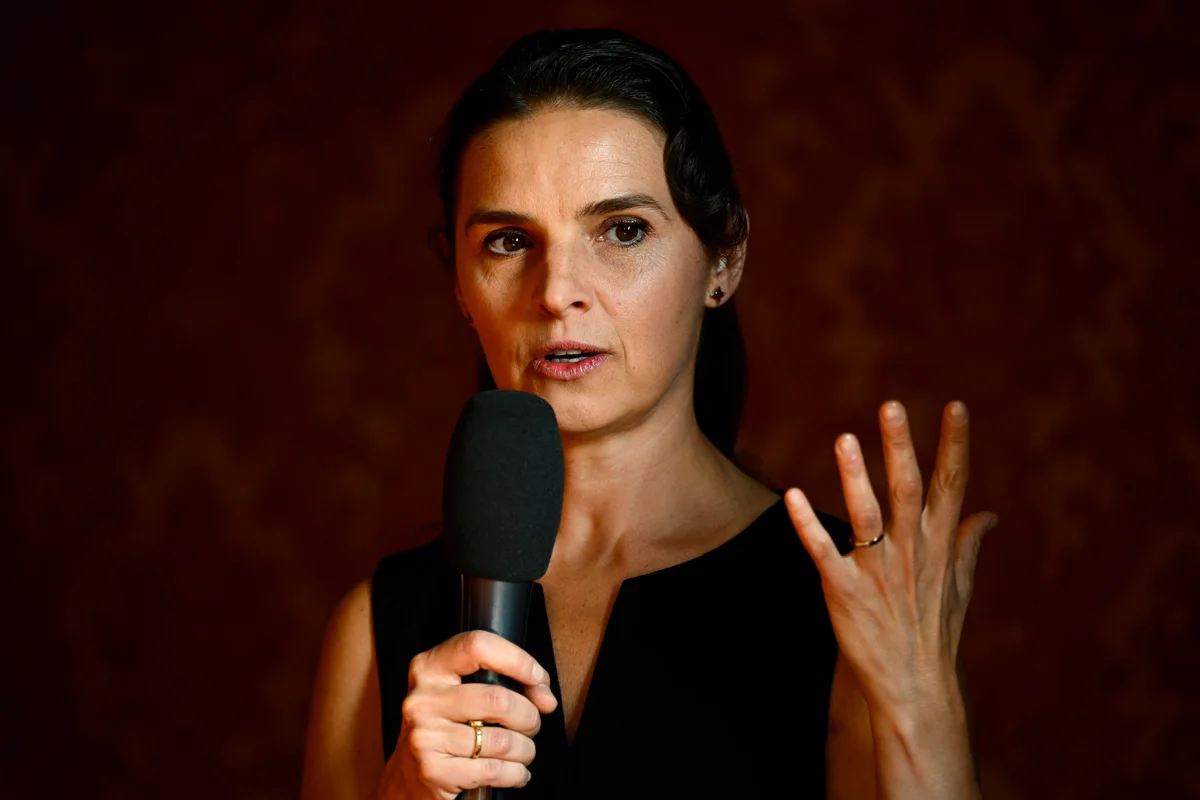
What does Oksana Lyniv say about this?
In an interview with Ukrainian Pravda:“Negotiations on this concert have been held with me since May last year: we have discussed the participants, the orchestra, date, work. But not a word, the intensity of the Vienna festival [Milo Rau] did not make a reservation that a double event was planned.
It turned out that they had in mind such an idea: here are two countries in the war, and here we have two artists at the festival who represent each of their countries for the whole world. And we will put this “double requiem”, where Kurentzis will conduct Britten Requiem, and Lyniv will conduct Stankkovych’s requiem. And we plan the debate between them in Vienna on the topic “Art during the war”.
And most importantly, I did not know anything about it! On the eve of the press conference, the email was sent to me: “The day after tomorrow we announce the program and hope that this concept of your joint event will not be a problem for you.”
My tongue was taken away! My agency urgently contacted the festival and stated that I refuse to participate that I was outraged by such a communication from the Vienna festival.
The festival quartermaster took a week. His first idea was to leave the performance of the Kurentzis orchestra, but to replace the conductor. But finally, the project was canceled at all.
Then the quartermaster apologized for a long time, said that they could not imagine that this would entail my reaction. I understand them. Kurentzis skillfully and successfully masks its political position on the image of such a musical messiah, which, outside politics, came to save everyone with high art.
By the way, the opinions of the press and the opinions of the Europeans themselves were very divided. The New York Times, for example, called the idea of an insensitive and rash festival. But the materials in the German press, where I commented on the situation on Kurentzis and [opera singer Anna] Netrebko (her performance at the Festival in Wiesbaden), received many negative comments from readers in my direction. They wrote that I am using this political situation to remove competitors, that I do not understand the unifying role of art, that Ukrainian performers and composers are still not interested in anyone. ”
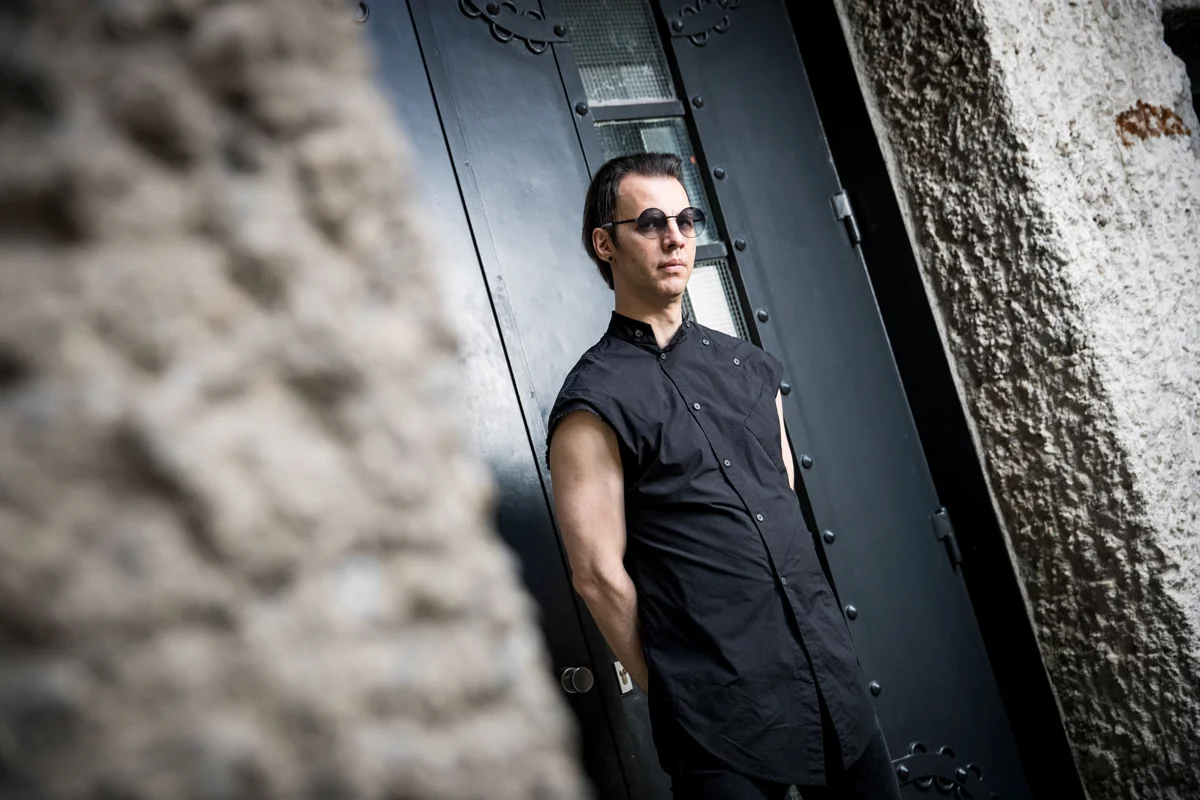
- What do you say about Serebrennikov’s Baroque?
- Of course, I saw this performance earlier, because I invited it. According to techniques, that is, by the way it is made, this is not an avant -garde, but quite a classic work. And I was sure that she would attract the audience, missing such a theater. The avant -garde in our program is already enough: these are the performances of Florentina Holcinger, Cornel Mundruzo, these are my “children of Medea” - all these productions are radical and aggressive. Serebrennikov’s work is impressive, it is difficult not to accept and not notice her scope. And, of course, this is a political performance. But he was made by the usual viewer in the way. I have known Cyril since 2013, I put “Moscow processes” that year when Gogol Center opened. At this time, Cyril was still quite close to the regime, but we know that then everything changed sharply.
-Just then, in Moscow 2013, you came up with yourater “Institute of Political Murders”. What do you think of the political theater today, when humanity literally tearing contradictions, and people turn into aggressive monsters?
- I already said: the space of art, the space of the theater - those sites where we may have conflicts, but we do not exclude anyone, do not fight and do not kill. I remember that when I was engaged in “Moscow processes”, the real lawyer who participated in our production was asked: you are working on real trials - why do you need this staged? She replied: “Just here, in the Sakharov Center, I am not on stage for the first time: I don’t know where we will go, and the finale is open.” In the political processes taking place under such authoritarian regimes as in Russia, the final is known in advance: everyone has the same opinion, as a member of the court, you know what decision should be made at the end. Therefore, I believe that art is free space. In a sense, it is dangerous, because anyone can take part. And you do not predict in advance in which direction everything will go: to light or into darkness. When we are now organizing our Vienna processes, we do not know each time how it will end.
By the way, during the trial of the curators of “forbidden art” and “Caution, religion!” And the participants of Pussy Riot in Moscow everything went to the fact that the process would be lost again. That is, the process, staged by me in the Sakharov Center, could end, like the real court - and then Pussy Riot, albeit metaphorically, would go to the camp again!
This is the danger of political art.
When you put Chekhov or any other play, you know how to end. And I like it when I don't know the final. I like the art that changes something.
As mentioned in the first paragraph of our Gaent Manifesto ( the manifesto is a program of the cute RAU as the City City Theater of Genta. - Approx. Aut. ): “Political art does not just describe the world: describing it, it changes it.” Well, or, as Jean-Luke Hodar said, “To make a film means changing the way to create a film, a way of spreading it, how it is watched, and who is presented in the film.” It is very important not to forget about it: we create art, not only to present it to the audience, but in order to change the process of creating art itself and our subsequent perception. I have a whole theory of metaisism - this is a very materialistic theory about what representation is, and that being a political art means doing all this clearly. Therefore, I hope to create the “Vienna Declaration”, I created the “Gaent Manifesto” and so on: I want the audience to judge us according to our laws and make sure that we do everything that we declare ourselves. Perhaps after that I will be fired, but I am ready for this.
-And how did it happen that you arrived in Moscow in 2012 and took up political processes?
- I remember that the Sakharov Center invited me along with Doech theater and the Schiller Museum: we had to do a project about the Gulag. And then the writer Mikhail Ryklin said: “Why do you need to embody Stalinist processes on stage, which have already become a classic? Take something from modern Putin processes! ” I immediately realized that he was right. Ryklin suggested taking three processes. But at that time I knew only about two: “Forbidden art” and “Caution, religion!”. While we rehearsed, Pussy Riot in the Cathedral of Christ happened. So we got three processes. Ryklin's wife participated in "Caution, religion!" As an actress. Unfortunately, then she committed suicide. He himself left the country, has been living in Germany for ten years, now Ryklin is very famous among local intellectuals.
- You would not recognize Moscow if you were in it today: the Sakharovsk center is liquidated, many of those who worked there left. Some of the people hid, the other in the literal sense wants blood. But the Russians are not unique: as we have already said, there is now a request for totalitarianism throughout the world. Can this be changed? Or it is like fashion: after narrow jeans, everyone puts on the most wide as possible; After freedom, fascism and totalitarianism come - and so in a circle?
“I think you are right.” The most incomprehensible in history for me is exactly what it is repeated.
-In Russia, it is repeated somehow too quickly.
- Yes, I agree, what is happening is incredible now. There is a problem that we all know: private property. And the fact that the authorities and around the government have a certain network of rich people who own capital and property. Everyone knows that it was they who led Putin’s power, because he was convenient for him, and he went much further than they expected. This is the same as Hitler, who was beneficial to large entrepreneurs as a protection from communism.
I think the problem is that the elites have learned to use democracy: sometimes it becomes a convenient tool for them, and then time changes, and authoritarian power becomes more convenient for them.
That is, they alternately use one or the other. Therefore, I argue that civil society must unite and oppose the elites, the whole problem is in them. At one time, this is Stalin, then Hitler, to another - Putin or Trump, you know them no worse than me. Sometimes they grow to such sizes that no one thought about. But in principle, this is always the same system: if tyranny goes too far, then after it the years 20-30 civil society come. And then suddenly we begin to swiftly rolling back - I think this is because the elites seem to be too far away, and they choose an authoritarian regime. This is exactly what is happening in many countries. Even Austria moves straight to the authoritarian regime. And about forty years ago, everything went in the exact opposite direction.
And yet I insist that the main problem is private ownership of production and land. I collaborated a lot with the movement of landless workers ( the Brazilian movement, which is dedicated to one of the latest productions of RAU Antigon in the Amazon. - approx. Ed. ) - they found a way to destroy the authorities and its leaders, but the most difficult thing is to destroy private property. She is inviolable. Of course, I am not opposed to my house, but you have mine. That is, everyone should own what he really needs. But not a thousand houses that you own alone. I think this is the only solution: why do I need violence if it does not give me anything material?
- Well, how, power?! She is self -charged. As you recall, the first -generation Russian Bolsheviks were often convinced by immigrants and at the same time built everything in violence. I think humanity is not yet ready for the model that you are talking about - we will arrange a massacre again. First, you have to kill those who have many houses, then those who have five of them, then those who have three, then those to whom the neighbor will bring ...
“I don't know what to tell you.” I'm trying to find a way out, but I have no clear answer.
- I, like many today, scare the extreme right parties. But for some time I began to fear the extreme left. In fact, this is one and the same. Two years ago, when I just arrived in the German city N, I rented a room in the apartment. The guy who rented this apartment with the owner was the main thing in her. He said he was left. Winter came, he did not turn on heating, so as not to pollute the environment and not help the Russians fight in Ukraine. Температура упала до нуля, я напомнила ему, что я тоже часть среды — живой организм, страдающий от холода. В конце концов мы договорились, что за отопление крошечной комнаты я буду ему доплачивать отдельно. Через полгода я съехала, а он прислал мне счет на серьезную сумму (мои немецкие знакомые сказали, что она завышена раза в два, а то и больше). В общем, наш левак жаждал денег.
— Начнем с того, что левый, который требует с вас больших денег, — не настоящий левый. Но я хотел бы немного защитить этого парня. Иногда все мы говорим одно, а делаем другое. И тут как раз важно то, о чем мы с вами говорили: поменять общую структуру! Этот парень хотел бы быть левым, но он может выжить, только вымогая с вас деньги, и, в общем-то, это трагедия выживания. В глубине сознания он отлично знает, что не прав, но он живет в структуре, где нельзя поступать так, как считаешь правильным.
Вот поэтому здесь, в Венской республике, я пытаюсь организовать структуру, где мысли не расходятся с делами. Приведу вам пример. Частью фестиваля с этого года стала The Academy Second Modernism, работающая в Нью-Йорке. И там мы заметили, что начиная с эпохи модернизма, то есть за последние сто лет, процент женщин-композиторов от общего числа композиторов не изменился: 7% женщин и 93% мужчин. Но если вы откроете любую газету на странице, посвященной опере и концертам, вы увидите красивую женщину со скрипкой или женщину-дирижера. Так функционирует культурный сектор: с одной стороны — наши левые идеи и философия, с другой — вечерние газеты. В общем, надо создать структуру, где будет квота на женщин-композиторов. А если квота не выполнена, то вы, например, не можете просить денег у государства. Мой контракт с Веной — на пять лет. И каждый год мы будем выбирать десять женщин-композиторов и представлять их новые работы. За пять лет мы планируем познакомить аудиторию с пятьюдесятью новыми композиторками!
Вы скажете, что это натяжка, что всё это искусственно, но только таким способом мы можем выровнять ситуацию! Именно поэтому я и создал Совет республики, где почти сотня очень умных людей следят, чтобы мы воплощали то, что мы сами же и провозглашаем. Потому что нам ведь только кажется, что мы живем при демократии или при либеральном капитализме. На самом деле мы всё еще в феодальном строе.
Эпоха демократии еще не наступила. Давайте опробуем ее хотя бы в маленьком масштабе — здесь, в Венской республике.
— Объявив на пресс-конференции о создании Венской республики, вы перво-наперво учредили суд. Мои друзья, побывавшие на втором процессе, сказали, что он был посвящен ковиду, ковидным ограничениям и, в частности, тому, как распределялась помощь бизнесу. В итоге обвиняемый, то есть государство, был частично оправдан. Расскажите о вашей идее.
— На самом деле, еще до суда мы учредили Совет республики — это Совет, представляющий аудиторию и в то же время призывающий город, страну и весь мир присоединяться к Венской республике. В Вене 23 микрорайона, и каждый имеет в Совете трех представителей, к ним добавлены 11 людей искусства и активистов (среди них Эльфрида Елинек, Сибилла Берг, Сандра Хюллер, Кирилл Серебренников). Пока идет фестиваль, Совет участвует в слушании таких вот судебных процессов. По результатам мы составим Конституцию Венской республики, на ее основе и будем решать, как курировать Венский фестиваль в будущем.
Первый судебный процесс был против правительства республики Австрия; второй, который вы упомянули, — против мер и запретов, предпринятых во время «короны», — насколько они были законны и прочее. Еще один процесс — против FPÖ (*Австрийская партия свободы. — *Прим. авт. ), крупнейшей правой партии Австрии, которая служит примером для всех правых популистских партий в Европе. Четвертый — против ангажированного искусства в целом.
Чего я жду от этих процессов? Это открытые площадки для дебатов, во время которых гражданское общество может вернуть себе влияние на парламентскую демократию. Мы критикуем правительство, партии, но также и то, как устроен культурный сектор. Мы хотим понять, как надо изменить культурные институции, начиная с Венского фестиваля. То есть мы выбрали огромную институцию, чтобы поменять ее снизу доверху. Проблема в том, что в Западной и Центральной Европе демократичны практически все институции за исключением тех, что занимаются искусством. В искусстве до сих пор царит феодализм: наверху всегда есть арт-директор или арт-группа. Все остальные им подчиняются. Город или государство дают им деньги, но никак на них не влияют. Культурный сектор — это часть госсектора, но функционирует он как частный. Я хотел бы поменять это во всех институциях, к которым имею отношение. Таков мой скромный замысел.
ПРИМЕЧАНИЕ РЕДАКЦИИ
Уже после публикации материала стало известно, что депутат австрийского парламента от партии свободы Кристиан Хафенекер направил министру по делам СМИ запрос с целью проверить Венский фестиваль на наличие «вмешательства во внутренние дела» из-за зарубежного финансирования и ущерба репутации FPÖ.