
Translated material
ECHR: FSB hides information about the death of Raoul Wallenberg, who saved tens of thousands of Jews during the Second World War
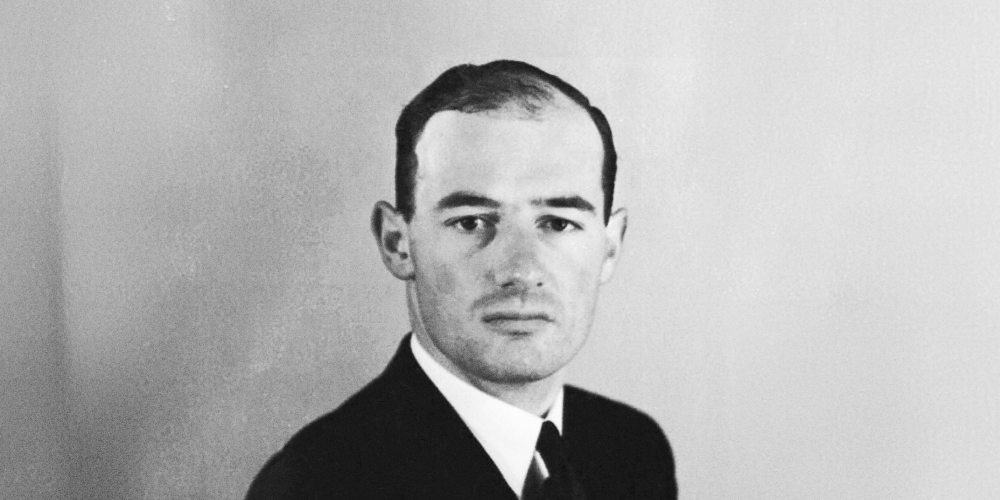
The European Court of Human Rights found the Russian authorities to have violated Article 10 of the Convention for the Protection of Human Rights and Fundamental Freedoms.
The European Court of Human Rights upheld the complaint of Marie Dupuy, the niece of Raoul Wallenberg, the Swedish diplomat who saved tens of thousands of Hungarian Jews from death during the Second World War. For many years, researchers and Wallenberg’s descendants have been trying to figure out how, where and under what circumstances the life of one of the “Righteous Among the Nations” was cut short. The traces point to the archives of the FSB, but the intelligence service refuses to provide the necessary documents to relatives. "The First Section" tells the story of Raoul Wallenberg and explains what this precedent-setting decision of the ECtHR means.
ECHR vs. FSB
For many years, Raoul Wallenberg's descendants, historians and lawyers have insisted that the FSB is illegally hiding information about the fate of a man who saved thousands of lives.
Back in 2017, Marie Dupuis sent a number of requests to the FSB, in which she asked to be acquainted with archival documents located in the Central Archives of the intelligence service, as well as to provide copies of these documents. Dupuis argued that the official date and cause of Wallenberg's death may be inaccurate, and that the death itself may have been a direct result of the actions of the Soviet authorities. The FSB refused to satisfy the request, and Russian courts predictably sided with the intelligence service.
On June 18, the ECHR recognized that such a refusal violated Dupuis’ right to receive information.
“Such a violation has occurred,” the ECtHR decision says. “Mr. Wallenberg is a generally recognized public figure and the subject of historical and academic research. The nature of the information about his death sought by the applicants met the public interest test. <…> The search for historical truth is an integral part of freedom of expression.”
What does this decision mean? That tomorrow the FSB will issue all the necessary documents? Unfortunately no. From March 16, 2022, Russia was excluded from the Council of Europe, and from September 16, 2022, it left the jurisdiction of the ECHR. The State Duma adopted laws that Russia will not (although it should) comply with ECHR rulings that came into force after March 15, 2022. Security officers have the right to ignore everything they are told by international authorities.
This, however, is an abnormal situation that cannot last long. Sooner or later, relations between Russia and the ECHR will return to the state in which they were quite recently. And then Wallenberg's descendants and researchers will still be able to access the documents they need.
Raoul Wallenberg is an absolute hero, whose fate should be studied and documented as much as possible, and not hidden in the archives. All we know now is that at the end of World War II, Wallenberg was arrested by Smersh officers and ended up in Lubyanka prison, where one day he allegedly suddenly died of a heart attack.
Wallenberg's feat
To tell the story of Raoul Wallenberg, let's first go back to 1944. A turning point had already occurred in World War II, but many European cities remained occupied by the Germans. One of these capitals was Budapest. In the spring, the Swedish mission operating in the city began helping Jews who were being persecuted by the Nazis. The program of such assistance was led by Stockholm businessman Raoul Wallenberg. He developed the official Swedish security passport - the famous "Schutzpass" - and also used entire apartment buildings under the Swedish flag to house thousands of Jewish families
Wallenberg was not a professional diplomat. He belonged to a well-known family of bankers in Sweden, but quite early he realized that a career as a bank employee was not suitable for him. Wallenberg studied architecture in the USA, then worked in a trading company. He knew several languages and traveled a lot, establishing contacts with different representative offices. During the 1930s, Wallenberg traveled to South Africa and Palestine, where he first encountered Jews persecuted by the Nazis.
In July 1944, Wallenberg was appointed first secretary of the Swedish embassy in Budapest. He began issuing protection passports to Jews with the right to repatriate to Sweden, but few were allowed to leave. Schutzpass helped to survive the occupation. Before the war, there were 800 thousand Jews in Hungary. Of these, approximately 200 thousand survived - including about 20 thousand saved by Wallenberg.
Yoni Moser, Wallenberg's messenger who helped him in all rescue operations, recalls how one day they stopped a column of prisoners who were being driven to a concentration camp. “On his orders, I rushed through the rows, calling on people to raise their hands. Including those who did not have any passports. Wallenberg then announced that he was taking everyone who raised their hands under his wing. Such strength emanated from him that none of the Hungarian guards dared to object to him. His demeanor conveyed power and unquestioned authority. He was incredibly persuasive."
In January 1945, Soviet troops entered Budapest. On January 17, Wallenberg was detained by employees of the counterintelligence organization Smersh. In March 1945, the Hungarian Radio Kossuth, under Soviet control, reported that Wallenberg had died during street fighting in Budapest, but in fact he was transferred to Moscow and ended up in Lubyanka prison.
The dungeons of the USSR: “Prisoner No. 7”
Beginning in 1945, the Swedish government began regularly requesting information about Wallenberg's fate. In 1947, the USSR officially denied Wallenberg's presence on its territory and claimed that he died during the capture of the city and street fighting in Budapest. In 1957, during the Khrushchev Thaw, the USSR government for the first time admitted that Wallenberg was in the Soviet Union and reported that until 1947 he was held in custody in the state security prison at Lubyanka, where he died of a heart attack on July 17, 1947.
Between 1945 and 1989, the Swedish side submitted more than 50 official requests to the Soviet government. The USSR, in all its responses regarding the fate of Wallenberg, adhered to the previous official version and invariably spoke about the death of the diplomat in prison and the loss of key documents in the case. According to representatives of the USSR, of all the documents about Wallenberg, only a doctor’s note remained about his supposedly accidental death from a myocardial infarction.
However, it is clear that Russian officials continued to hide from the public much of the information they had about Raoul Wallenberg.
It was not until 2009 that researchers Dr. Vadim Birshtein and Suzanne Berger learned from the Central Archives of the Russian State Security Service (FSB) that interrogation records from the Lubyanka Prison allegedly contained information about an unidentified “Prisoner No. 7,” who was interrogated on July 23, 1947, for more than sixteen hours. At the same time, Wallenberg's Hungarian assistant and his former driver Vilmos Langfelder were interrogated. FSB archivists came to the conclusion that “Prisoner no. 7" is "most likely Swedish diplomat Raoul Wallenberg." If this is true, it means Wallenberg was alive six days after the official date of death, and all previous statements by the Soviet authorities are untrue.
In addition, there are testimonies from other prisoners who claimed that they saw or heard about Wallenberg in the 1950s in other prisons, which also calls into question the official version of his death from a heart attack in 1947.
The USSR collapsed, secrets remain
After the collapse of the Soviet Union in the late 1980s, a Swedish-Russian working group jointly investigated Wallenberg's fate in Russia. Her goal, according to Wallenberg's half-brother Guy von Dardel, was "not to leave a single stone unturned under which the trace of Raoul Wallenberg's fate might be hidden." The working group intended to deal with all issues of Wallenberg's life and death, thereby clearing relations between countries of the “stains of history.”
For ten years, researchers worked with archival documents - certificates, interrogations, protocols and other papers related to the fate of the diplomat. However, with some exceptions, they did not have access to key documents. In retrospect, it is also clear that Russian officials deliberately withheld very important information from the Working Group, including the above information about “Prisoner No. 7.”
The investigation continued until January 2001, but important questions remained unanswered. In 2001, Russian representatives of the working group confirmed that Wallenberg "died or most likely was killed on July 17, 1947." They could not provide significant evidence of his death, since “almost all direct evidence was destroyed at the time.” “During a thorough search work, evidence of his [Wallenberg’s] detention and arrest was revealed, as well as some aspects of his stay in prisons of the then USSR state security system. It was not possible to find more reliable information,” said the report on the working group’s activities. In 2000, the Russian side rehabilitated Raoul Wallenberg under the law “On the Rehabilitation of Victims of Repression.”
In a separate report, the Swedish side stressed that in the absence of clear and convincing evidence of Raoul Wallenberg's death, important questions remain that need to be answered before any definitive conclusions can be drawn about Wallenberg's fate.
In 2016, the Swedish government, at the request of Wallenberg's heirs, declared him dead - before that he was listed as missing. According to Wallenberg's niece Marie Dupuy, the request to have Wallenberg declared dead was mainly due to the need to sort out his estate 71 years after his disappearance. Since Wallenberg disappeared in July 1947, and a person can only be declared dead five years after disappearance, the court decided to set the date of his death as July 31, 1952, the last day of the month he went missing.
What is the FSB hiding and why?
In order to establish the true cause of Wallenberg's death, his relatives and researchers will need to gain access to the unredacted files of his cellmates, archival intelligence documents and correspondence from law enforcement agencies. “We have spent seventy years in all sorts of guesses and theories, and now I want <...> to get to the facts and information that, as we know, are stored in Russian archives,” says Marie Dupuis. “As soon as we manage to get to the documents, we will immediately understand which of the theories is correct, which evidence was accurate and which was erroneous.”
Wallenberg’s relatives turned for help to lawyers who are now working with the First Department: “The documents that the authorities had previously provided to historians were censored, some pages were seized,” explains the founder of the First Department, Ivan Pavlov. “Wallenberg’s relatives and researchers studying his fate are rightly demanding access to the originals.”
In the late 2010s, lawyers sent several requests to the FSB on behalf of Marie Dupuis asking for copies of pages from the log of calls for interrogation of prisoners in Lefortovo and Lubyanka prisons, data from the log of prisoners’ movements between these prisons, and data on the registration of things in Lubyanka prison. The FSB refused to provide the requested documents on the basis that the Federal Law “On Archival Affairs” contains a ban on access to information about a citizen’s personal or family secrets, as well as information that poses a threat to the citizen’s safety.
Lawyers appealed the refusal to the Meshchansky District Court of Moscow. They argued that the requested documents did not contain data that could be classified as privacy or security-threatening information. In addition, Marie Dupuis, one of the plaintiffs, is Wallenberg's closest relative, which means the documents affect her rights to access information. On September 18, 2017, the Meshchansky District Court sided with the FSB and rejected the claim. The complaint against this refusal was also not satisfied.
At the same time, in April 2018, Wallenberg’s relatives contacted the Prosecutor General’s Office with a request for access to the decision to rehabilitate Wallenberg and to the documents on the basis of which this decision was made. The Prosecutor General's Office refused to provide this information.
In 2021, the Second Court of Cassation of General Jurisdiction rejected the complaint.
What now?
In June 2023, Vadim Birshtein, one of the world's leading experts on the history of the Soviet state security services, died. His 800-page book “SMERSH: Stalin’s Secret Weapon” is a colossal work that has no analogues in either Western or Russian historiography. Birshtein devoted a significant part of his life to studying the Wallenberg case, but never lived to see the full Russian archival materials made public and published.
Now historians, Wallenberg's relatives and lawyers can continue to put pressure on the FSB. 75 years (the period of non-disclosure referred to by the intelligence service) have already expired since the preparation of the necessary documents. However, the security officers continue to respond with cynicism, which leaves an impression. “The FSB central archive does not store [sic] all the requested documents,” FSB representatives said in one of their responses to the official letter.
Of course, this is not true. Of course, the intelligence services have all the necessary documents on the Wallenberg case. The FSB announced their absence relatively recently. All previous years they did not say anything like that, but used other arguments to not give access. The reasons for concealing the facts about Wallenberg's death change, but the concealment itself remains unchanged.
What secrets are hidden in the archives at Lubyanka?