
Translated material
Dollar for four rubles
Why is the Soviet ruble - at least a chervonets, at least paper - never became convertible
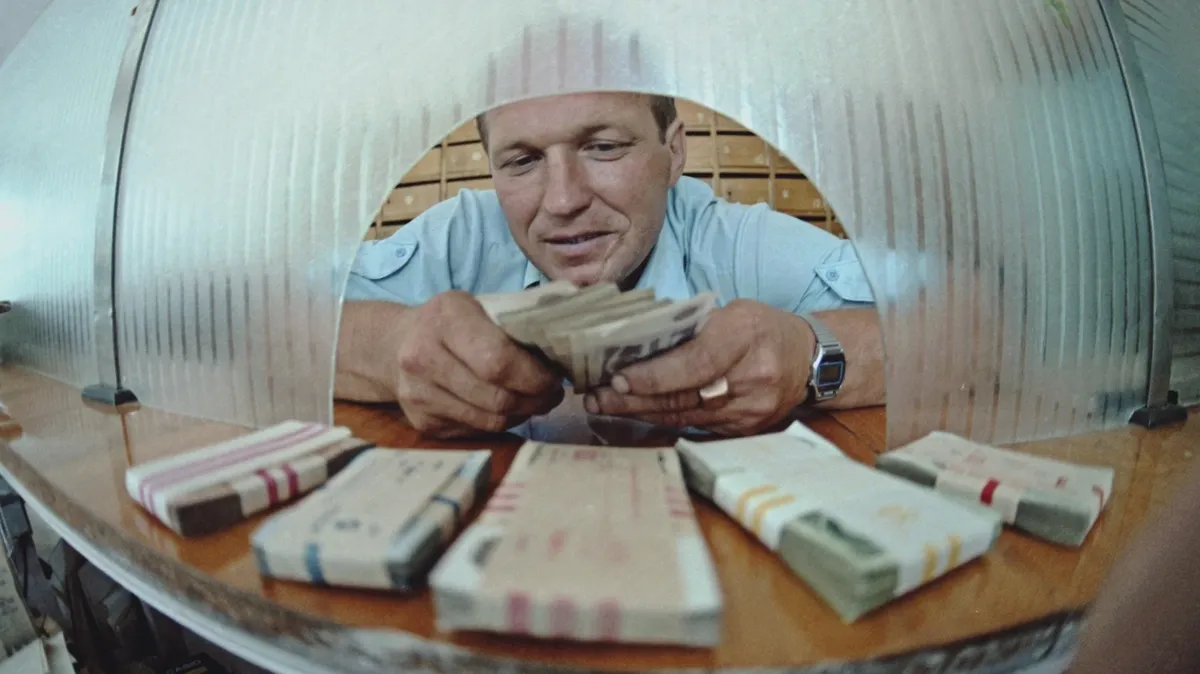
Photo: Anatoly Galushko / Photokhronika TASS
The idea of the deadllarization of the economy is dedicated to
As soon as the USSR financial authorities did not try to make a Soviet ruble convertible currency. They minted the gold chervonets, calculated the “theoretical gold content”, carried out monetary reforms - but they could not deceive the economy and the market.
Not all the gold that the "chervonets"
From the end of the 19th century, until the beginning of World War I, the Russian Empire was minted at golden wormers with a portrait of sovereign Nikolai Alexandrovich - - gold in such a chervonets was about eight grams, a little more than in the gold pound of sterling, along with which he was quoted. With the outbreak of war, the exchange of state banking tickets for gold was discontinued, and after 1917, Soviet banknotes were considered millions and billions.
But six years after the revolution, the Soviet government, interested in the development of foreign trade, ordered to mall their “Soviet Chervonets”.
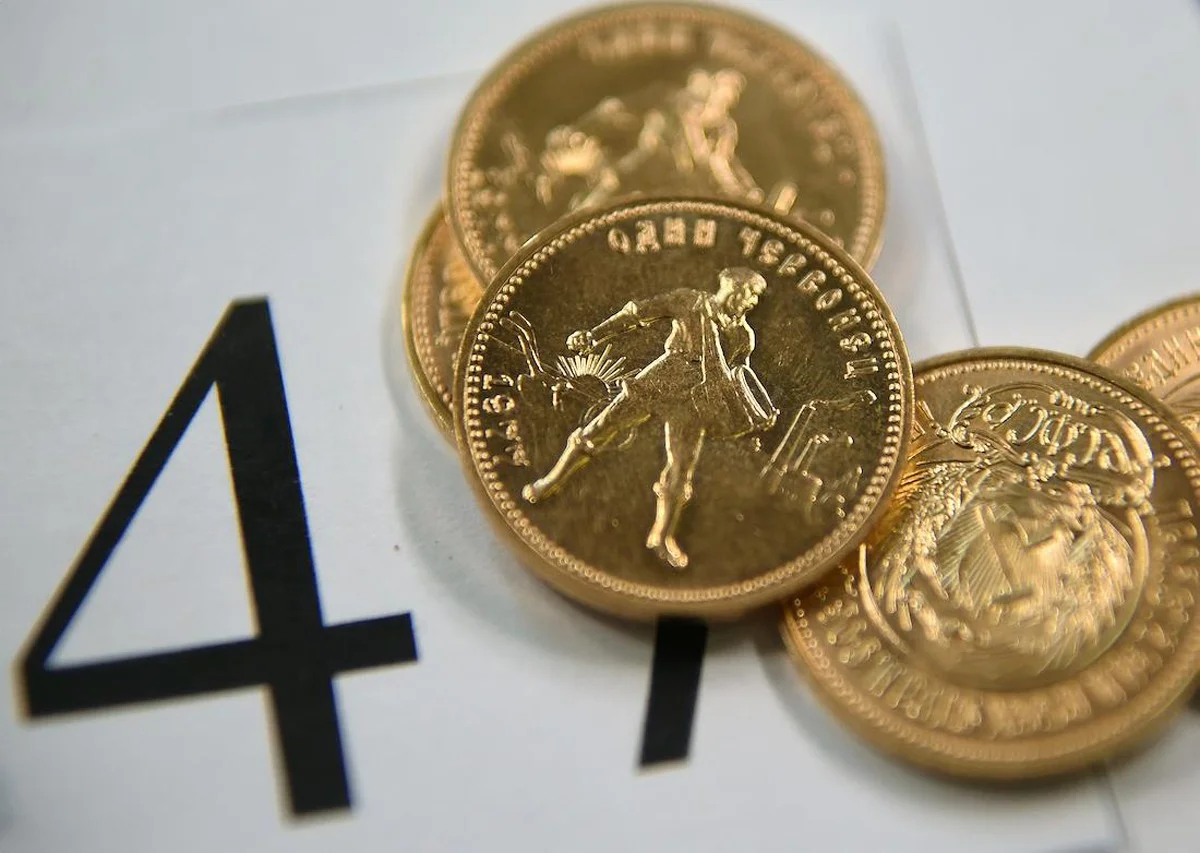
Instead of the royal profile, a “Sower” man was knocked out on Chervonets, and the official course of the new gold coin was declared at 9.4 “Chervon ruble” for 1 British pound. There was as much gold in the “Sitter” as in the royal coin, 7.7 grams.
As historian Alexander Dongarov wrote in the book “Foreign Capital in Russia and the USSR”, the Chervonets officially was first included in the quotation on the Riga Exchange on April 10, 1924. The Tallinn Exchange began to quot it from May 7 of the same year, Roman - from April 1, 1925. In addition, the Chervonets was quoted in China, Mongolia and Iran.
The main European exchange, London, did not quarrel Soviet currency. But since the English importers of Soviet products at times needed chervonians to make deals with Soviet organizations, in the second half of 1923 the USSR State Bank concluded an agreement with the British Lloyds Bank on the sale and purchase of a chervonets by gold parity, regardless of the real purchasing power of the ruble.
As of January 1, 1924, the State Bank had correspondent communications with 100 foreign banks with which an agreement was reached on the purchase of Chervonets at the course of the Moscow Exchange at a discount.
But something went wrong.
Yes, the Soviet Chervonets “weighed” as much as the same as the Nikolaev “Golden Ten”, which before the revolution exchanged several cents for one pound sterling. But from the point of view of purchasing power in the mid-1920s, the Soviet Chervonets was not compared with the English currency. If in the West, after the end of the First World War, the prices of many industrial goods returned to the price of 1913 prices or became even lower, then in Soviet Russia the prices of similar products increased two to four times.
For the goods, which in 1914, ten “royal gold rubles”, ten years later, had to be given an average of eighteen “Soviet gold rubles”.
At first, the Soviet Chervonets supported the cheapness of agricultural products in the USSR; However, by the mid-1920s, grain and meat began to rise in price.
As a result, the Soviet Golden Chervonets were not needed by the foreign market. According to the Soviet trade in London, British companies bought Soviet chervonians only for specific transactions.
The chairman of the Supreme Council of the national economy of the USSR Felix Dzerzhinsky admitted :
“If we compare the purchasing power of the chervonets in our market and foreign currency in the foreign market, it turns out that on the currency on which our exporters sell their blanks, they could buy a much more products, goods abroad than for those wormers that they receive in exchange for currency ... Chervonets exchanged for currency in the State Bank give Soviet importers the opportunity to buy the opportunity Much more than these chervonets can be bought from us. ”
Despite the growing gap in the prices of the domestic and external markets, the official Chervonets course - 9.4 rubles per pound sterling - remained unchanged and became more and more unrealistic. In June 1926, in the free foreign exchange market in the USSR, for three wormers, two funnelings were given at best.
Neither correspondent agreements with foreign banks, nor the official quotation of the chervonets on several peripheral exchanges meant that the Chervonets recognized the world currency market as a reliable means of accumulation and calculations for all types of payments, Alexander Dongarov wrote. Foreign buyers did not want to accept Soviet wormers in paying for their products (they could not find the buyer for this money later). Therefore, all the calculations with concessionaires had to be conducted in foreign currency.
In 1926, the Chervonets ceased to exchange for gold and currency in the private foreign exchange market, and in 1928 a ban on the export of Chervonets from the USSR was introduced.
"Theoretical gold content"
Throughout the 1930s, no attempts to offer the Soviet ruble to the USSR trading partners in payment for Soviet export were made-foreign trade was carried out exclusively for the currencies of “capitalist countries”.
Nevertheless, the ruble exchange rate for these currencies continued to be determined on the basis of conditional “gold content”. The dynamics of the change in this course is set out in the certificate “On the Ruble in relation to foreign currencies” of the currency and economic department of the USSR State Bank of April 25, 1956 (RGAE, f. 2324, op. 28, 945, p. 124–127), signed by the deputy head of the foreign exchange operations of the State Bank of the State Bank of the State Bank of the State Bank Mikhail Polyakov.
During the monetary reform of 1922-1924, the gold content of the ruble was established in the same amount as the ruble had before the First World War - 0.774234 grams of gold.
In accordance with this, foreign currencies were established based on the indicated gold content of the ruble and the gold content of the corresponding currency.
The courses of foreign currencies that did not have the content established by law were installed at their courses in London, New York and Paris in relation to pound, dollar, franc. The US dollar rate was at that time 1 ruble 94.5 kopecks.
When in 1933-1934 the dollar devaluation was carried out and its gold content was reduced by 49%, the dollar in relation to the ruble gradually decreased to 1 ruble of 14 kopecks.
Since April 1, 1936, by decision of the USSR Government, the ruble was equated with 3 French francs. The new gold contents of the ruble were not established, but since the French franc then contained 0.05895 grams of gold, theoretical gold content of the ruble was 0.176850 grams.
Since October 30, 1936, in connection with the devaluation of Frank and a decrease in its gold content to 0.04143 grams, a new ratio was established: 1 ruble = 4.25 franc. This ratio corresponded to the theoretical gold content of the ruble in the amount of 0.175950 grams.
Since the French Frank continued to depreciate in the future, and the golden maintenance of the dollar remained stable, from July 19, 1937, by decision of the USSR government, a solid ratio was established between the ruble and the US dollar at 1 dollar = 5 rubles 30 kopecks.
With the gold content of the dollar 0.888671 grams of the above ratio of 5 rubles 30 kopecks per 1 dollar corresponded to the theoretical gold content of the ruble 0.167674 grams. The courses of other foreign currencies to the ruble were then set through their exchange rate to the US dollar "
"... The official currency parity of the USSR performs its tasks is not satisfactory enough ..."
Comrade Stalin became interested in the problems of determining the ruble exchange rate at the end of the Second World War - when the question arose about normalizing the money circulation completely upset by the war.
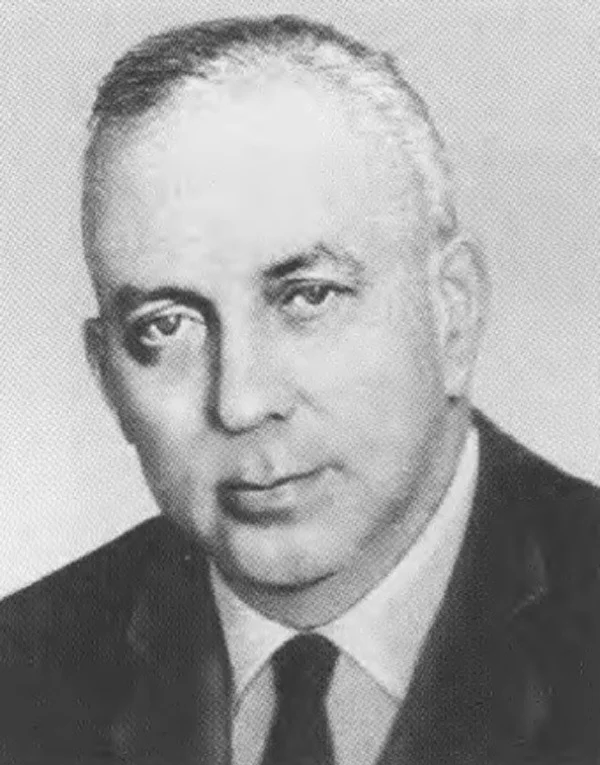
The outstanding Soviet economist, a member of the Bureau of Experts of the Board of the State Bank, Professor Zachariah Atlas, was entrusted to prepare relevant information on behalf of the State Bank of the USSR.
The task, standing in front of Professor Atlas, was very difficult.
On the one hand, he had to convincingly explain to the government that the “Soviet ruble” is nothing more than an internal calculated receipt that, in principle, could not have any value outside the USSR and is not of any interest for foreign partners. Moreover, the “golden content” of the ruble was completely “theoretical”, the USSR could not produce any “exchange for gold” of its money signs.
On the other hand, the expert of the State Bank was to give advice-how to even calculate the conditional ratio of the ruble to the dollar.
Professor Atlas coped with this task brilliantly. The certificate “On the steaming of the ruble” (RGAE, f. 2324, op. 26, d. 193, p. 203–209) is so informative, substantial and well written, which deserves extensive citation and attentive reading. The most remarkable thing is that the “certificate” has not only historical and scientific value - individual explanations and recommendations that Professor Atlas prepared for its high -ranking readers in 1945 did not lose relevance 80 years later.
Currency parity with certain deviations reflects the ratio of the purchasing force of the currencies of the relevant countries, explained Professor Atlas. At the same time, the economist continued his thought:
“... in the conditions of state currency control ... official currency parity can be fixed at a level, long and significantly deviating both from the actual ratio of the gold content of currencies and from the parity of purchasing force.
An artificially low currency course gives an export bonus and limits imports, and an artificially overstated course gives, on the contrary, an imported bonus and limits exports.
In the conditions of the monopoly of foreign trade and the currency monopoly in the USSR, the currency course is directly established by the state and can remain unchanged for a long time, despite significant changes in the internal value of money both in gold and in goods ... ”.
That is, the course "Comrade Government" can establish anything. But you can’t deceive the economy, delicately prompted the expert of the State Bank. As soon as it comes to calculations for goods, the actual value of your calculated receipt in the eyes of the buyer and seller, at least three times, will become obvious. To illustrate this statement, Atlas cited several examples:
“Along with the official parity, the actual parity practically also applies, which is more closely related to the change in the purchasing force of the ruble and with the price of gold inside the country, that is, with the real gold content of the ruble. This actual parity finds its expression in the need to cover losses to organizations exporting products. The sum of the paid subsidies to cover these losses is actually nothing more than an additional payment to parity, that is, a well -known adjustment of it. And this shows that for Soviet organizations the actual course is different, namely, it is equal to the official parity plus subsidies, covering the gap between the prices of these products in rubles and in dollars. ... Likewise, the removal of superprofits from imports indicates the same. But here it is not the amount of subsidies, but the amount of seizure is adjusting the official parity. ”
Zachariah Atlas also touched the question of the question of Soviet leaders extremely painful for Soviet leaders-whether the prisoners of the prisoners are really so profitable as economists say from the Main Directorate of Northeast Corporate Labor Camps. The expert of the State Bank found a virtuoso formulation, suggesting that “cheap gold” actually costs the budget much more than the gold miners report:
“The establishment of a system for making gold producers at low prices ... actually means the payment of a higher price for gold in Soviet rubles compared to the official price.”
In the same way as it regarding Soviet foreign trade operations, along with the official course there is practically actual course through the mechanism of subsidies for export and the removal of superprofits for imports, Professor Atlas summed up.
Due to the fact that the existing currency parity deviates greatly both from the purchasing force parity and the actual gold parity, some of its functions, official currency parity does not satisfy enough, the professor said.
"A distorted picture ..."
Further, the economist passed to the answer to the main question that interested the government of the USSR: is it possible, based on the “official course” of the ruble, to compare the cost and cost of products in the USSR and abroad? The Atlas answered this question in the negative:
"A comparison of the cost of products with us and abroad at the existing rate would give a completely distorted picture."
It was also not possible to calculate the correct course.
Yes, the expert of the State Bank wrote, you can build a currency exchange rate of the ruble and directly based on the parity of the purchasing force of the ruble and the dollar with certain consciously established deviations from this parity, but:
“Since, according to available calculus, the level of labor productivity in the USSR is 2–2.5 times lower than in the USA, obviously, the ratio of price levels cannot but reflect the fact that the value of many goods in the USSR is higher than in the USA. Therefore, the currency course, built on the basis of the purchasing force parity, must obviously deviate from this parity 2–2.5 times in the direction of exceeding the price level in the USSR (in rubles) in relation to the price level in the USA (in dollars). ”
The most correct from the national economic point of view would be to take the weighted average level of prices of all goods in the USSR, including means of production, wrote the Atlas. But the problem of " such an approach was that the price of prices for consumption funds is much higher in our country than for the means of production."
In addition, when calculating a new course, the question of how the level of salary in the USSR and other countries will look very significant in the course of one or another course, delicately resembled the expert of the State Bank.
The cost of means of production for enterprises was artificially underestimated, and the cost of consumer goods was artificially overstated. Simply put, the activities of “Soviet capital” were paid by the “Soviet working people” - everything that the government bought at the prices set by them, it tried to buy cheaper, and everything that the government sold people was more expensive.
So how is the ratio of the ruble and dollar correctly? And it depends on what you want, Zakhary Atlas answered:
“The specified issue can be resolved depending on what functions the revision of the exchange rate will focus on.”
As the "dollar of four rubles" believed
As a result, they returned to the determination of the new ruble exchange rate to the dollar five years later, after the confiscation reform of 1947 and a sharp increase in consumer prices - with the simultaneous abolition of the card system.
Among many Soviet myths, the fairy tale remains extremely popular about how Comrade Stalin “collapsed the dollar” in 1950, setting a exchange rate at the rate of 4 rubles per dollar contrary to the opinion of Soviet economists.
In fact, the history of such a decision is described in detail in the certificate of the State Bank “On the ruble course regarding foreign currencies that we have already quoted:
“When establishing the gold maintenance of the ruble in 1950, the Central Statistical Administration (CSS) of the USSR made an approximate calculation of the purchasing force of the ruble compared to the US dollar. The calculation was based on the cost of industrial products, personal consumption items, services rendered to the population, and crops of agricultural products in the USSR for 1949, on the one hand, at the prices of the USSR and, on the other hand, the cost of the same goods and services at US prices. ”
The cost of Soviet goods, services and means of production in “rubles” Soviet statistics were determined by 611 billion rubles, the cost of American goods, services and means of production of $ 153 billion. Having divided 611 into 153, statistics came to the conclusion that they found a “real ruble exchange rate to the dollar”, and then decided that to determine the “gold content” of the ruble, it was necessary to divide the “golden content” of the dollar into four.
Comrade Stalin did not argue, and on March 1, 1950 he signed a resolution of the Council of Ministers of the USSR, according to which a new gold maintenance of the ruble was established - 0.222168 grams of pure gold. According to this gold content of the ruble, the dollar exchange rate, which contained 0.888671 grams, was set at 1 dollar = 4 rubles.
But here it turned out badly.
"The state of the dollar costs an average of about 8 rubles ..."
As explained in 1956, Deputy Head of the Department of Currency Operations of the Board of the State Bank of the USSR, Comrade Polyakov, Chairman of the State Bank of the USSR, Comrade Popov:

“... Such a calculation of the ruble in relation to the dollar is in a sense of artificial. As a result of this, the ruble exchange rate against most currencies is overestimated ...
Завышенность курса рубля подтверждается тем, что наши внешнеторговые организации, продавая вырученную за экспортные товары иностранную валюту Госбанку по действующему курсу, имеют дефицит и покрывают своей выручкой меньше 50% суммы, уплаченной ими внутренним поставщикам товаров по отпускным ценам без налога с оборота. Это дефицит покрывает им госбюджет.
Таким образом, за каждый вырученный от экспорта доллар объединение получает от Госбанка 4 рубля и из бюджета тоже около 4 рублей, то есть государству доллар обходится в среднем примерно в 8 рублей».
Откуда же «государство» брало деньги для компенсации экспортерам?
But where. Согласно расчетам, представленным в Правительственную комиссию, которую возглавлял член Политбюро ЦК КПСС Анастас Микоян, в 1951 году товары, импортированные СССР из «стран народной демократии», продавались советским людям в среднем в 12 раз дороже, чем покупались государством. По расчетам комиссии, коэффициент доходности к импортной стоимости по промтоварам составлял 9,9, а по продовольствию — 17,7. На товары из «капиталистических стран» цены повышались в среднем в 16 раз.
По конкретным видам товаров разница была еще значительнее. Шерстяные ткани в СССР продавались в 7 раз дороже, чем закупались за границей. Пряжа искусственного шелка из Италии, «приехав в СССР», повышалась в цене в 22,1 раза, французское штапельное волокно — в 49,5 раза.
Самые ходовые импортные товары, поступавшие в розничную торговлю в СССР, по сравнению с закупочными ценами удорожались в пять–восемь раз. Наиболее ходовые товары стоили еще дороже.
В десять раз дороже закупочной цены продавались наручные часы.
Импортные лезвия для бритья росли в цене в 18 раз.
Чешские чулки дорожали в 10 раз.
Французский бархат — в 20 раз.
При пересечении границы СССР какао-бобы повышалась в цене в 22 раза,
индийский чай — в 23 раза,
рис — в 14 раз.
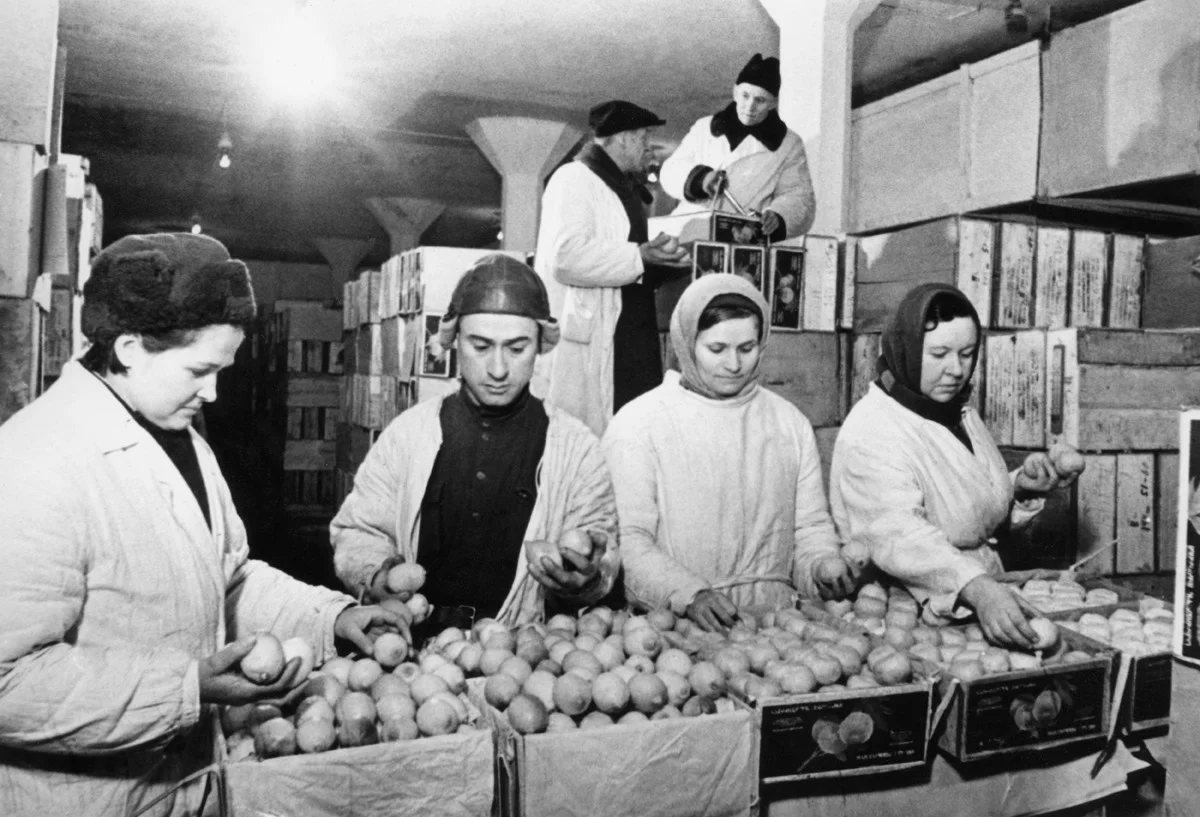
По пути к советским прилавкам итальянские лимоны дорожали в 44 раза (РГАНИ, ф. 5, оп. 30, д. 149, л. 32).
В общем, как и объяснял профессор Атлас в 1945 году, профицит советского торгового баланса и сверхприбыли экспортеров и импортеров оплачивался советским потребителем.
«…советский рубль занимает одно из последних мест…»
А что же было делать? Nothing! Вся экономическая политика советского правительства строилась на идее завышения «потребительских цен» по сравнению с «производственными», и, как разъяснял товарищ Поляков:
«…одна из трудностей определения реального соотношения покупательной силы рубля в отношении иностранных валют заключается в большом разрыве у нас между оптовыми ценами (без налога с оборота) и розничными ценами, включающими торговые наценки и налог с оборота.
В иностранных государствах такого большого разрыва между оптовыми и розничными ценами нет.
Поэтому сравнительная покупательная сила рубля, исчисленная на базе розничных цен, резко отличается от его покупательной силы, исчисленной на базе оптовых цен. Средняя покупательная сила рубля в отношении иностранных валют, исчисленная на базе как розничных, так и оптовых цен, является поэтому абстрактной, не отражающей реальных соотношений ни в одном, ни в другом случае…»
В итоге вопрос определения соотношения рыночного соотношения рубля к доллару административными способами был решен совсем уж радикально.
Советский рубль должен перестать быть валютой, ограниченной национальными рамками. Неуклонное развитие наших внешнеторговых связей … требует превращения рубля в мировую валюту наряду с американским долларом, писал Владимир Геращенко, первый заместитель председателя правления Госбанка СССР, представляя председателю Совета министров СССР Никите Хрущеву проект денежной реформы.
Оценку иностранных валют, установленную в 1950 году, Геращенко прямо называл неправильной и предлагал начать « определять валютные курсы исходя из сложившегося уровня цен на средства производства и предметы потребления в СССР и в США» .
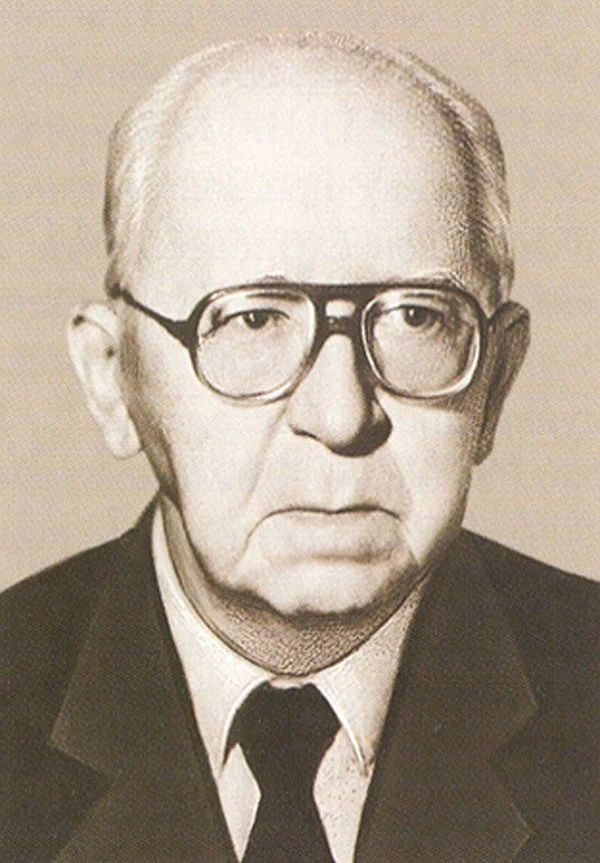
«В настоящее время советский рубль по сравнению с валютами крупнейших капиталистических стран занимает одно из последних мест, — писал Геращенко. — Курсы иностранных валют крупнейших капиталистических стран мира, выраженные в рублях, выглядят следующим образом:
1 доллар США — 4,00 руб.
1 английский фунт — 11,20 руб.
1 марка ФРГ — 0,95 руб.
Но, если принять во внимание надбавки к официальным курсам иностранных валют, … то соотношение между перечисленными выше валютами и рублем еще более ухудшается. С 1 апреля 1957 года установлено следующее соотношение, применяемое в неторговых операциях:
1 доллар США — 10,00 руб.
1 английский фунт — 27,60 руб.
1 марка ФРГ — 2,38 руб.
Исправить сложившееся соотношение между рублем и валютами других стран путем постепенного снижения цен на товары и повышения покупательной способности рубля не представляется возможным. Сложившийся уровень заработной платы в нашей стране ограничивает возможности для значительного снижения розничных цен на товары широкого потребления. Что касается снижения оптовых цен на средства производства, то в этой области наши возможности еще меньше…»
Радикальное решение, не давшее результата
«…коренное изменение соотношения между рублем и валютами других стран возможно лишь в том случае, если мы у себя в стране изменим масштаб цен и осуществим деноминацию денег, находящихся в обращении», —делал вывод Владимир Геращенко.
Госбанк СССР предлагалпонизить цены на все товары широкого потребления, а также на средства производства в 10 раз с одновременным снижением в таком же размере номинальной заработной платы. Вместо денег, находящихся в обращении в настоящее время, следовало выпустить новые деньги и обменять их на старые по соотношению 1 к 10.
И в этом случае официальные курсы валют ряда капиталистических стран выглядели бы следующим образом:
1 доллар США — 0,40 руб.
1 английский фунт стерлингов — 1,12 руб.
1 марка ФРГ — 0,09 руб.
Но главная идея товарища Геращенко, за которую схватилось советское правительство, заключалась не в этом. « Необходимо иметь в виду, что прямое повышение курса американского доллара могло бы вызвать нежелательные для нас отклики и сравнения в буржуазной прессе , — объяснял Геращенко товарищу Хрущеву. — По-иному будет обстоять дело, если мы изменим масштаб цен, проведем деноминацию и одновременно изменим курс нового рубля, выпущенного в обращение, по сравнению с валютами капиталистических стран».
При снижении цен в СССР в 10 раз можно было бы установить курс американского доллара не на уровне 40 копеек, а на уровне 70 копеек. Это можно сделать путем повышения золотого содержания рубля не в 10 раз, а в меньшем размере. Если установить соотношение: 1 американский доллар равен 70 копейкам, то в этом случае рубль будет стоить дороже, чем самая крепкая валюта капиталистического мира, рассуждал Геращенко.
После денежной реформы 1961 года рубль, может быть, и выглядел теперь как «самая крепкая валюта» мира, но экономику товарищ Геращенко все равно не обманул. Никуда не делась главная причина, не позволявшая определить «настоящий курс рубля», — большой разрыв между оптовыми ценами в СССР (без налога с оборота) и потребительскими розничными ценами, включающими торговые наценки и налог с оборота, о котором писал Михаил Поляков.
Искусственное занижение цен на «средства производства» вместе с искусственным завышением цен на «потребительские товары» делало «среднюю покупательную силу» рубля « абстрактной, не отражающей реальных соотношений ни в одном, ни в другом случае… ».
И как «золотой червонец» 1923 года не смог заинтересовать иностранных покупателей, так и бумажный рубль 1961 года, «обеспеченный всем достоянием Союза СССР», заинтересовал их еще меньше. Советскому Союзу пришлось торговать с «капиталистическими странами» на твердую валюту или по бартерным схемам.