
Translated material
Not (c) private property and nomenclature state
Vladimir Pastukhov* suggested looking at the 90s with the “turned off the imagination”: they have not ended yet, and no one robbed anyone
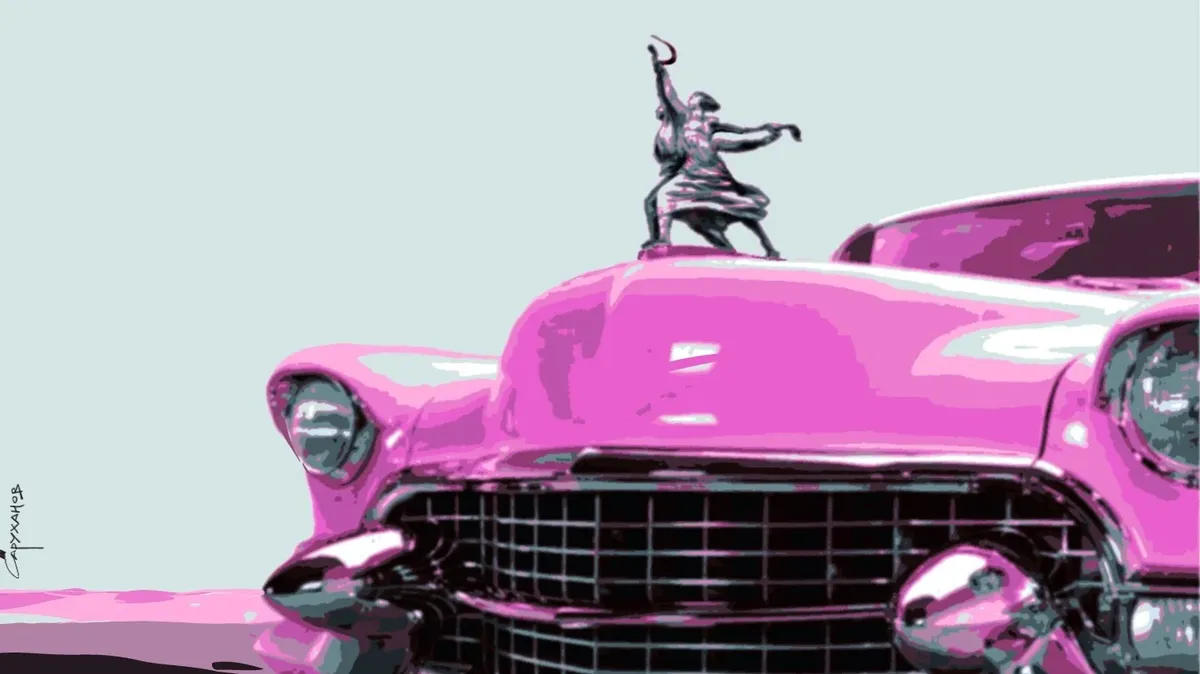
Peter Sarukhanov / "New Gazeta"
18+. This material (information) was produced, distributed and (or) sent by foreign agent Pastukhov Vladimir Borisovich or concerns the activities of foreign agent Pastukhov Vladimir Borisovich
As the poet said, the thought of the mentioned is a lie-even if it is such a powerful thought as the statement that the 90s are to blame for everything. Once a fresh and therefore quite working thesis that Putin and Putinism is a product of the 90s, becoming a YouTube trend, it has become a snake that survived its poison. Fashionable media lampshades are now sewing from the skin of this snake, which cover the light of the once great stars.
There is a feeling that it is time to return the snake its poison and make serious clarifications to the understanding of what they were actually, these “damned 90s”, and whether it was possible to avoid them. The terrible truth is that they were ugly, boundless and shameless. But even more terrible truth may consist in the fact that they were non -alternative. In the 90s, as now, we got exactly the story that we have earned centuries of previous slavery and the lack of repentance for previously committed crimes. For those interested in: repentance and call for reprisal - this is about different.
Difficulties in interpretation
Today, the 90s have turned into an unhealed historical fistula. Because of it, every few years, the source of social nerve of Russian justice occurs by the aggravation of social neuralgia. The first serious exacerbation on this basis happened on the tail of the failed Medvedev thaw of the 2008–2012-and, by the way, occurred against the backdrop of the efforts of the Kremlin and personally Sechin to promote the project of raider “renationalization”. The followed by Peter Aven’s attempt to differently place the accents, reducing the question of the role of an unpleasant person in history,, however, did not have a serious continuation, and by the end of 10 discussion almost stalled. Nevertheless, after the beginning *** [Sw], this historical “Voronya Slobodka” caught fire immediately from two sides.
Claims to the 90s, and in a generalized and conceptualized form, presented Putin’s team and the Navalny team almost simultaneously.
The peculiarity of today's discussion about the 90s is that almost all the main facts about that time are already known, and those that are unknown, are not as significant as many seem. The continuation of “factual” excavations is unlikely to lead to significant progress in the understanding of this era and even more so - to the change of accents in its prevailing perception. Now the “plug” is not with facts and texture, but with their interpretations and extrapolations.
The image of the terrible Russia of the past is applied as an application either on the disgusting Russia of the present, making it a little more attractive (due to comparison with even worst times), then on a bright face of the beautiful Russia of the future, making it even more beautiful. The 90s lose their independent historical significance and turn into part of the actual ideological discussion, that is, into a narrative, with the help of which political behavior is modeling (programmed), alliances are formed and disintegrated, their own and strangers are denoted.
Return to the context
The battle of narratives is according to the rules of the battle of psychics, where intonation is more important than meanings. In order to get out of this web of fake semantic shades and emotional overexposure, it is necessary to return the events discussed in their real historical context.
Of course, Putin did not fall from the sky, but came from the 90s-with banditry and privatization as a quintessence of the moral and political content of this era. But the 90s themselves, with all their criminal attributes, did not fall from the sky, but also came from somewhere. And today it is time to move on, more precisely - deeper on the stairs of history, in order to deal with the “cause of the reasons”, and not graze in the trampled meadow of mutual reproaches and accusations, where nothing has grown for a long time.
Unfortunately, having smoked deeper, we are likely to understand that the 90s is a phantom. They never began and did not end with anything. The 90s is the very fate of Russia, its hidden essence.
We all together, without exception, continue to live in them, because God has not come up with another Russia for us. And if it seems to someone that he is not from the 90s, then this means that he is poorly informed about his genealogical tree, well, or just forgot to look at himself in the mirror of history. I propose to take a look.
The property of the Cat Schrödinger
To steal something good, you need to have something good. If you have no property, then you can’t lose it. This is a maxim that seemed to Truism, which has become a folklore and poetic template, does not work when it comes to privatization in Russia in the 90s of the last century. The people, robbed seventy years before, at the very dawn of Russian Bolshevism, then deprived of private property and rights to any independent economic activity for many decades, forgot and forgiven the grievances to those who really wrapped it up to the thread, but took out the class hatred of those who expropriately expropriately, the robbery state, in fact, which became the only owner of the entire owner significant property after the Bolshevik revolution.
Was the expropriation of the state a bunch of nomenclature bonz, criminal authorities and partly into this process of a different intelligentsia in a fair business? Of course not. Can this expropriation be called a robbery of the people? Alas, there is also no, because nothing from the new (in fact - old) ruling class never (or the last 70 years) belonged to the people.
Should the ex-Soviet elites think about the people at that moment, and, having thought, limit their appetites, that is, take care of the more proportional distribution of property expropriately in the state inside a wider circle of people? Of course, but then this country would be called somehow differently-and it would have had a different story in general. Do not forget that we were talking about the grandchildren of those who conducted the first expropriation, also exhausted by the "apartment issue".
One way or another, privatization in the 90s was anything, but not robbing the people from whom everything was already stolen long before her.
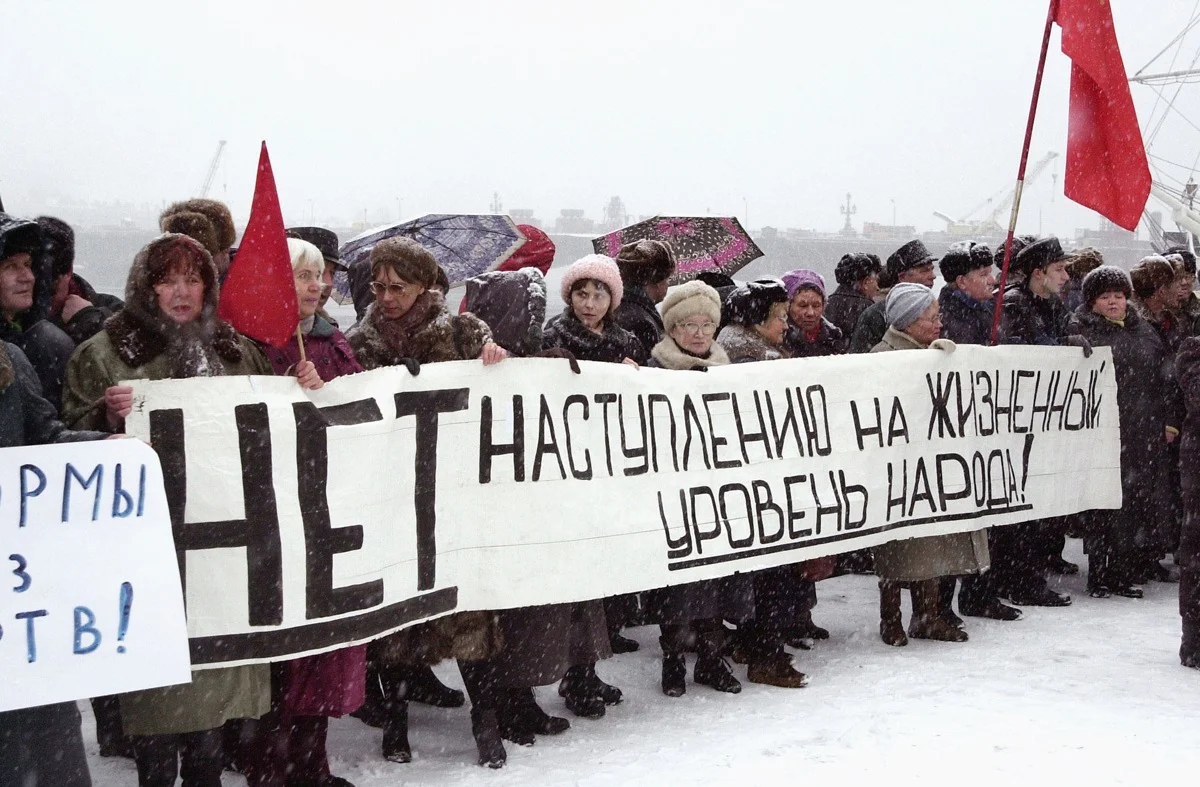
Was the owner?
The myth of public property turned out to be surprisingly tenacious and managed to survive the era of the so -called socialism in Russia for many decades. This myth, like a medal, has two sides: it is knocked out in the same arshin letters, that under socialism there was no private property, and on the other-that in the 90s it suddenly miraculously appeared from nowhere thanks to market reforms and privatization.
It seems to me doubtful both. Under socialism, the only real property was state capitalist private property, and socialism itself is nothing else in nature, as a hospitalism brought to the monopolistic extreme (which, by the way, the founding fathers perfectly understood).
After the destruction of the system of hospitalism, full -fledged private property in Russia did not appear, and the Soviet -type hospitalism simply came to replace the state -owned state -owned state -sample, that is, the system of hierarchical ownership of assets with the permission of the state and with the restrictions established by the state for the collective class of nominalists who call themselves owners.
The meaning of privatization, as it is seen thirty years later, was not in creating a class of private owners (albeit by robbing a “game of fate of offended births”-was it different somewhere?), But in the transformation of a centralized state property into a decentralized le owner system, in which a narrow circle of “assertive management” of property is allowed to use it as their own.
Those who do not understand the established rules of the game and are trying to behave like real owners go forest - dear Dalnaya, dear Khodorkovsky*.
The revenge of Leo Trotsky
About Putinism and the 90s one must understand one sufficiently simple truth: both are equally about state feudalism, and therefore they are naturally connected by a single historical causal connection, but this is a base that does not explain little, although it is necessary to start with it. At the same time, the “feudal” nature of property and power under Yeltsin is less obvious than under Putin, but nevertheless he is just that.
The role of the “oligarchs”, “Semibankershirs”, in general, the entire clan of “new masters of Russian life” (new Russians) and then and now very overestimated. The only real master of Russia in the 90s, just as in the 00s, 10th and 20th, was the state, a transformed former Soviet bureaucracy. This, by the way, is very clearly shown in the film by Pavel Lungin, but in fact it can be confirmed by numerous objective studies.
The ratio between Yeltsin Gosafodalism and Putin's Gosfodalism is approximately the same as in the early and later Middle Ages: under Yeltsin, the freedom of the barons is large, the king is a beggar and forced to maneuver, and under Putin the freedom of the barons is minimal, the king is rich and steering. This, however, does not change the essence of the matter: both there and there the feudal system at different stages of its development.
For us, it is important, however, not a statement of the “affinity” of the 90s, followed by an era, but their general genesis. This very state feudalism did not fall into Russia in the 90s from the sky as a hail in July, but was prepared by the entire previous evolution of the Soviet system. About this inevitable degeneration of Stalin was warned by Trotsky from his far, which perhaps accelerated his tragic end. Ultimately, Trotsky took revenge on Stalin in that he was historically right, although not in everything (Trotsky believed that the rebirth would be bourgeois, but in reality they reached only second -rate feudalism).
By the end of the 70s, there was a complete and irreversible degeneration of the regional communist nomenclature. I described this process in detail back in 1994 in the article “From the nomenclature to the bourgeoisie: new Russians”.
The main idea: the nomenclature, as the terrorist component of the Soviet system was weakened, the began to control state resources under its control as its own, disposed of them as quasi -related, extracting an irregular personal benefit from it.
So I am ready to argue with Khodorkovsky: the formula “property is nothing, control - all” invented not Berezovsky, he also stole it.
As a result, by the beginning of the 80s, a significant part of the Soviet party and state apparatus wanted to bring its legal status in line with its actual status of real beneficiaries of state assets. This desire has become the main political driver of perestroika and subsequent Yeltsin reforms. That is, the 90s as a robbery of the state (not the people) in favor of the nomenclature and its political fellow travelers (about them later) were predetermined by all the logic of the previous Soviet history. It would not be possible to avoid this half -steel in any case.
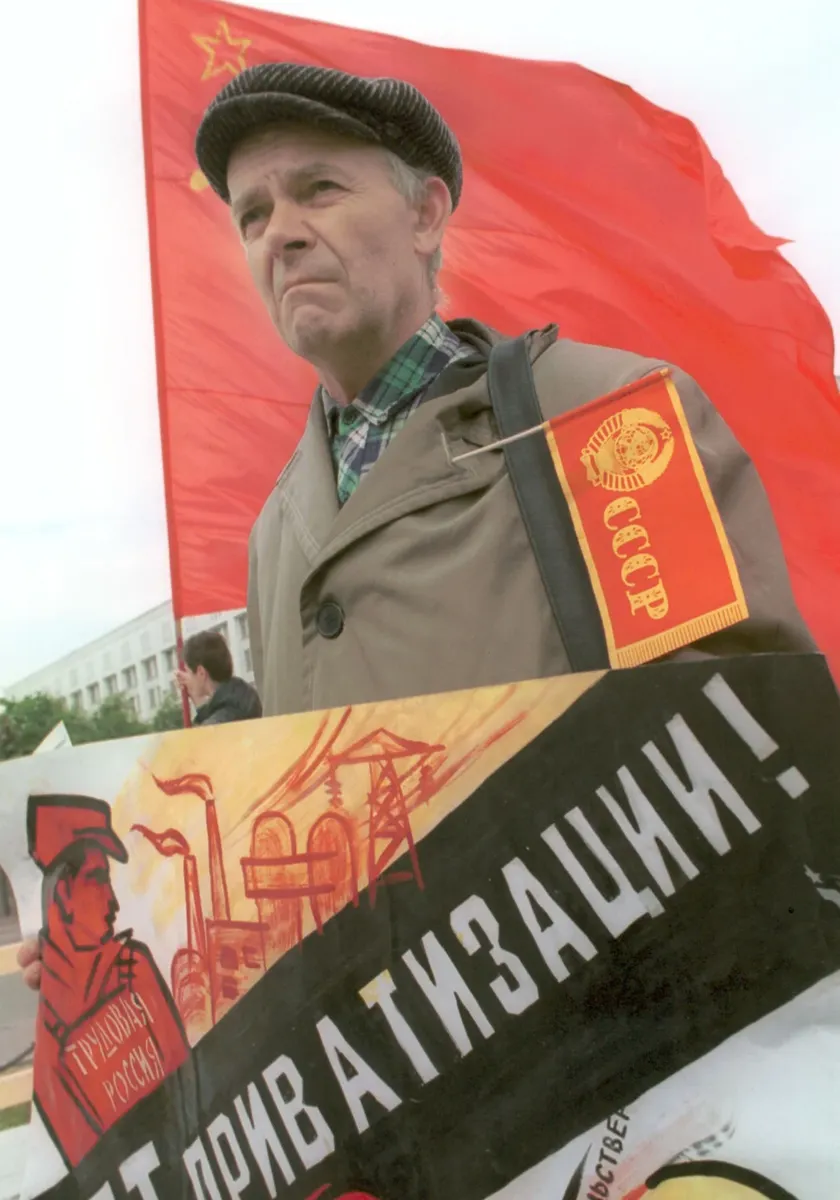
Everything is stolen to us
The concentration on the 90s as a self-sufficient, self-sufficient and therefore universally “explaining” period of Russian history led to a curious result: the “merits” of all previous eras were attributed to the 90th. Including in the issue of privatization.
In fact, the actual privatization, that is, the development of state assets as a personal resource, the entire period of Brezhnev’s stagnation and especially from the second half of the 70s was most active.
But still it was a rather limited, semi-legal process. And with the beginning of perestroika, he turned into a stormy stream, which also had a certain legitimacy. By that time, which in the “fiction history” is considered to be the “robbery of the century”, everything was already mainly stolen.
It is the end of the 80s that I am inclined to consider the period of the most shameless and the most barbaric (in the literal sense of the word-literally for beads and video recorders) privatization. It just walked “according to Berezovsky”: party bonzes, Soviet bureaucrats and other party -assembly disposed of everything that could reach, like their own, without making it into property. It was during this period that the currency pipeline served, served by “overlapping on the go,” by the Councils of Councils. In the same period, the main alliances are formed between the “red directors” and the “Soviet shadowers”, who will be shot more than once in the future (and still shoot). The history of all significant Russian post-communist states-both criminal and semi-criminal-goes precisely in the second half of the 80s, and not at all in the “terrible 90s”.
Writing the history of this period is much more difficult (and much more dangerous) than to go bankrupt about the oligarchs of the next decade. Until now, in many cozy corners of Europe, cute old-year old men and even billionaires, who are now under ninety and about which “Forbes”, survive their century.
By the time Yeltsin climbed into his tank, the country already had a very specific owner, another thing is that he was not everyone like.
"Red Directors" against entrepreneurs and bandits
In the 90s, Russia entered Makhno in a Jewish place. The state resembled a grenade from which the check was pulled out, but at the same time it did not explode, but fell and lying under her feet - and it is incomprehensible whether it was a dead piece of iron, or now it will tear. It was such an effect that was the destruction of the ideological party vertical, on which the entire Soviet structure was held.
The main characters of the era were the direct managers of assets and regulators (those who had a convertible admin resource in their hands - foreign trade licenses, foreign exchange earnings and quotas for raw materials). These people ruled the ball under the code name “Red Directors”. Thieves of the old formation and the workshops they roof them adjoined them. They supplied the system with cash, and where necessary - and the power component. This alliance was ready quietly, really, with a arrangement, at its leisurely pace to drive a paralyzed state. But the “third force” intervened, and not even one.
Freedom, especially economic, even in the Kutz itself, cut out a common product. It is difficult to hide under the nomenclature carpet. Expanding the space of freedom for itself, the Soviet party and economic nomenclature involuntarily gave a chance to other subjects that did not expect much and which, let’s say, was not very happy. This wide range of subjects could be determined by the term “entrepreneurs”.
It was a rather extensive and very motley “contingent”, which consisted mainly of immigrants from a diverse environment. But there were representatives of the highest and lower classes, the same part of the same “red directors” who felt the spirit of time and were able to correspond to it. The spirit of adventurism, a tendency to risk (often excessive), the desire and ability to build long chains of economic actions (“schemes”) and the willingness to study on the fly, that is, everything that distinguishes entrepreneurial people from imprisonment throughout the world, united this group.
But there were other “subjects” who were ready to take advantage of the revealed possibilities - bandits of all stripes, and mostly a new formation, which were shot down in flocks as wolves according to professional, regional or ethnic characteristics. These were veterans of the late Soviet wars, former athletes, growing forensic criticism and other “forest orderlies”. They aggressively entered the struggle for the “Soviet heritage”, playing against all and earned the glory of the “lawmakers”.
One way or another, but in the 90s Russia entered three “military columns”:
"Nomenclature" , consisting of "red directors", a retraining party -assembly and parts of the old thieves' elite;
"Entrepreneurial" , which consisted mainly of the heterogeneous intelligentsia and the groups joined it;
And the "gangster" , consisting of a cut of all stripes. All three columns moved in one direction: to master the new “Russian Klondike”, which seemed to be a drowned Soviet state.
The economic and political struggle between these three forces made up the content of the new era that has come.
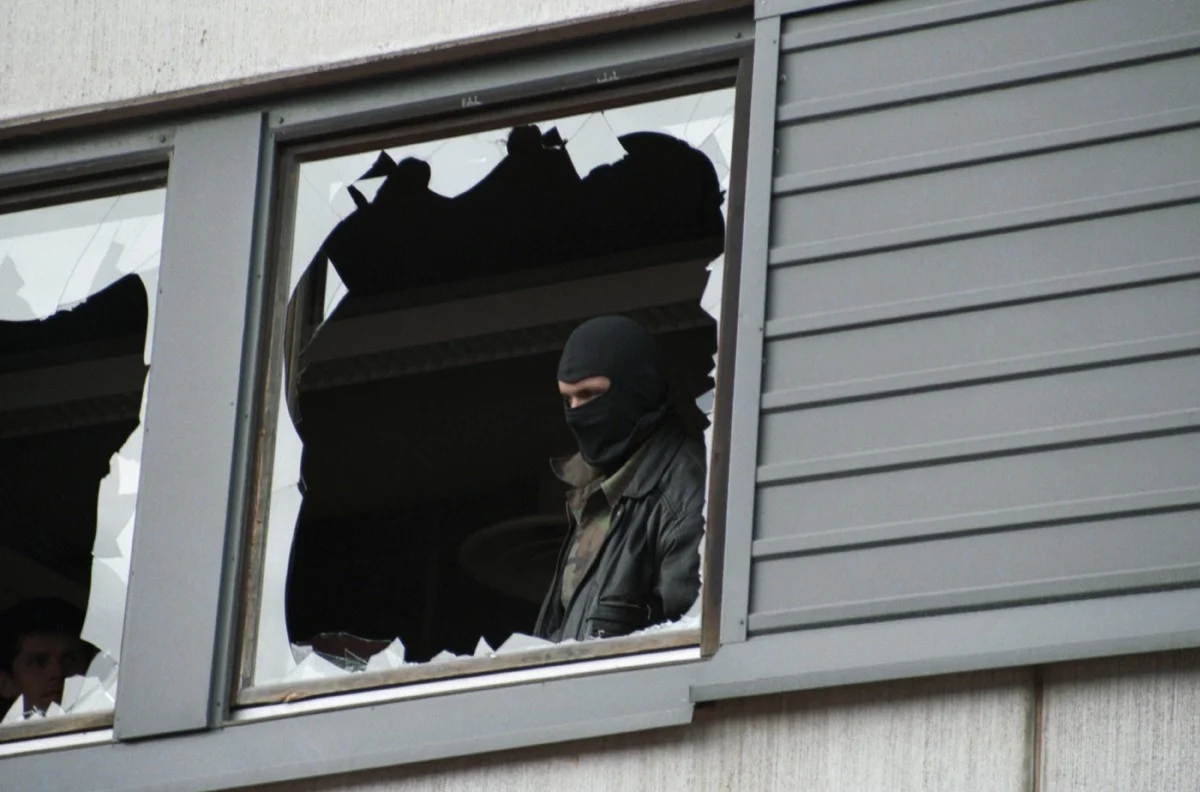
Coalition of the winners
In the struggle, which most of all resembled the Darwin natural selection, the entrepreneurs who managed to reformat and adapt the state that arose in the ruins of the USSR ultimately won. They formed something like a “power collaboration” with the new Yeltsin nomenclature in the framework of the program “Power Support in exchange for political (and when necessary, economic)”. С помощью государства, взятого то ли в союзники, то ли в заложники, возникший как будто из ничего предпринимательский класс сумел не без труда победить сразу на двух фронтах: и против «красных директоров», поставленных еще советской властью, и против «черных директоров», поставленных бандитами.
Приватизация — как первая (ваучерная), так и вторая (залоговые аукционы) — была непосредственной частью этой «войны миров», и, соответственно, являлась не совсем тем, чем она представлялась широкой публике.
Это не было великим «ограблением народа», а было перераспределением ранее награбленного от одного бенефициара революции к другому. Это не делало и не делает весь процесс ни более легитимным, ни более справедливым в глазах общества. Впрочем, он был не более и не менее легитимен, чем золотая лихорадка на Аляске. Споры о «предательстве идеалов» в этом контексте выглядят несколько неуместно. Идеалы там были вполне соответствующими смыслу происходящего. Как в доме повешенного не говорят о веревке, так в стране, отданной на разграбление шайке фанатиков сто с лишним лет назад, не говорят о ценностях.
But there are nuances. За покровительство надо платить, за покровительство со стороны государства — вдвойне и втройне.
Сделка предпринимателей с ельцинским государством была сделкой Фауста с Мефистофелем. С самого начала там был тот, кто продает, и тот, кто покупает. И те, кого все считали «покупателями», были «продавцами».
Чем больше времени отделяет нас от той эпохи, тем менее значимой представляется мне политическая, да и экономическая роль тех, кто вызывал тогда у общества (включая меня самого) наибольшее раздражение. Все эти банкиры, нефтянники, металлурги поставили себя изначально в зависимость от новой ельцинской бюрократии, и именно эта бюрократия создавала и диктовала те правила игры, которые привели Россию к сегодняшнему фиаско.
И именно наследники этой бюрократии сегодня более всего заинтересованы в том, чтобы сейчас, когда вся власть открыто сосредоточена в их руках, исторические акценты были расставлены иначе.
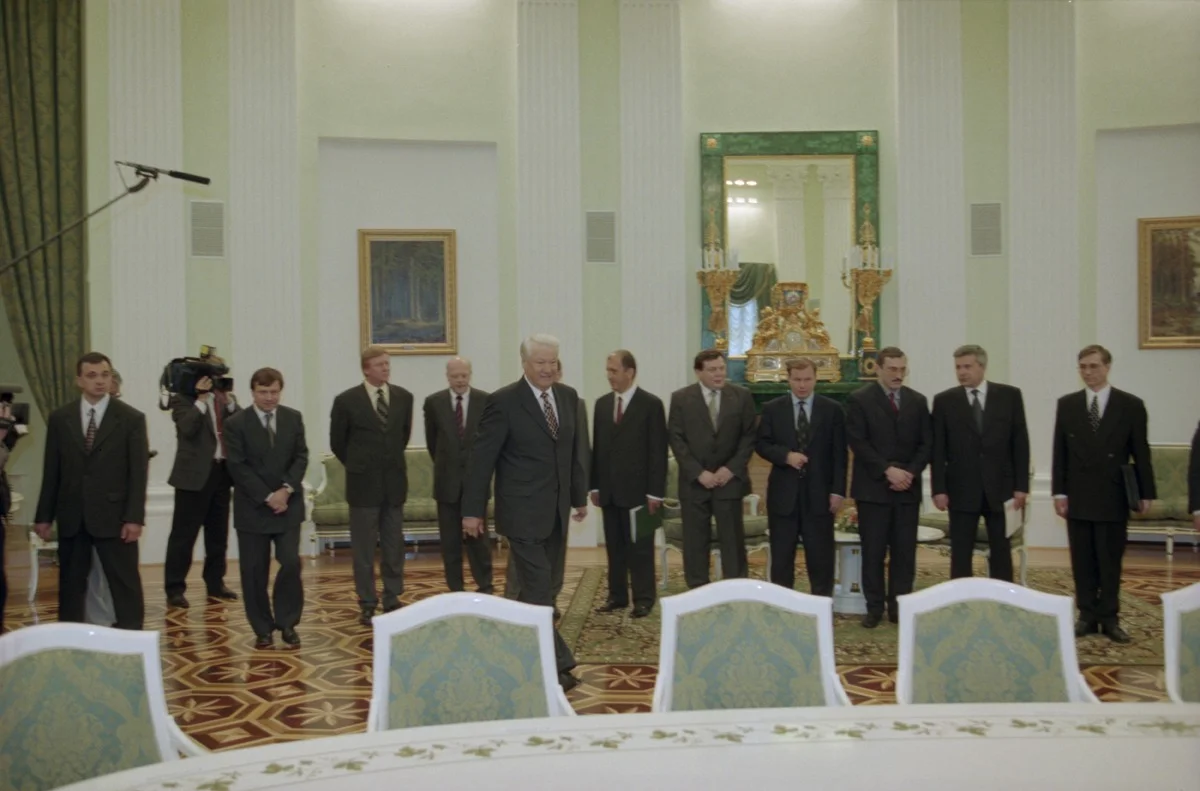
Мираж невозврата
У поражения на самом деле не меньше отцов, чем у победы. Просто в случае победы отцы появляются сами, а в случае поражения их разыскивают как алиментщиков. Сейчас на суде истории иск предъявлен к олигархам и либералам из 90-х. В этом удивительном процессе сразу две истицы (власть и радикальная оппозиция) пытаются взыскать с ответчиков политическую задолженность. Я не готов сейчас вступать в прения сторон о природе заявленных требований, но меня не может не удивлять, что, несмотря на то, что «истицы» такие разные, в этом конкретном деле они вместе на одной стороне баррикад. Напрашивается вопрос: почему?
К огромному сожалению, для всех нас, ныне живущих, проблемы 90-х как какой-то самостоятельной — и тем более самодостаточной — «темы» не составляют. С дистанции в тридцать лет отчетливо видно, что 90-е — это исторический мираж, возникший в воспаленном воздухе советской пустыни. При этом бродившие почти сорок лет по этой пустыне советские кочевники хотят обустроить внутри этого миража свой маленький политический оазис. Кто-то хочет построить в нем забор, защищающий его палисадник от революций, а кто-то, наоборот, хочет вырастить в этом палисаднике аленький цветочек новой русской революции. И тем, и другим мираж чрезвычайно удобен и полезен. Он отвлекает от постылой обыденности окружающего мира, но каждого по-своему.
90-е — это не процесс, а состояние. Состояние перманентной гражданской войны, которая полыхает в России уже более ста лет. У них нет ни четко выраженного начала, ни тем более осязаемого окончания. Это исторический фантом, из которого невозможно при всем желании извлечь ни корень добра, ни корень зла. Как часть гражданской войны он отметился грабежами и мародерством. Но не б о льшими и не меньшими, чем на всех других поворотных этапах этой войны.
Когда кто-то подчеркивает внутреннюю связь нынешних времен с 90-ми, он поступает правильно. Но когда он пытается этот мираж представить как точку невозврата, он подменяет существенные исторические связи несущественными, потому что
настоящей точкой невозврата в этой стране был и остается октябрь 1917 года, и никакие другие «точки» сформированный тогда вектор до сих пор не изменили. Это касается как собственности, так и свободы.
90-е с «выключенным воображением»
У Михаила Жванецкого была замечательная реплика о включенном и выключенном воображении — о том, что многие вещи совсем по-разному выглядят в зависимости от того, активировано ли собственное воображение наблюдающего или нет. Это имеет прямое отношение к нашему восприятию 90-х.
Включаем воображение — и видим подъем народного духа, движение масс к свободе, шанс круто поменять судьбу страны и свою собственную, которые мы все упустили. Рядом с этим духоподъемным зрелищем, где-то в углу писаной маслом картины видим жалкую кучку предателей, непонятно откуда взявшихся олигархов и прислуживающих им либералов. Эти оппортунисты и мизантропы не просто украли у народа свободу, но еще и обобрали его до нитки, отобрав общенародную собственность, которой этот народ так искренне дорожил. Все это они проделали с помощью приватизации, подтасовки выборов и банальных взяток.
Эта воображаемая часть реальности совпадает и у кремлевских идеологов, и у их злейших оппонентов. Разница только в одном пункте. «Кремлевские» полагают, что единственным добрым делом, которое невольно совершили эти предатели, был привод к власти Путина, а их оппоненты считают, что это как раз и было их главным предательством. В остальном вектор воображения у обеих групп совпадает.
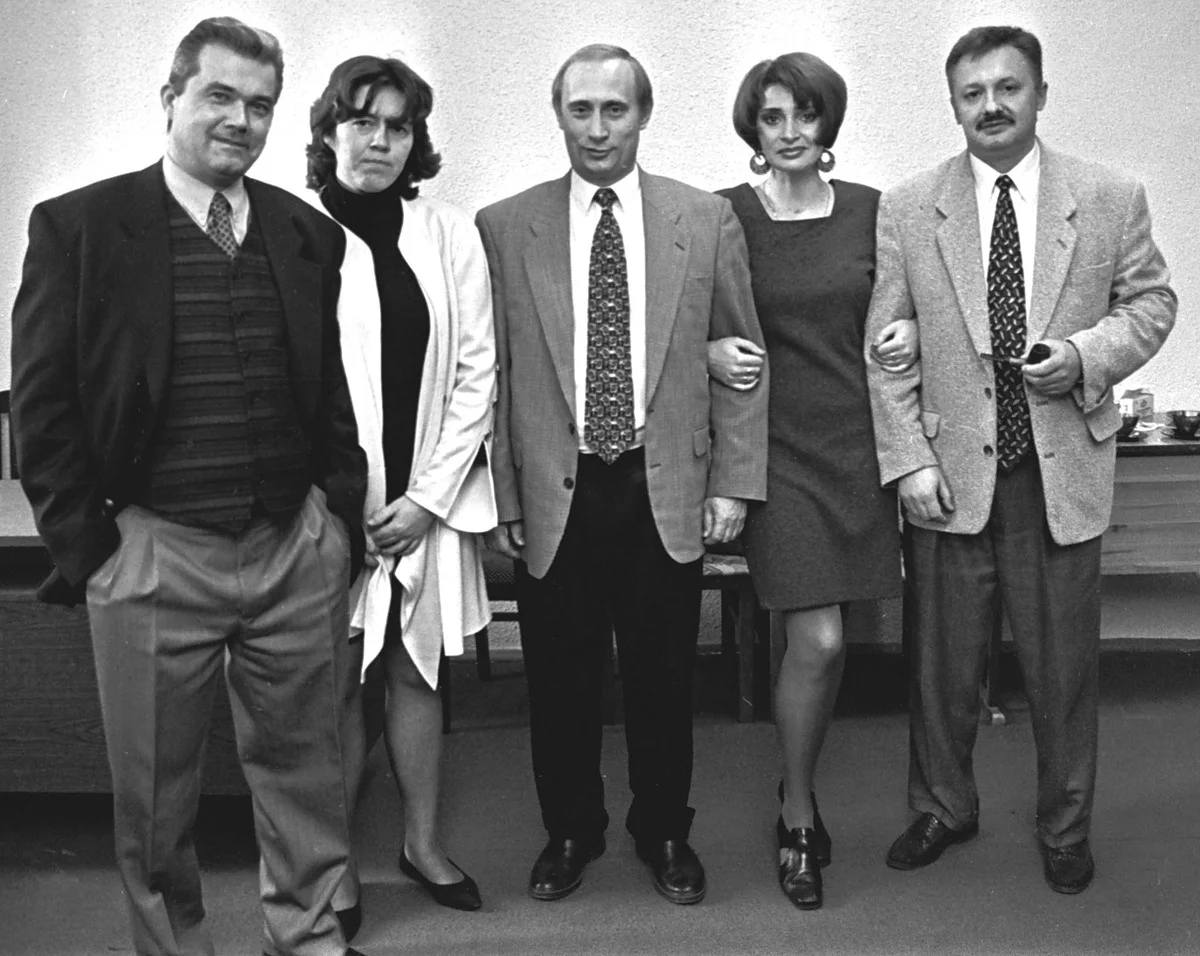
Выключаем воображение — и что мы видим в 90-х? Давно ограбленную и так же давно лишенную всякой политической субъектности, безразличную к происходящему народную массу. Видим вспышку гражданской войны на фоне инфаркта старых институтов власти, в ходе которой несколько враждующих кланов постсоветской элиты вели борьбу за наследство скоропостижно скончавшегося государства.
Один из этих кланов сумел поставить себе на службу новое государство, собранное на белую нитку из обломков старого. Эту политическую победу он юридически закрепил в форме приватизации, которая узаконила переход контроля над бывшими советскими государственными активами к новому авантюрному предпринимательскому классу. Впоследствии оказалось, что это была Пиррова победа, и то, что казалось инструментом — новое государство, сотканное из старой номенклатуры, — взяло верх над всеми и подчинило своих шустрых создателей.
В этой истории есть все, кроме одного: шанса на новую прекрасную Россию. Его просто не было, если не включать воображение.
Парадоксальным образом обе картинки имеют право на существование. Никто не может запретить людям с воображением видеть мир таким, каким им его хочется видеть, то есть с элементами дополненной реальности. Но с равным успехом люди без воображения имеют право видеть мир таким, какой он есть, то есть без прикрас. Акценты получаются разными, хотя вроде бы речь идет об одном и том же.
В «приукрашенных 90-х» главное — это драма предательства и ограбления народа, трагедия упущенного шанса на прекрасную жизнь в будущем. В «реалистичных 90-х», как они есть, главное — гражданская война элит при безмолвии народа, не оставлявшая ни единого шанса на альтернативный исход.
На сакраментальный вопрос «Кто предатели?» — единственно честный ответ в этой парадигме: мы все, причем в нескольких поколениях сразу.
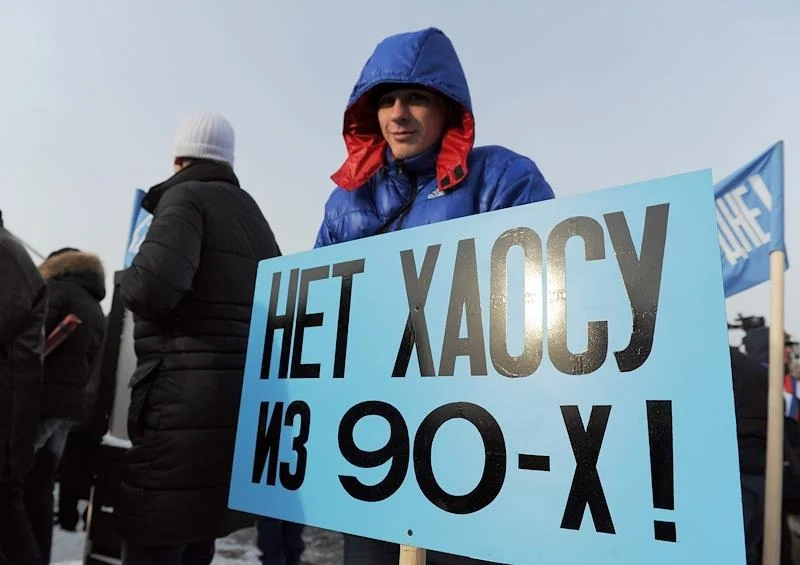
Как покинуть 90-е?
Как выбраться из затянувшихся 90-х? Они представляются мне похожими на очень запутанный исторический лабиринт с двумя выходами: фальшивым и настоящим.
На фальшивом выходе написано: «Расстрелять предателей». В действительности это не выход, а вход — в новую гражданскую войну. Если пойдем этим путем, то продлим 90-е еще на один круг.
Второй выход — это примирение грабивших и ограбленных, праведников и грешников, бенефициаров и лузеров, действующих лиц и наблюдателей, агентов и «иноагентов». Этот путь нам не знаком, мы им в России никогда не шли. Но это единственно возможный путь, двигаясь по которому можно преодолеть гражданскую войну, а значит, и положить конец 90-м.