
Translated material
He does not look away
Kim Smirnov saw, recorded, comprehended a lot - like no one. We hope the conversation will continue
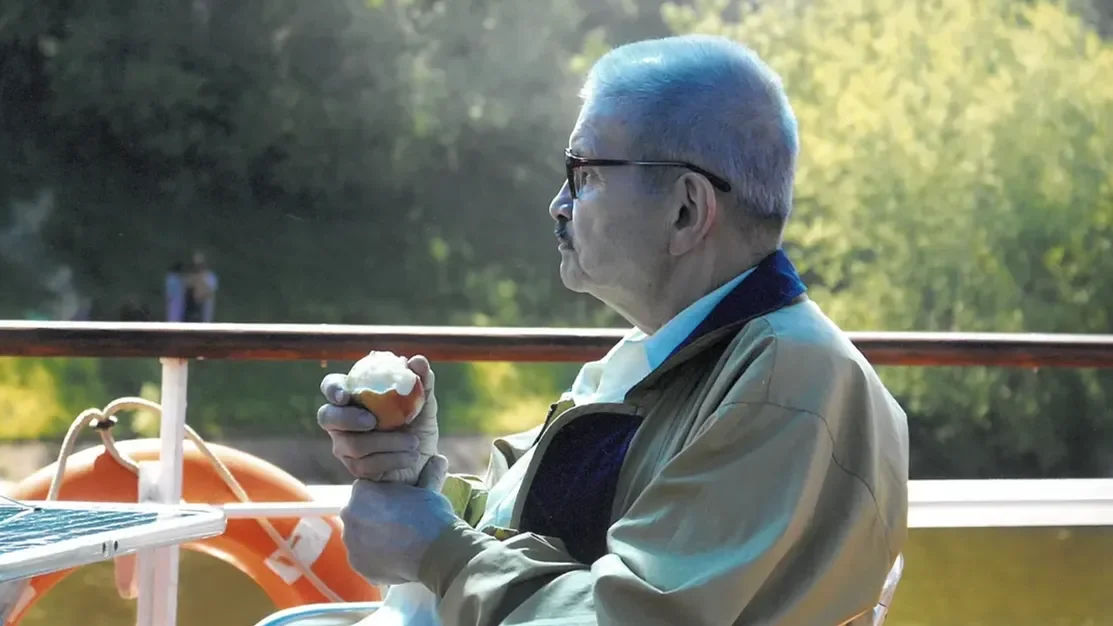
Kim Smirnov. Photo: Archive
Together with Kim, I worked in three newspapers: Komsomolskaya Pravda, Izvestia, and now - in the "New". I think, that's why they entrusted to write this text, they considered that it would be easier for me than to someone else.
How! ..
All his life Kim has been leading a diary and from time to time the head of the head publishes it. These publications cause a constant feeling - envy. Even if I also live 90 years, I won’t see, I will not remember, I will not be able to comprehend and the share of what I saw, remembered, wrote down and comprehended Kim. He met, talked (I would dare to say - was friends) with people who were the honor and glory of mankind. Physician of Kikoin, literary critic Likhachev, Nobel laureate Ginzburg, historian Sigurd Schmidt ... dozens of academicians of the first row.
Kim was born in Minsk in a military family. Therefore, the preschooler was drowned through the garrisons: Moscow, Leningrad, Tashkent, Ashgabat, Mary ...
Father died at the front, in 1944, near Warsaw.
Therefore, Kim Nikolayevich walked, drove away, passed, flew on his own - on business trips of his editions.
Say, he worked for two summers in the famous newspaper "Young Tselinnik" at the student construction site. " At first he was an editor, then he left the administrative service to freedom - a traveling correspondent. He received the medal "For the development of virgin lands", later - the Order of "Badge of Honor".
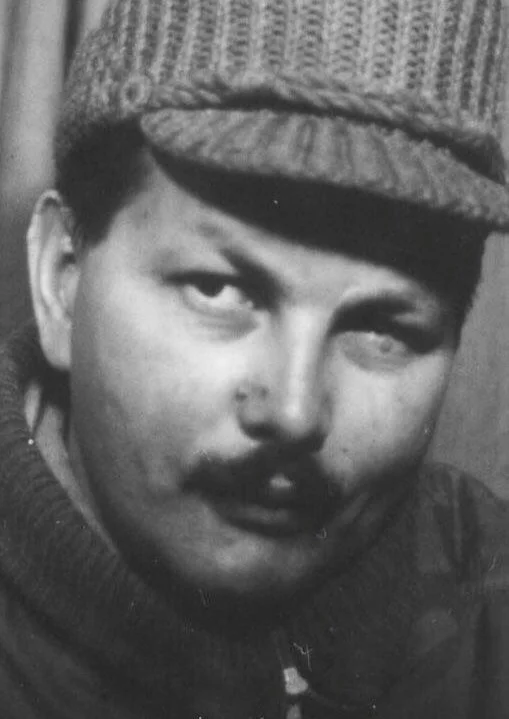
He graduated from the Faculty of Journalism of Moscow State University, and at that very “interesting time”. His student friend Igor Dedkov, the secretary of the Komsomol organization of the faculty, was then held a famous meeting that thundered throughout Moscow.
Dedkov’s report at this meeting dedicated to the XX Congress of the CPSU was a bomb, a reason for long and dangerous for all proceedings. They were engaged in both the party committee of Moscow State University and the KGB. As a result, the reform of the journalism factory, which the students demanded, still occurred, however, reluctant and in many ways formal. Nevertheless, it was enough for a long time.
For Kim, “His University” forever became both love and the measure of his and other people's actions, and his fellow students became the most reliable “reference group”.
QUOTE
“One of my notebooks is burned through and through the abbreviation“ Moscow State University ”. Friends from the laboratory of Rem Khokhlov “wrote” her laser. And about the Dolphin Petka - the creature exclusively smart and good, in the experiments with which the Karadag dolphinaria was lucky enough to participate - I wrote that he could well run for the post of president of the Russian Federation. True, this was later, when we had presidents. ”
Rem Khokhlov is an academician, rector of Moscow State University, also a good familiar Kim. He died during climbing ascent.
Kim wrote this in the book “Journalism at the junction of centuries. People and fate. " He published a book about the best representatives of our workshop, the Moscow Union of Journalists even when it was possible to joke about the presidential elections.
Even at the university, Kim fled to one of the best newspapers then - Komsomolskaya Pravda. True, they could not take him to the state: the main main one did not like that the future employee in the evenings is undergoing a course of physical faculty of the same university. “Or - or,” the chief set the condition. “Then the Physics and Enterprise,” Kim answered, and the clever chief reconciled.
True, two years later, life showed that the boss was still right. Kim could not stand it, the newspaper won - to our happiness.
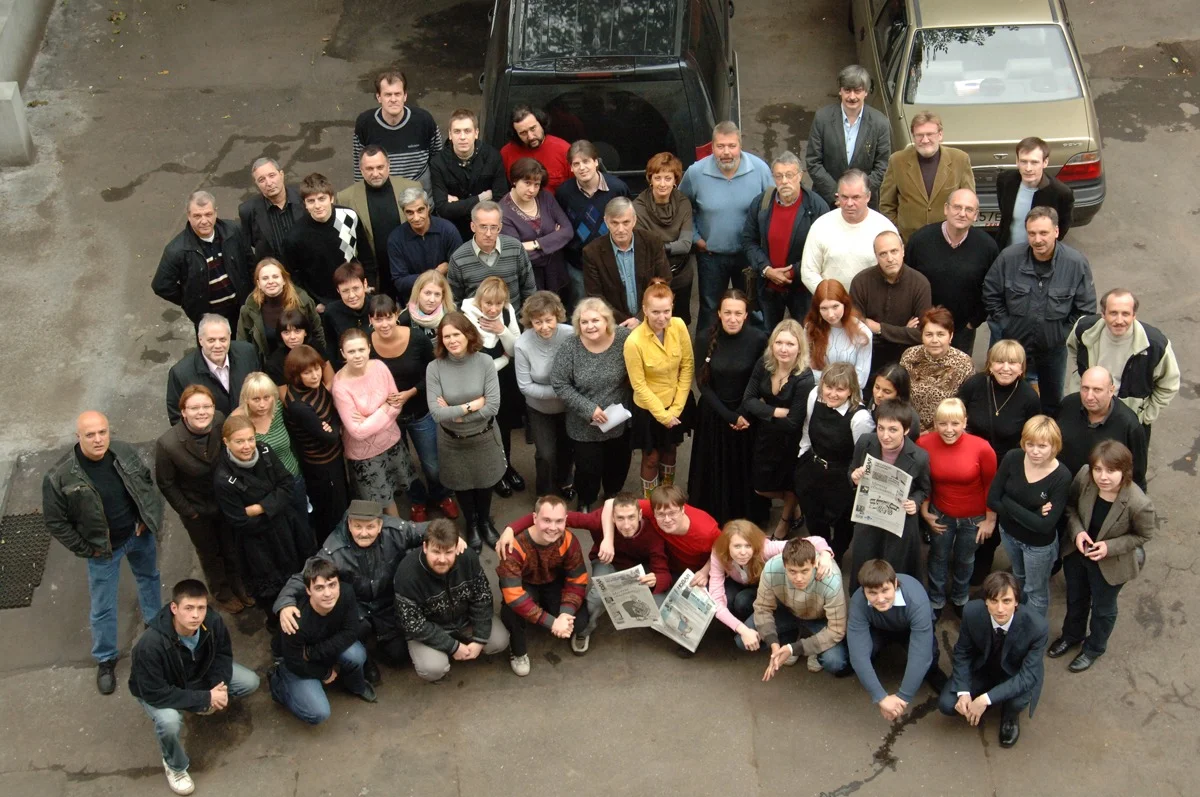
Arriving in the "new", Kim gave the newspaper the intelligence and intelligent faith in the spoken word that is characteristic of him. I am at random from an article about Moscow monuments:
“... Freedom Monument sculpted the great sculptor Nikolai Andreev, taking the Samofrakiyskaya as a model. In the center of Moscow, opposite the former house of the Governor General, three monuments replaced each other-General Skobelev, the first Soviet Constitution (in his ensemble and there was a statue of freedom) and Yuri Dolgoruky.
The Andreevsky sculpture was opened in 1919, its image was even made by the first Soviet coat of arms of the capital (it was already preserved on the bridge on the Moscow River near the house on the embankment). And then, in the early spring of 1941, they blew up. The Nick Samofraki, as you know, reached us with broken wings and without a head registered in the Louvre. We have remained from our freedom - on the contrary - only the head. Two workers of the Tretyakov Gallery dug up a miraculously surviving head among the wreckage and were taken to Lavrushensky lane on the sled. There, for many years she was hidden in the storerooms, unfinished, secret freedom. She was just hidden. Then, when it got warmer in the country, she periodically began to appear to the people at exhibitions ...
The head of freedom seems to be carved from gray granite. But this is just cement with granite chips. The keepers carefully laid it in the safest position - the head is thrown back. A mature, strong woman, with wide open eyes, looks directly in the face of our terrible, bloody century. And does not take his eyes off. The corners of the lips are lowered in a bitter visionary grin.
Why was she blended? Mystery. Not a single clarifying document in declassified archives. Only versions. One at a time: the material of the pedestal was destroyed. But why blow up the statue? It was possible to strengthen the pedestal. Another version: at this place they were going to erect a “central” lifetime monument to Stalin ... ”
Kim wrote this article ("Age of Wandering Monuments") in 2014. I'm afraid those who had to read it did not read it.
And 14 years ago he printed the following words of Sigurd Schmidt:
“Young men and girls from the school classes should be taught to distinguish between the truth from lies in history, to be able to analyze what is the proportion of truth, reliability is contained in certain historical sources. To teach an understanding: on the basis of what data conclusions are drawn about the past of his country, the future and themselves depend in many respects. With this approach, the study of history becomes a sphere of not only research thought, but also the formation of moral principles of personality. ”
I urge you to read them as carefully as possible. Today, these words sound like ever.