
Translated material
Myth and Bulshit
Historian Kirill Kobrin - about the post -Persian syndrome of Kafka, the post -truth and transition of ultra -right ideas into ultra -right
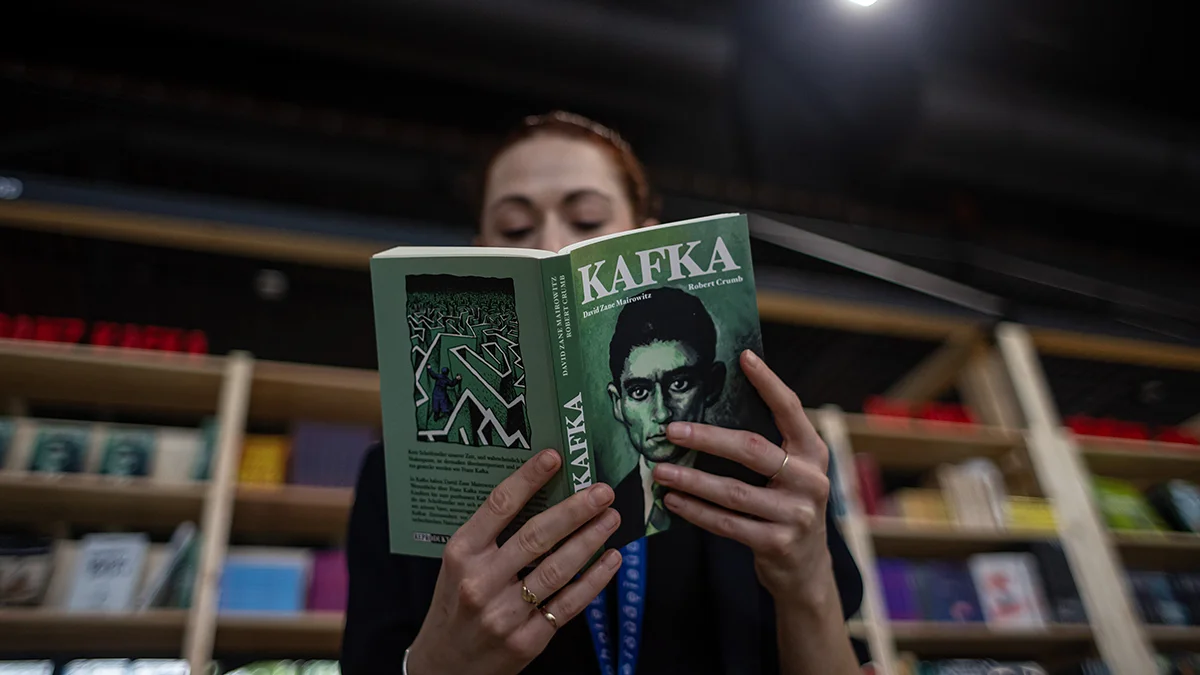
Photo: Martin Divisek / EPA-EFE
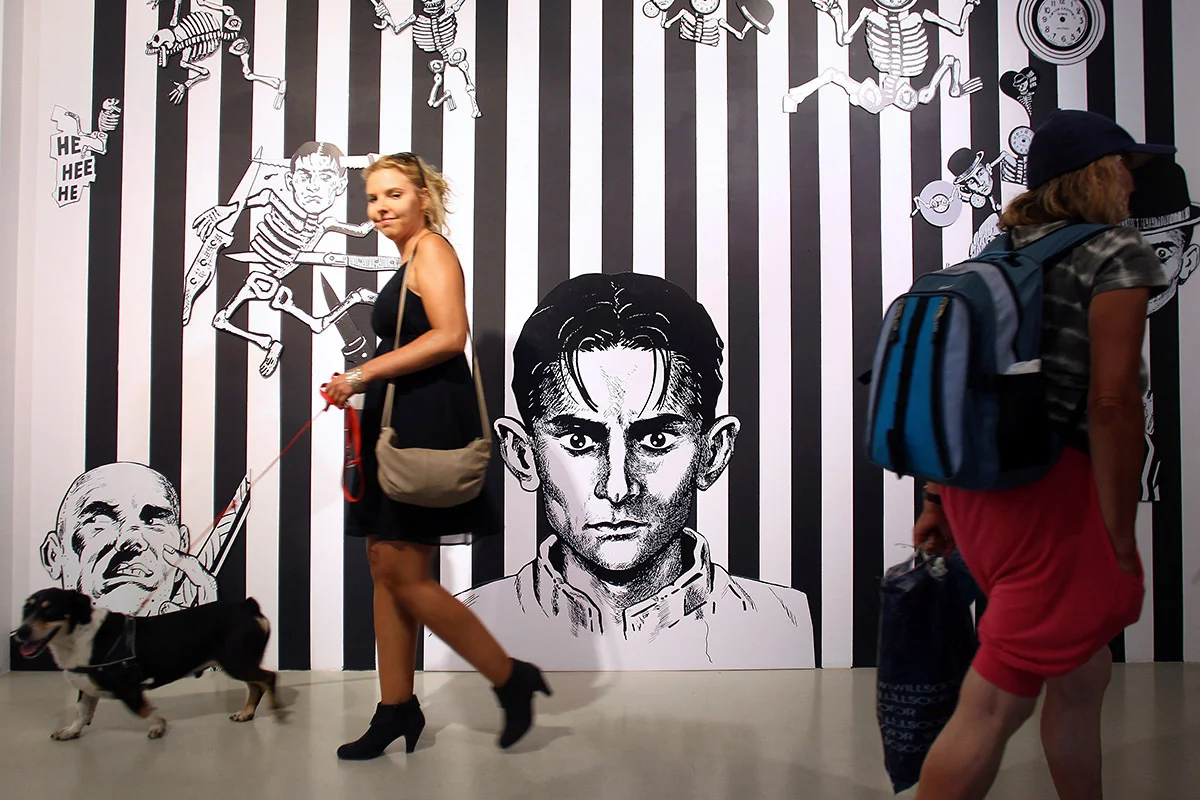
The writer and historian, the former journalist of Radio Liberty, Kirill Kobrin since 2000, has not been living in Russia and openly criticizes the Kremlin’s policy. In July 2022, the British magazine Granta published his essay "Epicris" about his personal reaction to the war, begun by Russia on February 24. This essay became the basis for his new book “Five Essays on the War and Illness” (Publishing House of the Babel bookstore, Tel Aviv, Distribution-Vidim Books).
Especially for Novaya Gazeta Europe, Irina Karpova met Kobrina after the presentation of the Five Essay in Berlin and talked with him about how the events and heroes of the book (Kafka, Napoleon, Thomas Mann and others) reflect our present day and are reflected on it, about the painful nature of the war and the birth of “alternative facts” at the same time, and contrary to the European intellectual tradition.
Kirill Kobrin
Writer, historian
- In Europe (and in Germany, in particular), on June 3, a century celebrated since the death of Franz Kafka. One of the essays is dedicated to him in your book. Why is this date chosen - a hundred years from the date of death, not birth - and why is it so important?
- The name of the book quite accurately reflects its content: these are really five essays dedicated to various cases of how the war enters the life of individuals, society, into social and individual consciousness, and what comes from this. The war is interpreted as a disease, but not as something external, such as an infection that can be picked up here and there, namely, as an innate disease, a soparic to man and society. The question is how this disease “works” in different historical and life circumstances. Five cases (engraver of Venzeslav Hollar, Jean-Antoine Gro and other artists depicting Napoleon under Arkol, writers Franz Kafka and Thomas Mann, and your humble servant) from the 17–21th century-respectively, five essays.
At the presentation, I was going to read the text that did not enter the book, but did not have time; He is just dedicated to the centenary of Kafka's death. From last fall, until the beginning of spring we lived in Vienna, and at some point I decided that we must go to the place where Kafka died (and he died under Vienna, in the town of Kerling, in the pulmonary sanatorium). I gathered and went. And he wrote a text , partly about the trip, partly about death. What is this really - to note the death of Kafka? Alas, “Kafka” and “Kafkian” became a kind of spells, metaphors of a state when something is very bad when it’s nightmare. "Some kind of kafka." But let's look at the historical context. Franz Kafka was born at the end of the 19th century, in a secular Jewish family, began to write before the First World War, published little, worked as an insurance agent, died in 1924. He grew up in the multinational world of Prague: Germans, Czechs, Jews. With the collapse of Austria-Hungary, he suddenly finds himself in the new national state, Czechoslovakia.
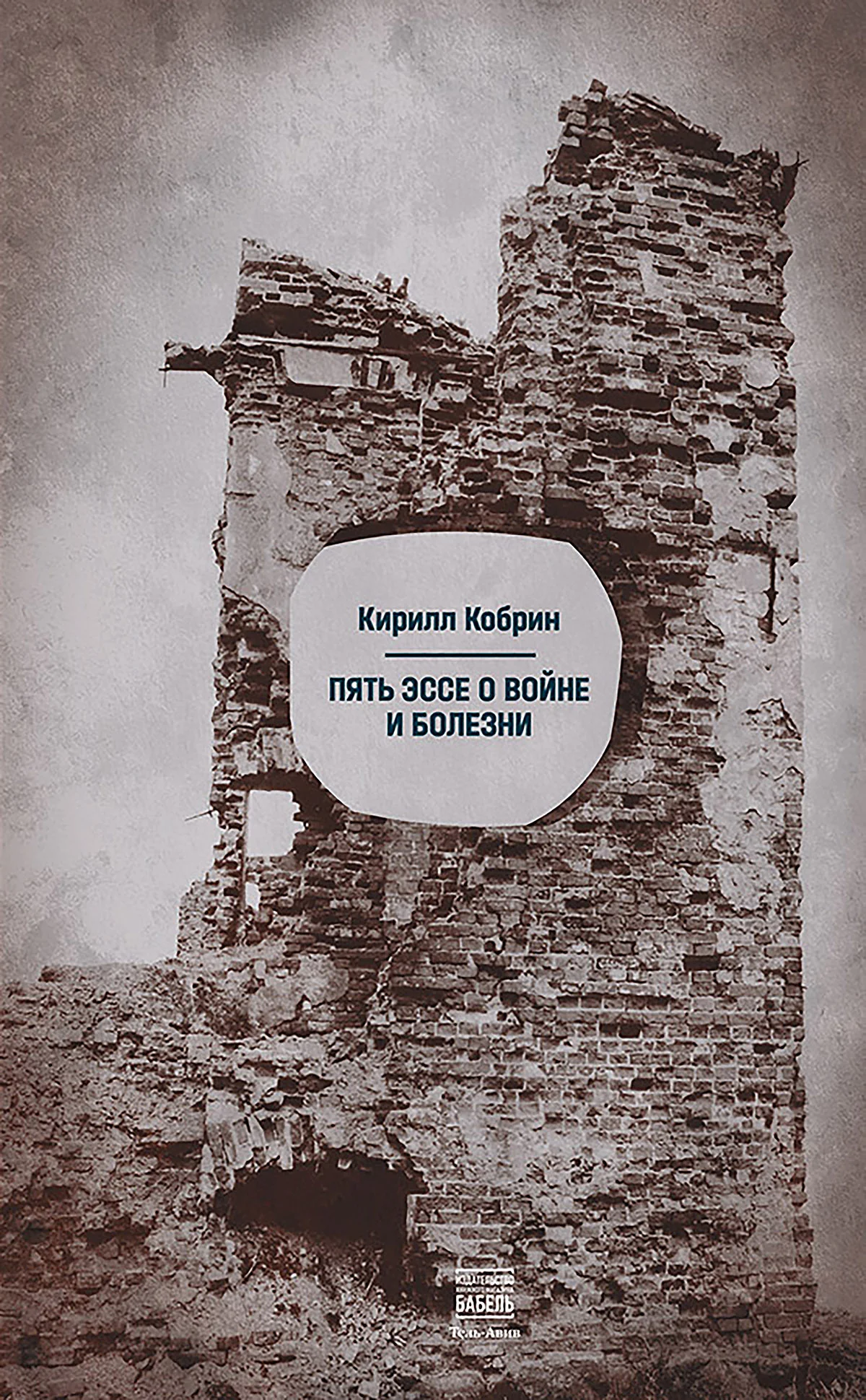
This is also a drama of our time: the drama of the post -Persian era, when people who grew up in a multicultural and multi -ethnic environment find themselves in a situation of ethnic or cultural “purity”. This happened in Yugoslavia in the 90s, this happened after the collapse of the Soviet Union, and this is continuing Around the World. The fate of Kafka is one of the brightest examples of the disaster, which began in 1914 and continues until today. It is also very important: the great modernists, Kafka and Proust, both died shortly after the end of the First World War, and they managed to fix the CETGIST - the transformation of the artistic, religious and existential way of thinking of pre -war time. These great modernists (and some more, of course) transformed their letter in accordance with the war-in fact, my book is about this: about how the war came into the life and thinking of different people and different societies. The book has a kafka. But there is no Proust, but there is, for example, Thomas Mann. If you look at the “in search of the lost time” of Proust - things impossible in the first volume occur in the fourth and fifth volumes. Proust very insightfully saw the collapse of the world of the beautiful era that developed at the end of the 19th century. The First World War is a tremendous suicide because of a kind of trifle, a tragic accident, due to the fact that one Bosnian Serbian madman killed one Austrian Crown Prince. None of the participating countries particularly wanted war, as Christopher Clark accurately notes in Somnanbula : they untied the war like sleepwalkers. This is one of such events that, having begun seemingly for no special reason, after itself begins to dictate its causes and its logic.
It is symbolic that the first symptoms of tuberculosis in Kafka appeared in 1917: he seemed to get sick with war and revolution. And when his world is over, he died.
- In the essay “ Bridge between Art and Truth” you write that in the information field you should distinguish between lies as such and just nonsense (Bullshit), which is used as a tool to confuse everyone. What in your opinion is more dangerous now?
-It’s not that I am nostalgic for good old times, but until some point the political sphere of Western society functioned within the framework of a public consensus that politicians and journalists should tell the truth, and if they are caught on a lie, the “Watergate” happens. It was on this that the public public sphere was built. It is not in the sense that they had little lie - of course, - but this lies proceeded from the fact that the presenting understood that he was lying, and he knew that there was truth.
- And now we have representatives of the Russian Foreign Ministry and state Russian television.
- This began, of course, not now, but with the emergence of dictatorial regimes of the twentieth century. Mussolini, Hitler, to a lesser extent Salazar, Pilsudski, Ulmanis. They proceeded from the prerequisite that there are no facts. When Mussolini was asked what fascism is, he replied: "This is what I say now." Let's see Trump or Putin now - the same logic. They cannot be caught in lies. There are no problems of lies for them, this is the idea of Bullshit. There are no facts, there are the so -called alternative faces. But unlike Bulsitters such as Trump, who come up with an alternative universe, in Russian discourse, as they say, Putin, Putin behaves as an old relative, retelling the theories of the conspiracy and his views on the story at the festive table. Everyone knows this type. The peculiarity of this type of Bullshit is that what rings into it. Somewhere they heard something like that-well, was Ukraine the Soviet Republic? Yes, it was - and all questions are removed. Like, Lenin created Ukraine, and all that.
- It turns out that these statements are in a certain border zone between lies and nonsense?
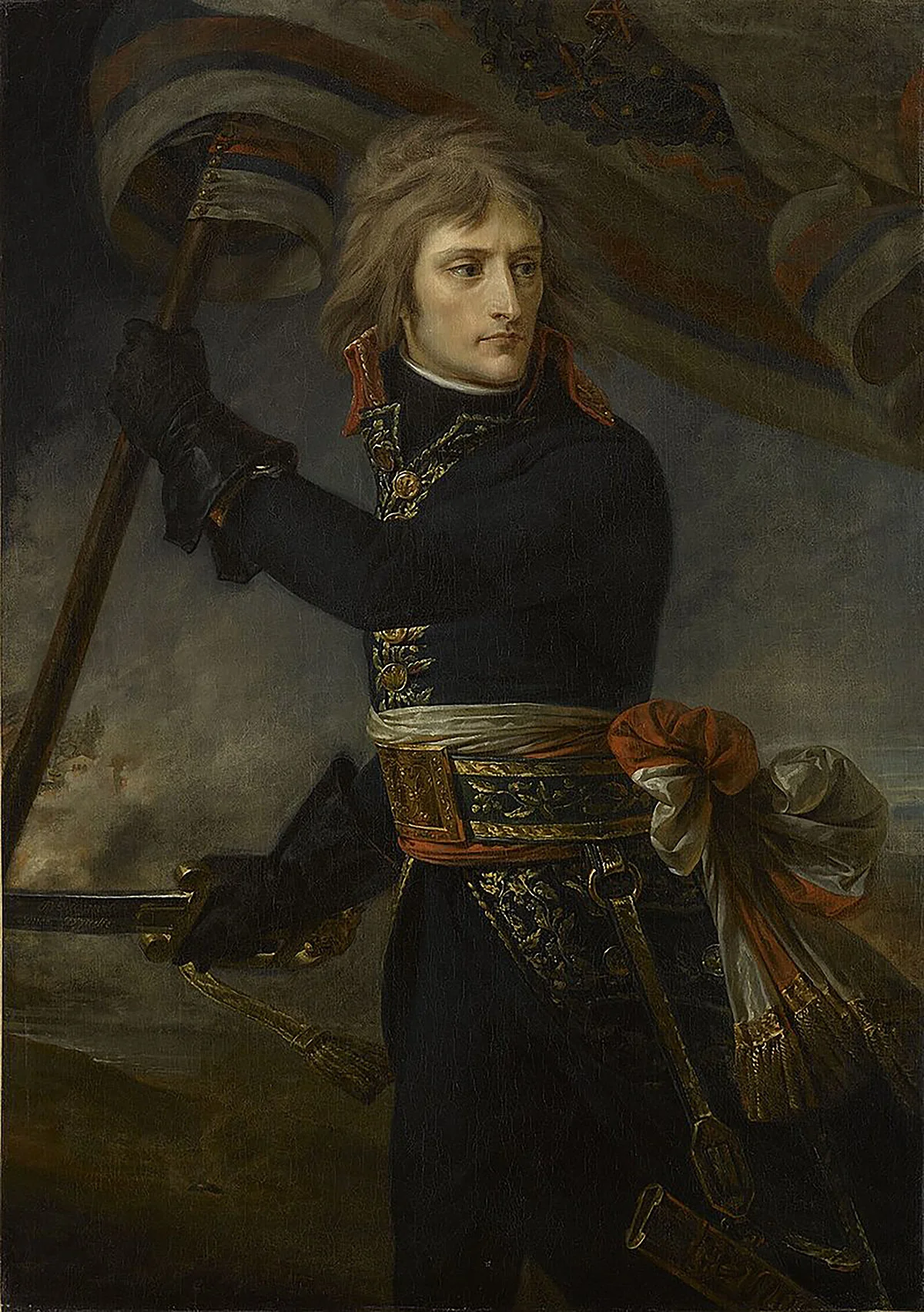
- We cannot determine clear boundaries, but the principle is the same as Mussolini. True - what I say now. I tried to describe this in the essay about the visualization of Napoleon's “feat”. No one in his right mind will say that Napoleon lost the battle of Arkol. No, he won him. But the battles actually do not happen as they are later portrayed by battalists, we know well about this, reading Tolstoy and Stendhal.
- For readers, I will allow a small spoiler: in this battle, Napoleon tried to raise the soldier on the attack, was almost killed, and then bogged down in the swamp; Artists depict him with a banner at the ready, leading an army.
- I tried not to say, but to show how propaganda art - in this case, the picture of GRO is gradually turning into a masterpiece that exists for itself. The rest of the artists (depicting the battle of Arkol) were not related to Napoleon, did not fulfill the political order, but their indifference to the actual side of this event, to what actually happened there, even to what uniforms were worn, reaches some incredible size, and all this turns into such artistic bully, which is transformed into a myth cleansed of politics and ideology. But this is an extreme case. It is clear that in our time this does not happen with you. We must live another hundred years to look at everything detached.
- It turns out that the distance in time allows not to see the death and blood of real people, but to enjoy painting. If we jump over ... For example, the film “20 Days in Mariupol”, which received the Oscar Award, a document of the Russian-Ukrainian war. And at the same time, a brick in the construction of a myth about Ukraine and their struggle. Watch this film is incredibly difficult. It is unlikely that this view will change in 20 years?
- I did not watch this film, I can’t say anything about him, but as a historian I will say that no film in the world, even documentary, is a document. Chronicle, archives, certificates - these are documents. The film can be a document of cultural history, the history of the thinking of those people who made it and who watched it, but not a historical source about what is shown in it. He is a document of the era, with all the circumstances enslaved. This is a very important difference. Perhaps someday this film will become a document in the hands of historians who understand how to work with such material, to share these entities. It is clear that there are no "pure" facts. Yes, the battle of Waterloo was in 1815. This is a fact. Only the ex-president Trump can say that the battle of Waterloo occurred in 1817, and millions of people will agree with him. Nevertheless, we know that she was in 1815. But we can never say with one hundred percent confidence, and what was really there.
And this is the great power of the cultural tradition to which we belong. In the inability to answer the question - what really is?
- Would the final answer mean the dogma?
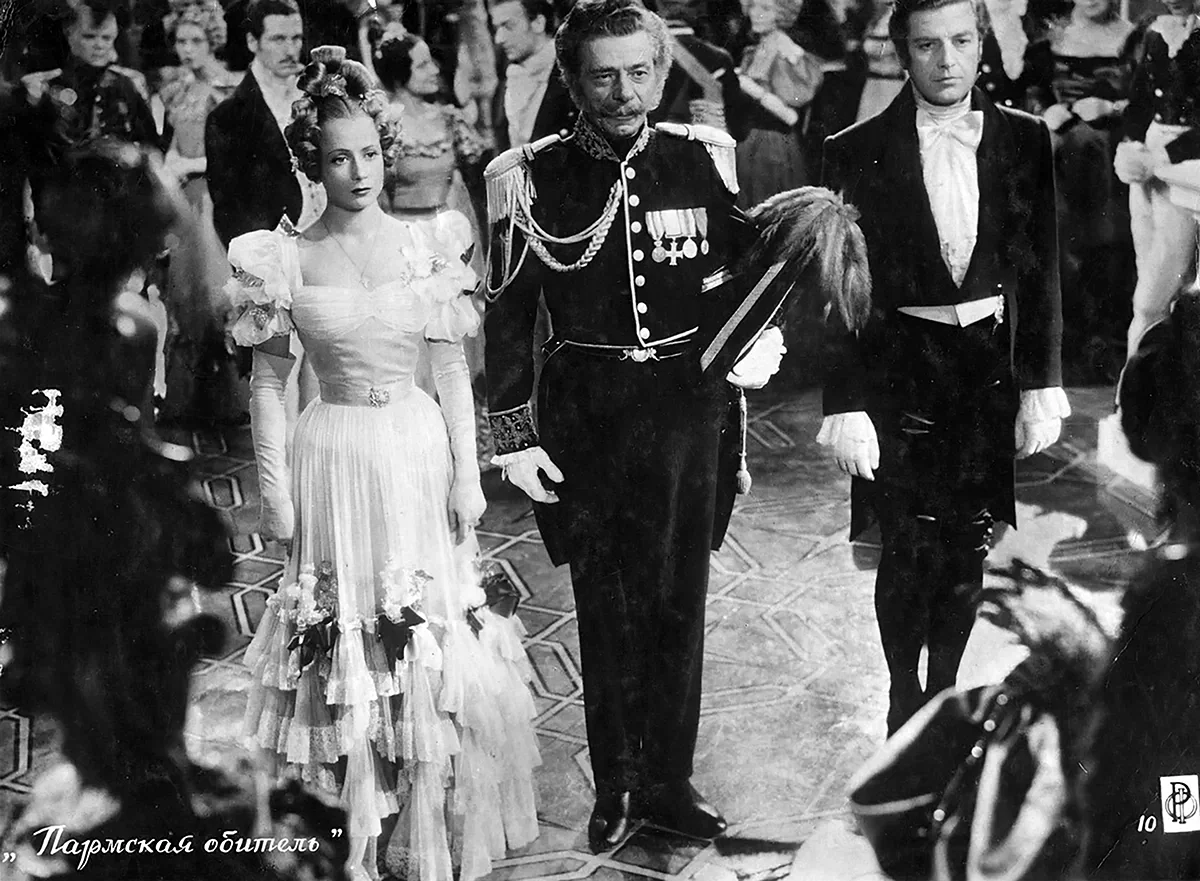
- We ask this question: "What really is?" How was it asked at one time: "What is the Word of God?" If this question was not, we would not be the ones we are. If there were no Socrates. If there were no Christian theology. If there were no enlightenment. If there were no decarlet before the education. And so on, so on. And the basis of all this is the inability to answer the question “what really was there and there”, for example, during the battle of Waterloo. If you read or re -read the description of the battlefield at Waterloo in the “Parm monastery” of Stendhal, then you will understand: the greatness of Stendhal is that he was the first to ask this question in European literature. Especially in the contrast with Hugo, who describes the same events in the “outcasts”, but with fluttering banners. Tolstoy came out of Stendhal, a man who changed our way of thinking about the war. Without Stendhal and Tolstoy, there would be no attitude to war.
-Those who read the “Parm abode” and “war and peace” somehow affect those who have not read them?
- The devil knows him. Tolstoy was an artilleryman and defended Sevastopol. Stendhal was a Napoleonic officer, he was a professional military man, even in Moscow in 1812. Following Stendhal, Tolstoy saw that an incomprehensible chaos was actually on the battlefield. We cannot say what happened there: at Austerlitz, Borodino, Waterloo, Verden, Stalingrad. In this ignorance of the final “how” - and I insist on this - the great power of the European, Western tradition. And at the same time, this is her great weakness. Because sooner or later a person appears who will say: "I know how it was." The artist Goro appears, who says: "I know what was in the battle of Arkol." And for any person, knowledge is better than ignorance, confidence better than uncertainty. People who say that they know how it was, they do not lie. They know . When Putin says that there was no Ukraine, he does not lie, he knows for himself. And Trump knows that he did not lose the election in 2020. This is the great power of Bulshit, the great power of art - and the great weakness of society.
- In an essay dedicated to Thomas Mann, you write that the soreness of the decadence became the attitude of the time when the disease was perceived as the norm, as a normal reaction to the collapse of the old world. Now we are in the first quarter of a new century, in Europe - a new war, a new right -wing turn, the right ones win in the European Parliament elections. Is this a reaction of a sick or healthy organism?
- The idea of the health and disease of society is the idea of purely proto -fascist. This is also the novel "The Magic Mountain". As soon as something about cleanliness sounds, he immediately rings the bell: it is clear where they are leaving. But the settembrini, a very cute racist, with his contempt for the Germans and especially to the Slavs, this singer of progress, he in the novel confront Nafta, whose prototype was the young Georg Lukak ( Hungarian philosopher-neomarxist.- Approx. Author ) in his first Catholic embodiment. And the simple -minded Hans Castorp is just the type of consciousness characteristic of the European tradition (or already the old European tradition?), In which it is customary to ask questions to yourself and others. Therefore, the “magic mountain” is called the “novel of education”: Castorp receives the upbringing in ideal conditions of an expensive tuberculosis sanatorium. True, everyone is dying - quickly or slowly. In a sense, this is a satirical description of the Belle Epoche society before the war: why and how all this collapsed. And therefore, the “Magic Mountain” stands next to the “man without the properties” of Muzil and, possibly, more important from the historical, cultural and psychological point of view than the “process” of Kafka. But it is very important that Mann himself does not carry this section on the sick and healthy. And this idea itself is monstrous. Let's ask ourselves with the question: "What is really health?" And they answer you: health is clean. And following the traditions. A conversation about tradition is a hysterical reaction of a modern society to the uncertainty of this historical period, which is intercepted by ideologists and politicians to pursue their goals.
What is a “pure society”? Where is ethnic purity? Or the purity of heterosexual relations? Who determines this? Who determines who is healthy and who is sick?
That is why Mann writes a novel in which there are no healthy ones, even his doctors are sick.
Today, the idea of cleanliness, no matter how obsolete it seemed, has gained a second wind. According to one, it seems to me, a simple reason: in the conditions of mixing everything with everything, a new social and cultural reality arose, which resulted in a result of this mix. In this situation, landmarks are lost, but they are always needed. Why, for example, the 1950s have become so popular in America today? This is a world of large cars, no one says that you need to spend less water, segregation: white - here, black - there, there is Marilyn Monroe and Elvis Presley, everyone eats burgers. But an important point is the idea of new purity, new restrictions and distribution did not come “on the right”, but “on the left”. This is the result of the monstrous swelling of the so -called "policy of identity." The identity policy that arose in America in the 50s during the movement of African Americans for equality, over the next decades, was transferred to everything else and relatively recently became part of the right, ultra-right, fascist and proto-fascist movement. Because the definition of yourself through a set of identities involves the cut off all that you do not correlate yourself, such an outline of life. This, of course, is no longer left, but absolutely right.
- I will allow myself to disagree with you. It seems to me that the identity policy is something new that allows people to determine themselves outside the usual framework and conditions, outside the family and the country. And she challenges the idea (pseudo) of universality, where the point of the counting of everything is a white heterosexual man. For example, in your book, the heroes of all the essays are one way or another, although you wrote a lot and thought about Lydia Ginzburg (a writer who described the experience of life during the blockade of Leningrad), but did not include the text about it in the collection. Why did it happen that in your book about the feeling of war and illness there are no texts about a woman? About the same Lydia Ginzburg?
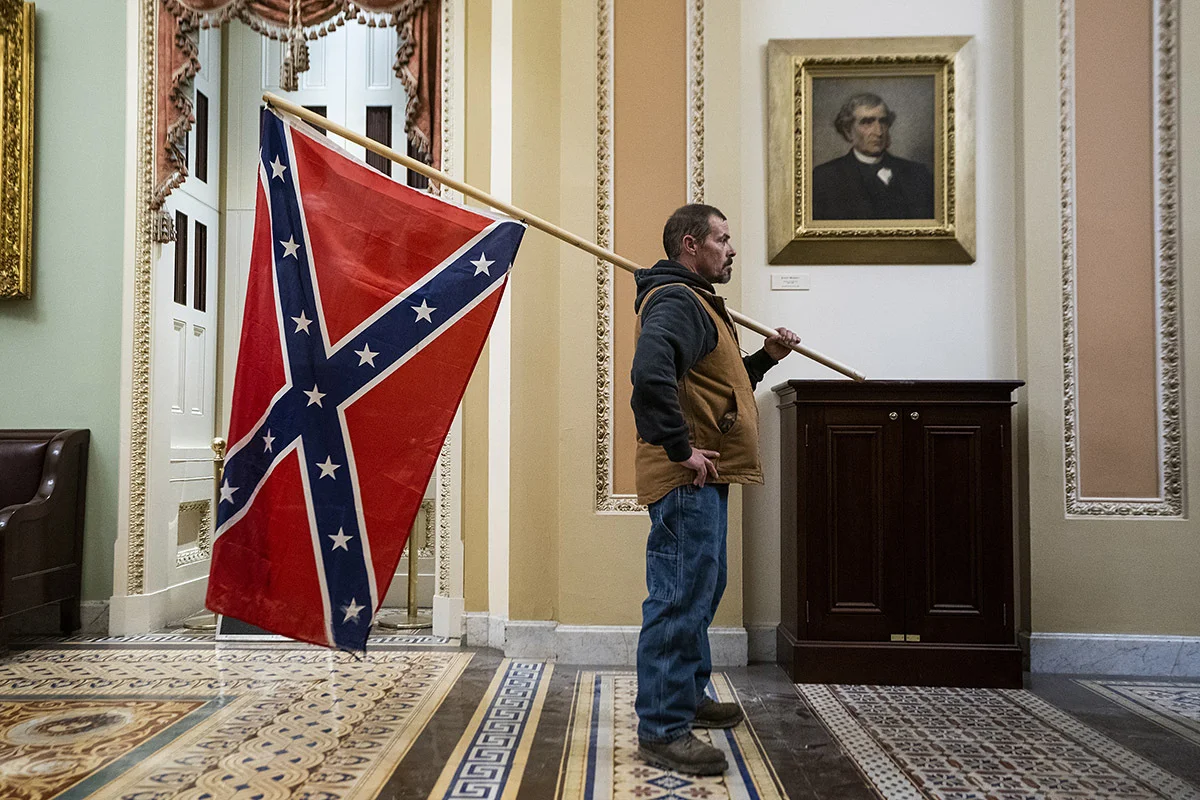
- Yes, it was a text about how life enters the life of a Soviet man. I did not specifically turn it on, now I would have a lot of redo it. I have quite a few texts devoted to different women, but they are about something else. The texts in my book create a certain plot, the book looks that way, because I want it to look like that . I terribly like radical feminism. And maybe I will ever write about Valerie Solanas. But when the conversations begin: why did you not write about it ... Usually I perceive it with bewilderment, I forget that I live in the world of identities. This idea and policy of identities, historically very correct, necessary, important, supporting hundreds of millions of people in their choice and lifestyle, it was brought to absolute absurdity and opposite content, when it was intercepted by right -wing populists. Because of what-and I insist on this-caused the absolute intellectual impotence of the left movement. Almost everything that is on the right ideology today is an inverted left. Why you can, but we can’t, Trumpists say, we walk with the Confederate flag, we are part of America. Это наша идентичность как истинных американцев. Дело не в том, что они дураки, а мы умные. Deplorables (англ. «скверные, достойные сожаления») — так Хиллари Клинтон назвала тех, кто голосовал за Трампа. Но дураки-то мы. Политика идентичности хороша, когда на горизонте мышления есть установка, что все мы люди, что есть здравый смысл. Но если все будут настаивать на своей идентичности, то исчезает возможность для разговора. Так сегодня произошло с медиа. Так произошло в культуре. «Новую газету Европа» не читают те, кто слушает русскую пропаганду. И у вас нет места, где вы встретитесь с этой аудиторией.
— А где это место?
- I don't know.
— Оно вообще существует, место для объединения?
— Я не знаю, я не священник. Я просто анализирую, что произошло. До какого-то момента можно было сказать: мы все советские люди. Идиотская штука, но она работала. Потом мы все пережили ужас Советского Союза и его распада, мы должны двигаться вперед, к прекрасной жизни. И возможность для разговора в девяностые и даже в нулевые годы была, безусловно, существовала. А сейчас, когда все говорят: а я — такой, а я — такой, а я — такой, возможности для публичной дискуссии нет. Не только в России, во всём мире так. И если остается что-то общее, то это только общая беда. Нет универсальной рамки, нет здравого смысла, нет фактов. Битва при Ватерлоо произошла в 1815 году, но с точки зрения техасского фермера она произошла в 1817 году, а с точки зрения человека ультралевых взглядов она была в 1066 году, и никто никого никогда не убедит. Вы можете вызвать десяток профессоров истории, они будут говорить в пустоту. И, к сожалению, я вижу себя этим профессором истории, который зачем-то бормочет в пустоту эти вещи.