
Translated material
Chaos or me
After Macron’s decision to dissolve the parliament, political life in France turned into chaos. Marine Le Pen leads in the election. What will happen next?
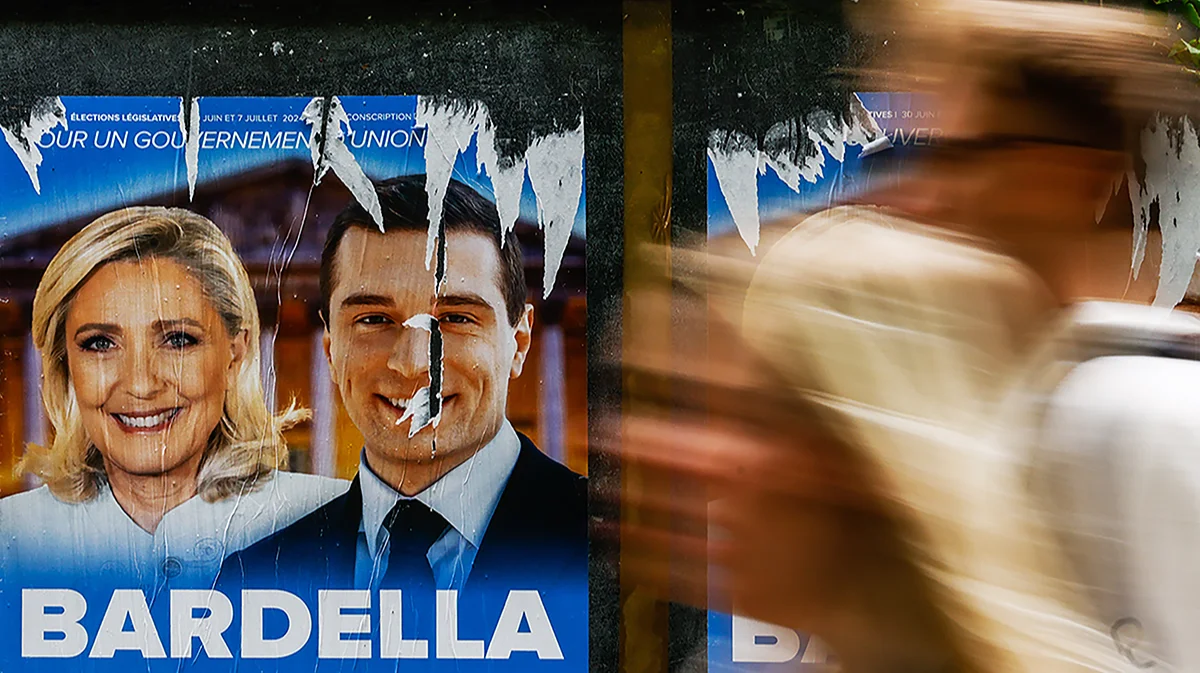
Pre -election posters with candidates Marine Le Pen and Zhordan Bardell, Paris, France, June 29, 2024. Photo: Mohammed Badra / Epa-EFE
"We will vote for democracy!" - With an editorial column under this name, one of the three main newspapers of France Le Monde was published on the eve of the election to parliament. The President of the Republic, Emmanuel Macron, who has just dismissed the parliament, now warns voters that if most of them cast their vote by ultra -right or ultralev, then the country is waiting for the “civil war”.
In response, his rivals on both sides of the political spectrum accuse the president of panic and using the Chaos or Me strategy - the French version of the slogan “Vote or lose”. The problem is that chaos in French politics is already available. The heirs of de Gaulle adjoin the ultra -right, the left promise to freeze prices and cancel pension reform, and Macron himself is trying to keep up with the youth, giving interviews to little -known sub -caste. What is happening in France and how political life has almost reached madness here-an independent journalist from Paris Julia Vasilieva sorted out specially for New Evrop.
Update July 1
According to the results of the first round of elections, the ultra -right “National Association” Marin Le Pen gains 33% of the vote, while the macron block “Together” is on the third line with 20%. It is also lagging behind from the French united left, which received 28.5%.Such a gap can allow the "national unification" to get the vast majority of places in the French parliament based on the results of the second round of elections. It will take place on the nearly Sunday. If this happens, then for the first time since the Second World War in France, a ultra -right government can be formed.
In large French cities - Paris, Lille, Marseille, Strasbourg - in the evening of June 30 , protests were held against the potential victory of the ultra -right in the elections.
Nadezhda Macron and his allies, the mobilization of his voters, perhaps, was not justified. 67% of the French really reached the sections of last Sunday - a record over the past decades - but a high turnout, rather, brought additional votes precisely the party Marine Le Pen.
However, due to the high turnout , in 315 districts, instead of two candidates on the second round, three came out. This enables the extreme left -and -hand forces and legalists for negotiations and unification this week. One of the leaders of the Ultralevs, the head of the Unconquered France party, Jean Luke Melanshon, has already called his candidates who went to second round from the third place from the election.
Bow to the right or fall to the left? It is such a question that is now facing France, in which today, June 30, the first round of elections to the parliament takes place.
The data of the latest surveys are inexorable for the current president Emmanuel Macron, who himself also dismissed the 577-seater National Assembly a few weeks ago. The preservation of him by the party and the allies of the relative majority in parliament looks almost impossible. Most likely, they will gain about 20% of the vote and receive from 70 to 100 seats.
That's why
Experts prefer to formulate the main question as follows: will the ultra -right “national association” receive an absolute or relative majority?
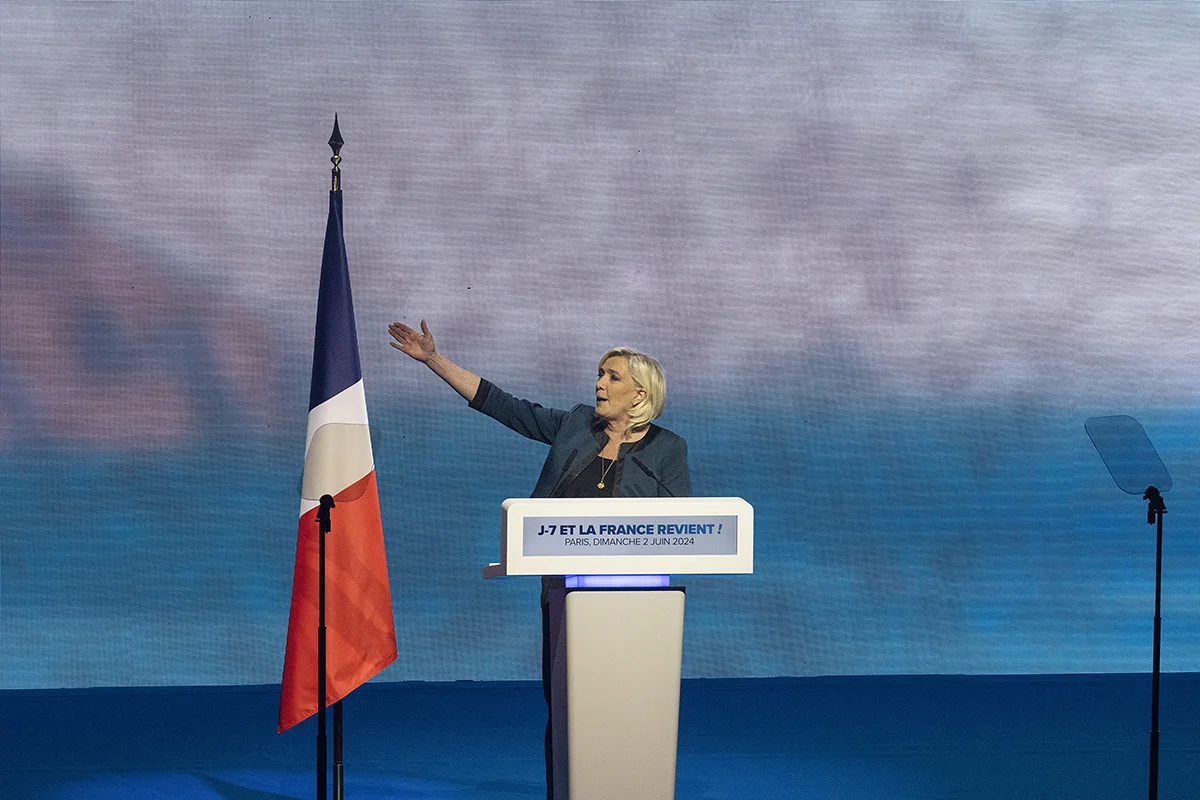
In early June, the party Marine Le Pen and Zhordan Bardell already won the French elections in the European Parliament, having secured the support of 31% of the voted - twice as much as that of the Renaissance presidential. And it seems that now the far -right ones are going to repeat their success. Polls give them 36.5% with allies and from 225 to 265 seats in the future parliament.
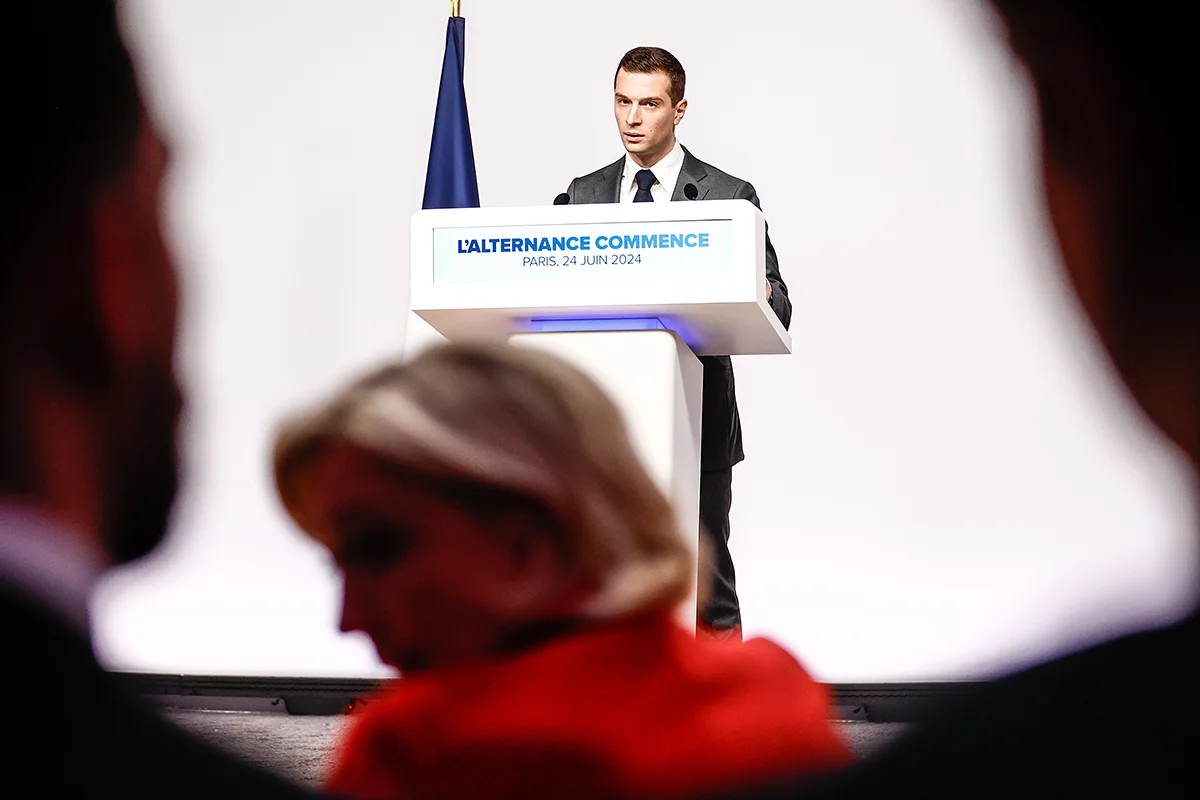
Only French ultralery can prevent the majority with ultra -right: specially for the elections, they united into the Coalition Mix from the Communists, Socialists and Green. Now in polls they occupy a second line with about 30% of the vote.
However, looking at how the campaign for the first round of the elections took place, it is still unknown whose victory-the ultra-right from Le Pen or the Ultralevs from Jean-Luke Melanchon-will be a greater problem for France and the rest of Europe.
Macron calculation
Immediately after Macron dismissed the national assembly, political analysts began to look for a rational calculation in this.
Firstly, despite the fall of the Renaissance rating, Macron could expect to keep a significant number of places in parliament behind his party due to the specificity of the French electoral system. The elections here pass in 577 majority districts in two rounds, and the deputy is received by the one who will gain more than the rest in the second round. In a matter of days, finding 577 good candidates is not so simple, experts said and explained why the “national association” could not repeat their pan -European success in the country.
Secondly, Macron could also play that the internal parliamentary elections have traditionally interests the French more than pan-European ones-they usually have a higher turnout. The Renaissance could really have a calculation of the mobilization of their supporters, who, for some reason, did not reach the plots three weeks earlier.
According to forecasts , the appearance in the elections will really be high - about 65%, and such an indicator has not been since 2007.
The number of issued "powers of attorney" - a local analogue of absenteeisms also speaks of the desire of the French to participate in the elections. There are already 2 million of them, which is five times more than in the past elections.
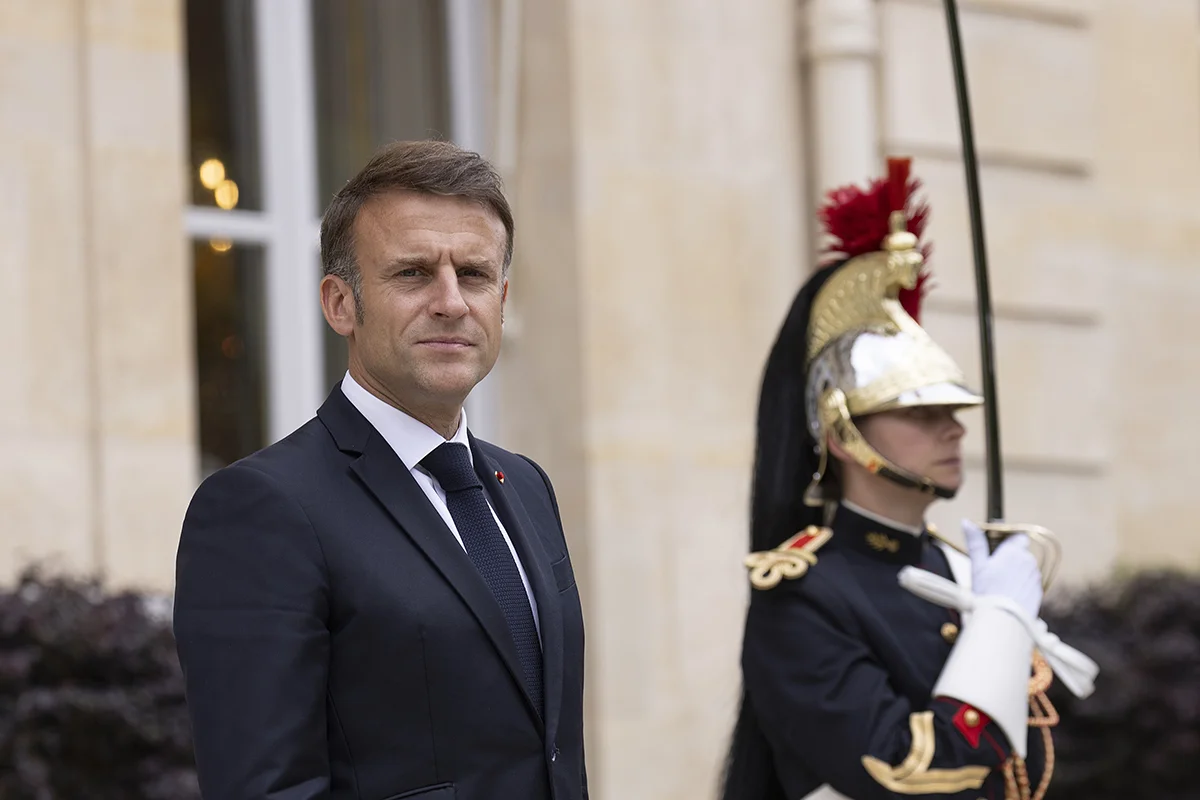
Thirdly, if in the “distant” and not very understandable to the ordinary voter the European Parliament, the French are ready to send radicals, then they are much more attentive to their voice at the national level and give it to the centrists more often. And in the center there is just a macron block with allies.
All these arguments looked logical on paper, and, perhaps, Macron, the thrilling parliament, was guided, but the intensity of the political struggle and the real chance of radical forces to form the government brought this calculation to naught.
Squicks of Republicans
Everything went not according to the plan. In recent weeks, the political life of France has plunged into madness.
First, Marine Le Pen joined the “national unification” of the right from the more moderate party “Republicans”. Its head Eric Sitty announced his decision to join the “national unification”, which predictably shocked most party associates. For the "Republicans", calling themselves the heirs of Charles de Gaulle and Jacques Shirak, the union with ultra -right has always been a taboo.
Therefore, in response to this statement by Sitti, the Sopartiyans declared him a traitor to their common history and the values that existed for decades. However, Sitty did not bother. He locked himself in the headquarters of the party, saying that he would simply not let his colleagues acting against him.
Meanwhile, the leadership of the Republicans gathered at an emergency meeting in another place and decided to exclude Cyutti from its ranks. In response, Siotti said that he still considers himself the chairman of the “Republicans”, as he was elected by a general vote, and not by the decision of the Politburo, and filed a lawsuit to his colleagues. “I am the chairman of the party, I’m going to my office, that's all,” he told reporters on the way to the headquarters the next day.
All this happened publicly, the participants exchanged angry comments on X (formerly Twitter), which amazed and brought to despair the remnants of their supporters.
The court ultimately recognized the exclusion of Suitty from the "Republicans" illegal - like the next two more similar attempts from his colleagues. This gave the “traitor” to nominate 63 (including himself) republican candidate - and, according to surveys , they can bring from the Le Pen from 20 to 25 additional places in parliament.
"Tick current from the ultra -right"
The National Association itself and its young leader Zordan Bardell, all three weeks of the election campaign, tried to attract the French even more populist slogans than usual.
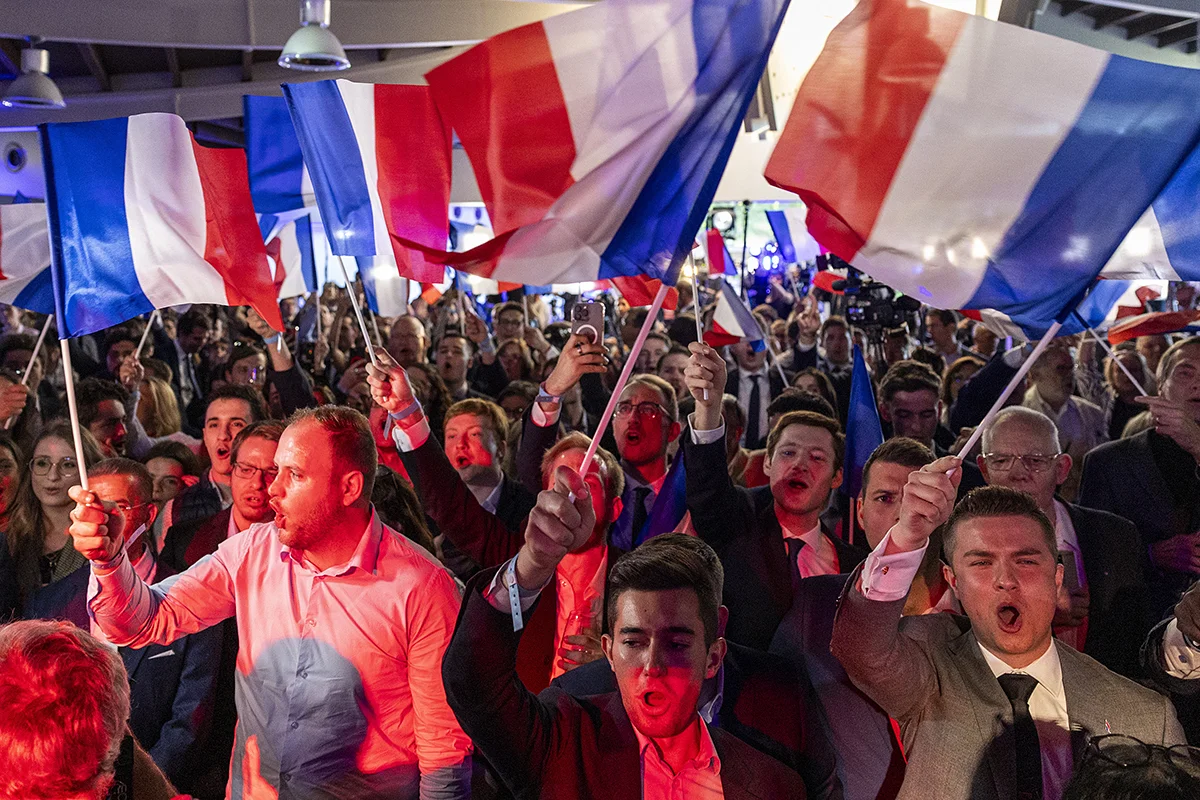
As in the elections to the European Parliament, Bardella continued to bet on the mobilization of youth. To do this, for example, he promised if he became the prime minister, to free young people under 30 years of income tax and allow him to retire in 60 those who started working at 18.
Bardell leads an account in Tiktok, where he has 1.7 million subscribers. He also learned to speak with young French in the language of Storiz and Reals.
The election events of the National Association are compared with rock concerts. Even those who have not yet managed to reach adulthood and have a vote with the right of voice come to them.
The program of the National Association itself, it seems, is also designed for the weaned to read long texts of the young generation. It fits only on ten album sheets in PDF format. Instead of traditional volumetric clarifications in small print on a white background - modern layout, large photos of the smiling Bardella and Marin Le Pen, in simple language sentences, theses with shootouts and capacious infographics.
Another shock in the society of the “National Association” expressed in June is a ban on holding “strategic positions” to people with two citizens. "Can we imagine that the Franco-Russian ones work in the Ministry of Defense?" - asked Zordan Bardell.
However, if such a rule acted today, it would affect not only the abstract “Franco-Russian” ones. Ann Idalgo, probably, could not become the mayor of Paris (because of the citizenship of Spain), Rashid Dati-the Minister of Culture (citizenship of Morocco), and Eric Dupon-Moretti-the Minister of Justice (Italian citizenship).
“Your proposal for dual citizenship was hit by three and a half million Frenchmen,” Gabriel Attal noted during the debate. "Do you want to put the Franco-Russian at the head of the nuclear power plant?" - asked Bardell in response. To which Attal reminded him that one of the advisers of the National Association in European organizations is Tamara Volokhov - just the same owner of the Russian and French passports.
"Complete madness" of the left
While the right -centers broke up, and the farmers behaved even more populist than usual, the French left could agree on the creation of the coalition.
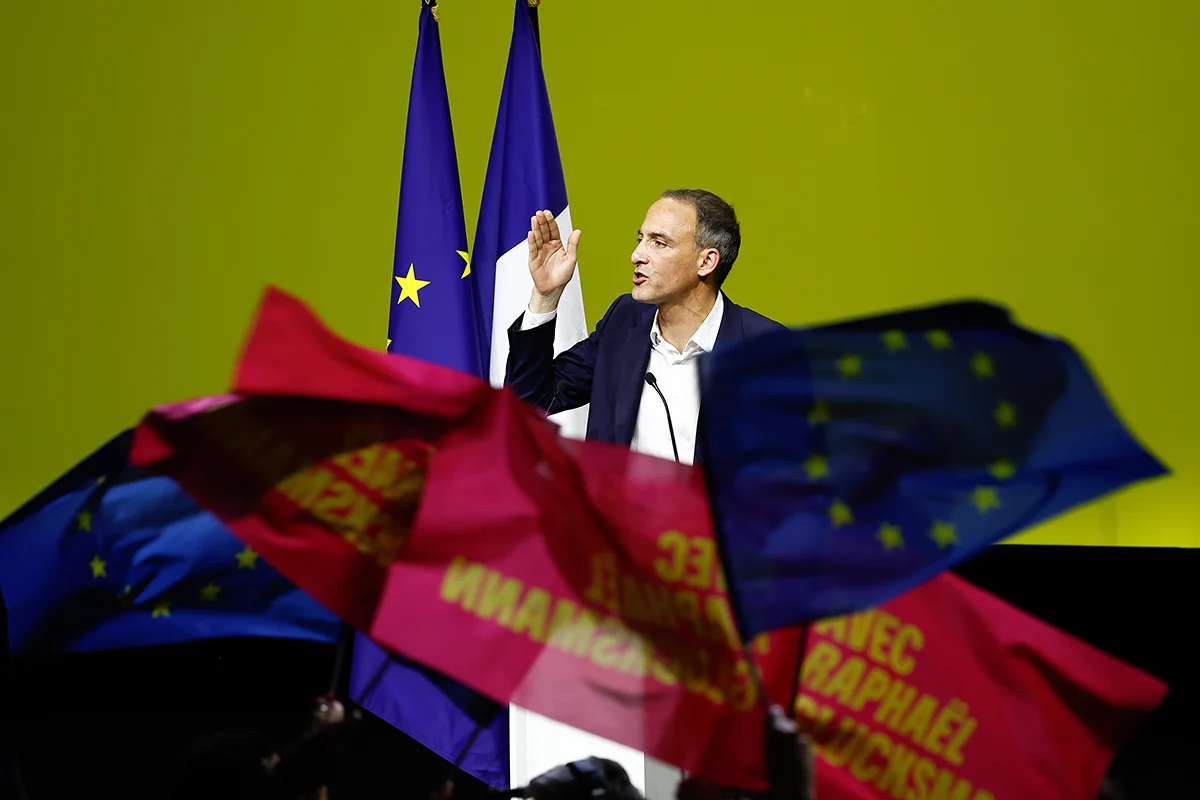
The negotiations lasted several days, periodically interrupted, the tension increased. Ultral, socialists, communists and “green” tried to bring their programs to the common denominator. No matter how strange this is in the 21st century, the problem of anti -Semitism was the main obstacle to the formation of the coalition.
Less than ten days before the first round, the head of the list of socialists in the European campaign, Rafael Gluxmann, said that he had become the object of anti-Semitic attacks from the Ultralevs from the “rebellious France” by Jean-Luke Melanchon.
The Gluxmann team even demanded that the Ultrals pass anti -Semitism training.
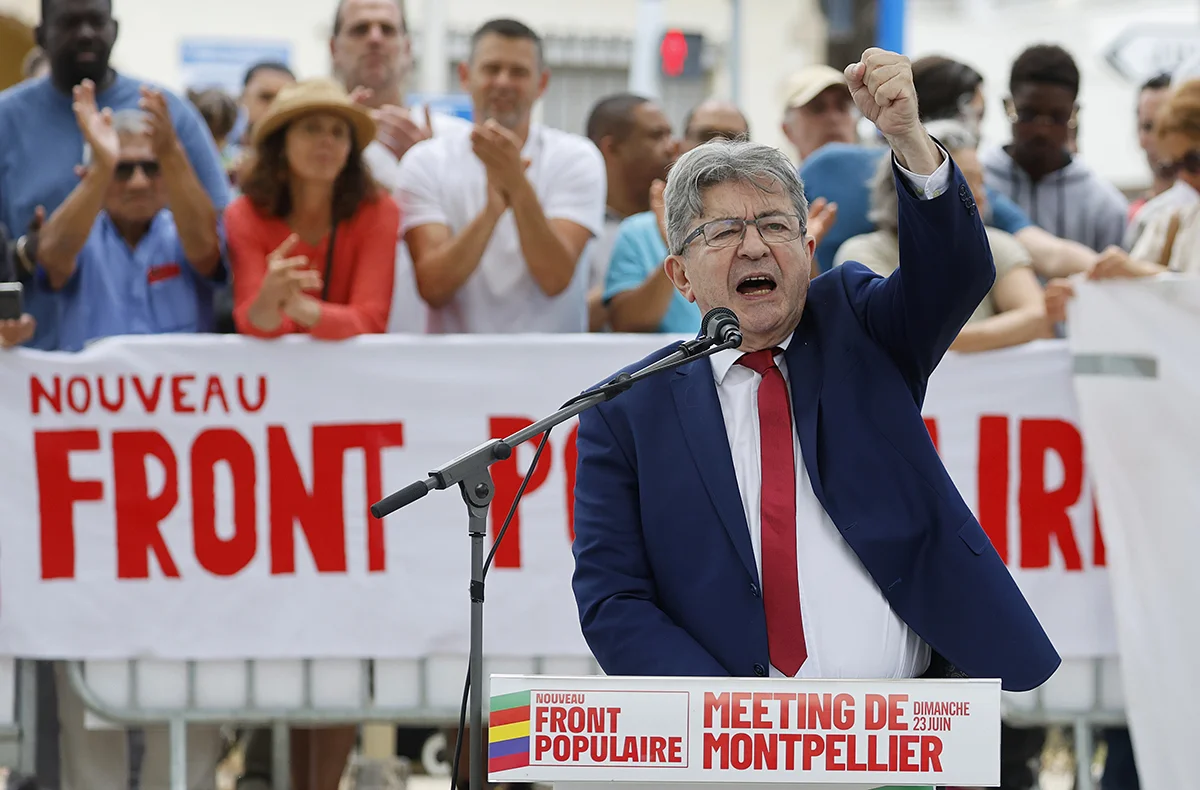
But after a public exchange of attacks, negotiations nevertheless ended with success, and the alliance of the left forces called the “New Popular Front” published the program. One of the key measures is the abolition “within 15 days” after the victory of the unpopular reform of Macron, which increased the age of retirement to 64 years. In fact, this statement of the left means the rollback of the key reform of Macron, with the help of which he tried to solve the problem of the growing French budget deficit.
In addition, the left promised their voters to freeze first -necessity prices and electricity, increase the French minimum wage from 1400 to 1600 euros per month, reduce VAT and restore the tax on wealth that Emmanuel Macron canceled after coming to power.
Although in reality, all these proposals of the left coalition have nowhere to take money. Last year alone, the French budget deficit amounted to 153.9 billion euros, that is, 5.5% of GDP. The Minister of Economics Bruno Le mayor generally considered the left -wing program with “complete madness”, which will end with “mass unemployment” and “France's exit from the EU”.
In turn, Emmanuel Macron called the "new Popular Front" an unnatural union, emphasizing that Leon Blum is the first French prime minister-"should tilted in the grave today."
A comparison of the new alliance of socialists with the Blum period arose not only in Macron.
The name “New Popular Front”, Jean-Luc Melanshon and its supporters, chose their not better associations, obviously to draw an analogy between the French anti-fascist movement of the 1930s and the modern left-wing, opposing the threat of coming to the power of the ultra-right ones.
The first “Popular Front” is the Alliance of the Left Forces, which was in power in France in 1936-1937. Then the government of Leon Bluma reduced the number of working hours from 48 to 40, introduced a two -week paid vacation and legalized trade unions at enterprises. But all these measures were poorly combined with the state of the budget. The economy was covered by a crisis, inflation grew, the francality fell, as a result of which the left set up a significant part of society against itself, ultimately facilitating Adolf Hitler with the installation of Vichy's collaborationist regime in France.
POCAST and confidence verification
“We will vote for the republic and against the extremes! I am counting on you, ”the Prime Minister of France and the comrade-in-arms of Macron Gabriel Attal called on social networks on the eve of the voting day. After all, if these very “extremes” - the ultra -right “national association” or the left coalition “New Popular Front” - will show the result similar to the predictions of polls that took the post of head of government only six months ago the attale will definitely have to leave it.
But he is especially counting on the support of moderate voters, of course, French President Emmanuel Macron himself. In a “letter to the French” published on Monday, June 24, in the regional press “Letter to the French”, the president said that he would not resign in the event of the victory of the opposition and remain at his post until May 2027. But the so -called “cohabitation” is a situation when the president and parliament relate to different political forces are not the simplest format of state governance.
Officially, Macron does not take part in the election campaign and, in particular, in the debate, but since he dismissed the assembly and appointed extraordinary elections, the owner of the Champs Elysees appears in a public field almost every day, trying to convince the French to support his Renaissance party.
Perhaps,
The strangest and most unexpected decision of Macron over these weeks was to participate in the recording of the podcast, which was not known in France, “Generation that made itself.”
Usually, entrepreneurs, artists and athletes come to the author of the podcast Mathie Stephanie, who independently achieved certain heights. Only two politicians sat down to the macron to his microphone: Arno Montebur, who, under Francois Olland, was two years as the Minister of Renovation of Production and two months by the Minister of Economics, and the deputy of the previous convocation of the parliament Cedric Villani.
As Matyu Stefani himself later told the Le Parisien to the Le Parisien, he sent a request for an interview to the press service of Macron a few months ago and did not receive an answer. But last Friday, June 21, at four in the morning, Stephanie, at that moment resting on Corsica, a message came from the Eliseisian Palace with a proposal to record a conversation with the president right the same evening. The author of the podcast urgently flew to Paris, and many observers saw in the unexpected response of Macron an attempt to please the very young audience for which Tiktoki Zordan Bardell records.
“Many people are angry at me. But I did this [dismissed the national assembly], because there is nothing greater and fair in democracy than confidence in the people, ”so the main theses of Emmanuel Macron in the podcast sounded.
They are angry with Macron inside the presidential camp. According to the French media, only a few people in his environment knew that he was planning a similar step.
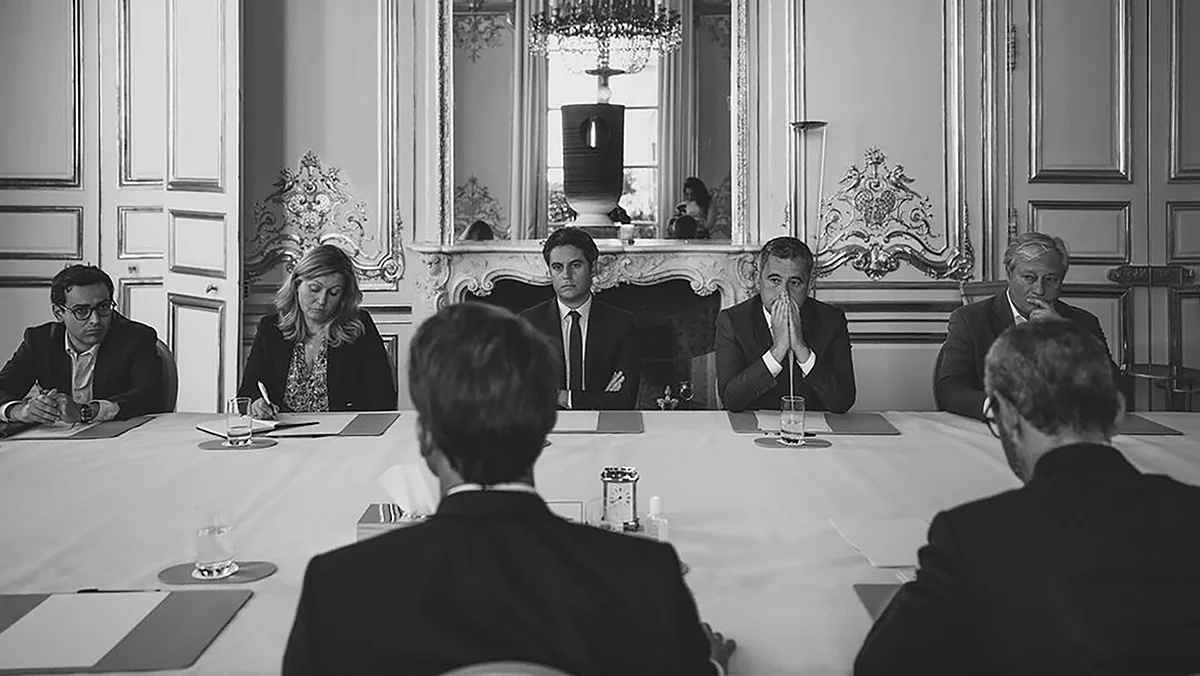
В сети распространилось фото, снятое официальным фотографом Елисейского дворца 9 июня, на котором запечатлено, как Эмманюэль Макрон объявляет о своем решении ближайшим союзникам.
За столом — обескураженные премьер-министр Габриэль Атталь, министр иностранных дел Стефан Сежурне, председатель Национальной ассамблеи Яэль Браун-Пиве и глава МВД Жеральд Дарманен, закрывший лицо руками.
«Это был очень жестокий момент», — расскажет Браун-Пиве позже телеканалу TF1. Она попросила Макрона о встрече, чтобы попытаться отменить роспуск, но «было слишком поздно».
То самое «доверие народа», к которому апеллировал французский президент в подкасте, проверяется на прочность прямо сейчас на избирательных участках по всей стране в первом туре парламентских выборов. Однако вряд ли Макрон и его соратники будут рады результату проверки. И вряд ли им хватит недели, чтобы в случае краха сегодня успеть что-то исправить ко второму туру, который состоится через неделю.
Note of the editorial office
Впервые этот материал был опубликован утром 30 июня.