
Translated material
Looking for what to read in the summer? Here are three popular science books
About football during World War II, relations between people with bacteria and the future of the Internet (which should not be so sad)
Football. War. Holocaust
Edited by I. A. Altman, A. E. Herber. UFO Publishing House
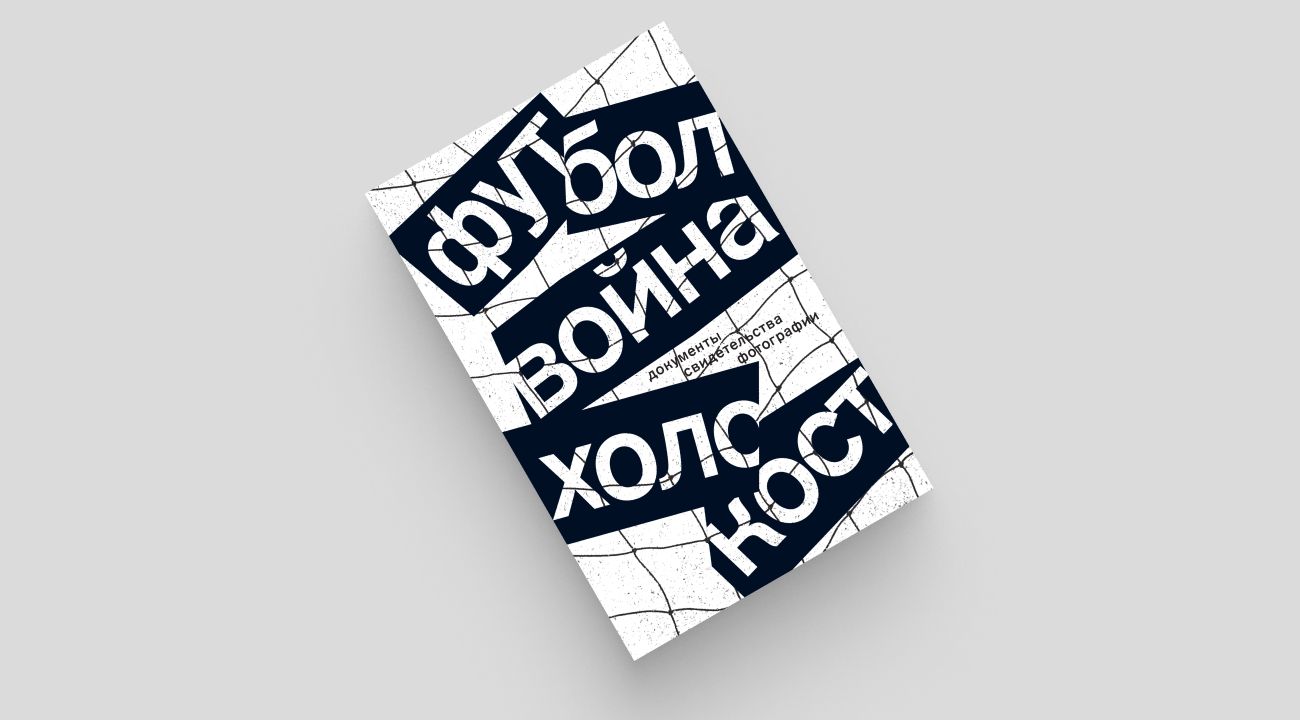
A small book of documentary evidence and photographs about football during the Second World War. After the 1936 Berlin Olympiad, Jewish coaches, football players and presidents of German clubs fired, many of them, a former large stars, were arrested and died in camps. At the same time, matches were arranged in concentration camps, and since 1942, by order of Himmler - even championships. For many players, it was a way to survive or at least live until the end of the game.
The most famous was a football match in Terezienstadt in August 1944, a fragment of which one of the prisoners even shot a film. After the match, the players were sent to Auschwitz, after a month the majority was gone.
Another characteristic episode is about the legendary president of FC Bavaria Kurt Landauer, who in 1938 got into Dachau, but a month later he was released as the hero of the First World War. He fled to Switzerland, and after the war he returned to lead his club again. Most of his family died during the Holocaust.
The second large plot of the book is matches in the occupied territories, the victory in which could cost football players of life. And although the authors prove that the legend of the “Death matches” in Kyiv and Lviv, which ended in the execution of the defeated teams, is nothing more than a legend - it became the basis for several wonderful films, such as “The Victory Fleet” with Michael Kane in the main role.
There is a third plot, which is already developing in the Soviet Union -the arrest of the legendary Brothers of the Starostins , the founders of the Spartak team, who were accused of preparing a terrorist attack on Red Square and an assassination attempt on Stalin.
Each of these stories is a short sketch, a picture with a signature. But from these stories there is a story about finding hope in difficult times. It does not last long, her promises are ghostly, and the end is often tragic.
Gert Lovink “The Platform is captured. How do we regain our Internet "
Translation from English: Andrey Kartashov, Nikita Kotik. Publishing House Ad Marginem
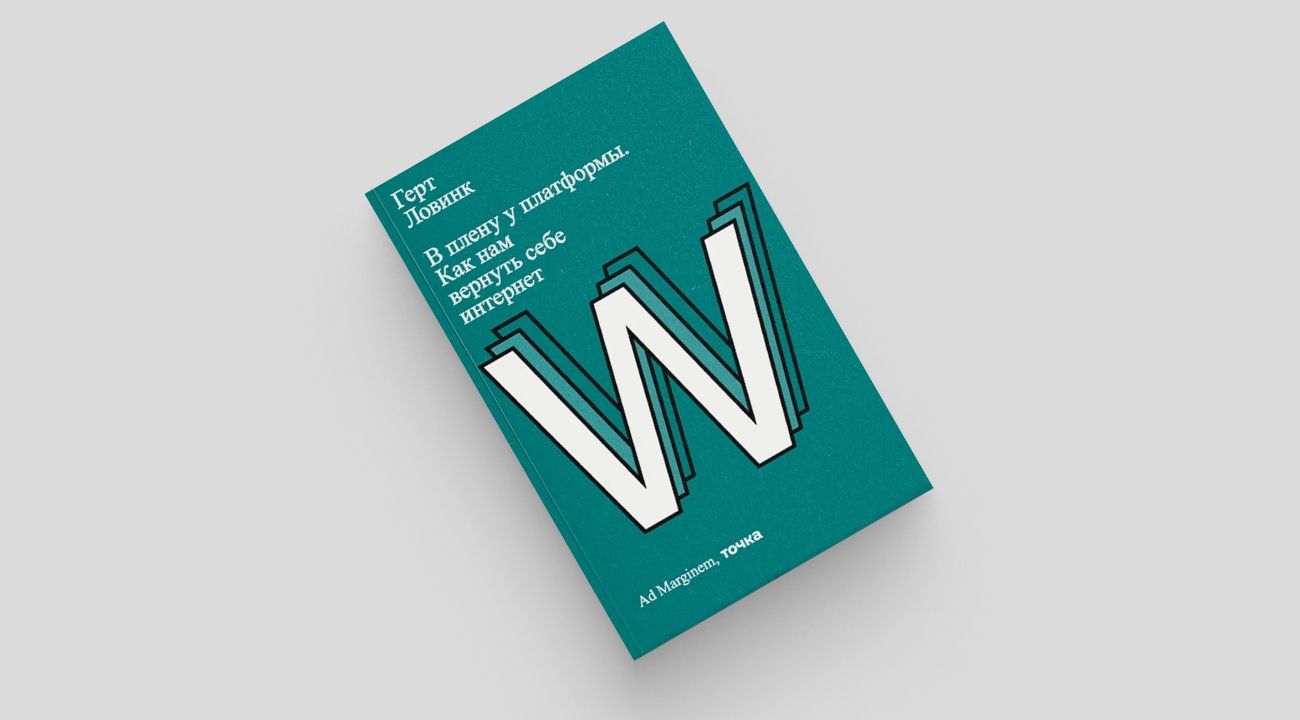
“The Platform is in captivity” - a collection of critical essays of the Dutch theorist of Media Gerth Lovinka. In Russian, his “critical theory of the Internet”, the translation of the book of 2016 about what social networks and smartphones led to. A new book is a recognition of the final surrender of the user in front of the Internet, written in a pandemic - when life has passed only online. “Instead of turning on a radical technical imagination for the start of alternative projects, we were distracted by fake news, abolition and cyberwoman,” Lovink writes.
This book was written briskly and smartly, like the very fact of its release, the very possibility of conversation is contrasted with the “acute conceptual poverty”, which we all encountered. The author refers to French and German philosophers, quotes the feminist criticism, and not so much creates an accusing manifesto, but calls to make the Internet a more meaningful place. You can, of course, just remove the phone in your pocket, but enough of us for a while. The main problem, which we find ourselves in captivity, writes Lovinka is a public sadness. At the same time, few of us believe that the tape of Instagram is able to cure it from melancholy.
Lovink offers a whole Internet healing program, which begins with the outcome, that is, a literal exit from social networks. Lovink hopes that one day the best Internet will grow at the site of the platforms: slower, not so giant, focused on local communities and benefits for them, and not to earn large corporations. Perhaps this is a utopia, but the very recognition of the current state of things looks in the presentation of a loving more than anxious - and very accurate.
Many of you asked how to order the books of the Medusa publishing house outside Europe. We finally expanded the list of delivery countries. We hope that it will be convenient for you. Now we deliver books not only to all EU countries, but also to Israel, Armenia, Georgia, Turkey, Serbia, Kazakhstan, Uzbekistan, Kyrgyzstan, Montenegro, Moldova, Thailand and the UAE.
Rob Dunn "With us or without us: the natural story of the future"
Translation from English by Anna Petrova. Publishing House "Alpina Non-Fix"
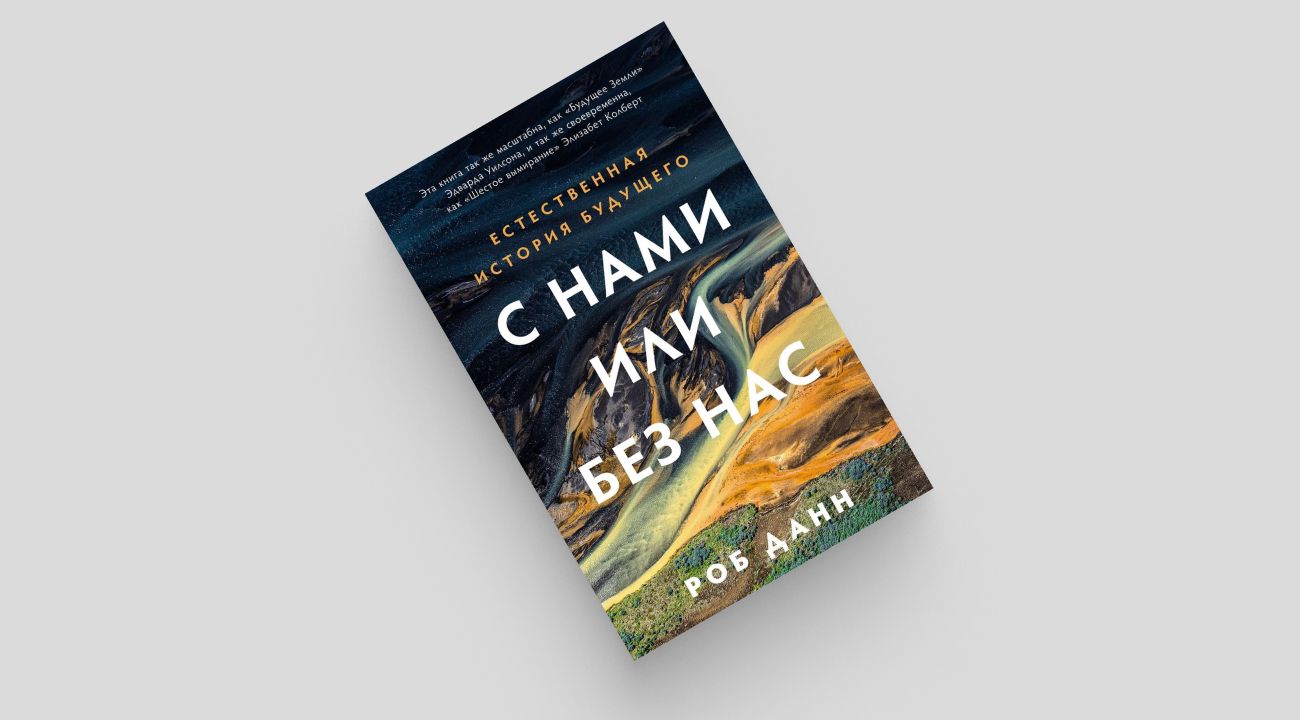
Robert Dunn is a biologist, writer and associate professor of the Department of Applied Ecology at the University of North Carolina. In Russian, his 2009 book was already published “Not one House” about bacteria and multi -bedrooms in our dwellings and “The Wild World of our Body” (2011) about bacteria in our bodies. His book “The Natural History of the Future” is devoted to the future of man as a species, but here it was not without bacteria and insects.
One of the central ideas is Danna - people are much more similar to bacteria or termites than it seems to us (we also cannot exist without other species). He begins his book with a story about the Entomologist Terry Erwin, who in 1970, studying beetles in the tropical forests of Panama, discovered that there were a great many unknown species of tropical arthropods - up to 30 million. There are even more bacteria - perhaps up to trillion. Dunn does not forget to remind the readers that they are only a “bubbling life in Petri's cup”, that people are not the only ones and not even the main on earth and in vain imagine themselves conquerors of nature.
But at the same time, his book is primarily about people: about their scientific victories, about the stories of many biologists and environmentalists who have discovered new species and climate changes in the last decade. It is even more interesting to fantasize Danna, what life will be after these changes are irreversible: where the inhabitants of yesterday's forests and swamps will go in search of the usual ecosystems, whether rats will walk the size of elephants on abandoned land. And how much time will pass before only bacteria and insects remain on the planet.
Lisa Birger