
Translated material
Imperfect crime
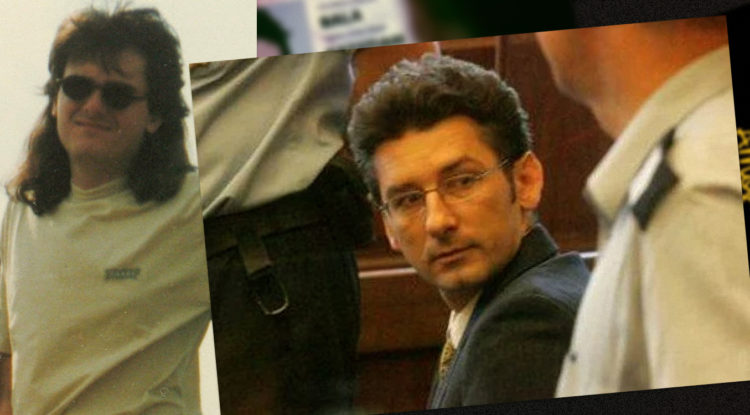
The killer described his crime in the novel, but the police could not go on his trail for years until the detective with love for psychology took up the matter
In December 2000, in the southwest of Poland, three men were fishing on the Odra River when one of them noticed how the current was driven by something like a big bundle. At first, the fishermen thought that it was just a log, but, having looked closely, they realized that they were mistaken - logs did not have human hair. When the police arrived at the place, they found in the water the corpse of a man with obvious traces of violent death.
In order not to miss the main materials of the "cold", subscribe to our Instagram and telegram .
The loop was worn around the victim’s neck, and the hands were tied behind his back. The forensics found that once the ropes were interconnected so that the slightest move of the hands forced the loop on the neck of the victim to drag on even more. Of the clothes on the deceased were only sweatshirt and underwear.
The murdered person came under the description of the missing businessman named Darius Yanishevsky, which his wife reported a month ago. The last time Yanishevsky was seen in Wroclaw, 100 kilometers from the place where his body was found.
Yanishevsky’s mother was able to finally identify the body - she recognized her son’s loose hair and a birthmark on his chest. The pathologists established: before the death of Yanishevsky, they were frightened and tortured, but he died already in the water - he choked.
The police launched a large -scale investigation: the scuba divers examined the bottom of the Odra River, the forensic scientists carefully examined the nearby shores and forests. All the employees of the advertising company, which was led by Yanishevsky, were questioned - but the police could not be found.
Familiar Yanishevsky described him as a soft and sociable person. In his free time, he played the guitar and composed music for his rock band. “He was not inclined to conflicts,” his wife recalled . “He would not harm anyone.”
The investigation was terminated six months later - the Polish press called the murder of Yanishevsky "an ideal crime." For three years, the case lay in the Archive of the police department of the Wroclaw, until in 2003 it caught the eye of the 38-year-old detective Yatsek Vroblevsky.
He finally decided to find the culprits of the crime.
Detective-enthusiast
Detective Vroblevsky was fond of psychology and at his free time attended classes at one of the local universities: he wanted to better understand how the criminals think. He often lingered at work for a long time and studied archival materials. In the Yanishevsky case, he was attracted by the fact that it was still not disclosed, and the police, who initially searched for the perpetrators of the murder, came to a standstill.
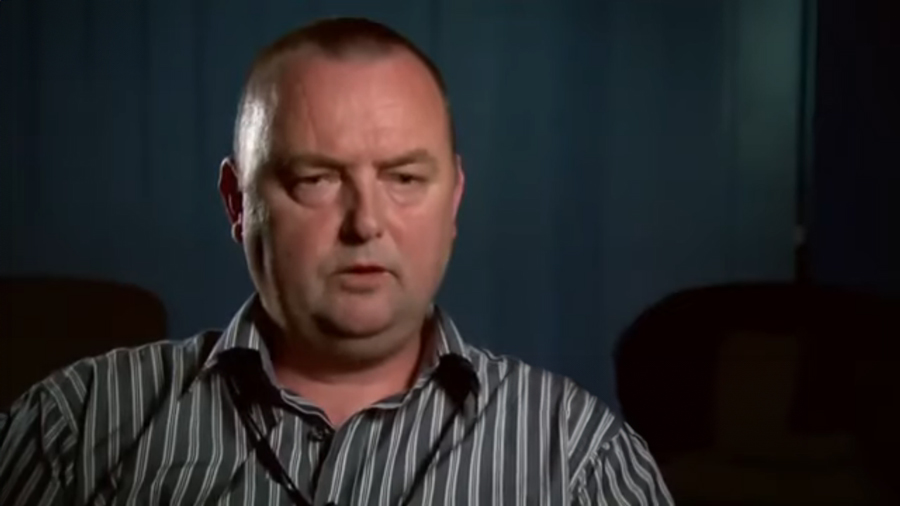
When Vroblevsky began to investigate the death of Yanishevsky, he carefully studied all the materials of the case. The murder - and the detective did not doubt that it was precisely it - was not connected with the robbery. So, for example, according to the wife of Yanishevsky, her husband always carried credit cards with him - however, after his death, no one used them.
Vroblevsky plunged into materials deeper - he found that Yanishevsky’s mother worked with her son in the company as an accountant. She specifically emphasized in the testimony that on the day of the loss of her son, at about 09:30 in the morning, an unknown man called the office. He said that he wanted to order several advertising banners, and insisted at a personal meeting with Yanishevsky to discuss details. They agreed on a meeting that took place about four in the afternoon. After her, Nobody saw Yanishevsky alive.
Investigators under the leadership of Vroblevsky studied the recordings of telephone conversations and found out that they made a call to the office of the murdered from a telephone booth. Moreover, less than a minute after the completion of this conversation from the same machine gun on Yanishevsky’s mobile phone, another call was received. However, it remained unclear whether the calling criminal was and how many people were involved in disappearance and murder. In the testimony, the witnesses noted that when Yanishevsky left the office, two major men went towards him - but the police could not find out who it was and whether they were related to the murder.
Detective Voroblavsky realized that he needed to find what his colleagues missed: some new clue, detail, to find a mistake that the criminal made-after all, no matter what the press wrote, and there are no perfect crimes. Then Vroblevsky recalled that the mobile phone of the murdered Yanishevsky was not found - he disappeared without a trace on the same day as the deceased.
At that time, in Poland, they were just starting to introduce technologies for tracking computer and cellular communications, but Wroblevsky still found out that after the disappearance of Yanishevsky, no one used his number. The detective also managed to find out that the cell phone with the same serial number was sold at the Allegro online auction four days after the disappearance of Yanishevsky. The seller of the missing phone was registered at the Internet as an Internet as the pseudonym Chris B. He turned out to be a 30-year-old man named Christian Bala.
Polish postmodernist
Christian Bala was born in a small town of Khoynuva near the Wroclaw. He grew up in a simple family: his father, Stanislav, worked at a construction site and sometimes took part -time jobs in a taxi, and Mom Teresa was a housewife.
From a young age, Christian showed interest in literature. He brought home books on philosophy and read them one after another. His father sometimes went to watch in France, and Christian often went with him to make money to study. “He brought suitcases full of books,” recalled Stanislav Bala. - He worked all day, and studied at night. I was joking that he knew about France more of books than from personal observations. ”
In 1992, Christian entered the University of Wroclaw. During sessions, he often spent time outside the house in the company of friends. As a result - often for the exams themselves, he appeared with a hangover and disheveled hair. At the same time, he received the highest marks. According to the memoirs of teachers, he was one of the most talented students. Beat Serotskaya, a professor of philosophy, spoke of him as a man with a non -frenzied thirst for knowledge, possessing a "inquisitive, rebellious mind."
Christian himself called himself a nihilist. He used his academic knowledge to create his own philosophy, which distorted the ideas of Nietzsche, Foucault, Burrose, Heidegger and de Sad, so that they correspond to Christian's worldview. He claimed that he hates "conventions" and was ready for anything.
In 1995, Christian married his school lover Stanislav. Stasia, as Christian called her, leaving her school, worked as a secretary and did not show much interest in either languages or philosophy. Christian's mother was against this marriage, as she believed that Stasia was not suitable for her son. However, the young man insisted and said that he wanted to take care of his wife, who "always loved him." In 1997, the couple had a son Kasper.
In 1997, Christian Bala graduated with honors from the University and entered the doctoral studies in philosophy. He received a complete academic scholarship, but it was difficult for him to provide his family, so he decided to leave his studies and open his own cleaning business.
Christian burned out quite quickly - in 2000 he announced bankruptcy. In the same year, his marriage broke up. “The main problem was women,” his wife later said. “I knew that he had a novel.”
After parting with his wife, the ball was in a depressed state and in 2001 decided to leave Poland. He went to the United States, and then to Asia, where he taught English and underwater swimming. Around the same time, he began working on his first literary work - the postmodern novel “Rabies” (original name Amok), in which he reflected his radical views on philosophy. The book was published in 2003.
"Amok"
According to Vroblevsky, the investigation was not at the investigation until 2005, until he called the anonymous and advised him to read the work of the ball. The detective followed the advice and got a copy of the book. A black goat symbolizing the devil was depicted on her cover. Inside, Vroblevskoy expected a real gift - the plot of the novel almost accurately retold the details of the murder of Dariusz Yanishevsky.

The main character is a bored Polish intellectual named Chris. He reflects a lot about philosophy, drinks, has sex with different women and at one moment kills his mistress for no apparent reason. Chris straightens out with his victim with the help of a knife, and then strangles it with a rope - exactly as it happened to Yanishevsky. Moreover, the instrument of murder, a knife, Chris then sells at an online auction.
Vroblevsky was impressed by the coincidence of the details of the real murder with the plot of the novel. It became clear to him that the author - besides selling the victim’s phone - was precisely involved in the crime. The detective printed a copy of the novel and handed them to all the police officers who participated in the investigation. Each of them was supposed to look for new parallels that could be drawn between the fictional Chris and the real Christian Bala.
The investigation team talked with the friends of the ball and compiled his psychological portrait, which almost completely coincided with the image of the protagonist of Amok. Like Chris, Christian studied philosophy, was divorced, had an unsuccessful business, traveled a lot and often drank.
Another clue - albeit still weak - was the plot about the murder of Yanishevsky, published back in February 2002 and posted on the website of the Polish television channel. On the site there was a call for those who wanted to help the investigation.
Investigators analyzed hundreds of IP addresses of those who entered the page with the plot, and noticed that some of them were registered in the USA, Japan and South Korea. Detectives hardly believed that foreigners showed interest in information in Polish dedicated to the old crime in Wroclaw. But the fact that the criminal who is abroad could watch this plot, they could allow.
Vroblevsky also found out that a month before Yanishevsky was abducted, Christian Bala was interested in the Internet by the book “Hanging as a result of an accident, suicide or criminal offense”. Despite all these strings, the detective realized that real evidence was not enough to charge. He needed to meet with the writer personally.
The policeman knew that the ball would return to Poland to see his relatives. It only remained to wait.
New clue
In the fall of 2005, Christian Bala finally arrived in the hometown of Khoynov, where he was detained by the police. On this day, Vroblevsky first met a beam face to face.
The detective, still not having evidence against the writer, began interrogation, listing strange coincidences with reality discovered in the text. “It was madness,” the ball later recalled. - He perceived the book as if it were my autobiography. The impression was created that he had read it a hundred times. He knew her by heart. "
Finally, Vroblevsky turned to the facts. He asked the suspect how the victim’s phone came to him. Christian replied that he could buy him at a pawnshop, as he did many times. He also agreed to testify on a lie detector and insisted that he was not involved in the murder.
During the polygraph, the ball often held his breath and manipulated the instrument in other ways - the test did not show accurate results. After 48 hours, he was released.
“I spent two years to build a case, and it crumbled before my eyes,” Voroblavsky later recalled .
Before returning the passport that was taken from the writer during the arrest, Vroblevsky drew attention to the stamps. They testified that Bala in recent years visited Japan, South Korea and the USA. It turned out that the periods of the time that the ball spent in these countries coincided with the dates when foreign users went to the page with the plot about the murder of Yanishevsky.
Club "Frantic Horse"
While Wroblevsky continued the investigation, Bala accused the police of Wroclaw of abuse of office. According to him, when detained, he was broken by his hands behind his back and squeezed his throat so that he barely breathed. The police themselves claimed that the detention was carried out without the use of physical strength. Bala turned to international human rights organizations and the organization of writers-PEC club. The ball was supported by Denise Rainhart, a theater director, accompanied by traveling to the United States and South Korea. She wrote an open letter demanding to stop the investigation.
Despite the pressure from the society, Vroblevsky and his team were able to find another clue. They determined the number of the telephone card, with which calls were made from the automatic phone on the day of the disappearance of Yanishevsky. The analysis of the phone calls showed that the offender was associated with the parents of the ball, his wife and work colleagues.
Soon, Wroblevsky and his team managed to find a connection between Bala himself and the dead businessman. Malgozhata trembled, Stasi’s friend, the ex -wife of Christian, told the police that in the summer of 2000 he and Stasa went to the Szalony Koń (“Radio Horse”). During the dance, the Malgozhat saw how Stasya was talking with a man with long hair - his name was Darius Yanishevsky.
Vroblevsky realized that he needed Stasia - she was the key to the whole puzzle. She did not unlock and confirmed that she met Yanishevsky in a “frantic horse”: “I ordered Free potatoes and asked the man at the bar, [whether he saw, whether my order was ready. It so happened that Dariuse turned out to be this man, ”Stasia recalled .
That night they chatted until dawn, and in parting, Darius gave Stas his phone number. Later, they met and registered in the motel, but, according to Stasi, there was nothing between them: Darius admitted that he was married, and Stasya left, saying that he did not want to do this with another woman, because he knew what it was - to be the wife, whose husband betrayed her.
As Stasya said , a few weeks after her meeting with Yanishevsky, a drunken Christian came to her house. He demanded that she admit in the novel with Yanishevsky, shouted that he had hired a private detective and knows that Stasia was with Yanishevsky in a motel, and then hit her.
Vroblevsky finally received what he wanted - direct proof that Christian Bala saw and knew the victim. And the detective also understood the meaning of the last line of the novel by the Polish postmodernist: "It was the one who was killed by blind jealousy."
"Based on real events"
After the detectives collected all the necessary evidence, the ball was arrested on charges of murder. This case caused a great public outcry. Some of the inhabitants of Poland were sure that he was guilty, while others believed that the case was fabricated.
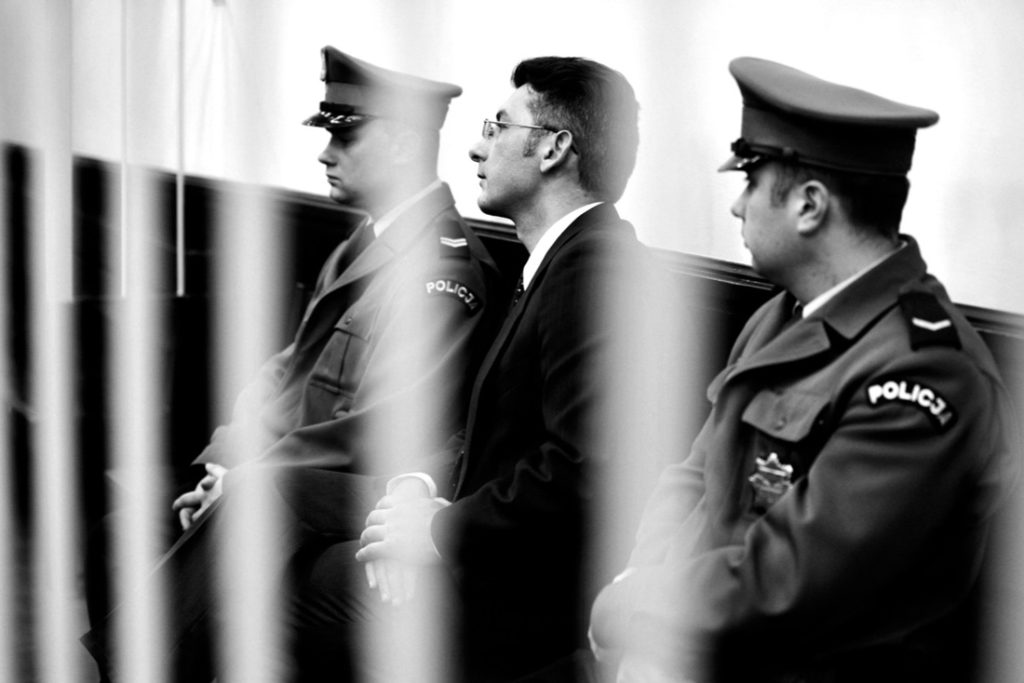
At the same time, several witnesses reported that the ball was a man prone to aggression and alcohol abuse. He often experienced bouts of jealousy, and his relationship with Stassey was accompanied by physical violence. When they were still together, the police even brought them to the register of families where violence is committed.
The trial of Christian Bala began in Wroclaw on February 22, 2007. The process attracted the broad attention of the public, there were philosophers who argued with each other about the influence of postmodernism, and young lawyers who wanted to know about new methods of investigation, and reporters who finally were convinced that there were no ideal crimes.
The accusation introduced files from the computer of the ball, which the police seized during the search in the house of his parents. In one of the files, the access to which was protected by the AMOM password, the Polish postmodernist described in detail his sexual contacts with more than 70 women. Also, some sources argue that during the search, notes were found in which Bala talked about treason and mentioned Yanishevsky. In addition, he allegedly planned to commit another murder that was going to describe in the next novel.
As the court continued and more and more evidence appeared against him, Christian Bala continued to claim that no one saw how he was kidnapped, killing and throwing Yanishevsky’s body - which means he is innocent. When the prosecution presented the jurisdiction of excerpts from the romance of the Act, which described the murder, Bala said that it only symbolizes the “destruction of philosophy”. The court did not believe him.
In court, they also talked a lot about the fact that the ball had a pronounced complex of superiority. Two independent psychologists conducted a study and found that he had a high level of intelligence, he realizes the consequences of his actions, but at the same time he was diagnosed with a narcissistic disorder. Because of this, he is not able to empathize with other people and reacts extremely painfully to criticism.
On September 5, 2007, Christiana Balu was found guilty of murder and sentenced to 25 years in prison. He never pleaded guilty. Already in prison, Bala said that he was working on a new work called De Liryk. This name is a game of words that combines “lyrics” and “nonsense”, that is, “delirium”.
In 2011, director Roman Polanski announced the beginning of the filming of a thriller entitled “a real crime” based on the history of Christian Bala. Однако фильм так и не вышел — вместо него в 2017 году Полански выпустил картину «Основано на реальных событиях» о писательнице, которая достигла первого в своей карьере успеха и теперь страдает от депрессии. Никаких пересечений с историей Кристиана Балы в картине нет.
В 2017 году по книге «Амок» фильм сняла польская режиссера Каси Адамик. Произвдение «De Liryk» пока так и не появилось в книжных магазинах.