
Translated material
In order to prevent the victories of the ultra-right in the elections, the macron party and the left block made a “smart vote” in French
That's how it was
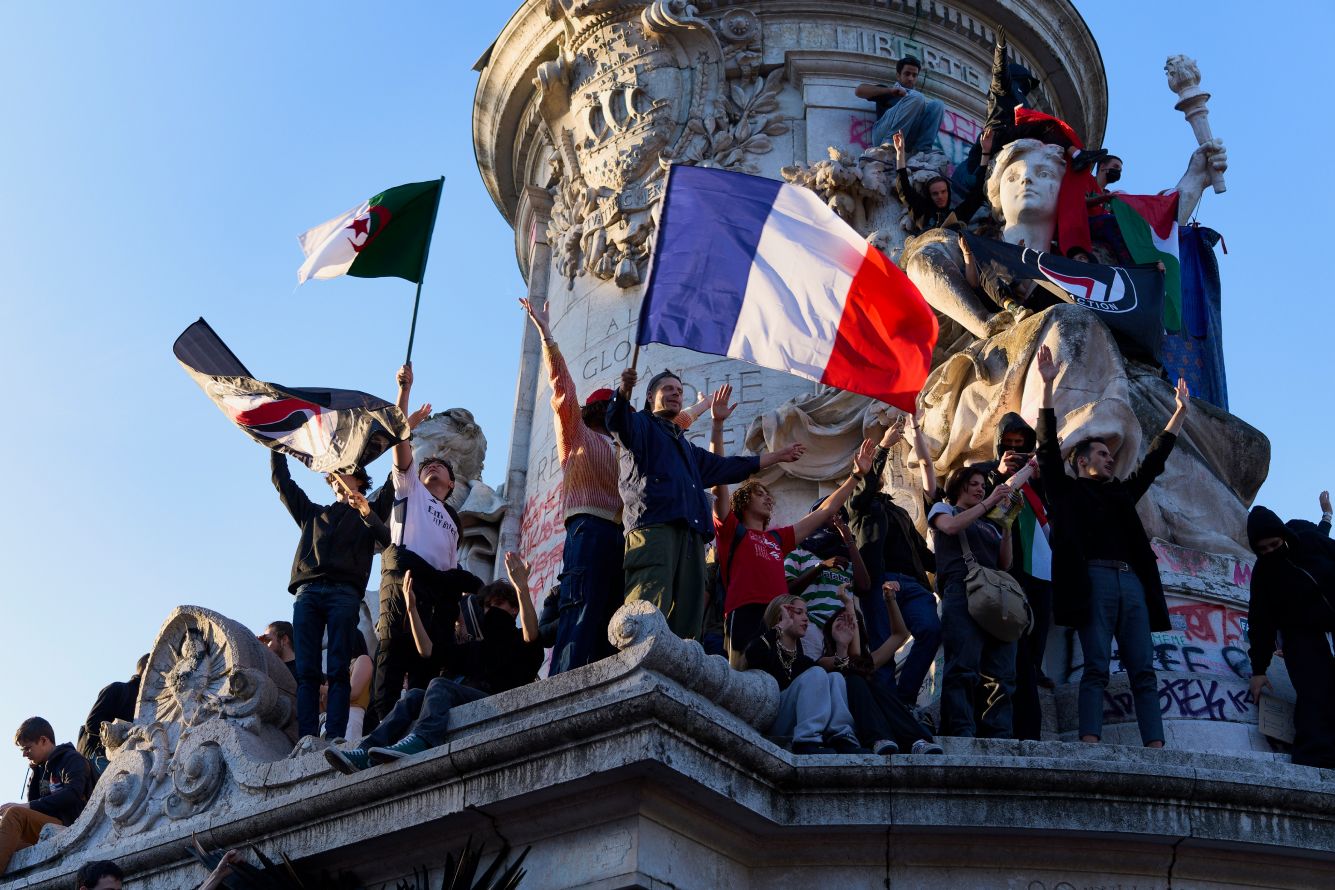
Back in early July, after the first round of elections to the French lower house of parliament, the extreme right “national association” had every chance to win the absolute majority. In order to prevent the victory of the Le Pen party in the National Assembly, the centrists agreed with the Left Bloc and created the “Republican Front” . Medusa tells how, with the help of this classical electoral strategy, France citizens managed to prevent the victory of the right - at least temporarily.
As the organization of the "Republican Front" influenced the election
In the elections that ended on July 7, the New Popular Front Left Bloc took first place and received 182 places in the lower house of the France Parliament (in total 577 seats in the National Assembly). The Central Alliance of Emmanuel Macron, who was represented by the country's Prime Minister Gabriel Attal, got 168 mandates, the right party Marine Le Pen and Zhordan Bardella “National Association”, which was recently considered a favorite, received 143 places.
Immediately after the preliminary results of voting became known, Prime Minister Attal made a statement. In “accordance with the democratic tradition,” he decided to resign on the morning of July 8. At the same time, the politician recalled that in the summer of 2024, France meets “important international events ”, and promised to act as the prime minister “so far requires a duty”, that is, until a new government is formed. On the morning of July 8, Macron did not accept Attal's resignation.
Attal himself, despite the failure of the alliance, was able to get into his district. He noticed that the party not only “survived”, but also held more deputies to the parliament than they gave some forecasts, overtaking the Le Pen party. One of the leaders of the Left “New Popular Front” by Francois Ruffen, also re -elected by the deputy, compared the victory of his party with the “light, which again lit up at the moment when the darkness won”. But along with this, Ruffen warned his party’s colleagues: “Voters gave us the last chance.”
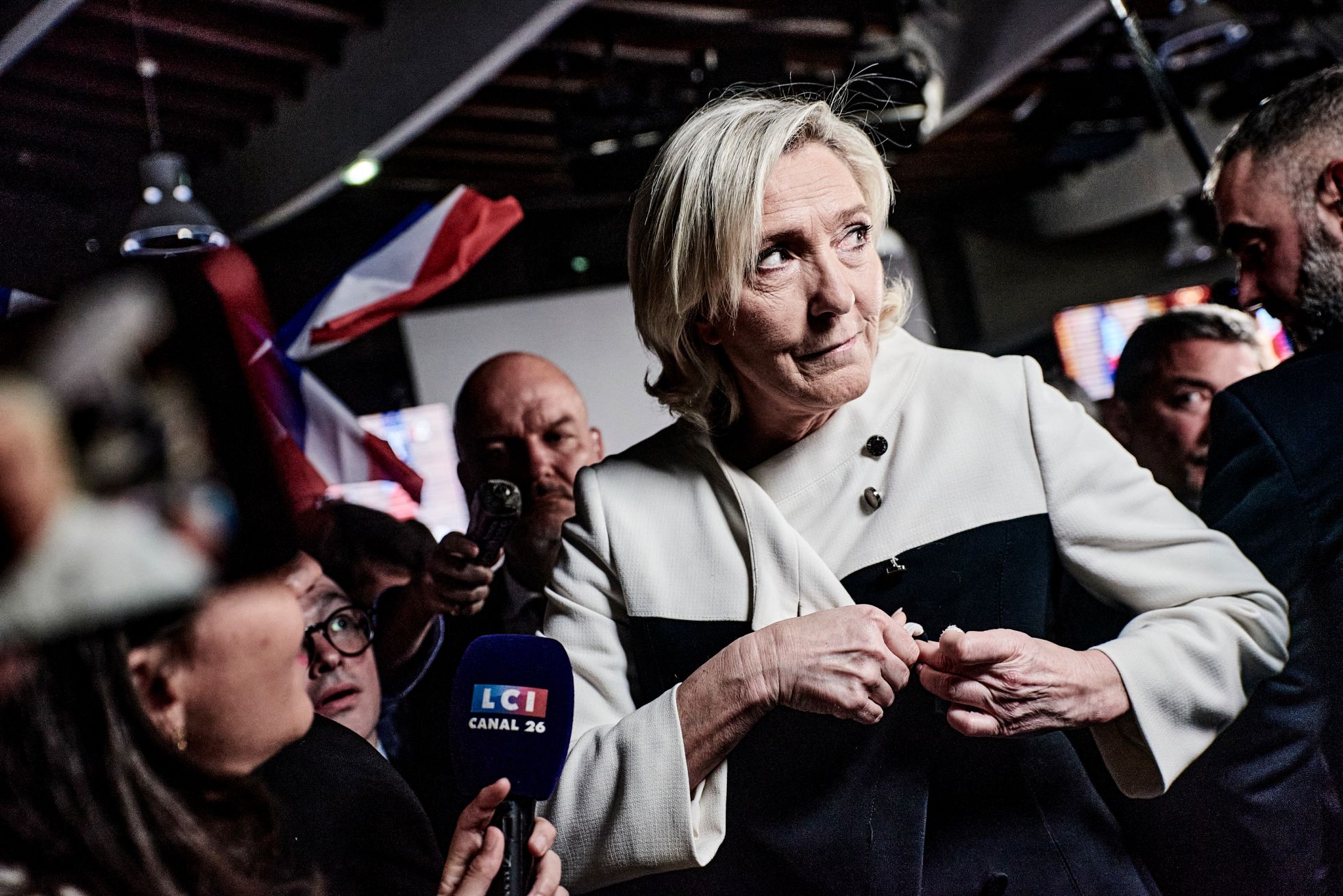
In her speech, Marine Le Pen said that "the ebb intensifies." “This time [the wave] did not rise high enough, but it continues to rise, and, therefore, our victory is simply postponed,” the politician said, hinting at the presidential election of 2027.
In the 76 districts, the winners decided on the first round. Further citizens of France had to choose another 501 deputies. Due to the fact that in the 224 districts of the Left, centrists and several candidates-nominates managed to agree, the results of the second round did not critically coincide with the initial forecasts .
On the eve of the second round, opponents of the Le Pen party created the “Republican Front” . In each constituency, where the candidates from the ultra -right claimed to win (and there were a majority of such districts), other politicians removed their candidates in favor of the stronger opponents of the Le Pen party. For example, the candidate from the presidential coalition refused to participate in the elections and called for vote for a more authoritative representative of the left, and the candidate from the left in the district where he lost to the centers, advised voters to support the contender from the macron party.
Immediately after the announcement of the results of the first round, four authoritative institutions of studying public opinion were given by Le Pen Parties and its allies from 240 to 310 seats. Candidates from the ultra -right ones went on the second round by almost 90% of the districts and were in the lead in almost three hundred districts (and 39 of them went to parliament immediately). Given the rules by which elections are held in the country, this is an impressive result: the centrists of Macron had such “early” winners in the first round.
But immediately after the appearance of the final data on the “Republican Front” on July 2 and up to the 5th, when the results of the surveys were published for the last time, the same sociologists began to predict the Le Pen parties that are already much less encouraging results . As a result, sociologists partially guessed only the result of the left.
How French politicians convinced voters
On the eve of the second round, both experts and politicians called several circumstances that could still affect the result. For example, the level of turnout and the one whose voters will show themselves more actively. These factors should have been most strongly affected by that hundred constituencies where it was difficult to predict the outcome of the vote in advance.
The second important variable was the level of confidence in the voters of those parties that made up the “Republican Front”. In recent years, the French have less and less followed the instructions of the Front, noted the Public Sénat parliamentary publication, and therefore it was difficult to predict whether they would follow the advice of their withdrawn candidates.
Just two years ago, in previous elections to the National Assembly, sociologists significantly underestimated the results of the ultra -right before the second round. Although surveys gave the “national unification” Le Pen from 20 to 50 seats, the party took 89 seats. It is possible that the reminder of this also helped to mobilize the electorate.
Finally, Le Pen herself, in order to reassure the voters of opponents, repeated before the second round that the chairman of her party, 28-year-old Zhordan Bardell, would “disagree” to become the Prime Minister without the vast majority in parliament. But nevertheless, she emphasized that the ultra -right are also considering the reserve option - the formation of the coalition.
Representatives of the “Republican Front”, among whom were not only politicians, but also activists, and celebrities (including the captain of the French national team Kilian Mbappa ), also scared the joint voters with the fact that Le Pen was real - especially after the results of the first round.
Representatives of the “progressive camp”-from ex-president Francois Olland to the Prime Minister Attal-actively called on fellow citizens to come to the sites. “There is a block that the majority can receive in the National Assembly, and these are extremely right,” Attal warned the French. - Either the authorities will take the extreme right government, or it will be in parliament. I am struggling for the second script. ”
The Prime Minister called on the fellow citizens to show solidarity, uniting around the general idea and leaving aside personal preferences: “Obviously, many Frenchmen do not like that they have to prevent the“ National Front ”( the old name of the Le Pen party-approx.“ Medusa ” ), using the not the balloon that they would like, [due to the fact that their candidates were removed]. But our duty today is to do this. ”
President Macron preferred not to speak out before the second round.
How extraordinary elections affected the party of Macron himself
Macron's coalition escaped third place only by a happy chance. And she seriously reduced her representation, having lost the majority in the National Assembly. The results of the elections once again attracted attention to the rapid advance of the extreme right and weakening of the "presidential majority."
At the first parliamentary elections for the macron party in 2017, his candidates received 350 seats and won the absolute majority. In the second, in 2022, they already received 245 seats and only the relative majority, on the third, who had just passed, 168 seats. So only seven years after a loud victory, the centrists lost the opportunity to form a capable government on their own.
The idea of Macron to mobilize its electorate, having held extraordinary elections, did not work. In just a couple of days, the left managed to agree on the formation of a wide “front”, the voters of the extreme right continued to vote for the only large “non -systemic” force - the Le Pen party.
Many political scientists, sociologists and even representatives of the Macron team himself initially considered his idea of losing. But another explanation was put forward. According to this version, Macron before the presidential election of 2027 decided to show French voters ahead of time, how dangerous the extreme right threat is. He hoped that, having won the parliamentary elections, the right would form the government and show with their further actions how incompetent in the government of the country.
As a result, the Le Pen party remained in the comfortable position of the “only non -playing” representative of the opposition. And moreover, she received the most convincing reason in her history to simply and intelligibly explain to the voters: they again did not allow the country to rule conservative people. Now, in order to pursue a policy that the right ones share, they need to elect their president.
The current president Emmanuel Macron did not speak after the elections. In the Champs Elysees, journalists were informed that the holding of extraordinary elections was “fair and appropriate” and led to “clarifying” the situation, but Macron himself will speak out about their results later: “In accordance with the republican tradition, the president will wait for the formation of a new national assembly to make the necessary decisions.”
Fedor Bely , Paris