
Translated material
"We all know what happened to Meyerhold"
Zhenya Berkovich and Svetlana Petriychuk were given six years of colony. We talked with those who remember how directors and playwrights were in the same way in the Soviet years
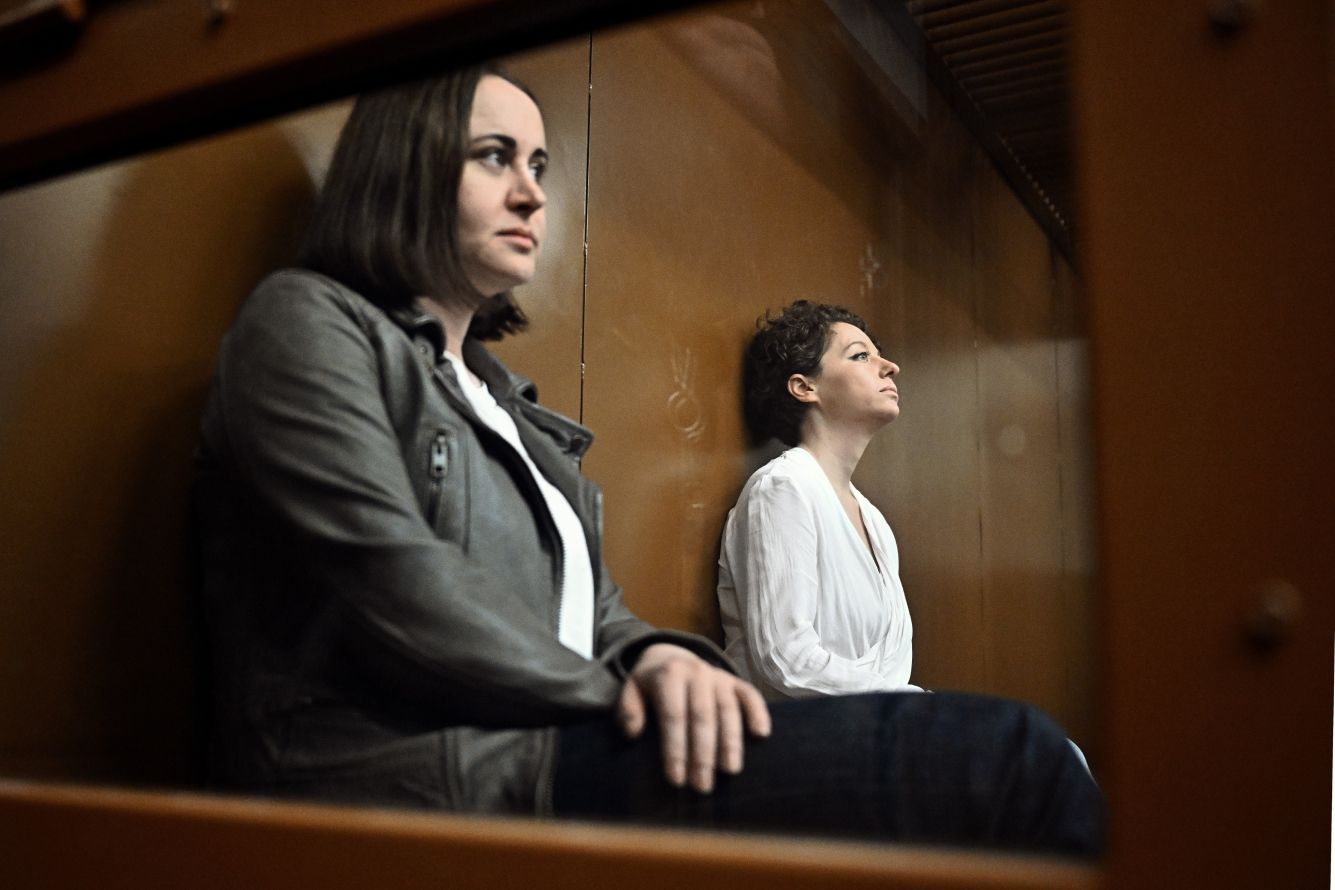
Today, the Second Western District Military Court sentenced the director Zhenya Berkovich and playwright Svetlana Petriychuk to six years in a general regime colony. They are accused of “justification of terrorism” for the play and the play “Finist's Yasny Falcon” about the Russians recruited by the “Islamic state”. This business has become one of the most egregious examples of political repressions of recent years: for the first time since Stalin's times, theater figures openly judge for creativity. However, those who started the theater career in Soviet times remember well what it is when the state wants to control culture. Many of them found artists, directors, critics who survived the Stalinist terror. Medusa talked with theatrical figures, for whom the case Berkovich and Petriychuk became a sign of the return of repression in art.
Natalia Pivovarova
Theaters, critic, former dean of the theater faculty of GITIS, former head of the Mikhail Schepkin House-Museum in Moscow. In 2022, he was dismissed from the museum and institute due to anti-war position
I often repeat that she became an adult in August 1968, [when the USSRintroduced troops into Czechoslovakia to stop democratic reforms].
I was 15, and I understood that it was the end of the short era of the thaw and the country was eager for the “iron winter” - to Stalinization. Lyudmila Zotova, who worked at the Ministry of Culture and left the remarkable notes “The Diary of a Theater official”, recalled how on the eve of the fiftieth anniversary of the October Revolution in 1967 in the windows of the APN-this is the current TASS-photographs of Stalin appeared.
The life of the late 1960s-early 1980s was complex and contradictory. Well, for example, I lose the Komsomol ticket in the tenth grade - not on purpose - they destroy me at the Komsomol meeting of the school, and on the same day at the party one of these Komsomol bosses tells anti -Soviet jokes. Or in the summer of 1970, I enter the Moscow State University for the Histress. The graduate student makes a fiery speech about collectivization before the applicants - how Stalin ruined many people, agriculture, and collective farms destroyed the country. Then I go to the exam, and in my ticket the second question is collectivization. I hate collectivization, I hate Stalin, but I want to study and tell that “life has become better. Live has become more fun ”according to the Soviet textbook. We were taught to live by double standards.
On the other hand, I wrap it in a color cover [Alexander Solzhenitsyn’s novel about the imprisonment in the “sharashka”] “in the first circle” - this is a small two -volume microscopic font, published by Ymca , and I read it in the subway completely openly. Anyone can look into the book and convey. But I don’t even think that I am doing some kind of “feat”. Or, when I was already called to the party at the institute, I said frankly: I won’t go. There were no consequences.
In the sixties, seventies, the Nogorbachev eighties, we read dissident literature, samizdat, Tamizdat, listened to the “enemy voices”, although they were terribly dashing in Moscow, so we knew places, areas where the signal reached. We sat for days behind the printing machine, copying the forbidden literature. They used to read volumetric novels like “Dr. Zhivago” in one or two nights. Ultimately, I am sure, perestroika became possible because there were many people who read, knew and comprehended Soviet history and reality.
Life was absolutely conscious: we knew that we hate and that we love, we knew what to read, what to look at the theater, what exhibitions and concerts to go. We knew about arrests, deaths, punitive psychiatry and so on. This added excitement to us, hatred in relation to the system and the desire to find out as many objective facts as possible, that is, the truth. Our worldview was integral. We saw that by the end of the 1970s the regime had already agonized, but we were not at all sure that the Soviet Union would collapse during our life.
Part of the intelligentsia did everything to soberly analyze modernity, but for this you need to understand the logic, the cause-effect relationships of the Soviet repressive system. From the origins - to the meaning, as Nikolai Berdyaev wrote in the work "The origins and meaning of Russian communism." But for most in the 1970s, this topic was closed. And this is natural, because we were not taught this “higher mathematics” neither in kindergarten, nor at school, nor at the institute. Soviet ideologists locked all these issues in the basements of the Special School. So they killed the memory.
In my environment, many elders knew firsthand about the bloodsucker Stalin, about ships, camps, prisons, links. For example, in the 1930s, my mother experienced two arrests of her father (she learned about the execution later)-this injury remained with her for life. Therefore, parents fought in every possible way first with my brother, and then with me, so that we would not discuss either the repression of the past or political reality publicly. Fear sat in people in a subcortex. People often hid their biographies, pedigree, did not talk about repressed relatives with children.
Now, if a person wants, he will easily get any information: about arrests, courts, about crimes, and so on. In Soviet times, few knew the names of witnesses [in courts]. They guessed that such and such a scammer, but could not say with confidence. [Now] We all read about the speech in court [actor, a witness to the prosecution of the case of Zhenya Berkovich and Svetlana Petriychuk Vladimir] Karpuk, for example.
Recently, well -known names in the theater were removed from the poster - recently, the play “Seryozha” [Dmitry] Krymov was walking along the Culture channel, and the titers did not have the name of the director. This is nonsense and cowardice. But modern viewers can easily find the name of the director. And when in 1941 a collection of articles about Lermontov’s “Masquerade” was published and it did not mention the name [director of Vsevolod] Meyerhold - by that time the executed , - the young readers had nowhere to find out that it was Meyerhold “Masquerade” in the Alexandrinsky Theater.
I entered GITIS [already after the Permanent Fund of Moscow State University] in 1974. The mid-1970s is a period when Brodsky, Solzhenitsyn and a lot of writers, artists, architects, and scientists are expelled from the country. But in lectures they never comprehend the real story - gulag, Stalin, repressions, red terror, and even more so Lenin. No, our teachers did not instill in us apolitism, did not teach us to engage in pure science outside of ideology. They led us away from the Leninist-Stalinist concept of culture into a completely different [ideological] space.
For example, [Theater, the future rector of the Shchepkinsky Theater School Boris] Lyubimov, a young teacher who led the course with Pavel Alexandrovich Markov , told at lectures about Kireevsky and Khomyakov , about Berdyaev , Merezhkovsky , Bulgakov .
We immediately made friends with Lyubimov. Every day we spoke for almost an hour on the phone - about dissident literature, about the expulsion of Solzhenitsyn, Brodsky. Moreover, sometimes we discussed these issues at parties at the institute. Once there was a snatch next to us and heard our whole conversation - but there was absolutely no fear. Somehow I really wanted to “live not by lies”, not to take part in choral singing.
On the day of the funeral of Andropov, I defended [in GITIS] a dissertation about Apollo Grigoryeva . The topic could not be affirmed on a large scientific council: Grigoryev is an idealist, his views on art are largely opposite to the views of Belinsky, [which Soviet art history considered “its own”]. The dissertation was, of course, without party songs, but quite correct in relation to the Soviet regime: I understood that I could not protect it if I allow myself too much.
Before I was allowed to defend, my teacher Andrei Ivanovich Gusev, the same Marxist, wrote a real denunciation to me and my dissertation, where he demanded that the rector Demin prevent me to defend. But Demin felt that something in this life was wrong, something needed to be changed. He gave my dissertation to the review by the then head of the Department of Marxism-Leninism, which eventually wrote a positive review. When I defended myself, Gusev showed me his ticket, where it was necessary to put “for” or “against”: look, look, I set the pros. As it were, he took off his responsibility. It was 1984, he sensed that his time was ending.
The pathological fear of many theater’s figures was instilled in the campaign to combat cosmopolitans. Her first victims were theatrical critics. In the late 1940s, a conflict arose between the critics of the All-Russian Theater Society-the future Union of Theater Workers-led by [Joseph] Yuzovsky and the Union of Soviet Writers, who headed [Alexander] Fadeev . Critics fought for art, called not to put bad [propaganda] plays [which promoted the Union of Writers], but at the same time they allowed themselves very careless statements towards the authors of the “patriots” or like the hero of the Gorky “philistines” Nile is not the most nice person.
One of the close Stalin's close associates slips the leader of the critics: they complain about the Union of Soviet Writers. Stalin, without looking, says that this is a “roll” on the laureate of the Stalin Prize Fadeev. In January 1949, the article “On one Antipatriotic Group of Theater Critics” appeared in Pravda. The name was invented by Stalin - he edited this article. Pravda accused critics of antipatriotism, of cosmopolitanism, the humiliation of the Russian people and Russian writers, stated that they were alien to a sense of national pride. A campaign against the so -called cosmopolites began with this article. Many people who taught in GITIS in different departments were injured. [Stefan's theaters'] Mokulsky was removed from the post of director. The [Boris] Alpers, [Grigory] Boyajiev, Abram Efros, [Alexander] Aniksta and many others were fired.
At the request of Stalin, under large institutions, courts of honor were created, where the “cosmopolitans” had to repent, plead guilty and call accomplices, and the rest - brand them. The worst thing was when students were attracted to these vessels, forcing them to testify against their teachers. The student of Alpers screamed at the academic council, like she, a simple Russian girl, hates these “rootless cosmopolitans” - referring to Jews.
One student of Boyadzhieva came to his house and said: “I am forced to brand you. What should I say on this scientific council? What will harm you in the lowest way? " Another would simply drive this student with a filthy broom. And they went outside and discussed how to oppose Boyajiev.
There are eras that do not allow people to show all the worst properties. And there are those that instantly, by click, expose everything ugly, aggressive, cannibalnic, which has accumulated in a person. In addition, there is always a matter of money and personal well -being. In denunciation too. You, a rootless cosmopolitan, live with your family in a three-room apartment, and I, some younger rank of an Officer of the NKVD, live in a one-room, and I also have a family of three or four people. You have to put you to pick up your apartment for yourself.
For people there was something to knock on - and there is something to knock on now. We believe that there is nothing. And they are sure-who is sincerely, and who is conjunctural-that they are fighting for a family, for their theater, for their institute. Fear paralyzes conscience and dignity even among strong people, to say about insignificance. Miles, criminal. The mode drives a person into the space of absurdity. Any dictatorship is a simplification of the diversity of life, a rejection of a complex person. It is easiest to stand in the crowd-that’s the person in the crowd, having lost his personality, like a small screw of the system-ruble.
“Man-Masa”, according to the definition of [Jose] Ortega-i-Gasset , for the sake of his well-being, refuses freedom, responsibility of choice. Hannah Arendt will say that a person refused to think. I did not lose the opportunity, but chose not to think.
The aggressive majority will doubt, gnaws, throw it out, put him in prison, in a psychiatric hospital, if someone feels that someone is violating its comfort, violates the building they built, where everything is allowed, where any means are good to achieve well-being. And he gave freedom to the state, to the authorities.
Yes, of course, fear is a very strong tool for suppressing will. It sounds beautiful, it is a mythologist. But so we take off responsibility. A well -known excuse - did not know, did not see, did not understand. And in reality, just do not care, complete indifference, my hut with the edge, “the giraffe is large, he knows better,” as Vysotsky sang.
[Kinoveda and Theater Science] Ney Markovna Zorkaya writes that Russian intellectuals are characterized by two complexes. One is the complex of Christ: I will go to the slaughter, I will suffer for everyone and save all my victims. And the other is a complex of Judah. I will betray, convey, expose, bring it to clean water - but these are my teachers, friends, so I suffer, suffer, and I have to forgive me. I have a family, parents, a favorite thing.
[Documentary Tale] “Six Leopades” Zorka now needs to read all young people. This is a strict introspection and an amazing text in terms of sincerity and drama, dedicated to its exclusion from the party. She signed a letter of solidarity in the case of Alexander Ginzburg , the famous dissident who compiled a collection called “White Book” in the case of [Andrei] Sinyavsky and [Julia] Daniel . The courage of this man is amazing: Ginzburg personally handed over a copy of the manuscript in the KGB, of course, he was arrested to Lubyanka and received five years in the colony.
No, no, I do not propose to repeat this act. Just everyone should answer for himself, where the boundaries that he will not cross, and how to preserve his human face in the crazy time when the number of monuments to Stalin, and Yuri Dmitriev , Oleg Orlov , is in general, the “memorial” - are in prison.
Moscow theater actor
I am from the family of repressed: my grandfather was shot, my grandmother died in exile, and my father was brought up in an orphanage. Of course, of course, there was an understanding of what Stalinism and generally totalitarianism were in our family. I have been engaged in the history of our family for a long time. A lot of things were found, including the name of the man who wrote a denunciation for his grandfather - this was one of the worst executioners of the NKVD in the region where the family lived.
During the time of Brezhnev, a group of artists gathered around my father, very good, who were then forced to leave, squeezed out of the country. For example, Alexander Blokh , Vladimir Ryklin . These non-conformers were quite successful.
Do you know where the America house is on Sretensky Boulevard? The famous house, huge. There on the upper floor there were workshops of artists, where I often went small with my father. These workshops [in Brezhnev times] began to burn. The arson became the last straw, people left. They were escorted forever - as on another planet: no one thought that it would pass for another 15 years and all this would end. These wires often passed at our house.
I worked for more than a dozen years in [the famous Moscow theater]. From the "old people", the older actors, I know many details related to the editors and closures of performances [in Soviet times]. Then the theaters were not covered. Closed and ruled individual work.
I recall the story that the older actors told me. They prohibit the next performance. Censors work out the creators: what do you allow yourself? One of the performers rises - a brave, sharp man - and says in a well -set voice: "You are terribly far from the people." He was then forbidden to teach. On the other hand, it was possible to play.
Times are now not as vegetarian as with the “expensive” Leonid Ilyich. Bulgakov has a famous formula in Moliere : "Art blooms with strong power." Since art is clamping - the matter is not so good in power. Repressions against artists reflect the shattering of the state, its self -doubt.
I feel pain for colleagues, for their fate, for the fate of their relatives, relatives. And most importantly, I don’t understand why this is done. We lose the best people, we lose artists, composers, actors, directors: they either leave, or go to prison, or cease to engage in art. And who will educate the next generation of creators? Pupils see perfectly: it’s better not to meddle - you’ll be more complete.
I left the theater and no longer work in any official institutions. I communicate little with colleagues, but I can say that in Stalin's times there was still more fear than now. Although we are approaching them. With “developed socialism”, at least it was clear what was possible and what it was impossible. Some institutions were allowed more, others less. But it is no coincidence that this is called “stagnation” - there were an established framework. Now it is not clear: what can you? Therefore, many people think, it is better not to do anything.
The performance, unlike literature, music, painting, cannot be created into the table. Even the film can be put on a shelf - and wait until he finds his viewer. But the theater requires a response here and now. Театр требует зрителя. Актеры должны играть для публики, чувствовать зал. Поэтому закрытых, подпольных спектаклей быть не может. К тому же какие могут быть подпольные спектакли при нынешнем развитии интернета? Обо всем сразу становится известно.
С другой стороны, формы театра бывают разные. Был во время Второй мировой войны такой концлагерь Терезиенштадт. Его организовали в нацистской Германии для Международного Красного Креста. «Вот, у нас все замечательно, у нас еврейская интеллигенция сносно существует в гетто». Там сидела профессура, актеры, режиссеры и так далее. Но никто не говорил, что в лагере происходит ротация: заключенных отправляли прямиком в Аушвиц, а на их место набирали новых.
Так вот, заключенные Терезиенштадта, чтобы выжить, организовали в бараках театр-кабаре. Мне доводилось читать пьесы, которые они там разыгрывали. Они пели песенки, рассказывали анекдоты. То есть театр может существовать везде, даже в таком аду. Театр был еще в первобытном строе, когда шаман разыгрывал тотемические пляски перед соплеменниками, театр существовал в «мрачном» Средневековье, принимал разные формы, но никогда не исчезал и не исчезнет, несмотря ни на какие репрессии.
Я наблюдаю молодых ребят, которые только приходят в эту профессию. Они же все равно пробьются, как цветок сквозь асфальт. Прорастут.
Оксана Мысина
Актриса, режиссер театра и кино. До эмиграции сотрудничала с разными московскими театрами, в том числе Московским театром юного зрителя и Школой драматического искусства. Самая известная работа Оксаны Мысиной — роль Катерины Ивановны в знаменитом спектакле Камы Гинкаса «К. И. из „Преступления“», актриса играла его больше 25 лет
Легендарная актриса Ермоловского театра Эдда Юрьевна Урусова говорила мне: «Ты — это я в юности. Такая же высокая, длинноногая. Я была такой же экзотичной актрисой».
У нее была главная роль — княгиня Бордеро, хранившая как зеницу ока свою любовную переписку с Байроном. Я играла ее племянницу Тину, над которой у княгини была безраздельная власть. Это был один из первых моих спектаклей на профессиональной сцене — «Письма Асперна» Бориса Александровича Львова-Анохина по роману Генри Джеймса [в Новом драматическом театре в Москве]. Очень романтичный спектакль, с детективным сюжетом, действие происходило в Венеции. Эдде Юрьевне было уже за 80, она играла в коляске: у нее были обморожены ноги после сталинских лагерей, где, как потомок дворянского рода Сухово-Кобылиных, она провела семнадцать лет.
Княгиня Бордеро стала ее последней главной ролью. Она царила на сцене. Ее неповторимый голос: сколько в нем было всего — нерастраченной женственности, трагизма, изысканного юмора! Перед каждым спектаклем мы обнимались и желали друг другу «Ни пуха!». Помню ее традиционное «К черту!» и заливистый смех.
Мы очень дружили, не ощущая разницы в возрасте. Она была чрезвычайно остроумной и открытой всему новому. Я часто приходила к ней в гости. Однажды Эдда Юрьевна мне рассказала, как они с ее молодым мужем, Михаилом Унковским, счастливые, ехали на гастроли в Ленинград — оба были звездами Ермоловского театра. Прямо при выходе из вагона их арестовали и в наручниках увезли в разных направлениях. Больше они никогда не видели друг друга. Шел 1938 год. Дома, в Москве остался их крошечный сын Юрочка. Он не знал, живы ли его родители, больше двадцати лет. Сама Эдда Юрьевна узнала о судьбе мужа только по возвращении в Москву из норильской ссылки. Михаила Унковского расстреляли на Лубянке через месяц после ареста, без суда и следствия.
В лагере Эдда Юрьевна оказалась на Колыме. Женщины обматывали ноги тряпками — у них не было обуви — и шли валить лес. Крестьянки из раскулаченных семей сказали ей: делай что хочешь, главное, даже не начинай пробовать пилить деревья — нам не привыкать, а ты, московская барышня, сразу погибнешь, тебя может придавить первым же деревом. И Эдда Юрьевна придумала. Она сидела в лесу у костра вместе с конвоирами по восемь-десять часов в пятидесятиградусный мороз и громко, на весь лес, играла за всех персонажей все роли из ее спектаклей, читала наизусть стихи — а она их знала море, — разыгрывала в лицах всю мировую литературу, включая «Войну и мир».
В лагере Эдда Юрьевна была на грани смерти от дизентерии. Но все ее так любили, что мужской барак собирал для нее рис, по одному зернышку, чтобы сделать рисовый отвар. Она лежала и не могла уже двигаться, а мужчины по ночам по очереди пробирались, рискуя жизнью, в женский барак и отпаивали ее, умирающую, этим отваром.
После лагеря она поехала в ссылку в Норильск, и там у нее под рукой оказалось два актера, Георгий Жженов (тоже после лагеря) и Иннокентий Смоктуновский (после немецкого плена). Они открыли театр, где Урусова была в основном режиссером и педагогом. Репетировали и играли чуть ли не весь мировой репертуар — вдвоем или втроем. Из общежития в театр ходили, держась за канат: зимой в Норильске страшные снежные бури.
С Георгием Жженовым я тоже была знакома — это был интеллигентнейший человек и мощный актер. Встречались и общались мы в основном на кинофестивалях. Он рассказывал, что они дружат по-прежнему, все втроем. У Жженова есть потрясающая книга, «Саночки». Он умирал от голода в лагере [на Колыме], и вдруг комендант сказал: «Тебе пришла посылка». Но идти за ней нужно было по снегу за сто километров. Комендант дал ему лыжи и саночки. В книге он рассказывает, как шел на лыжах, падал, спал в снегу, чтобы получить эту посылку от мамы. Там было все спрессовано в камень — шоколад, орехи, — но посылка спасла жизнь всему бараку.
Эдда Юрьевна вернулась в Москву в 47 лет — а на момент ареста ей было 27. Двадцать лет жизни ушли буквально на выживание. Вместо юных красавиц-героинь ей пришлось перейти на роли, как она говорила, комических старух. Восстановиться в театре [имени Ермоловой] оказалось совсем не просто. Ее уже не ждали, ее мысленно похоронили. Но все же она снова вышла на родную сцену — хотя после лагерей уже не могла передвигаться без трости.
Я репетировала спектакль «К. И. из „Преступления“» у Камы Гинкаса [в Московском театре юного зрителя]. Эдда Юрьевна жила по соседству, в Трехпрудном переулке. Я иногда забегала к ней после репетиций — на крыльях — и рассказывала, как работаю с Гинкасом. Она была так счастлива за меня. Кормила меня блинами с красной икрой, а сама выпивала рюмочку коньячку. Она была первым зрителем, кого Кама Миронович пригласил на прогон нашего спектакля.
Эдда Юрьевна в последний раз сыграла «Письма Асперна» незадолго до смерти. Она играла с переломами руки и ноги — но работала блистательно. Я приехала к ней рано утром, чтобы помочь ей одеться и сесть в машину: помню, она уже сидела на краешке кровати, припудренная, в белоснежном оренбургском платочке, надушенная любимыми духами, готовая к работе, к счастью встречи со зрителем.
У нее в роли был такой момент — она обмахивается, будто веером, венецианской маской и говорит: «Если уж я покину эти комнаты, то не для того, чтобы дышать свежим воздухом, да и не думаю, чтобы он был так уж свеж там, куда я отправлюсь!.. Но до этого пока — далеко!» Перед словом «далеко» ее княгиня Бордеро делала с помощью маски такой жест, будто кидала за спину бокал с шампанским. Она делала этот жест так залихватски, что публика не могла не аплодировать. Так вот, на нашем последнем спектакле она из-за перелома не могла сделать этот жест, но произнесла реплику так, что весь зрительный зал устроил ей долгую стоячую овацию.
У Эдды Юрьевны была уникальная актерская техника. Она могла говорить на сцене иногда очень тихо — но ее всегда было идеально слышно. Она проживала жизнь своего персонажа на моих глазах, не форсируя голос, не актерствуя. Я считаю ее одним из своих любимых учителей — не только в профессии, но и в жизни. Я видела, что такое пережить трагедию и не сломаться, сохранить себя. Не озлобиться, а идти своей дорогой во что бы то ни стало.
Думала ли она, что террор может повториться? Нет, мы никогда это не обсуждали. Эдда Юрьевна спрашивала: что нового ты смотрела в театре? В кого ты влюбилась? Какие новые актрисы появились? Любопытство было потрясающее к профессии.
Могу сказать от себя — когда я почувствовала, что в стране происходит что-то не то. Я ведь училась у Михаила Ивановича Царева в Щепкинском училище — у того самого Царева, который был одним из любимых актеров Мейерхольда. Все мы знаем, что случилось с Мейерхольдом — как его садистски пытали чекисты, избивали, унижали его достоинство, ломали физически и морально.
Мой муж Джон Фридман повел меня однажды на Донское кладбище в Москве, где в общей могиле номер два вместе с шестью тысячами других расстрелянных лежит измученный пытками Мейерхольд. В то время там даже не было таблички . А ведь о Мейерхольде по всему миру писали диссертации, книги, в Москве был Центр имени Мейерхольда . Тогда был. Сейчас уже нет. Все начинает возвращаться. Как говорил поэт Александр Тимофеевский , 37-й трамвай едет по Москве.
Я думаю: нет, подождите. Я через одно рукопожатие ученица Мейерхольда, можно сказать, через Царева. Я должна что-то с этим делать. Я рассказала об этой вопиющей ситуации в одном из интервью. В музее Мейерхольда мне заявили: «Оксана, не вмешивайтесь, это не ваше дело». Дали понять, что будто даже обиделись. Мне это было непонятно! «Неужели вас это не волнует? Вы же имеете к этому прямое отношение!»
Я пошла в Центр Мейерхольда. Тогда директором там был один из моих лучших друзей, Миша Пушкин . Я говорю: «Миша, ты знаешь, что происходит? До сих пор на могиле Мейерхольда даже нет элементарной таблички». Он отвечает: «Оксана, прекрати, тебе что, больше всех надо?» Я ушла из этого кабинета в слезах — с тех пор мы перестали быть друзьями.
Великий театральный художник Игорь Попов рассказал мне, что в свое время существовал проект памятника Всеволоду Мейерхольду. Они с режиссером Анатолием Васильевым хотели поставить его на Поварской , во дворике их театра. Пытались добиться разрешения, даже ходили по инстанциям, писали письма. Запретили — под предлогом того, что жильцы якобы категорически против. Сейчас мы понимаем, что все боялись поссориться с ФСБ.
Я играла у Женечки Беркович. Это был ее дипломный спектакль, по сути, первая режиссерская работа, там участвовали в основном ее однокурсники, студенты Кирилла Серебренникова — но она позвала и нескольких актеров постарше, в том числе меня. Женя уникальный режиссер, нежная, тончайшая душа, мы с ней очень подружились. Нам дали пространство, совершенно, казалось бы, непригодное для театрального показа, но очень выразительное для эстетики современного театра, бывший цех: там была, естественно, цементная пыль, грязь. Мы с Женей вдвоем накупили средств для мытья полов, чистки стен, набили ими мою машину — и сутки все это мыли, драили, оттирали, чтобы можно было туда пригласить публику.
Женя потрясающе образованная, разносторонне талантливая. Она удочерила двух девочек с тяжелой судьбой, подростков — и сколько любви, сколько тепла она им отдала! То, что сделала с ней власть, — это плевок во всех нас. Это говорит о том, насколько глубоко они зашли в полном непонимании, что такое человек, его достоинство, его ценность.
Со Светланой Петрийчук я не знакома лично, но, естественно, я точно так же сопереживаю ей. И фантастический Илья Яшин — там, в тюрьме. С ним я прекрасно знакома. Мы однажды вместе были в телевизионном эфире, выступали в поддержку Михаила Ходорковского, познакомились. Он, оказывается, был на моем спектакле Камы Гинкаса [«К. И. из „Преступления“»], вместе с его родителями, еще подростком. Признаюсь, мне это было очень дорого узнать.
Всего за полгода до тюрьмы Илья блистательно сыграл в моем фильме «Голоса Новой Беларуси» по сценарию Андрея Курейчика по документам и письмам из белорусских тюрем. Он мгновенно согласился участвовать — и первым из всех прислал отснятый материал.
С Борисом Немцовым и Алексеем Навальным я тоже была знакома. Два несомненных лидера оппозиционного движения, оба убиты. Невозможно забыть и простить.
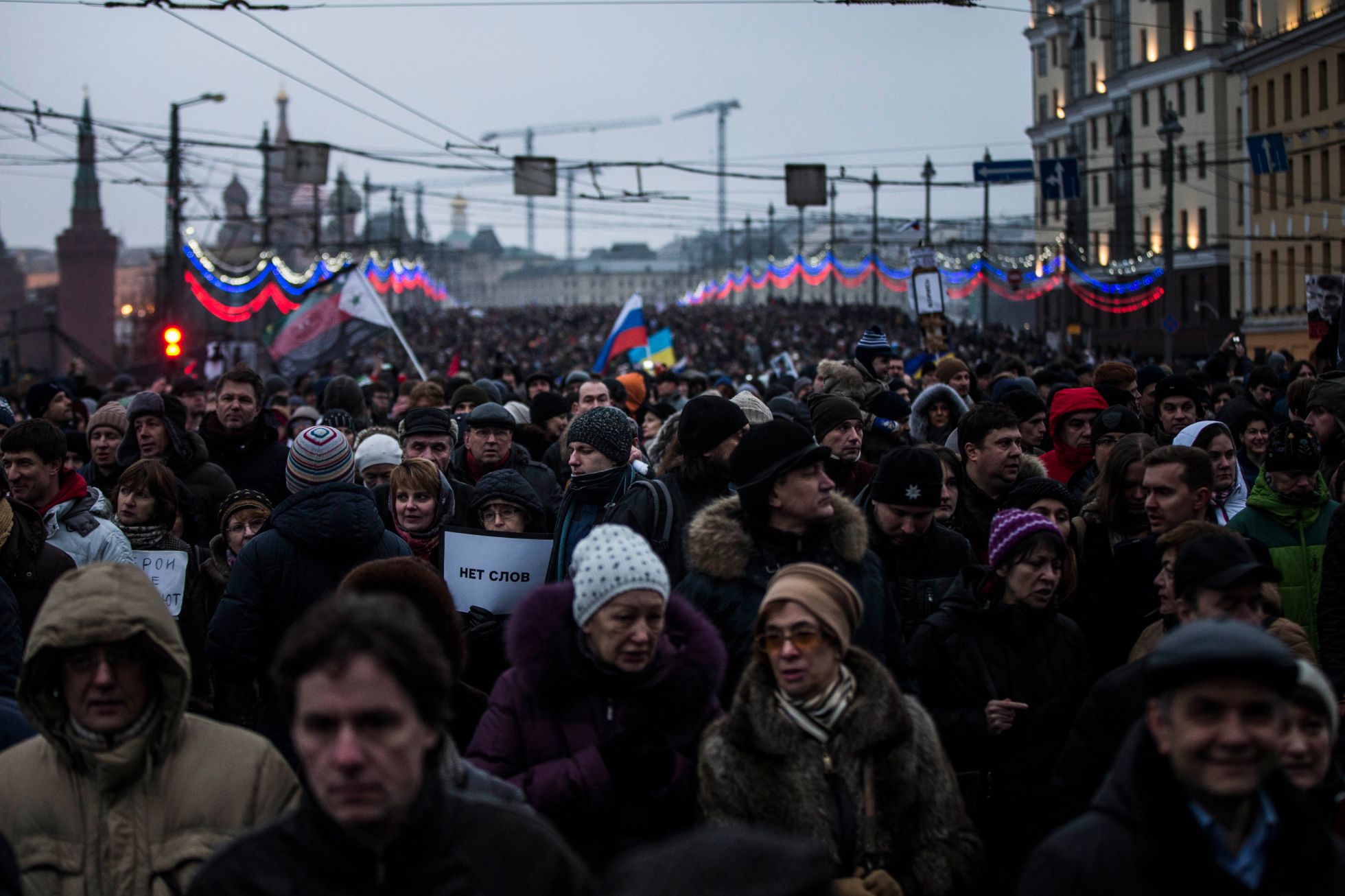
В 2014 году в Донбассе стали высаживаться «зеленые человечки». А я родом оттуда, из шахтерского поселка Юнокоммунаровск, недалеко от Енакиево. Мои родители были учеными, их после института в Днепропетровске туда послали поднимать Донбасс. Поэтому, когда мне позвонили от Немцова и пригласили выступить на антивоенном митинге , я, естественно, согласилась. Это был мой день рождения, 15 марта. Тогда, произнеся свою речь, я познакомилась с Немцовым. Он сказал, что я, мол, смелая и что далеко не все люди актерской профессии способны на такое. Это был лучший подарок на мой день рождения.
Когда Бориса Немцова застрелили в спину, для меня начался новый отсчет времени. К тому же один за другим стали закрывать спектакли и фильмы с моим участием, кроме одного-единственного, моего любимого спектакля у Камы Гинкаса.
Однажды [в 2015 году] мне позвонили с незнакомого номера: «Оксана, привет, это Навальный». Я так обалдела. «Я тут провожу митинг „За сменяемость власти“ в Марьино. Ты не можешь побыть со мной рядом? Ты хорошо недавно провела „Марш мира“ — а у меня прямо вот живот болит от волнения». Я говорю: «Боже, Алексей, чтобы у вас не болел живот, я пойду на все!» Мы с Джоном приехали — и, наверное, около часа перед митингом сидели вместе под тентом в Марьино. Там была Юлечка Навальная, была вся его потрясающая команда.
Do you know what struck me the most? То, как подробно, с какой любовью и восторгом Алексей тогда рассказывал мне, его соведущей, о каждом выступающем. Он хотел это мне передать, чтобы я прочувствовала, что это за люди. Этот интерес и бережность к другому человеку и был сутью его природы. Люди, лишенные всего человеческого, ненавидели (и в конце концов убили) его именно за это — за душевную щедрость и искренность.
Вот это — мои герои. Уже третий год идет полномасштабная война и геноцид украинского народа. Эта война отстаивает интересы системы, построенной на безразличии к человеку, более того — на грубом использовании человека для самых античеловеческих целей. Оставаться в стороне нельзя. А без борьбы с системой войну остановить тоже не удастся — иначе та примет другие формы. Я надеюсь, где бы мы сейчас ни находились, мы сделаем все необходимое, чтобы остановить войну и не повторять ошибок этого столетнего режима, сломавшего столько судеб. Это Советский Союз сейчас так страшно заканчивается, рушится на наших глазах.
Записал Антон Хитров