
Translated material
Anti-FaschiZm
Why did the street fighters of the 2000s go to fight for Russia?
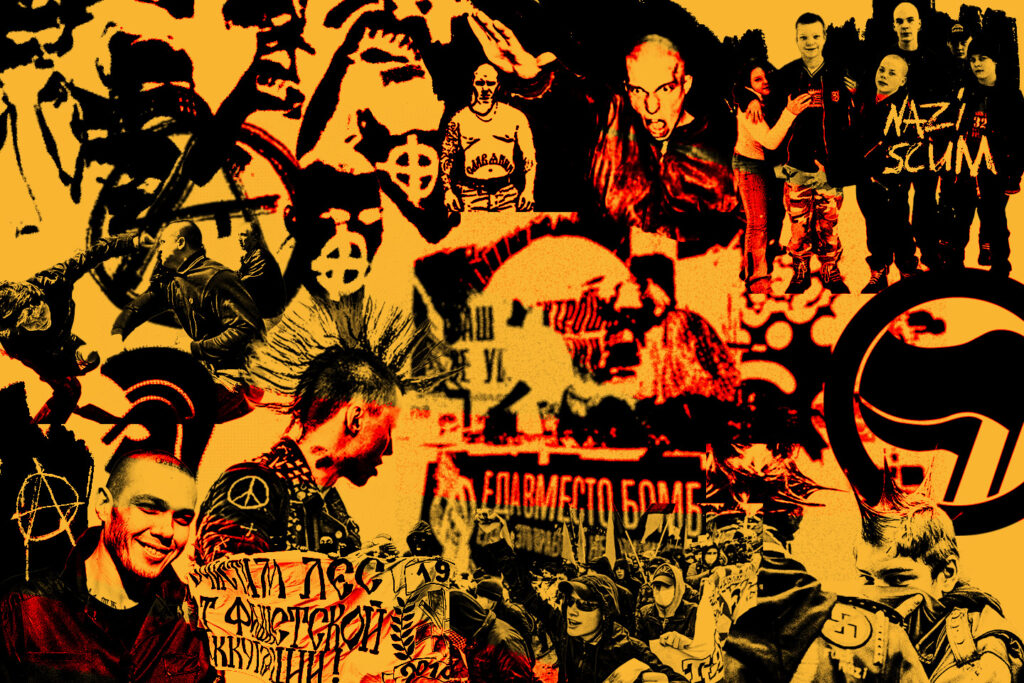
Few people remember the antifa era of the 2000s-1900s - those who have grown old, have grown up with sides and credits, have retired or are still in prison. Their memories include mohawks painted with their mother’s cheap paint, a frenzy for a healthy lifestyle, smoke bombs flying towards the Khimki administration, which decided to cut down the local forest, pickets in the city center with banners “No to fascism of all stripes from the gateways to the authorities.” And also - street wars, skirmishes with neo-Nazis, broken heads and killed comrades, the wildest punk-hardcore concerts and cops who eventually crushed all representatives of the opposing subcultures. A few years ago, old anti-fascists said that all this was in the past and somewhere in their youth... When everything was simpler, clearer and more unambiguous: some kill non-Russians and disperse xenophobia, while others try to resist this and help the weak. Sometimes at the cost of your own life. The war in Ukraine has provoked a surge in murders and violence not only on the “contact line”, but also on the streets of our cities. Only now everything is not so clear and simple. And those who 15 years ago fought for freedom, equality, brotherhood and anti-fascism are today going to kill Ukrainians. No Future correspondent Anna Vorobyova spoke with those who call themselves anti-fascists fighting “Ukronazis” to understand how they ended up in the same trenches with neo-Nazis and why they don’t see anything wrong with it.
The names of the characters have been changed.
Iroquois, swastikas, blood on the asphalt
Small Volga regional center. Abandoned construction site. The beginning of the tenth. All the walls are painted with swastikas, the fire pit is laid out in the shape of a Nazi cross. Every evening a crowd comes here - about 30 people, all in black bomber jackets with an orange lining (this makes it easier to recognize your own in a fight), pants with pulled down suspenders (which means he’s ready for battle), in “Martins”, “Grinders” or “shitbags” from the market with white laces (which means he killed non-Russians).
They're planning future attacks here - who should we jump on next? That “Azer” from the vegetable stall or the homeless Uzbek who sleeps on a bench near the station? Every day some “non-Aryan” was found beaten on the street. There they shot arrows at local informals - a bunch of teenagers with Iroquois who invariably lost in fights and crawled home bleeding.
The informals were called anti-fascists, or antifa for short. One day, after another massacre, the teenagers called the “senior” antifa - adults, strong informals - and asked to intercede. The next day, early in the morning, a not very new “nine” drove up to the abandoned lot. Several people with sticks and rocket launchers unloaded from it. On the other hand, a shaven guy in a “I’m Russian” T-shirt was moving towards the construction site. Strong guys from the “nine” surrounded him, stole his T-shirt, tied him up, beat him, shoved him into a car and drove around the city.
The first stop is an ordinary courtyard, three people are smoking at the entrance. All are shaved to zero. The nine stopped nearby, the antifa jumped out, and the massacre began. “I’m Russian” looked at this from the car - he was forbidden to leave, only to give addresses. The nine rode around the yards until the evening. When it got dark, the “Führer” was taken back to the abandoned place - there was supposed to be a large gathering there, but after the daytime raid only a few people came, who were met by antifa with volleys of rocket launchers and beaten with sticks. By that time, the Fuhrer was already really asking to go home - he was released, but first he was forced to apologize on camera and promise that he “would no longer pester people and offend anti-fascists.”
Denis, antifa and TV
Denis Khromov was one of the younger Antifa - he grew up in this regional center and got into the party as a teenager. I just once saw a group of guys in torn, painted jeans, with earrings in their ears. He came over and started talking.
— What do you listen to, rap or rock? - the guys asked.
“Well, rock,” Denis ventured. He then had two cassettes with music: “Ellipsis” and “The King and the Clown.” He immediately recognized the daring vibe of his new acquaintances and felt that “It happens in life” here it’s better not to drag it out - they won’t understand. The antifa subculture is closely connected with the punk scene: the philosophy of punks and the principles of anti-fascism intersect in many ways. Both of them oppose any type of discrimination, including the oppression of people based on race. The “King and the Clown” musicians appeared on stage for some time wearing T-shirts with the inscription ANTIFA; the band’s lead singer, Mikhail Gorshenev, repeatedly expressed his anarchist views in interviews and called himself a punk. The team released a line of merch with the most famous anarchist symbol
- That's it, then you'll hang out with us.
The dangerous-looking punks mostly spent their time quite herbivorously: they painted graffiti “no to fascism”, prepared and distributed hot vegan meals to the homeless - the action was called “Food not Bombs”, this is how anti-fascists around the world protested against wars and authoritarianism. We also went to concerts a lot. Not a single event was complete without armed Nazis. They were also called booms - from the word bonehead, which can be translated both as “skinhead” and as “moron.” Skinheads became a separate subculture in Great Britain in the late 1960s. Initially, the skins were a mix of English hard workers of the 60s and emigrants who played the music of goodness and love - reggae - in pubs, shaved their heads and wore “clean” bows without excesses in defiance of the colorful, beaded hippies. Nazi skinheads broke away from the movement in the 80s, and in Russia the first bonds appeared in the early 90s on the general wave of the rise of far-right nationalist sentiments - they are associated with the economic instability of that period, the rise in crime and the war in Chechnya, which contributed to the rise of xenophobic sentiments. They came to the subculture in different ways - some through music in the style of Oi! and RAC (Rock against communism), some from among football fans, others simply liked Nazi symbols. Skinheads used the Celtic cross, various types of swastikas, and the double “zig” rune, which was used in Nazi Germany.
The boomers threw stones and bottles at the antifa, hit them with everything they could get their hands on, and poured pepper in their eyes. They did not disdain either homemade bombs or knives. In 2005, in the center of St. Petersburg, anti-fascist Timur Kacharava was stabbed to death - eight people shouting “Anti-antifa!” attacked him and his friend after the Food Not Bombs event. The international movement “Food no Bombs,” which was organized by American anti-fascists in 1980, began to gain popularity among Russian antifa in the mid-2000s. The core values of the movement are non-violence, anti-authoritarianism, and recycling of products.
In total, by the end of the 2000s, neo-Nazis committed up to 500 murders a year. Subculturists-pacifists began to organize themselves and defend themselves. And they gradually grew into dangerous street fighters - it was they who began to be associated with the term “antifa.” In general, the movement itself is a response to the aggression of the far right, which in the 2000s was gaining momentum uncontrollably throughout the country. Anti-fascists attacked the booms themselves, and evenkilled at least one Nazi. Violence was condemned in the movement, but Ivan “Bonebreaker” Khutorskoy, a well-known antifa who earned his nickname for his active participation in street fights, believed that it was better “to listen to accusations of inhumanism now than to argue about the right tactics in front of the doors of the gas chambers.” In 2009, Khutorsky was shot in the back of the head in the entrance of his own house.
Denis Khromov in his antifa era did not think about humanism - he “beat and hammered” booms regularly and believed that there was no other way to deal with them. In parallel with the street wars, he graduated from vocational school, found a girl, got a job at a construction site in Moscow - he went there on shifts. At the beginning of the 1910s, the fights practically disappeared, because there was simply no one to fight with - the security forces saw a real threat in the confrontation between the Nazis and Antifa, and began to imprison both of them. In 2010, criminal cases were opened against anti-fascists who carried out a pogrom in the Khimki administration building as part of an action to protect the Khimki forest from deforestation. In 2011, members of the Combat Organization of Russian Nationalists (BORN) received life sentences for the murders of journalist Anastasia Baburova and lawyer Stanislav Markelov. In 2017, 11 anti-fascists were arrested on charges of involvement in a terrorist community - the process was called the “Network” case.
I had to decide what to do now with my energy and views. Some began to drink , others - for example, Denis - joined the political opposition. “I went to Moscow to the Marches of Millions , where I got in touch with anarchists and anti-fascists,” says Khromov. “Even as a child, I understood all the injustice of the authorities, security forces and everything else, etc. Hatred for the existing government, for this entire regime. It’s just hatred.”
Khromov perceived the war in Donbass in much the same way as fighting with the Nazis - brave, tough, strong guys organized themselves and fought with the boomers who wanted to destroy them simply because they exist. “I started watching the news on TV that neo-Nazis were hitting civilians, that people had gathered a militia and, roughly speaking, were “fighting” against them. That’s how I decided, because... well, this is Nazism, nationalism, I don’t know,” recalls Denis. He came to Donbass as a volunteer in the fall of 2014 - without a “urgency”, a military ID, a medical examination report or money. He was 20 years old.
Denis was enlisted in UAV reconnaissance - to look for enemy positions and direct artillery at them using drones.
“Same men” and birds of death
A picture appears on the laptop screen: rectangles of fields with green inserts of forests. Blue icons flash above the forests - cell phones are working there. If there are three or more phones, this is a “cluster”. The clusters in the forest are trenches and dugouts. Dugouts where first-line soldiers live. To hit them more accurately, you need to drive closer - to where you are almost deafened by artillery strikes. Then choose a place for the catapult - clear a clearing, find a flat surface for a good rest. Then assemble the “bird” - screw on the three-meter wings and tail, put a parachute inside to land it after the goals have been worked out. On the inside, under its nose or belly, the “bird” has a camera, a thermal imager and a camera. The coordinates of the icons are transmitted to the artillery. Further on the dugout is hit by Grad, howitzers, and D-30. From above you can see thick smoke escaping from the trench, boards flying upward, and someone's pants hanging on a tree near the trench. There is a terrible scream inside, someone is covered with earth up to their helmets, and blood is gushing out of someone like a fountain. Some people are missing half their torso. “They threw us closer to the dill and we worked. They flew around, picked up the bird, came back and gave artillery coordinates. They worked it out, we launched the bird again and confirmed it,” says Denis.
— Were the Nazis there?
- Personally, I haven’t seen them. <...> These ardent ones who are in Mariupol at Azovstal (we are talking about the Azov regiment, which Russian propaganda calls Nazis, and the Ukrainian side calls the defenders of Mariupol - NF note), they weren’t there then. The same men who fought were given the order to go to war. The state said that the Donetsk People's Republic wants to secede illegally and so on. They went to fight just like the boys who didn’t want to be with Ukraine.
- Did you understand the meaning? Why did you go there?
“I can’t answer this question—I still don’t know.” But I think I did everything right. If I could return that time, I would now volunteer there again and would be there. Here with those boys.
People like Denis are called “zetniks”, “vatniks” and rashists by many antifa. Most of the movement supported Ukraine in the war, and some joined the Ukrainian Armed Forces. For example, on April 19, 2023, Dmitry Petrov, an anarchist and anti-fascist who left Russia several years ago due to repression and settled in Kiev, died in the battles near Bakhmut. In the mid-2000s, Petrov was an active participant in the street war against neo-Nazis.
Igor Shmelev, an active participant in street fighting with booms, explains this by the youth of the community members who wanted action. “Many people joined antifa simply because they wanted this kind of movement. And then everything depended on what turned out to be closer to whom. Some people found the aesthetics of the republics that rebelled against the “Bandera neo-Nazi junta” closer. Some people found the aesthetics of a popular uprising closer, which overthrew the government and is now trying to defend their land from imperialist Russia,” says Shmelev. “There are people who simply found themselves in the war and this is their life choice. There are people who sincerely believe in all this. What's the point in dissuading them?
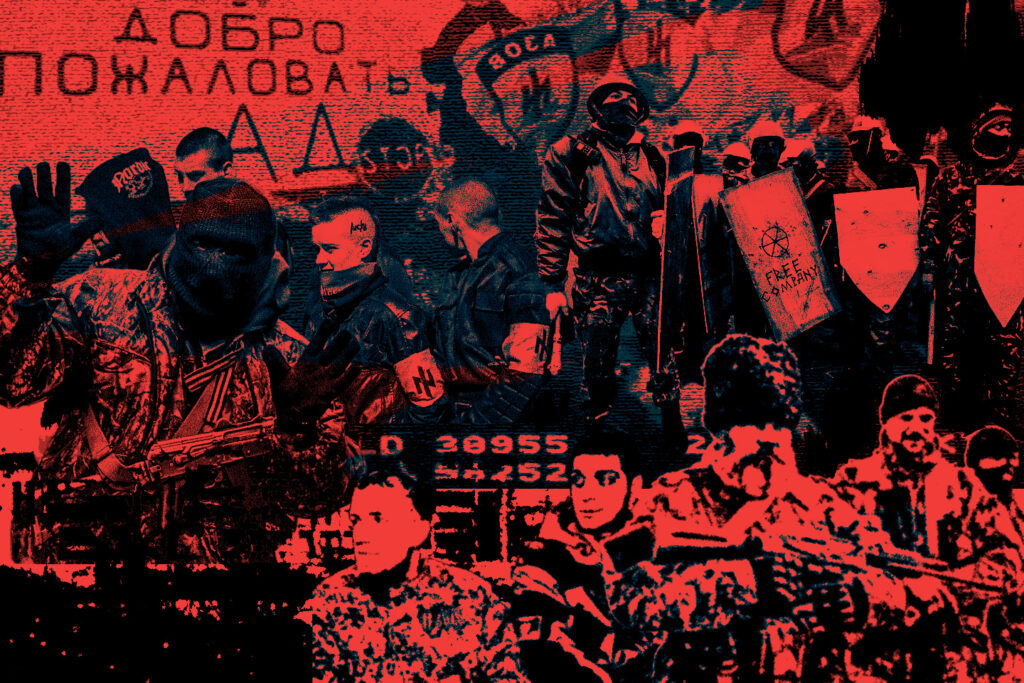
The anti-fascists themselves, fighting for Russia, believe that pro-Ukrainian antifa belongs at the front, and everyone can reason from the sofa. One of them is Vadim Krasnov. He's ready to face his former buddies in the trenches.
- You can say a lot of things. Let them be recruited into the Armed Forces of Ukraine if they feel strong enough.
- Well, that’s how they get recruited. That is, you can meet an anti-fascist from Volgograd, Kaliningrad...
- Well, so much the worse for them.
“I want action”
Vadim signed a contract with the Ministry of Defense in the fall of 2023. In the heady 2000s, he joined antifa because he “couldn’t put up with Nazism,” and then, when the streets were cleared, he withdrew from subcultural affairs and got a job as an electrician in a small provincial Russian city.
Vadim interprets the events of 2014 as purges organized by “Ukrainian nationalists.” “Ethnic cleansing began here - in Lugansk, Donetsk... As if, this is where it all began. And now we are forced to protect the Russian-speaking population here with weapons. Here we just responded and reacted. We’ve been waiting for something for eight years, and finally it happened,” says Krasnov. In 2022, the city where Vadim was from began to be shelled, and he went to fight. “I realized that I couldn’t feel safe even 700 kilometers from the front. Here. It was such a rush,” he explains.
At first, Vadim served as deputy chief of staff of a tank battalion near Kremennaya. “The Azov is located five kilometers from us. But I didn’t see the Azovites. The Ukrainian army consists not only of Nazis. Unfortunately, they have mobilized people there, people who got there not of their own free will, who were just as unprepared for this war - some kind of pacifists, that is, people who do not know how and do not want to fight. And they were called, and they had nowhere to go. I have seen such people, yes. Frightened, crying. This is a terrible sight. I have no hatred for such people, only sympathy,” says Krasnov.
—What is the worst thing in war?
— Deceased [military].
- From our side?
- It doesn’t matter which side. Both ours and the Ukrainian one. I understand that a dead Ukrainian Armed Forces soldier is a holiday, and I should be happy about it, but I definitely won’t be able to cut off their ears or do any such things. And I definitely won’t stand and savor their view.
— Why is a dead Ukrainian Armed Forces soldier a holiday?
- Because he won't kill me. In this sense, of course, I will be happy.
For the first few months, Vadim did not participate in battles, but worked on documents on the third line at headquarters. He said that he imagined the war as a blockbuster, but in reality it turned out to be a shifting of pieces of paper.
There are different types of paperwork: for example, about the calculation of military salaries, about the delivery of food and ammunition to positions, and from the positions - corpses. They are brought from the front line in bags - sometimes directly to the unit where they are identified. Bodies are dragged from damaged tanks on ropes - swollen brown-purple legs covered in pieces of decayed uniforms, twisted at wild angles. There is a thick crust of dried blood on the blackened nostrils, ears, and mouth. Sometimes instead of a body there is only ash and bones, sometimes nothing at all: the tank burns like a torch, and when the ammunition explodes, the tankers fly out of the vehicle and hang on wires, on the roofs of neighboring houses.
Two months after the conversation, Vadim wrote that he submitted a report on transfer to the stormtrooper company.
— Why did you decide to transfer?
- I want action.
- Aren't you afraid?
— Just a little <…> Well, sometimes it gets completely boring.
- You are without legs in the hospital and a mobilized Ukrainian, whom, as you say, you feel sorry for, is in a coffin. Funny?
- Maybe it's frustration or something like that. Don't know. I really had a boring life. I would like to be at least somewhat useful. Needed by someone.
Vadim Krasnov has been missing for several months now - he does not respond to messages, “he was online for a very long time.” The last time he got in touch was three months before the publication of this text.
— Did you sign the report?
- Yes. Translated.
- Aren't you bored now?
- Otherwise...
No Putin, no war, PMC
“We just live a little on different planets with civilian populations. Especially those people who have been fighting for a long time. It was as if their consciousness had changed. And sometimes we already misunderstand you. We are alive - everything is good for us. And if you completed the task alive, and didn’t even hurt anyone - neither you nor your brothers - yes, it’s absolutely gorgeous. Why are you sitting there whining?” says anti-fascist Sergei Sazhin.
During the “street” era, Sergei actively “jumped” against the Nazis, played in his own punk band, and in 2014 publicly spoke out for the Maidan and the ATO, going on pickets with a “No Putin. No war." “I myself supported, so to speak, people who wanted freedom, changes for the better. We strived to develop the country. That's good, right? Just great. But in the end, what? It was a waste of time. And for the soap that made it even worse,” says Sazhin. - Why the hell did people rebel in Donetsk? Потому что вы приедьте сюда и посмотрите, что здесь за тридцать лет изменилось с ухода Советского Союза? Nothing! И причем до 14-го года я был в Киеве — охренительно отстроенный. Дальше города — охренительно отстроены. А Донецк, Луганск — вся восточная часть, которая больше всего экономически приносила плюсов для государственной экономики Украины — на них клали огромный, беспросветный болт».
Сергей поехал на Донбасс добровольцем в 2015-м — говорит, попал в «очень лютую движню» разносортных антифа, которые собирались на фронт, и просто рванул с ними. Повоевать не удалось — вместо армии, по словам Сажина, его встретила толпа казаков и офицеров, которые днем вместе пили, а к вечеру начинали драться. Сажин пробыл на фронте две недели — сначала ждал, когда выдадут оружие, а когда ждать надоело, развернулся и уехал домой. Но в 2022-м он вернулся на войну — сначала подписал контракт с «Вагнером», а сейчас воюет в составе другой ЧВК, название которой не озвучивает. На вопрос о том, убивал ли он людей, Сергей отвечает: «Наверное».
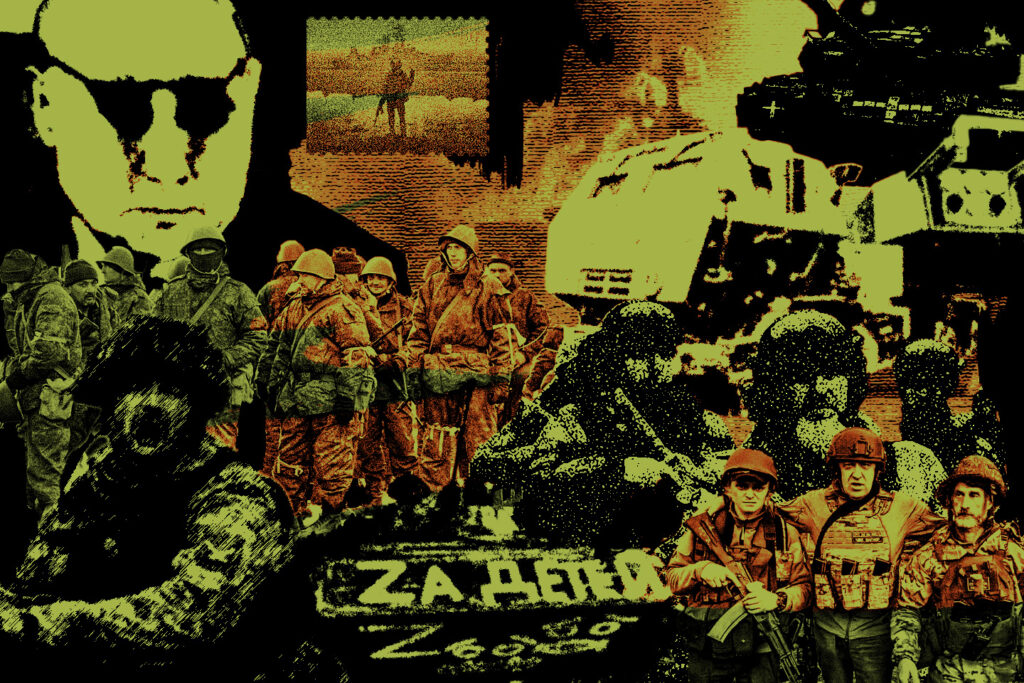
В августе 2022-го Сергей попал под Зайцево в 20 километрах к юго-востоку от Бахмута. Там готовилось российское наступление , шли тяжелые окопные бои, «Вагнер» штурмовал позиции ВСУ. Сергея тяжело ранили на штурме 22 сентября, он долго лечился, но решил вернуться на фронт.
— До этого, типа, так скажем, против войны всю жизнь был, но, когда, как говорится, она уже есть — тут уже, извините меня, тут нет такого: «А-а-а-а, я против войны!» С флажком бегать — срань полнейшая. Это для умственно отсталых.
— Но если война есть, это не значит, что в ней обязательно надо участвовать.
— А как ее остановить по-другому?
— На этот вопрос можно пять часов отвечать. Но сторону выбрать — это же вы не монетку кидали?
— Извините, я родился в России, и это моя страна, и, как бы, я тут… За меня, как говорится, в этом плане решили, да.
Хороший, плохой, нацбол
Сергей — анархо-националист. То есть выступает против государства, но за нацию. В середине 10-х Сажин состоял в националистическом движении «Народная воля» . Народовольцы считали, что нация — это только труженики, рабочие люди. А паразитическая верхушка, которая наживается на их труде — предатели народа. Анархо-националисты поддерживали локальные протесты, открыто выступали против власти, считали своей целью ее свержение . Некоторые антифа считали, что в движе таким не место — хоть и антигосударственники, но слишком уж правые. Анархо-националисты выступают за общество без государства, в котором разные этническое группы развиваются отдельно друг от друга. Антифа считают национал-анархизм новой модификацией фашизма, ультраправые — за «пачкание» национализма левыми идеями. Некоторые исследователи вообще относят анархо-националистов к ультраправым
Но антифа никогда не было политическим движением — скорее, платформой, на которой сходились люди очень разных взглядов: коммунисты, социалисты, марксисты, анархисты и даже националисты. Все они были так или иначе против капитализма, авторитарного лидерства, неравенства и дискриминации. И для некоторых из них поддержка России в войне — вопрос идеологии.
«Я считаю что национализм — это любовь к родине, к своей стране. Это хорошо, это правильно. Я живу в этой стране, я люблю этих людей. Всех своих сограждан. Я хочу процветания для них. При этом я не хочу, чтобы кто-то другой плохо жил. Я не считаю, что русские люди, белые люди, кто угодно там, лучше мексиканцев, американцев или кого-то еще — вот это уже нацизм. Это когда ты свою нацию над другими превозносишь. Это глупость полная, бредни», — говорит другой антифа, Олег Котов, который называет себя национал-большевиком или коротко нацболом. Национал-большевистская партия появилась в 1994 году — ее основали Эдуард Лимонов, Александр Дугин и Егор Летов. Идеология партии строилась на идее «Великой России» и «Русского мира», антилиберализме, антикапитализме, реваншизме и империализме.
Лозунг нацболов: «Россия — все! Остальное — ничто!». Они считают, что все земли, на которых живут русскоязычные люди, нужно вернуть в состав России. Олег ездит на Донбасс с «Интербригадами — 2022» — это военизированное крыло национал-большевистской партии «Другая Россия Эдуарда Лимонова». Котов не видит противоречия в том, чтобы быть и антифа, и националистом — он много дрался с бонами, занимался зоозащитой, а субкультурные разборки на тему «кто самый правильный антифа» всерьез не воспринимает. Уже почти полтора года он возит гуманитарную помощь в поселок Тошковка Луганской области, который сейчас контролирует российская армия. «Я лучше буду ватником, чем двуличным опущенным чертом по жизни, — считает Котов. — Людям нечего есть, и они мерзнут в разрушенных домах, потому что у них нет ни света, ни газа, ни воды. Одним нужно всячески помогать и жалеть их, а на других просто всем насрать».
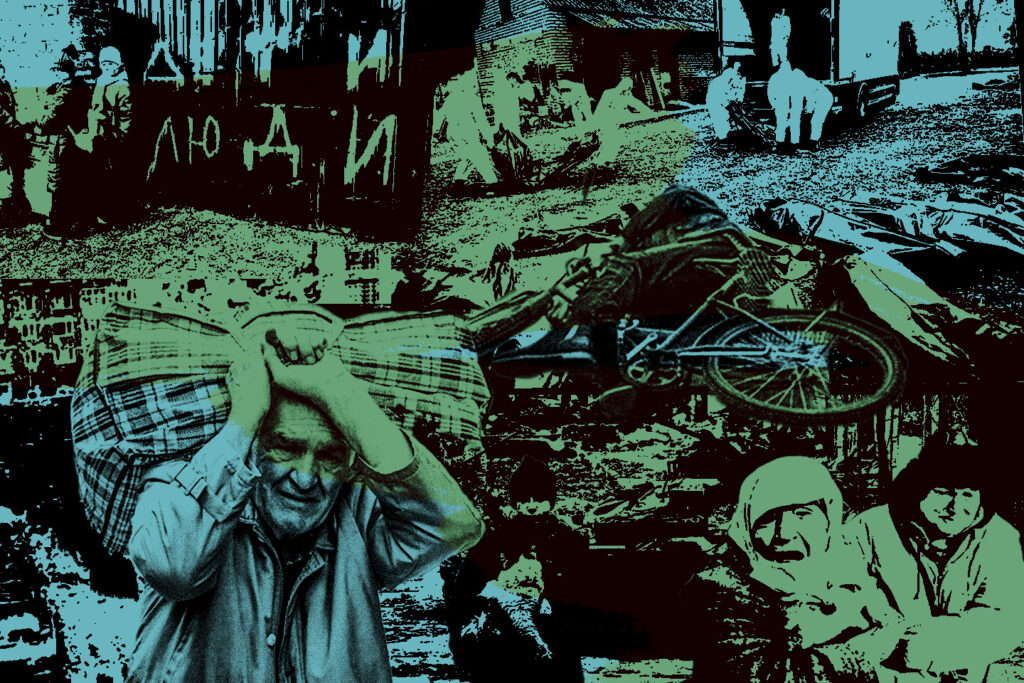
В Тошковке нет ни одного целого дома. Поселок начали обстреливать в 2014-м, а с июня 22-го его контролируют российские войска. После боев коттеджи в частном секторе выглядели так, как будто на них наступили — крыши от прилетов вдавило в землю, по боками торчали остатки стен. Под завалами домов разлагались трупы. На улицах — месиво из битого кирпича, скарба из разбитых квартир, полусгоревших машин. В кустах лежали истлевшие коричневые свертки, похожие на тряпки — останки военных, которых никто не забрал. Из пяти тысяч жителей в Тошковке оставалось всего 83 человека. Они набирали воду в роднике и топились дровами — много деревьев повалило во время боев. В поселке не работал ни один магазин, ни одно учреждение. Осенью 22-го Олег в первый раз привез туда подушки, одеяла, фонарики и генераторы для преобразования электричества, чтобы люди пережили зиму в домах без крыши.
«И добровольцам мы помогаем. Мобилизованным много помогаем — ну сами знаете, как у нас с обеспечением и прочим у мобиков идет. Их же в первый же штурм кинут без брони, они же там передохнут вообще все. А это мои соседи, у меня дальний родственник попал под мобилизацию, — говорит Олег. — Ты же не можешь сказать человеку: „Тебя забрали, а ты мне не друг, не брат, не сват, ты рашист-фашист“. Бежать в Казахстан он не захотел, потому что не так воспитан. Его же надо поддерживать, помогать ему, нельзя оставлять его в такой ситуации».
Добровольцы «Интербригад» воюют в составе батальона «Эспаньола». У его командира на теле несколько свастик , кельтский крест, знак «белого братства», штрафы за демонстрацию нацистской символики, а в одном из интервью он рассуждал о том, что в полку «Азов» служат «не арийцы, а жиды пархатые и кучерявые, азеры, грузины».
«V» значит «Реvолюция»
— У нас вообще в стране как с нацизмом? Он ликвидирован? — спрашиваю я у Олега.
— Нет конечно, не ликвидирован. У нас до сих пор толпы малолеток зигующих бегают в нашивках, это на таком уличном, субкультурном уровне.
— А вам не кажется, что и Кремль какой-то правый крен дал? У нас есть вот такой певец Шаман, который поет: «Я русский»…
— Это отвратительно. У меня сын сейчас закончил первый класс, у них тоже вот эти вот «разговоры о важном» и прочее, их заставляют учить какие-то песенки, пытаются сделать пародию на октябрят, ну типа отряды, чтобы они вступали туда, но это идиотизм сплошной. Пионеры гордились, что они пионеры — сейчас, к сожалению, гордиться абсолютно нечем.
— Что мы будем с этим делать?
— Не знаю, я же не политик вообще. Не задумывался даже. Сначала война должна закончиться, а потом уже строиться что-то нормально у нас.
«В случае поражения России революции не будет, смиритесь, — говорит антифашист с ником „коммунист Сэм“. — И если Россия проиграет, ослабнет, тем хуже — развалится, то на нашей земле, на территории нынешнего Российского государства, установится „белая Африка“. И девяностые покажутся образцом порядка и законности на фоне того, что будет <…> Я хочу видеть Россию красной, потому Россия должна быть достаточно сильной, чтоб пережить революцию, защитить ее и быть ее оплотом <…> Война дворцам, мир хижинам. Служу Советскому Союзу».
Сэм считает, что сейчас ни о какой революции речи быть не может, потому что рабочие вполне довольны своим положением, а пока на хлеб хватает, на восстание массы не поднять. Он говорит, что окопы — самое подходящее место для разговоров о политике, и называет войну «непаханным полем» для революционной агитации: «Вы окажетесь в коллективе, где сможете проявить себя. И тогда ваше мнение, ваше слово будет чего-то стоить для человека, еще вчера думавшего только о хлебе насущном. Вот тут-то и будет время говорить о том „Зачем и почему мы здесь“. Нельзя стыдиться силы, нельзя бояться применять ее».
Но те, в ком Сэм хочет сеять зерна революции, могут до нее не дожить.
Денис и кровь в окопе
Денис Хромов не выходит на связь. Во время последнего разговора в середине февраля 2024 года он говорил, что этот материал — «может, последнее, что обо мне напишут вообще». Хромов болеет.
В 2014-м на фронте он заразился туберкулезом — узнал об этом, когда проходил медкомиссию в военкомате. Но спустя три года снова поехал на войну. По его словам, он «не смог найти себя» в мирной жизни. «Вот тянет туда, и все. Это как наркотик, наверное. Вот когда в одном окопе сидишь с пацанами, когда работаешь под обстрелом, с одной ложки, блять, ешь, я не знаю… помогаешь друг другу. Именно не с какой-то корыстью, а все на братских отношениях. А тут кидалово какое-то с работой и с баблом, недовольные морды руководства, гнилые люди в коллективе. Че, думаю, делать? Надо ехать еще раз», — рассказывает Денис. Он лечился, но оказался резистентен — на рентгене «все как было, так и осталось». Чтобы снова попасть на фронт, он просто подделал флюорографию.
Во второй заезд Денис провоевал в составе армии ДНР восемь месяцев и вернулся домой — говорит, что ему не понравилось. «Там уже все по-другому. И оружие хер пойми какое, и дебильные приказы, и вот это вот „в бою добудете“, нахуй. Они жируют там, суки штабные, ебут там за все подряд. Возвращаешься ушатанный просто в хуй, не спал по двое суток, и нет чтобы тебе дать отдохнуть — тебя еще надрачивают какой-то хуйней заниматься. Ну вы че, угораете?», — говорит Хромов.
После Денис «как-то жил, где-то работал»: делал разводку электрики в квартирах, клал паркет. Была девушка, родился сын. Чувствовал себя нормально, но начала кусками отходить мокрота — только прокашлялся, как она снова забила горло. Когда его потянуло на войну в третий раз, он уже знал, где взять левую флюорографию.
Первый официальный контракт с Минобороны Денис заключил 10 августа 2023-го, но не дослужил до конца — его «списали» одним днем, забрали прямо из окопов под Луганском. До этого он вместе со своим взводом месяц копал лес и ждал приказов от начальства. Распорядок был такой — ночью спишь на мерзлой земле в спальнике, от восхода до заката долбишь ее лопатой. «Просто кроты нахуй, — описывает Денис, — от кого, зачем? Просто заебать солдат».
Когда он первый раз увидел кровь на земле, ему показалось, что она идет из зуба. Потом стала подниматься температура — он обливался потом, останавливался, облокачивался на лопату, «ну не могу, не могу». Всем говорил, что просто устал — про туберкулез ни слова. Каждый день он закашливался сильнее, крови становилось больше. Рентген, который Денису сделали в госпитале в Ростове-на-Дону, показал огромные очаги воспаления в легких. Его отправили в родной город и посадили на «Бедаквилин» — препарат от туберкулеза нового поколения. Денис говорит, что сильнее лекарств уже нет.
На войну он уже больше никогда не вернется — даже если бы хотел, с таким диагнозом его не возьмут. Но Денис и не хочет: «Я просто насмотрелся зомбоящика и попал в эту авантюру, и все. А там я просто проникся вот этой сплоченностью людей. И там все поменялось. Было одно — стало вообще все по-другому».
Больше всего Денис обижен на государство. И считает, что выхода у россиян никакого нет. « Я об этом очень много думал. А ты помнишь Болотную? Я помню «Марши миллионов», я лично на них был. Когда в Москве до ебени фени народу ходили на эти митинги. Потом хуяк — Майдан. По телевизору война-война, «вот смотрите, до чего доводят вот такие вот перевороты». А тут под шумок тебе законы начались о проведении митингов — где запрещено, как запрещено… Потому что они понимали, суки, что в натуре народ начинает сплочаться, все начинает выходить из-под контроля. А тут все сделали: вот хотели — ебашьтесь, погибайте. А эти дуры ебаные — вот эти добровольцы, контрактники — они не понимают, что это живодерня ебаная. Они щас почистят таких, как мы, которые ходили на «Марши миллионов», и все будет тихо и спокойно. Кто будет выходить? Когда половина полегло там на полях. Вот мое разочарование — и все » .
На прощание Денис просит об анонимности, потому что за то, что он сказал в интервью, его посадят и «назовут изменником родины»: «Сделайте так, чтобы хоть последнее времечко меня никуда не забрали». В последний раз он прочитал сообщение в феврале 2024-го. С тех пор связи с ним нет.
Автор текста Анна Воробьева
Иллюстрации для No future сделал Паша Barli
Редакторы Антон Кравцов и Владимир Шведов
To publish materials more often, we need your donations. We will spend them on fees for authors, photographers and illustrators. Below there is a form for donating any amount for the future No future.
You can give us some money or sign up for regular donations
You can send Bitcoin (BTC) to this address without a sign:
bc1qcn5qxdpz8m4ktr5p5zx9ez8rc36qtgzz47cju6
And send USDT (Tron) to this address:
TFvVAB95QVgqUw12RD7xF6aBj6cFL6GuLX
А в этой форме можно задонатить рублями: