
Translated material
Sustainable instability
Economic activity in 2024 really increased. Only grows not that and not there, and therefore is unlikely to have enough resources and money
Photo: Dmitry Rogulin / TASS
"Unstable, but generally progressive"
“High -frequency data on economic dynamics show that ... the economy has returned to the trajectory of unstable, but generally progressive growth. Consumer demand is most actively growing, pushed (probably temporary) jump in the income of the population. At the same time, the observed growth of investments is connected, judging by indirect data, with military production, and export has only stabilized.
Expanding consumer demand against the background of unstable dynamics in the production of consumer goods and in construction (and against the background of import growth) raises the question of the potential for the stability of economic revival, ”in such expressions of the Macroeconomic analysis and short-term forecasting (TsMAKP), the main trend of the Russian Federation and economics and short-term forecasting He called the main fear of the government.
Yes, statistics fixes the growth of production (and Rosstat does not deceive anyone), but ...
“... Industrial growth is concentrated on a rather narrow front - in the extraction of minerals, oil refining, and the production of metal products. The production of consumer goods is expanding uncertainly, ”admits the TsMAKP.
No “consumer import substitution” happened to the poet, analysts write, on the contrary, against the background of consumer demand and slow dynamics in the production of consumer goods, imports are expanding.
Prices are also not pleased: “The inflation rate continues to grow, more than two times higher than the Bank of Russia target (June, estimate: 8.75% in annual terms).”
At the same time, this release of the Central Department Store has good news: “The budget in the 1st square. Balanced, Neneftegas income is growing. The execution of the expenditure part of the budget is within the framework of the “uniform schedule”, and the value volume of exports stabilized stabilized.
... There is a high level of expectations of managers of companies and the population, the unemployment rate is reduced, employment began to grow again, the level of real wages and, accordingly, real incomes of the population is growing, consumer expenses are rapidly increasing. ”
So it's just some kind of song! Then where did the fears about the instability of growth come from?
Three sources of problems
- Firstly, the situation in which people are growing income and expenses, and production in the consumer sector is not growing, they drive the economy on the same slippery path that the USSR economy stumbled, when the presence of money on savings were accompanied by the lack of goods on the counter.
The sign of this situation is a stable high inflation, which cannot be slowed down in any way.
People understand that there is more money, but it no longer becomes goods, and a reasonable solution in this situation is to buy everything!
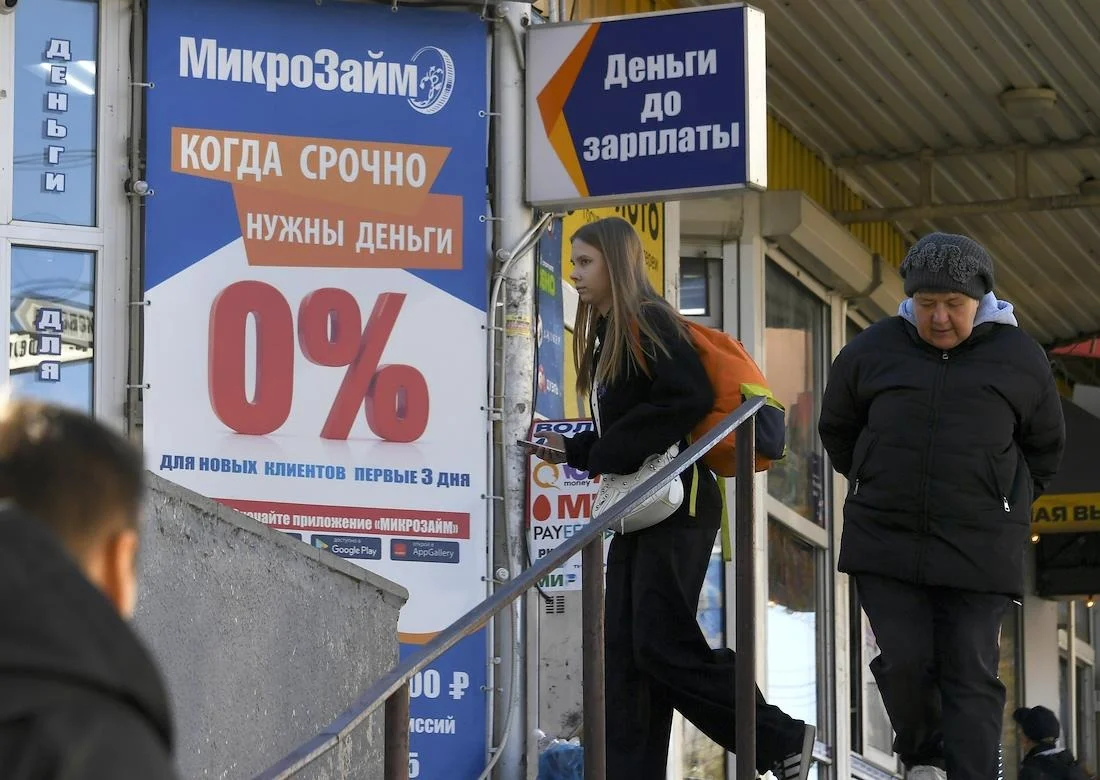
There is no money - take on credit! Bet 15, 17, 20 percent? Come on, somehow we can handle it, especially since there are offers to earn more from everywhere, and here and now. Are prices rising? Well, then take even more loans.
No, the economy is still far from the deficit of consumer goods, but only because the country has enough foreign exchange earnings for the payment of imported consumer goods and “critical production goods”.
- Secondly, the economy resources are not scientific. As Professor Oleg Vyugin, who previously held a number of high posts in the government and in large business, explained in his speech at the Bank of Russia financial forum, the use of all the resources accumulated by the government over many years was primarily in the government and in large businesses, and the source for the growth of the economy.
“In budget policy, we crossed from $ 45/barrel. [Scot prices when planning the budget, above which the oil transactions are sent to accumulations] to the regime of the more complete use of current oil revenues to finance the economy. In addition, the accumulations of the National Welfare Fund were involved - the liquid funds of the Federal Tax Service were significantly reduced, especially during 2023. Also, the financial resource was apparently involved in the termination of the intensive outflow of capital. Finally, labor resources were involved in the maximum: now the shortage of personnel in almost all sectors. Yes, the resources went mainly to the industries that ensure the production of military defense products, but it doesn’t matter for GDP as a final indicator, ”said Vyugin.
However, both financial and labor resources are almost exhausted, Oleg Vyugin says: “We have already heard the first bell in taxes: in order to maintain the reached level of budget expenditures, we have to redistribute internal resources.”
- Thirdly, the further, the more difficulties with the effective use of “labor resources”, as the chairman of the Board of Directors of the Central Bank of the Russian Federation Elvira Nabiullina spoke about the financial forum.
“I would identify three types of restrictions now, they are interconnected. This is labor. The situation shows us that we can no longer extensively grow, growth can only be due to labor productivity, and labor productivity is technology. And for us, restriction is access to technology, our own technological development. ”
"Unproductive" production
But here is the problem. The technology itself will not solve anything yet.
Yes, in the Russian Federation there is a reserve to increase labor productivity. But if you want sustainable growth, then this performance must be raised throughout the economy, and not in individual sectors - they will not extend the “whole country”. So as they do not pull her now.
Labor productivity in the Russian Federation is much lower than in countries located at the front edge of technological progress, and progressive sectors with high labor productivity do not make up a significant part of the Russian economy. Yes, there are such sectors, they can and should be proud, but they do not play a decisive role in the economy.
To increase productivity in general, investments in all sectors are needed. And this is a long business and the investor is risky, especially in a situation where he does not have tools for influencing government policy. Yes, you can use the decisions of the government, which is happening, but today the government makes some decisions, tomorrow - others, a potential investor cannot influence them, therefore, the planning horizon will be short.
When the ministers urge someone to invest in technology, the question arises: what do you invest in yourself? In the export of raw materials to China and to the infrastructure to ensure it? So the Russian Federation has these technologies. In "Production of goods" for third world countries (i.e., in competition with China)? Well, so -so prospect ...
Besides,
The government itself knows very well that the idea at any cost to ensure “growth in the production of metal products” and the idea to achieve “sustainable economic growth” contradict each other.
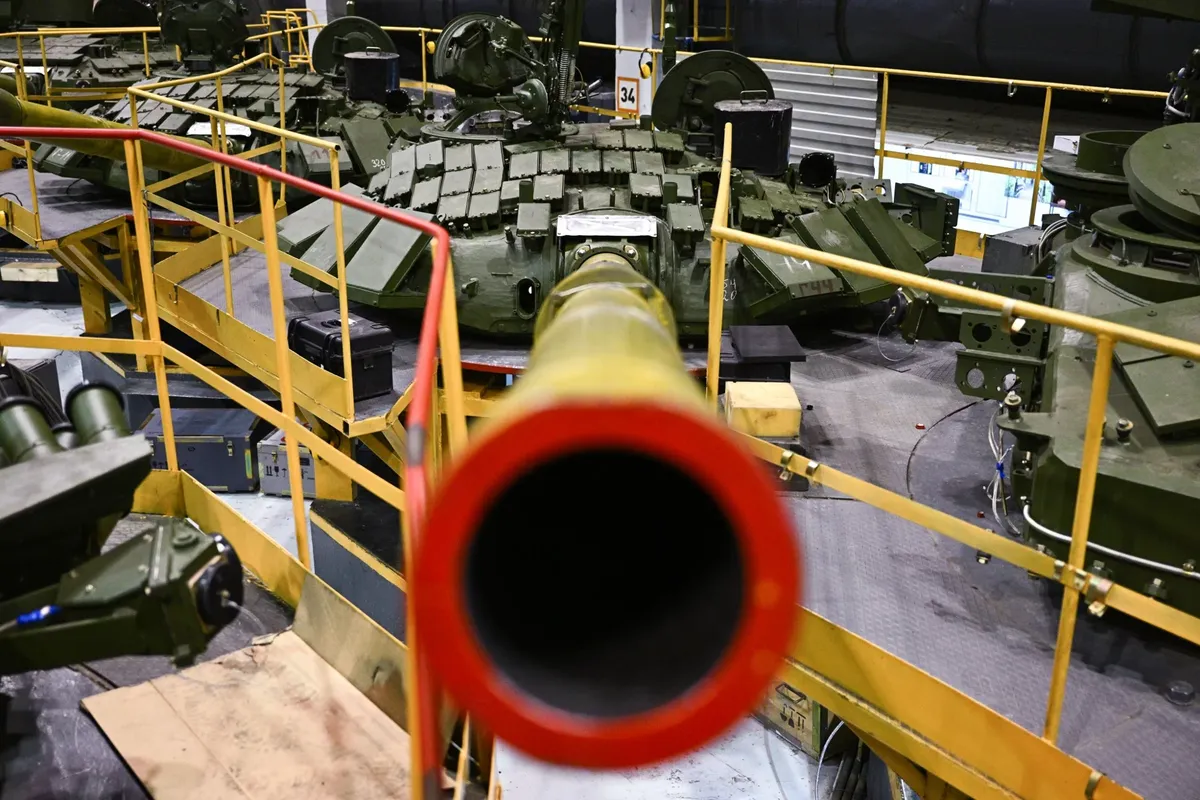
In 2018, the journal “Economic Policy” published a study “The influence of the structure of budget expenditures on economic growth in Russia”, carried out by the senior researcher at the Center for Budget Analysis and Forecasting (Scientific Research Financial Institute) by Alexei Balaev (“Economic Policy”, No. 6, 2018, vol. 13, p. 8–35).
One of the key concepts in modern theories of economic growth is associated with the division of budget expenditures into productive and unproductive. It is customary to include investments in human capital (primarily expenses for education and healthcare) and physical, including infrastructure expenses. Unproductive expenses include financing of non -market services (including public administration, defense, etc.) necessary for the performance of the main functions of the state, as well as all types of social transfers.
Having studied the ratio of the expenses of the Russian Federation and its influence on the growth rate, Alexei Balaev comes to the conclusion that:
The greatest positive effect among productive expenses is in the costs of the national economy (increasing this type of expenses by 1% of GDP while maintaining the total amount of expenses at an unchanged level leads to an increase in the growth rate of GDP by 1.1 percentage points);
The following in size is given by the cost of education (the increase in these expenses by 1% of GDP with an unchanged total amount of expenses leads to an additional GDP increase of 0.8 points);
Health costs have a lower positive effect on growth (the corresponding effect of their growth is estimated in the additional 0.1 percentage points to the growth rate of GDP);
For the costs of defense and social expenses, the effect is negative: –2,1 and –0.7 percentage points. For 1% of GDP expenses, respectively.
Thus, the expansion of “unproductive budget expenditures” does not contribute to long -term economic growth, the researcher concludes.
And government analysts know this very well. And they must be aware that the achievement of short -term goals of “production”, supported by all available resources, has come into conflict with the long -term objectives of the economy. Therefore, they talk about the instability of growth.