
Translated material
Barrier of the Republic
In the elections in France with difficulty, but it was possible to avoid the victory of the ultra -right forces. What price will have to pay Macron and all of Europe for this?
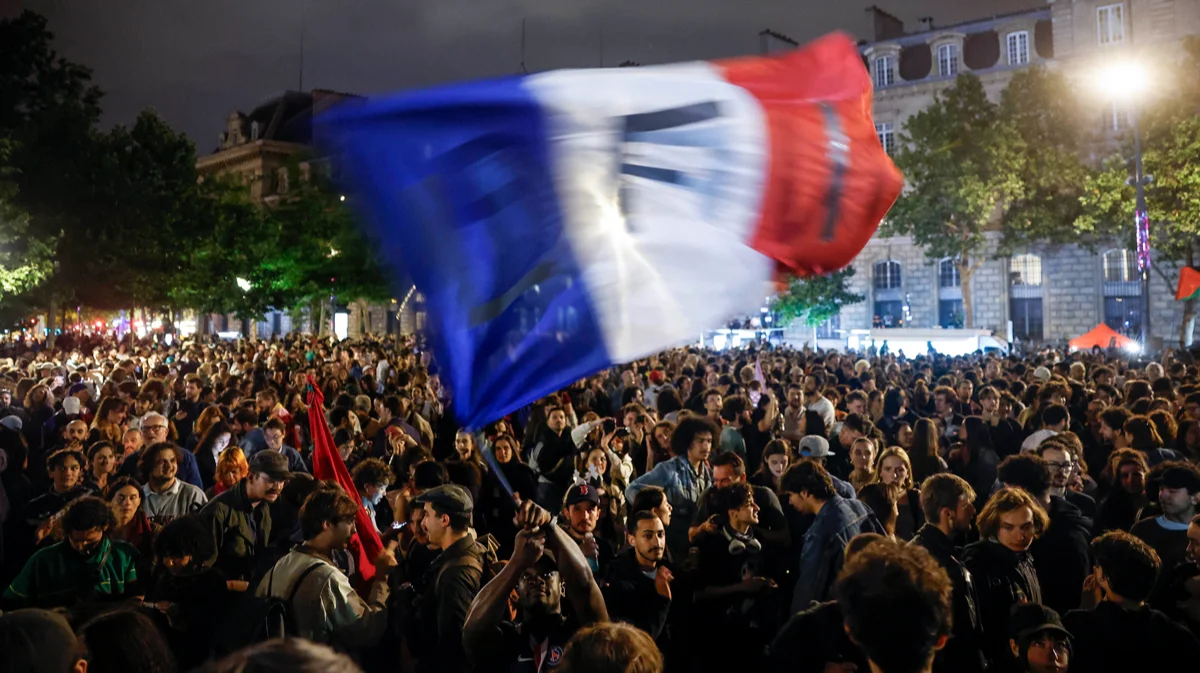
Protesters with the French flag on the Square of the Republic in Paris after the end of the second round of elections, France, July 7, 2024. Photo: Yoan Valat / EPA-EFE
After the defeat of his party in the European Parliament elections in early June, Emmanuel Macron went to the largest risk in his career and dismissed the parliament, convening extraordinary elections. After that, in the first round, another catastrophic defeat suffered. The winner on them was Marin Le Pen, who managed to get almost 30% of the French votes.
But the parliamentary elections in France take place in two rounds, and a week before the final vote day the left alliance and the forces of Macron agreed to form a single “Republican Front”. In more than 200 districts throughout the country, candidates who took third place in the first round shot their candidates to give their votes to those who were more likely to win the district in the second round without allowing the victory of the candidate from Le Pen. The strategy worked. According to the results of the second round, the Le Pen party took only the third place in the number of mandates of deputies received, lagging behind both the united left and the macron movement. Despite this, it is difficult to call Macron successful “gambit”: his party lost 86 chairs in parliament and lost the championship with the united left. Given the fact that now there are three large forces in parliament at once: the left alliance, the forces of Macron and the Le Pen party - the government will not be easy to form. Why in the second round, the far-right ones could not repeat their success, and whether France is now “cohabitation”, the observer of the European and international policy of Novo-Europe, Andrei Smolyakov, figured out.
Association against panic
If three weeks before the first round of elections in France were most often characterized as “political madness” , then a week between the first and second round best describes the word “panic”.
As a result of the first round of extraordinary elections, the proceedings were expected to defeat, and the ultra -right Le Pen party, in turn, won, took first place and went out onto the second round with a high head. The real prospect of the first in the post -war history of France of the ultra -right in the elections was polarized by society:
During the week after the first round, 50 politically motivated attacks on officials and politicians occurred in the country.
The police were forced to increase the level of readiness and the number of patrols, and expected mass protests - regardless of the results.
Against this background, the mainstream forces were suddenly able to come to an agreement and agree among themselves. For the first time in a long time, the centrist party of Macron and the left coalition sat at the negotiating table . Despite the fact that Macron himself on the eve of the first round actively criticized the left flank, negotiations were more than successful. The leaders of the left alliance and centrists decided to unite against Le Pen and speak out in the second round by a united front, organizing a kind of “sanitary cordon” on the path of the ultra -right.
It was partly a desperate step - the victory of Le Pen seemed inevitable. On the other hand, the features of the French electoral system led to the fact that three candidates were presented in most sites in the second round: a Le Pen candidate, usually enjoying the support of voters of other right -wing parties, a candidate from the left Alliance and a candidate from Macron. In conditions when for voting against Le Pen it is necessary to choose between two candidates, it would be easier for her to be in the first place, which happened in the first round.
As a result of negotiations, the centrists and left decided to withdraw third candidates in 224 sites - almost half of the mandates determined in the second round. Thus, it was planned to avoid mutual rivalry and work to defeat Le Pen's candidates in the fight against a “single candidate” from the left -giant coalition. The Le Pen could not do anything against this, and this strategy was the main hope of preventing the ultra-right to the government.
As the results of the second round showed, the “Republican Front” worked: the supporters of Le Pen will have only 125 mandates in the 577-seater French parliament. This is far from the absolute majority, which the parties prophesied a week ago.
The main winners were the united left -wing: their parties increased their representation by almost 50 seats, becoming the first force in the French parliament. Macron with allies received 86 mandates less than according to the results of the elections in 2022, thus guaranteeing only 150 seats of deputies.
At the same time, the combined front of the left and centrists of Macron is unlikely to remain in the parliament itself: the contradictions are too strong both inside the left alliance, uniting even before the first round of the green, communists, socialists, and between them and macron. Therefore, the new cabinet of ministers will be a compromise and much less controlled president. The continuation of the reforms that Macron carried out in recent years is unlikely to be possible, but it seems that exactly the French voter wanted this.
Gambit Macron
Extraordinary parliamentary elections declared by macron are a very bold and reckless move. The very idea of such elections largely contradicts the president’s political platform: to build a stable centrist coalition and prevent the ultra -right parties to the government. The war with the "political extremes", which was sometimes called the "radical centrism", was at the center of both presidential campaigns of Macron.
However, the dissolution of the parliament and the announcement of early re -election after the decisive victory of Le Pen in the elections in the European Parliament actually opened her path to forming the Cabinet of Ministers. It might seem that Macron voluntarily gave power to his main rivals - although, of course, the motivation was different.
The decision on the dissolution of the parliament is not a white flag, but rather a gambit in which Macron tried to find benefits for himself. The victory at the re -election would allow the president to “revive” his second term, which is not easy for him so far. Having come to them the winner, Macron would be a “popular president”, listening to citizens and completely trusted in them.
However, it is difficult to say how thought this step was thought out. Despite the fact that the very idea of re -election, apparently, was discussed long before the elections to the European Parliament, even the closest associates of the president were not allowed to make the final decision. The dissolution of the parliament plunged both the party members of Macron and the base of his voters in a panic.
In many ways, the President’s position after his Gambita says that
On the eve of the second round, Macron actually disappeared . So, within a week he missed several planned television performances and not only did not campaign for the party, but also practically hid from the eyes of voters.
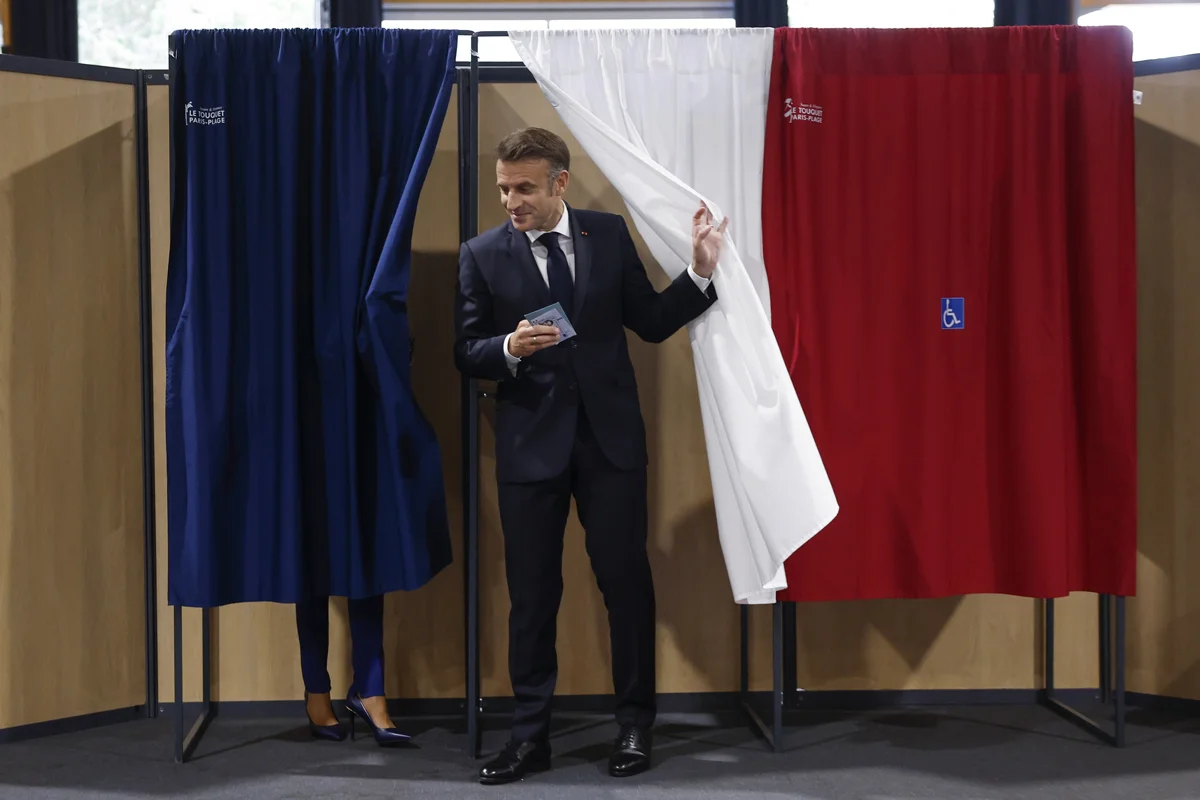
Even voting in the elections themselves, the president did it as quietly as possible : without journalists, in an inconspicuous suit and dark glasses, as if hiding from the paparazzi.
Probably, the “disappearance” of Macron was intentional and was intended to play into the hands of his party: judging by the surveys, his very face annoyed both voters and associates . It turns out that the less Macron appears in public, the less votes he loses - and this is not the situation in which politicians usually go to such risky steps.
Rebranding for the ultra -right
Macron and the Left Alliance were able to agree on a temporary union only because they opposed the candidate not acceptable to any of them: Marin Le Pen and her ultra -right forces. From the very beginning of the presidency of Macron, it was Le Pen who acted as his main rival. And in these elections, she came closer to power than ever.
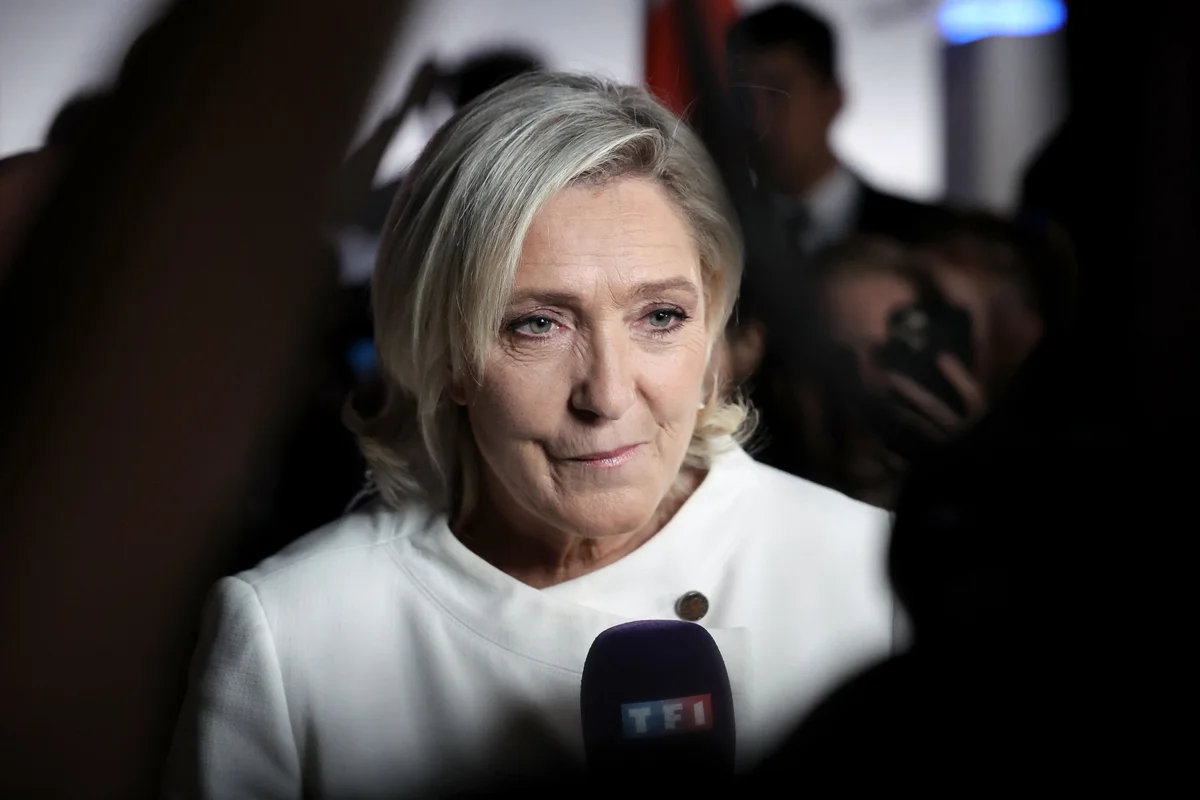
Despite a number of successes in recent years, in historical context, the popularity and even the mainstream of the “National Association” is largely amazing. At the beginning of its path, the party, then led by Father Marin Le Pen, had a very dubious reputation . In addition to the general populism, the “National Front” (as the association was called) was known as a party of open anti -Semites. Moreover, they were often described as the heirs of the collaborationist regime of Vichy, who collaborated with Hitler during the Nazi occupation of France.
In the past five years, Marin Le Pen spent a lot of effort to change the image of the party, moving it from the extreme right flank closer to the political center. Le Pen was well aware of the hopelessness of the association exclusively with marginal political ideas and layers, and therefore she took up active rebranding .
This campaign to launder the party from the most “dirty” associations in the French press is often called “Dediavolization” - and it passed more than successfully. During it, the party got rid of not only radical ideas like frank anti-Semitism, but also from other, once central messages for the “National Front”.
So, after the serious economic consequences, Brexita Le Pen left behind the idea of Frexit . She softened rhetoric relative to NATO, although it still remains a "moderate skeptic." And after the full-scale invasion of Russia to Ukraine, Le Pen is increasingly removing from any sympathy to the Russian Federation and Vladimir Putin, although he still opens against the active support of Ukraine. Perhaps that is why Russian politicians are still openly rejoicing in the successes of the "National Association".
Today, Le Pen represents not only marginals and the remaining collaborators, but also a significant segment of the right -centric electorate. At the same time, of course, nuclear supporters of the party from the entire ultra -right spectrum have not disappeared and continue to support Le Pen.
That is why, according to the received percentage of votes in these elections, the Le Pen party takes first place. One way or another, it is ready to support about a third of the population of France.
Three chances for coalition
Despite the fact that the Sanitary Cordon’s strategy worked, and after the stunning defeat of the centrists in the first round, the party of the main rival Macron still did not come to power, it is difficult to call everything that happened to the president himself.
Macron's movement lost too many deputy mandates and, in general, without understanding the causes of the emergency dissolution of the parliament, plunged into the internal crisis. So, immediately after the announcement of the election results, Prime Minister Gabriel Attal, the closest ally of Macron and one of the most popular politicians in his party, announced his resignation , which the president, nevertheless, so far refused to accept .
Having lost at least the relative majority in the parliament, which Macron possessed according to the results of the 2022 elections, the president faced the need to join the coalition with left -wing forces in order to form a new cabinet of ministers. Of France at the disposal of three possible scenarios for the next government, this is the most stable, but least achievable.

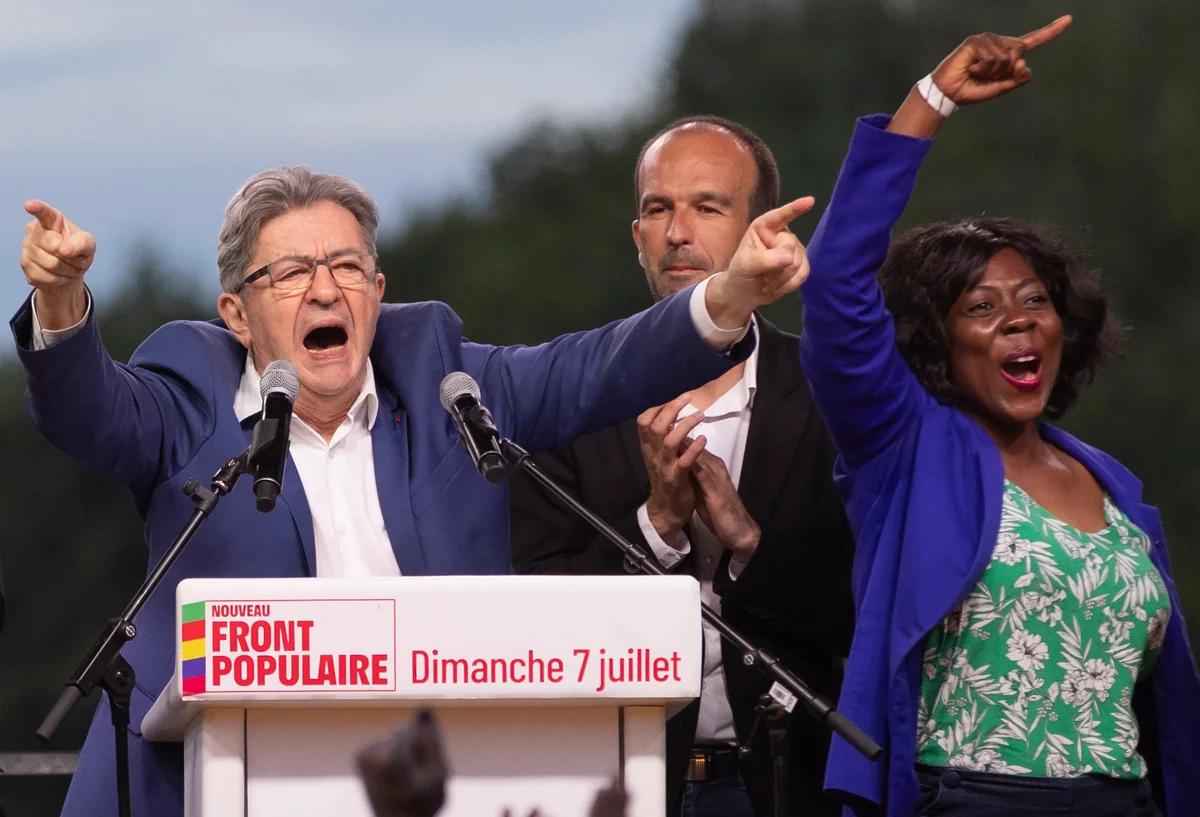
In order to form a left-centric cabinet, Macron needs to agree not only with moderate socialists and green, but also with the ultralery Jean-Luka Melanshon, which controls the largest faction in the left alliance. However, the contradictions between the President’s policy and the requirements of Supporters of Melanchon look insurmountable .
The second scenario: a minority government , consisting mainly of leftist forces. In this case, Macron as the President will represent one political force, and the Prime Minister and the government will be another. In France, this combination is called "cohabitation"
(Cohabitation) and usually leads to political paralysis and constant conflicts between the president and the government. Both those and others will enjoy the ultra -right. True, in order to launch “cohabitation”, the left alliance lacks about 100 votes of the deputies, and from which parties they can be obtained, remains unclear.
And the third, extreme scenario: the so -called “technical government” with ministers who are not adhering to the party sides. But such cabins usually represent a very shaky construct and do not last long.
If you agree on the new government, at least technical, the deputies will not be released, the parliament will be dissolved again - which will lead to the next elections.