
Translated material
New performance by Dmitry Chernyakov: Five -hour Opera Iphigenia in Avlida - Iphigenia in Tauris "
About war, sacrifice and PTSR. How does the heroine turn from a victim into a killer?
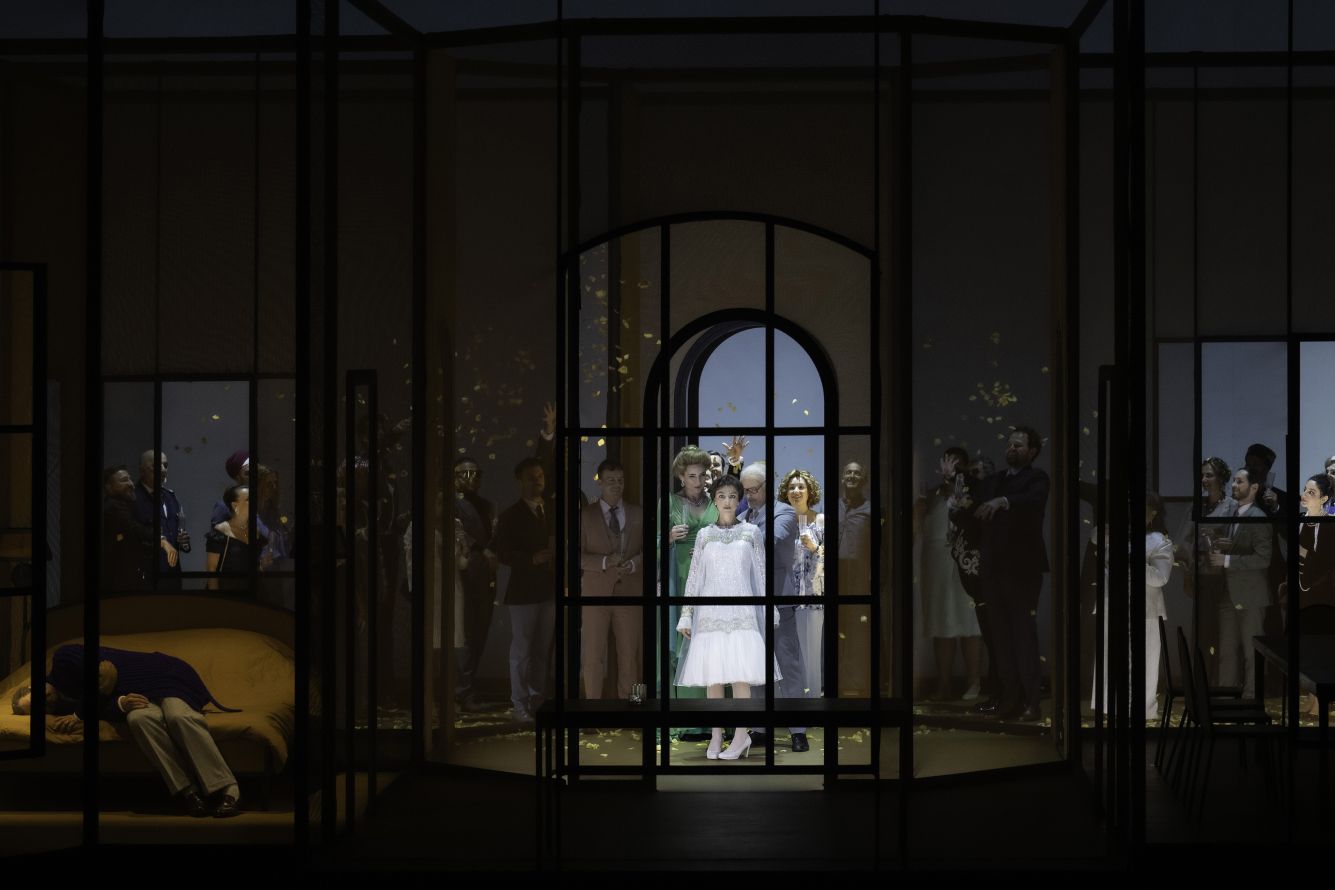
In France, from July 3 to 23, there is an ex-en-proven opera festival. He was opened by the performance by Dmitry Chernyakov “Iphigenia in Avlida - Iphigenia in Tauris”, a five -hour work, uniting two opera of Christophe Willibald Gluck of ancient plots of the same name. The project was also attended by the National Opera of Greece and the Paris National Opera. This time, Chernyakov - a director, known throughout the world with his unexpected interpretations of classical plots - is trying to understand how the main character turns from a victim into a killer and how a society longing for war affects it. Kinocritic Anton Dolin visited the premiere and talks about why the plot of Euripides is so suitable for our days.
Many books have already been written about the current war of Russia with Ukraine, films have been shot, performances have been staged. But even against this rich background, almost the most intelligible and artistically capacious statement seems to be the production of Dmitry Chernyakov, uniting two operas of the late XVIII century. In it there was a place for both the pre -war bloodthirsty euphoria, and the post -traumatic syndrome, and the “green little little men”, which was embracing society, and the second half of the performance takes place in the Crimea. And not by the will of the director-interpreter: this is what is written with Euripides.
“Iphigenia in Avlid” (1774) and “Iphigenia in Tauris” (1779) have never been put before a single performance with a total length of five hours. However, the novelty of the impression, sometimes shocking, is not on the scale of the plan and its performance - Chernyakov is not used to large projects, from the "Trojans" of Berlioz to the Bastiy Opera to the "Ring of the Nibelung" of Wagner at the Berlin state opera. The point is the sharp modern dilemmas, before which are the heroes of the operas.
In the name of presumably the highest goal, one should cut his own daughter on the altar, the other - his own brother. It is difficult to doubt: over the millennia, which have passed since the first theatrical interpretation of the myth, the world has not changed much. People "for the sake of the common good" continue to die.
The director dared to an experiment in the ex-en . In France, Christophe Willibald Gluck, a reformer of the opera who revolutionized precisely in his Paris period, is honored: he contrasted a musical tragedy filled with psychological and static genre. This completely coincides with the program of Chernyakov, which always seeks in opera material not credibility, but truth. With cinematic meticulousness in detail, he conveys even the most archaic material to the modern audience.
The incredible reliability of the acting, which the director achieves from the singers, is capturing. At the same time, naturalism does not contradict the poetic, at times of surreal convention - neither the paradoxical metaphors growing before our eyes, nor the final catharsis according to the covenants of the ancients (“cleansing through suffering”), but without pompous and pathos inherent in the opera and pathos. Achieving realism, Chernyakov immediately destroys it. His main ally in the new production is the American Corinn Worm. With heroic dedication, without the slightest drawing or inhibitory, she performed the party and the roles of two completely different, separated by one and a half decades of Iphigenia. First, victims, then - priestesses.
The spectacular decoration of Avlida-traditionally invented by the director himself-in the first part is a theatal schematic transparent palace of several rooms: two bedrooms, a negotiation, a common hall in the background. It was there that to the music of the overture, the terrible dream of the commander Agamemnon (Canadian baritone Russell Brown) was materialized. Festively dressed - as always, a virtuoso costume artist Elena Zaitseva works with Chernyakova - the Greeks blindfold his daughter Iphigenia, then the High Priest cuts her throat. So the goddess Diana ordered, the ritual murder of the princess - an indispensable condition for the beginning of the long -awaited war against Troy.
Agamemnon, who heads the troops, is ill and nervous, but he is more important to keep his face to advisers and generals than to save his daughter. The mother, dressed in green Clytemnestra (French soprano Veronica Gens), and the groom - the valiant Achilles, the dandy in the pink (Australian tenor Alasder Kent) worry more. But the choir, in several scenes in an antique turned into the voice of fate and hidden into an orchestral pit, inexorably demands bloodshed-otherwise you will not start a war.
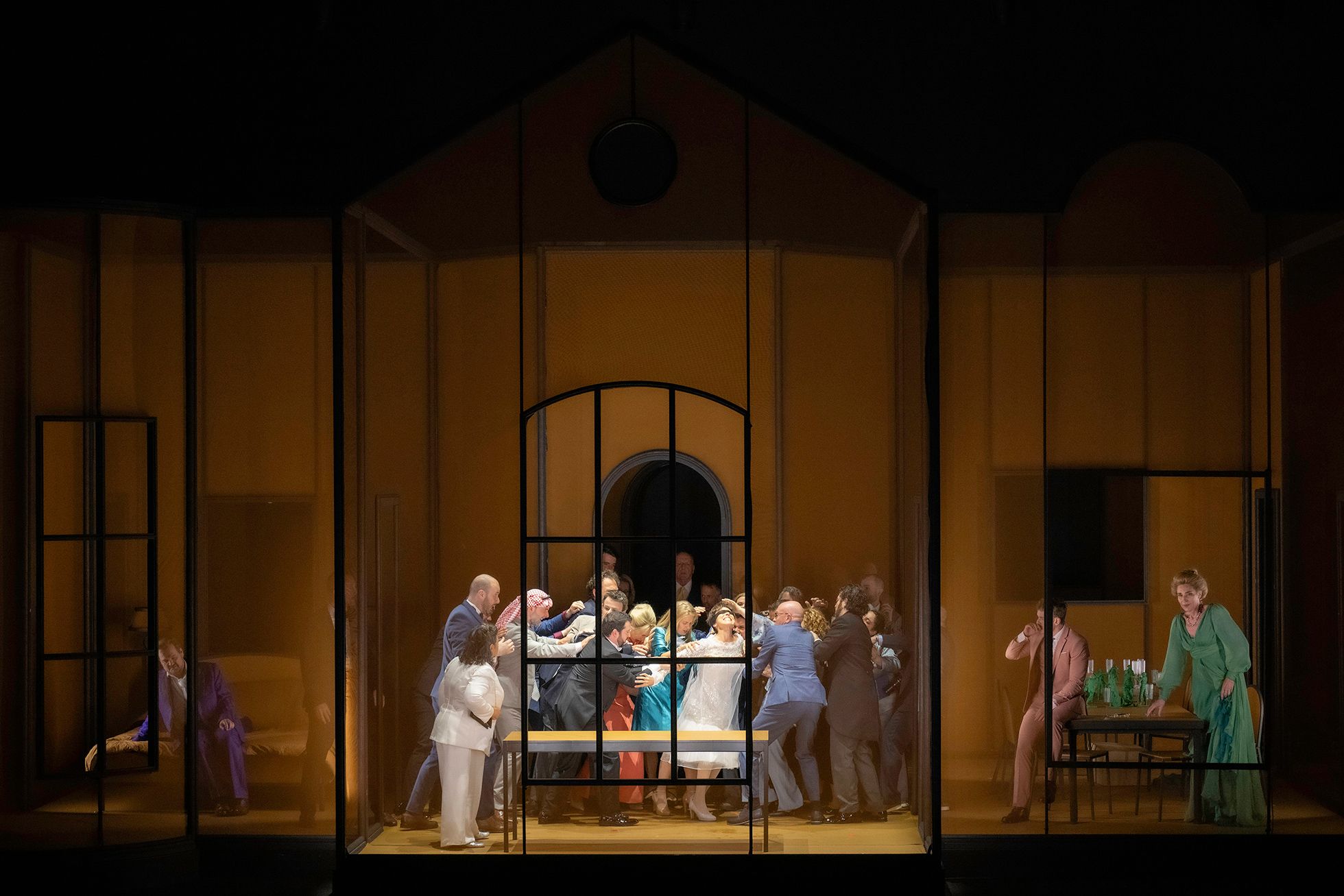
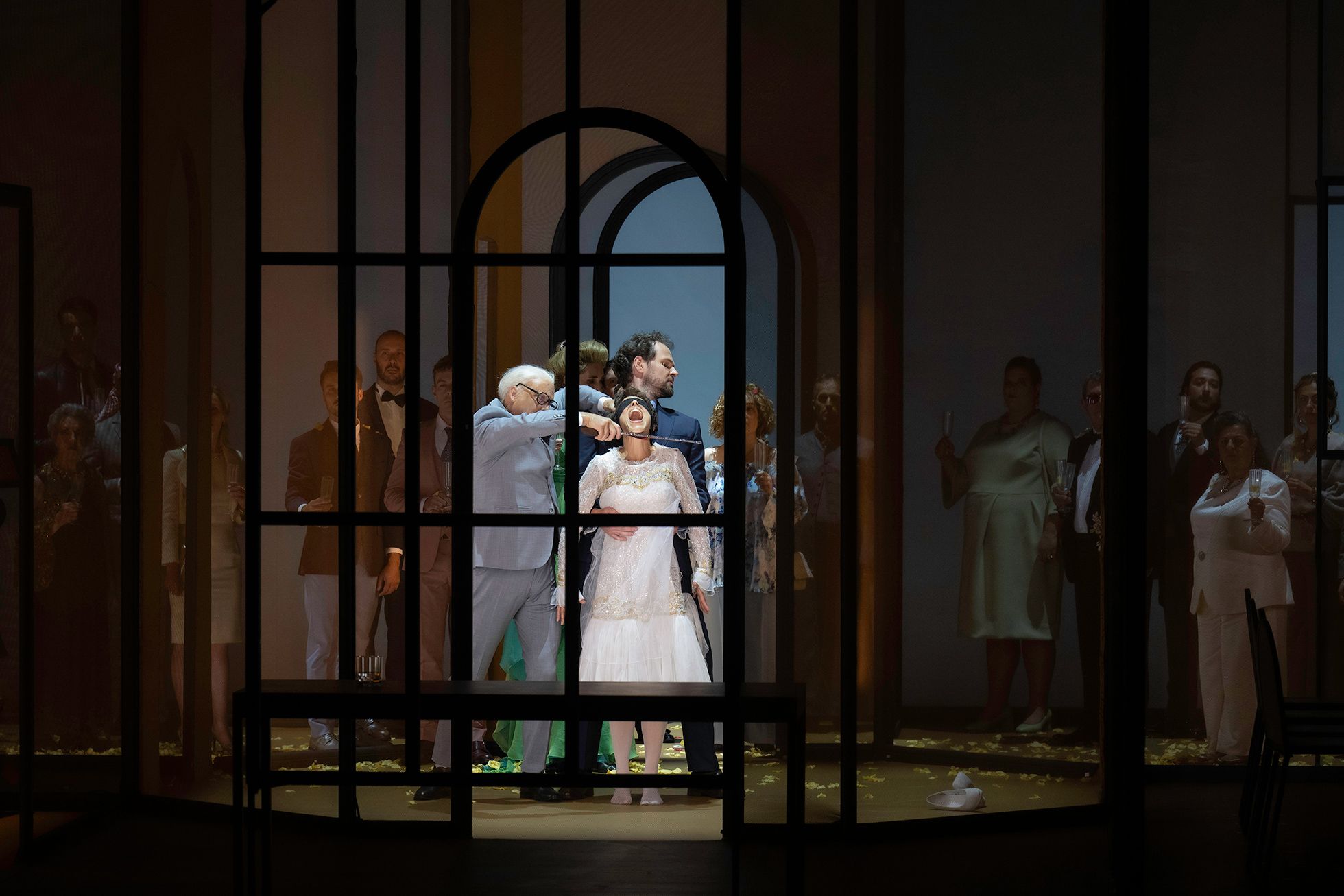
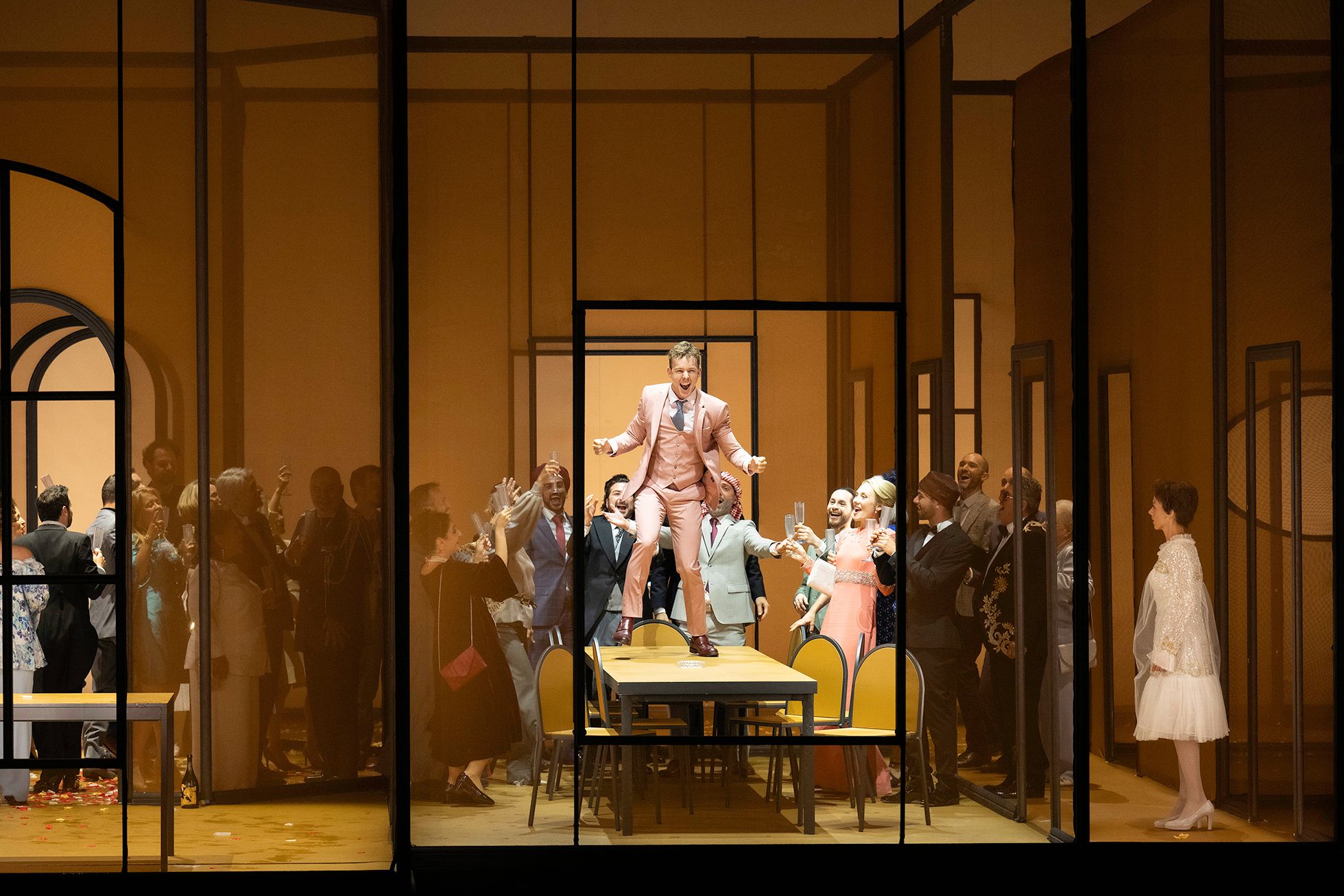
The finale of “Iphigenia in Avlida” in Gluck is bravur-rimming: Diana forgives the Greeks, and Iphigenia remains alive. In Chernyakov, he is incomparably more terrible, which enhances happy music: the Greeks dance and march at the dead body. After that, a curtain with a huge inscription "War" falls onto the stage.
At the beginning of the second part - “Iphigenia in Tauris” - the number of losses of armies and civilians is projected, but where it is not said. Iphigenia reacted to the shores of Crimea, saving the same Diana from the Avilid altar (Greek Sula Paussidis sings the party), turned into a pando materialized by Phantom, the double of the main character. After all, not ruthless gods, namely people require blood, more and more.
The decoration is transformed. Now this is the outline, the outlines of the palace in Avlid, the ephemeral memory of the past. Either the frame of the burned house, or the architectural 3D model, in any case, neither a real roof nor walls are here. The contours glow, and the intensity of this light controls the audience attention. If Iphigenia in Avlida in the Chernyakov interpretation of the plot resembled the “Dogville” by Lars von Trier with an innocent heroine - the victim of the whole city, then “Iphigenia in Tauris” is similar to the same film aesthetically. The destroyed Crimea seems to be drawn by light, like a dogwill - chalk.
This world is either after the war, or after death (it is not completely clear whether Iphigenia was sacrificed or is it only a hallucination) is inhabited exclusively by refugees and people with disabilities, for each of which the war passed by a roller. The local King Foant (French baritone Alexander Duel) - a madman in a reflective orange vest and helmet - a little that the ground falls and beats in a seizure. His demand to sacrifice every foreigner, undoubtedly, turned from a long -standing bloodthirsty law into a personal mania. Immediately I will recall the column hall filled with “displaced faces” from the Prokofievskaya “War and the World” of the same Chernyakov: the theme of war and its consequences pursues the director, which is easy to understand.
The first scene of Iphigenia in Avlida is again a dream, now Iphigenia. The choir is suddenly in the depths of the scene, and we will find out a crowd of the first opera - now they are all in white and motionless. The dead in the second act is much more than the living. A one and a half decades after the outbreak of the Trojan War, all the characters of Iphigenia in Avlida were killed, in addition to the graying main character and her brother Orest, whom Chernyakov introduced into the first action as a silent child.
Now Orestes are soldiers - he has a beard, scars and post -traumatic syndrome (the stunning role of the baritone Florian Sempe). He finds himself in Tauris with his colleague and close friend Pilad (the role was no less impressively played by tenor Stanislas de Barbayrairak). One of the strangers will have to be slaughtered on the altar, and Orestes with Pilad are fighting for the right to die. In these two operas, the victims in a strange way call themselves misfortunes, they themselves want to be killed in order to escape from painful internal contradictions. Iphigenia dreams of forgetting about the betrayal of his father, Orestes - to atone for the murder of his mother (the terrible death of Clytemnestra, who was behind the scenes in two original "Iphigenies", Chernyakov painted in the recent "Electr" Richard Strauss).
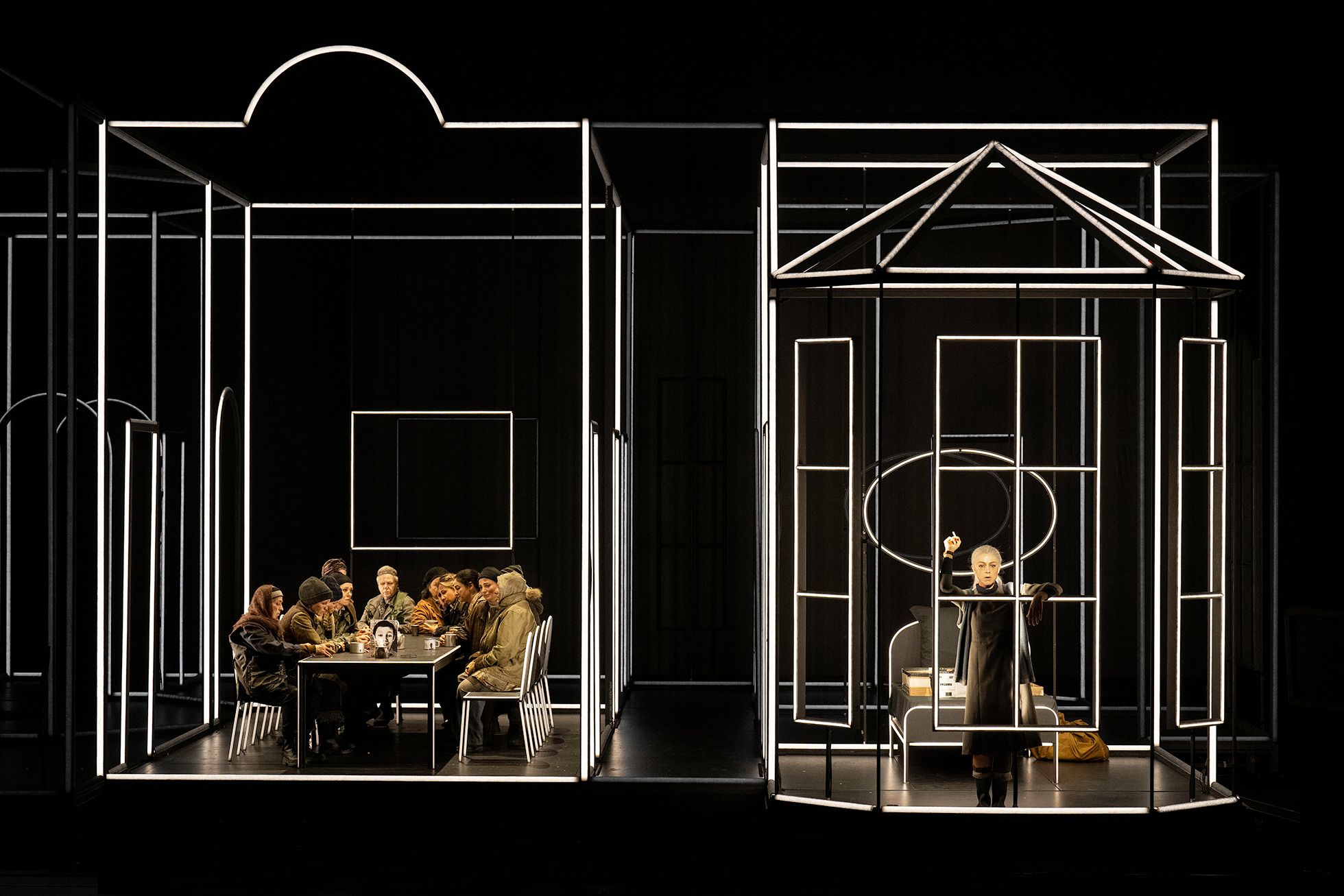
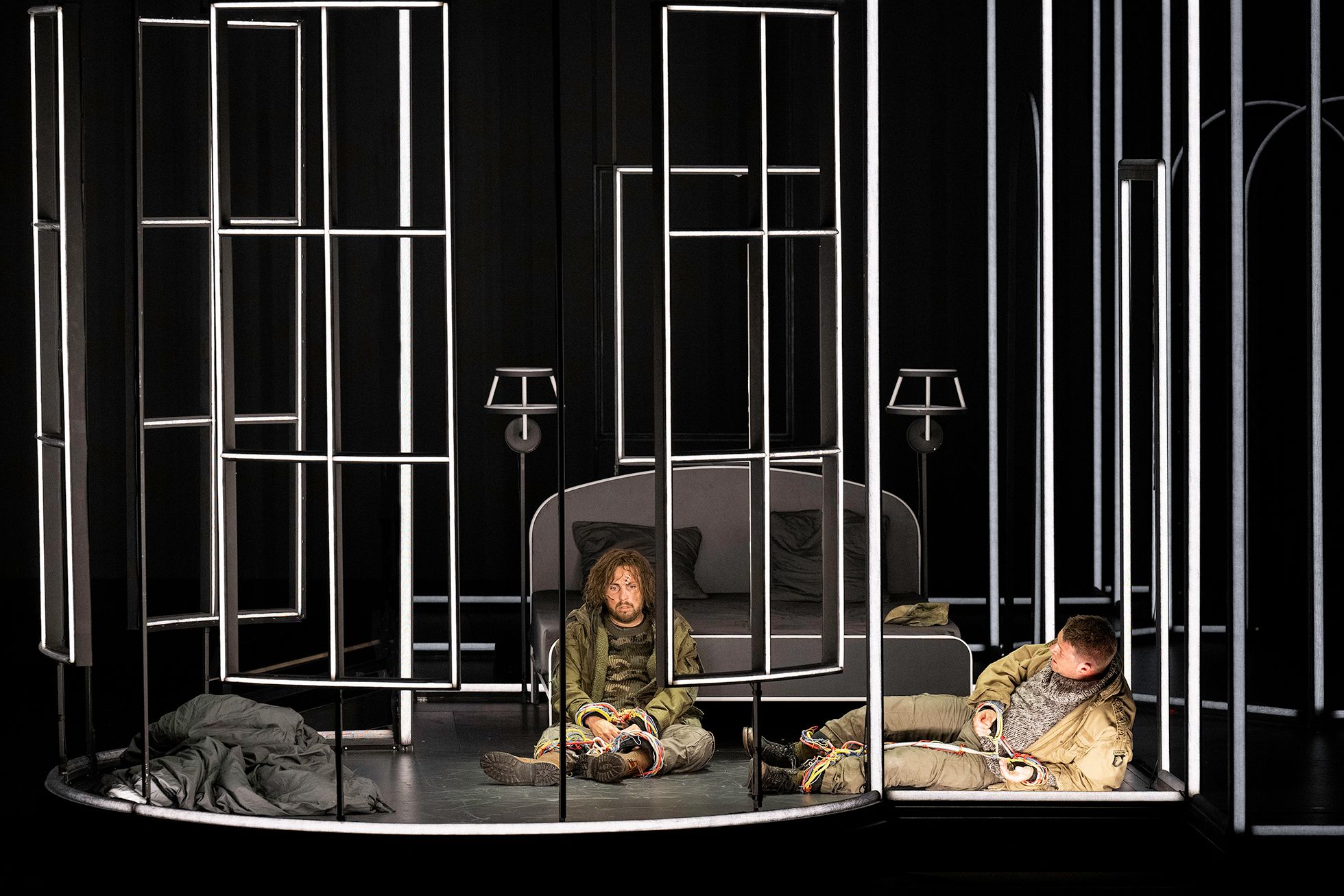
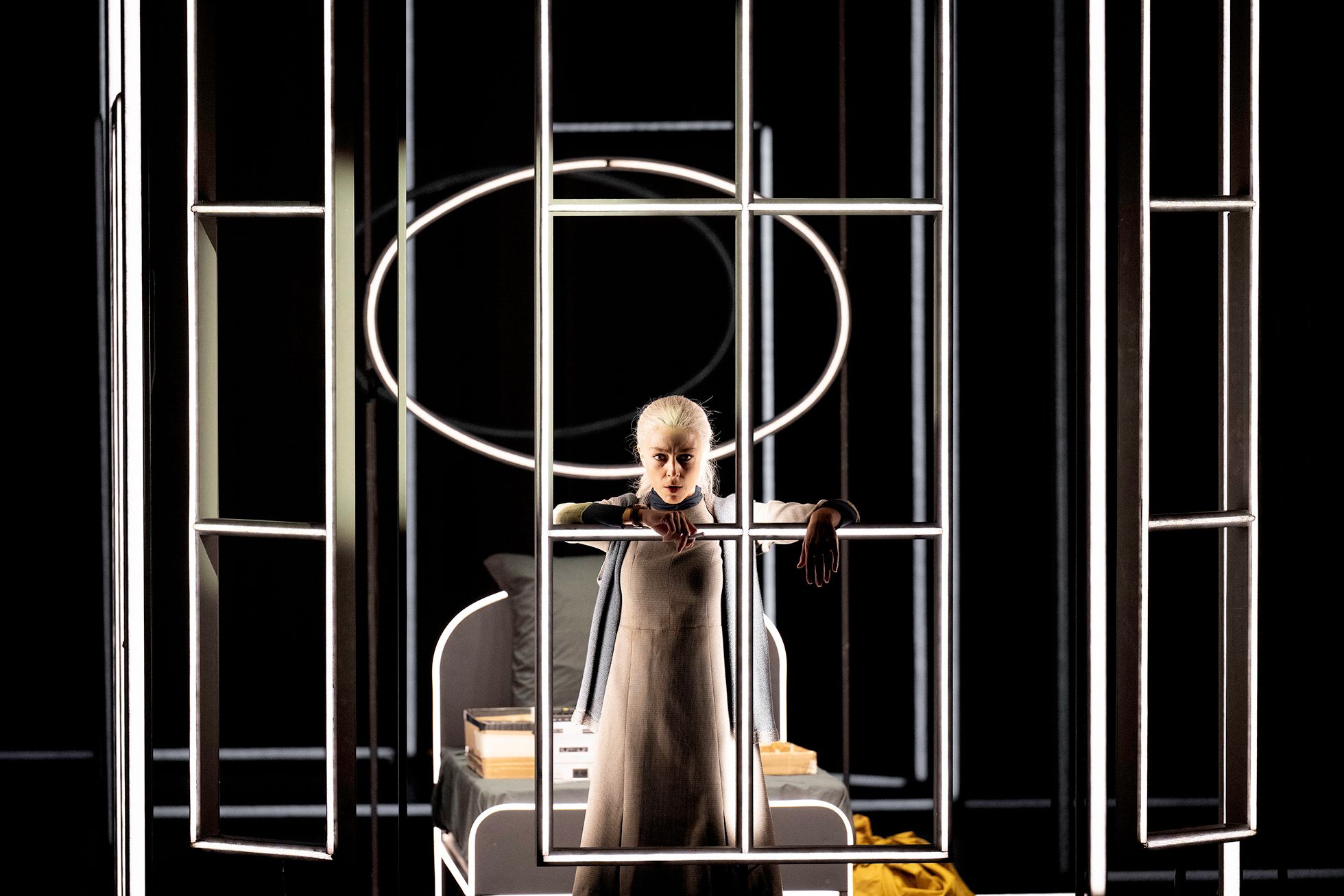
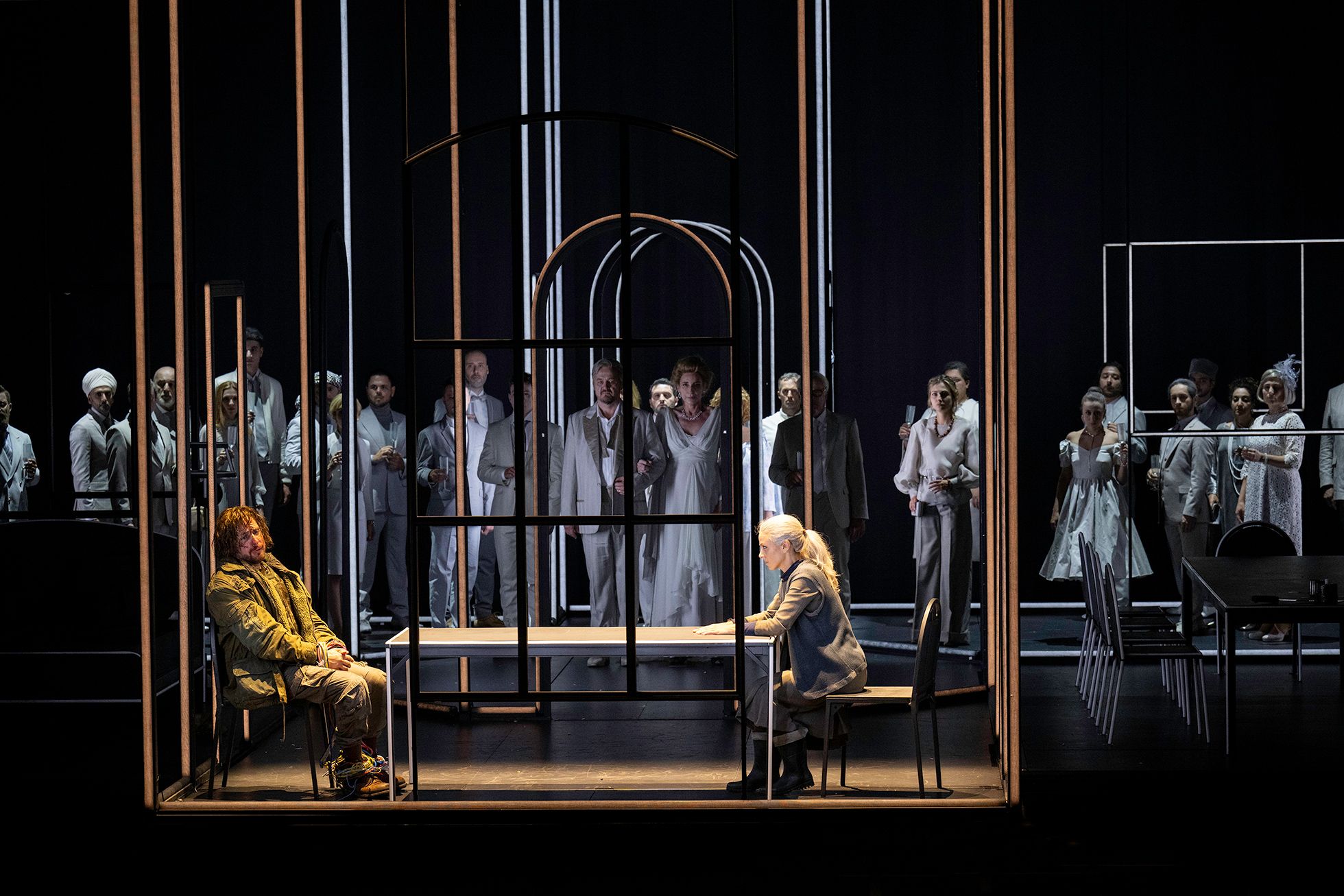
In the performance of Chernyakov, both extreme transformations that change the executioners and victims raise the question of responsibility - not at all collective, but individual. The tragedy of war is irreversible, its injuries are incurable, but salvation through mercy is still possible. It seems that the transparent, strict, tragically honest music of Gluck, the execution of which by the Le Concert D`Astree orchestra, under the direction of its creator Emmanuel Aim, also deserved a standing ovation.
But even outside the specific performance, the increased relevance of a terrible myth is impressive and scared. It is not without reason that literally simultaneously with the premiere in the ex-en-Provence of another “Iphigenia in Avlida”, Euripides, in the Greek epidaurus was shown in the version of another director from Russia- Timofei Kulyabin .
Finally - about "green men." In Chernyakov, baby Orestes playing frighteningly large plastic soldiers. Born in the USSR unites one childhood, similar forms of nostalgia for the past: exactly the same soldiers in the early 1980s my mother brought me from Donetsk (it was not so simple to get such a collection in Moscow). Some of them are probably still preserved. Playing the war since childhood, sometimes you do not notice how it becomes a reality.
Anton Dolin