
Translated material
Goodwill gesture
No matter how the football authorities try to remove the policy from sports, it breaks on the field. Often-in the form of what cannot be shown: the “wolf salute” on Euro 2024 and Nazi greeting
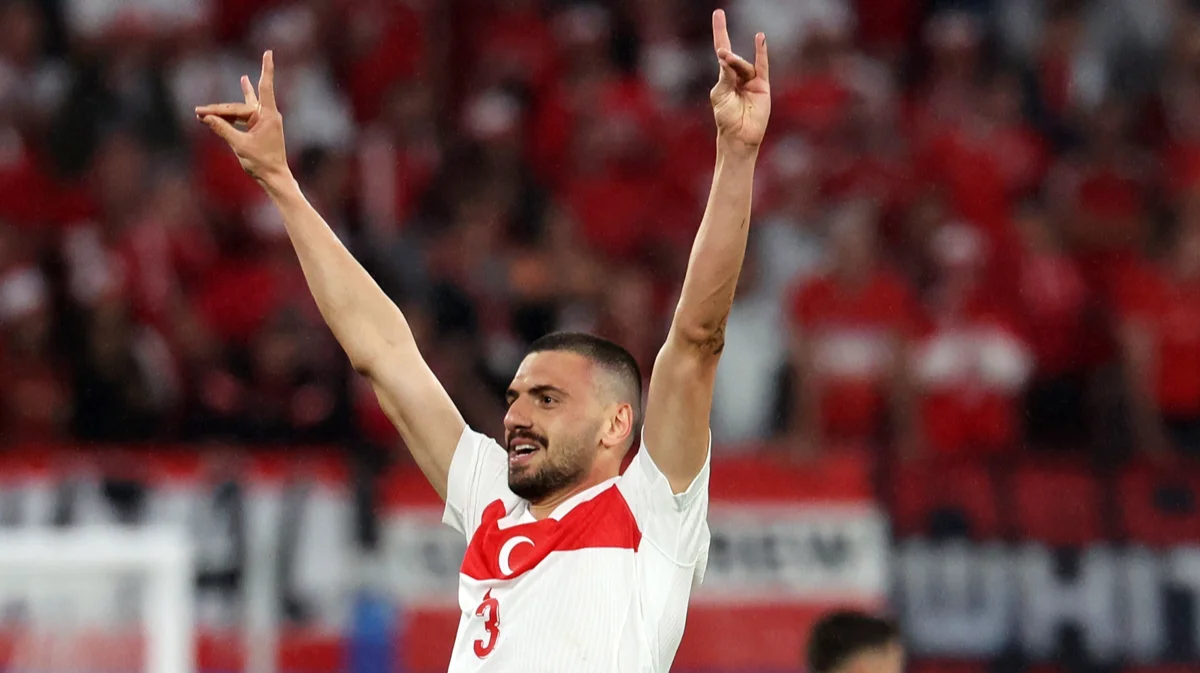
Merich Demiral during the Euro 2024 match between the national teams of Austria and Turkey, Leipzig, Germany, July 2, 2024. Photo: Abedin Taherkenareh / EPA-EFE
In the world of football, in addition to game rules, there are norms that regulate the behavior of athletes and fans. And with particular severity, the organizers of international tournaments relate to symbolism, which can cause political, racial or religious disputes.
Nevertheless, from year to year, football federations of various countries receive fines for the tricks of players and fans. Sometimes it comes to disqualification. The other day, for example, UEFA was removed for two matches of the Turkish football player Merich Demiral. After the victory over the Austrian national team on Euro 2024, he showed the “wolf salute”-an unofficial motto of Turkish nationalists banned in Austria and France. The football player also published a photo with a gesture on Twitter and signed it: "How happy is the one who can call himself a Turk."
The head of the German Ministry of Internal Affairs Nancy Fezer said that the symbols of “Turkish right -wing extremists have no place” in the stadiums of Germany. The Turkish Foreign Ministry called this reaction “Xenophobe” and explained that the gesture shown by Demiral could not be associated with right extremism and is not prohibited in Germany. Before Turkey’s match with the Netherlands, Turkish fans massively repeated the “wolf salute” at the stadium during the performance of the national anthem.
During the group stage, the Balkan countries distinguished the scandals. In particular, the Kosovo journalist was deprived of accreditation at the championship for showing the “two -headed eagle” during the Serbs match: the symbol of both Kosovo and Albania.
What other gestures are prohibited in football? New Europe recalls other high-profile cases.
Nazi greeting
In 2013, the midfielder of the Athenian club Aek Giorgos Katidis celebrated the goal and greeted the fans, throwing his right hand up. This action caused a great condemnation on social networks. At the same time, the football player assured that he simply showed towards a teammate who was on the rostrum, and his coach insisted that the 20-year-old athlete saw a gesture on the Internet and did not know what he means.
“He is a child who has no political views. He most likely saw such a greeting on the Internet or repeated somewhere else, not understanding the meaning, ”said the mentor of the team Evald Linen.
Katidis himself also wrote on Twitter: "I am not a fascist and would not have done it if I knew what it means."
Nevertheless, in the Greek football federation they called this gesture a “serious provocation”, which “offends all the victims of the atrocities of the Nazis”. As a result, Catidis was lifelously removed from the game in the national team of the country.
“The greeting of a player of the audience in the Nazi manner is a cruel provocation, an insult to all the victims of the Nazi atrocities, it all deeply hurt the humanistic nature of the game,” the Greek football federation said .
The AEK leadership also removed Katidis from participating in official matches until the end of the 2012/13 season.
In 2005, the player of the Roman Lazio Paolo Di Canio after the match against Roma demonstrated a gesture that was associated with a Nazi greeting. He greeted the fans, throwing his right hand. As a result, the football association set him a fine of 10 thousand euros. Di Canio, however, said: “I am a fascist, not a racist. I am making a Roman greeting in order to greet our supporters and those who share my ideas. ” “This gesture is in no way inciting to violence and, moreover, is not a call to racial hatred,” he insisted.
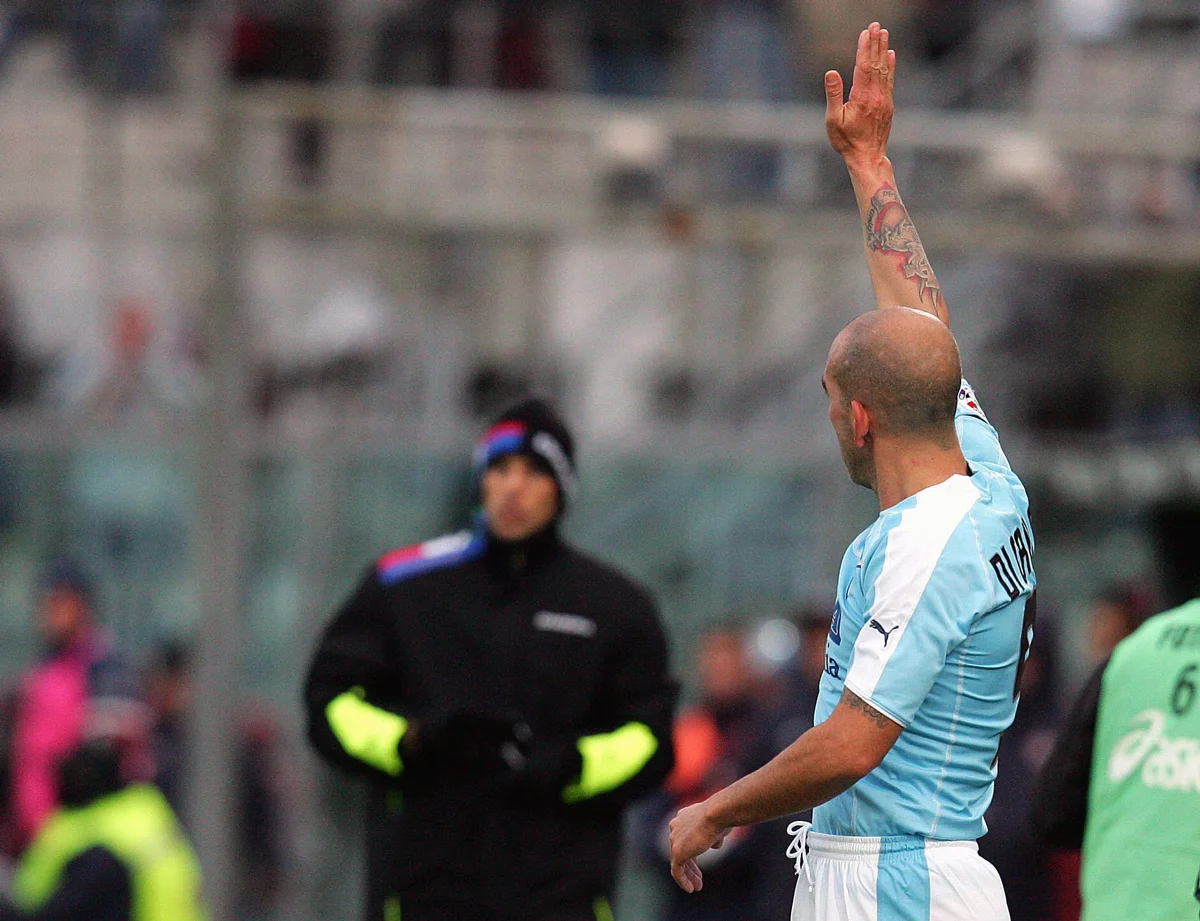
In 2006, the football player was again a fine of 10 thousand euros and removed him from one match for his hand raised up during the defeat in the match with Livorno. In 2013, critics again recalled Di Canio his statements after the athlete was appointed coach of the English "Sanderland". The arrival of the Italian to the club even caused the resignation of one of the members of the board of directors - deputy David Miliband.
Anti -Semitic gesture
In December 2013, the French footballer Nikolai Anelka, who played for the English club West Bromvich Albion, was in the center of the scandal. Celebrating the goal against the West Ham, he used a gesture called La Queenelle (he is also called “Inverted Ziga”) - one hand is bent at the elbow, and the other hand rests on the shoulder or stomach. The sign was invented by the French comedian Dyodon Mbala-Bala, a friend of Anelka. The gesture is often interpreted as anti -Semitic, since the artist was many times different from statements against the Jews. Mbala-Balah himself claimed after the scandal with a football player that he was Angric of African, and “La Queenelle” is a gesture about emancipation that was not related to Nazi greeting. Anelka explained that he showed a gesture in support of Mbala, who was convicted seven times for anti -Semitic crimes.
The reaction to the demonstration of Anelka "La Queenelle" was instant and negative. West Bromvich Albion fined a football player and disqualified for five games. The football association of England said that the independent commission proved: the gesture was offensive and belonged to ethnicity, race or religion. But it was noted that Anelka was not found guilty of anti -Semitic behavior.
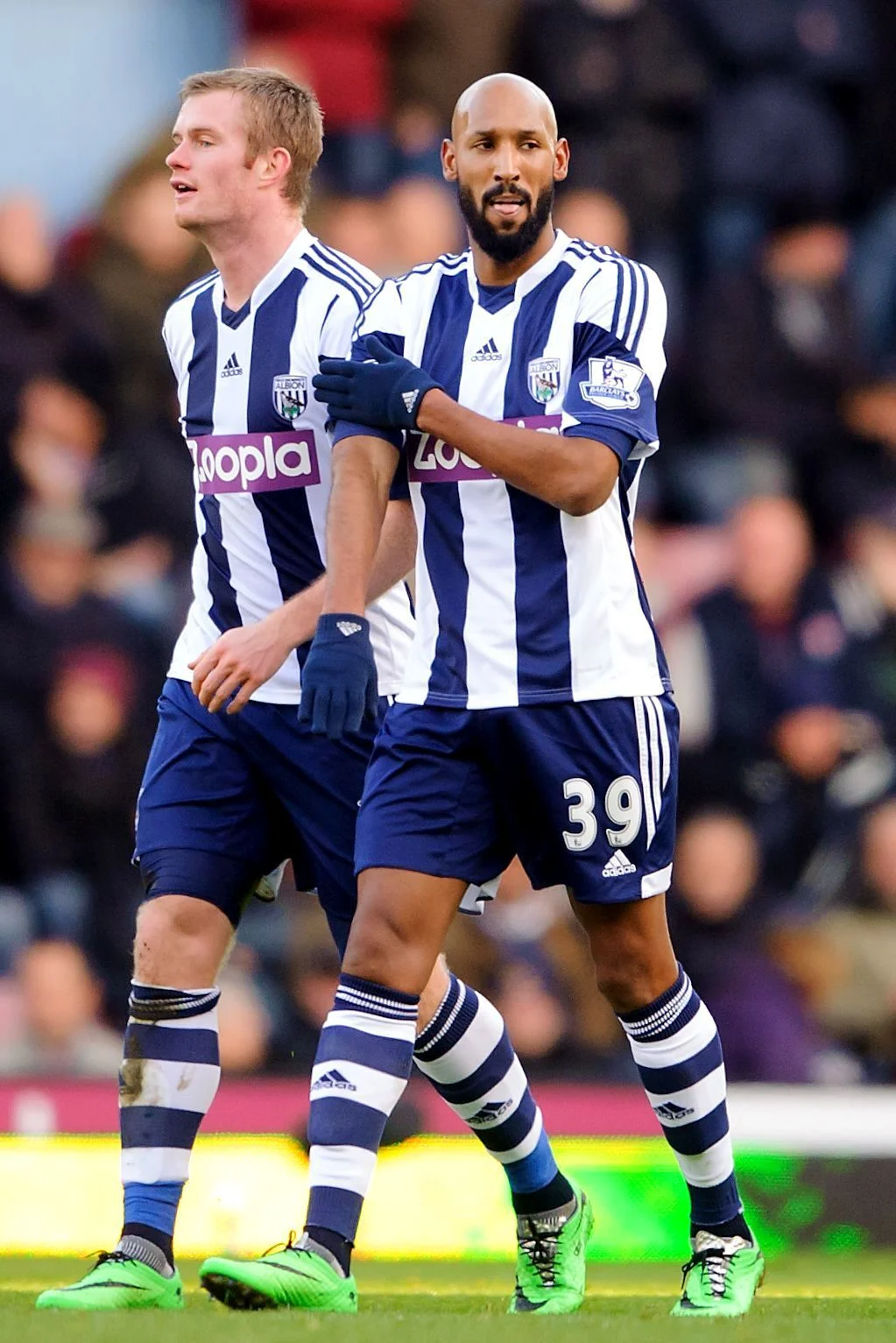
Later, the football player announced the departure from the Club West Bromvich Albion. He wrote in social networks that he was offered the conditions for returning, which he "could not accept." The club itself got angry because of such a statement and clarified that Anyelka needed to apologize for the consequences of his gesture on the football field, as well as agree to the payment of the appointed fine.
With a finger on the throat
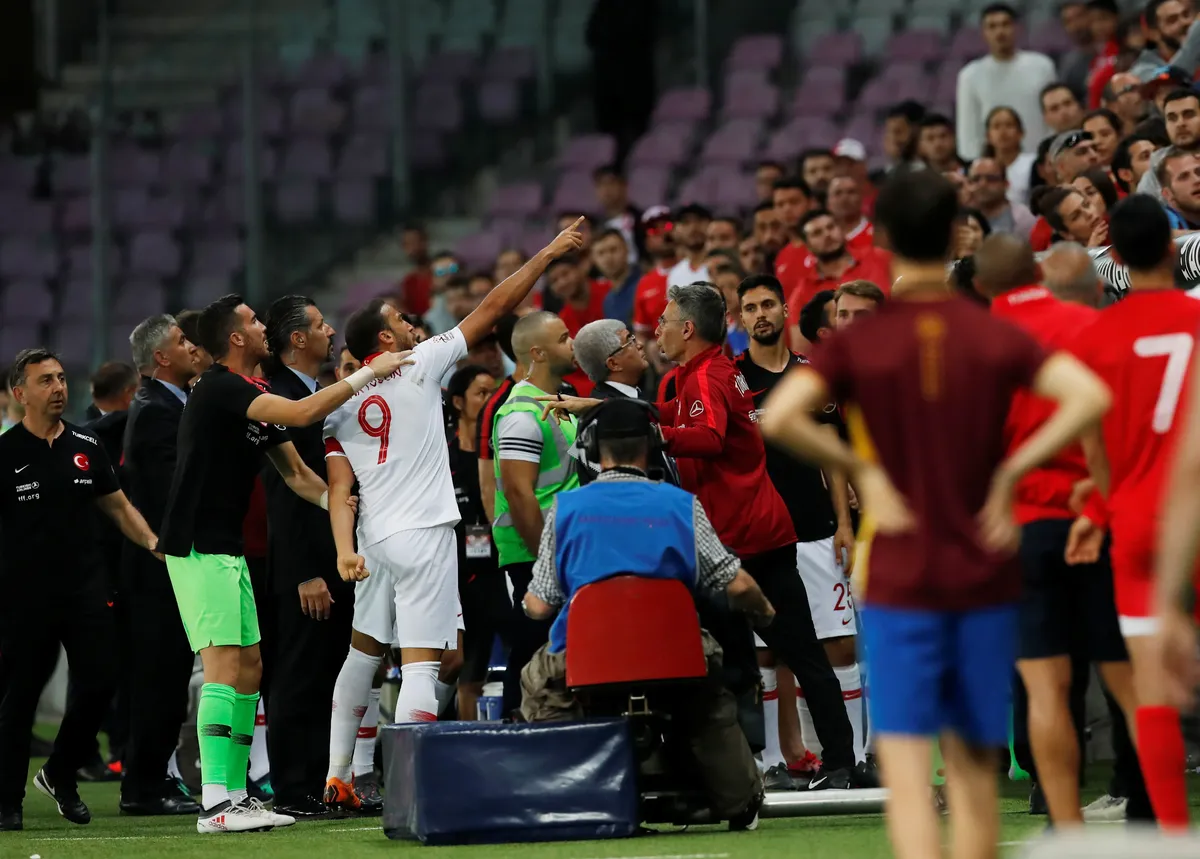
In 2018, the striker of Everton and the Turkish national team Jenka Tosun was removed for a threatening gesture during the friendly match of his national team against Tunisia. The football player in the middle of the match realized the penalty, after which Turkish fans began to throw fireflies. Then Tosun ran a finger along the throat, addressing this gesture to the fans. Presumably, he was disturbed by the fireyers could get into his father and other family members. Later, Tosun apologized for his behavior, explaining that, although he was a professional football player, but also a person.
Imitation of shots
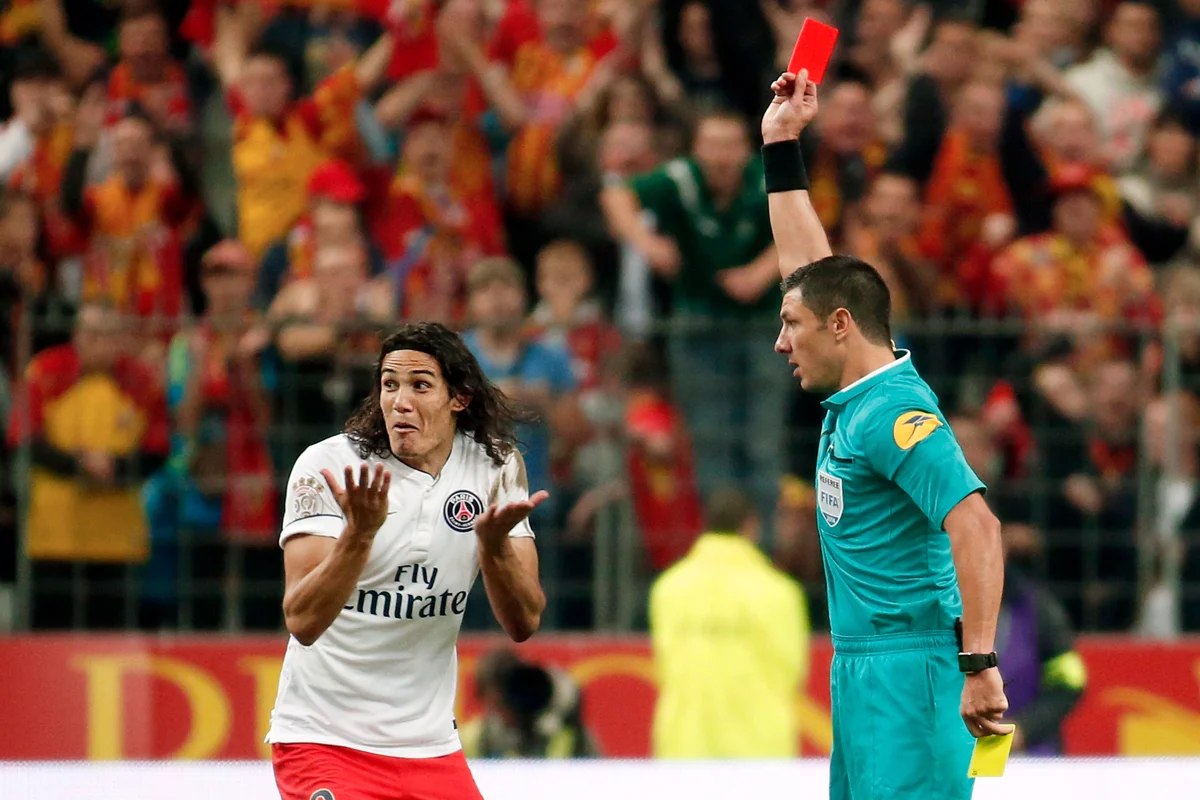
In 2014, the striker of the French Paris Saint-Germain Edinon Cavani was disqualified for one match-also after he showed a threatening gesture. Having implemented the penalty in the match against Lansu, Cavani imitated a targeted shot from a rifle. In fact, the football player received only a warning for the gesture itself, but then he began to argue with the judge, and he showed him a red card. PSG defended the player, saying that the imitation of a shot from a gun is only a football player’s signature sign.
Two -headed eagle
At the 2018 World Cup in Russia, two players of the Switzerland national team, ethnic Albanians from Kosovo Granit Jaka and Jerdan Shakiri, after scored heads into the goal of Serbia, “crossed their hands”, which resembled a two -headed eagle from the coat of Kosovo, whose independence does not recognize Serbia. Players got off with fines of 10 thousand Swiss francs.
The fans of the Serbian national team then sang the players in response, threw objects on the field, and also stretched banners with discriminatory inscriptions. For this, FIFA also fined the Federation of football Serbia - 54 thousand Swiss francs.