
Translated material
"Your liberal things are over ..."
Why are the Zoya Svetova sorted out from the facades of houses the memorial signs of the “last address”. The sign in memory of her grandfather also disappeared
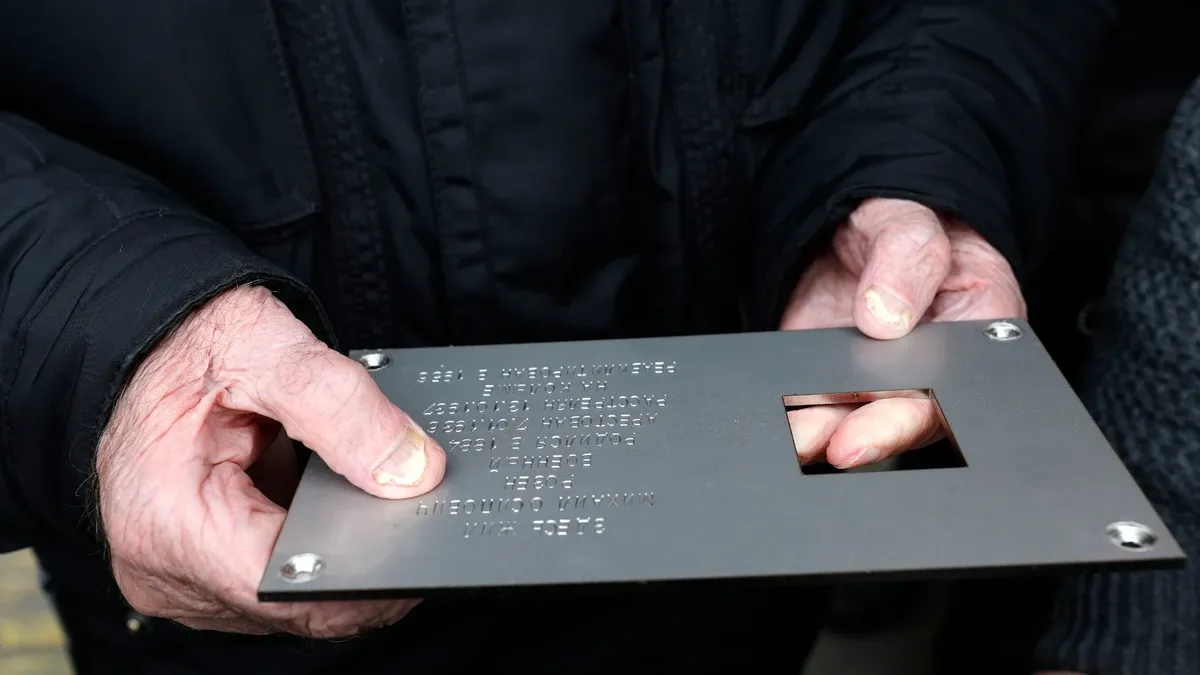
Photo: Mikhail Japaridze / TASS
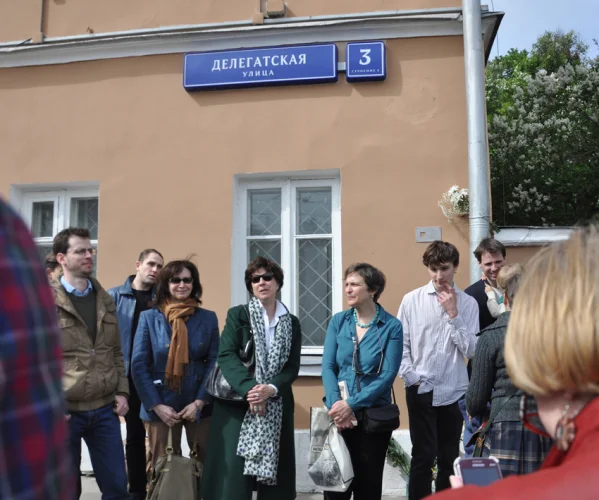
I am standing on a garden ring in Moscow, in front of the house 3 on delegatskaya Street. Part of the yellow wall of this two -story building is painted with white paint, and this light rectangle is highlighted against the rest of the background. So hide traces of the crime, quickly hiding them, without bothering to choose the color.
Upstairs, where the white rectangle is now, a small memorial plate was nailed - the “Last Address” sign.
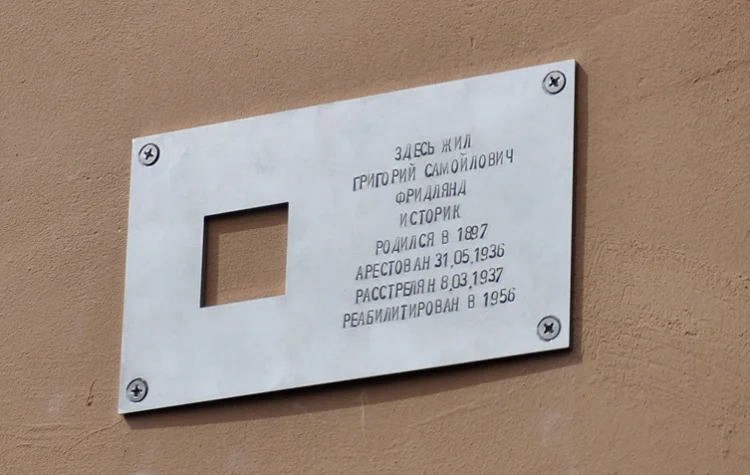
“There lived Grigory Samoilovich Friedland, a historian, born in 1897, arrested on 05/31/1936, executed on 03/08/1937, rehabilitated in 1956.”
On the ground floor, in an apartment of four small rooms stuffed with books, from where my grandfather took my grandfather on May 31, 1936, my father, Felix Svetov lived for some time after his arrest (he studied in the second grade, and he was teased by the enemy of the people), with his mother and older sister. Then they went to exile in Arkhangelsk, where my grandmother was quickly arrested as the wife of the enemy of the people.
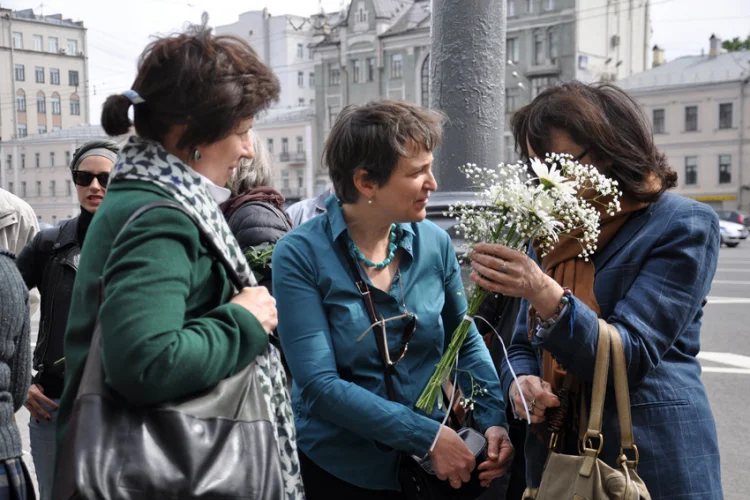
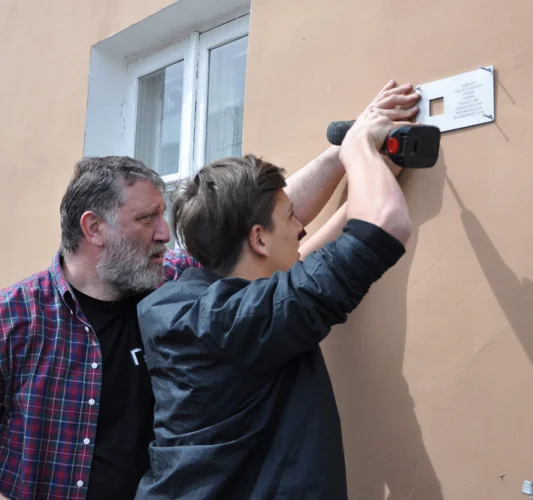
We hung a memorial plate on May 15, 2016, and it was then that a real acquaintance with my grandfather took place. It was then that this “memorial” relative once became alive and relatives for me.
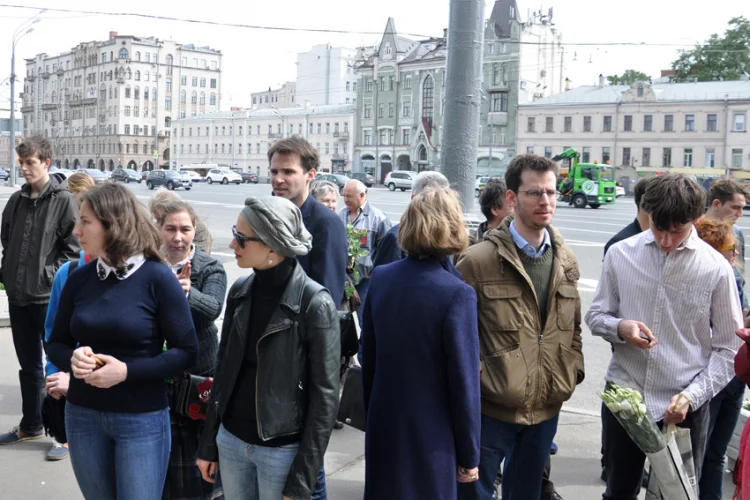
Almost all my relatives gathered at this ceremony - close and distant, some of which had never seen each other before. We invited the current Dean of the East Faces of Moscow State University, representatives of the All-Russian Museum of Decorative and Applied Arts, the premises of which are now the former apartment of my grandfather.
Friedland great -grandchildren screwed the memorial plate, they were helped by Sergey Parkhomenko*, who, in fact, 10 years ago and came up with the project “The Last Address”.
"My crimes are heavy before the party and homeland"
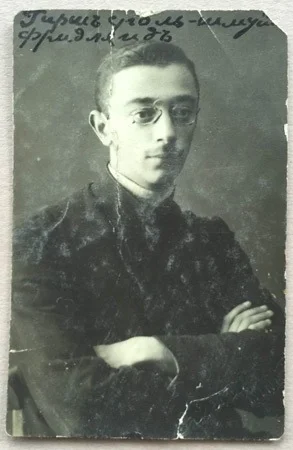
A few years before this ceremony, I read the Friedland case in the FSB archive. Grigory Friedland was the first dean of the Faculty of History of Moscow State University, his monographs “Marat”, “Danton”, “Axtreaming on the history of revolutionary movements in Western Europe” and others were highly appreciated by domestic and foreign historians.
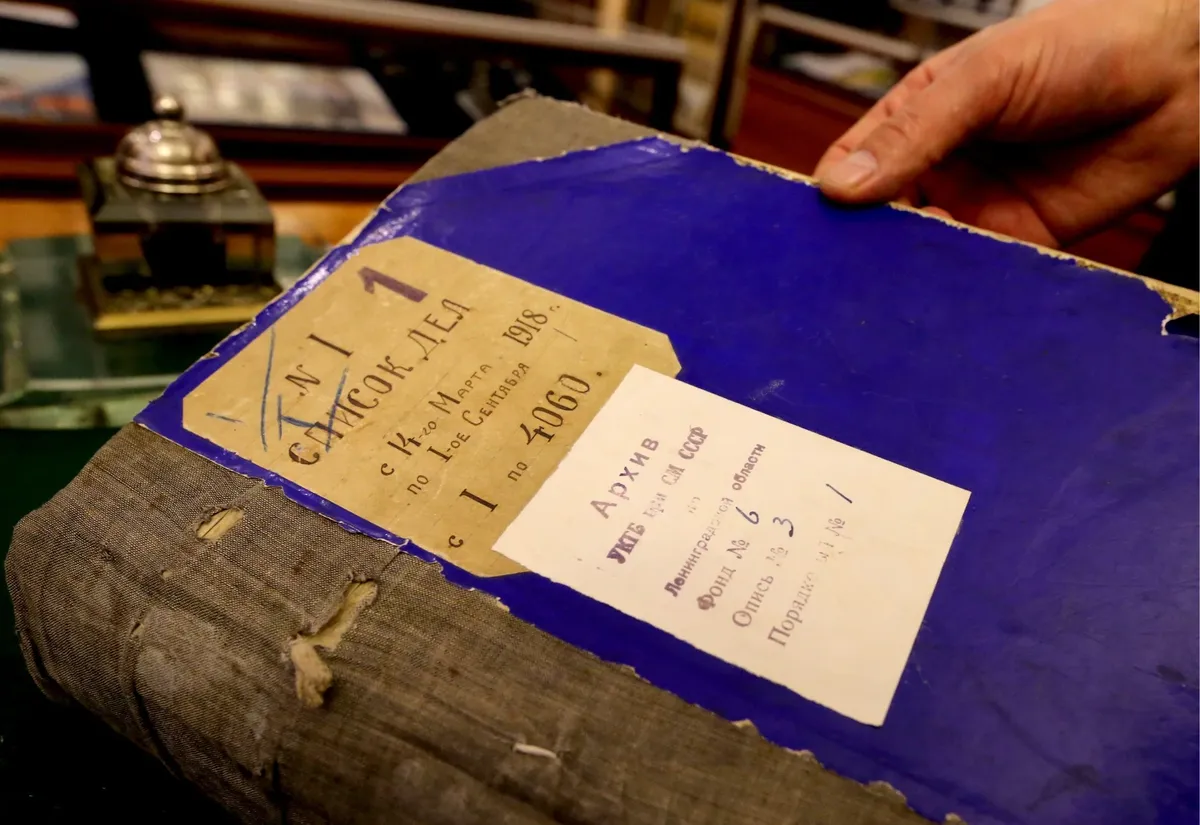
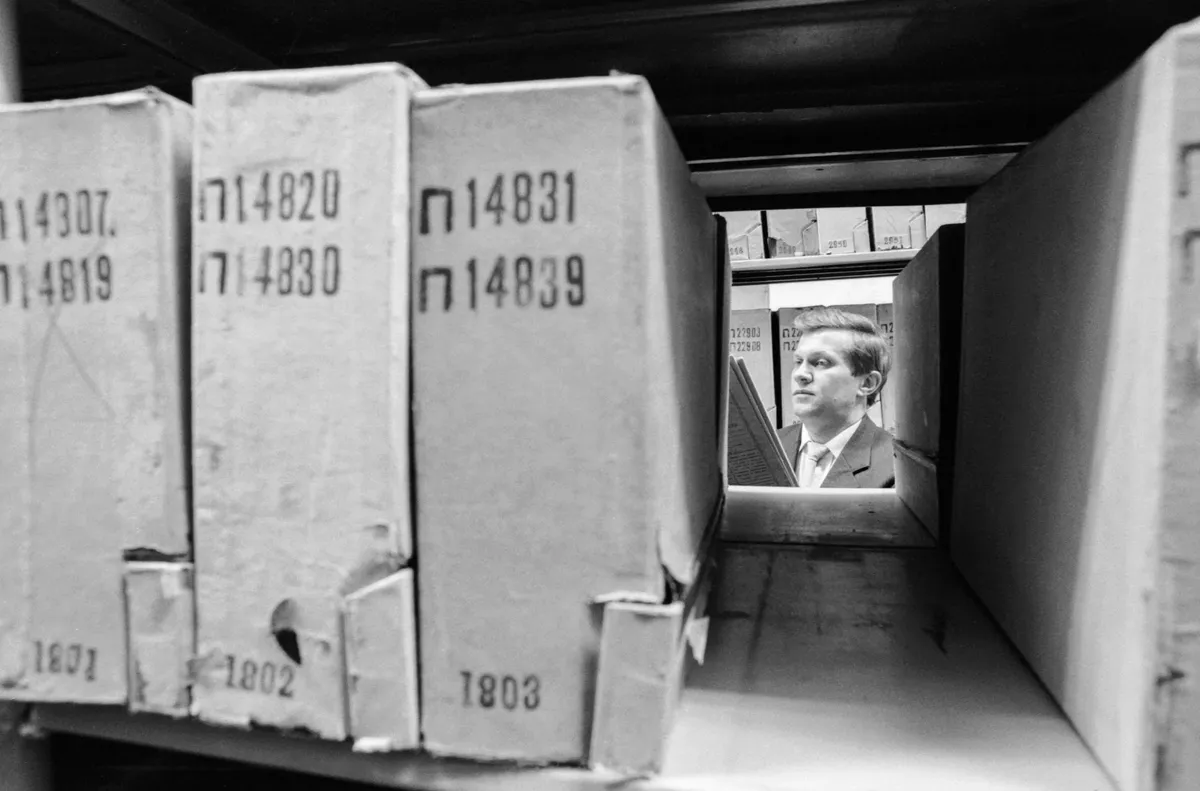
The FSB archive on Lubyanka does not have a sign, it is written on the door that in this building there is either geographical or some other society. True, the archive is the door to the door with the FSB reception, so if you know about where to go, you won’t be mistaken. You climb to the second floor, call the bell, and you are allowed. Big Hall with Book Cabinets. Everything is decorous. At my request, I was allowed to read the case No. 3257 Friedland Grigory Samoilovich, who is accused under Art. 58 hours 8 and Art. 58 h. 11 of the Criminal Code of the RSFSR. You can’t take pictures. You can only reprint or rewrite.
Of course, I, the first thing I began to read interrogations of my grandfather.
June 8, 1936
The question of the investigator. You are a participant in the counter -revolutionary terrorist organization of the Trotskyists. You are a hidden Trotsky-Duurushnik. Give exhaustive testimony about your terrorist activity.
Answer. I categorically deny.
June 9, 1936
Friedland. Never belonged to any terrorist organization. I categorically deny something similar.
August 4, 1936
Question. Throughout the investigation, you stubbornly refused to testify about your counter-revolutionary activity as a participant in the Trotskyist-terrorist organization. Do you intend to now completely exposed in counter -terrorism activities, to deny your belonging to the organization?
Answer. Yes, I admit that until now I hid from the investigation his participation in the Trotskyist terrorist organization.
Question. When and by whom were you involved in the Trotskyist organization?
Answer. I was involved in the Trotskyist organization in 1930 Ter-Vaganyan ( Ter-Vaganyan Vagarshak Arutyunovich, a Soviet party leader, historian, writer, defendant in the first Moscow process, shot on August 25, 1936.-Ed. ) .
At the trial, Ter-Vaganyan said that he gave Friedland instructions on the organization of terrorist attacks. There are similar indications in the criminal case of my grandfather.
My grandmother told how quite by chance she saw Ter-Vaganyan on Lubyanka. She was called by the investigator. When she went to his office, the door opened, and Ter-Vaganyan came out. He did not recognize her, although they were well acquainted, but most of all his grandmother struck his face. “A man with the face of a dead man,” she recalled. And “cotton legs” - he almost could not go, he was almost introduced to the elevator. Talking this story, my grandmother asked each time: "What had to be done to him so that he would say this?"
So I, reading my grandfather’s interrogations, asked myself and everyone around: “What did they do to him, that he made himself and others?”
The most amazing document is, of course, the minutes of the court session. Yes, I read in books about the Stalinist Troika, I knew that people were judged without lawyers, that people admitted the most terrible and impossible crimes. But one thing is to read about some unknown people, and it’s quite another to read the words of his own grandfather.
“It’s difficult to realize my crimes before the party and the Motherland that I was brought up and put on my feet with my youth, I ended up in the ranks of its traitors, the ranks of the Trotskyist bandits,” wrote my grandfather on August 7, 1936 and the commissar of the state security of Berry.
Then he still hoped that he would be spared: “Conscious of the severity of my crimes, I would like to make possible with all the remnants of my strength to expose, first of all, myself and my accomplices in crime, to earn, if possible, the right to life and work for the Motherland.”
Seven months later, on March 7, 1937, at a court hearing, he had no more illusions and hopes left.
The court session lasted exactly 25 minutes.
I give a completely protocol of the court session of March 7, 1937.
PROTOCOL
Closed court session of the Military Collegium of the Supreme Court of the Union S.S.R.
March 7, 1937 mountains. Moscow
Chairman - Armenian Armist V.V. Ulrich
Members: military universalists I.T. Nikitchenko and N.M. Rychkov
Secretary -military lawyer of the 1st rank A.A. Banner
The meeting was open at 16 hours 30 m.
The chairman announces that the case on charges of Friedland G.S. In the crimes under Art. Art. 58-8 and 58-11 of the Criminal Code of the RSFSR.
The secretary reports that the defendant is in the courtroom in custody and that the witnesses were not called to court (!).
The chairman is certified by the personality of the defendant and asks him whether he was handed a copy of the indictment in the case. The defendant responds in the affirmative. His rights were explained to him and the composition of the court was declared. The defendant, as well as the withdrawal of the declared composition of the court does not declare.
At the suggestion of the chairman, the secretary was announced an indictment. The chairman, explaining to the defendant the essence of the charges against him, asks him if he finds himself guilty.
The defendant finds himself guilty and answers the court questions: he, as a member of the Trotskyist organization, is responsible for the murder of Kirov. In 1934, he saw with Zaidel (historian Zaydel Grigory Solomonovich was shot on May 11, 1937. - Ed.), And the latter informed him of the unit block between the Trotskyists, Zinovievites and the Levaki.
In the indictment, it is incorrectly said that he received this information from Ter-Vaganyan and he learned about terrorist settings from Ter-Vaganyan. The existence of the Vanaga terrorist group ( Vanag Nikolai Nikolaevich was sentenced to execution on March 7, 1937, shot on March 8, 1937. - Ed. ) He was aware and knew about the preparation of terrorist acts.
<...> The judicial investigation was declared complete, the defendant was given the last word in which he says:
"The crimes committed by me are so serious that I do not dare to ask the court to preserve life." He cannot say anything in his defense. He does not see anything mitigating his guilt. In the investigation, he showed the true truth. The court does not ask for mercy, for with such a shameful spot - the spot of a terrorist, a traitor, a traitor to his homeland - you can’t live. ”
The court is deleted to the meeting.
Upon the return of the court from the meeting, the chairman announced the verdict.
At 16 hours 55 m. The meeting was closed ( spelling of the document is preserved. - Ed. ).
"We cannot put the video camera at each signs"
Friedland was shot on March 8, 1937. The day after the sentence.
On November 21, 1956, the “case on charges of Friedland” was revised by the military collegium of the Supreme Court of the USSR. The verdict of the Military Collegium of the Supreme Court of the USSR of March 7, 1937 was canceled "due to newly discovered circumstances." The case was terminated for the lack of corpus delicti.
So my grandfather was posthumously rehabilitated.
On May 15, 2016, a commemorative sign of the “last address” was installed at the house from where it was taken.
And now, eight years after the solemn installation, this sign disappeared. So the public memory of Grigory Friedland disappeared. It is unnecessary to say that he did not have and did not have a grave, he is buried in the Don cemetery in a nameless burial.
I say that this tablet has disappeared, because none of us for certain knows who removed it and where it is now.
As they do not know about the fate of barbarously unscrewed from the walls of the houses of the memorial tablets of the “last address” and hundreds of relatives of other repressed ones.
The Foundation “The Last Address” has been installing memorial tablets for 10 years (in different regions of Russia and not only) on those houses from where the repressed was arrested in Stalin's times and where they, as a rule, never returned.
I asked Oksana Matievskaya, the coordinator of the “last address”, how many plates were shot over the past two to three years.
“We tried once with friendly municipal deputies to make such a table for the audit, but, in general, it turned out that while we compiled it, new removed signs were already added. And they put new signs. More recently, I passed along Big Afanasyevsky Lane, there the tablets were in place. I led the tour there, we approached this house, and they are no longer there. So technically it is impossible to conduct current statistics.
We do not have cameras on each plate, and they are scattered throughout the city. If a year ago I said that the shot tablets are about a hundred, now of course there are more. I think that out of 700 thirds installed in Moscow, they probably removed, ”summarizes Oksana Matievskaya.
“To date, 1314 of the“ Last Address ”plates throughout Russia have been installed,” says Natalia Tyurina, director of the Last Address of the Last Address. - These are 69 settlements - from Moscow to different villages and villages. Basically, signs are removed in Moscow and St. Petersburg. But also in Yekaterinburg and in Perm. In Tomsk, for example, for 10 years 10 signs were installed, two were removed. ”
The fact that the memorial signs have disappeared in the Foundation "The Last Address" are learned from volunteers or from residents of houses.
Basically, the signs are removed by order of the district administrations, they say in the fund. So, for example, in the Basmann region of Moscow at the address: Chistoprudny Boulevard, house 9 - the memorial sign was removed by the Housing Estate, and when they asked why, they admitted that they did this by order of the district council. In the Basmann district, the most hung in Moscow were the “Last Address”.
And in St. Petersburg, the management company took off the sign in one of the houses. It happens that the signs are removed by the residents themselves at home. For example, if a new tenant settled in the house, who had not previously coordinated the installation of the memorial sign of the “last address” (and this sign should be coordinated with most residents or there should be a decision of the Homeowners' Association or a meeting of the Council of the House). So,
From the house in Bolshoi Kharitonyevsky Lane in Moscow, the new tenant removed memorial signs, saying that he does not like them, he would not give them to anyone, and his neighbors advised "to forget all these liberal things because they were over."
When people turned to the district police officer, he “could not get through” before this “master of life”. And then the “last address” at the request of the old -timers of the house installed duplicates of the tablets. But they were also removed soon.
There are cases when the signs are not removed, but spoil: they glue stickers with Stalin and Lenin, write “vile contravation”, “Trotskyist”, some draw the letter Z. And this is already a sign of the new time. Massively began to be removed in the last one and a half years.
"Catch signals from the state"
What to do to those whose signs are removed? For example, to me? Employees of the Last Address say that you need to contact the police, write a statement about the abduction of property, because the applicant paid for the manufacture of the tablet. But there is no great hope for the police. The deputies of the Moscow City Duma have already written to different police departments with a request to deal with the removal of signs. The result of these statements was the unsubscribing: the police complained that it was not possible to determine who removes memorial signs - a certain number of days are stored, and then erased.
Then a new initiative arose: the volunteers of the “last address” began to make cardboard tablets and hang them at the site of the removed memorial signs. The owners of the tablets can also order steel duplicates in the Foundation "Last address" and hang them in the old place.
I ask Oksana Matievskaya, whether they often remove the tablets on buildings in which state institutions are located, as, for example, in the case of the All-Russian Museum of Decorative and Applied Arts, where Grigory Friedlyanda hung a sign of my business.
In response, Oksana tells a completely blessed story about how the former municipal deputies Ilya Yashin* and Alexei Gorinov hung a memorial plate on the Lukoil building, who are now serving prison deadlines under an article on fakes. The Lukoil building in Kostyansky Lane, house 4, was built on the site of a demolished house in which Bruno Markevich lived, accused and shot "for espionage." At first, the “last address” was refused to install this sign, but when the deputies Yashin and Gorinov joined the case, everything agreed, and the former municipal deputies screwed it up by themselves.
She is still hanging there. There is also a memorial sign on Middle Karetny Lane on one of the buildings of the Ministry of Education, there are signs on the building of the Bolshoi Theater chamber scene on 17, and on the building belonging to the Pushkin Museum.
So it turns out: the only state institution on which the memorial sign of the “last address” disappeared is the All-Russian Museum of Decorative and Applied Arts in the delegate?
Historian Irina Shcherbakova, one of the founders of the Memorial Society ** in the Podkast “Advisory Room”, answering the question of why memorial tablets are being removed, spoke about the meaning that people, especially clothed with the authorities or officials, play: “Of course, people are subject to these signals that are sent as if from the state, especially when such a state vertical is built and when such a state vertical Propaganda and in general the state begin to play a completely different role in education and enlightenment. Schools, universities, museums and so on. In general, all these signals are very read, very caught, especially when there is no confrontation on the other side of society.
We see now, as in Germany, where the right ones are trying to win the elections and get voices, German society is very resisting this very much, hundreds of thousands of people go out into the streets. This protest did not happen and did not happen. And on the other hand,
In Russia - a wave of denunciations. They are written on people who do not think so, they say something wrong, they wear something wrong.
There are structures that supposedly represent the public, but in fact fulfill both their own desires and order. He can be directly formulated by some people who also seem to act on their own initiative, but in fact some state forces are behind them.
And of course, people who take off the signs are sure that they will not be anything for this, that no one will catch their hand, that they will not be punished.
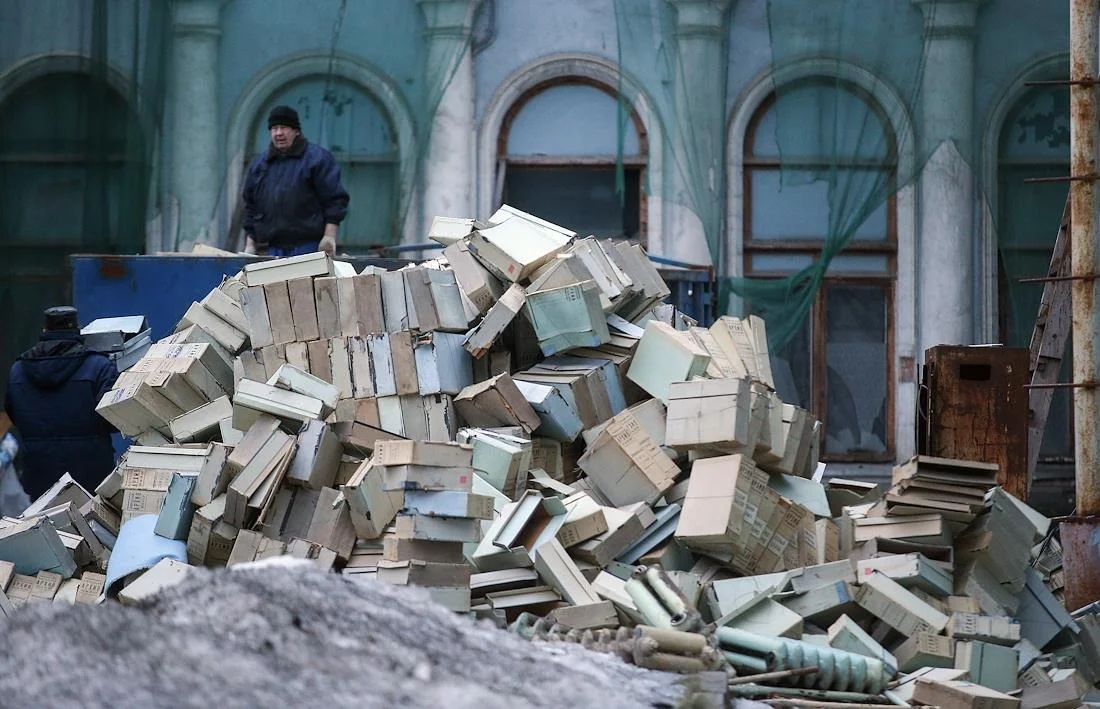
When in 2016 the attack on the “memorial” began, about the same people who are now tearing or getting signs - the same type of people, I think. And then in 2016 an attack was attacked on the participants of the school competition, right on schoolchildren and teachers, it was also some Rubicon. In the very center of Moscow, at the entrance to the Cinema House. Each time, at these awarding ceremony, we invited the winners of the school competition to Moscow. And it was always such a solemn action. And there were these people who were ready to pour paint, with portraits of Stalin and green in their hands, tried to pour the teachers entering the house of the movie, shouted: “Traitors!”, “Western litter!” - and so on. This seemed completely wild, unusable for schoolchildren and teachers from the province. Then this continued until the liquidation of the Memorial. And already in the end it acquired pogrom forms when dozens of people broke into the building of the Memorial.
Such people are always located. It is important here how much society is opposed to this. Because if it were some single, as they say, excesses that would cause general outrage, then I am absolutely sure that they would stop this activity. In Moscow there are cameras literally on every corner, and not only in Moscow. ”
"Protect yourself"
The most interesting thing is that now two processes are going on in parallel: the process of removing memorial tablets and the process of their installation in the capital and in other Russian cities.
Директор фонда «Последний адрес» Наталья Тюрина считает, что нет какого-то спущенного сверху распоряжения о том, что таблички «Последнего адреса» надо снимать. Разные власти действуют самостоятельно.
«Я так понимаю, что проект «Последний адрес» все-таки набирает обороты и о нем становится известно ровно по тому, как снимают таблички, — говорит Тюрина. — Да, сейчас много идет разговоров, и скорее здесь каждая структура власти пытается обезопасить себя и проявляет инициативу. То есть лишь бы снять, собственно, и чтобы было спокойно».
Кажется, именно это произошло в случае исчезновения мемориальной таблички моего деда.
В середине апреля 2023 года ко мне обратилась Наталья Юрьевна Кайкова, заместитель директора Всероссийского музея декоративно-прикладного искусства, в тот момент она замещала директора. Кайкова сообщила, что в музей пришло письмо из Министерства культуры, срочно просили прислать документы о мемориальной табличке Григория Фридлянда.
«В Министерство культуры с запросом обратился Бекетов Игорь Владимирович, Гоша Тарасевич, из организации SERB ( националистическая пророссийская политическая группа, известная своими провокациями против российской оппозиции. — Ред. ), — сообщила мне заместитель директора музея. — Он интересуется, на каком основании эта табличка висит на здании памятника архитектуры, которым является здание нашего музея. Прошло семь лет с тех пор, как мы установили этот мемориальный знак. Когда мы выдавали свое согласие, мы знали, какой это уважаемый человек — Григорий Самойлович Фридлянд. Все это я напишу в Министерство культуры, но нужен документ, разрешающий эту установку. А министерство ответит Тарасевичу».
Меня тогда поразило, что Министерство культуры так спешит отвечать Тарасевичу…
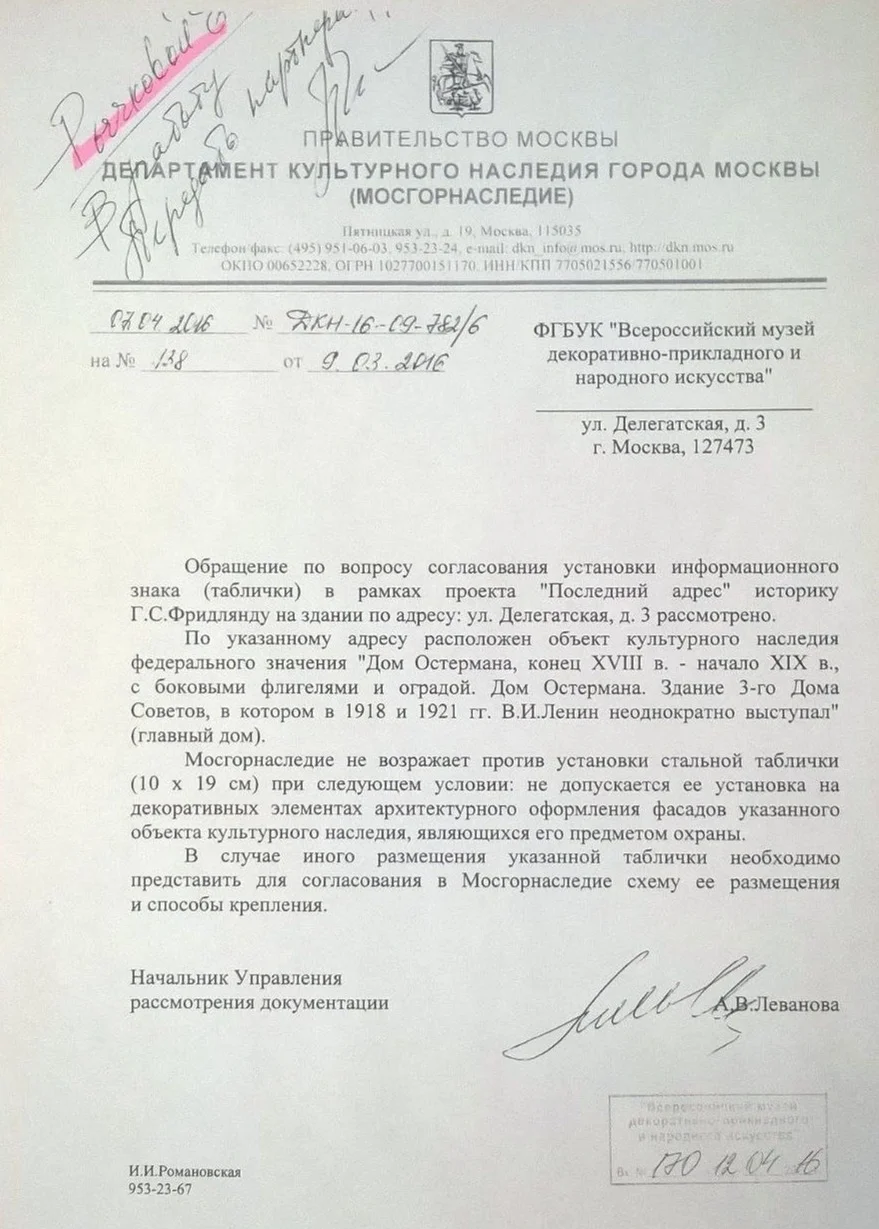
Я очень быстро нашла разрешительный документ из Департамента культурного наследия города Москвы. И казалось, инцидент был исчерпан.
Прошел почти год, и вот, проезжая в конце марта 2024 года мимо дедушкиного дома, я, как всегда, искала глазами его мемориальную табличку. И увидела, что ее нет, а стена замазана свежей белой краской.
Я сразу позвонила Наталье Кайковой, которая тогда так пыталась сохранить табличку и с уважением отзывалась о моем деде. На этот раз она была холодна и сказала, что о снятии таблички ничего не знает, а на работу ходит другой дорогой, не с Садового кольца.
«Не быть стражем таблички»
Я бросилась звонить директору музея Елене Титовой, жене Бориса Титова, совсем недавно назначенного спецпредставителем президента России по связям с международными организациями. Елена Титова была неуловима. Я отправила ей вопросы, попросив об интервью для «Новой газеты», хотела поговорить о музее и о том, куда пропала мемориальная табличка моего деда.
Специалисты по связям с общественностью, которым поручили со мной общаться вместо директора, три недели морочили мне голову, обещая, что скоро пришлют письменные ответы на мои вопросы, а потом вообще пропали. Пришлось мне позвонить напрямую самой Елене Викторовне. Не для интервью. А для понимания.
Мне стало понятно, что директор ничего не знает о судьбе таблички. Елена Титова заверила меня, что, вероятно, табличку сняли рабочие, которые делали ремонт. И вообще руководство музея никогда не брало на себя функцию «быть стражем таблички».
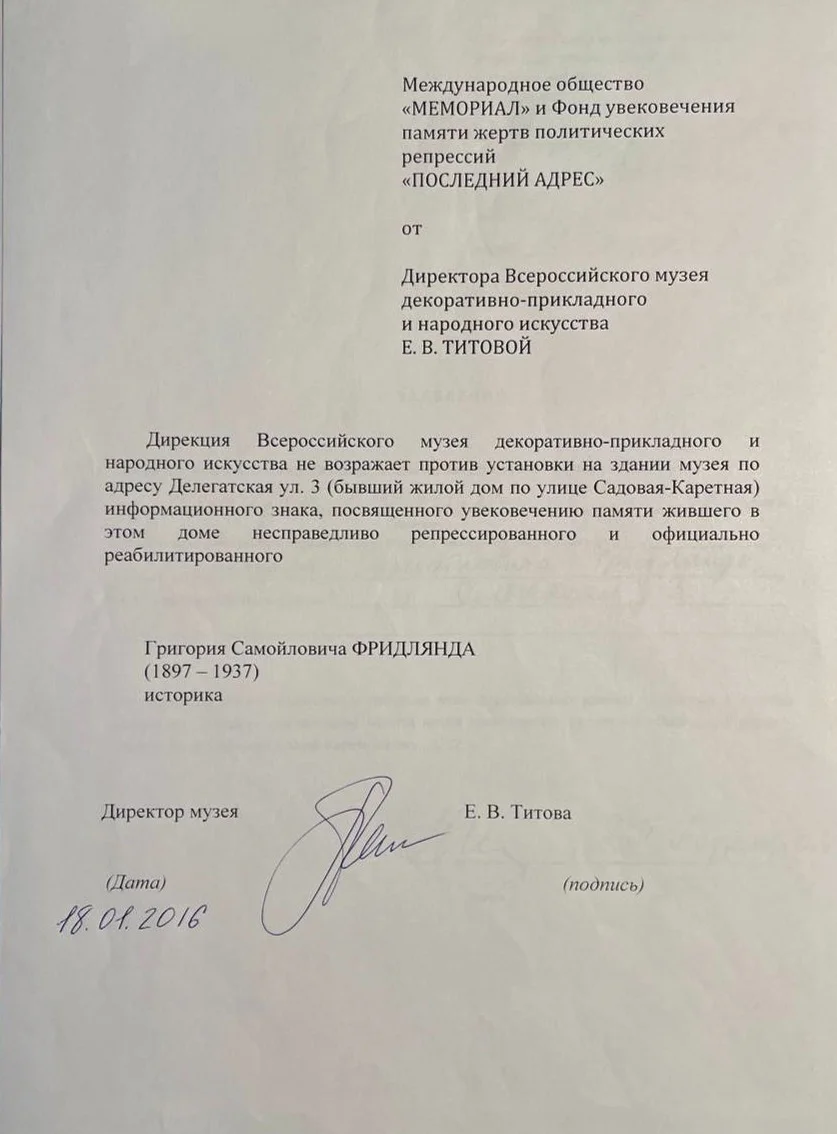
Честно говоря, я успокоилась. Я поняла, что раз директор музея ничего не знает, значит, я и «Последний адрес» можем поправить это недоразумение. Мы можем заново повесить мемориальную табличку. Ведь она была установлена фондом «Последний адрес», который работает в рамках государственной концепции по увековечению памяти жертв политических репрессий, принятой в 2016 году на заседании рабочей группы при президенте России. То есть легальным фондом. Кроме того, у нас есть все разрешительные документы, а именно — разрешение из Департамента культурного наследия города Москвы.
И это разрешение никто не отзывал.
Мне кажется, будет правильно, устранив недоразумение, восстановить равновесие. Вернуть память о Григории Фридлянде, первом декане исторического факультета МГУ, расстрелянном в 1937 году по сфальсифицированному обвинению и реабилитированном в 1956 году. Память о моем деде.
Я совсем забыла сказать Елене Викторовне Титовой, что лучше, если на флигеле музея будет висеть эта маленькая стальная табличка, ранее провисевшая там восемь лет, нежели самодельная табличка: «На этом месте была репрессирована табличка человека, который был репрессирован здесь».
Именно такие таблички появились на нескольких домах в Санкт-Петербурге. Например, на 14-й линии Васильевского острова, где уже восемь раз срывали копии табличек «Последнего адреса», установленные Константину Благово, расстрелянному в 1920 году.
Эти новые таблички, никак официально не связанные с «Последним адресом», — еще одна истинно народная инициатива. Это значит, что символически проект «Последний адрес» продолжает жить своей жизнью.
Несмотря на чьи-то страхи и желание себя обезопасить. Вопреки конъюнктуре и изменившемуся климату в стране. Кому, как не музейщикам, знать и понимать, что такое история, и помнить про траву, прорастающую из-под асфальта, когда кажется, что она уже вся утрамбована…