
Translated material
Georgian turn from the Gate of Europe
What are the prospects of the country, which has been striving for the Western world for several decades, and now its power has changed its mind
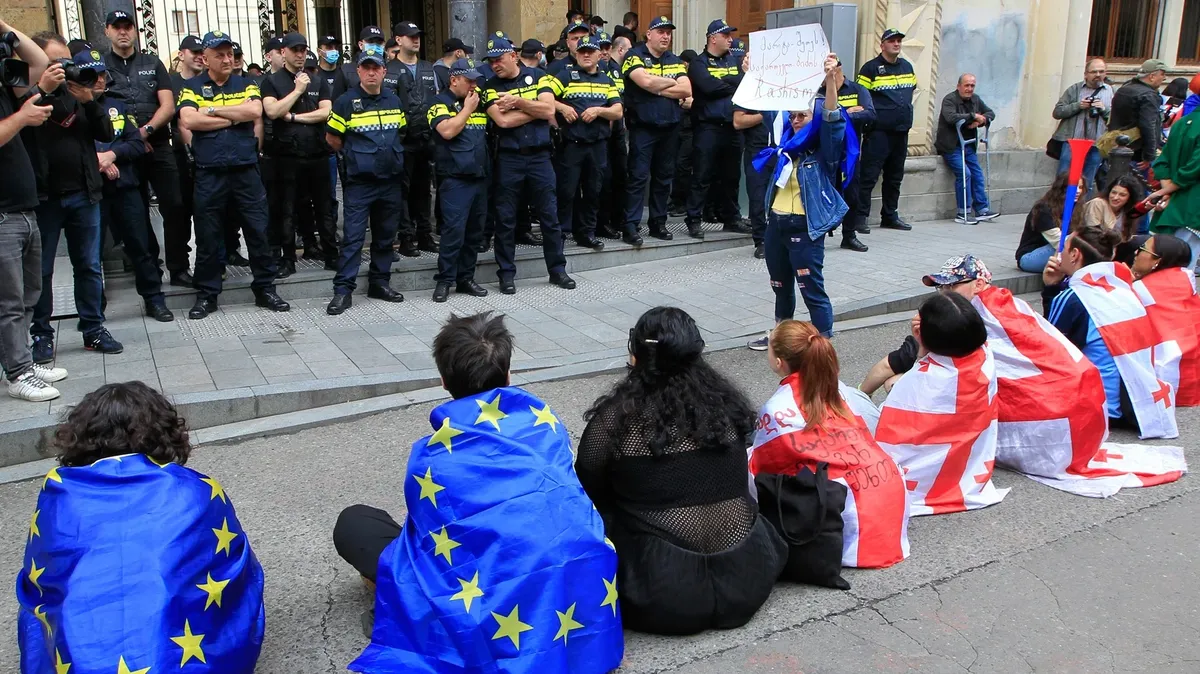
Photo: AP / TASS
The process of Georgian entry into the EU is suspended for a certain time: at least to the parliamentary elections on October 26. But how clearly and clearly makes Brussels understand in the person of their plenipotentiaries if, during those elections, Georgians re -elect the current “party in power”, the “Georgian Dream” of Bidzina Ivanishvili, who has irrevocably spoiled relations with the West, then Georgia’s centuries -old dream of integration into Europe and all the efforts of Georgian politicians over the past 30 years may come to nerd - “dream of a dream of a dream of Europe ”will finally turn into a historical myth, and the Caucasian country will return to“ its own circles ” - to the orbit of Russia.
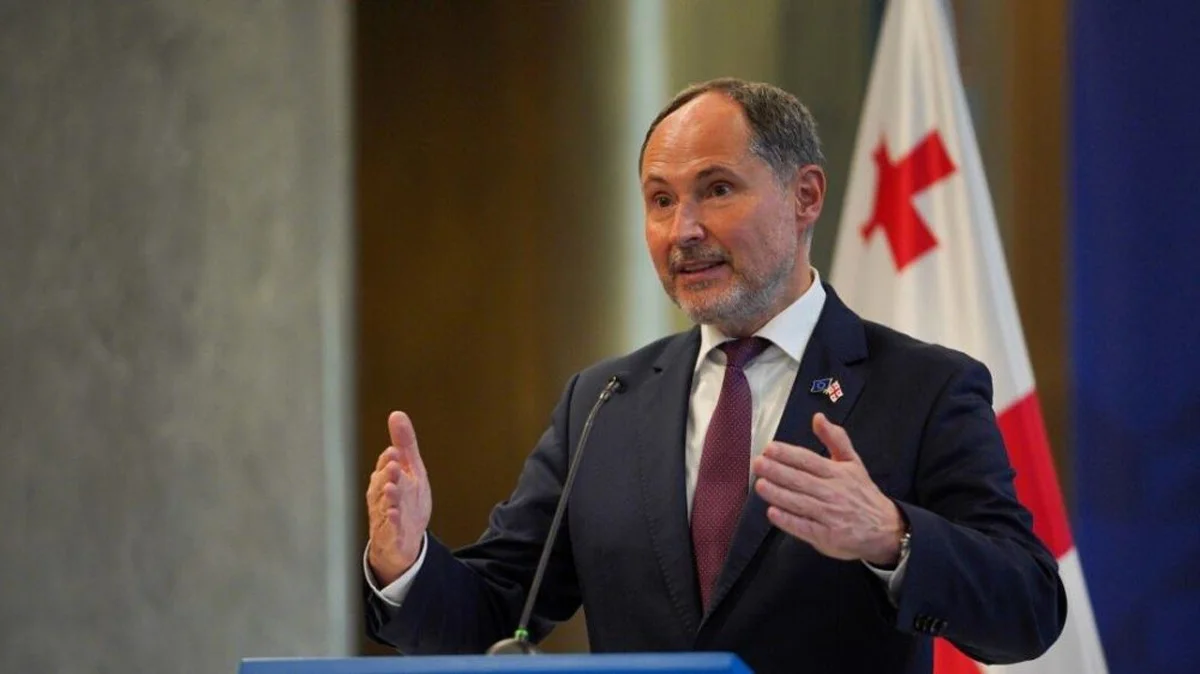
The EU Ambassador to Georgia, an experienced and high -class Polish diplomat Pavel Gerychinsky, was more so harsh and concern in estimates. Literally on the verge of European diplomatic rhetoric. Speaking “on the fields” of the Tbilisi International Conference “EU Expansion is the geopolitical necessity and subsequent steps for the Candidate states”, Gerchinsky began with the message that the EU leaders during the last meeting of the European Council on June 27 “decided to freeze the process of Georgia’s entry into the EU”.
It is interesting that according to the results of that meeting of the heads of state and governments of the European Union, the problems of Georgia in the final communique were not formulated so clearly and unequivocally, but Pavel Gerthinsky, apparently, received the mandate to make complete clarity, dotting all points over I. “For our leaders, the aspirations of the authorities of Georgia are incomprehensible,” the Polish diplomat continued to develop the thought. “The Law“ On the Transparency of Foreign Infant ”is a clear departure from the fulfillment of nine conditions for the integration of Georgia into the EU,” said Mr. Gergchinsky, calling the suspension of the process of integration of Georgia “sad” and “annoying”.
According to him, integration can be renewed in the fall, but only on condition that as a result of the parliamentary elections on October 26, Georgia will have a “new government”, and this government “will again begin work on rapprochement with the EU”.
Having voiced the tough ultimatum (in fact, this is precisely the ultimatum, not to the authorities, but to the Society itself), the Herchinsky ambassador explained in detail why the EU was “forced” to resort to the method of relations with a partner who has the status of an EU members so unusual for the European style.
If we translate the arguments of Gerchinsky from the “diplomatic language”, then Brussels simply could no longer endure the “art” of the Georgian authorities not only in terms of their specific actions, but also rhetoric. This is the adoption of the law “On Transparency of Foreign Infant”, in fact, an analogue of the Russian law on “foreign agents”, in addition, the repeatedly sounded accusations of the leaders of the ruling party “Georgian Dream” (GM), including the founder of the party, billionaire Bidzina Ivanishvili, as well as the Prime Minister and the speaker of the parliament, in malicious attempts of “organizing the organization in Georgia of the state Revolution ”with the help of funds financed by the EU, as well as in“ the desire to draw Georgia into the war against Russia ”, opening the“ Second Front against Moscow ”in the Caucasus.
The “crown” was the statement of Prime Minister Irakli Kobahidze that the European Commissioner Oliver Varheli allegedly threatened him with the “fate of the Prime Minister of Slovakia, which was an armed attack” in the event of the adoption of the Law “On Ino-Agents”.
Nevertheless, the last straw, apparently, overwhelmed the Brussels “cup of patience”, was not even this unheard of accusation, but an unprecedented in its ... “courage” statement by the same Prime Minister Kobahidze that
The adoption of the notorious “law” not only did not reduce the chances of Georgia to join the EU, but, on the contrary, increased the country's chances to find full membership in the European Union by 2030, “while maintaining national dignity, and not jumping on one leg before Brussels”.
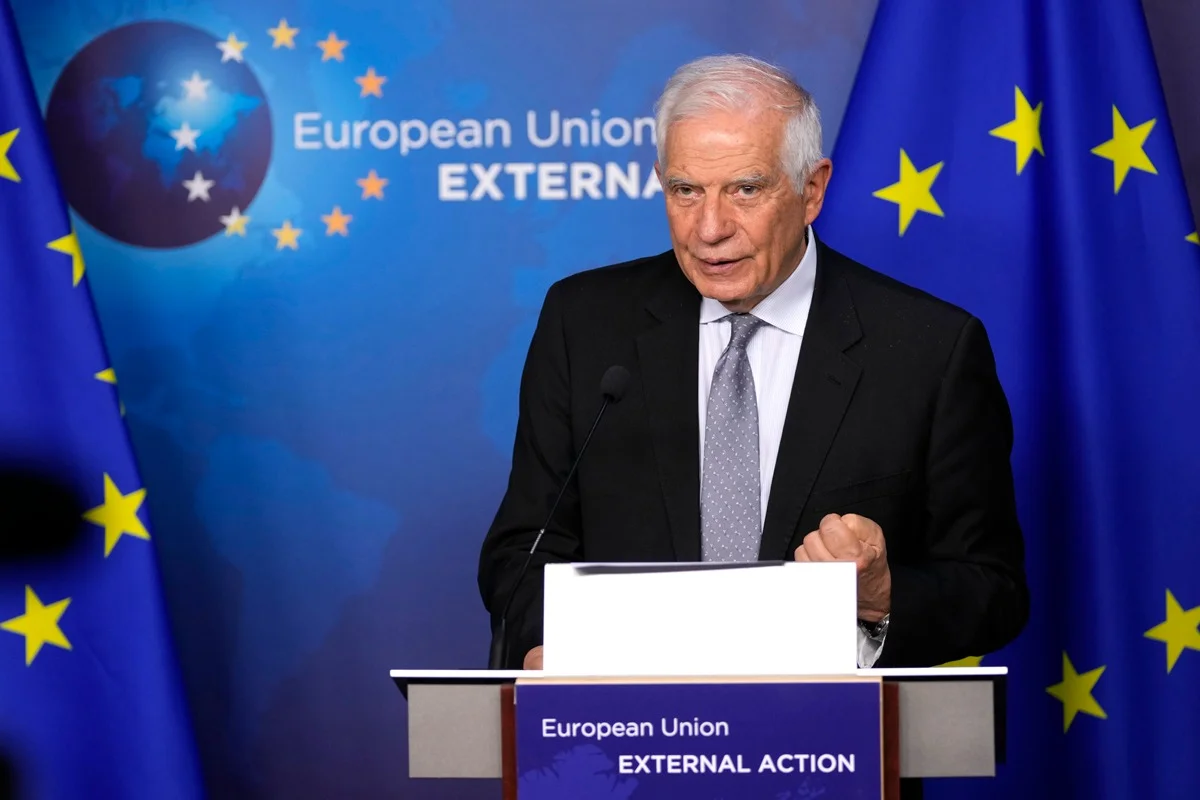
After this tirade, even always the soft and calm Josep Borrel, the Supreme EU representative on foreign policy and security issues, almost switched to Ryk: “No and no, this law does not bring closer, but moves Georgia from the EU,” the Spaniard almost exclaiming at the briefing, accompanying the phrase unusual for him with his “chopped gesture” with his hand.
Dischargeable Caucasian child
Modern Europe, of course, was not by itself, if, with all this, she immediately stopped “reigning” with the obscure to her, difficult to drink “Caucasian child”. And the point is not even that Brussels still does not finally “seal the gate” in front of Georgia, postponing the final decisions for the period after the parliamentary elections on October 26, and in the reluctance to punish the Georgian society itself, while maintaining a chance to form. The European Council, contrary to expectations, did not cancel the visa -free regime for Georgian citizens, leaving them privileges and happiness to freely go to the states of the Schengen agreement.
This privilege has made about 300,000 Georgians since 2017 (about 7% of the entire nation), who safely left for Europe, who found work there and helping families.
All attempts by the leading powers (primarily the Federal Republic of France, the Netherlands) to achieve the suspension of “visa-free” due to the unprecedented influx of Georgian illegal emigrants and asylum suppliers, came across a strict opposition to European officials, including the same Bo-Aggrait and Varheli, who called for “European tolerance” in relation to Georgia and its many-majorfulness people.
However, the Europeans have not had the slightest motivation and opportunity to endure what has been happening recently:
If on October 26, Georgian voters confirm the powers of the current ruling party, thereby agreeing with its policy in relation to the EU, then the European Gate for Georgia will be completely closed.
Perhaps forever.
And if we take into account that, according to all public opinion polls, in the conditions of the traditional “raving” in a miserable and unhealthy “political spectrum” of Georgia, GM retains a chance for an unconditional victory, the country undoubtedly approaches the sad milestone of its own centuries -old history, which goes out in its significance far beyond the current discourse between Tbilisi and Brussels.
The child of the Great Byzantium
“The desire to Europe”, “Return to Europe” (“back to their home - Europe”) - the main “mobilizing mythologems” of Georgian history since May 1453, when the Turkish army of the Sultan Mehmed II won Constantinople, and the Great Byzantium, under which Georgia has developed since the 9th century, ceased to exist.
Since then, “European orientation” has been considered an original “Georgian dream”, but-under the conditions of the impossibility of overcoming huge geopolitical and geographical barriers-first manifested itself in an effort to get closer to the Great European Power, the Moscow Kingdom, later by the Russian Empire, then finally embodied in the “Georgian Democratic Republic” based on then the then dominant social-democratic values. Until the destruction of this republic, the “Russian Bolsheviks” - Joseph Dzhugashvili and Sergo Ordzhonikidze - according to the results of the military aggression of February 1921.
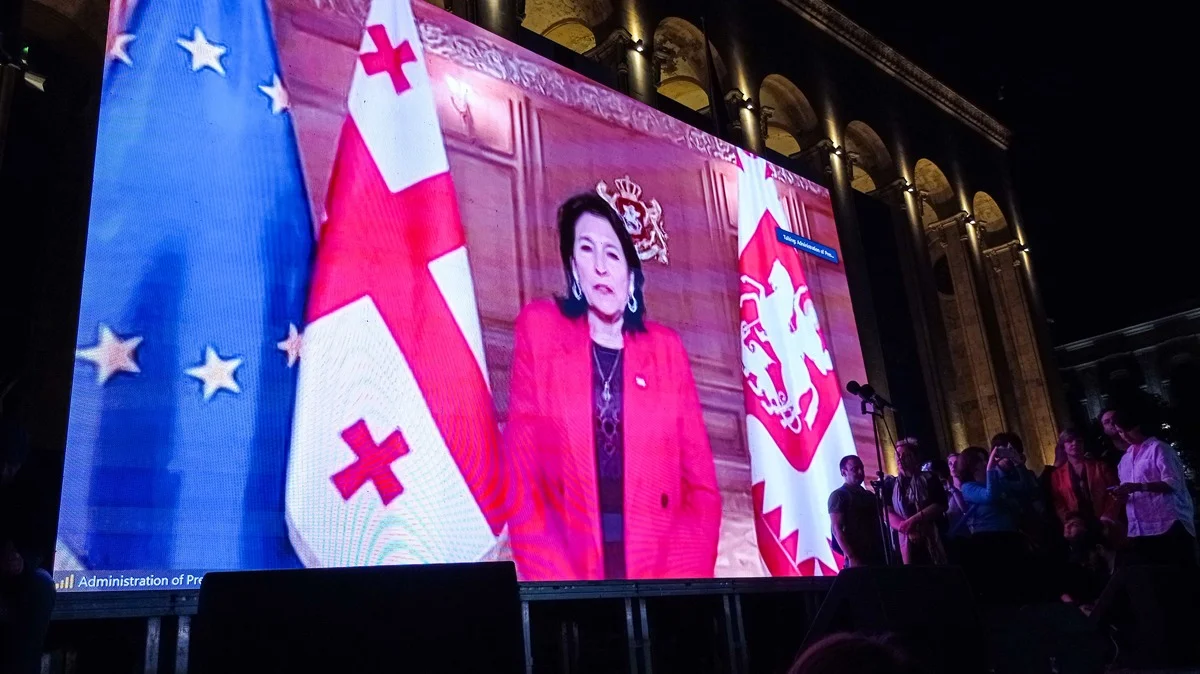
The Georgian elites of that time escaped through Batumi to France, where they rest in the cemetery near the town of Leville near Paris. The descendant of that emigration - the current president of Georgia, the career French diplomat Salome Zurabishvili - is desperately fighting for the preservation of the "centuries -old dream" of Georgia, but according to the Constitution, it has only ceremonial powers.
Visit to Versailles and funeral
For centuries, the Georgian kingdoms did not stop attempts to establish allied relations with the "nucleus of Europe." The same France.
An example of this is a visit to Paris in 1714 of the Georgian enlightener Sulkhan Saba Orbeliani and his meeting in Versailles with Louis XIV.
The Sun King was sad, feeling the approach of death. He told the Georgian messenger that he was “attacked by old age” and that he “hardly manages to cope with the weight of seventy years”, to which Prince Orbeliani answered in the best traditions of Courtois -European: “Your Majesty! You wear your years so gracefully that everyone would like to survive until your age. ”
The response of the Georgian diplomat was liked not only by Louis Bourbon, but also by the court of the great king with their sophisticated diplomatic style.
However, France, of course, could not help with any Georgia suffering from constant raids of hostile highlanders and other neighbors.
As the Georgian poet of the 20th century Machavariani wrote in the poem “Saba”: “The Cartley Ambassador carried out the same thing from the famous Versailles as he entered there.”
Immediately after an unsuccessful and unsuccessful prayer for help to the Bourbons, Tsar Kartli (Eastern Georgia) Vaktang VI turned to the Romanovs. And his ambassador and teacher Sulkhan Saba Orbeliani was buried in Moscow - in the Vsesvyatsky.
After the historical “unconsciousness” of the communist regime, which was extending from 1921 before the declaration of independence in 1991, the idea of “home to Europe” lit up with renewed vigor, but the Georgian elites, including politicians, were hardly understood that 500 years - too many even many for civilizational and geopolitical identity.
European path of Georgia
Recently, the Georgian journalist Paata Natsvvvlishvili recalled: in 1992, after the collapse of the USSR, when he was in Europe as part of the official delegation, achieving Georgian membership in the European Football Union, it was worth it to explain to the Europeans why Georgia, the country of the Southern Caucasus, should be accepted in UEFA, and not in the Asia Confederation of Football.
Many European officials shrugged and referred to the conclusion of the authoritative British Geographical Society, according to which the borders of Europe are held in the east along the Ural ridge, and in the south - along the main Caucasian ridge.
The senile civil war, which was raging at that time in Georgia and cynically, brutally, but rightly called in the West, also contributed to the quite European “shrug” and “cold caution” then; As well as two wild ethnopolitical conflicts in the territory of the former Georgian SSR - in South Ossetia and Abkhazia.
In those days, the EU was not yet an institutionally established association, and what kind of considerations they expressed Paris, Berlin and London with their decisive word in Europe will agree to include Georgia in European integration systems, now it is difficult to say. They say that the former USSR Minister of Foreign Affairs Eduard Shevardnadze, popular in Europe and especially Germany for contribution to the “destruction of the Berlin Wall” and the end of the Cold War, played his role.
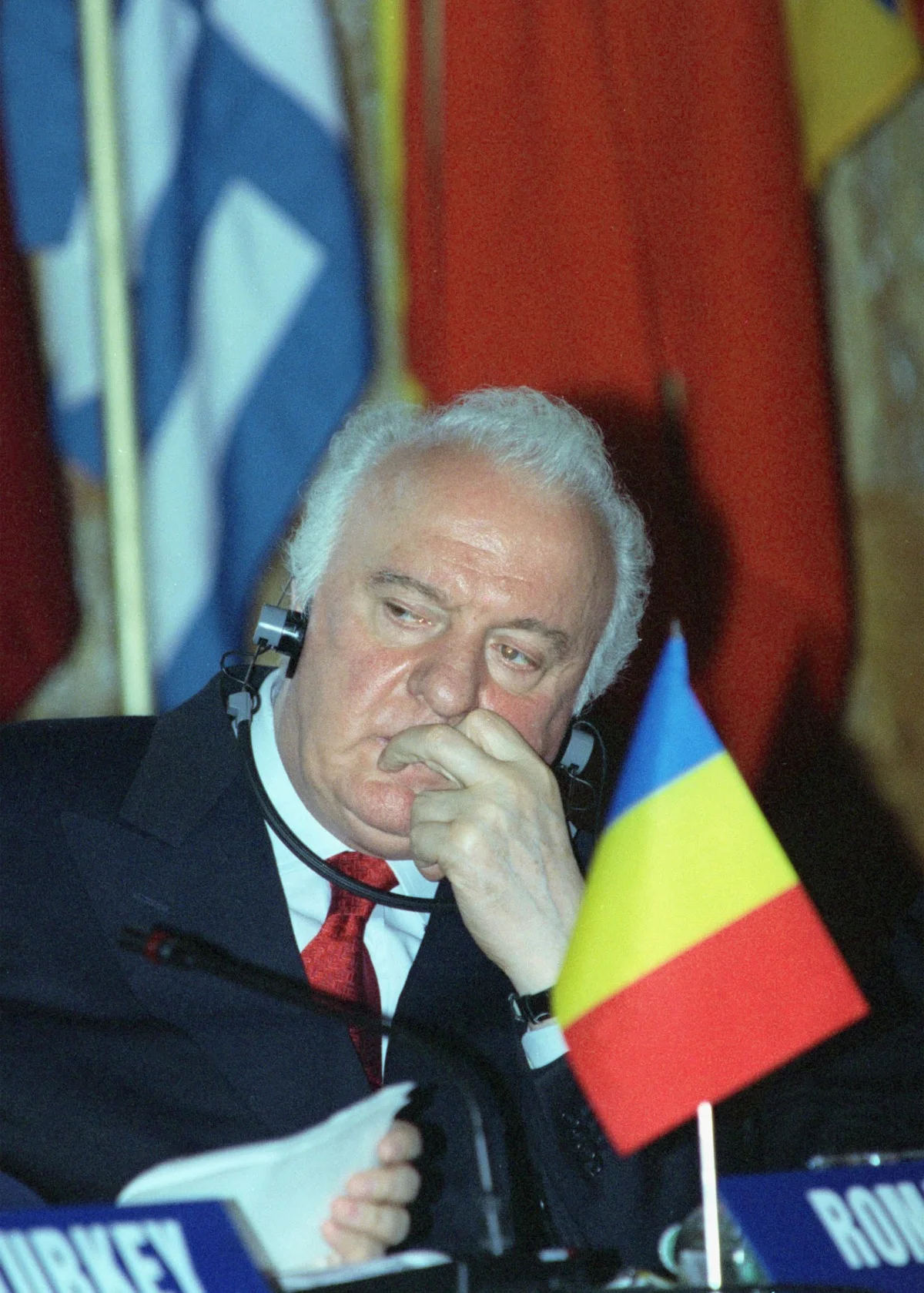
One way or another, but Georgia stood on the “European path”, and President Shevardnadze declared in 1996: “The European Union will be the last quiet harbor for the state ship of Georgia after the stormy centuries of history.”
"Extreme bastion of European civilization"
In 1999, speaking in Strasbourg at the ceremony of Georgia in the Council of Europe, Shevardnadze said that his country for centuries was "the last, extreme bastion of Europe." Bearing that it was to the east of Georgia that Asia began from the 12th century, that is, the era of the Templars and Richard the Lion's Heart, when, according to legend, the Georgian troops had the right to enter the Kingdom of Jerusalem with expanded military banners as the closest allies of the European crusaders.
By the way, all of them, including the British, Germans and Italians, in Georgia in those days were called "Frenchmen."
Many centuries later, in January 2004, immediately after the “Rose Revolution”, which overthrew President Shevardnadze, the leader of that revolution (the fourth president of Georgia-36-year-old Mikhail Saakashvili) first raised the EU flag on the flagpole near the parliament building, thereby manifesting the main direction of his foreign policy: the entry into the EU and NATO.
Saakashvili’s supporters are characterized by an exaggeration of his role both in Georgia itself and in the region, but if Misha’s stormy ten -year -old reign is completely objectively and impartially, it is impossible not to notice the strong chain of events that ultimately led to the acceleration of the process of converging Georgia (and not only Georgia) with the EU. Immediately after the “five -day war” of 2008, the European Union, shocked by the actions of the Russian army in an independent post -Soviet state, initiated the Eastern Partnership program for the republics of the former USSR. Over time, another, far -reaching project was “hatched” from this program - conclusion with Georgia, Ukraine and the Moldova Association with the EU. And Kyiv’s attempt to issue an “association” of Ukraine with the European Union caused a strict rejection of Moscow. As a result: the refusal of President Yanukovych from signing the document, violent events in Kyiv, Crimea, many years of confrontation in the Donbass and finally on February 24, 2022.
At the same time, Georgia, which, under Saakashvili, became the “source” of these processes and the “first link” of the mentioned “chain”, took advantage of the fact that she changed the authorities in 2012, “reassuring” the Moscow, but really continued to go along the same “path”:
In 2014-2015, Tbilisi signed with Brussels EuroAssociation, as well as an agreement on a deep and comprehensive free trade zone.
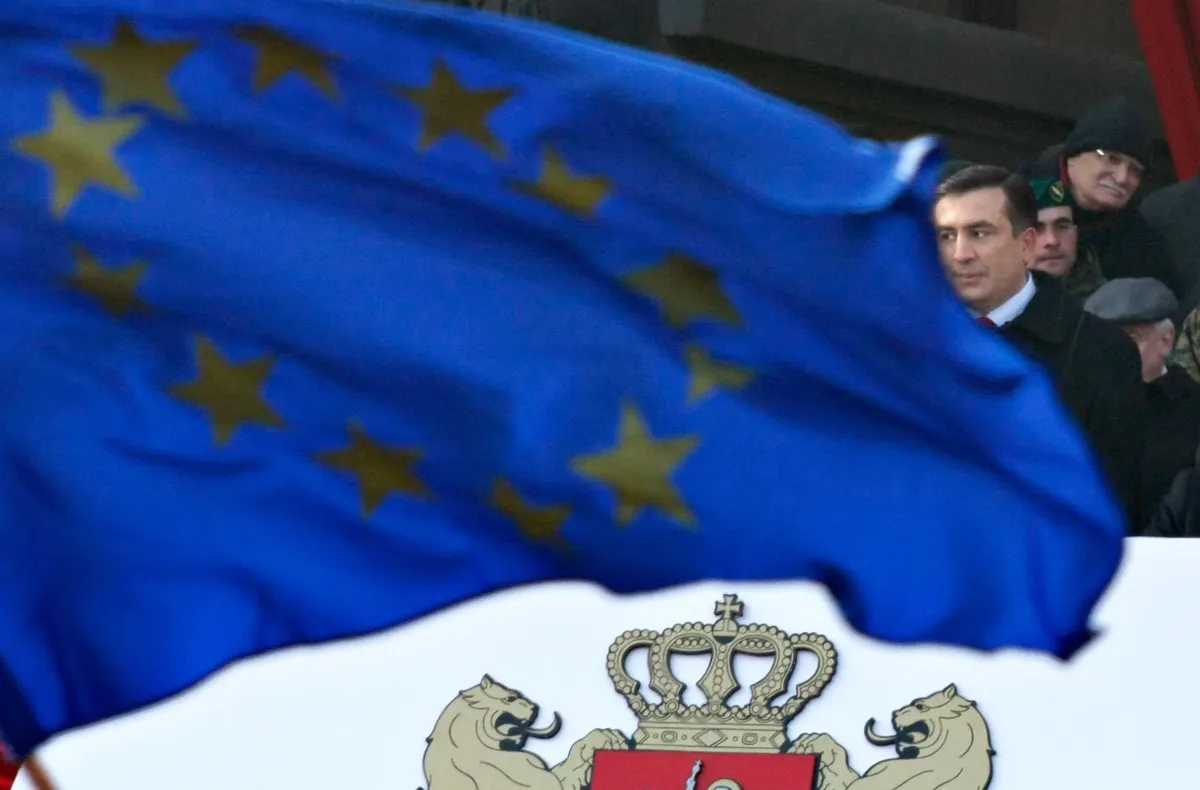
In 2017, the EU introduced with Georgia the “visa -free regime” - it was the highest point of European integration of the Caucasian country in terms of the degree of influence on the life of ordinary citizens who got the opportunity to go without visas to the countries of the Schengen agreement. In this sense, even the official status of a candidate for the EU, which the country received in 2023, cannot be compared with the “visa -free”.
How Georgia has "broken"
What has “broken” after? The understanding (if it existed at all) was “broken” that there is no and cannot be democracy without the replacement of power.
"Fateful elections" are approaching on October 26. The leader of the opposition, Mikhail Saakashvili, is already, in fact, for the third year, under house arrest in the Vivamedi clinic and daily acts with statements about readiness to change power. The non -governmental sector, traditionally influential, quite highly professional and very active since the time of the “Revolution of Roses”, openly lobbles changes, hinting at the possibility of a new revolution in the event of a stubborn refusal of the ruling party to go to the opposition.
In the summer of 2023, the coalition of the most influential non -governmental organizations even presented an ultimatum to the government during the mass manifestation of the protest, demanding its resignation. The NGOs then presented at a long -term rally the “Provisional Technical Government” to the new democratic elections.
And although all these “public exercises” were only a demonstration and manifestation of the attitude of civil society to the “fermented power”, the ruling party decided to reanimate the “Russian law” on “foreign agents” in order to “curb Western agents”.
Thus, if in October the “Georgian Dream” retains in its hands the leverage of the country, and the opposition, along with the “non -governmental sector”, will be defeated, Georgia will finally stand on another, not at all a European path - towards the “sovereign democracy” of the Russian type,
Thus, turning into the only example in the post -Soviet space and in Eastern Europe, when the state, which went towards the EU and NATO for three decades after gaining independence, suddenly turns 180 degrees back.
Moreover, in the fall, it is impossible to exclude the most “traumatic” from the point of view of the independence and statehood of Georgia. The option of developing events: the other day the Russian foreign intelligence service with “tender care for Georgia” said: the West supposedly prepares a violent change in power in the October elections.
Thus, Moscow did not exclude its intervention in the region very important for it - Georgia as a key geographical point of “Southern Semey of Russia” since the 19th century, the era of the Russian Empire and governors in the Caucasus.
George Pagawa, Tbilisi