
Translated material
"After the prison, I became bolder"
Director-discident Jafar Panahi for the first time in fifteen years was able to leave Iran. At a meeting with spectators in Yerevan, he told how he continued to make a movie despite the prohibitions of the authorities
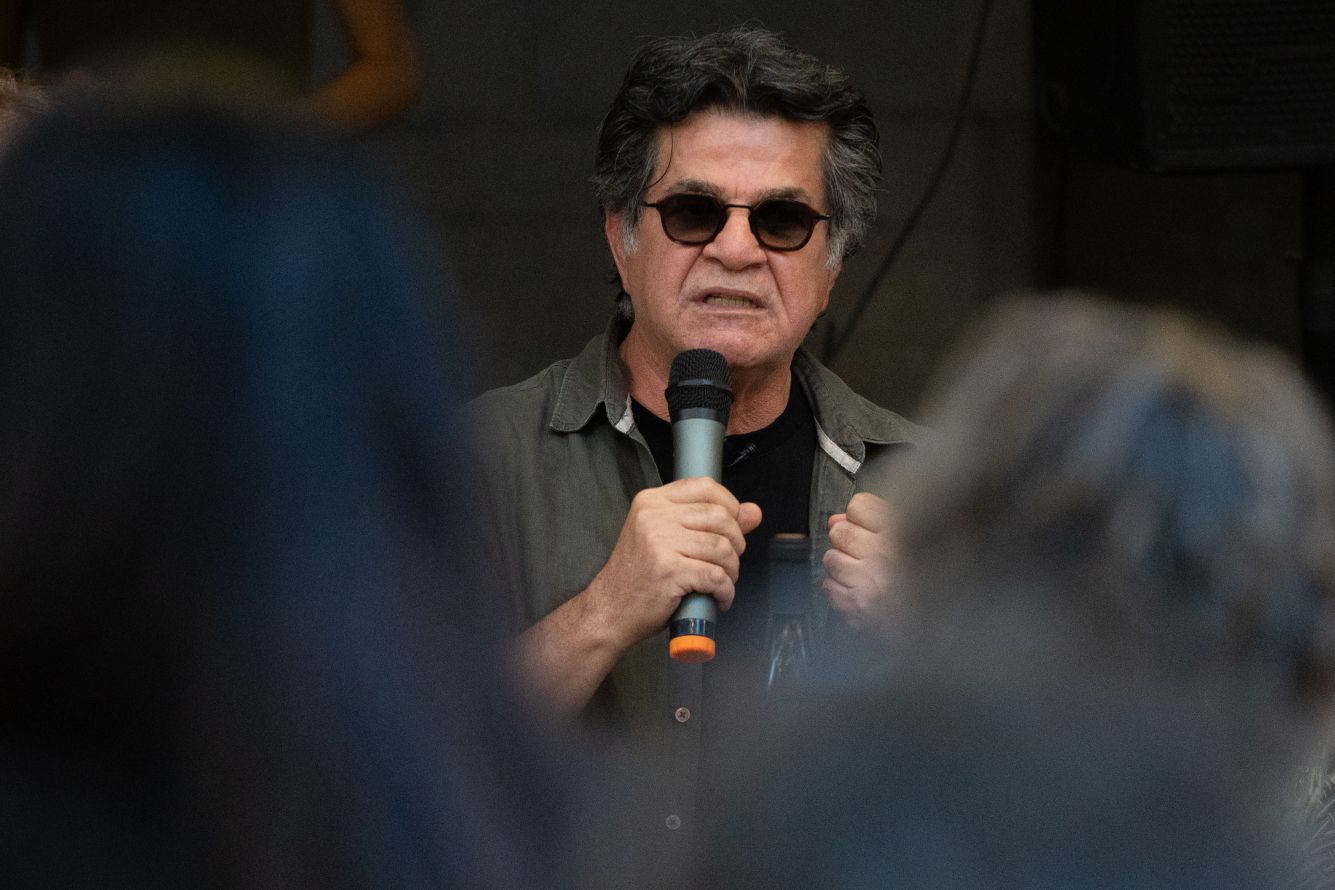
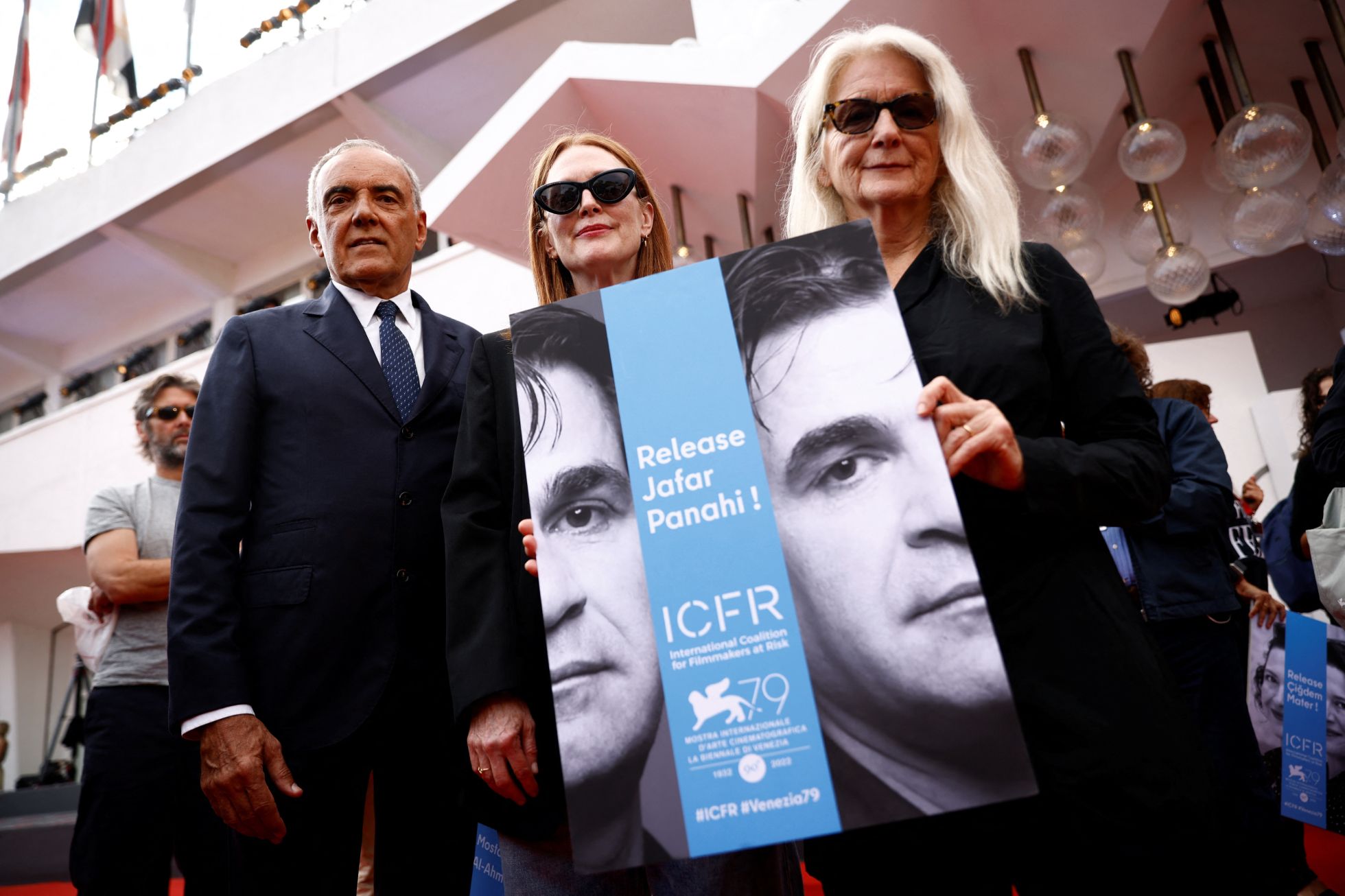
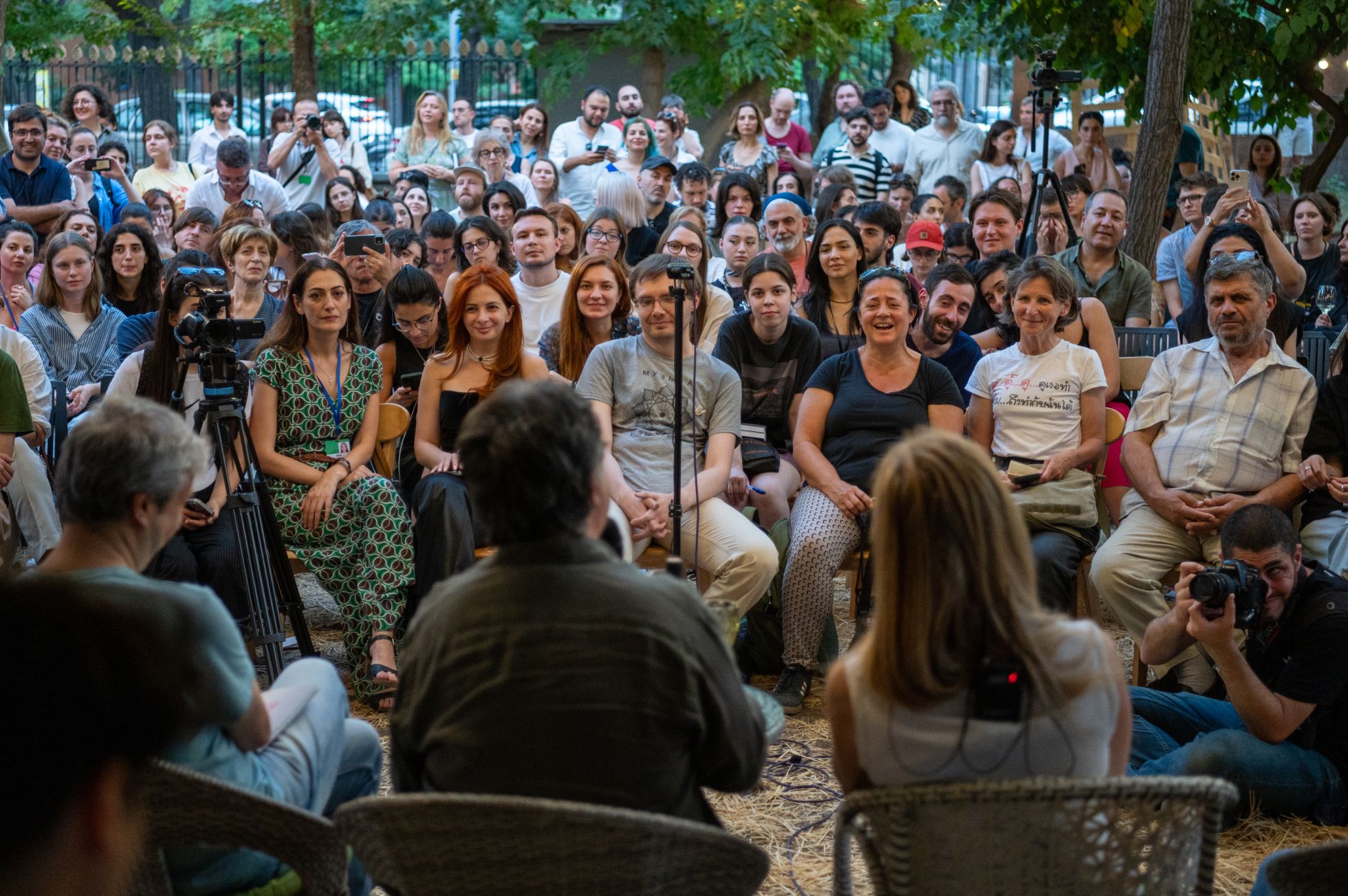
In 2010, Iranian director Jafar Panahi, the main prizes of Venice, Berlin, Locarno and Cannes, was accused of “anti -government activity” and sentenced to six years in prison. Although the deadline was replaced by house arrest, Iranz was forbidden to make films, leave the country and give interviews. Despite this, he secretly shot five more paintings that later participated in international festivals (the first one that appeared after the ban was called “This is not a film”). In 2022, Panahs were condemned again, he left prison at the beginning of 2023-and continued to shoot. In Yerevan, at the Golden Apricot festival, Panahi’s paintings were shown this year, and the director himself was awarded the honorary prize - for this, for the first time he went beyond the limits of Iran. Continuing to formally observe the ban on an interview with the media, Panahi agreed to meet with the audience and answer their questions. The moderator of the meeting was the observer of Medusa Anton Dolin. We give the decoding of this conversation.
Anton Dolin: A question that can sound formally in other cases in your own has a special weight: what makes you continue to make a movie? Against you, the entire powerful repressive mechanism of the state, films do not go to Iranian rental, the risk of repression is very large. You were in prison twice . Nevertheless, you continue to work.
Jafar Panahi: Good evening. It’s so difficult for me to talk with the public after a fifteen -year break ... Sometimes I think that my sentence was not such a bad idea. The director’s work is to make a movie, not explain it. I say everything is really important for my films, nothing needs to be added to this. But I am very glad to meet with the public, my special gratitude to the organizers of the festival and Anton Valley, who took on the work of writing a book about my paintings.
Why make a movie? Only your view of the world is important. What do you want from cinema? Do you need a large audience or just the one that will follow you? There are two types of cinema: where the director follows the public and where the audience goes to the director. 95% of the films belongs to the first group. This applies equally to Hollywood and Bollywood.
But there are another 5%that I belong to. The directors of these paintings say: "I see the world in this way and I want you to understand and accept this." For me, the movie is sacred that is why. For the sake of this principle, I am ready to sacrifice anything. Overcome any obstacles to express yourself. I am not ashamed of a single film that shot, and they do not stop me with difficulty.
Dolin: In today's Russia, it is believed that in the context of strict censorship and a totalitarian state it is impossible to make an independent movie. You can write a poem or a novel, you can still sing a song or create a picturesque work, but the movie is made too long and too expensive, it requires the involvement of a large number of people. But you succeed! How?
Panahi: From the side it seems that this is almost unprotiped. But when looking from the inside, you always find a way to survive. Of course, when you look at people who are under bombing or have become victims of a natural cataclysm, it seems that they need to be saved, to run. After all, it is impossible to exist where your life is in danger. However, many learn to survive even in such circumstances. The filmmaker in conditions of censorship and dictatorship in the same way searches and finds ways to continue to do his own business.
Of course, the movie is not easy. You need to somehow collect the budget. I am quite famous, and the producers from around the world offer me to make the next film - however, I refuse until the work on the picture is completed. To make a film, I risk my money, and sometimes - life. Therefore, I do not want to involve an excessive number of third -party people in this. I do not want to answer to anyone except myself. The film should be such that I would like to put my name in the credits. So no producers from the outside.
My film crew is very small, less than that of the most chamber independent paintings. But I am surrounded by friends whose motivation is not money. For example, the operator of my three last paintings is Amin Jafari, who agrees to work for a very modest fee. Most actors are removed from me for free. When you collect a group of like -minded people for work, the film becomes your common work.
Amin Jafari: This is not true! Mr. Panahi is unfair to himself. He pays me more than enough. Of course, we don’t talk about money, but we don’t have to complain. In general, we have many beautiful operators in Iran, and everyone dreams of working with Panahi. This competition is not so easy to win, but I was lucky. It is impossible to imagine that Panahi will invite you to shoot his picture, and you will refuse!
Dolin: So what helps to finance the shooting? As far as I understand, Crowdfounding is impossible , and do you refuse producers from the outside?
Panahi: My budget is tiny, but my films are quite successfully rolled around the world. Earned money is enough to shoot the next picture. So far, this system works. It is not so complicated.
Dolin: Starting with your work “This is not a film”, the first after the ban, you play in your own paintings. What is the reason for this decision?
Panahi: Before the arrest and sentence, I myself was part of society, could observe it and reflect it in my cinema. But after I was separated from society and forcedly plunged into my inner world. I could not help but see the hero of my next paintings. I was told that I no longer have the right to make films, and I said to myself: “If so, I will not make a movie!” It began with the fact that I was locked at home , a friend came to me, we began to shoot each other. So was born "This is not a film."
I had another strong motive. I work a lot with young filmmakers, students, and they regularly complain that in the current circumstances they cannot make films. I need to prove to them that the impossible is possible. “This is not a film” - my proof. “You must find a way to shoot,” I tell them. It doesn’t matter if you have a professional camera. Enough of a smartphone. Your thinking and imagination are important, not a technique. But if there are no ideas, even the best camera in the world will not help. For example, my film “Taxi” was born from a simple idea: if I am forbidden to make a movie, why not go to taxi drivers? And then I decided that you can install a camera inside a taxi, shoot passengers ... So another film will be born.
Question from the audience: What do you advise young filmmakers?
Panahs: The first advice to the students with whom I work is simple: "Be yourself." First you need to find yourself, and then, do not hesitate, your films will differ from everyone else. You can only come to success in this way: shoot your own, not other people's films. Based on your experience and look.
Question from the audience: What kind of films do you watch and love? What paintings did your love for cinema begin?
Panahi: I look absolutely any, including the most commercial. I will not name your favorite genre or one author.
Once, at the very beginning, I was in love with Hitchcock, it was he who taught me the alphabetical cinema. Time passed, and other films taught a different look. After all, a few weeks will be enough to study the alphabet. I understood at the institute: I will not become a real director here. Study was more likely to meet like -minded people than a real school of a profession. Then, by the way, Vittorio de Siki became my favorite film.
In any case, now my tastes have become more diverse. I look at the series, swallow in whole seasons - this is my refuge. For example, “24 hours” : I can’t tear myself away until I watch to the last series. I note that you can learn a lot in bad films. You look - and you will understand how you do not need to shoot.
Question from the audience: In the past five years, the number of arrests of directors, writers and musicians in countries with a totalitarian regime has grown. Why do you think the authorities are so afraid of them?
Panahs: The governments of countries with totalitarian ideology are afraid of free art. Any dissent seems dangerous to them, especially if the ideology of the state is based on religion. Dogmatic thinking does not allow any encroachment on strictly prescribed rules. The writer, musician or rapper can be in their view a threat to the stability of the regime. The number of prisons is growing, more and more prisoners of conscience, but there are many other methods of pressure on artists. The artists are popular, their audience is great, this sets up the authorities against them.
Iranian prisons are crowded with other directors , singers , musicians . Any free word or action in such circumstances is a risk. Hope inspires that the creative process does not stop no matter by anything. After all, the influence of people of art is really huge. Take at least actresses who, during recent protests, openly abandoned the hijab. For them, this ended with a ban on the profession. But they did not break and did not abandon their position. Many moved to underground cinema.
Question from the audience: How has your life changed after a prison term?
Panahi: After the arrest and prison, I was afraid that I could never make a movie, stress would be too great. It seemed to me that at any moment the police or special services would come and interrupt the shooting. Such cases were really. Our penultimate film had to be stopped six days after the start of filming, we were forced to flee from the village where we worked, to the neighboring one. And then the next one, until they found the right location. But we continued to work. Before the arrest, I had no such fears.
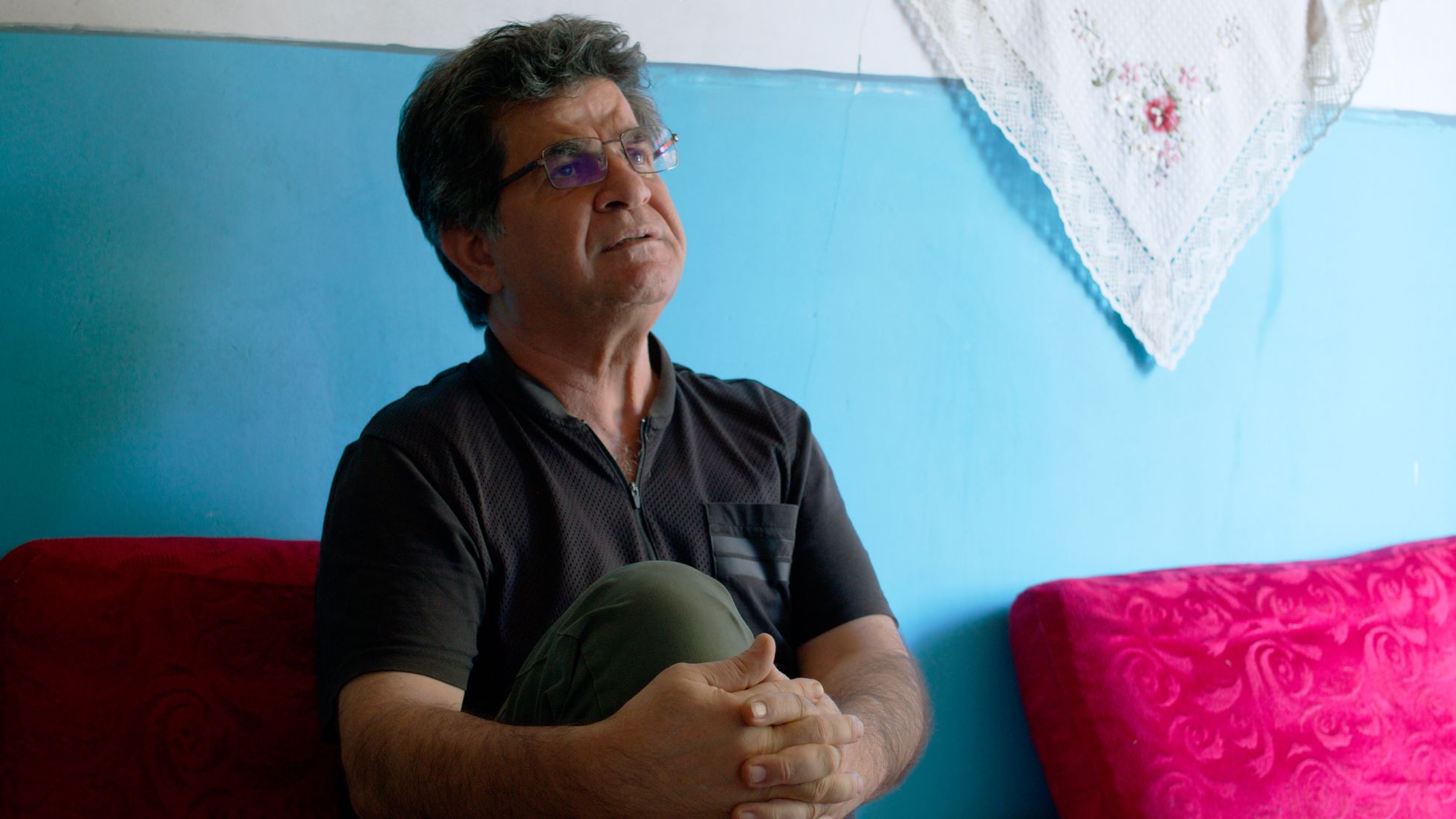
On the other hand, these phobias and paranoia enriched my films in their own way, made them more real. After the prison, I became bolder. When you are free, you are afraid to be behind bars. When you are already in prison, there is nothing more to be afraid of.
Question from the audience: You insist that you shoot social films, not political. What is the difference for you? Why is it so important?
Panahs: For me, “political” are those films that support the agenda of a political party that dictates, whom and how to portray on the screen. Politicians share people by their views. Social cinema is a different category. It does not have “bad” and “good”. People are not to blame that they were in unbearable circumstances, the government itself and the structure of the state are guilty of this. I shoot such films.
Dolin: In your paintings, you really cannot meet villains. Your colleague and comrade Mohammad Rasulof had just shown the film “Semey of the Holy Smoknitsa” in Cannes, whose hero is the judge of the revolutionary court , which passes the death sentences. You have never seduced such stories and heroes?
Panahi: There was such a plan. Once I almost shot the film based on the play by Ariel Dorfman “Death and Virgo” , which was also filmed by Roman Polanski. This is a story about the meeting of the executioner and his victim. Probably, this film would be different from everything that I shot. Of course, his hero could not be called a good person. But in my eyes, even he is just a screw, a gear of a car. A detail that can be replaced by another. It is not responsible for the functioning of the repressive mechanism. I have not watched Rasulof’s film, but only I'm glad that we are making different films.
Question from the audience: I watched your film “Mirror” and did not understand: is it partly documentary? Your actress - a girl - really freed to act in the midst of filming or not?
Panahi: Everything was spelled out in the script. This is the art of the director - to force the audience to believe that she sees reality, not fiction. Both the camera and installation work for this. But in front of you, with all the credibility, is not a documentary, but a playful film. The girl dreamed of playing a movie! This is the younger sister of the actress from my previous film "White Ball". She was terribly jealous, envied her success. It was just very important for her to finish the film, although her heroine acts differently.
Question from the audience: How often in your films there is a place for improvisation?
Panahi: During the casting, we discuss with actors - as a rule, unprofessional - the smallest details and possible difficulties. They must accept the conditions: only after that they will become equal participants in the film crew. We better recognize each other during work. The place of shooting and context help us to plan the process, up to the installation.
If I start working with my own ideas, during the filming they can change as you like. The main thing is that we all in a similar way understand the goal. I regularly say to the operator: "Take off as you think it is necessary." Sometimes some of the tasks we have invented seems unrealizable, but Jafari always says: “Let's try.” We spend fifty doubles on some frames, achieving the perfect result.
Question from the audience: That is, everything is spelled out in advance to the slightest detail?
Panahi: As a student, I shot a short film for television according to someone else's scenario. In it I did not change a word. But after the installation, he felt that the film came out soulless - precisely because I did not retreat from someone else's plan. I realized: this is not my film. I was ashamed. I stole all the negatives from the laboratory and threw them away. No one had to know that I made such a film.
Since then I have not been working like that anymore. For a year or more, I polish the script, but then, believe or not, I can completely forget about the written on the set. Actors have their own vision, and it also needs to be taken into account. But this is because I choose roles performers especially meticulously: if my character is a baker, I will take a baker for this role. And I will listen to any comments made by him.
Jafari: Maybe the situation is really like that on the set. But at the post -production, Panahi does only what he considers correct: he cannot be shifted by a millimeter. No compromises. And everything happens on the set. Sometimes we beg him to remove another double, but he refuses: "No, I have already received what I wanted."
Dolin: Your films are very much connected with the Iranian reality - the same “White Ball”, “Offside”, “Three Persons”. But they are understandable not only to the Iranians: they are awarded at festivals and look around the world. What makes them so universal? Do you achieve this consciously? Or is it a kind of inexplicable miracle?
Panahs: I have no idea how my films become universal. I do not think about the audience for a minute when I make a movie. I do not think to whom and when I will show the film. In general, nothing outsider. One thing is important to me: to make the right artistic choice at each stage, other thoughts do not visit me. Yes, many things in my paintings can be understood exclusively by Iranian spectators. But I try to tell simple stories. It must be the point of this.
Dolin: In all recent films, you seem to include your audience in the film itself - you turn to it directly, breaking the Fourth Wall, demand a response and reaction from it, make my riddles and force them to interpret them. Why is it so important for you?
Panahi: This is a special genus of cinema. The audience is involved in the film, it is in the very center of the picture. The techniques used for this help the viewer believe in the reality of the world that he sees on the screen. Therefore, I never shoot professional artists. The audience will recognize them and remember that he watches the movie, lose his sense of involvement. For the same reason, I shoot each actor only once. The viewer’s belief in what I show him is most important for me.
Question from the audience: How do you achieve such a high degree of credibility?
Panahi: The most important thing is to know what exactly you want to do and say. How exactly do you invite the audience to take part in the process. You can put the camera anywhere, there are hundreds of options; But for this director, only one suitable place, any digressions are excluded. The choice is the main thing. This applies to the angle of shooting, and installation solutions, and light, and color, and every nuance. There are no minor details.
The same applies to casting. Sometimes I choose one executor out of eight hundred. Only one approaches the role of a character in which I can believe - which means that the viewer will believe. At the same time, the actors themselves are not professionals, they all repeat one thing: "I do not know how to play." I answer this: "Fine, I need it." Most of the energy it takes me not to allow the actor to play.
Jafari: We achieve the ultimate realism, but this should not interfere with the choice of the best angle. The main thing is to find a balance between these two tasks. For example, if the action takes place in the village, we cannot use additional light sources so that the viewer does not doubt that he sees the real village.
Вопрос из зала: О чем будет новый фильм, который вы сейчас снимаете?
Панахи: Кто вам сказал, что я снимаю? А, я и сказал? В любом случае не расскажу ни сюжета, ни названия. Пока работа не завершена, я о ней молчу. К тому же я опасаюсь давления и препятствий со стороны властей, так что лучше буду держать детали при себе. Короче говоря, я и сам не знаю, делаю ли я новый фильм.
Вопрос из зала: Ограничения и давление со стороны властей действительно могут помочь художнику быть более креативным, находить неожиданные решения?
Панахи: Полагаю, иногда ограничения могут помочь в развитии творческого мышления. Ты постоянно изобретаешь новые способы обмануть систему. Но одним это может помочь, а другим — сломать хребет. Талантливые люди бросают профессию, уезжают из страны, поскольку не могут работать в условиях подобных ограничений.
Долин: Для оппозиции и диссидентов в сегодняшней России чрезвычайно важен диалог между эмигрантами — «уехавшими» — и теми, кто продолжает жить и работать в условиях цензуры и диктатуры, «оставшимися». Вы [в Иране] принадлежите к числу вторых. Ваш последний фильм «Нет медведей» смотрится как концептуальное высказывание: «Я никуда не уеду, я остаюсь». Вы можете сказать несколько слов о своем выборе? Если я правильно понимаю, вы продолжаете на нем настаивать и после тюремного срока.
Панахи: Я никогда не осуждал коллег, которые покинули Иран. Каждый из них совершил свой выбор. Но мне не хватает смелости, чтобы уехать. Я не верю, что смогу выжить за пределами своей страны, я способен жить только в Иране. За жизнь я побывал в пятидесяти пяти странах, на пяти континентах. Но после завершения фестивалей ни разу нигде не задержался даже на день.
Я всегда скучаю по Ирану и хочу вернуться домой. Не потому, что Иран в чем-то лучше других стран. Просто там я родился и прожил жизнь, я знаю мою страну и живущих в ней людей, я слышу их, даже когда они говорят шепотом. В любой другой стране я всегда буду чужим. Так что простите мне мое малодушие и позвольте оставаться в Иране.
"Jellyfish"