
Translated material
Violetovo, fashionable, youth
Despite the general roll to the right, the “anti -Poulist” party of VOLT was held in the European Parliament based on the elections. Who are the Voltans and why does the youth vote for them?

Photo: Volt
“We have no deputies from Germany or the Netherlands. We have deputies from Europe, ”says the Party of the Volt party, the first and only transnational European party in the European Parliament.
Usually, parties in the EU are created in any one country, try to get into the local parliament and only then go to the pan-European level, joining one of the existing political forces. The VOLT party went on a different path: at first it formulated a pan -European agenda and only then began to create party cells in individual countries. So, the Voltans are trying to emphasize that Europe needs more unity, and the interests of the entire continent should be above national borders. Based on this, the party advocates the creation of the United States of Europe, proposes to stop restraining the flow of migrants in the EU and provide Ukraine with the maximum possible support in the war with Russia. Having conducted an election campaign at the same time in 15 EU countries, Volt received five mandates of deputies in the new convocation of the European Parliament, mainly thanks to the votes from young Europeans. Novyevropa was versed in the phenomenon of the popularity of Volt and why the party is called the "hobby of rich children."
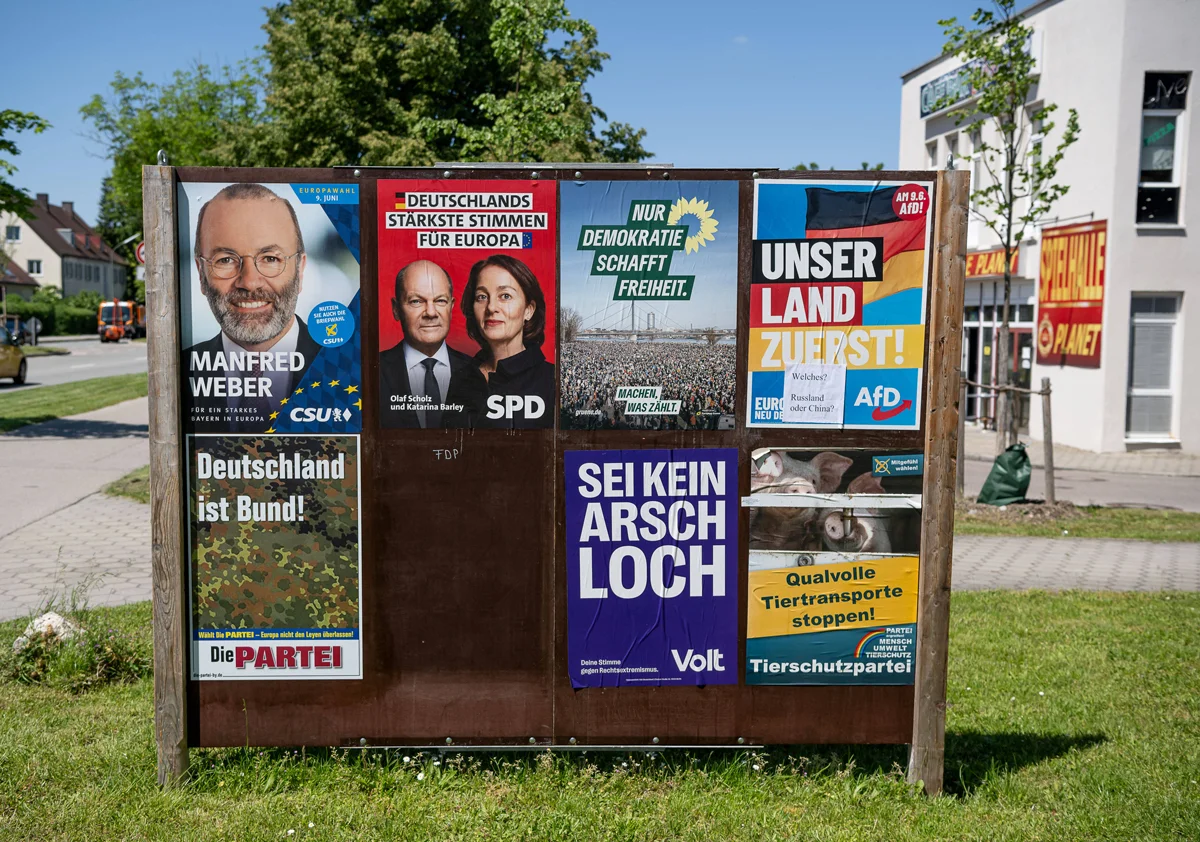
“Do not be an asshole”, “more ice”, “power to the people” - such inscriptions with large white print on a bright purple background could be found this spring on campaign posts in most EU countries.
The posters of the VOLT party, one of the youngest on the continent and really promoting rather bold ideas, who participated in the European Parliament, posted posters. Volt thus tried to appeal to European youth, and not in some individual country, as appropriate to traditional national parties, but throughout the EU.
Volt is the first major party, which initially began to form and fight for power immediately at the pan -European level.
The last week before voting in the European Parliament, the Voltaires held a series of meetings with voters , mainly in the favorite places of youth - cafes and bars from Amsterdam to Cyprus Nicosia.
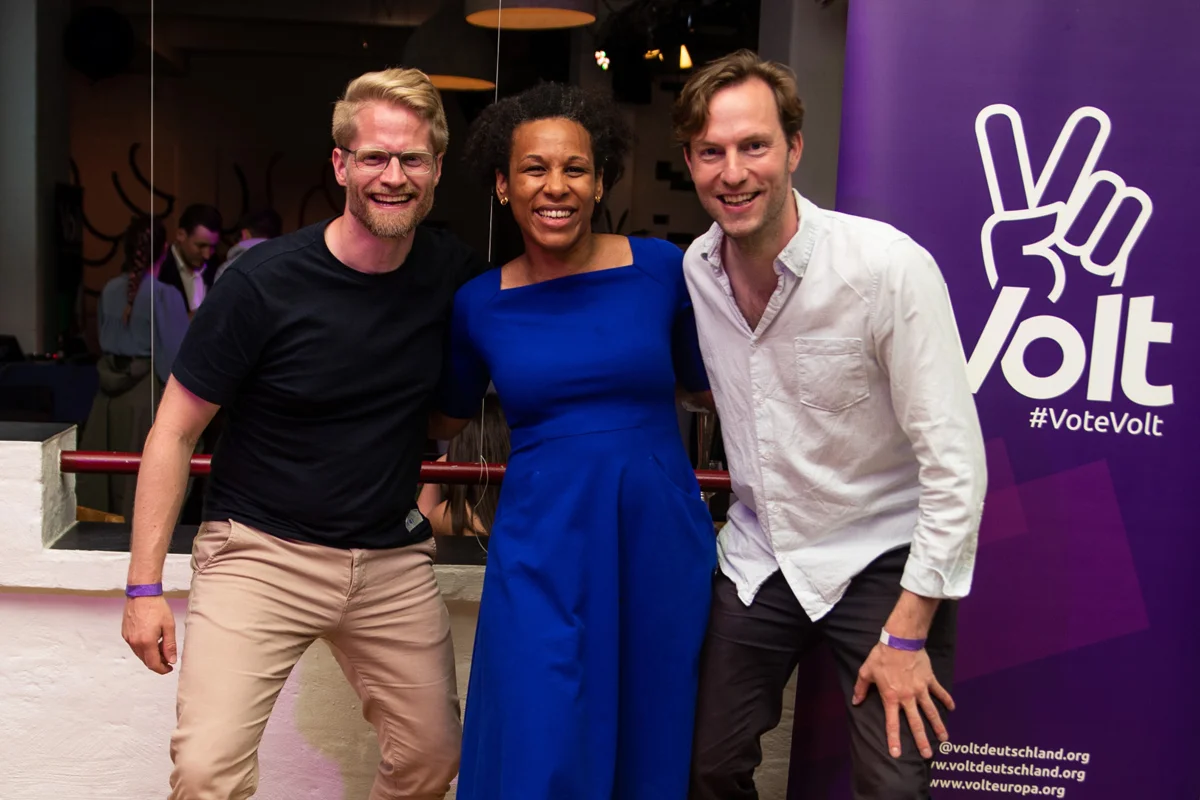
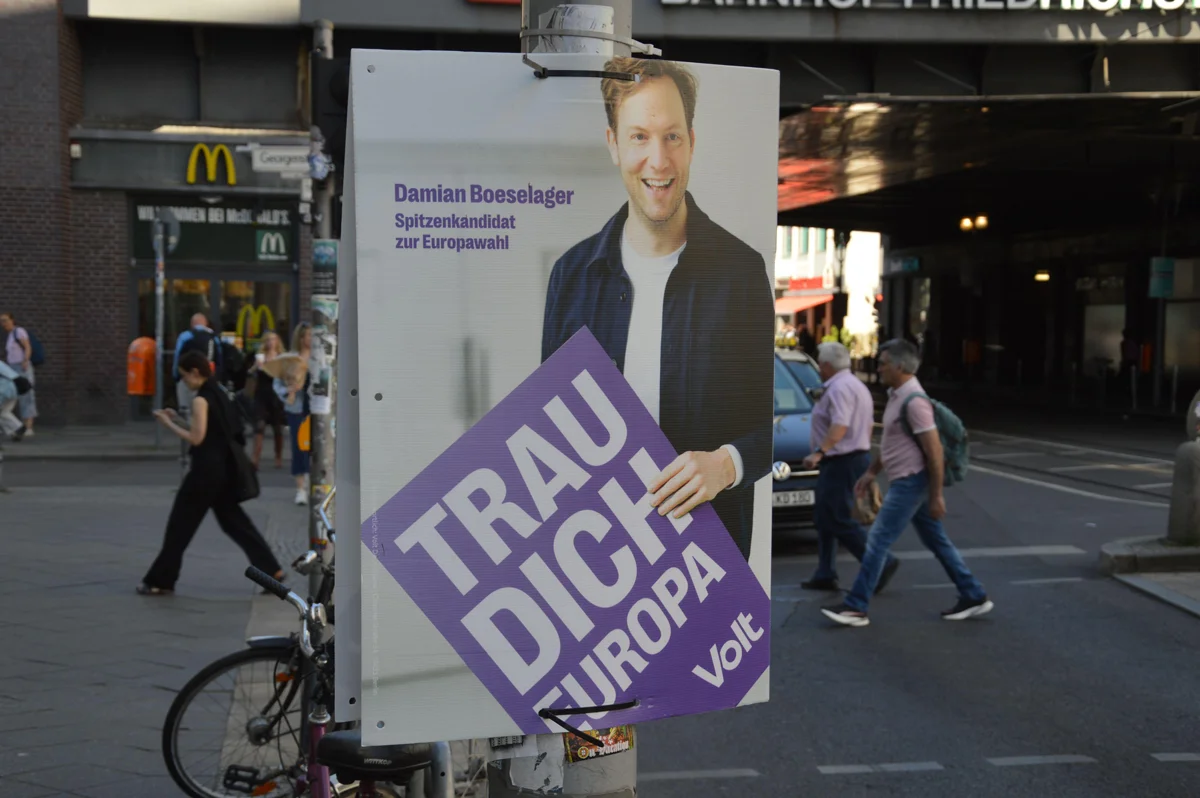
Partly their strategy with bright slogans and a betting on the youth worked: Volt received five places in the European Parliament. The deputies from the “purple” party were the people very young by the standards of European politics: 40-year-old Kai Tegetkhoff and 38-year-old Nile Ril from Germany, as well as 28-year-old Anna Stralenberg and 34-year-old Raynir Van Lanshot from the Netherlands. The only deputy of the Volt, which became part of the parliament, was 36-year-old German Damian Bozelager, who was at the origins of the party.
After the election, Volt continued not quite typical of the European party structures of action. For example, he suggested that the party’s supporters vote which faction of the European Parliament should join. And the truth acted in accordance with the opinion of the majority: so the “purple” became part of the green.
Voltage of one volt
The idea of the First Transnational Party of the EU arose among its creators eight years ago. 2016 was not the best time for Eurooptimists and generally supporters of globalization. Germany, which had previously let out more than a million refugees, shook anti -migrant protests. The UK, despite the warnings of experts, completely left the European Union. In the USA, Donald Trump won in the presidential election, who relied on isolationism and anti -European rhetoric. In addition, the largest economies in the planet were not in a hurry to take care of ecology and take measures to restrain climate changes. Two years later, this will lead to the famous speech of the eco -activist Greta Tunberg in the UN.
European youth watched all this with anxious feelings. Some of the most ambitious ones, including Damian Beselger-then he turned 28-and two of his friends, 24-year-old Andrea Ventzon and 22-year-old Colomb Caen Salvador, decided not to limit themselves to one observation, but to try to change anything. Each of them could count on a brilliant career in traditional areas, for example, in business or jurisprudence. Bezelager and Venzon, after graduating from prestigious universities (Bayroitsky and Colombian universities, respectively), worked as project managers at McKinsey, and Caen-Salvador, a scholarship of the Duke Law School, was a researcher at the Roberta Management Center F. Kennedy. However, they chose a different way.
Having met in the cafe in the fall of 2016, shortly after the summary of the American presidential race, Beshelager, Ventzon and Caen Salvador decided to create a fundamentally new party to stop the growing wave of right-wing populism and defend their version of the European future.
“The American elections have shown that the power of the most powerful country in the world may have an absolutely crazy person,” recalls in an interview with Novy-Europe Damian Bezelager. - For me and many of my friends it was a shock. It was necessary to do something with this. ”
A year later, the party already had the name - VOLT, literally meaning a unit of measurement of electrical stress and designed to symbolize the energy of the participants. She also had hundreds of supporters in several countries and a software manifesto of five points, from the modernization of public administration in the EU and economic revival to ensuring high standards of social equality. The main idea of the document and all the activities of the party was the transformation of the European Union from the amorphous association of 27 states into a full -fledged Federation, capable of competing on equal terms with the United States and China.
To the first in its history, the 2019 pan -European elections, the Party of Millennialov, how the VOLT was christened in the press, created structures in seven countries, formalized in accordance with the EU electoral legislation in the form of national parties, but in the end was able to hold one deputy - Damian Beslager to the European Parliament. In the elections, as a whole, a high turnout was noted among European youth, which helped green and pro -European movements get more mandates than they had before.
The voltian Beshelager elected to the European Parliament joined the green, worked as part of the Constitutional Committee, committees on industrial policy, budget and domestic affairs. With his participation, laws related to the simplification of the issuance of visas to IT specialists, directly affected by many of our compatriots. With the beginning of Russian aggression in Ukraine, the politician actively advocated the full refusal of Europe from oil and gas from the Russian Federation and voted for the allocation of financial and military assistance to Kyiv.
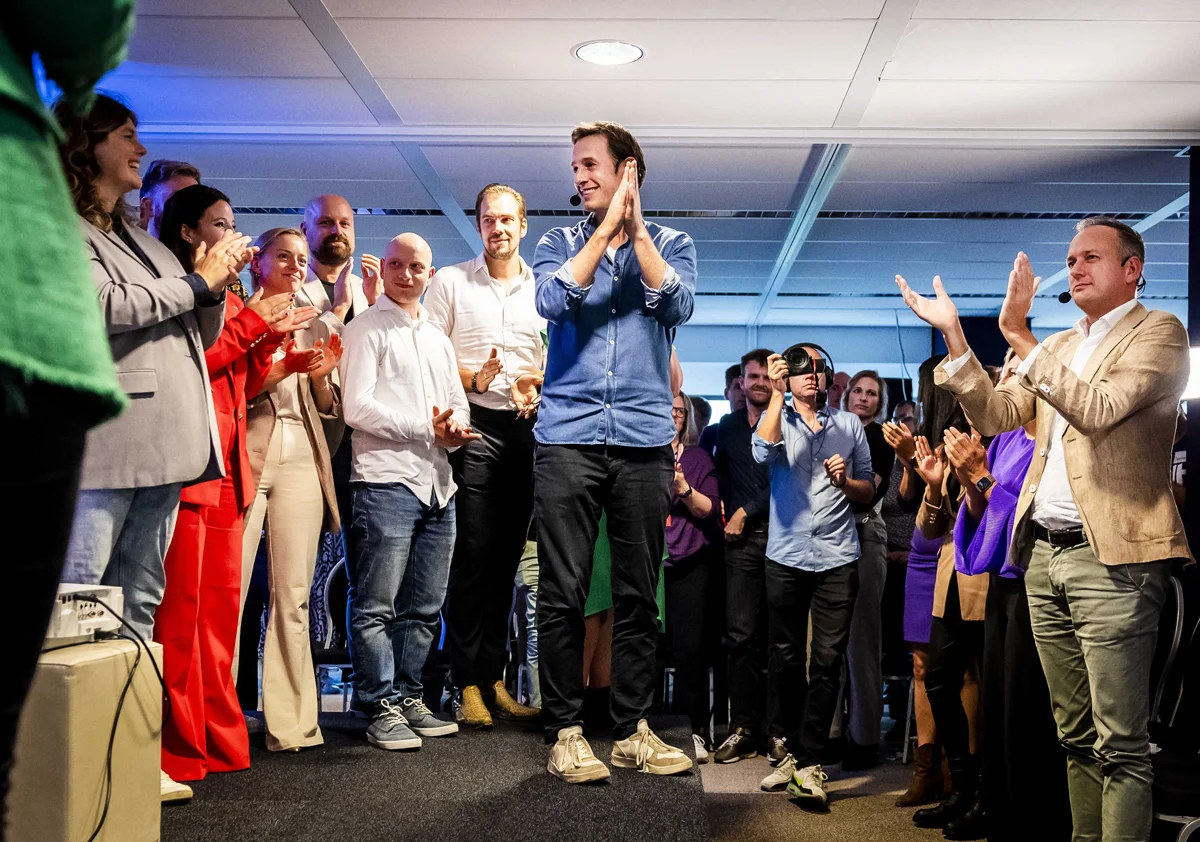
However, the main result of the first parliamentary term for the Volt was the active development of party structures. By the elections of 2024, the “purple”, which already had more than 25,000 members, including about a hundred deputies of various levels, performed immediately in 15 countries. Only another party tried to lead a similar pan -European campaign - Diem25, founded in 2021 by the Greek politician Janis Varufakis. But, unlike VOLT, she failed to carry out a single candidate to the parliament.
Deputies from Europe
The collective portrait of the Volt faction, which poured after numerous consultations and the above -party voting mentioned above into the pan -European fraction, is difficult to make up.
The company to the aristocrat, the son of a wealthy banker Bozelager was compiled by two compatriots: an engineer, a former researcher at the Braunschweig Technical University Kai Tegetkhoff and Hamburg teacher Nila Ril, an absolute beginner in politics. The faction also included two representatives of the Netherlands - lawyer Reinir Van Lanshot and political analyst Anna Stralenberg. Prior to the beginning of the political career, Lanskhot managed to work in a startup providing legal services, and even Vyuvki a supermarket, and Stralenberg was a press secretary of the Dutch NPO, specializing in helping refugees. However, the Volt deputies themselves call themselves European politicians and ask not to focus on origin.
“Our deputies represent not only native countries. They share a collective European identity and a single approach to management, which goes beyond the borders. This means that we have no deputies from the Netherlands or Germany, we have deputies from Europe, ”
- explains the co -chairman of Volt Europa Mels Clabers.
The creation of a full -fledged European Federation is the key point of the VOLT program. The party is convinced that national governments and parties are no longer able to solve the problems of the Old World. Volt insists that the EU adopted a common constitution, form a single government accountable to parliament, and spoke in the international arena a united front, while actively attracting new members to its ranks.
VOLT unconditionally supports the allocation of Ukraine to all the necessary economic and military assistance to reflect Russian aggression. In the winter of 2023, on the eve of the Ukrainian counterattack, when Germany still hesitated with the supply of its tanks to the front, the party demanded that the APU immediately provide the latest armored vehicles in order to "defeat the Russian army and thereby protect Europe from its most dangerous neighbor."
“Putin is a thug, a street bully. He gets what he wants, and stops only when someone stops him, ”Damian Bezelager explains his position. - I do not think that it is worth constantly worried about whether there will be a conflict between NATO and Russia or not. The question is whether we will allow Putin to take Ukraine and go further. The Russian regime must lose this war and leave the entire territory of Ukraine. ”
Despite the irreconcilable position in Ukraine, they look at the normalization of relations with Russia in VOLT with restrained optimism.
“With democratic Russia, we would have excellent relations, as is most often between democracies. I think that, with proper efforts, Russian citizens within the country and the Russian diaspora can pull Russia out of the hands of this madman, ”says Beshelager.
According to the Voltian, the European authorities should clearly share ordinary Russians, many of whom were forced to move to Europe, literally escaping from Putinism, and an aggressive Russian regime.
Hook right
But its main task, Volt sees the struggle against the ultra -right populist parties and, in particular, against the German “alternative for Germany” (AFD). The slogan “Do not be a mud ...” (German - Sei Kein Arschlock) is primarily associated with this confrontation, in a deliberately gross form, emphasizing the Volt position in relation to opponents.
“The idea of the slogan is also connected with the 300th anniversary of Immanuel Kant,” continues Bezelager. “He formulated and developed a moral imperative, which, if very short, can be expressed in the words:“ Do not do what you do not want for yourself. ” We decided to remind people about this gold rule. ”
One of the points of conflict with the ultra -right is migration policy. VOLT actively advocates facilitating the fate of migrants, both labor and forced.
Instead of fencing from an ongoing human stream, the party offers to come to terms with him as an inevitable fact and, on the one hand, achieve a more fair distribution of migrants from the EU countries, on the other, to help everyone who needs asylum or simply decided to start a new life,
To adapt faster in Europe, get an education, work and join European society.
In economic terms, Volt are liberals advocating the accelerated integration of European markets, innovation and improving the quality of management. The party insists on an early transition to renewable energy, the rejection of fossil fuel and internal combustion engines. At the same time, it emphasizes the importance of supporting the high -tech European industry. In response to large -scale protests by farmers , which covered the continent last winter, Volt proposed to resolve the farmers developing progressive environmental forms of management, but in no case do not weaken the legislation in the field of ecology.
Hobbies of rich children
The about how popular these ideas are among Europeans can be judged by the results of the party in the June election, which turned out to be better than in 2019, but several times worse than the party’s own plan, which the day before declared the desire to hold 23 deputies to the European parliament and form their own faction. Some political scientists are skeptical of both the electoral results of the “panneuropeians” and the concept itself.
“Parties like Volt and Diem25 are nothing more than a hobby of rich children.”
- believes the associate professor of the Department of Political Science of the Amsterdam Free University Andre Kruvel. He believes that stable political structures should be created on the ground and develop from the bottom up, and not vice versa.

Political analyst Filip Enrices, based in Brussels and advising the green fraction in the European Parliament, the very one, which included the deputies from Volt, is convinced that experiments with transnational parties have exhausted themselves.
“These ambitions contradict the very essence of what Europe and the EU are. Throughout the continent, European democracy was built at the national level. Diem25 and Volt could not understand that regional differences here are the key to success, ” writes Enrices in his column on the Green website.
Damian Bezelager rejects such criticism and looks at the future of his movement with confidence.
“I do not think that the ideas of the Volt have exhausted itself, given that our representative office in the European Parliament has just grown five times. The movement is growing rapidly, as well as the need for a closer European cooperation ",
- says the politician.
However, so far the majority of European voters remain indifferent to the leftal agenda as a whole and to the idea of closer integration in particular. On the one hand, this is evidenced by the failure in the elections of the green fractions and “updating Europe”, which have lost a total of more than 40 votes. On the other hand, the success of EuroSrkeptics from the European Conservatives and Reformers faction, who received 14 additional places, as well as a more confident performance of national ultra -right parties, such as an “alternative to Germany” and the French “National Association”.
Thanks to the bold transnational election campaign, Volt managed to declare himself loudly, to attract attention, because no one wants to “be mud ... m”. However, it is unlikely that in the next five years the party has the strength and perseverance to resist the growing trend for isolationism and really advance on the path of creating the United States of Europe.