
Translated material
Hawk diplomacy
Kaya Callas is preparing to take the place of the head of the Eurodolomatia. What threatens Kyiv, Moscow and the Russian opposition in exile?
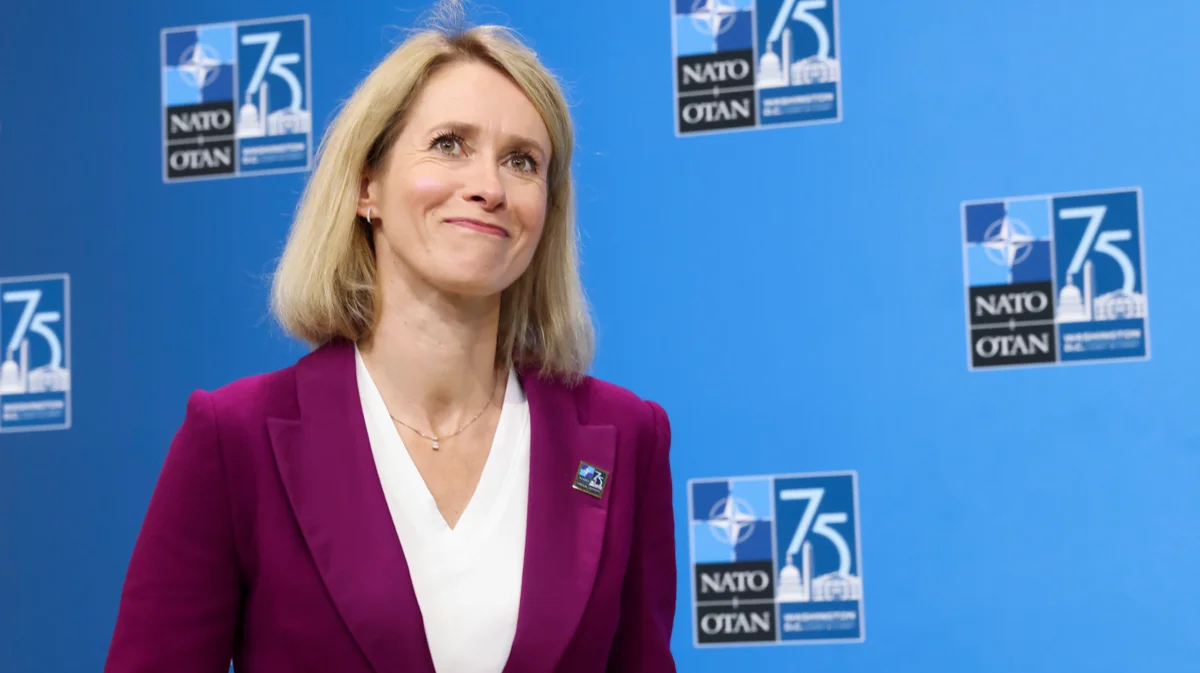
Estonian Prime Minister Kaya Kallas at the NATO summit in Washington, County of Colombia, USA, July 10, 2024. Photo: Michael Reynolds / EPA-EFE
As a result of today's voting in the European Parliament, Ursula von der Layen was approved for the post of head of the European Commission for the next five years. Her candidacy was supported by 401 euros deputy, mainly from legal, left and green forces.
Now von der Lyain is a difficult process of forming the next commission, taking into account the interests of political parties and national leaders of the EU member states. Nevertheless, the posts of the most high -ranking EU officials were already distributed as a result of a meeting of heads of state in late June. In particular, Kai Callas, the former Prime Minister of Estonia, was announced to the post of head of European diplomacy, with the name of which is associated with a loud scandal within the country. While Callas called for the maximum tightening of relations with Russia, in 2023 it turned out that her husband’s company was involved in trade with Russian companies. However, this did not prevent Callas from taking the post of head of European diplomacy at the EU level. This appointment became at the same time the most non -standard - Callas clearly does not have enough experience necessary for this position - and the most clear from the point of view of the message. The former Prime Minister of Estonia is a loud opponent of the Kremlin and one of the most prominent supporters of Ukraine among European politicians. What changes in relation to Europe with Russia and Ukraine should be expected from the appointment of Callas and why the EU made such a choice - the observer of European politics Andrei Smolyakov sorted out.
Diplomat without experience
At the post of the EU Supreme Representative for Foreign Affairs and Security Policy - or, more simply, the Minister of Foreign Affairs of the EU , Kai Callas will replace Josep Bo -Borrel. This is one of the five highest posts in the European Union, and the person holding it is responsible for coordinating foreign policy between EU member countries, building and maintaining a pan-European consensus on international issues and generally acts on behalf of the whole EU on the world arena.
Traditionally, the heads of European diplomacy were representatives of larger European countries: Germany, Spain, Italy, Great Britain (before Brexit). Kallas, in turn, became the first candidate for such a high position in the EU from the Baltic countries. But it is unusual for her appointment not only by this.
Callas predecessors in this position were mainly experienced diplomats: they worked in the Foreign Ministry of their countries or in international organizations. For example, Javier Solan, before appointing the head of European diplomacy, was the Secretary General of NATO, Katherine Ashton served as the European Trade Commissar, and Josep Borrel was in leading positions in various EU institutions, including the European Parliament. Callas for diplomatic circles remains outsid. She began her career as a lawyer in the private sector and avoided politics for a long time.
Of course, this gives critics a fertile ground for doubts about its qualifications. In the commentary of Novy-Europe, the analyst of the Stockholm Center of Eastern European research, Dr. Andreas Mindland, explains that this really can become her weak side: although Callas has an excellent portfolio for focus in Russia and the war in Ukraine, she does not have enough experience in other matters and regions. At the same time, he is sure, Callas herself understands this perfectly. Indeed, according to some media , since the beginning of work as the prime minister, she actively studied international relations and international politics and continues to work on this now.
As for the focus in Russia and the war in Ukraine, here Callas really occupies the most striking and unambiguous position - as critical as possible to the Kremlin - and remains one of the most noticeable supporters of Ukraine in the EU. With her, Estonia became a country with the largest volume of assistance to Ukraine in relation to GDP. All this earned Callas a reputation of the “hawk”, and some media began to call it the “European Iron Lady”. And in this regard, the appointment of Kallas for a high position in the EU is also not an accident.
Focus on the Ukrainian question
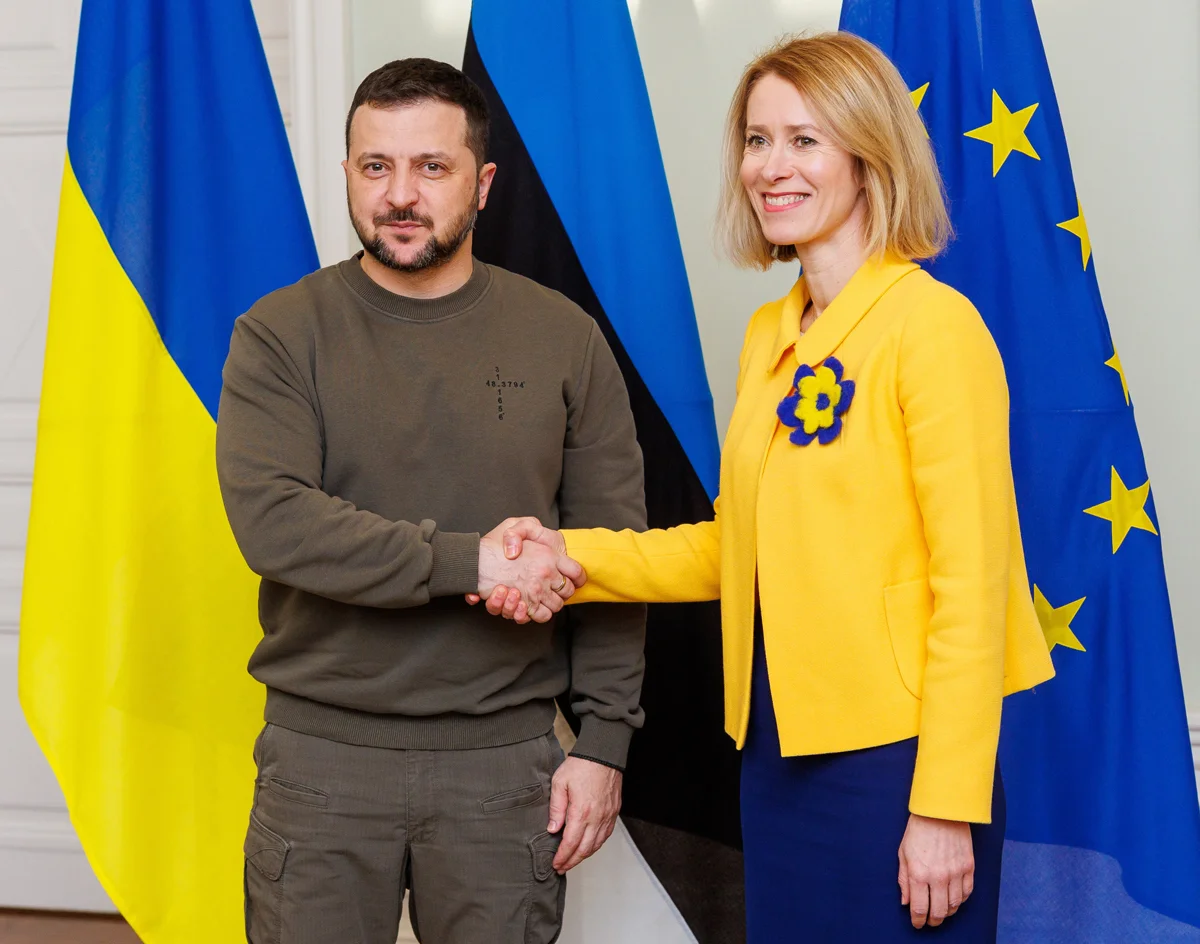
Among the leaders of the European powers, Callas, perhaps, expresses his opinion about Russia and Putin most directly. Almost from the very beginning of a full-scale invasion, Estonian Prime Minister made a warning that Russian interests-and threat-lie far beyond the borders of Ukraine and European powers should certainly support Ukraine, and not just strive to end the war at all costs.
“The world cannot be the ultimate goal in itself, if it implies benefit for the aggressor,” Callas said in one of her interviews. Then she turned to NATO countries with a call to change the approach to Russia - to move from passive deterrence to active defense.
Callas also performed with a speech about the advantages of the potential “collapse” of Russia as a result of the war and spoke about the right of Russia's peoples to self -determination. And although discussions about the possibility of the collapse of the Russian Federation have recently been found often, neither politicians, nor mainstream experts have been seriously considering this scenario. This idea is not popular even among the mainstream Russian opposition. Against this background, the position of Callas looks at least unconventional, albeit consistent for bright and long -standing criticism of Russian imperialism.
In an interview, Kallas often talks about Soviet repressions against his family. In 1949, during mass deportations from Estonia, her grandmother, along with a newborn daughter, mother of Kai, the Soviet authorities sent to Siberia, and there women spent ten years. Thus, the attitude of Callas towards Russia is motivated not only politically, but also deeply personally.
Against this background, Kallas began to support the idea of expanding military cooperation within the EU itself. So, in 2023, she was one of the first to speak out in favor of collective European financing of defense initiatives through state loans and the release of “defense” bonds. And although this policy fundamentally disagree , for example, in Austria, the Netherlands, Denmark, Finland and Sweden - the so -called “economical five” , Callas managed to enlist the support of France President Emmanuel Macron. In addition, this idea is quite combined with the main defense initiative of the chairman of the European Commission Ursula von der Lyan, who has just been recruited for a second term, on the creation of the position of the European Commissioner for Defense.
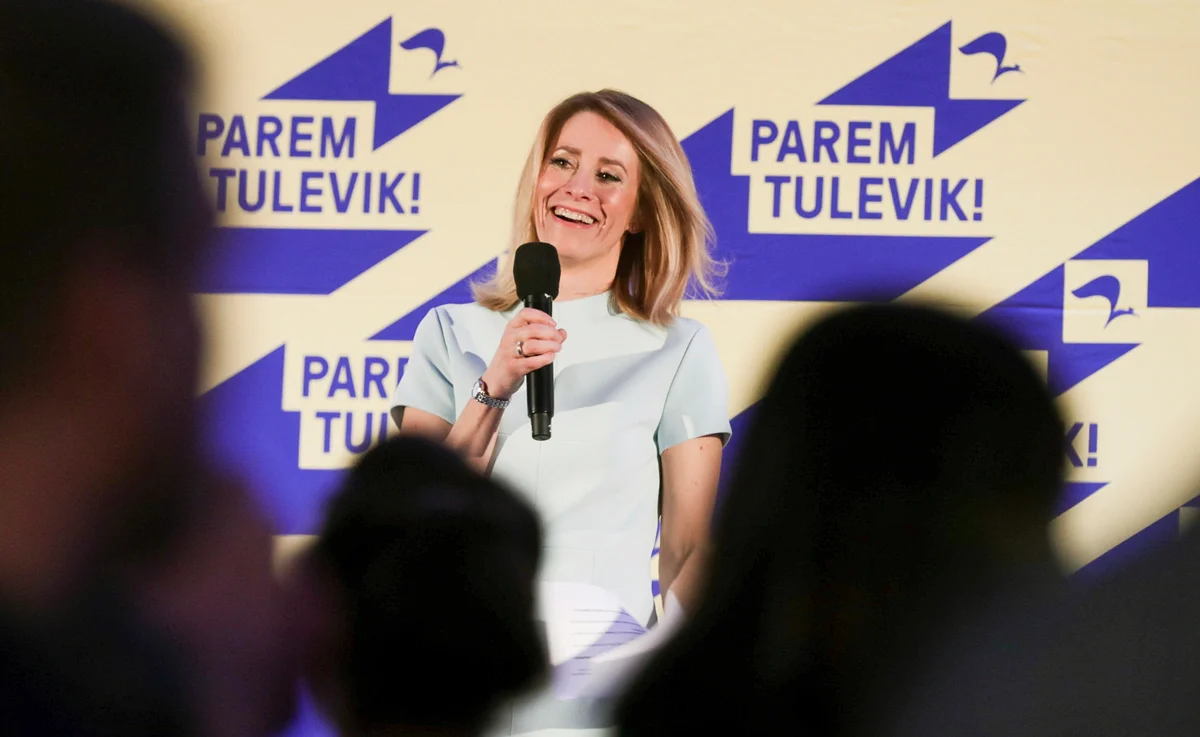
At the same time, when it comes to Russia, Callas pays attention not only to formal issues of politics and security, but also to lower initiatives. Callas officially made the support of the NAFA online community-a decentralized group using online comments, memes and other unconventional ways of combating Russian influence on the Internet. Although her attitude to NAFO is also attracted to criticism: in addition to the fight against Russian influence, the group distinguished itself, among other things, campaigns against a number of Western politicians .
Such a background Callas, most likely, became the main motive for choosing her candidacy. “This is an adequate purpose,” Malland said. “Objectively, with or without Callas, the Ukrainian question will now remain central for the European Union.”
This approach is shared by many large EU officials.
“We should have listened to those who know Putin,” said Ursula von der Layen back in 2022, referring to the country of the Baltic and Eastern Europe.
It is they who borders Russia and have a long history of occupation and conflicts with it, which is why they are most critical to Russia, which they often diverge from Western colleagues, sometimes more “tolerant”. The adherence to the support of Ukraine and the important role in this Estonia and personally Kallas von der Layen emphasized once again in 2023 at a meeting with the Secretary General of NATO and Callas itself.
The Chancellor of Germany Scholz also repeatedly expressed support to the initiatives of the then Prime Minister of Estonia-he also advocated the nomination of her candidacy for the post of head of the Euro-Divium. This partnership may seem unexpected: Sholtsa, in contrast to Callas, often criticized just for softness to Russia and the unpreparedness to provide the necessary support to Ukraine. But even his position has clearly changed in recent years.
However, perhaps the most active supporter of Callas in the new post was Emmanuel Macron. It was he who was one of the first to support her candidacy, and in general both politicians regularly discussed the war in Ukraine among themselves and have long been a united front in the European Parliament, representing the party group Renew Europe .
Problems at home
The appointment of European politicians for Callas itself became the most successful development of events for a new position. Especially considering that recently inside Estonia it is difficult to call her a popular politician and a re -election for the second premier term would be unattainable for her.
According to recent surveys, Callas enjoys extremely low support among voters in the country - only 16% . For comparison, before her appointment to the post of head of government, she was the most popular party leader in the country, and in the elections in 2019 her reform party received 28.8% of the vote. Now, only 18% of voters are ready to support the “reform”, while the opposition is gaining momentum, especially in the person of the national-conservative “Fatherland” with 27% of the vote.
The unpopularity of Callas is so obvious that she even decided not to visit the presidential reception on Estonian Independence Day is one of the most important events in the country. Callas herself explained this by the fact that her appearance would cause a negative reaction .
The thing is that in August 2023 in Estonia, a large scandal with the participation of her husband Kallas erupted, and this dealt a decisive blow to her ratings. Estonian editions of EPL and ERR published an investigation, during which they found that Stark Logistics and one of its owners Arvo Hall, the spouse of the prime minister, helped another Estonian company organize the supply of goods to Russia. In the first months after a full -scale invasion, they sold goods for 17 million euros.
The cooperation of the spouse of the Prime Minister with Russian companies, despite the war, sanctions and openly the pro-Ukrainian position of Callas itself, of course, caused large-scale discontent in Estonia. Media and the opposition, as well as, judging by the surveys, part of the voters called on Callas to put up powers.
The President of Estonia Alar Caris also made criticism of the prime minister: news about her husband, he said , negatively affect the reputation of the whole country. Conservative politicians in the opposition of Callas even tried to call it to testify before parliament.
However, inside the Estonia government, a clear position in relation to the scandal was still not developed: despite the fact that the opposition hastened to use a scandal for pressure on Callas, some of the ministers supported it - especially the Minister of Defense.
Callas herself claimed that he was not immersed in the details of his husband, and he, in turn, said that he did not know about transactions with Russia, and sold his share in Stark Logistics. Subsequently, Kallas more than once apologized for the scandal - but this did not help her ratings.
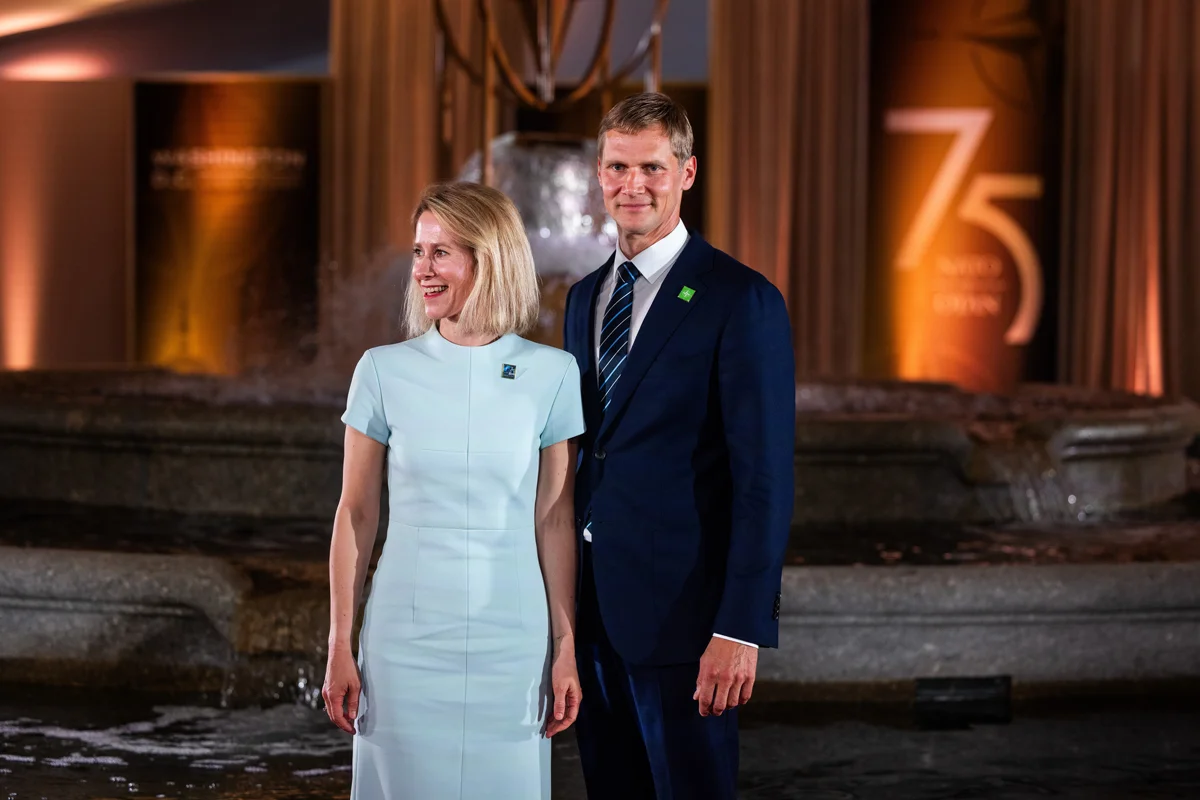
So the appointment to the post of head of European diplomacy was in handy. The scandal inside the country, apparently, did not affect the reputation of Callas as the opponents of Russia in the eyes of other European politicians. From the very beginning, the European media in general did notshow interest in this story too much, and the diplomatic circles seem to be ready to close their eyes on it. In addition, local scandals for large politicians are not novelty: von der Lyain and Antoniu Koshta, a former Portuguese prime minister, was preparing to take the place of the head of the European Council instead of Charles Michel, have problems with them.
On July 15, Kallas left the post of prime minister-but already of his own free will to take the place of the Minister of Foreign Affairs of the entire EU. At the same time, unpopularity as a politician within the country, oddly enough, did not deprive Callas support from fellow citizens in a new position. “Estonians clearly experience pride-and for listening to them, and for the fact that their compatriot now takes such a high position in the EU,” the researcher and lecturer of the Estonian Academy of Internal Security Yaaniko Mili said in an interview with the “New Estonian Academy”. This appointment, according to Merilo, became the logical development of Callas career, and in a new position it will be able to achieve more than in domestic politics.
Signal to Moscow and Kyiv
In itself, the appointment of Callas for the post of head of European diplomacy is a very unambiguous signal for both Moscow and Kyiv. But what practical consequences this will bring, so far remains an open question.
Callas is not just another critic of Russia - the Kremlin has developed a special hostility to it. So, the already former Prime Minister of Estonia is one of the few European politicians declared in Russia on the wanted list. Moreover, some sources claim that Russia organized a misinformation campaign against Callas, in which its children's photographs were distributed, and also accused her of sympathies to the Nazis. They also managed to respond to the very appointment of the authorities of the Russian Federation: Presidential press secretary Dmitry Peskov indicated the absence of “diplomatic inclinations” from Callas and said that its appointment would not lead to improve relations.
The signal for Ukraine is the appointment of Callas, too, but already positive. Yaanik Merilo believes that Callas will support Ukraine and promote European assistance to it as much as possible.
“I think she will actively work on both fronts: in the field of support for Ukraine, and in the field of pressure on Russia with the help of sanctions, organizing the exchange of prisoners of war and so on,” the expert believes.
But how much her efforts will actually affect a practical policy - it is not easy to predict. The fact is that the head of European diplomacy is a position more performing than leadership. The EU chief diplomat is constrained by the control of the European Commission and the European Parliament, Malland explains. “Kallas will probably actively promote Ukrainian interests, but the question is how much influence the national states will be ready,” he says. One of the main weaknesses of European diplomacy remains a very limited ability to influence the foreign policy of the EU countries - and Callas will face this directly.
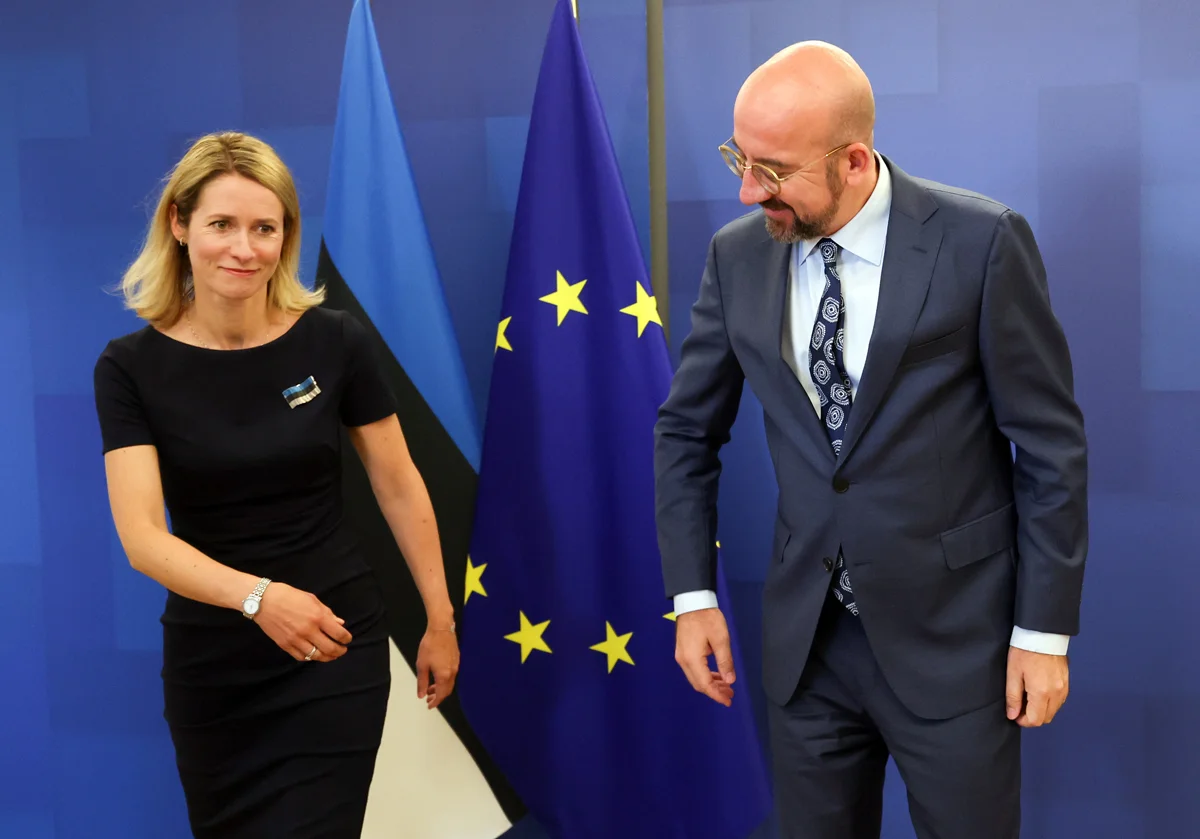
In addition, a lot depends on Callas cooperation with other EU key persons. First of all, the support of the head of the European Commission Ursula von der Layen will be important for her, Modland believes. If they manage to work and combine efforts, Callas can get their contribution. At the same time, Malland himself is optimistic about the possibility of this union: “Von der Lyaina itself has become a happy chance for Ukraine; Contrary to expectations, it was thanks to her that Ukraine was able to get the status of a candidate. Therefore, von der Layen and Callas can become a strong team. ”
The EU interaction with international organizations, including Russian democratic and anti -war communities in emigration, is another important issue that Callas can affect the new role. Although he, of course, is not priority for most European politicians and is often limited only to general slogans and attitudes . According to Umland, pan -European politics is more inclined to support the Russian democratic opposition, but still it depends on the national states. Estonia, he believes, is generally positive about the Russian opposition, but Callas herself did not make high -profile statements in any direction.
I could not unequivocally evaluate the position of Callas on this issue and measure. But the expert is sure that the main priority of Callas in the new position will still be the search for the decision that will help to end the war on the conditions acceptable for Ukraine, as soon as possible. So it is likely that the EU policy in this regard will not change significantly.