
Translated material
Seized by the front
Due to the war, the Russian economy has already lost 1.7 million workers. New mobilization can paralyze the labor market
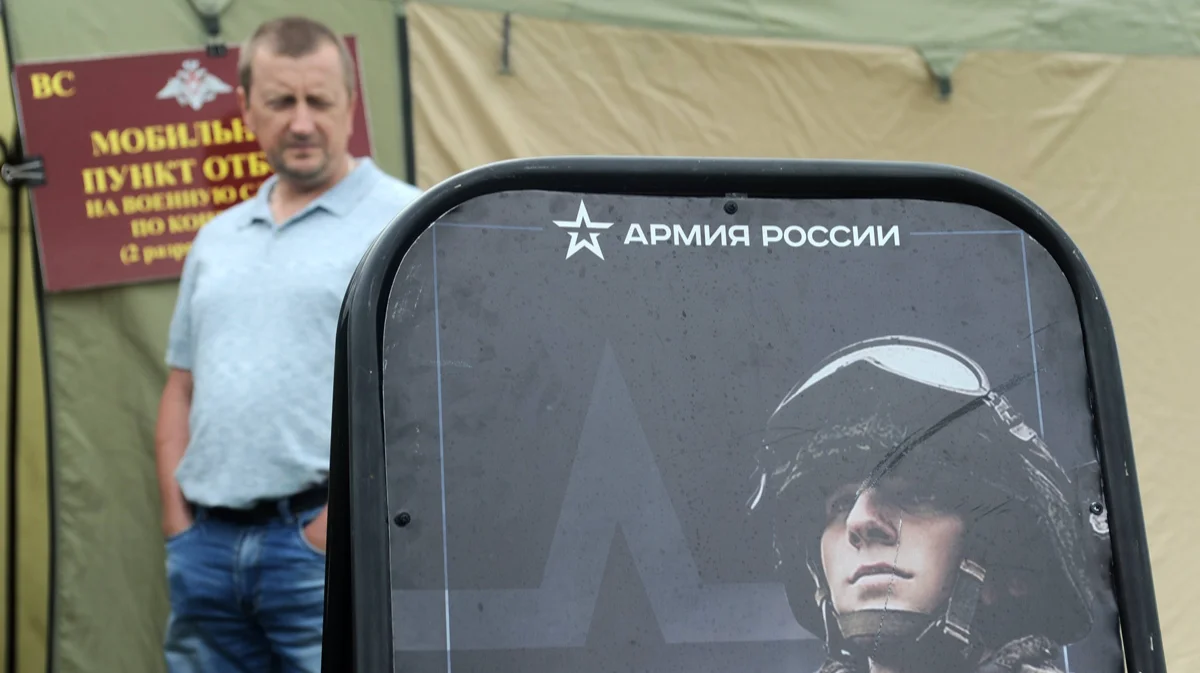
A man at the entrance to the mobile draft point in the Tambov region, Russia, July 9, 2023. Photo: Alexey Sukhorukov / satellite / Imago Images / SNA / Scanpix / Leta
The more Russians send Vladimir Putin to fight in Ukraine, the faster prices in Russia are rising. The war devastates the labor market, and the deficiency of labor has become one of the main inflationary factors - this is recognized by both independent economists and the Central Bank. Perhaps it is the fear of uncontrolled inflation in the spirit of the early 1990s that the Kremlin holds the Kremlin from the second wave of mobilization. Novyevropa tells how the personnel hunger is dangerous and what will happen if several hundred thousand men from the Russian economy are withdrawn.
Why recruitment disperses prices
According to Novo-Europe, due to the war, the Russian economy could already lose from 1.5 million to 1.7 million people, or about 2.2% of the number of labor in Russia (according to Rosstat, this is 76 million people). These figures are mainly consistent of sending mobilized and contractors to the front, as well as from the flights of people caused by the war abroad and combat losses.
An annual inflation in Russia as of July has already exceeded 9%, which is more than twice as higher than the goal that the Bank of Russia sets itself. If at the beginning of June the Bank of Russia believed that the economy accumulates the risks of inflation growth, then only a month later the head of the regulator Elvira Nabiullina said that these risks "not only grew up, they were realized."
At the same time, the Central Bank directly says that the main reason for price dispersal is the lack of workers. With such a shortage of labor force, the enterprise cannot satisfy the growing demand in the economy, and because of this gap prices are rising. Inflation also accelerates the growth of salaries inevitable with a lack of workers.
How the Central Bank explains inflation
“Participants ( discussions of the key rate in early June 2024. - Approx. Ed. ) Agreed that the growth of consumer demand is still exceeding the possibility of expanding the supply, and this is the main factor in increased price growth. The main restriction for expanding the offer, according to participants, is still a shortage of labor resources. Tension in the labor market is enhanced. In conditions of competition for employees, companies increase wages, having such an opportunity due to a high financial result. As a result, salaries continue to grow at a high rate, ahead of the growth of labor productivity.
In April, the decrease in inflationary pressure observed in December 2023 has stopped. Since the growth of lending and consumption does not slow down, inflation can gain a foothold at the current increased level or even go to growth. ”
In July, the Central Bank said that "the security of personnel in the second quarter of 2024 updated the next minimum of the history of observations." Prior to this, the Central Bank said that “plans for hiring for the second quarter of 2024-at the maximum”, however, according to the regulator, the “more restrained” appetites for the third quarter of the Central Bank, as a result of a regular survey , recognized about 14 thousand workshop enterprises.
Where the working hands disappeared
In 2022–2023, from 860 thousand to 1.08 million people could be taken to war. This figure consists of those who got to the front to mobilize in the fall of 2022 (according to official figures, there are 318 thousand people), as well as from contractors. The number of the latter is more difficult to calculate, but it can be from 540 thousand to 740 thousand for the first two years of the war.
The Ministry of Defense did not officially report how many people signed the contract in 2022. According to the chief economist in Russia, Bloomberg Economics, Alexander Isakov, is about 200 thousand people. The officially former head of the Ministry of Defense Sergei Shoigu reported on the number of contacts in only 2023 in 540 thousand people. According to the military expert Pavel Luzin, there were fewer of them: 350-400 thousand, and 150-200 thousand are “retrite”, that is, those who were forced to re -sign the expired contract. Including the military who left the front and those who were released and conquered by the prisoners.
An additional load on the labor market is created by huge combat losses, which, according to the total assessment of The Economist, could be from 462 thousand to 728 thousand people, including from 110 thousand to 150 thousand killed. Many of these people return with disabilities, cease to be full -fledged workers and often can no longer return to their previous activities. New contractors and mobilized are taken to the front just to replenish losses that are unprecedented for Russia over the past 80 years.
The second most important blow to the labor market inflicted the flight of Russians after the start of the war and the declaration of mobilization. Demographers give a fairly wide scatter of assessments of those who left. The Bell study that 2022–2023 (partially covers some statistics and in 2024) could leave and not return at least 650 thousand people. A migration researcher living in Russia agrees with this assessment (he asked for a “new Europe” not to call his name).
Demographer Alexei Raksha has a more modest assessment: from 350 to 500 thousand people left Russia irrevocably, he told us. Basically, this wave happened in 2022, and in 2023 a net-flow, according to the researcher, did not grow. At the same time, some of those who left continued to work for Russian companies or customers, so it is quite difficult to evaluate how much it exactly lost the labor market due to migration
Since the Kremlin is not going to end the war, according to the results of 2024, the number of people who will be taken from the economy to the front can grow by another 50-60%, depending on which scenario will be implemented: with a new wave of mobilization or without it.
If the authorities are limited to recruiting contractors, then in three years, in 2022–2024, the economy (taking into account the maximum assessment of those who went “with the ends” and without taking into account the disabled people who have not returned to the work, the exact number of which we do not know) will be in approximately 1.7 million to 1.9 million people (the figures are overcome due to different estimates of the number of contractors).
If there is a new mobilization, then about 1.9–2.1 million people can be discussed, or up to 2.8% of the labor force , by maximum assessment of labor losses. This is a fairly large figure that has already created macroeconomic risks.
Front arithmetic
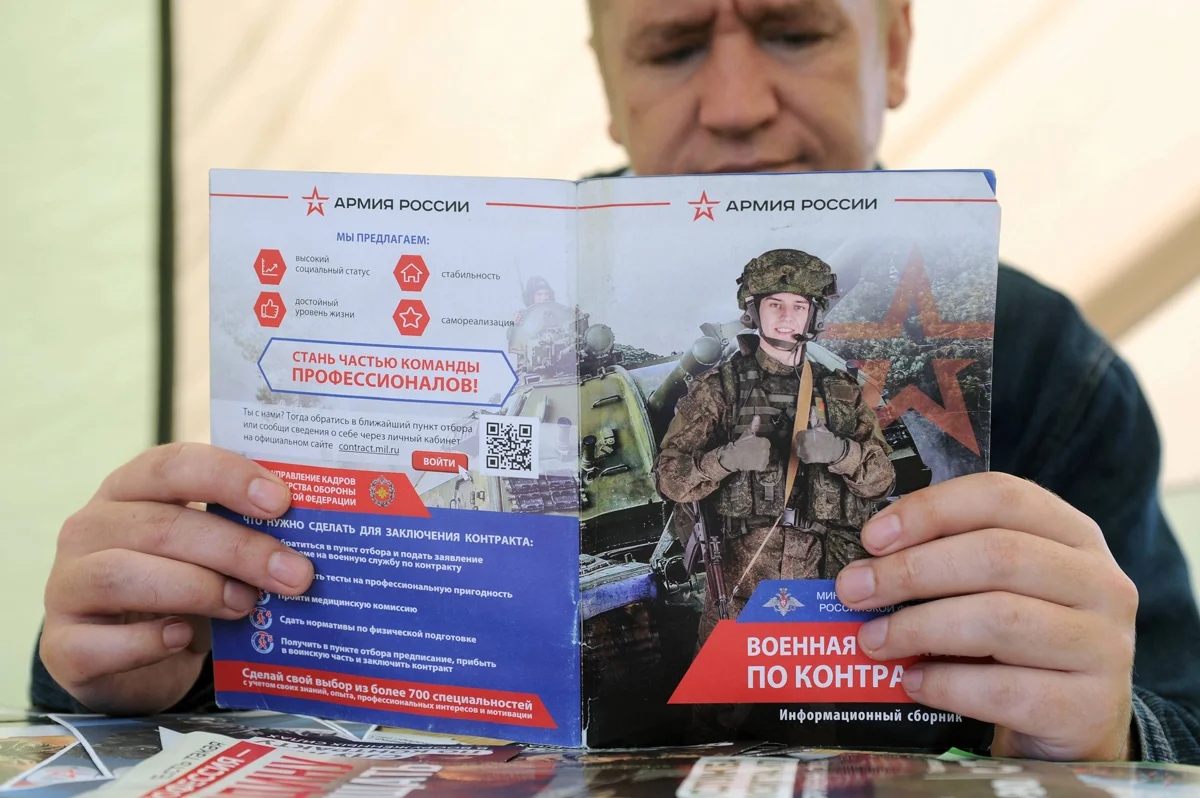
The script “Without mobilization” involves sending from 240 to 370 thousand people in 2024. The last figure follows from the promises of the deputy head of the Security Council of the Russian Federation Dmitry Medvedev, who claims that about 1000 people per day are being signed and the Ministry of Defense has already managed to recruit 190 thousand people.
Medvedev says that the recruitment pace of 1000 people per day will remain, this means that in 2024 up to 370 thousand people will be put under the gun. A number of external observers agree with the assessment of “30 thousand new contractors per month”: for example, the British Ministry of Defense . The same figure was called the New Year and the head of the Polish analytical center Rochan Consulting Conrad Music.
But other military experts consider this data overstated. The founder of Conflict Intelligence Team Ruslan Ruslan Leviev estimates the current pace of delivery of people to a front of 15 thousand people a month. Military expert Pavel Luzin told Novy-Europe that new soldiers are gaining “about 20 thousand a month”, and the rest-“in recent months, they have voluntarily and renovatoryly re-signed the contracts by those who signed them in the first half of 2022 for all types and kinds of troops.”
About 200 thousand people, according to various experts, the Kremlin may call if he decides to resume mobilization. Analysts explain its necessity by the fact that for Russia for its military goals there are already few those who sign a contract.
“Even if it is so that it (hiring contractors - approx.) 20–25 thousand people a month, this is still not enough to carry out effective military operations on the front line. I'm silent about full -scale breakthroughs. They cannot even achieve current goals, ” said Ruslan Leviev Yutub-channel“ Bild in Russian ”.
Military expert Yuri Fedorov said that without mobilization it is impossible to fulfill the plan that Shoigu spoke about in March 2024: to form two combined arms armies and 30 formations. Fedorov told the “agency” that this implies a set of more than 200 thousand people, “but there are no people for this, except if Russia announces mobilization,” the expert said .
With an assessment of 200 thousand I agree and OSINT analyst Kirill Mikhailov. “I think, in the context of the resumption of military assistance from the United States and the entry into force of the Ukrainian law on mobilization, in order to turn the situation, the figures of this order are needed,” Mikhailov said New-Europe. Grigory Sverdlin, head of the anti -war project “go forest” (he helps to leave Russia to those who do not want to fight) told us that he was evaluating possible mobilization of 100-150 thousand.
True, there is one “but”: as Mikhailov says, “it is not clear how to arm these new mobilized ones if, for example, the supply of tanks at best barely block the losses at the front.” Leviev also agreed with this opinion, who said that mobilization is meaningless, because for such a number of people there are no military equipment.
Shocks of sentences
Not only the economists with whom the New Evrope spoke, but the authorities themselves say that the personnel hunger in Russia only intensify, dispersing the growth of salaries and inflation. But although the enterprises themselves and the Central Bank complain about the shortage of working hands, this does not prevent the authorities from taking 20-30 thousand people per month.
The military “leaching” of employees is undermined by the economy, you can judge by what fact: the shortage of labor force was the most hit by sectors, where there is more demand for highly qualified workers.
The economist of a large global bank shared such an observation from the “New Evrope” (he does not name his name in the media). He compared the growth in two years of the war in the sectors that occupy the second and third place in the number of employed in Russia (the leader in employment, trade, showed not growth, but the fall of revenue in 2023 compared to 2021): manufacturing and construction. In processing, the total growth in 2022 and 2023 was half as much as in the “construction site”, where the requirements for the qualification of employees are lower, the economist says.
At the same time, demand is equally high for products of both construction and processing sectors - in the latter enterprises perform defense orders, the economist notes. That is, it was precisely the shortage of personnel that became one of the most important reasons that slowed down the industry with high demand for qualified labor. And nominal salaries both in processing and in the “construction site” increased by 37–38%, which is higher than the average for all sectors of the economy (31%), the interlocutor added.
“Provocated by politics shows of proposal in the labor market already negatively affects, and will limit the volume of production, provoke the growth of salaries and prices,” the economist of the Global Bank confirms in a conversation with the New-European.
In addition, the inflation was also dispersed by the “so-US economist and the Nobel laureate Milton Friedman called the infusion of funds into the economy to stimulate it- approx. Ed .), Which the Ministry of Finance throws into contracts in the military-industrial complex, military salaries, funerals and so on,” the head of the analytical economic center in Russia said to the New Year (he asked not to ask for not call your name). According to the calculations of the Re: Russia, payments to the war participants, the wounded and relatives of those killed from July 2023 to June 2024 could reach 3 trillion rubles, or exceed 8% of the federal budget expenditures.
“Unscorious factors are still winning. If earlier ( until a full -scale war. - Approx. Ed. ) Could pay off this very inflation by increasing imports at reasonable prices, saturating the commodity market, now we cannot do this. Import is getting more expensive because we have complicated calculations, because we have passed exotic currencies from the comfort zone of normal currencies, ”our interlocutor said.
Against mobilization
Experts we interviewed, as well as economists who published their forecasts, believe that in the near future, salaries will have nothing left but to grow.
This means inflation will accelerate, so sending workers to war in 2024 and 2025 will only aggravate the risks for the economy. “Any further increase in labor demand will directly lead to an increase in salaries,” Alfa-Bank analysts write in a review . In turn, the economist Dmitry Poleva in his telegram channel claims that the increase in the costs of enterprises for wages in 2024–2025 "can become a more determining factor for inflation, which explains the growing concern of the Central Bank with the parameters of the labor market."
But the need for employees will also grow, because the enterprises have nothing to plug the holes in the staffing of the staffing: almost all reserves of replenishment of labor have already been exhausted, said Rostislav Kaplyushnikov, deputy director of the Center for Labor Studies of the Economics of Economics, the conclusions of the Bank of Russia Exons Bank.
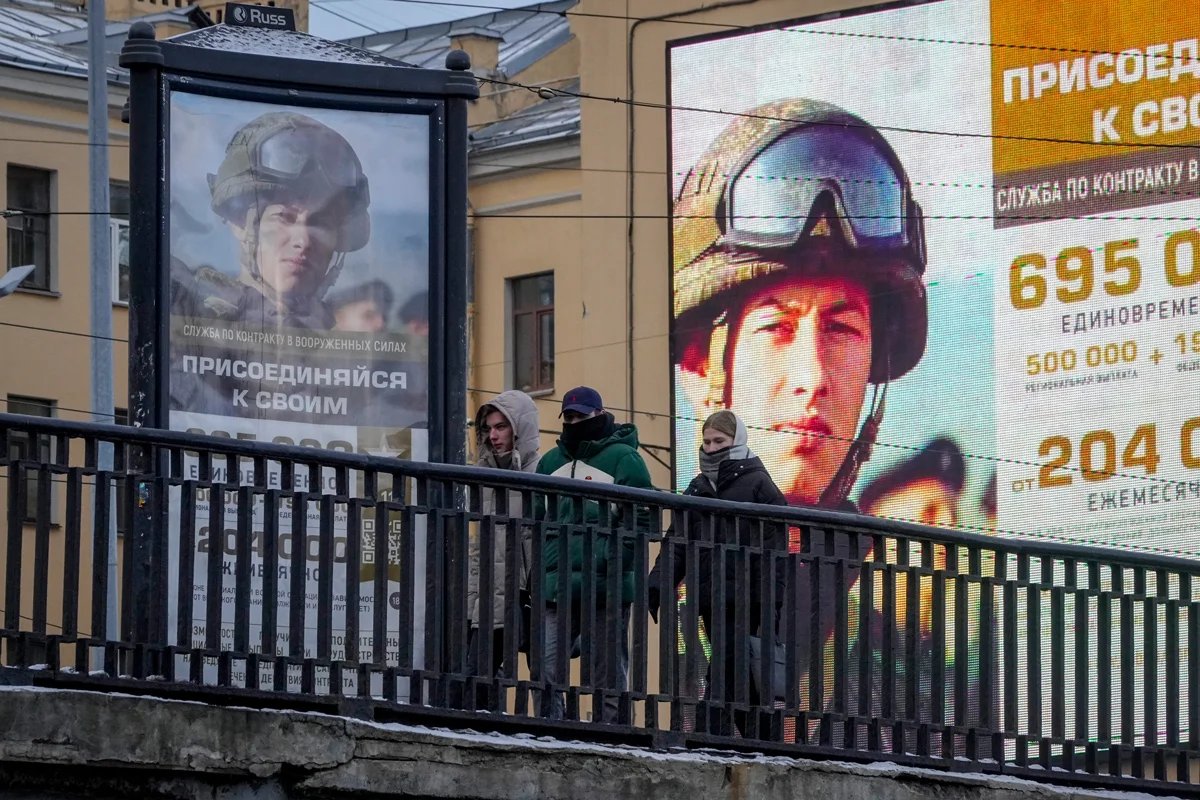
Kaplyushnikov sees in this a possible positive side: in his opinion , "competition for labor between enterprises will potentially lead to acceleration of the growth of real salary." But the paradox is that from its growth those who avoid sending to the front and remain “on a civilian” will not become much richer.
Most experts are waiting for more than a two -time drop in the growth rate of real salary in the next three years. This was shown by the July macro -capacity of the Central Bank, its participants, economists of 33 banks and research organizations, believe that if in 2024 the real salary will grow by 7.3%(already below last year’s jump by 8.2%), then in 2025 its growth will slow down to 3%, and then it will be at the level of 2.4–2.3%.
There are two simple reasons why the authorities need to strive by all their might to keep the price in the UES; No wonder the Central Bank set a 4% inflation goal. Firstly, high inflation restrains the growth of the economy, because expensive money is meaningful to long-term investment projects. Secondly, this increases the expenditure of the budget, which needs to index social obligations and make public procurement at rising prices. And to look for money for this, the treasury will have to borrow more rubles in the domestic market.
A good indicator of current and future costs of expenses is the dynamics of the cost of debt. If at the beginning of 2023 the government occupied through federal loan bonds (OFZ) at a rate of 10.2% per annum, now it is already 15.5% per annum - that is, future expenditures of the budget for “life on credit” have grown one and a half times.
How the budget grew
In the third year of the war, the Kremlin increased budget expenditures by 5 trillion rubles at once. This huge amount is approximately a fifth of the annual expenses of the federal treasury for the last two peaceful years, in 2020 and 2021. This is because military spending in 2024 increased to 10.8 trillion rubles, or more than three times by 2022.
The economists who interviewed Novy-European believe that in 2024 the government with their “appetites” will not be able to fit into the 36.7 trillion rubles limit established by the budget Limit Limit. This has already happened in 2023: then the federal treasury spent 32.4 trillion rubles, exceeding the expenditure plan of 2.1 trillion rubles in the law on the budget law. Novyevropa wrote in detail about where they come from and why this money has not ended yet.
It is possible that it is for this reason that the authorities still do not carry out the second wave of mobilization, realizing that this will cause an even greater blow to the labor market, which means that the rise in prices will increase even more. If you continue the recruitment of contractors in the same pace, and also declare mobilization, then “the personnel deficit will become even more acute, and we will see the new surge in inflation on the horizon, said“ New-Europe ”Nikita Mitrofanov, economist and editor of the Chinese threat telegram channel. He hopes that the authorities "understand that every next seizure of labor force from the economy will cost much more than the previous one."
Nevertheless, if the Kremlin decides that it is urgent to plug the hole at the front with fresh manpower, then the opinion of the “technocrats” economists will not take into account the calculation,
The Russian researcher said, who asked not to give his name. “The Central Bank definitely has an understanding of this. But in their ( authorities. - Approx. Ed. ) The heads justify the means, however, the goal itself is incomprehensible. If there is a decision about the second wave, then they will not look at the macroris, ”he said.
What else is the risk of the economy
Inflation growth is only one of the economic risks that the Kremlin creates with his own hands, taking hundreds of thousands of workers to the war. But there are others: overheating of the economy, threats of loss of competitiveness of a number of industries and, in general, the economic crisis, as well as an increase in excess of economics through increasing taxes.
Overheating of the economy is a gap between the demand for goods and the ability of the industry to produce these goods. According to the Central Bank, in this state, Russia has been located since September 2023. А в середине 2024 года, как считает регулятор, в экономике наблюдается пик перегрева и лучше не становится.
Экономист, руководитель аналитического центра в России, описал эту ситуацию так: «Люди, которые могли что-то производить, вместо этого грязь месят на фронте. А потребляли, как потребляют». Работников становится меньше, но из-за вливания «военных» денег россияне покупают больше товаров, берут кредиты на автомобили и квартиры — и экономика «разогревается».
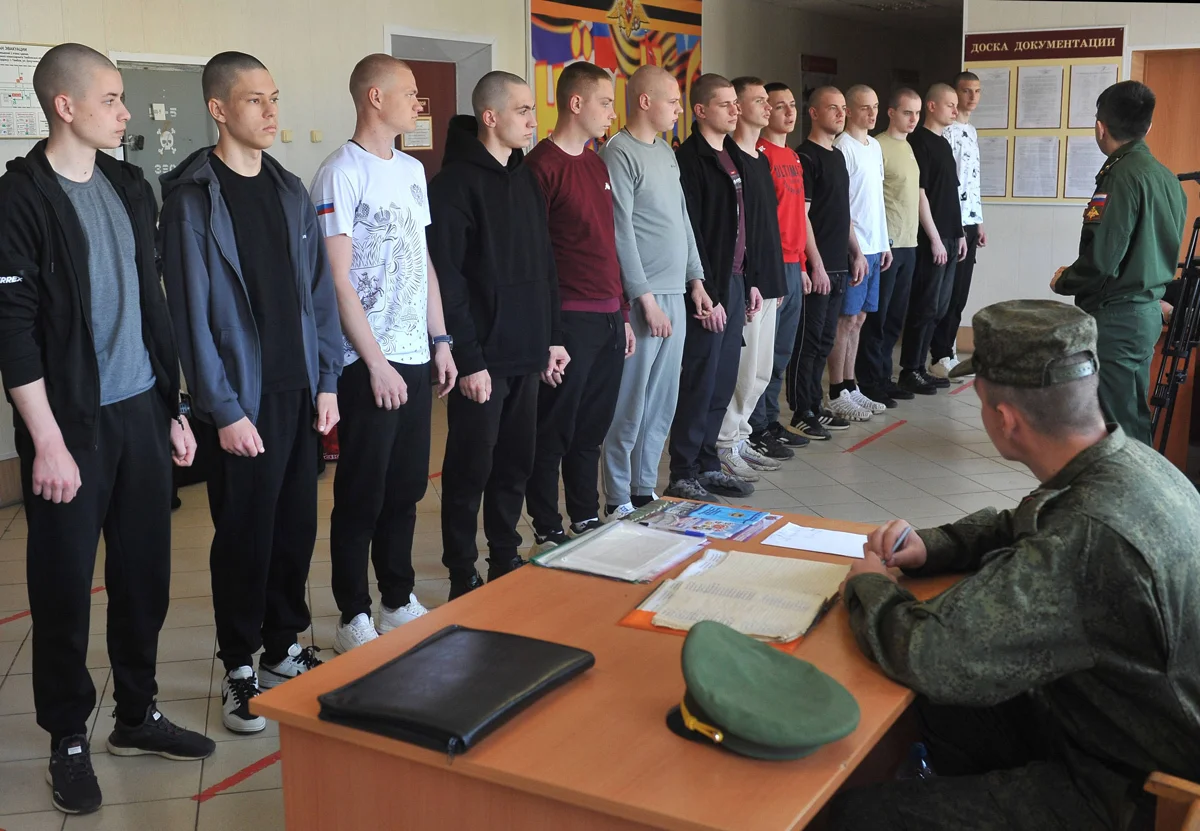
Эксперты говорят, что разрыв между спросом и предложением уже увеличился так сильно, что «без рецессии вернуть экономику в норму, похоже, уже не получится» — так, в частности, считает экономист банка «ЦентроКредит» Евгений Суворов. Как сказал нам экономист Никита Митрофанов, если бы вдруг сейчас в России «материализовалось» от 1 до 2 млн трудоспособных людей, «это бы существенно охладило бы экономику и помогло сбить рост зарплат и проинфляционные факторы».
Если экономика не охладится, возможен экономический кризис, и это еще один долгосрочный риск, создаваемый «военной» потерей трудовых ресурсов,
говорит Никита Митрофанов.
Сопутствующая угроза, говорит Митрофанов, состоит в том, что изъятие людей из экономики обостряет проблему старения трудоспособного населения, которое и без того сокращается в России. Если на 1 января 2022 года в стране жили 140 млн человек, то через 10 лет будет уже 135–136 млн человек, «если всё будет продолжаться, как продолжается», говорит демограф Алексей Ракша (Росстат считает , что в России живет 146 млн человек без учета захваченных территорий, но Ракша говорит , что эта цифра завышена).
Именно демографическая проблема могла стать одной из причин, по которой власти только что провели налоговую реформу . «Повышение налогов в каком-то смысле можно расценивать как создание условий роста доходов бюджета на будущее от стареющего и уменьшающегося населения. Если нельзя увеличить трудоспособное население, то можно брать с них больше налогов», — сказал «Новой-Европа» Митрофанов.
Таким образом, с экономической точки зрения война завела Россию в тупик. Продолжение агрессии (которое, по мнению ряда экспертов, невозможно без мобилизации) повышает риски неконтролируемой инфляции и усиливает перегрев. Но парадоксально и то, что завершение войны тоже подкосит экономику. Сокращение огромных вливаний в ВПК может вызвать рецессию из-за того, что «то, что вы раньше производили, вам не нужно, а больше ничего вы пока не можете производить <…> конверсия будет сложной, долгой, тяжелой, неприятной», сказал в лекции на Ютуб-канале Zima Magazine финансист Андрей Мовчан. Именно так и случилось после распада СССР.
«После войны всегда бывает рецессия. Во время войны экономика как правило растет (всегда если война на чужой территории). После войны экономика почти всегда падает (особенно если ты воевал на чужой территории и победил)», — сказал «Новой-Европа» экономист Дмитрий Некрасов. Он и Мовчан приводят два примера: крупнейший спад экономики США был после победы во Второй мировой войне в 1946 году с падением ВВП на 11%. А экономика Великобритании после победы в Первой мировой войне сократилась на четверть за два года, в 1919 и 1920 годах.
Поэтому правы те, кто говорит, что Россия проиграла войну уже утром 24 февраля 2022 года, — по крайней мере, для экономики это так.