
Translated material
Startup from the United States selection of not yet born children
Parents are promised SuperMbrion: without innate diseases and negative features. Scientists compare this method with Eugenic Nazis
In the USA, a new type of pregnancy planning is gaining popularity, in which women choose future children from dozens of different options. This became possible thanks to polygenic screening - technology that analyzes embryos and chooses the best from the point of view of genetics. The creators of such a technique promise parents of “supercesses” with the most powerful genes and good health. The new technology is compared with the methods of the Eugenics and recall the anti -utopia “On the marvelous new world”, where children were grown in special incubators. The scientific community is also skeptical of this method. Ideal offspring from the test tube - in the material "Cold".
In order not to miss the main materials of the "cold", subscribe to our Instagram and telegram .
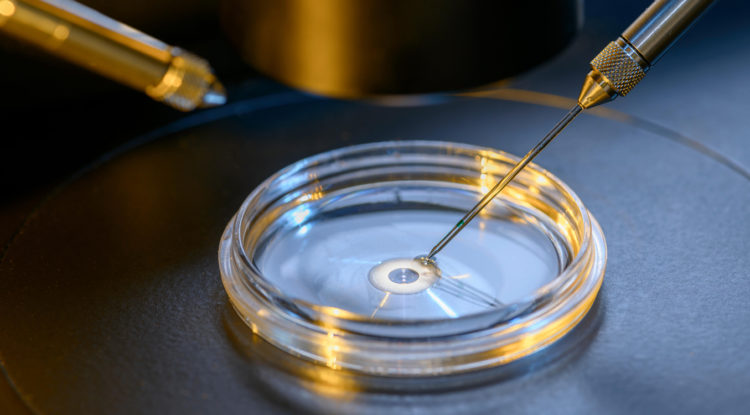
The American startup Orchid is engaged in expanded screening of embryos. Its clients make an extralyporal fertilization procedure (ECO), and then cryoconservation, that is, freezing embryos and eggs. Future mothers receive information about the health of potential children before pregnancy, while the embryo develops in the laboratory. Later, a woman can choose from a dozen embryo she likes and not injure her body with the birth of "the wrong child."
The traditional conception carries more risks than this procedure, because, having already become pregnant, a woman can find out that she will have a sick child, and then she will have only two options: abortion or save a child. Screening of embryos allows you to identify potential problems with the health of the child even before the embryo is in the uterine cavity.
Ethics specialists are confused by the screening of embryos because of its similarity with the methods of Eugenics-the doctrine to “improve” the human race, which was used in Nazi Germany. The Nazis killed those children who did not fit the criteria of the ideal Aryan. If the screening of embryos begins to be used everywhere, then it will be the first step towards the creation of “designer children”. Critics call this technique a “liberal Eugenic”, and supporters - “parental choice” or “reproductive autonomy”.
Explust embryos
The founder of Orchid Nur Siddika decided to create a company because of a personal tragedy. Her mother is almost completely blinded due to age retinite-eye disease, which is inherited. Siddiki admitted that her grandmother, with the technology of screening embryos, could not give birth to her mother, but another child. Siddiki herself wanted to check for the genetic diseases of her future children. She already has 16 experimental embryos , but she has not chosen any of them yet.
The screening of the embryo, which offers Orchid, cannot be combined with traditional pregnancy. A woman should freeze an embryo for research, and for this you need to do IVF. The essence of IVF is %20%D0%B2%20%D0%BF%D0%BE%D0%BB%D0%BE%D1%81%D1%82%D1%8C%20%D0%BC%D0% B0%D1%82%D0%BA%D0%B8%20%D0%B6%D0%B5%D0%BD%D1%89%D0%B8%D0%BD%D1%8B.) The fact that the fertilization of the egg does not occur in the body of a woman, but in the laboratory, and for this you do not need to have sex. Because of this, the people began to be called children born with the help of IVF, "Children from the test tube."
In recent years, the popularity of IVF has been growing both in Russia and in the West - with the help of IVF technology, more than eight million children around the world have already been born . In Russia, IVF can be done for free if a woman has infertility. In 2023, more than 86 thousand cycles of this procedure were carried out in Russia.
Orchid assures that its technology is able to analyze more than 99% of the embryo DNA, while alternative methods analyze less than 1%. The screening of the embryo with a high degree of probability can determine whether the child will subsequently have cancer, schizophrenia, Alzheimer's disease or a bipolar personality disorder. The founder of the company also claims that its methods are able to determine even the character traits of the child.
“I suppose that it will be possible to stop the birth of a future serial killer,” says Siddiki.
All data about embryos will be stored in a special appendix of the future mother. There she will be able to compare the health of embryos in different indicators - for example, which of them has more predisposition to cancer. The catch is that the screening of one embryo costs $ 2500. This amount does not include IVF, and in the USA the prices for this procedure can reach up to 15 thousand dollars. Embryo screening is now available in 40 clinics in the USA, with which the startup cooperates.
Discrimination in the womb
The high price of technology makes it inaccessible to ordinary families, and this can aggravate the inequality in society. The problem is that most genetic tests are based on information about white people in European origin, so this analysis is less suitable for African Americans, Latin Americans and other non -persons.
In addition, such breeding tests stigmatize people with mental disorders, experts say. The consortium of psychiatric genomics (an international group of more than 800 researchers) opposed such methods of “selection” of embryos: consortium experts propose to improve the lives of people with mental illness, and not interfere with their birth.
Embryo screening also raises questions in the scientific community. Orchid technology is supposedly capable of identifying the risks of the spread of polygenic diseases, that is, those in which several defective genes are used at once. The editors of the authoritative scientific journal Nature warns : in reality, scientists are far from understanding the potential advantages and dangers of such a technology. In fact, such tests only destroy viable embryos and use a woman’s body to collect more eggs.
The authors of the study published in the European Journal of Human Genetics directly call the screening of embryos unproven and unethical practice. In fact, there is no point in such screening: the variability of genes within the family is much more limited than variability in the human population as a whole. However, other researchers found pluses in this method. For example, the polygenic screening of embryos almost doubles the risk of a child with schizophrenia or Crohn's disease .
The professor of epidemiology from Harvard Peter Craft developed polygenic tests as part of the university research (its developments are used in Orchid). According to him, this technology really finds defective genes, but this is unlikely to help avoid genetic diseases. The fact is that different genes can be responsible at once for several potential diseases. If future parents choose an embryo with a low risk of breast cancer, then they can lose sight of the set of genes from which another disease can develop. For example, type II diabetes is associated with a mutation in not one gene, but in thousands.
Some researchers tried to determine the potential level of the child’s IQ by embryo, but this did not bring results. True, companies leave no hope to develop such a technology, and this scares the scientific community. The selection of children according to cognitive abilities is unnatural, a number of scientists believes . At the same time, it is sometimes simply impossible to stop such startups: for example, there are no laws in the United States that could prevent such tests to the masses.
If the idea of breeding children becomes more popular, the ability to generate a “super-signs” will not seem like a futuristic, but a desired service for parents. Thus, Eugenika and artificial birth control may stop being marginal Nazi ideas of the first half of the last century, and companies like Orchid will be able to make a condition on this.