
Translated material
Let's get acquainted?
How Tinder and Grindr introduced Russians to the Western culture of Deiting, which ended in Russia with the outbreak of war
Photo: Yuri Kochetkov / EPA-EFE
Perhaps not everyone has noticed, but from the beginning of 2010 and until 2022, a slow but faithful sexual revolution has been taking place in Russia (which in recent years has changed “sexophobia”). No, no one climbed to the barricades and no one spent the parades of freedom, but in isolation from the official ideology of the Russian leadership, telling about “traditional values”, at the level of ordinary Russians there were changes towards pro -Western sexual freedom. About the same as in Brezhnev’s time, when ordinary Soviet citizens lived their lives, dreaming of jeans and listening to Western music.
This sexual revolution was associated with the arrival of two inconspicuous ones to Russia-at least then, in the early 2010s, applications: Grindr and Tinder. First, smartphones began to appear in Russia, and different applications could be installed on them: WhatsApp, Instagram, Foursquare - they all contributed to the formation of a new virtual space that was placed on one device that climbed into the pocket. There were also dating applications-Grindr and Tinder (the first-for Quirry-human, the second-for both Quir and hetero).
Grindr was the first: the application was released in March 2009 and began to quickly gain popularity all over the world. It was simple in nature: photos of men were displayed on the smartphone screen, depending on their remoteness relative to the phone holder.
It is safe to say that this application had a truly revolutionary meaning - both in the West, and even more so in the CIS: it made acquaintance much easier.
Interestingly, some western stars of show business, not hiding their homosexuality, actively promoted the application in the Quir-comic. So, the British comedian Stephen Fry spoke about Grindr during the British show about Top Gear cars. After that, the number of users in the UK, and in other Western countries, immediately took off.
In Russia, in these years, all talk about traditional values began at the official level, but there could be no talk of advertising the Western application, especially for Quirry-loves. Russian users learned about him gradually: the word of mouth, although it worked, is slower than in other countries. So, in 2011, the number of applications in Moscow was only about a thousand. But this figure still gradually increased.
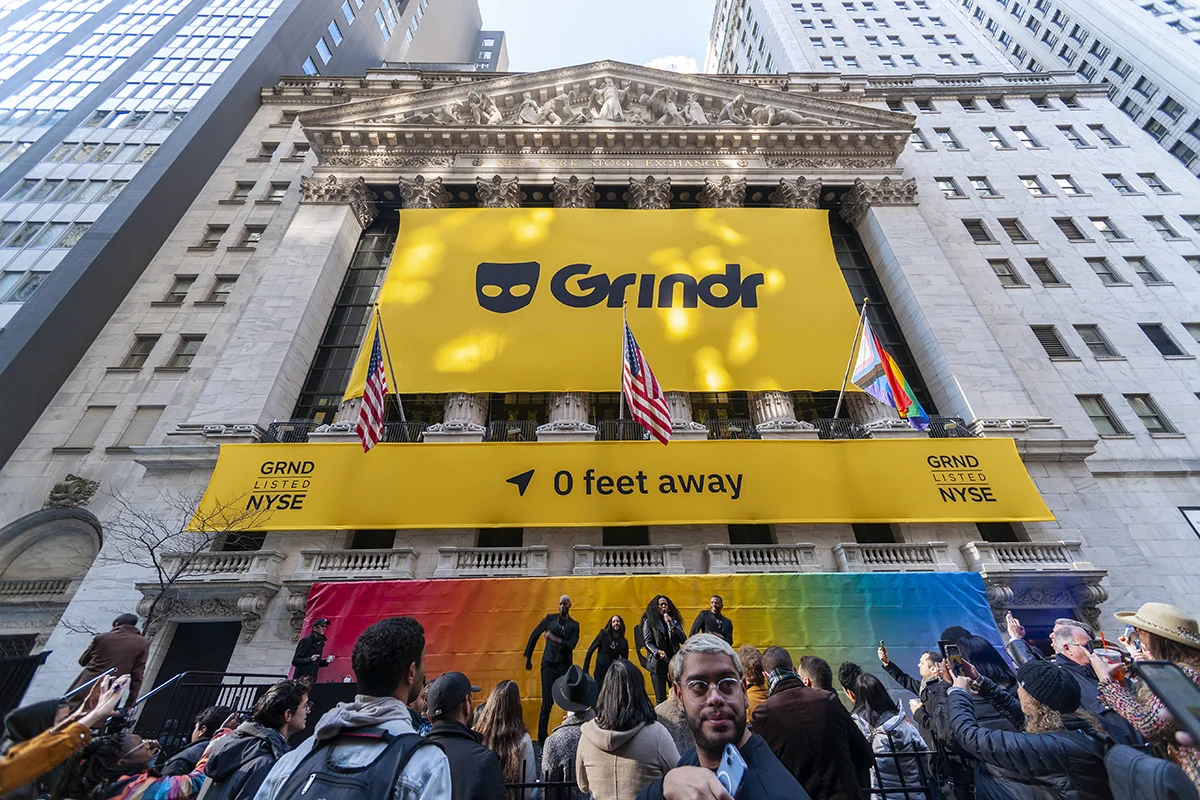
At the same time, for Russian men and men from other post -Soviet countries, the appearance of Grindr was Big Deal. If in many Western countries a stable gay infrastructure for dating and Connect has been formed a long time ago, then in post-Soviet countries such infrastructure, if existing, was weak and not very effective. Moreover, it was not safe: a trip to a bar or sauna (an option that is not available in all Russian cities) was a risky business - many, for various reasons, were to go to such clubs, if not scary, then shy. With the advent of Grindr, a gay bar could have in a pocket.
Unlike Russian dating sites, for dating with Grindr it was not necessary to register anymore and have access to the computer. Now you could get acquainted here and now, in real time. For many Russians, as for the Kvir Muzhin in the West, Grindr download was the first to get acquainted with Quir-Mir, an attempt to see who is around and understand that you are not the only one.
In 2012, the US invented a new Tinder dating application for hetero- and homosexuals. An interesting fact - Tinder has become widely known to Russian users after the Sochi Olympics in 2014. Then foreign athletes talked a lot about an unknown application for dating.
So, one snowboarder wrote on Twitter that she wanted to use Tinder as soon as possible in the Olympic village. After such “advertising”, the Russian audience of the application increased by as much as 400%.
Tinder led to an even more serious transformation of Russian deiting-this time for hetero- and for homosexuals. With the strengthening and popularization of apple culture, a small icon with a red flame on the screen of an iPhone or android became a necessary attribute of anyone who wanted sex dating or dreamed of finding their second half. Tinder dating even became fashionable. Moreover, with the help of the application, Russia was gradually embedded in a global, global editing culture and “sex globalization”. Tinder helped people find a couple not only in their country, but also abroad, increasing the number of applicants open to dating.
It is important that Tinder also helped the Russian Quir-Melods. Firstly, the application has strengthened among the Kvir-human understanding that their relationship does not have to be reduced to sex at all, but can be filled with feelings, affection, conversations-all that heterosexuals have. Tinder helped to “normalize” the culture of gay gay with trips to the cinema and restaurants-as opposed to the quick meeting for sex. Yes, at the state level there was already a law on gay propaganda, but Quir-loves still met, went on dates and lived their lives-largely thanks to Tinder.
The application seemed to many safer than Grindr, since it was possible to communicate there only if both sides showed interest.
Both applications led to a serious decrease in stigma around online dating: before their arrival, many thought that online dating is the destiny of losers. Moreover, Grindr and Tinder, being Western applications, had a good interface, fashionable design and western gloss, they were modern.
But pro -Western acting culture in Russia came to an end after the beginning of the so -called “Switch”. Tinder left Russia of his own free will - what was only in the hand of the Russian anti -Western narrative: after all, it is inconvenient to admit that the Western application helps Russian people with personal life. It can still be used with the help of VPN, but the general web of freedom and communion to Western, to sexual globalization - ended. The state offers its alternatives to a popular application, but naturally, they are not so attractive.
As for Grindr - it is most likely to use it unsafe. In a country where there is a well-known decision of the Supreme Court, the use of the application of anonymous sex dating for Quir-cereals is fraught with understandable risks. One can only hope that once Russia will again integrate into the global system of love and acquaintances.