
Translated material
Russia. Reboot
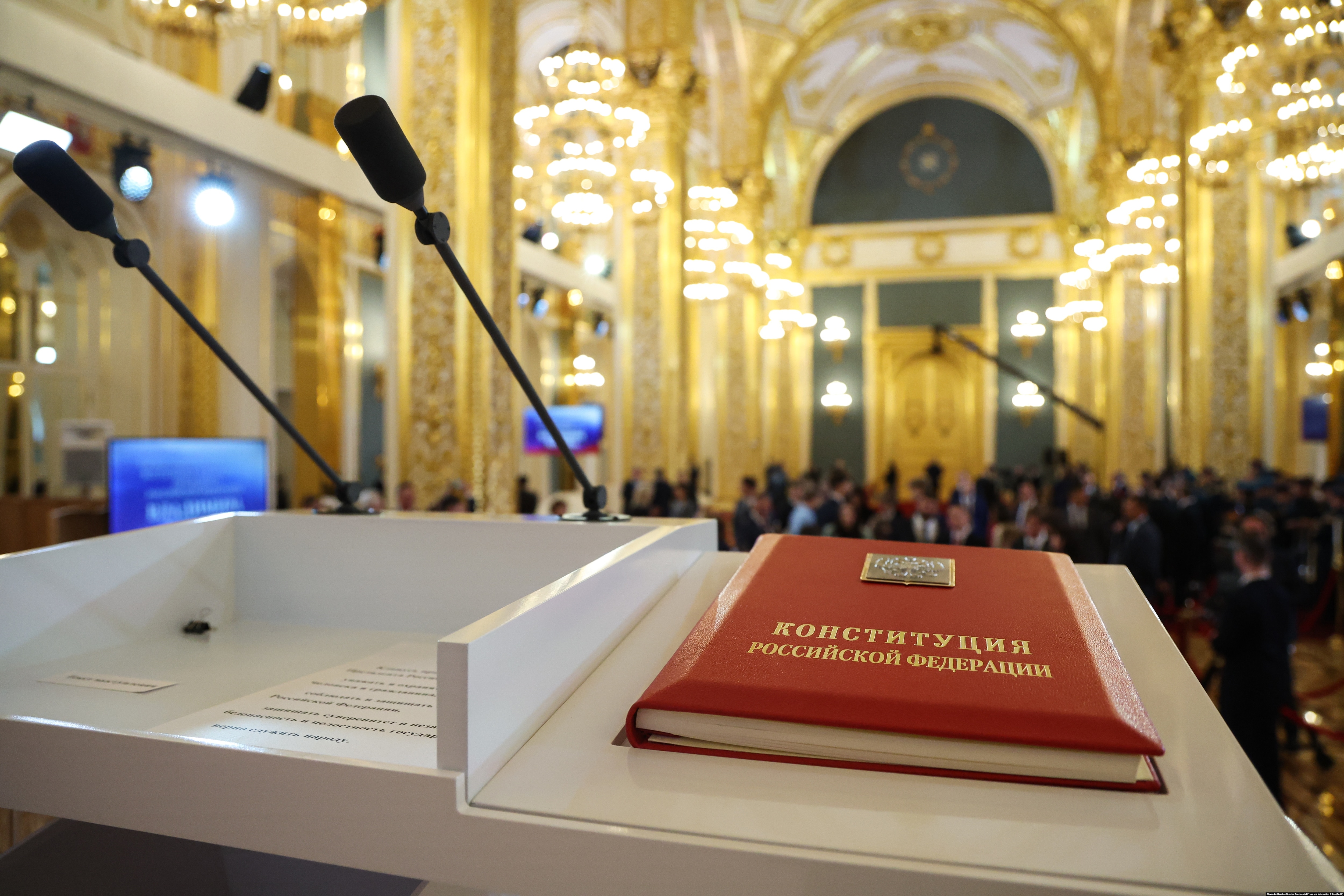
Alexander Morozov, Evgeny Roshchin and Ilya Shablinsky: is it necessary to change the Constitution after Putin?
Sergei Medvedev: Our hearts demand a constitution! I remember the moment on December 14, 1825, when the soldiers on the parade ground, trained by the Decembrists, began to demand the Constitution, saying that this was supposedly a new queen. In the same way, we are now waiting for a new Constitution; at least three of our colleagues - political scientists Grigory Yudin, Evgeny Roshchin and Artemy Magun from the Institute of Global Reconstitution have proposed a draft of a new Constitution for Russia.
Is such a project necessary today, when Russia is at war and the future of the country is still unclear? Why couldn't the 1993 Constitution prevent the usurpation of power? How to avoid dictatorship in the future?
Correspondent: In the draft of the new Constitution, the authors propose decentralization of power in post-Putin Russia, renaming the country into the Union of Republics, the State Duma and the Federation Council into the Chamber of Republics and the Chamber of Citizens. The president's actions will be monitored by a special council of five elected and internationally recognized citizens.
Officials and security forces are encouraged to adopt new rules and a new Constitution in order to maintain their places in Russia after Putin. The draft new Constitution caused heated discussions among the Russian opposition. In particular, it was noted that it does not present mechanisms that can prevent the emergence of a dictatorship.
Sergei Medvedev: With us are political scientist Alexander Morozov and Evgeny Roshchin , political theorist, researcher at Princeton University in the USA, one of the co-authors of the draft Constitution.
Sasha, isn’t this draft Constitution some kind of sharing of the skin of an unkilled bear?
Alexander Morozov: I think the authors put forward this project, well aware that now is not the historical moment when it could be in demand. But at the same time, they seem to understand well that it is necessary to develop social imagination, and are taking a step in this direction. They want to say that we must make some kind of progress into the future, regardless of whether there is a chance of implementing such a project today or not.
Evgeniy Roshchin: Our project is really about the idea of political and social imagination. We wanted to think about how in the future we could imagine a country founded on completely different principles, how we could learn some lessons from what happened and see if it could be imagined differently, given those lessons and what is happening with federations and with the world at large. This is an attempt to discuss the future that awaits us over the horizon of 20–30 years, when the whole world will be faced with the question of the principles of the new constitution of a common world and a common political system.
Sergei Medvedev: Is there some kind of ideology embedded in this project? They write that three leftist theorists have gathered and are promoting a leftist agenda.
The authors of the project propose decentralization of power in post-Putin Russia
Evgeniy Roshchin: We are somewhat surprised by these labels, since even among the co-authors of this project there are ideological differences. The umbrella principle of this project was rather what is today called neo-republican political theory. It draws part of its principles from the experience of classical, Renaissance and modern republics, partly from modern moral political philosophy.
Sergei Medvedev: Sasha, to what extent can the principles of classical republicanism work in Russia?
Alexander Morozov: We don’t know that. The authors of the project want to tell us that at some point absolutism will collapse in Russia. And when the door to republican government is opened, the question will arise: how should it be organized? In this sense, we are at the peak of the post-Soviet usurpation of power. Now they say that the expression “personalist regime” is not very accurate, because it is already simply totalitarian in some sense, it is at a different pole than the republican tradition. Therefore, when Eugene says that their goal is to outline for the reader some contours of the future, they are turning to the republican tradition. Yes, she is different.

Sergei Medvedev: Evgeny, the republic is good, but where can we get so many public? I remember the joke: “Is it possible to build a Swedish model of socialism in the USSR?” - “You can, but where can you get so many Swedes?” Your work says that everything will sprout from below - from house committees. Do you think that, as in the Athenian polis, democracy will sprout from below?
Evgeniy Roshchin: This project is intended to rethink both grassroots management and the federation as a whole. We came up with a nesting doll of several levels in order to come up with a peaceful republic. Our lowest level directly affects the level of federal policy.
We are at the peak of the post-Soviet usurpation of power
We relied both on the experience of scientists who studied the historical traditions of republicanism in Russia, and on what we have observed in recent decades, especially in the context of the life of large urban centers where the movement of active citizens has manifested itself. This is due to activity in municipal elections, especially in Moscow and St. Petersburg, and to other types of activity, when citizens, especially after the Bolotnaya protests, began to develop small projects.
So there is a demand for participation at the grassroots level. And our idea was to try to comprehend this request and give people an idea of how they could meaningfully participate in public life. Today, many do not associate themselves, for example, with municipalities, presenting them as institutions completely controlled by United Russia and local administrations and meaning nothing. With this project, we decided to try to give the idea that it is possible to meaningfully take part in the organization of life around us, and give people the power to make these decisions, raising the stakes for them to participate in local government.
Sergei Medvedev: I have an association with how it was in the first years after the revolution: such a house committee under Shvonder. These grassroots forms of self-organization were very direct social elevators that brought such people to the very top through various forms of councils, through participatory democracy. They swept away the traditional mechanisms of the elites. Do you have something similar - trying to raise grassroots forms of self-organization to the supreme power in the state?
Evgeniy Roshchin: In a sense, yes. We just want to give citizens the opportunity to feel like citizens, starting from affairs in their own backyard and ending with affairs at the federal level, and between them there will be important issues of managing microdistricts or entire republics.
Sergei Medvedev: Your critics accused you of creating a property qualification: the HOA votes, but to do this you must first be the owner of the property. What if the person is not the owner?
Evgeniy Roshchin: This is one of the debatable issues. Our project is now in the second edition stage.
Sergei Medvedev: Evgeny, as I understand it, you are still focusing on the federation: it is no coincidence that your name is “Union”. This is a word that has set many people on edge.
Evgeniy Roshchin: We proceeded from the fundamental consideration that we are coming up with some kind of common political space, but at the same time based on federal principles. The question before us was: what went wrong in the space that existed on the territory of the modern Russian Federation since the collapse of the USSR? And we proposed a new principle for the formation of a federation, where the federation receives exclusive powers in the sphere of determining foreign policy.
Our project brings together two foundations for curbing sovereign power. We tie the foreign policy decision-making process, firstly, to the work of international institutions, and secondly, to the work of the federation. And when we talk about the federation, it is very important to understand how to organize it so that it, in the person of its body that now exists, the Federation Council, does not simply rubber-stamp someone else’s decisions. So our project tried to imagine a federation where the federation would have a real interest in determining how foreign policy should be done and what this common republic should be.
Sergei Medvedev: Do you have any positive examples of existing federations?
We want to give citizens the opportunity to feel like citizens
Evgeniy Roshchin: Yes, we proceeded from the experience of several federations: Germany, Switzerland and the USA. But we decided to even strengthen the federal aspect of the project, making it so that the regions represented in the general body can block all the most important decisions in foreign policy. Moreover, we wanted to ensure that the regions had an independent political voice. At the same time, the region must be financially and politically wealthy.
Sergei Medvedev: What should insolvent regions do? Will they be disenfranchised?
Evgeniy Roshchin: Both in the USA and in other countries there are regions that receive subsidies from the federal center, and then, of course, the federal center puts forward certain conditions. And as soon as the conditions for spending funds appear, the regions begin to lose their political power.
Sergei Medvedev: Actually the same property qualification.
Evgeniy Roshchin: Not exactly. Here the question is that the regions have the resources to resist both the strong federal center and strong federal neighbors, when the regions, for example, unite into some kind of conglomeration and, as conglomerations, become part of the federation, maintaining their independent voice. This condition is fundamental to ensure that the federation is not asymmetrical and not dominated by several regions or one federal center. And this will be one of the main limiters of aggressive militaristic urges to which more unitary states succumb.
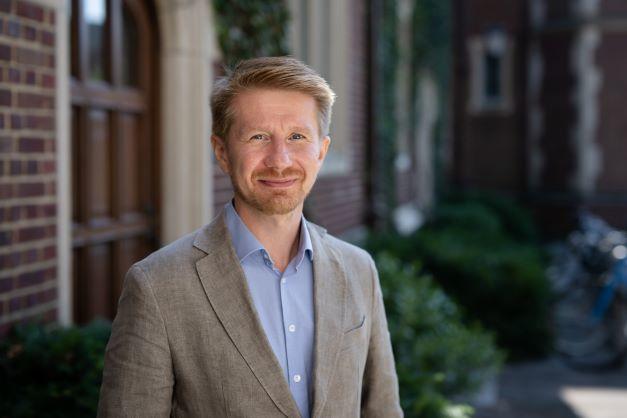
Sergei Medvedev: Ilya Shablinsky , professor, Doctor of Law, joins us. Your opinion about the project as a lawyer and one of the people involved in the current, albeit severely crippled, Russian Constitution.
Ilya Shablinsky: The opinion is rather positive. In any case, we need to continue searching in this direction. Even though the authors are mostly not lawyers, they offer new and interesting ideas. This shows what trends currently exist within constitutional thought.
In any case, we need to continue searching in this direction.
It is worth noting two trends reflected in this project, which, of course, needs serious rethinking. It is clear that it is necessary to expand the rights and powers of parliament, to increase its role in the legislative process when making personnel decisions. In addition, measures must be taken to prevent the formation of a despotic tyrannical regime, which has now developed in Russia. This means that presidential rights will have to be reduced; some propose eliminating the institution of the presidency altogether. The authors of the project do not exclude this institute and offer a number of original solutions.
Sergei Medvedev: Sasha, there is truly an eternal debate - a presidential or parliamentary republic. Has the time finally come for a parliamentary republic in Russia?
Alexander Morozov: If the Constitution emerges as a result of civil conflict, then the parliamentary form will certainly be promoted by all participants. But if the conflict ends in the usurpation of power, and some Bonaparte is at the head of the country, then it is clear that he writes the Constitution for himself and receives emergency powers. But I would still proceed from the fact that after this post-Soviet transit has passed, Russia and its territories will inevitably seek a form of limitation of this unitary power. So, perhaps, we really should focus on strengthening, complicating, and differentiating parliamentarism and parliamentary power.
Sergei Medvedev: Indeed, early constitutional projects, both American and French, are a limitation of absolutism and despotism.
Ilya, to what extent has the 1993 Constitution been implemented? Why was she unable to prevent the evolution of power, which, in particular, Alexei Navalny wrote about?
Ilya Shablinsky: The 1993 Constitution contained a number of mines, dangerous concessions to possible authoritarianism. The first is the procedure for forming a government.
Sergei Medvedev: Was it written for that time, for Yeltsin during the period of his highest confrontation with the Supreme Council, with the remnants of communist power?
Ilya Shablinsky: Of course, it partly bears the stamp of that time. The point was to find answers to the questions posed by the crisis of 1992–1993. And there, in particular, there was the question that there was a certain huge parliamentary majority or a huge body represented by parliament, from which the Supreme Council was formed. And so they could make any decisions and did not bear any responsibility for them. This affected their work.
The 1993 Constitution contained a number of dangerous concessions to possible authoritarianism
The government led by the president and his administration were unable to find a compromise with this parliamentary majority. The 1993 Constitution laid down mechanisms that would facilitate the formation of a government. The president, in fact, could appoint almost anyone. And this is the weak point of that Constitution.
In addition, there was a rule that allowed the president to dismiss the chairman of the government with a snap of his finger. Now, in any case, it is necessary to change the procedure for appointing the government, to expand the powers of the upper and lower chambers when making personnel decisions. Probably, the mechanism for forming the judiciary needs to be adjusted: now it is completely dependent on the presidential power; all federal judges are appointed by the president. This means that they are selected by the Administration, checked for loyalty and charged as needed. The authors of the project tried to take this into account. In this project, judges are appointed by parliament. There is something to complain about, but in general it is correct.
Russian society has a very deep wound in its skin regarding the Constitution.
What was not properly reflected in this project? Government appointment experience. The authors proposed: the government is formed in the lower house from among the members of the chamber, as in England. The House approves this government. And after that it is proposed for approval in the upper house. Of course, this is an unnecessary complication of the formation procedure; nowhere in the world is a government formed like this: if the lower house has approved it, that is enough.
Sergei Medvedev: Sasha, did Putin actually use the weaknesses of the 1993 Constitution in his rise to power? Or does the very mechanics of the state of emergency that Putin introduced do not imply the use of constitutional mechanisms?
Alexander Morozov: No, Putin has always been a legalist, he told everyone around him: do it, but only so that it is according to the law. The emergency came quite recently: perhaps in 2020 with amendments to the Constitution. This, of course, is the complexity of the situation when we talk about a new model of the Constitution: Russian society has a very deep wound in its skin regarding this matter.
Sergei Medvedev: Ilya, the future of Russia: what to do - cancel all the amendments of 2020, return to the 1993 Constitution, or completely build a new constitutional space from scratch?
Ilya Shablinsky: I would assemble some new organ. All the amendments made under Putin are absolutely ridiculous and harmful!
First there is the question of a political solution. I think the easiest way would be to work with the 1993 Constitution and amend it. Expand the powers of the Duma and the Federation Council and narrow the powers of the president. But how to achieve this? This is a separate question.
Sergei Medvedev: Sasha, is the future of Russia still evolution or revolution?
Alexander Morozov: The project itself, which was proposed by three well-trained specialists, is not a naive move. Here we are dealing with a completely high-quality professional intellectual provocation in a sense. But the approach is interesting. Such a Constitution may appear as a result of some very large civil conflict, as a result of withdrawal from it and reconciliation. The authors of the project propose a scheme in which a new federalism and, in general, a completely new structure of power arises.
Sergei Medvedev: How to prevent the emergence of a new Putin?
Alexander Morozov: This is an endlessly open question of history. Society as a whole is able at any moment to either develop some kind of vaccine against this or not. And old democracies are subject to this temptation.
Sergei Medvedev: What could be a vaccine?
Any end to the war in Ukraine will end in an internal conflict of very great force.
Alexander Morozov: This is a question of political culture.
Sergei Medvedev: Civic education, political education and a mature society, which alone can prevent the usurpation of power.
Alexander Morozov: Yes, a society in which there is some interaction between the bureaucracy as an element of the state and educated circles, academic circles, as well as elected politicians, and in general this meritocratic environment is able to constantly reflexively monitor the processes within society, call on society to react to something and thereby stop political degradation.
Any end to the war that the Kremlin is currently waging, any development of events as a result of this post-Soviet 30th anniversary will end in an internal conflict of very great force. And only from within this conflict will those groups emerge that claim to be the holders of the future.
It's hard to say what decision they will make. However, it must be said that the authors of this project are implementing one of the elements of the political legacy of Alexei Navalny. He was one of those who believed that the old Constitution would no longer stand. To be honest, I also think that after the regime has crippled this Constitution, the historical mincemeat cannot be reversed.
Sergei Medvedev: The authors of this alternative project provide a very good service to intellectual and civil society: by thinking about the future, we bring this future closer.