
Translated material
Association of Indigenous Minorities enriches officials
RAIPON receives money from Norilsk Nickel and spends it on contracts with affiliated companies
In July, the Russian Ministry of Justice recognized dozens of independent anti-war organizations of indigenous peoples, including those from the “Arctic” regions , as extremist. The initiator of the persecution of some of these organizations was the Russian Association of Indigenous Peoples of the North, Siberia and the Far East, better known as RAIPON. “Layout” together with the NGO “Arktida” and with the participation of the publication “7x7” tells how members of “United Russia” and business representatives manage the organization, earn money from cooperation with industrial companies and lobby the UN to lift sanctions against Russia.
In order not to miss new texts from “Layout”, subscribe to our telegram channel
National activists became “extremists”
At the end of July 2024, the Ministry of Justice recognized 55 organizations as “extremist”. They were considered “structural units” of the non-existent banned organization “Anti-Russian Separatist Movement”. Among them were projects opposing the war and helping Russians avoid participating in it: for example, the Free Buryatia, Free Yakutia, New Tyva and others foundations.
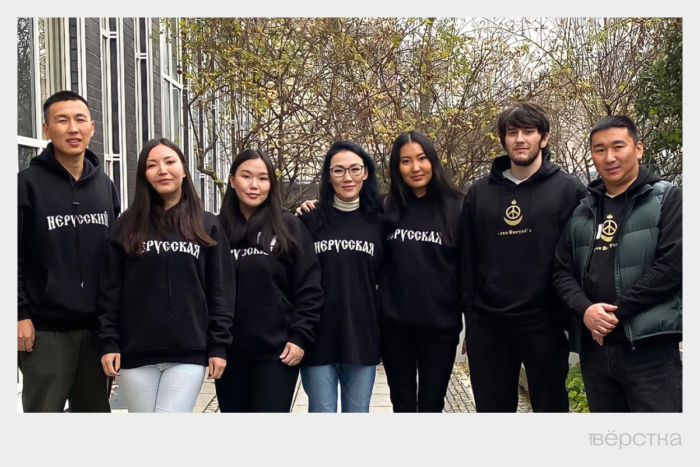
The list also includes decolonial movements that support the indigenous peoples of Russia on international platforms: for example, the Aboriginal Forum and Russia of Indigenous Peoples. Two years ago, the Association of Indigenous Peoples of the North, Siberia and the Far East, also known as RAIPON i , asked to check for extremism on the blog maintained by activists of these associations. RAIPON initiated this check together with the Russian delegation of the UN Permanent Forum. Before this, members of the Aboriginal Forum and Russia of Indigenous Peoples spoke out against the war.
The new “extremist” status will greatly complicate the work of associations in Russia - interaction with them now faces liability, even criminal liability. In fact, RAIPON remained one of the few “legal” representations of the indigenous peoples of the North, Siberia and the Far East. It includes 34 public organizations, including from nine “Arctic” regions of Russia i .
How does the Indigenous Peoples' Association work?
As stated on the Association’s website, its main task is to protect human rights and defend the interests of indigenous peoples of the North, Siberia and the Russian Far East. She conducts this work in three directions: legal, international and youth.
The legal direction includes proposals to change legislation in favor of indigenous peoples and assistance to specific community representatives. According to Vestka’s interlocutor, who is associated with the work of RAIPON in the Khabarovsk Territory, the Association provides lawyers, but only in high-profile cases that do not contradict the position of the state.
“We had a case where our hunters shot a tiger when it attacked and tore a man apart,” says Vverstka’s interlocutor. - It was self-defense. Our prosecutor's office is opening a criminal case. It became resonant. And then the Association got involved and helped [with lawyers]. Because if these hunters were imprisoned, the people would rebel. I noticed that the Association as a whole maintains this balance: in some places they are tightening the screws, and in others they are trying to protect. But they don't work at full strength. And they won’t be allowed to work [by the federal authorities].”
The rest of RAIPON’s human rights activities boil down to writing appeals and complaints, Vverstka’s interlocutors note. For example, last year the Association complained about Leonid Yakubovich to the management of Channel One. The host of the “Field of Miracles” program compared the Chukchi to “idiots.” But in the end, responding to the claims of the indigenous residents, Yakubovich only advised his fellow citizens “not to read Soviet newspapers.”
At the international level, the Association sends delegations to thematic meetings at the UN. The public organization “KMNSoyuz”, opened with the support of RAIPON, helps her with this. i
As part of the “youth” direction, experts from RAIPON and “KMNSoyuz” launched a diplomatic program for indigenous peoples at MGIMO, and at the Institute of the Peoples of the North of the Russian State Pedagogical University named after. A. I. Herzen opened a representative office of the Association. One of the students of the Russian State Pedagogical University, who interacted with the local branch of the Association, told Vorstka that the organization also filmed videos in support of the authorities.
“We, as students, were also invited to film,” recalls Vverstka’s interlocutor, who wished to remain anonymous. - I refused to participate in this. They answer me: “That means we are not working well with young people.” I said: “So young people have a different opinion.” Other students also supported me and did not go to film.”
How officials seized power in the Association
As a public organization, the Association of Indigenous Peoples of the North, Siberia and the Far East has existed in Russia since 1999, but in fact it began working in the early 90s.
As former vice-president of the Association Pavel Sulyandziga recalls in a conversation with 7x7, for a long time the organization managed to maintain independence from the authorities and even resist large companies. They, in turn, laid claim to the lands of traditional residence of indigenous peoples, rich in natural reserves of oil, gas, coal, and gold.
According to Sulyandziga, already in the first years of work, with the support of the Association, it was possible to pass three federal laws at once to protect the lands of indigenous peoples: on guarantees of the rights of indigenous peoples, on the principles of organizing communities and on territories of traditional environmental management. At the same time, the Association headed the secretariat of the Arctic Council of Indigenous Peoples (IPS), and also began to be a member of expert and advisory bodies at the UN. Pavel Sulyandziga, recalling that period, says that there was no censorship in the Association, and if problems arose locally, they were talked about openly.
“Even at the UN we opposed business, which, of course, the authorities really didn’t like,” he says.
In the 2000s, according to Sulyandziga, politicians and officials “gravitated” to the Association. By the mid-1990s, they began to manage the entire organization.
The RAIPON charter states the inadmissibility of “interference by public authorities and their officials in the activities of the Association.” But for the past 11 years, the post of president of RAIPON has been held by a member of United Russia, Grigory Ledkov. More than half of the organization's presidium consists of officials, deputies and senators, and regional branches are often headed by former politicians or their relatives. Ledkov himself came to the leadership of the Association as a State Duma deputy, and since 2020 he has been holding the post of senator.
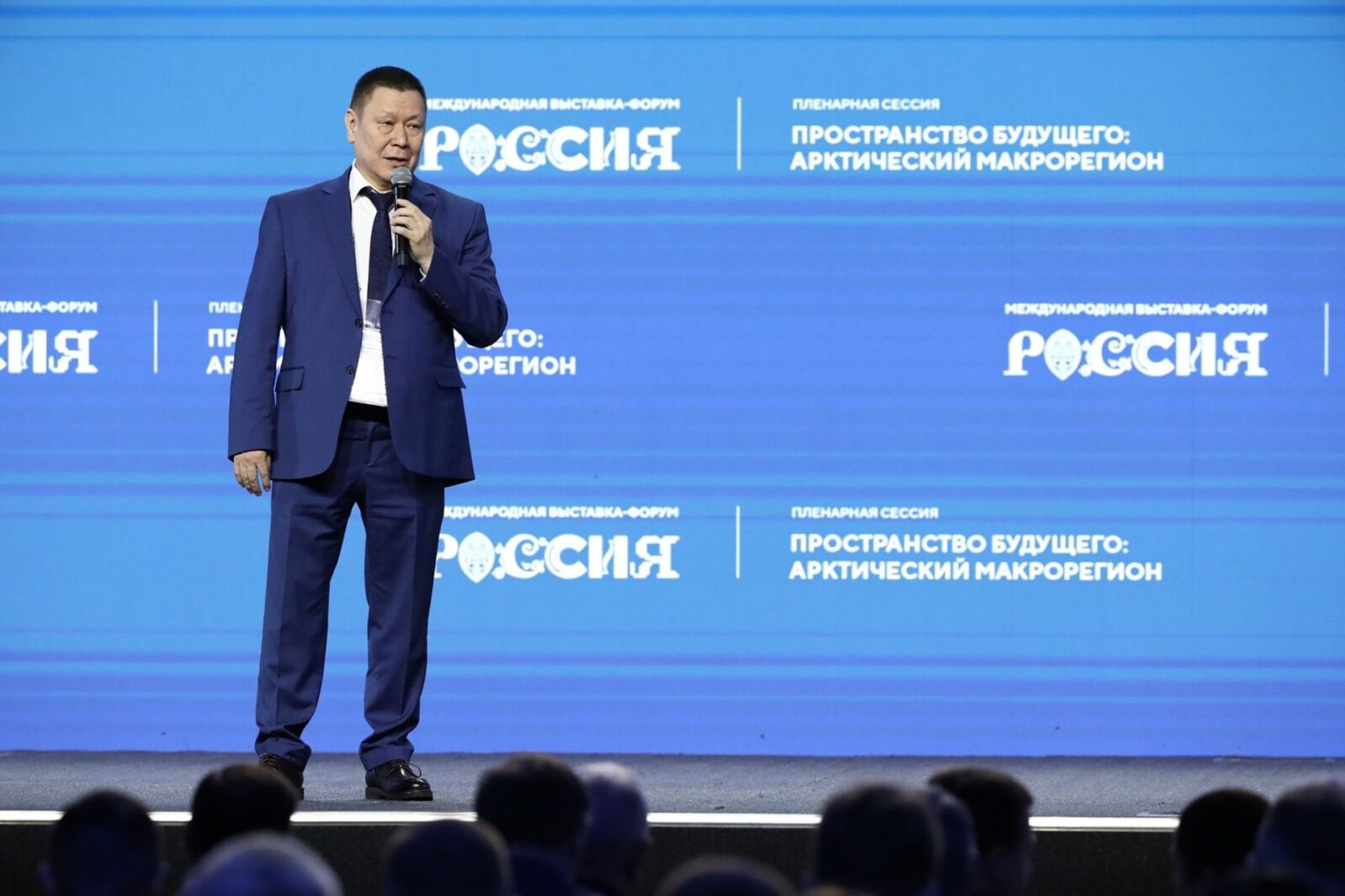
Under Ledkov, RAIPON moved from situational cooperation with the authorities to full support of their actions. In 2022, for example, the Association welcomed Putin’s decision to invade Ukraine and even spoke out at the UN “about the inadmissibility of the revival of Nazi ideology.”
In the winter of 2023, the organization also supported Putin’s next nomination for the post of president of the country with the words: “For the President! For Russia! For a stable future for our country!”
“[Now] they work for the benefit of the top. That is, now it is their [the authorities’] interests that are being pursued, not ours,” says an indigenous resident of the Khabarovsk Territory associated with RAIPON. “There may be disagreements among people on the ground, but no one is discussing it.”
According to her, now regional associations are raising money to send humanitarian aid to the military and condemn foreign companies that have left the Russian market.
“I asked people if they were ashamed, they printed their books with their [foreign companies’] money,” says the interlocutor of “Vestka”. - They have nothing to answer. Like a weather vane blew to another place, they ran there, but they didn’t have their inner convictions.”
Another interlocutor of “Vestka”, tundra activist from Yamal Eiko Serotetto, also speaks about the Association as an ineffective organization. On his VKontakte page, he regularly publishes posts about corruption in local authorities and calls on the Association to help people.
“The problems that I and all the reindeer herders and fishermen voice—probably, these problems would not exist in general if Ledkov had been effective, if this Association had been effective,” says Serotetto. “Today they are spreading [rumors] among the people: “Eyko is sitting there somewhere in the village, they are dictating to him,” although no one is dictating anything to me, I am writing straight from the tundra, from the camp. I find time and monitor all their actions. But I don’t see helping people at all.”
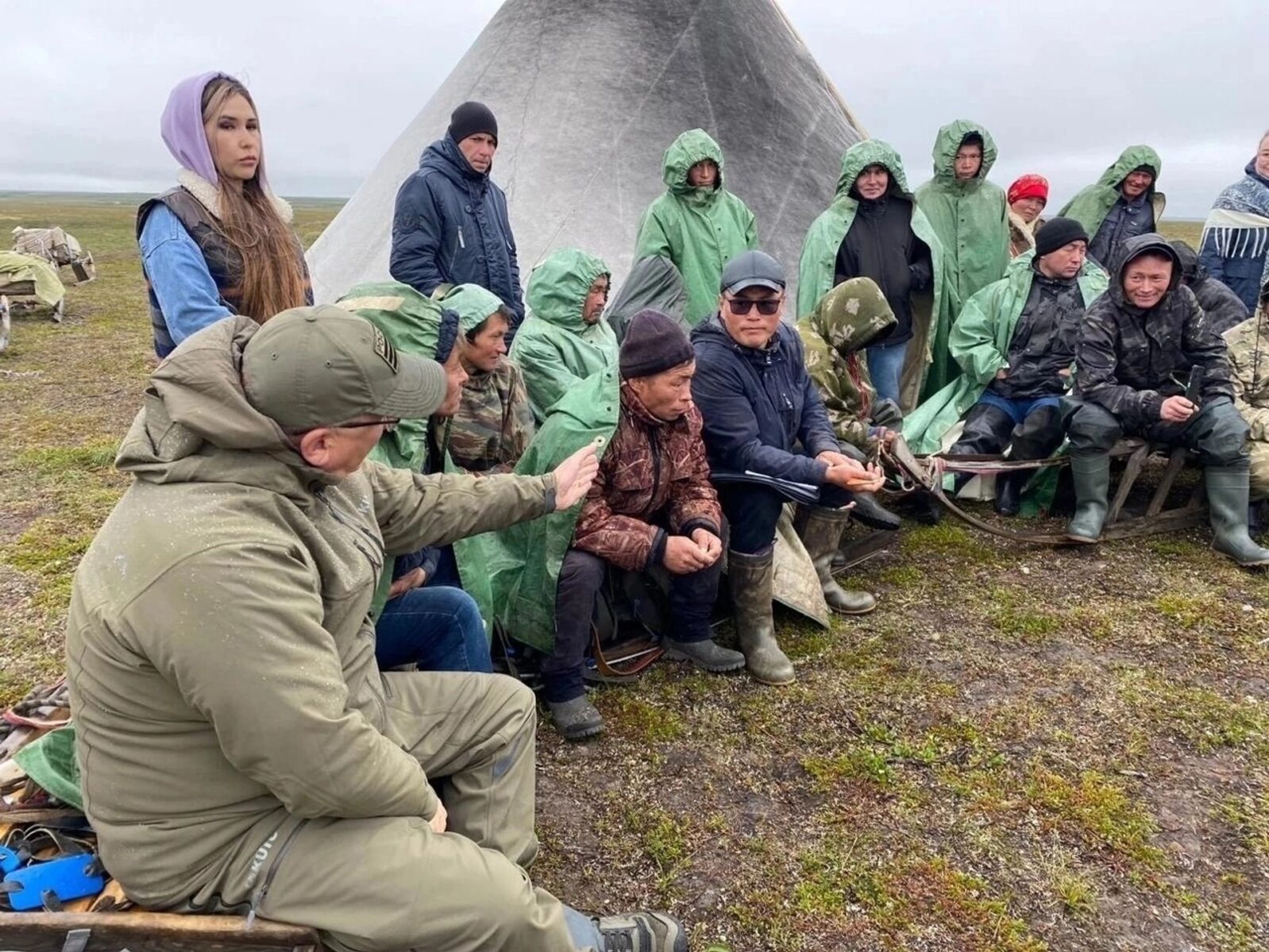
According to Serotetto, he has repeatedly contacted the Association and asked, for example, to help increase nomadic payments. “They give out five thousand a month. This is supposedly help, but in reality this five thousand is enough to go to the store for one day,” he adds.
In order not to miss new texts from “Layout”, subscribe to our telegram channel
How officials make money from helping indigenous peoples
In recent years, RAIPON’s activities, as Vorstka’s interlocutors from Russian regions say, have been reduced mainly to cultural and educational work: organizing concerts, exhibitions, legal seminars and meetings of indigenous peoples with Russian politicians. As Vorstka found out, most of the Association’s money is spent on such events.
RAIPON is financed through a charitable partner foundation with a similar name - the Fund for Support of Indigenous Peoples of the North, Siberia and the Far East. Its website says that it is a non-profit organization that was created to raise funds to support the indigenous population of the North - first of all, to ensure the work of the Association itself.
The head of the fund is 72-year-old Viktor Maksov. Little is known about his activities before starting work in this organization. As Vorstka found out, Maksov may be connected with law enforcement agencies. His son Denis is married to Ekaterina Kulba, the daughter of FSB Lieutenant General, Deputy Head of the Control Directorate of the Russian Presidential Administration Andrei Kulba.
As it became known from leaks of government databases, in 2021 Ekaterina Kulba was listed as an employee of LLC LC Ministry of Defense. “Verstka” was unable to find a legal entity with this name: it is not in the registers of active and closed organizations. This probably refers to the linguistic center of the Ministry of Defense at the Military University of Prince Alexander Nevsky. Ekaterina indicated her parents' home phone number as her employer's phone number. At the same time, in the phone books of other users she is recorded as “Katya FSB”. At the end of July 2024, the governor of the Murmansk region, Andrei Chibis, invited Catherine’s father, FSB Lieutenant General Andrei Kulba, to become a senator from the region.
Judging by the financial reports of the fund, for 2022 and 2023 it received donations amounting to more than 70 million rubles. i The fund spent more than 75 million. Both of these amounts are twice as high as before the war.
“Vorstka” received data from the Foundation’s financial transactions and found out that the largest expenses were transactions in Synchrotel LLC - more than 43.5 million rubles for 2022 - this is almost comparable to the amount of all donations to the Foundation for that year. At the same time, the Synchrotel company itself is associated with a former FSB employee, retired colonel, Igor Barinov. Now Barinov heads the Federal Agency for National Affairs (FADN), with which RAIPON closely cooperates. Synchrotel belongs to the parents of his daughter-in-law - Tatyana and Igor Gorbachev. The Gorbachevs’ daughter Ksenia is married to the son of the head of the FADN, Igor Barinov Jr.
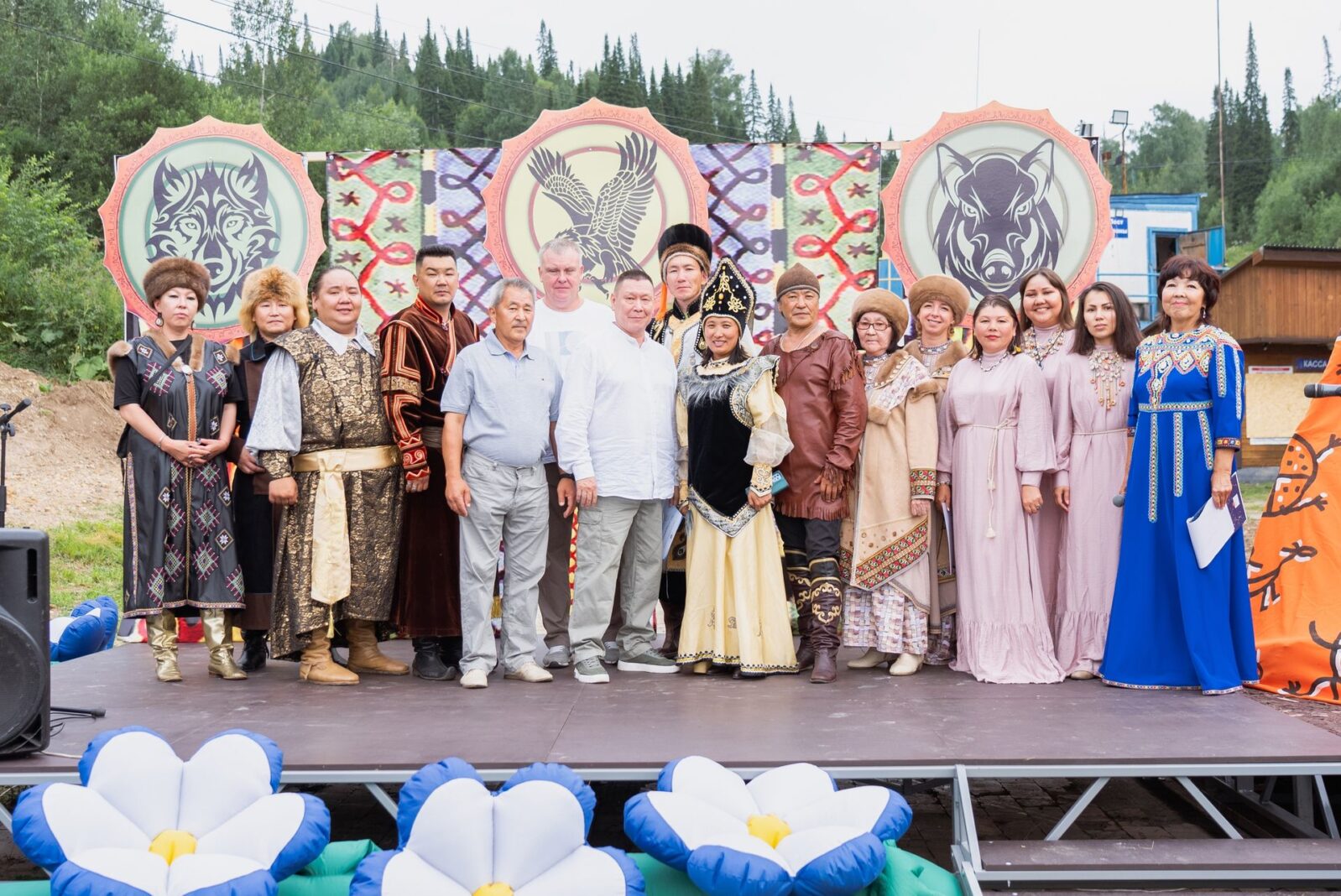
The Synchrotel company positions itself as one of the largest Russian holdings in the event industry. Their portfolio includes organizing the Eastern Economic Forum, the St. Petersburg International Economic Forum and the annual press conference of Vladimir Putin.
How else does the Barinov family earn and spend money?
Expand ↓The family of the head of FADN is actually involved not only in organizing major events, but also in their decor and technical support. From the financial data of Synchrotel LLC, available to Vorstka and Arktida, it follows that the company transferred most of the money received in 2022 and 2023 to another legal entity - Essiji LLC. This company deals with decor at Synchrotel events. Over the two war years, she received about 120 million rubles from Synchrotel. Moreover, the company still belongs to the Barinov family - his son and daughter-in-law. In 2022 and 2023, the company’s total net profit amounted to more than 20 million rubles.
On March 11, 2022, when Russian troops had already invaded Ukraine, Ksenia Barinova published her photo on her Vkontakte page with the caption “Are we going back?” Arctida managed to find out where Barinova had to return from after the start of the war in Ukraine. Her husband Igor Barinov, the son of the head of the FADN, together with a business partner, owns an apartment of 302 square meters in Marbella (Malaga), Spain.
As follows from the financial documents available to “Verstka” and “Arktida”, the Fund for the Support of Indigenous Minorities paid Synchrotel for “providing events” in late March-early April 2022 and in October of the same year. Judging by the information on the RAIPON website, in the spring on these dates there was a gathering of reindeer herders of the Tazovsky district, and in the fall - the International Forum “Public-Private Partnership in the Sphere of Sustainable Development of Indigenous Peoples”.
The forum was co-organized by the same Federal Agency for Nationalities Affairs, headed by Barinov, as well as by the Ministry of Eastern Development of Russia, the Ministry of Foreign Affairs of the Russian Federation and PJSC Norilsk Nickel. It is noteworthy that Norilsk Nickel is one of the main sponsors of RAIPON.
How businesses are using indigenous peoples
RAIPON largely exists thanks to donations from large Russian industrial companies. This, for example, was stated by the representative of the Kamchatka regional association, former police officer Andrei Metelitsa, speaking at a meeting of the UN Permanent Forum on Indigenous Peoples in April 2024. He also complained that RAIPON does not receive grants from the UN and enters into agreements with companies to, among other things, sponsor foreign trips. Moreover, after that trip, Metelitsa made excuses in the local media for flying in business class.
One of the “industrial” sponsors of RAIPON is PJSC Norilsk Nickel. Its CEO, billionaire Vladimir Potanin, is a friend of Vladimir Putin. The company itself is the world's largest producer of nickel, palladium, as well as platinum, gold and other valuable metals. Its enterprises are located on the Taimyr and Kola Peninsulas and in the Trans-Baikal Territory - in the territories of indigenous peoples.
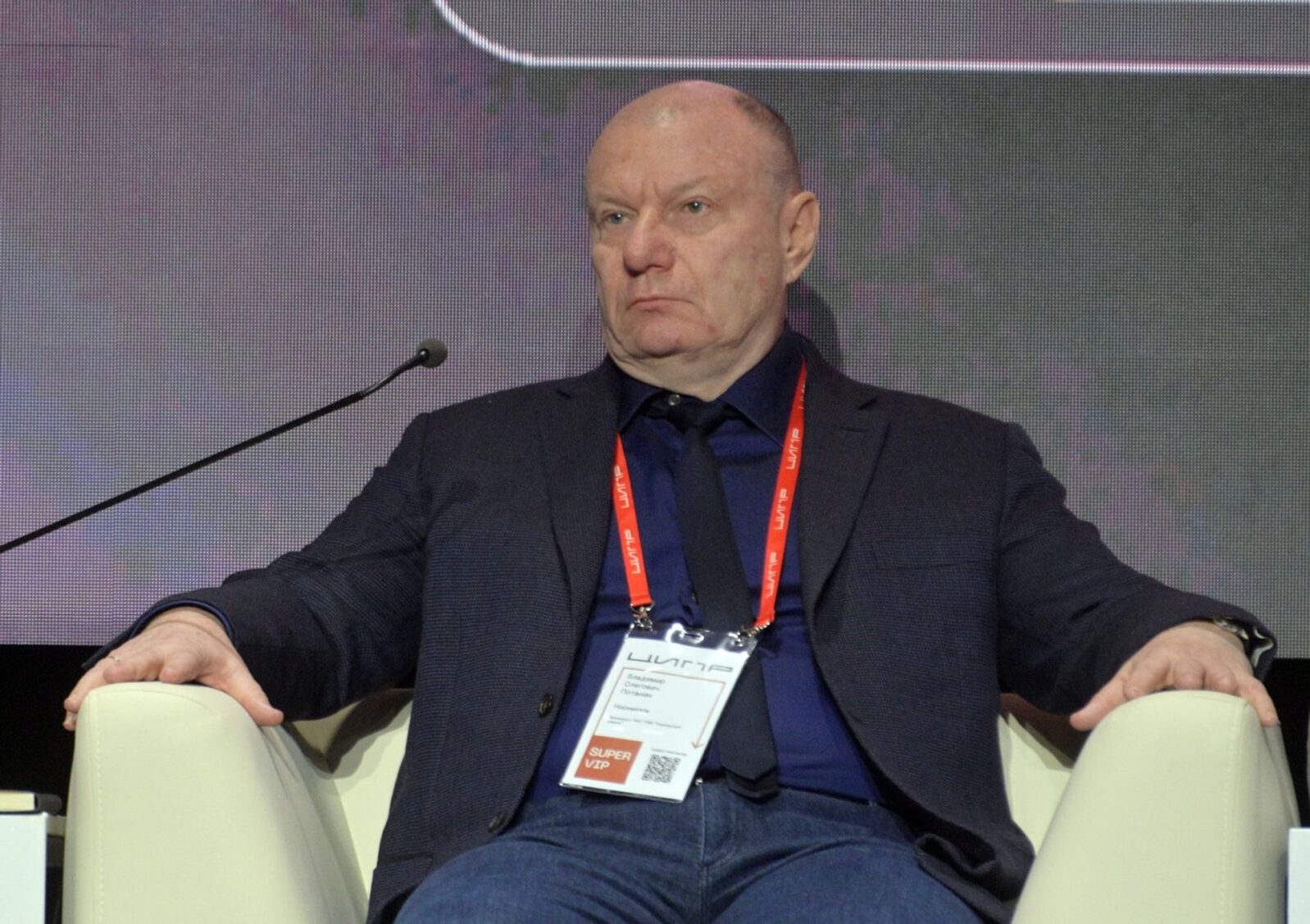
As “Verstka” learned from financial documents, during the two war years, the charitable foundation under RAIPON received more than 54.1 million rubles in donations from PJSC Norilsk Nickel (the organization did not use a little more than 5 million of them and returned them). This amount became the most significant: for example, Lukoil-Western Siberia transferred 25 million rubles to the fund over two years, Russneft - 3 million rubles, and Gazprom-Khantos - a million.
The Association itself helps the corporation resolve problems with local residents. For example, RAIPON was actively involved in preparations for the resettlement of the village of Tukhard in Taimyr: local authorities, together with Norilsk Nickel, initiated it back in 2017. But it was not possible to solve the problem the first time: people had complaints about the quality of housing construction to replace the existing one. Then Norilsk Nickel chose to act under the FPIC procedure, and RAIPON again supported the company i
Since the beginning of the FPIC procedure, members of the Federal Association and representatives of the KMNSoyuz have been setting Norilsk Nickel as an example at UN sites. The company and its experience are talked about at events parallel to the main program: for example, at discussions organized by the KMNUnion itself, or at meetings of international structures.
Against this background, Russian delegates to the UN, also from among the members of RAIPON, began to call on international bodies to lift sanctions both from Russia and from Russian industrial companies . Delegates from RAIPON voiced these demands several times: in April at a meeting of the UN Permanent Forum and in July at a meeting of the UN Expert Mechanism.
In at least one case, Russian senator and member of United Russia Alexander Novyukhov was responsible for training RAIPON members. To do this, he was instructed to consult with Barinov’s FADN and the Ministry of Foreign Affairs.
Speaking about the lifting of sanctions, representatives of the Association emphasized that due to current restrictions, Russian companies cannot undergo an international audit. The decision to suspend such an audit was made by The Initiative for Responsible Mining Assurance (IRMA) amid the Russian invasion of Ukraine. This audit is important because, in addition to economic indicators, it also takes into account the company's concern for the social and environmental aspects of its work. Representatives RAIPON focused on this and noted that due to sanctions, “indigenous peoples of Russia are deprived of the opportunity to use these standards for human rights purposes in relations with companies.” However, even in the absence of an audit, KMNSoyuz is developing joint documents with Norilsk Nickel, and RAIPON members continue to advertise the company’s experience in Tukhard, without mentioning any problems in взаимодействии с ней.
However, the absence of such an international audit jeopardizes the company's ability to sell raw materials to third countries and organizations where their availability is considered mandatory.
How the Association “competes” in the UN
Back in 2022, after the Russian invasion of Ukraine began, exiled indigenous activists condemned Russia's actions. In response, members of the Taimyr association, through RAIPON, addressed the UN Permanent Forum. They demanded that Pavel Sulyandziga and other activists should not be allowed to speak on their behalf and stated that they “abuse the openness of the Forum site and do not comply with ethical principles.” Similar bickering continued later.
As a result, according to Sulyandziga, they led to the fact that indigenous communities in other countries came to the conclusion that what was happening between RAIPON and independent activists was a consequence of competition between two organizations within the country.
In July of this year, after the regular UN session in Geneva, according to Sulyandziga, his comrades had a conversation with representatives of American Indians. Those, unexpectedly for activists, began to speak out in support of the Russian government on the issue of participation of indigenous peoples in the UN General Assembly. As Sulyandziga notes, Russia demanded that only organizations recognized by the governments of the participating countries be allowed to participate in the General Assembly.
“They also began to express thoughts that our position on RAIPON is an internal squabble between the indigenous peoples of Russia,” he says. “We tried to say that this organization helps the state put pressure on indigenous peoples. But they don’t quite understand our categorical attitude towards the Russian government, because Russia talks about what is happening in the country with indigenous peoples only from the positive side - omitting the facts of pressure and persecution of dissenters.”
Cover: Alisa Kananen
You can support “Layout” from any country in the world - it is still safe and very important. We really need your support now. How to help us →