
Translated material
Teflon mode
Venezuela does not stop protests after the scandalous “re -election” of Maduro. Will he really cope with this crisis?
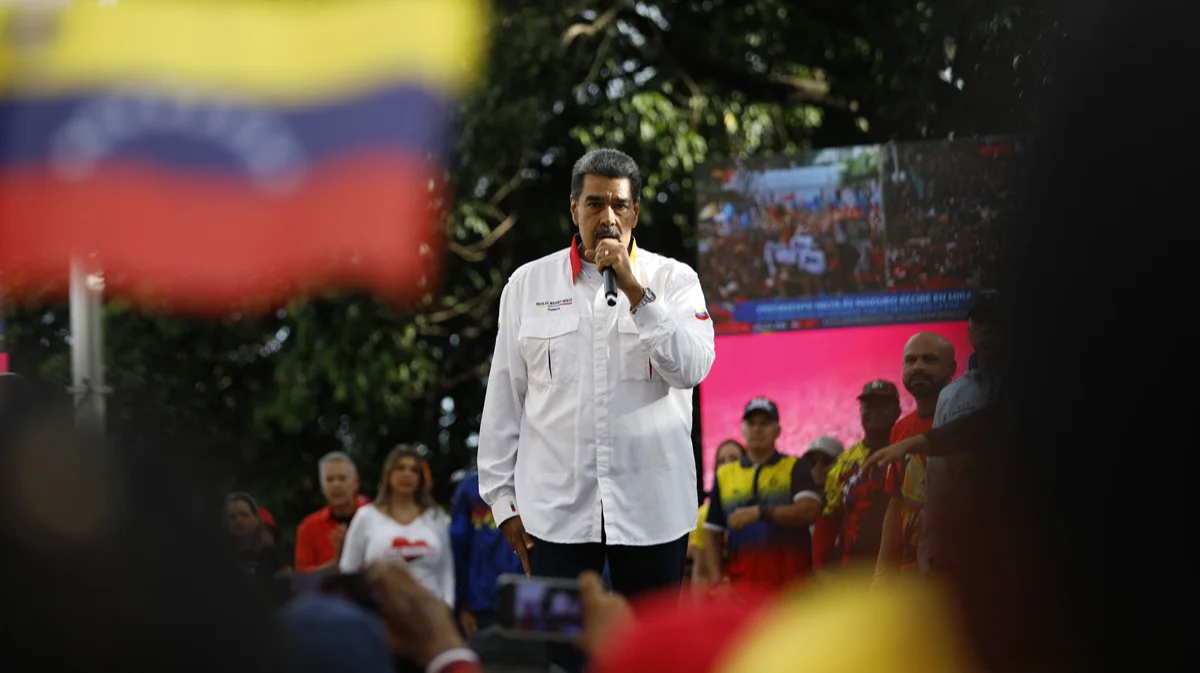
Venezuela President Nicholas Maduro addresses supporters during a rally in Karakas, August 3, 2024. Photo: Pedro Rances Mattey / AFP / Scanpix / Leta
The Nicholas Maduro mode is one of the most serious inspections for strength for the whole time. On the streets of Venezuelan cities, protests that began following the results of the presidential election are underway, while the international community enhances pressure on Karakas.
Several countries, led by the United States, have already recognized the winner not Maduro, but Edmundo Gonzalez, an opposition candidate. However, since 1999, the Chavists have repeatedly proved their survivability, so this time to achieve at least partial concessions from the authorities, still tightly standing at the helm of the Bolivarian Republic, will not be easy.
Each has their own Venezuela
“My dear, my brave Venezuelans! On Saturday [August 3], we, as before, are whole families, in every city and the village of this country, we will go out to the streets to confirm that we are right: we won! ” - announced the largest action of the Venezuelan opposition for a long time her undisputed leader Maria Korina Machado.
Whether Machado itself will appear at the rally, until the last remained unknown. After the election, the authorities wrote out an arrest warrant of the opposition, which forced her to go underground. In a column for The Wall Street Journal, on August 1, she admitted that she writes "from a secret place, fearing for her life and freedom."
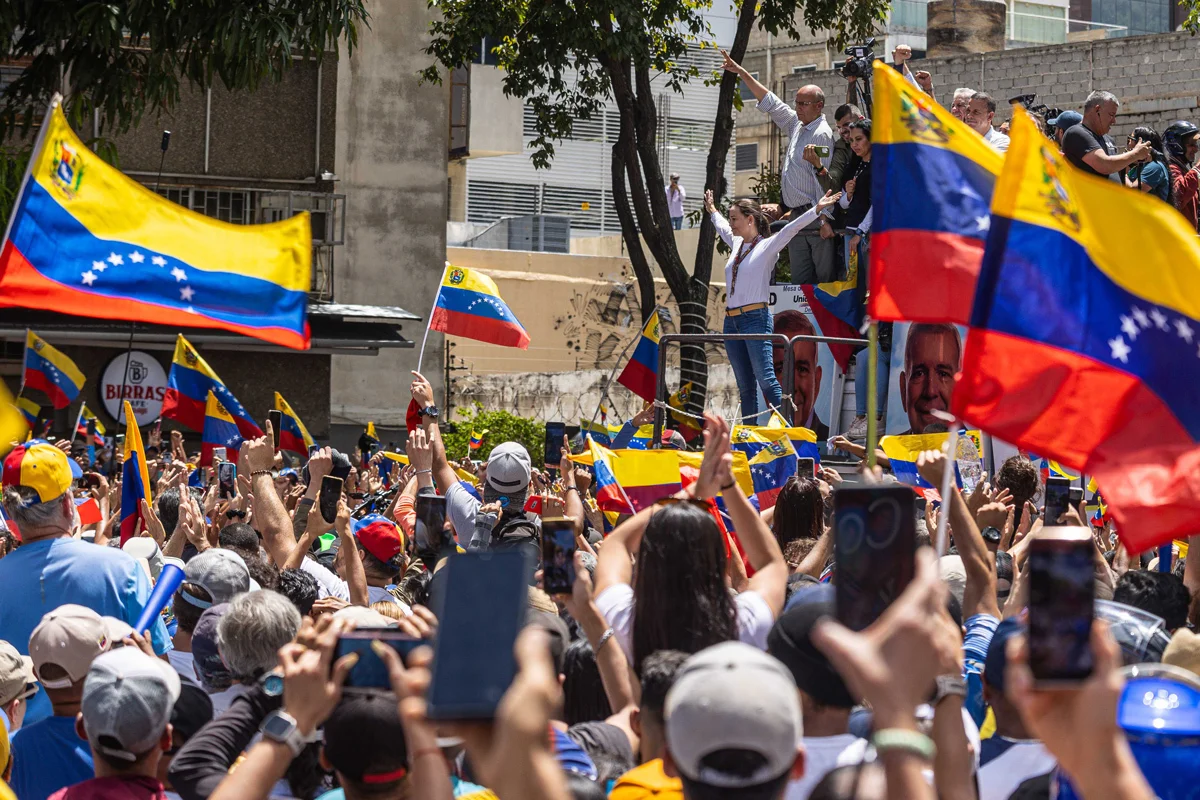
Nevertheless, she spent the day of the rally with like -minded people. Speaking in the center of Karakas in front of the thousands of those gathered, she convinced them (or maybe herself): "We were never so close to the final victory." And she expressed pride in compatriots who "want changes and will achieve them." She declared Gonzalez an unconditional winner.
Who is Gonzalem and why did he become a candidate?
Initially, Maria Korina Machado, who scored 92% of the vote, scored on opposition primaries, was to participate in the elections. However, in June 2023, she was banned from occupying any state debts in the next 15 years: the authorities found the opponent guilty of fraud in the filling out of tax returns for those years when she was a deputy of the National Assembly. In January 2024, the Supreme Court confirmed this decision, after which the opposition reconciled with the inevitable and began to look for alternatives.At first, the views of the opposition fell on a professor of philosophy, the 80-year-old Corin Yoris, but they did not register her in the elections. After that, the candidacy appeared until then, not known to the general public, Edmundo Gonzalez, a former diplomat who served as an ambassador to Algeria and Argentina. He had no political experience.
In total, ten people got into the ballots, which was supposed to demonstrate the presence of high political competition in the country and at the same time help to crush protest voices. But the elections instantly became the battle of two people: Maduro and Gonzalez.
How many people took to the streets on August 3 - it is difficult to understand, neither the opposition nor the authorities called the exact numbers. But, for example, the Spanish newspaper El Mundo claimed : the score went on hundreds of thousands of people. It was not limited to Karakas: protests took place in many regions of the country. In addition, shares of solidarity took place in foreign cities with a large Venezuelan diaspora: for example, in Miami, Madrid, Barcelona, Bogota, Mexico City.
As often happens, the Venezuela authorities tried to kill the agenda, organizing their own rallies: “In defense of the world and the decisions of the people to support Maduro as president of the Republic.” Under the slogans “streets belong to the people of Bolivar, Chavez and Maduro”; “We are joy, we are the majority” and “There is no place for Venezuela, people went through Karakas and other cities.
In 2013 and 2018 - respectively, in the days of the first and second elections, Maduro, the correspondent of Novaya Gazeta Europe, has repeatedly met the participants of the pro -government rallies in Karakas, who admitted:
They are not there of their own free will (and, for example, at the request of employers). However, it is obvious that many people went to defend the Bolivarian Revolution at the Call of the heart.
So, at the subbotnikh rallies, groups of men on motorcycles were especially distinguished : in Venezuela this is one of the key and most radical groups that defend the ideals of Chavism, including with the help of weapons. Bikers attacks on opposition are regular. On the same Saturday, for example, in the city of Kunama, motorcyclists threw grenades with tear gasbatives of opposition manifestation.
In general, a large protest day showed that the republic is still split into two parts, and the slightest trigger leads to the fact that analysts again begin to talk about the threat of civil conflict. This time, the presidential election became such a trigger.
It is important how to calculate
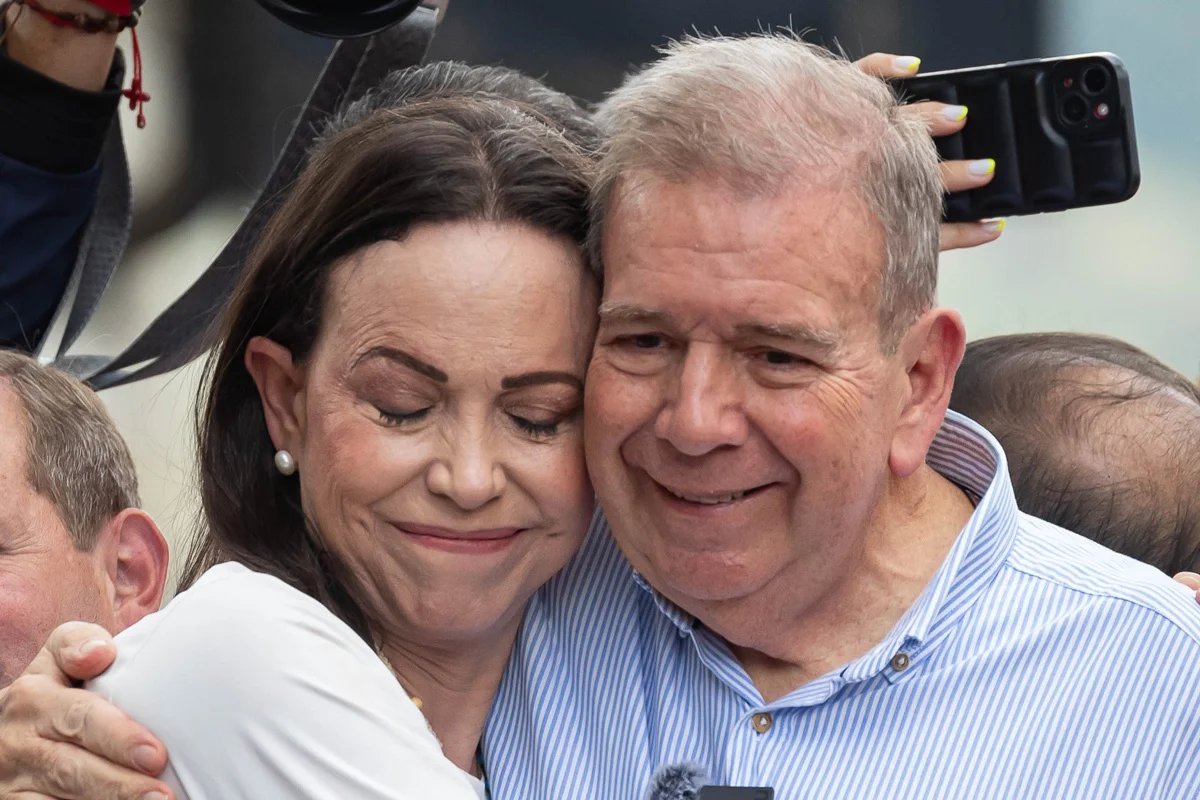
“The elections on July 28 can be described by the phrase“ they wanted the best, but it turned out as always, ”says Vladimir Ruvinsky, professor of Colombian University of ICESI,“ New Evrop ”. - Initially, the calculation of both Maduro himself and most external players, including the United States, was that the vote would show: the Venezuelans support the current president. This would allow the West and the Latin American neighbors Venezuela to start building relationships with her. Although not as with a democratic state, but as with those who have a certain legitimacy. But everything was organized very clumsy and went not according to plan. ”
Analyst of the NPO "International Crisis Group" (ICG) Phil Hanson notes : the government did not interfere with the nomination of Gonzalez. Venezuela authorities were sure that the low turnout of opposition voters in combination with the already tested methods of mobilizing the Chavists would again lead the latter to victory. According to the expert, the negotiations between Karakas and Washington, and pressure from the neighboring, relatively friendly leftist governments of Brazil and Colombia, played their role, played their role. “But nothing of this means that the Venezuela government was ready to abandon the authorities,” adds Phil Hanson.
The election day itself passed without noticeable incidents. And after the closure of the plots, the ec-Pols confirmed the first Chavist’s loss since 1999. So, the Edison Research survey showed : 65%voted for Gonzalez, and only 31%for Maduro. However, the Venezuela authorities announced that in fact the first was gaining 44.2%, the second - 51.20% (the data was data after the calculation of 80% of the ballots; the final result has not yet been summed up, but since then the indicators have changed slightly).
The opposition with the announced results did not reconcile. “Mr. Maduro did not win. He lost with a devastating score, 67% versus 30%. And I can prove it, ”Machado wrote in The Wall Street Journal. Proof - protocols from polling stations that collected 90 thousand observers.
How do they vote in Venezuela?
Venezuelan officials, with whom the correspondent of Novaya Gazeta Europe communicated, more than once called the voting system of almost the best in the world. And, which is surprising for the Russian reader, many oppositionists, in principle, agreed with this (adding that everything that happens before the election day does not allow the election in the country free and fair).The essence of the system is in duplication of electronic voting paper. When the voter comes to the site, they check the documents and take fingerprints. Then it approaches the electronic voting terminal and makes its choice. The car takes into account the voice and encrypts it, but at the same time it also prints a filled paper ballot, which must be put in a voting urn standing nearby.
After the site is closed, a final protocol is printed from each car, which, due to its length on Venezuelan slang, is called “Chorizo” (sausage variety). It indicates the total number of votes with the division of candidates, there is a QR code to confirm the data, the signatures of representatives of parties and employees of the commission are affixed.
Part of the URN voting is opened and the results of paper ballots are compared with what is written in the Chorizo Protocol (this should exclude the possibility of manipulations with votes in the areas). Then the data from the terminal is sent to the National Electoral Council. And copies of the protocol by law can receive all the observers present.
“The very next day after the vote, we had enough data to mathematically confirm our victory,” said Maria Korina Machado. “The next day the protocols could see the whole world.” The authorities instantly blocked this site : now it can be opened from Venezuela only with VPN.
The website of the National Electoral Council did not at all publish the results of the elections, although by law it was obliged to publish them no later than 48 hours after the closure of the plots. The resource turned off, according to the authorities, due to cyber attacks from North Macedonia (in this Balkan Republic they were very surprised by such accusations). As of August 4, the site did not work.
The AP agency conducted an independent analysis of the protocols published by the opposition and came to the conclusion about the convincing victory of Gonzalez: 6.89 million votes against 3.13 million. However, the Chavists quickly found an answer: according to their version, the opposition presented the fake, and the scenario of destabilization supposedly prepared in advance. And the protocols on the site are not at all 80% of the total, as declared, but significantly less. And in general, not all of them are signed by observers and members of the commission.
“The opposition managed to persuade public opinion to their side, showing that the results were falsified. But the main problem is this:
Opponents of Maduro initially implied the possibility that the elections and counting of the votes would be honest. However, they did not become such,
- analyzes the layouts Vladimir Ruvinsky. -The whole system is still controlled by Maduro. In his hands - all control over the institutions that could give a move to this matter. "
It is, first of all, about the Supreme Court. Last week, Maduro, it would seem, to concess the opposition. He appealed to the Venezuela Supreme Court with a request to conduct an audit of protocols. And he said that "is ready for call, interrogation and investigation." But it is difficult to take this step seriously, because the Supreme Court has long been fully controlled by the Chavists.
The voice of the streets
Against this background, the opposition, perhaps, only remains that to prepare for parliamentary and local elections (they are planned for the next year, but can pass earlier), and also put pressure on the authorities with the help of street shares for the long time.
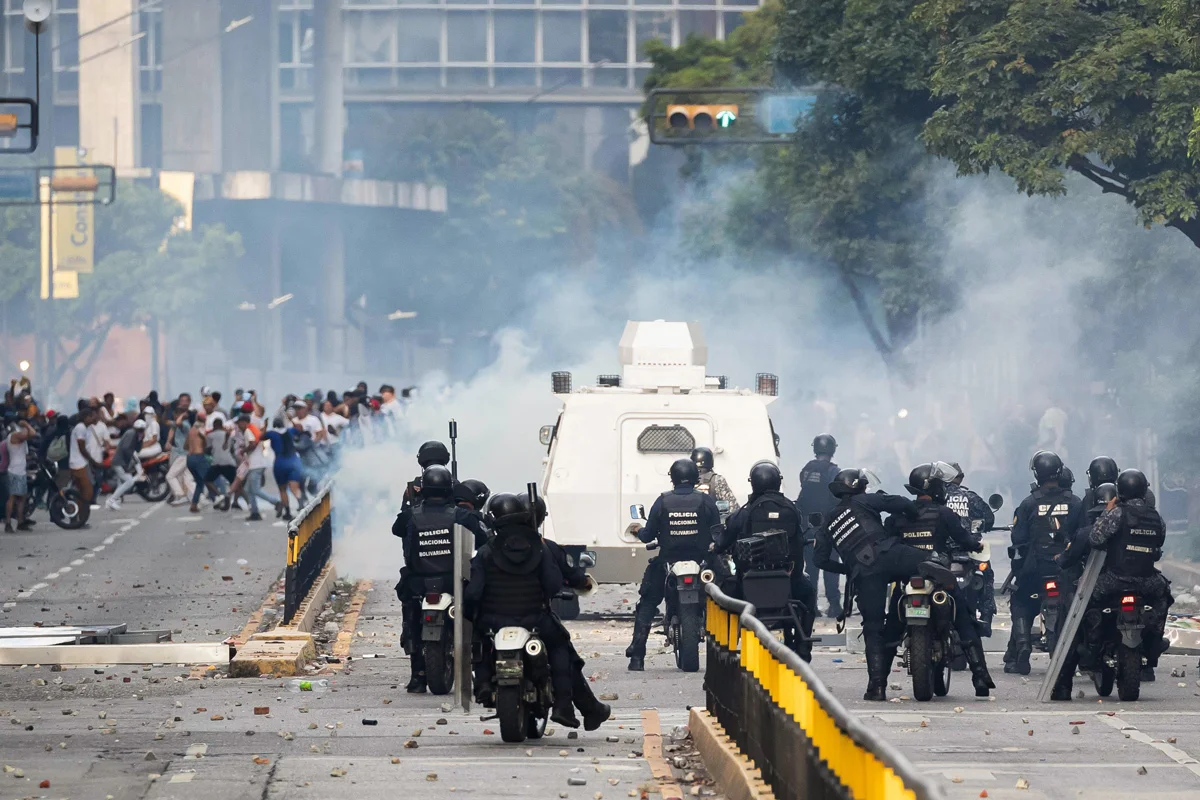
It will not be easy to do. On Saturday evening, Maduro reported that more than 2 thousand protests were already detained. “Maximum punishment. Justice. This time there will be no forgiveness, ”the president said at a rally in front of the presidential palace.
A day earlier, he said that as a result of protests, two fighters of the National Guard were already killed, another 141 security forces - military and police officers - were injured. In addition, according to Maduro, 5 thousand pro -government public leaders were subjected to attacks, and material damage was caused to 250 police sections, 12 universities, 30 clinics, three hospitals, one pharmacy. The leader of the Chavistov calls everything that is happening an attempt to “a state -plot organized by fascist forces.” And he claims: not ordinary Venezuelans participate in the protests, but the fighters who have passed special training in the United States, Colombia, Peru and Chile. Edmundo Gonzalez, according to the authorities, is none other than the “CIA agent”.
Meanwhile, independent media have already told many stories about accidentally falling under the distribution. For example, one of the BBC interlocutors named Merientes said that her daughter left work on Mototax and accidentally drove near the demonstration. The police stopped the motorcycle, after which she arrested both the driver and the passenger. Another interlocutor - Carlos Eduardo - said that his son and another relative were arrested, as soon as they left the house to the store for soft drinks - and now they are accused of involvement in terrorism.
How was Venezuela protested earlier?
The leaders of the opposition urge not to reduce speed. But infinitely long ago the intensity of passions will not be able to maintain - this was proved by all previous protests. Actually, the manifestations accompanied the elections at the very beginning of the reign of the left forces. Having arrived at the presidency in 1999, Hugo Chavez quickly changed the constitution, after which it took the holding of early presidential elections. And in July 2000, Chavez re -elected from 59.76% of the vote, provoking accusations of falsifications. The unrest covered seven of 23 states of the country. One person died, 30 were injured.The riots were even longer and large -scale after the first elections of Nicholas Maduro: in 2013, supporters of the candidate Enrique Capriles (according to official figures, he lost less than 1.5% of the vote) went out into the streets. According to various sources, from 11 to 13 people died in the riots.
In 2014, protests, the root cause of which was a rapid deterioration in the economic situation, turned out to be even more powerful and long. 43 people were killed in a year.
Unrest arose in 2017 (died from 127 to 163 people), and in 2018 (14 victims), and in 2019 (more than a hundred) ... But each time the regime armed with special equipment for overclocking the demonstrators turned out to be stronger. And while there are no signals that this time everything will be different.
Talking about the prospects of protests, many pay attention to the expansion of their social base: if earlier representatives of the middle class came to the manifestations earlier, now residents of poor areas are increasingly joining them, who have been using all the benefits of Venezuela's “socialism of the 21st century” for the third decade. Some people use a safe way to protest for Latin America for Latin America: at the appointed time, they begin to loudly beat the pots and pans. Others resort to active actions: they tear off posters with images of Maduro and lie on the ground of the statues of Chavez. “Maduro’s refusal to admit that the people who previously supported him are now protesting against him, shows a huge distance that formed between the Chavist government of Venezuela and its traditional base,” said experts in the field of sociology, Rebecca Hanson and Veronika Subiyag.
On the other hand, the protest asset has been played over the years of Chavism: everyone who could (almost 8 million Venezuelans lived in other states in the status of refugees or migrants). And an even more impressive figure: according to the BBC survey conducted before the election, 44.6% of Venezuela residents did not exclude for themselves the possibility of emigration in the event of the victory of Maduro.
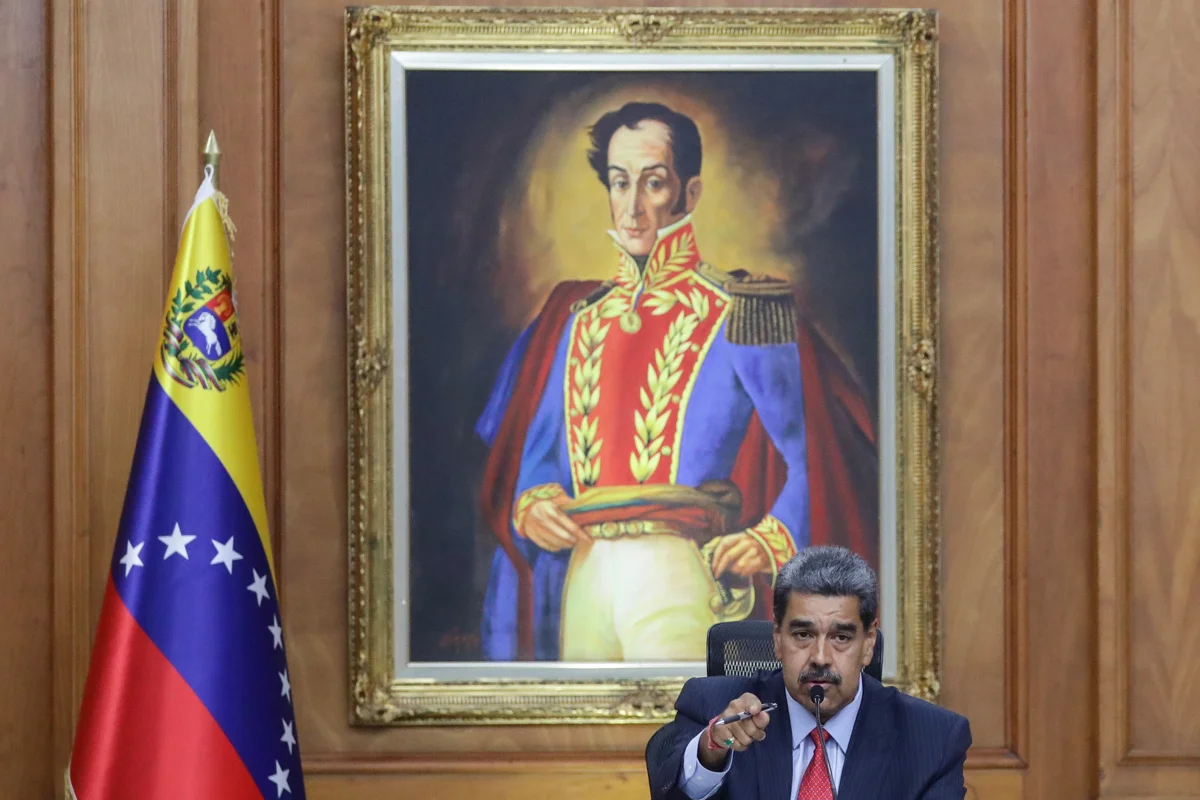
One way or another, not public moods, but another factor are of key importance: who the security forces will support. Immediately after the election, Maria Korina Machado turned to the army with an appeal "to ensure the observance of popular sovereignty." That is, do not interfere with protests and contribute to the overthrow of the regime. Soon, it would seem, the first signals optimistic for the opposition appeared: a video was published on the Internet, on which two officers turn to military leadership with a request to "make the right decisions at this historical moment." “Remember, gentlemen, officers that the republic’s weapons were created to protect, and not to suppress the will of our people,” they said, calling for the creation of a transitional “civilian council”, led by Edmundo Gonzalem.
The video began to spread rapidly in social networks. Only one publication on the social network X (formerly Twitter) received more than 1.5 million views and an enthusiastic comment from the owner of this social network, billionaire Ilon Mask: Bravo, Officers. But there were no more such performances. And then the factor from the EFE agency found out that the authors of the encircled video are retired military, who have long been living outside Venezuela. Meanwhile, Minister of Defense Padrino Lopez, on behalf of all the armed forces, issued a statement with traditional rhetoric about attempts by coupling and fascists.
Did the security forces opposed Maduro?
During the presidency of Nicholas Maduro, the individual security forces twice seriously challenged him. So, in June 2017, the rebellious officer Oscar Perez along with accomplices stole a police helicopter, after which he threw grenades and fired at the buildings of the Ministry of Internal Affairs and the Supreme Court. The criminals managed to hide. And six months later, they organized a raid on the army barracks in Miranda, capturing this military facility. In January 2018, the Oscars were tracked and killed.А в апреле 2019 года тогдашний лидер оппозиции Хуан Гуайдо призвал военных положить конец «узурпации власти», записав видео в окружении ряда офицеров на столичной базе ВВС «Ла-Карлота». Власти объявили о попытке госпереворота и о начале операции по «обезвреживанию военнослужащих-предателей». Хуану Гуайдо в итоге удалось скрыться, остальные силовики его не поддержали.
Лояльность силовиков легко объяснима: они многое потеряют в случае прихода оппозиции к власти. Выстроенная в стране система благоволит военным, которые сейчас интегрированы во многие органы власти. Они контролируют многие нефте- и горнодобывающие компании, таможню, стоят во главе 12 из 34 министерств.К тому же, многим — даже если бы они вдруг захотели — некуда бежать. Почти 50 высокопоставленных военных — бывших и действующих — фигурируют в санкционных списках США.
Взгляд снаружи
Международное давление на режим, как показывает история, тоже не является решающим фактором. Показательны события 2018–2019 годов, когда Мадуро благополучно переизбрался с 67,84% голосов. Внесистемная оппозиция в той кампании не участвовала, сочтя это бессмысленным занятием. В январе 2019-го тогдашний спикер парламента Хуан Гуайдо объявил себя и. O. президента (он действительно имел на это право в случае «невозможности исполнения президентом своих обязанностей»). Тогдашний американский лидер Дональд Трамп тут же признал такой шаг легитимным, а вслед за ним это сделали более полусотни государств. Оппозиция занялась созданием параллельных посольств и других органов власти. И казалось, что под таким напором режиму Мадуро, который к тому же оказался под новыми санкциями, не устоять. Но он всё-таки устоял: в декабре 2022 года «временное правительство» Гуайдо было распущено самими же оппозиционерами.
Сейчас ситуация развивается по схожему сценарию. 1 августа США признали победителем выборов Эдмундо Гонсалеса. Об этом же заявили Панама, Эквадор, Аргентина, Уругвай, Коста-Рика. Каракас ответил массовой высылкой дипломатов этих стран. В ЕС от такого шага пока воздерживаются, но на минувших выходных лидеры семи стран: Испании, Италии, Франции, ФРГ, Нидерландов, Польши и Португалии, — в совместном заявлении призвали венесуэльское руководство немедленно обнародовать протоколы с избирательных участков.
При этом возможности Запада по усилению давления сильно ограничены. США еще в 2018 году перестали считать Мадуро легитимным лидером. Но это ему, похоже, ничуть не помешало. Как и, например, белорусскому лидеру Александру Лукашенко, который с 2020 года находится в том же статусе. От этого у Светланы Тихановской, которую США и множество других стран считают реальной победительницей выборов-2020, никаких рычагов власти так и не появилось.
«Рассчитывать на тот уровень внешней поддержки, который был в разгар ситуации с Гуайдо, оппозиции сейчас вряд ли приходится, — отмечает Владимир Рувинский.
— США и многие ведущие игроки в Латинской Америке, такие как Колумбия и Бразилия, заняли выжидательную позицию. Нового полномасштабного кризиса в Венесуэле (подразумевающего, в частности, массовый поток беженцев) никто не хочет».
По мнению эксперта, администрация Джо Байдена будет пытаться избегать резких движений и стараться переложить проблему на плечи следующей администрации, которая сформируется по итогам президентских выборов 5 ноября. Тем более что инаугурация венесуэльского лидера состоится лишь в начале 2025 года. Не случайно все эти дни представители Белого дома максимально осторожно комментируют перспективы введения новых санкций против Каракаса.
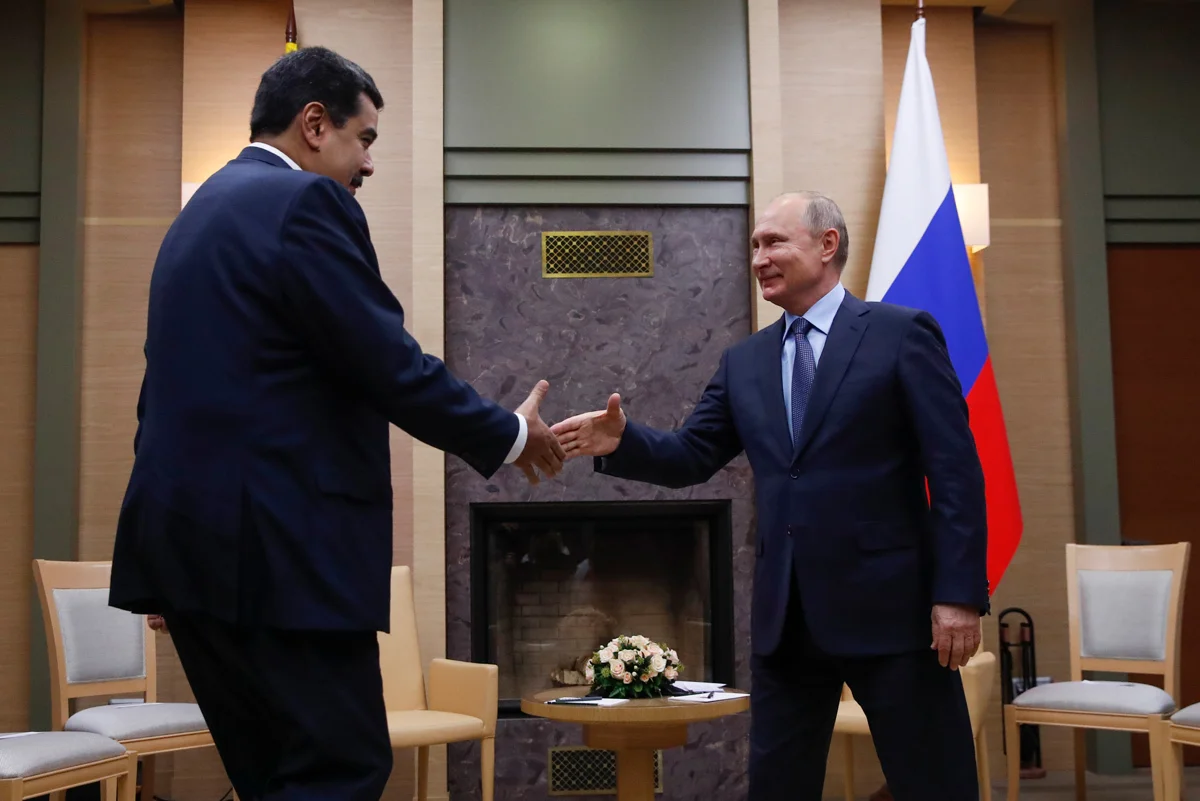
Зато не сдерживает себя Николас Мадуро. 2 августа он пригрозил Соединенным Штатам и «их партнерам» тем, что эксплуатируемые ими (в частности, американской компанией Chevron) блоки газовых и нефтяных месторождений будут переданы друзьям Венесуэлы — членам БРИКС. Китай — главный торгово-экономический партнер Каракаса. Россия — заметный экономический партнер и идеологический союзник в битве с Западом. Не случайно председатель КНР Си Цзиньпин и президент РФ Владимир Путин были в числе первых лидеров, поздравивших Мадуро с переизбранием. Так, в телеграмме из Кремля говорилось :«Российско-венесуэльские отношения носят характер стратегического партнерства», а дальнейшая деятельность Мадуро наверняка «будет способствовать их поступательному развитию по всем направлениям».
ЕСТЬ ЛИ В ВЕНЕСУЭЛЕ ЧВК «ВАГНЕР»?
В разгар протестов в соцсетях распространилось видео, на котором видно, как группа хорошо экипированных силовиков готовится противостоять манифестантам. При этом в кадр со спины попал человек в песочного цвета униформе с нашивкой, похожей на нашивку с символикой ЧВК «Вагнер». После этого, например, анонимный автор популярного в Z-сообществе телеграм-канала Condottiero, которого нередко представляют как «ветерана ЧВК «Вагнер»», перепостил видео со словами: «Венесуэла, Группа Вагнера, наши дни». Блогер дал понять, что задача наемников — противодействие попыткам революции в Венесуэле.Версия о том, что ЧВК «Вагнер» помогает режиму Мадуро, появляется не впервые. В 2019 году агентство Reuters сообщило, что в дружественную России республику могли прибыть до 400 наемников, одна из задач которых — не допустить задержания Мадуро его собственными охранниками. И хотя эта информация вызывала обоснованные сомнения, новость разошлась широко. В Пентагоне заявили, что пытаются найти подтверждения этой информации. В Кремле назвали сообщение Reuters конспирологией.
В этот раз никакой информации о роли российских наемников, помимо одного видео, тоже нет. Но это не помешало, например, президенту Украины Владимиру Зеленскому прокомментировать тему. «Вызывают беспокойство сообщения о присутствии российских наемников «Вагнера» в Венесуэле вместе с правительственными войсками. Куда бы ни шли эти головорезы, они несут смерть и дестабилизацию, — написал Зеленский в субботу в соцсети X. — Это яркий пример бесстыдного вмешательства России в дела других стран, а также ее привычной стратегии сеять хаос по всему миру».
Посол РФ в Каракасе Сергей Мелик-Багдасаров в эфире телеканала «Россия-24» рассказал , что один из первых зарубежных визитов после переизбрания Николас Мадуро совершит в Россию. Вероятно, он приедет на октябрьский саммит БРИКС в Казани, куда уже получил официальное приглашение. «БРИКС создаст мультивалютную систему — Венесуэла в деле. БРИКС создает систему платежей, альтернативную SWIFT, — Венесуэла в деле. У БРИКС есть предложения с возможностями для торговли — Венесуэла в деле», — заявил сам Николас Мадуро на днях.
Впрочем, за 25 лет правления сторонники Боливарианской революции — вначале Чавес, а потом Мадуро — не раз демонстрировали качество, которое можно назвать либо гибкостью, либо беспринципностью. Вполне возможно, что через несколько месяцев венесуэльские власти скорректируют свою риторику и, к примеру, возобновят переговоры по политическим и экономическим вопросам с теми, кого сейчас обвиняют в организации попытки госпереворота.