
Translated material
"Own on the Board Man"
As a Spanish journalist-romantic Pablo Gonzalez made friends with the Russian opposition, turned out to be a spy of the Kremlin, was caught, but in the end he stepped down the ramp and shook his hand in Vladimir Putin
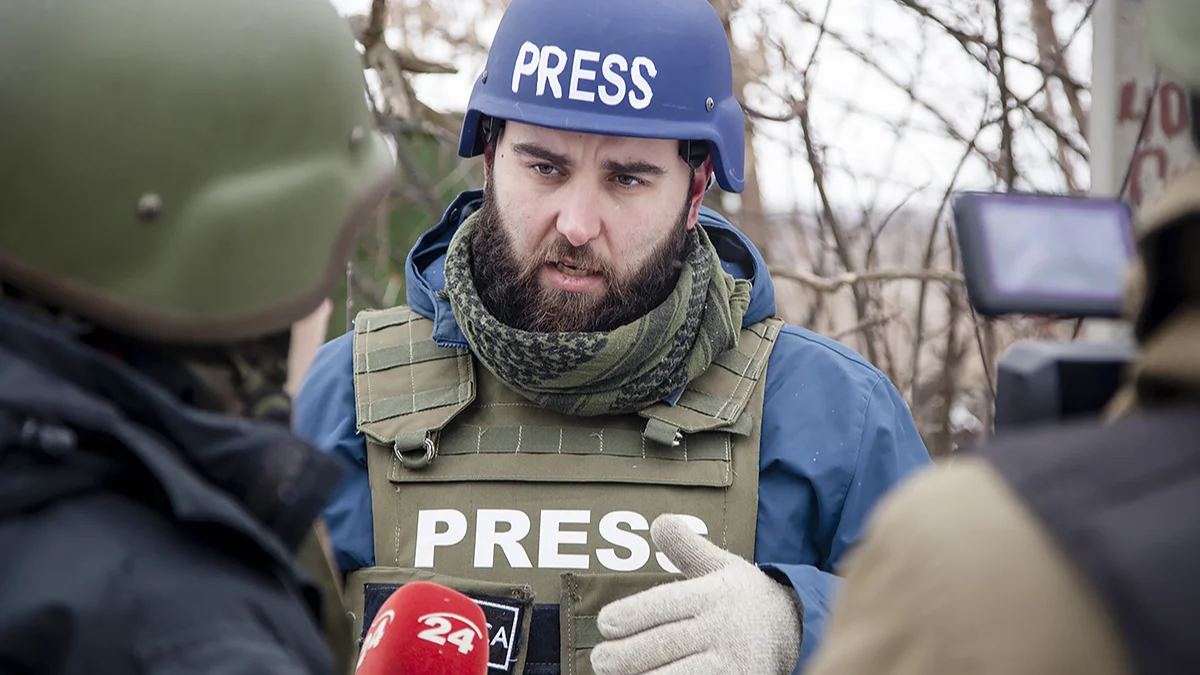
Pablo Gonzalez. Photo: Juan Teixeira / Eulixe.com
In the framework of the largest exchange in the history of exchanges with prisoners with the United States and European countries, Russia received eight citizens of the Russian Federation - killer, hackers and spies undercover. Among the latter-42-year-old Pavel Rubtsov, who for many years was presented at the forums and conferences of a democratic opposition in the EU Spanish journalist Pablo Gonzalem and was “friends” with Russian activists.
In 2022, a few days after a full -scale invasion of Ukraine, he was detained in Poland on suspicion of espionage in favor of Russia. In May 2023, the agency publication reported that Gonzalez was probably an agent introduced by GRU surrounded by Zhanna Nemtsova, the daughter of the murdered opposition policy Boris Nemtsov. But then there were no official clarifications on the fact of detention and open business from the Polish special services, and many in the opposition environment did not believe that Gonzalez was a really refusal agent. After the initiation of the case, international journalistic and human rights organizations have repeatedly stood up for Gonzales. Nevertheless, in August 2024, Gonzalez was among those whom Vladimir Putin personally arrived at Vnukovo Airport. As Pablo Gonzalez rubbed into trust for years, fascinated and deceived the Russian opposition and eventually slipped away from the hands of Polish justice, says the correspondent of Novo-Europe, Julia Akhmedova.
In October 2017, Boris Nemtsov’s forum was held in Berlin - an annual event where the Russian opposition meets with European politicians and intellectuals to discuss the future of relations between Russia and the EU. That year, politicians Ilya Yashin, Dmitry Gudkov, lawyer Ilya Novikov and other representatives of the democratic opposition came to the forum.
But many from that forum have been remembered by both very active and wishing to meet everyone Spanish journalist Pablo Gonzalez. A large, brutal man of about thirty -five seemed to everyone as a freelancer specializing in Eastern Europe and military conflicts. He spoke to beautiful Russian without an accent, very sympathized with the Russian opposition and took part in discussions about the importance of freedom of speech. At that forum, Pablo Gonzalem got a lot of useful contacts, managed to take pictures with politician Ilya Yashin and then attended the events of the Nemtsov Foundation more than once.
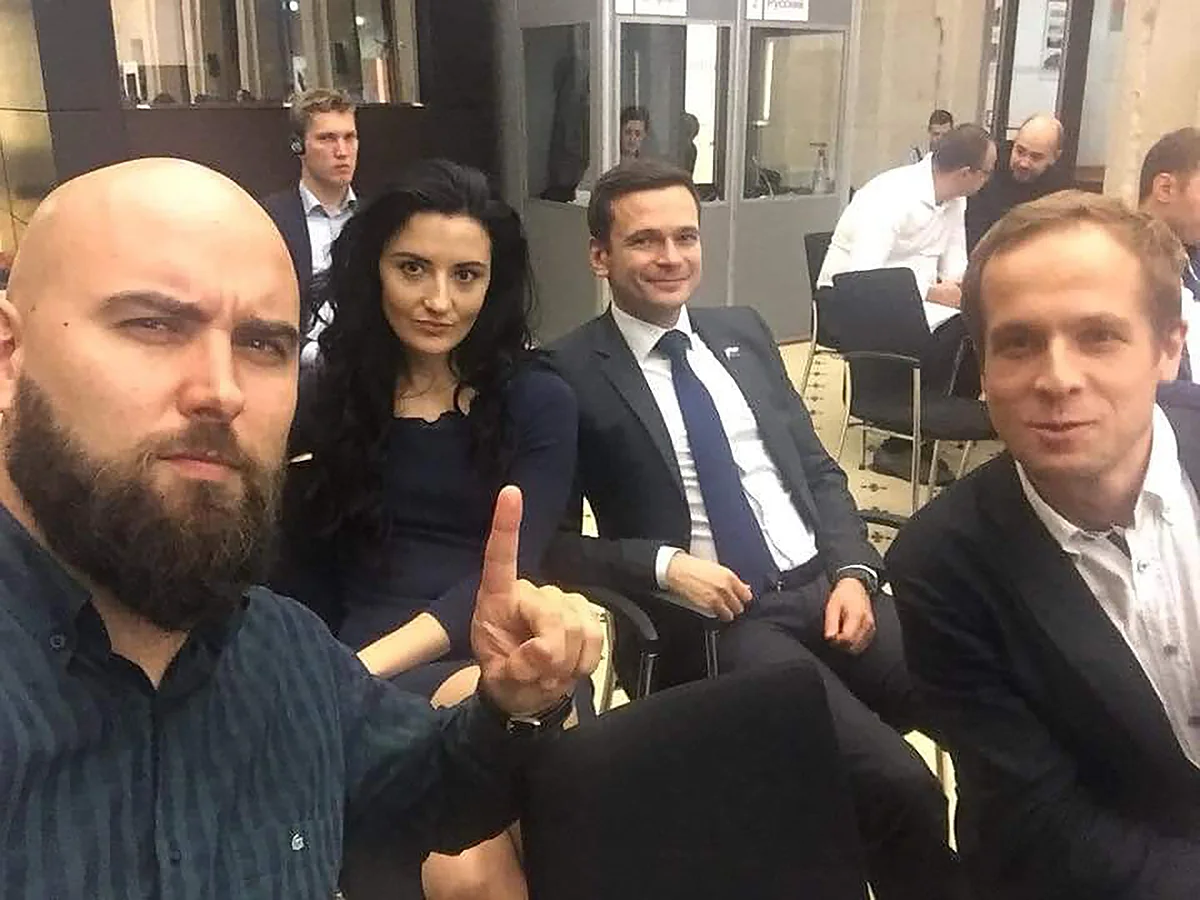
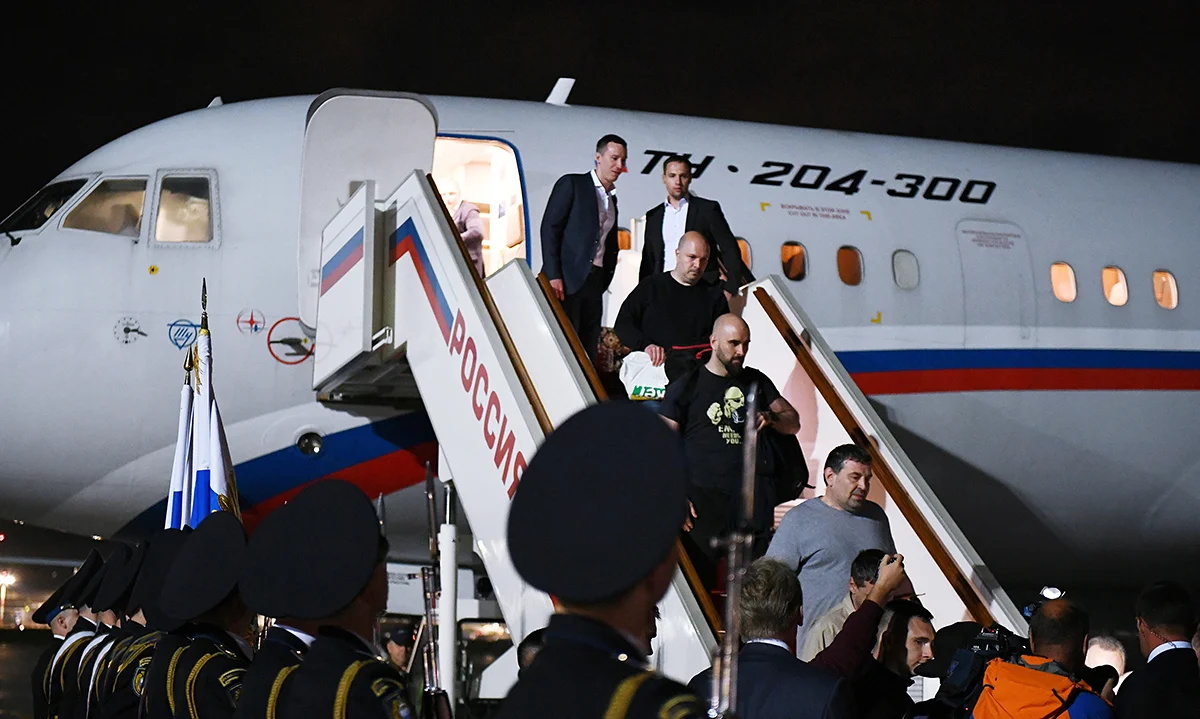
Only seven years later, when Vladimir Putin will personally meet in Vnukovo as a result of the exchange of spies of the Russian Federation as a result of the exchange with European countries, the Russian opposition will finally make sure that all this time a friendly Spaniard followed them and wrote reports in the GRU.
"Looked like a professional journalist"
For the first time, Pablo Gonzalez met with the co -founder of the Boris Nemtsov Foundation for Freedom Zhanna Nemtsova in Brussels in 2016 during the discussion of the candidacy of the specialist Pase in the case of the murder of her father - Russian opposition Boris Nemtsov. As the political activist and former husband of Nemtsova Pavel Elizarov, who is now in exile in Portugal, recalls, Gonzalez asked Jeanne an interview. After that, he "entered her circle."
According to Elizarov, he himself intersected with Gonzalez not only at work, but also on friendly trips, for example, to the country of Basque, where, as Gonzalez himself claimed, he lived. They also met in Barcelona, where Elizarov came as an observer from the “voice” to the referendum on the independence of Catalonia in 2017. There, Gonzalez impressed him, well immersed in the local environment.
“He was there like a fish in water. He introduced me to different people who organized a referendum, accompanied me to polling stations. He [said that] studied at the university in Barcelona, lived there for several years. I spoke perfectly in Spanish, as far as I can judge, without an accent.
Gonzalez knew how to write, interact with speakers, journalists and photographers who traveled with him. In general, he looked like a professional journalist ",
- recalls Elizarov.
According to the results of that referendum on the independence of Catalonia in Spain, mass protests organized by the Catalan politician Carles Puchdemon began . But Spain then did not allow Catalonia to get out of its composition, and as a result, Puchzemon, on which a criminal case was opened, fled to Brussels, where he created the government in exile. All these eight years, which have passed since the referendum and protests, politicians defending independent Catalonia, are accused of relations with the Kremlin. The media reported that at the peak of protests, Russia allegedly even offered the head of Catalonia 10 thousand soldiers and hundreds of billions of euros. Therefore, it is possible that Gonzalez did a double work there.
Pavel Elizarov admits that at some point their relationship with Gonzalem could be called quite friendly, in 2017-2018 they communicated quite a lot. Then the Spaniard positioned himself as a left activist, was interested in fan groups, asked about the fans of Spartak: how much are the nationalists, are there any left ones among them?
“Pablo - he is such a guy in the board, loves to sit in a bar, drink beer. He loves adrenaline, so he often went to those places where some movements take place: military conflicts, protests, and so on. He was all interesting to him, ”says Pavel Elizarov.
Nice in communication and reliable "in battle"
In hot spots - in the Donbass, in Nagorno -Karabakh - Gonzalez “made friends” with a journalist, special commander of Novaya Gazeta Europe Ilya Azar.
“We intersected in such places that, frankly, I did not have the thought that he could be an employee of the GRU,” says Azar.
-When you arrive at night under the shells falling from above in a hotel in Stepanakert and drink whiskey with fucking colleagues in body armor in a darkened hotel, you somehow don’t think: “Are you a pear-haired man, Pablo?”
Azar recalls Gonzalez as an easy thing in communication and a reliable “in battle” colleague, a comrade by profession, “with whom it is pleasant to spread stories and drink.”
“I am generally used to people, colleagues to trust, and there is such a kind of brotherhood of journalists in wars and conflicts,” says Azar.
The writer Alisa Ganieva, who was not easy for the Kremlin in the Kremlin - Caucasus - Caucasus - Caucasus. He also met her at the Nemtsov forum in Berlin in 2017. In a conversation, he raised the topic of potential independence of the Caucasus: he tried to understand whether this idea was popular there, citing cases of Basque and Catalans.
“Apparently, I hoped that I would say that the idea was popular, and I would name some names. But I had nothing to please him. At all
Pablo was able to play along with the interlocutor, to seem completely his own. My acquaintance with him was a hat, nevertheless, he threw the bridges, skillfully, as if by chance, shared good impressions of my books,
But this is a short way to arrange a writer to him, ”recalls Ganieva.
Gonzalez was also actively interested in Donbass, says Kirill Martynov, the editor-in-chief of Novo-Europe, like many who met Gonzalez at the Nemtsov forum.
“He expressed sympathy for the people who were in the territory of the“ DPR ”. Then many wrote about their problems, went there, made reports. There was a feeling that he was such a journalist-freelanger, telling about the horrors of war, who wants to be friends with everyone, because he has a difficult job. He actively socialized during the conference, made contacts, talked about the importance of freedom of speech. As far as I remember, at that conference he met literally everyone, ”says Martynov.
The descendant of the Spanish revolutionaries
The interlocutors of the Novo-Europe notes that Gonzalez was remembered not only by what he knew how to arrange, but also by his unusual origin. He was born in Moscow in 1982 and was registered under the name of Pavel Rubtsov. His mother was a descendant of the so-called “Spanish children” -their Republican parents fought with the dictator of Francisco Franco. In the 1930s, they were taken from Spain to the USSR, which then spoke on the side of opponents of the dictatorship in order to save from hostilities during the civil war. Gonzalez’s father, Alexei Rubtsov, since 1999 worked in RBC structures in managerial positions.
In the late 1980s, Gonzalez’s mother moved to her historical homeland, to Spain, and took her son with her. There she registered him as Pablo Gonzalez Yague. They lived in Bilbao for a year, and then moved to Catalonia. In 2005, Gonzalez settled in the Basque Country. And two years before, in Moscow he received a Russian passport in the name of Pavel Rubtsov.
Gonzalez began working as a journalist in 2014, specialized in Eastern Europe and military conflicts: he covered the annexation of Crimea and the invasion of Donbass, the war in Nagorno -Karabakh, the issues of non -recognition of Kosovo and Transnistria. He collaborated with the Spanish newspaper Público, with EFE agency, Lasexta television channel, Voice of America, Deutsche Welle and Basque regional publications Naiz and Gara. Gonzalez has a degree on Slavic philology, and it is also known that he wrote a doctoral dissertation at the University of the Basque Country (UPV/EHU) on the persecution of LGBT moves in Georgia.
Detention in Poland
Back in early February 2022, before the start of a full -scale war, when Gonzalez was in eastern Ukraine, supposedly performing journalistic work, he was called from the Ukrainian intelligence services and asked to come to Kiev. There he was interrogated and accused of "pro -Russian orientation", but released. In parallel with this, employees of the Spanish intelligence services questioned his relatives in Spain. But this did not go further. Pablo returned to Spain, and no one bothered him for almost a month. On February 25, he decided that he could calmly leave the country, and went to the border of Poland and Ukraine, supposedly illuminate the refugee crisis.
Two days later, on February 28, 2022, Gonzalez was detained in the Polish city of Pshymisl, near the border with Ukraine. The Polish authorities said that, according to them, the journalist worked for Russian intelligence and intended to get into Ukraine.
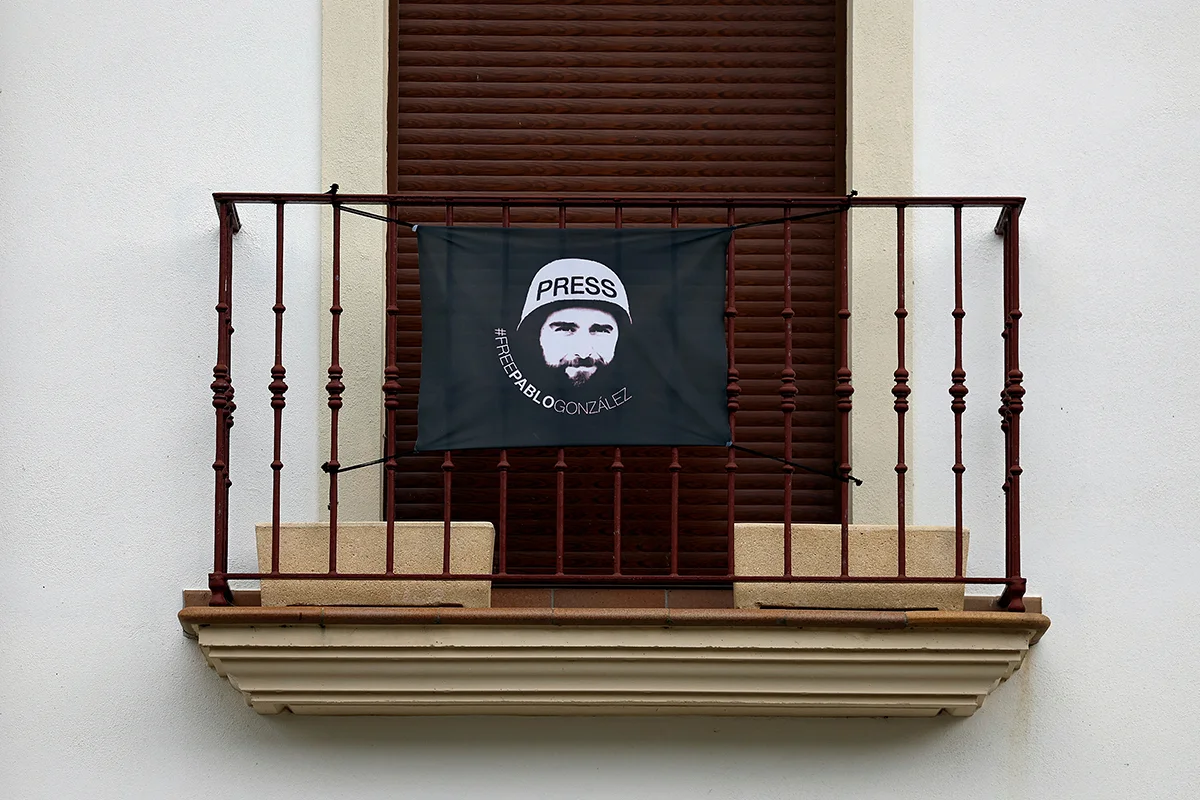
Then, in the Basque country, demonstrations began with the demand to free Gonzalez. Such organizations such as “reporters without borders” , Amnesty International and the International Federation of Journalists made condemnation of the arrest.
All of them, as well as the Spanish media, in the coverage of the arrest of Gonzalez, emphasized that at that time Poland took 66th place out of 180 in the rating of freedom of the press. The EU himself then also had questions to Poland to comply with the rule of law in the country.
In a conversation with the New Evrope, a representative of “reporters without borders”, Jeanne Cavilier clarified that the organization never considered Gonzalez “arbitrarily detained”, but only asked the Polish authorities to quickly organize a fair court, which would determine wheels or not.
“According to EU standards, it was unusual to keep him in prison for two years without a trial. The court is also necessary so that we find out whether Pablo Gonzalez was a spy. Now he has to give explanations, ”said Jeanne Cavilier.
In May 2023, the Agency, citing sources in the Nemtsov Foundation, reported that Gonzalez was an agent, introduced by GRU, surrounded by Zhanna Nemtsova. According to sources familiar with the course of the investigation, in his reports, Gonzalez described in detail the activities of Nemtsova and her friends, employees and partners of the fund, as well as students of the annual summer journalism school, which has been held by the Fund since 2018. In addition, letters of Boris Nemtsov were found in the gadgets of Gonzalez, which the journalist allegedly copied from the laptop of Nemtsova herself.
The Nemtsov Foundation did not respond to the request of Novo-Europe. The co -founder of the Foundation Olga Shorina also refused to comment, citing a non -disclosure subscription.
The latest doubts
After Pablo Gonzalez ended up in a group of prisoners to exchange with Russia, the doubts that he was a Russian spy is unlikely to remain. Nevertheless, Polish and Spanish journalists are concerned about how the investigation in the case of Gonzalez Warsaw fired.
It is still not clear what grounds were for his arrest, and the investigation itself is classified.
The reasons why Gonzalez decided to exchange is only known that Poland did this "because of the close Polish-American union and common security interests."
To the questions of journalists about what stage the criminal case of Gonzalez has and whether it will reach the court, after the exchange, they refused to respond to the Polish prosecutor's office.
All this caused the indignation of the public. So, for example, according to the deputy of the European Parliament Marek Biernacki), the prosecutor's office and the Polish special services should explain to everyone that will happen further with the criminal case of Rubtsov in Poland, on which he was exchanged and what he actually did in Poland.
Too good life for an independent journalist
Pavel Elizarov recalls that he never suspected Gonzalez of anything like that, nevertheless, he stopped communication with him a couple of years before his arrest, because at some point the Spaniard behavior changed.
“He began to manifest homophobia, hatred of migrants, and I thought that maybe he was really no left activist. It’s not that he sharply began to broadcast the Prochrevsky views, but he definitely changed, it was felt.
Apparently, he no longer had the task of developing me or one of the opposition. When he was arrested, I noticed that the Spanish government did not comment on this; And then I thought that, apparently, there are serious reasons for the accusations, ”says Elizarov.
Ilya Azar recalled the post-fact of suspicious details: “In his very stay in Karabakh, almost longer than all other journalists, in his ideal Russian language and not quite obvious to me as a statnik survival in Freelance was something suspicious. But then I found that he was such a romantic from the profession. It was all the more difficult to find out that Pablo was a pear. At first, I even thought to go to the picket in his support, but colleagues (smarter than me, it seems!) Washed it off. Well, now the last doubts have disappeared. ”
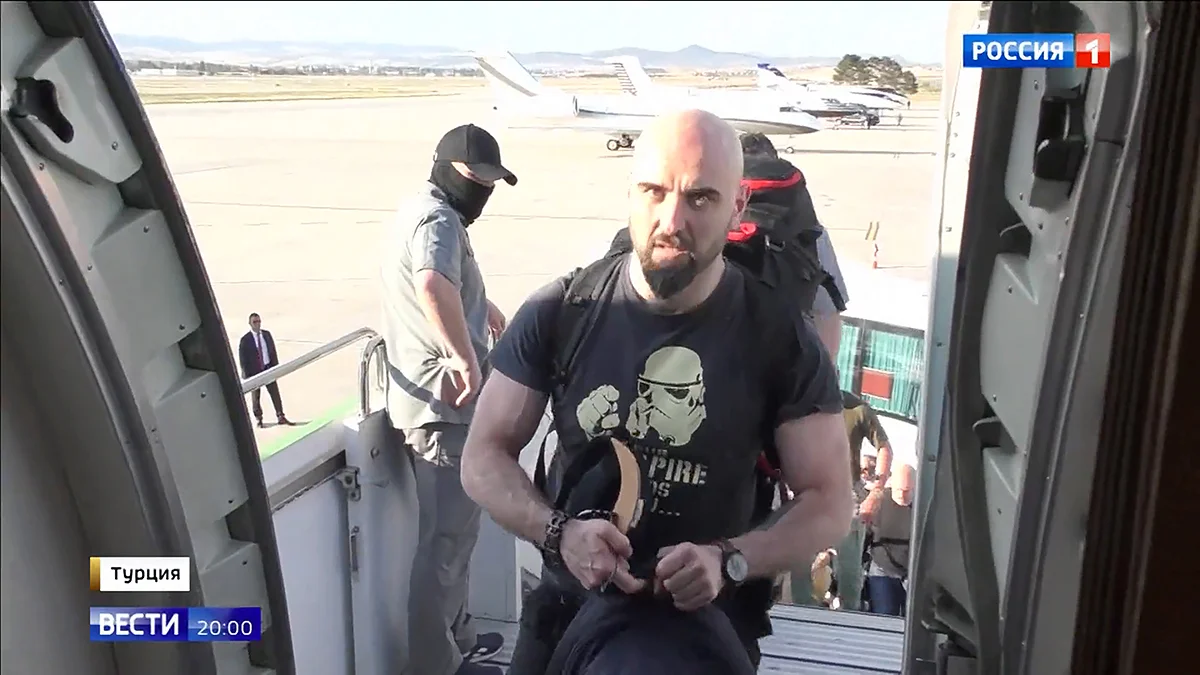
The opinion that Gonzalez always fit well into the team, easily found a common language with colleagues is confirmed by Western journalists. So, for example, Jaap Arriens, a Dutch video officer working in Warsaw, recalls Gonzalez as a cheerful and simple guy, but at the same time notes that Pablo seemed to have more funds than an ordinary freelancer journalist. So, he always used the newest and most expensive mobile phones and computers, and on the Polish-Ukrainian border he worked on the latest 14-inch MacBook Pro.
“Once, Gonzalez said:“ Life goes well, life goes almost too well, ”Arriens recalls. - And I thought: “Dude, the life of an independent journalist is never too good, what are you talking about?” ”