
Translated material
Bread and will
What Russians choose: well -being or civilian freedoms. The results of a study of sociologists
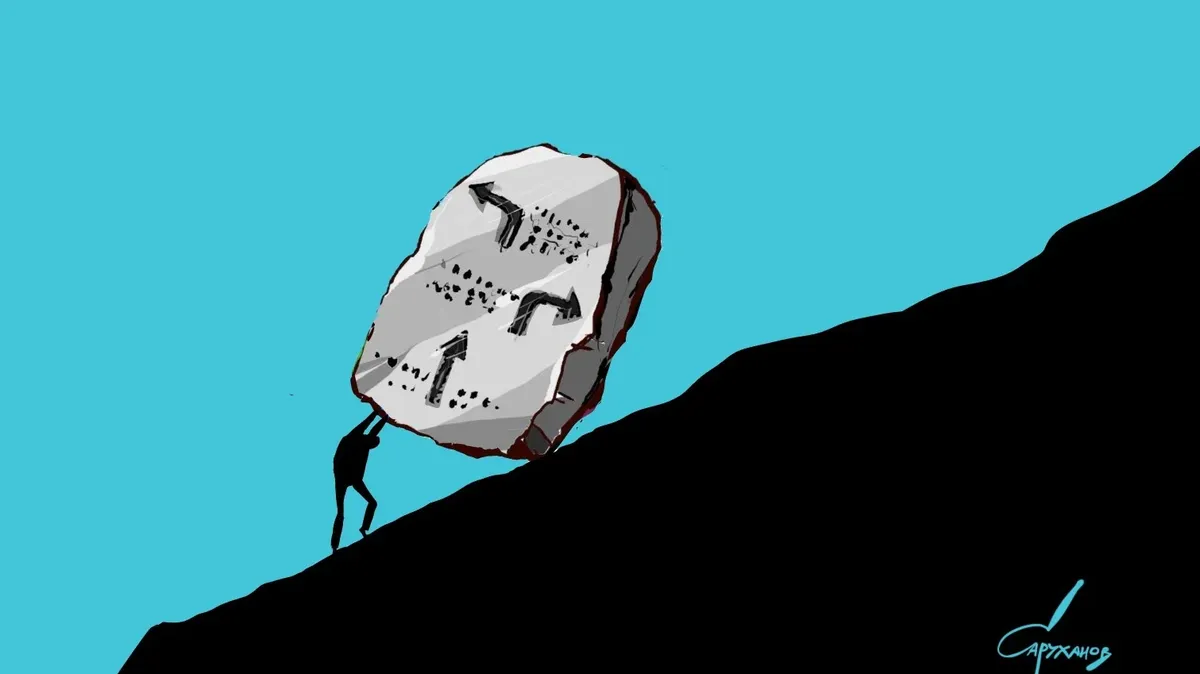
Peter Sarukhanov / "New Gazeta"
18+. This material (information) was produced, distributed and (or) sent by the Levada Center foreign agent or applies to the activities of the Levada Center foreign agent.
How do the Russians imagine the value positions of their fellow citizens, their political attitudes? This is shown by the results of a survey conducted in July “Levada Center”* during a study conducted together with the laboratory of the future Novaya Gazeta.
The Russians were asked two questions. This is how the answers to them were distributed as a whole:
Poll I
What is more important for Russians now? As a percentage of the total number of respondents
Material well -being - 21%
Civil rights and freedoms - 5%
Both equally - 71%
I find it difficult to answer - 3%
Poll II
Most people around you:
Actively support power - 20%
Support power, but passively - 39%
Do not support, but do not oppose - 26%
Do not support and are ready to protest/resist - 3%
I find it difficult to answer - 12%
First, we evaluate the results from the formal side. We see that the first question almost did not cause difficulties. Three percent difficult to answer is very little. The point, apparently, was that among the possible answer options there was one that allowed us to get away from the “sharp” options, to hide the neutral answer “both” - both the reluctance of some to discover their opinion and the desire, probably, to hide the lack of a firm opinion on the asked positions of all residents of the Russian Federation.
Moreover, in this response they disappeared - among almost three quarters of all respondents - and those who do not have a firm opinion even about their own position. No wonder such an answer is most often given by those who found their best with answers and other questions of researchers. Well, most importantly:
Not everyone in Russia generally believe that life requires to choose between freedom and wealth. It would be nice, they think, have both.
Many politicians put the question of choosing between earthly tangible goods and exalted good freedom. The answer that the leaders of the emerging American nation gave is known: the people who prefer the safety of freedom will lose both of them. The response of Russian fighters against the autocracy is known, they were called "bread lovers": we demand for the people both bread and will. Politicians of the twentieth, and this century can be divided into those who promise the people well -being, but suppress the struggle for rights and freedoms, and those that, on the contrary, call for the struggle for freedom, even if they will have to pay (temporary) hardships. The masses in different countries at different times of their history were inclined to the side of some or to the side of others. The survey shows how things are in our country these days.
Let's look at the distribution of answers to the second question. We see that about every tenth was difficult to answer. This is a common thing. It is interesting that they said that the majority in their surroundings do not support power and are ready for protests, four times less. There are three of them for a hundred. It is appropriate to recall the widely spreading opinion: people who are oppositionly will not say this to sociologists. It looks plausible. But, if you think about it, this means that they behave exactly as described in the formula "do not support, but do not oppose." Someone will say that this answer is risky, you never know what ... Yes, but just what is the opposition, which is afraid to even admit that she is afraid and silent. This is just this option of loyalty.
To be loyal to existing power is natural for most people in most historical circumstances.
But, firstly, in addition to the majority, there is a minority that may disagree with the current government.
And secondly, there are periods when a deaf disagreement with the authorities, or even open resistance becomes characteristic of significant-in a numerical or functional meaning-part of society.
The survey shows us whether this is so in modern Russia.
We pay attention that the first question suggested that the respondents express not their own position regarding the dilemma “freedom or well -being”, but to say what choice other citizens of the country as a whole make. Experience shows that, speaking of their compatriots and contemporaries in general, some people really answer about others, not to themselves. For example, leading workers are a third less often than others about the value of well -being for Russians, as well as the importance of civil values for them. Such is their opinion about the "people." But students in answers about “all” express their own opinions and beliefs: they twice as less than average attribute to Russians the concern for abundance and one and a half times more often than average - interest in civil rights and freedoms.
In the second question, the respondents were no longer answered about “all”, but about their environment. It can be expected here that a person has more knowledge about the opinions of others, but the dependence on their opinion is higher. It is not without reason that those who at the very beginning of the survey said that they consider the course to which Russia are two times more often than anyone else they say that the majority in their environment “does not support power”.
So what is more important for Russians now? From the answers it turns out that well -being for Russians is four times more important than civil rights and freedoms. But both material benefits and moral values separately choose a minority. And most of the entire population, they tell us almost three quarters of Russians, do not make a choice between these benefits.
On average, one fifth of the respondents sees active power support in its environment.
It is not surprising that among those who trust television most of all, there are a third more such answers. Indeed, for them, a TV with his characters is the closest environment.
Very few are generally ready for resistance to resistance, and in this environment there are even fewer. And about silent disagreements, they speak a third less often.
As we said, many responds project their views on their imaginary society as a whole. Therefore, in their answers you can see their own attitudes. Moscow is the richest city in the country. The village, small cities mostly live well. And this was reflected in the fact that Muscovites attribute the priority of welfare to Russians one and a half times more often than residents of small populated places do. In Moscow, the highest percentage of the authorities in the country. The chiefs are a third most often say that others actively support power. And in the answers of Muscovites, the share of statements about the active loyalty of the surrounding authorities is increased. Moscow influences both the central federal district and ideologically on the surrounding it. This is probably why the answers about the value of the material are given much more often than average.
And the North-Western Federal District twice as much as central ascribes to the Russians a primacy of material interests. And one and a half times less often speaks of actively supporting power.
We noted that among the respondents of the chiefs the highest percentage of claiming that the majority is actively supporting power around them. This manifests their own loyalty. But their fright is also visible: they are a quarter more often than the average report that the majority of others do not support power, but they hide it.
Among the entrepreneurs are a different picture. They almost twice as less often than others find in their environment the carriers of the active support of the authorities and, on the contrary, almost twice as often see in their environment those who do not support the authorities, although they do not open openly. But they do not see those ready for open resistance among “their own” at all.
Among the working population, the power not supporting power is called by a majority of about 28%, and actively supporting power - about 20%.
The opinions discussed, as it turned out, to some extent depend on the financial situation of the respondents. It must be thought that the poorest layers and the most prosperous motivations call the material well -being of the most important thing for Russians, but both categories call this motive more often than average. But then it is noteworthy that:
Firstly, the poorest groups are almost twice as often than the middle and more often rich call civil rights and freedoms the most important things for Russians,
Secondly, they again more often than the middle and more often rich call the majority in their environment those who are opposed to the authorities, but are silent, as well as those who are ready to protest and resist.
So in general the survey results look. Recall that these were the opinions of Russians about the opinions of Russians. Readers have to put their opinions about them.