Translated material
"National map"
Hungary simplified the legalization in the country for Russians and Belarusians. And although the EU is criticized by this decision, you can use the program and you can move now
Photo: Balazs Mohai / EPA-EFE
In early July, Hungary simplified the process of moving for Belarusians and Russians: both countries were included in the National Card program, a new type of working residence permit, which should increase the flow of labor migrants in the country. Potential workers are promised an accelerated consideration of the application, the opportunity to transport a family with them and receive permanent residence in three years.
Budapest made the decision almost immediately after the trip of Prime Minister Viktor Orban to Moscow on July 5. However, it was not possible to do without unnecessary noise: at the end of the month, the initiative began to be widely discussed in the media, and now some European politicians demand to exclude Hungary from the Schengen zone. The new newspaper Europe figured out what opportunities a new program opens for Russians, why it caused such disputes in the EU and what needs to be done in order to move from Russia to Hungary on the National Card.
"National map" of Hungary
“National Map” (Hungarian Nemzeti Kártya) is a new type of residence permit (residence permit) of Hungary, which appeared in early 2024. It is issued for two years and can be extended by three more. After three years of living in Hungary, the owner of the National Card has the right to request a permanent residence permit (permanent residence).
The National Card is distinguished by much more flexibility from the usual working residence permit: you still need a work contract with the Hungarian organization, but you can move without special professional skills and qualifications, and if necessary to change the employer and the type of residency without leaving the country.
At the same time, the document makes it possible to transport the family with you and the right to freely move around the EU.
The appearance of the program is due to the desire of Budapest to attract workers from abroad to the country. Hungary has been actively looking for labor migrants for the past ten years. The country's government and the National Association of Employers and Manufacturers even called the approximate number of foreign workers that they strive to attract: from 200 thousand to 250 thousand people. In the spring of 2024, Budapest announced that he was expecting 65 thousand migrants during the year.
Despite the fact that this is not the first program created in order to attract labor migrants to Hungary, all this time the move has still remained a difficult process. For example, the Hungarian employer needed to get permission (quota) if he wanted to hire employees from countries that are not part of the EU. The resolution was issued only if it is impossible to find similar personnel in the labor market of Hungary or the entire EU. Thus, the "national map" is designed to simplify and speed up all these procedures on the side of the employer.
"Peaceful mission" to search for workers
At first, the program of the National Card was applied only to citizens of Serbia and Ukraine. Both of them borders Hungary, so that they are closely connected not only in the issue of labor relations. Serbs and Ukrainians have constituted a significant part of the migration flow to the country since the 1990s (then, however, mainly ethnic Hungarians came). The flow of Ukrainian migrants increased significantly in 2014, after Russia began hostilities in the southeast of Ukraine. But a full -scale war led to the fact that workers from Ukraine were finally replaced by refugees: at the beginning of 2024, about 65 thousand people remained in the country.
In July, the list of states, from where Budapest expects an increase in the migration flow, was significantly expanded. In addition to Serbia and Ukraine, it included Moldova, Bosnia and Herzegovina, Montenegro, North Macedonia, Russia and Belarus.
At the moment, several options for moving to Hungary are available for Russians. In addition to moving on a regular working residence permit, and now the relay of the National Card, in early July, the Hungarian program of Golden Vis was updated . According to it, citizens of third countries have the right to receive a residence permit of Hungary for 10 years with the possibility of extension. The investor can either purchase ia in the fund in the amount of 250 thousand euros, or buy real estate from 500 thousand euros, or donate from 1 million euros to the Hungarian higher educational institution.
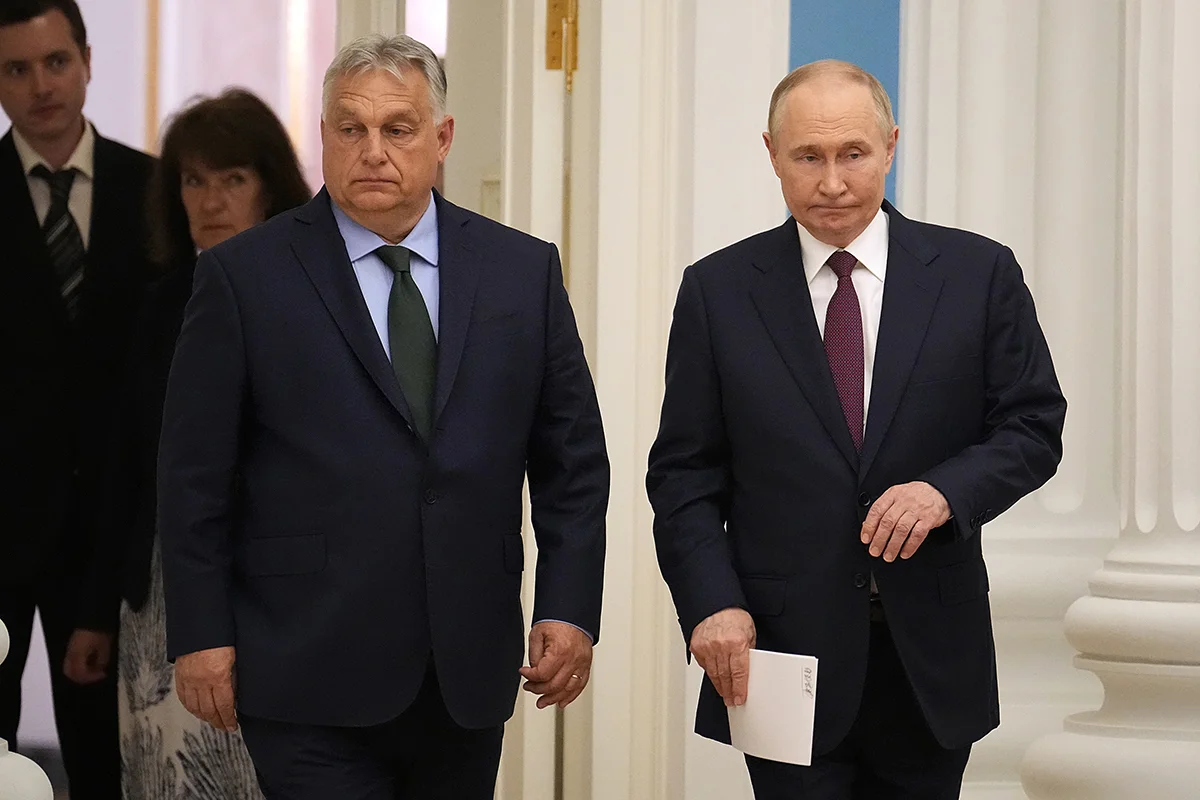
The Russians were included in the National Card program on July 8, just a few days after the prime minister of Hungary Viktor Orban visited Moscow.
The trip was presented as part of the “peaceful mission”: before arriving in Russia, Orban met in Kyiv with the President of Ukraine Vladimir Zelensky. Hungarian political scientists appreciated the visit to Moscow, including as the desire of the Hungarian prime minister to strengthen their influence within the EU and present themselves to Europeans as an alternative policy.
Viktor Orban is considered one of the last allies of Vladimir Putin in Europe. He regularly advocates continuing the EU cooperation with Russia and criticizes the allocation of military assistance to Ukraine. The European Parliament of Orban to Moscow condemned in the first resolution adopted after the change of composition of deputies in 2024.
The expansion of migration opportunities for Russians and Belarusians caused at least surprise in Europe. First of all, due to the fact that it occurred against the backdrop of a continuing war in Ukraine.
Questions arose about the economic justification of the decision.
According to Deutsche Welle, with the help of the National Card program, Budapest wants to simplify the entrance to the country for workers who will be involved in the construction of the PAKSH-2 Hungarian NPP. For the past ten years, the Russian corporation Rosatom has been engaged in this project.
However, as a teacher at the University of Corvin in Budapest, Andras Rats, the construction is still far from the stage, which will require an increase in labor, since Rosatom cannot yet provide plans for the EU standards.
But, in any case, not only those who want to work at the nuclear power plant will be able to get a “national card”.
National approach inside the EU
Since Hungary made changes to the program without any comments, the discussion of new rules within the EU began only a few weeks after that, at the end of July. The first to the changes was drawn to the chairman of the largest European People's Party (UNP) Manfred Weber. In a letter to the chairman of the European Council, Charles Michel, he pointed out that the Hungarian “National Card” would make it possible to freely move around Europe for Russians who have not passed the audit. Weber called on EU leaders to accept urgent countermeasures in response to the actions of Hungary.
After that, the decision of Budapest caused a violent reaction from the EU countries. The actions of Hungary were criticized in the Baltic countries: the President of Lithuania Gitanas Nauceda and the Minister of Foreign Affairs of Estonia Margus Tsakhkna said that the participation of Russians and Belarusians in the program increases the risks of security for the EU and the Schengen zone, due to the fact that the owners of the new residence permit can freely move around Europe.
The European Parliament deputy Sergei Lagodinsky, in the comments by the German publication, RND called the actions of the Hungarian leadership a “wrong approach”, and the initiative of the country's prime minister Viktor Orban, “undermining the European migration system” in the interests of the Kremlin.
In early August, 67 euros deputies in an open letter asked the European Commission to react to growing risks.
Parliamentarians recalled the previous actions of Orban and noted that the expansion of the National Card program could strengthen the Russian spy network inside the EU.
- There are numerous examples of hostile operations of the Russian Federation on European land, including an attempt on the [former GRU employee Sergei and his daughter Julia] Skripals and the incident in the Vrbetitsa [ we are talking about explosions in the weapon warehouse in the Babrian, in the Czech Republic, in October and December 2014. - approx. Ed. ]. Our duty as European institutions is to protect European citizens from these threats, and not to completely open borders for countries that consider us their enemies, the letter said.
The proportionate response of politics was called the introduction of new control measures on the borders with Hungary. Some deputies, for example, Joachim Straight from Germany, are completely urge to exclude Hungary from the Schengen zone. In the past, a similar precedent has already happened to Greece. Due to the migration crisis in the country in 2016, the European Commission threatened to suspend the membership of Athens in the Schengen agreement, but still did not reach.
Nevertheless, despite the fact that in Europe they still decide what to do with the new Budapest rules, Russians can already use another way for emigration. The National Card program is launched and works.
How to get the "national map" of Hungary
The website of the Hungarian Migration Service states that to obtain a “national card” will be required:- Application for the issuance of a residence permit
It can be submitted in the diplomatic or consular representative office of Hungary in the country of citizenship or residence. A separate application for a visa is not required.
You can also issue a card on the territory of Hungary through the Enter Hungary electronic system or personally in the Department of the National General Directorate of Foreigners (English National Directorate-General for Alien Polics, NDGAP) at the place of residence. The applicant’s company, with whom he will cooperate in Hungary, can also apply using Enter Hungary.
- biometric data
In addition to the completed questionnaire, a biometric data may also be required to obtain a residence permit: a photograph of the face and fingerprint.
- paid administrative fee
For applicants who are submitted to a residence permit through an embassy or consulate, it is 110 euros.
- documents confirming the purpose of moving to Hungary
That is, an employment contract with a legal entity registered in Hungary or a preliminary agreement on readiness to establish such labor relations. - Confirmation of income
The applicant of the National Card must confirm that it has sufficient funds for moving, living in the country, receiving medical care, etc. It can confirm income as the same employment contract with the Hungarian employer and an extract from the bank. The amount necessary for submitting the amount in migration rules has not been established.
- confirmation of the presence of a place of residence
Housing lease or confirmation of ownership in Hungary.
- Medical insurance
- Documents that confirm that the applicant will be able to leave the country
This requires a valid passport and a sufficient amount of money in the account to buy a ticket. The passport should be valid two more years after the expiration of the “national card”.
- Photo for a document
The deadline for consideration of the application is 21 days. During this time, the migration service, if necessary, may require additional documents. At the same time, the maximum time during which the country's authorities can make decisions is 70 days from the date of filing the application.
In case of approval, the applicant will receive a visa for entering Hungary and further registration of a residence permit. You need to move to the country within three months. If this period is not observed, the decision will burn.
The refusal to issue a residence permit can be appealed for eight days.