
Translated material
Where are we talking from, or about speech geopolition | Colta.ru
Kolt continues the project“in separation” , formally dedicated to the relationship of “those who left” and “remaining”, but truly-how the identity of people have changed from the beginning of the war, wherever they are geographically.
The new text of the project is devoted to the simple fact that the editorial office has repeatedly and bitterly encountered. It became very difficult for people divided by state borders to speak with each other; The same words began to mean different things. Together with the movement in space, consciousness inevitably changes, and with it, speech in a one -as -one, general, “native” language.
This problem was discovered by the poet Pavel Arseniev, who has long been living in France. She became the subject of his lecture, read in March 2024 at the University of Toulouse named after Jean Zhores, “Where are we talking about? Speech geovement between discursive imaginary and communicative gaps. ” After the lecture, Anna Lemial, the sociologist and teacher of the Russian language and country at the University of Toulouse, talked in detail with him. The conversation will be published next year in French in the collection of Langues et Discours Face a la Guerre En Ukraine (edited by Sarah, Julia Lerner, Bella Ostromoukhova and Anna Lemial).
At the request of the editorial office, the Russian -speaking version of this conversation Arsenyev and Lemoial prepared for the colts.
Pavel Arsenyev - postdoxterant sorbonne in literature, laureate of the PAUSE program College de France.
All illustrations for the project are made with the help of neural networks Ksenia Leonov.
And one more, very important.
Dear readers, we remind you that the editors really need your help. You can support the work of the colts and specifically the project "In separation"
on "Frendley" (from Russia);
on Patreon (in any side of the world).
Thank you very much!
Printing differently and starting from afar
- Pavel, you and I have been familiar with the 2015 conference Publier Autrement (“Print differently. Small publishers, independent journalists and bloggers in Russia”) in the Paris Higher School of Social Sciences (Ehess). Then the French community of Russianists and sociologists working in Russia only departed from shock after the annexation of Crimea, observed with anxiety the new repressive laws of the Russian Federation, wondered where all this could have, and with interest followed the reinvestment of the 2011-2012 protest energy in local and urban involvement, in alternative forms of political participation and the same. Independent forms of the press naturally also fell into focus, and we were able to invite her protagonists from Russia, including you, with an abstract certificate of magazine [Translit].
Only seven years later, the whole world and our field of research has radically changed. On this round, you arrived in Toulouse in 2024 - you did not fly out of distant Russia, but just sat on an electric train from Marseille. Now you talked about the transformations of the language after February 2022 and the related metamorphoses [translite]. It seems to me that now both of these topics - linguistic behavior during the war and the existence of an alternative press - have acquired a new and especially acute sound.
- Yes, but let's start with the magazine [translite]. In the spring of 2022, if not a chain of times, then most of the production and logistics chains in the editorial office. Almost every technical solution now turns out to be a political choice, and vice versa: a political choice (say, to go out of non -certificate) becomes a technical solution (about the editorial office).
But we decided to resist an attempt to divorce the cultural generation in the camps of those who left and remain. At that time, we not only prepared the PDF of our new, anti -war number and distributed it to Safespace of Western universities and on the network, but published it in Russia, on paper, and launched it on our long -established network of independent bookstores, liberthous libraries and simply acquaintances.
Transformations that experience language and media are a continuation or expansion of general tectonic processes. First of all, we are talking about the collapse of large Russian -speaking audiences. “Small peoples” replace them, these forming “creative minorities”, as Deleuz called them.
For example, writers and public political figures, who previously counted on wide popularity or enjoyed mass success among the Russian -speaking audience, is now not easy. Most of the temptation of nostalgia and a certain conservatism, the desire to again “collect all this”, this “Russian world” or, in any case, a massive Russian -speaking audience (which, as in the past, would provide them with cultural and economic vitality). This desire to return to a large scale in itself seems problematic to me, it ignores new conditions in which the Russian language has ceased to be a neutral “working” language. On the other hand, small independent media, such as ours, are much easier to adapt to the collapse of large Russian -speaking audiences, because we always had to deal with the public and more specific and more international.
Nevertheless, even within our editorial office, a split was gradually outlined: it is too difficult to talk about the war in Russia, and in Europe it is easy to speak (against war), but it is quite difficult to limit themselves to the Russians, because the Russian -speaking public is small and scattered. We will return with you to the last circumstance.
Paradoxically, both sides no longer have words (as we entered, for the first time transliterator, the last Russian-speaking number, published in 2022 in St. Petersburg, Bolshe Net Slov ). The first number, published in Marseille in 2023, wears the subtitle Sens EN Migration (“migrating meaning”): in it we will study how the meaning of each statement is broken down in a new situation, it becomes fluid.
Language corruption and algorithmic censorship
- The number [translite] with the eloquent name Bolshe Net Slov, which you just mentioned, is dedicated to the corruption of the language associated with the war. What exactly is this corruption? Can you tell a little?
-Among the new speech reflexes that appeared since 2022, you can distinguish the gl man of Cyrillic spelling ( insert z and v in the official names of entire regions ), lexical seizures (legally enhanced) and logical-syntactic breaks (in propaganda speech and in persons depending on it). We could not pass by such a rich material and a wide panorama of the decomposition of the tongue, which we continued to use.
But among these linguistic breakdowns and complications, the most interesting, of course, was not the seizure of individual words or export -substitution of the Cyrillic letters by Latin, but a new type of censorship, which I would call algorithmic. We are talking about the risk of being arrested not for a joke in communal cuisine, but for reposting on a social network. In former times, in order for one of the neighbors to show vigilance, an “individual approach” was needed, an interested suspicion of the other's speech. And today, the identification of seditious utterances, and with it the impulse itself for repression is actually delegated to algorithms (as well as loyalist replicas are outstanded to the botes). In this setting - by no means “the best of the possible” - the main “Voice of protest” will not necessarily be arrested, it may be an ordinary schoolgirl who shared a protest meme. One way or another, the algorithms, unlike tyrants, are not adapted to call repression and clarify “Is the Poet Mandelstam,” they simply react to keywords. And this makes you refuse them just in case: it does not matter what you think there and whether you consider your poems to be anti-war, just avoid some expressions because of which you can lose your job.
This seems to have been tested for the first time quite “manually” (although the police 'hands were equipped with video cameras) during “swamp protests”, when completely arbitrary people touched out of the entire mass of repression in May 2012, but the list was a visa-based socially representative: a young anarchist, respectable father of the family or, for example, a pensioner. Such aleator repression was designed to create an atmosphere of fear for any, including completely “peaceful and without weapons”, participation in protests. Subsequently, this strategy was automated in algorithmic network censorship, when speech itself is criminalized and any mention of certain words should cause fear.
In 2014, the protest forces were divorced (like suckers) in two camps with the help of the question of the Crimea and the Donbass, but this remained a purely ideological confrontation, and, roughly speaking, inside (culture) of the Russian Federation, “ours” and “not ours” coexisted relatively peacefully. But in 2022, this speculative schism was required to transfer to the level of the final moral and economic solution: now, if you do not agree with the general line of fantasy-imperialism, you better go into emigration, and if for some reason, including respectful, you can’t arrange it, then you must morally adapt to the new cannibal order, find some right or your own right or your own right or your own Tragism and, in general, to assimilate in your new country.
Tactics of linguistic exile
- Since we started talking about emigration, please tell me how you yourself ended up in it. After all, you left long before the start of the war? As far as I remember, this was associated with the consequences of “swamp protests”?
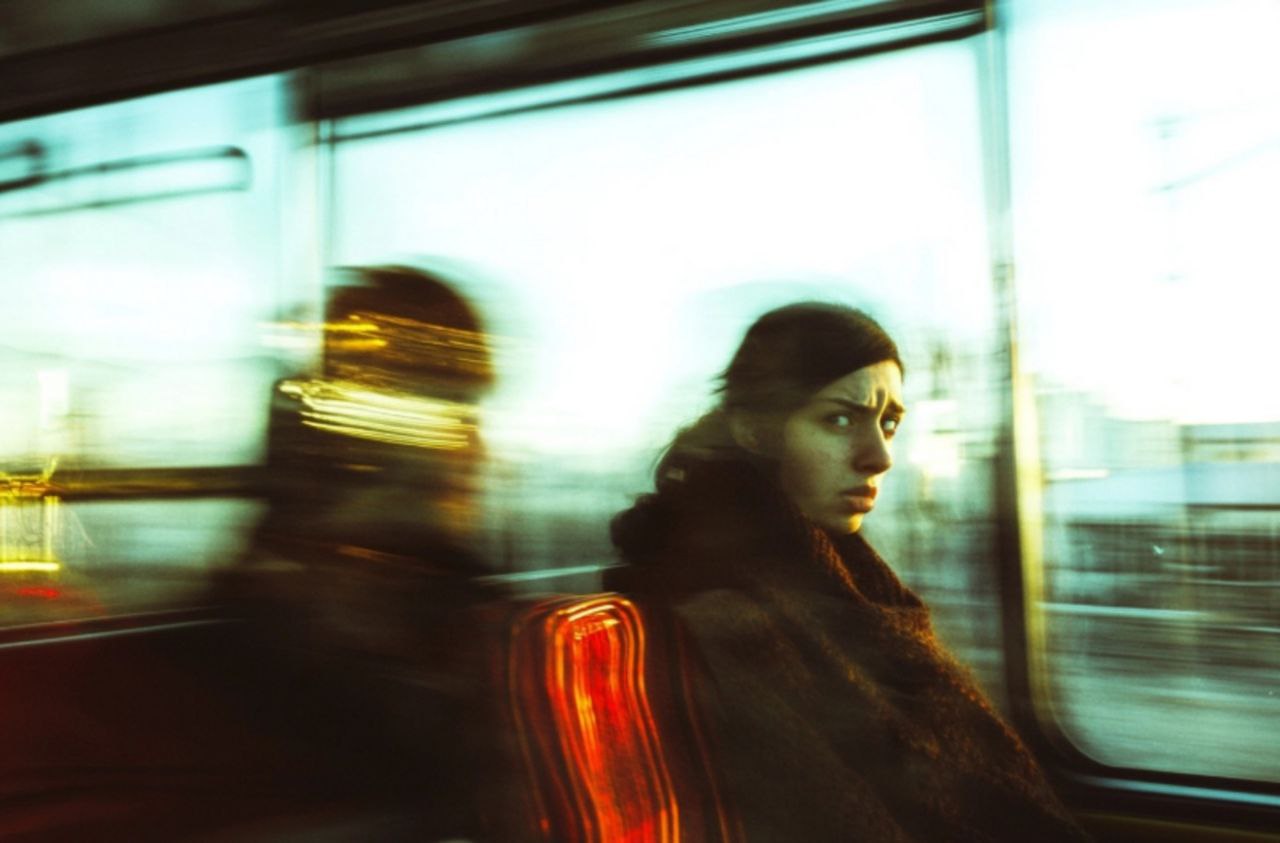 © Ksenia Leonova
- My own history of emigration was associated with political reasons and linguoto -ethical circumstances that were originally connected. After the arrest and court in 2013, I was forced to leave the country for reading poetry at the rally (which qualified while “disrespect for society and public morality”). At the same time, I received an invitation from the center of the comparative epistemology of the linguistic ideas of Eastern and Central Europe to continue my border guards - between literary theory and political poetry - studies at the University of Lausanne.
Therefore, then, in 2014, I still had a chance to consider this educational migration, and not political emigration. But in 2022, literally on one day, we were no longer in graduate school, but in exile, we did not plan to return anymore, we could not plan anything else, and often do anything.
So gradually I had an attempt to develop the concept of linguistic exile . From birth, we all find ourselves in one or another language environment: at first we act on the touch, doubting in our expressions (and therefore in what we express). But over time, we settle in this language, get used to perceiving it as a native, we become his “native speakers”, use it, almost without thinking and not paying special attention to it.
In adulthood, anxiety about the language can return in three cases. Firstly, if we have children who learn the language in the same method of trial and error, and we are attentive to this process. Secondly, when we write poetry, where the action of everyday expressions is suspended, the meaning is redesigned, and the audience, which we turn to, is eroded. And finally, we again feel anxiety about the language, when we find ourselves in exile, trying to settle in a new country, in a new culture and in a new language - inevitably, reverse relations with the former language.
And since in the past few years all these reasons are accumulating and intersecting, I am inclined to perceive linguistic exile not as an exceptional state, but as a basic condition in the existence of talking animals, which simply becomes more obvious in catastrophic times. Again, making the use of the language uncertain, awakening attention to it, the linguistic exile could be shaken on the literary program, but in the current situation it acquires more acute political relevance.
At the same time, the forms of linguistic emigration are different: for some, this is a refusal to speak Russian as (the only) official language of the aggressor country (even if this language has always been considered relatives), for others it is a refusal to obey military censorship so as not to lose the opportunity to call a spade a spade. In the first case, you are forced to think what native language, culture and country are, and ultimately give these concepts more than usual, even in exile. In the second case, you have to think that you can and should talk in public, about the price of freedom of expressions and about whether you are ready to pay for it (arrest or departure).
As a result, various tactics of linguistic expulsion appear: preservation or rethinking of communication with the native language, radical crossing with the language of the host country in combination with the refusal of the “purity” of the native language (and sometimes with its partial/complete “blocking”) or, conversely, the integration of compatriots and the cultivation of new practices of using the “native” language within it. We all now, in fact, are practicing this or that form of linguistic exile: we teach non-native, we intensely forget the ex-native one in the so-called emigration, which is in the so-called country.
- This is very interesting: about irresistible differences and the growing gap between the “remaining” and “leaving” they speak too often, you are considering the situation of linguistic exile as a common one.
- Yes, let's not forget about the third case - Russian -speaking Ukrainians who are in linguistic exile, probably the most peculiar. Many of them only now, in adulthood, begin to teach Ukrainian and are inclined to consider it to be his family. To learn the “native language” at 50 (due to the fact that the former native has now become the language of the aggressor) is a rather unusual linguistic situation. This is another argument in favor of an understanding of linguistic expulsion as a basic state of a person, which affects those who live in conditions of censorship and those who leave to free themselves, and those who flee from the war to the European, for example, country. Language exile equally affects both Russian citizens and Russian -speaking Ukrainians. I look at this from the standpoint of linguistic ironism, as a linguist and the poet, I am more interested in not passports, but how people re -invent their relations with (native), when they are already here, in (linguistic) exile.
The fourth East Slavic
- In my opinion, the unification of such heterogeneous exiles requires a deep understanding. It seems to me that you are already busy with this when you think about the emergence of a very new language in the emigration. Could you explain this in more detail?
- In fact, the processes that we are trying to describe are really very complicated and include the most unexpected gaps and rapprochement. In the near future, the gaps are most noticeable: the speech of one half (former) Russian citizens has already lost its meaning for the other half. Even if we are talking only about phraseological and intonational misunderstanding, there were two Russian languages, like passports - external and internal. Someone cannot get the second, someone has long lost the first.
On the other hand, there is also rapprochement, like this strange use of the “same” Russian language exile from Russia and refugees from Ukraine in Europe. Finally, let's not forget about the Belarusians who fled from the 2020 repressions. This is what led me to the idea that the native speakers of different East Slavic languages not only collide, but also mixed in (linguistic) exile.
Slavophones in exile will increasingly “find a common language” with each other, even if so far it was only about similar ideo (logo) of stylistic strategies (for example, about the possibility of calling a war of war), although this is already convergence. It can be assumed that after several generations the language of the East Slavic diaspora will gradually acquire more specific qualities, moving away from the original national languages. So the fourth East Slavic language may arise.
Although the current state is more inherent in instability and multiplying tears. In a situation of linguistic expulsion, when nothing self -evident is left, no less, but great efforts are needed to achieve a simple consent about terms - even between yesterday's comrades, even between “speaking one language”. Moreover, it was precisely what was not said, but was implied by people who, it would seem, used to speak “in the same language” with each other, now requires long and periodically grave discussions from them.
In a situation of linguistic expulsion, such a specific and quite everyday phenomenon can be distinguished as the separation of the meaning of almost every expression into two or more messages, sometimes mutually exclusive. Moreover, this is not just a prosperous multiplicity of semantic shades, but a new agonic variable wartime. Expressions now change the meaning depending on the speaker’s geopolitic , sometimes regardless of his will - just when crossing the border. In other words, the meaning begins to systematically slide , migrate between mutually exclusive prospects, we can say, become migrating (like pain) or a migrant meaning [1].
Migrating meaning and geopolition of speech
- Can you give some specific examples of how the meaning begins to migrate?
— С началом войны уже больше недостаточно просто выбрать какой-то язык как «рабочий» и начать на нем «продуктивную дискуссию». Так, даже просто продолжая говорить на (к примеру, единственном вам доступном) русском, вам придется ответить на некоторые вопросы — хотя бы для того, чтобы решить, использовать или не использовать то или иное слово, упоминать или нет тот или иной населенный пункт. Мы все теперь обречены на повышенную сознательность речевого поведения, потому что больше, чем когда-либо ранее (на моей памяти), оно стало чревато последствиями.
Вы говорите, находясь в России? Тогда вам недоступны некоторые выражения, такие как «война», «вторжение», «агрессия», а всякий их использующий будет восприниматься как чужой. Вы эмигрант и общаетесь с другими восточнославянскими эмигрантами? В этом случае вы можете продолжать пользоваться «всем богатством русского языка», но у вас произойдут коммуникативные разрывы с «оставшимися»: некоторые тревоги (тех, кто остался в России) станут вам непонятны, а молчание ваших (бывших) соотечественников — неприятно. Наконец, если вы все еще находитесь на границе между «двумя мирами» и только надеетесь получить визу как политический активист, но вполне допускаете, что вам придется вернуться, тогда война для вас пока все еще будет называться «всеми этими событиями» и «всем, что происходит». Другими словами, именно ваша геолокация будет определять, что вы говорите, где бы вы ни находились — при так называемом тоталитаризме или в царстве так называемой свободы слова.
То, что я называю геопозицией речи , становится важной лингвистической переменной, потому что теперь она определяет, что вами может быть сказано, наиболее эффективно или неявно. При этом, чтобы оправдать выражение «все эти события», никто не станет вам объяснять, что он или она просто боятся. Или, наоборот, вам никто не скажет, что им ничего не стоит произнести слово «война», когда они эмигрировали в Западную Европу. Люди в такой степени усваивают ту или иную речевую геопозицию , что она начинает восприниматься как естественная, как само собой разумеющееся.
Картина усложняется тем, что разные геопозиции в речи одного и того же человека могут сменять друг друга буквально в течение месяца, в зависимости от состояния его миграционных документов и изменений в его реальной геолокации. Геопозиция речи — это динамический параметр, а отнюдь не «естественная» данность (как и «родной язык»). И хотя со временем геопозиция речи усваивается и становится имплицитной, но изначально это конструкция, требующая определенных усилий, чтобы ее выработать. Она даже не автоматически следует за «релокацией», то есть за перемещением в пространстве. Переезжая, носители русского языка часто сохраняют как раз прежнюю «речевую геопозицию» — во всяком случае, на какое-то время, пока они не почувствуют противоречия со своими новыми жизненными условиями.
— Эта динамичность и многофакторность — очень интересный элемент в твоей теории геопозиции речи. Получается, что, например, «находиться в России» — это не только нейтральное сообщение о геолокации, но и выражение некоего психосоциального состояния, которое напрямую определяет вашу речь, да?
— Я бы уточнил: не «находиться», а «говорить из России». Один мой товарищ по эмиграции однажды отчетливо сформулировал свою речевую геопозицию как «я не в России (географически), но во мраке России». Эта формулировка показывает, что можно быть «в России» (или в ее мраке) не только географически, но и психориторически. А некоторым удается, наоборот, оставаясь в стране, не париться и «просто жить».
— Можно ли нынешнюю специфику речи объяснить, сравнивая ее с речевым поведением, характерным для разных волн русскоязычной и советской эмиграции в прошлом?
— Эта новая переменная действительно становится контрастнее, если взглянуть на предыдущие волны. Например, Бродский или Кузьминский уезжали в 1970-е раз и навсегда, без малейшей надежды на возвращение, и поэтому увозя с собой условные чемоданы с рукописями. В 1922 году «философский пароход» был точно таким же путешествием в один конец, как переправа через Стикс. А если вернуться к середине XIX века, то основанием целой альтернативной инстанции высказывания стал отъезд Герцена — первого политического эмигранта и редактора первого оппозиционного издания на русском языке, выходящего в эмиграции, — «_Колокола_»[2]. Все эти политически затронутые литераторы прошлого испытали трудности эмигрантской речи, но в их распоряжении было больше времени (и более медленные медиа), чем у нынешних «релокантов», чтобы выработать новую геопозицию речи «с другого берега», потому что их отъезд был безвозвратным, а геолокация — гораздо более стабильной.
Сегодня перемещения становятся все более дешевыми, а слова распространяются в медиа с гораздо большей скоростью. В результате сообщения, отправленные «оттуда», оказываются в странном электронном соседстве с сообщениями, отправленными «отсюда», хотя в бумажные времена они почти никогда не пересекались в пределах одного материального носителя. А поскольку сегодня все публикуется мгновенно и при этом сами публикации легко поддаются трекингу, возникают любопытные разрывы и расхождения между реальной геолокацией говорящего и геопозицией того, что он произносит, которая во многом (если не полностью) определяет ценность сказанного.
Если Ленин еще мог сказать без избыточной самоиронии: «Душой я с вами, на каторге, а телом здесь, в гостинице, в Цюрихе», то в наши дни такое указание на свою реальную геолокацию мгновенно аннулировало бы важность всего, что может быть сказано из этой точки (особенно для тех, кто сейчас находится на каторге). Представьте себе, что вы на своей странице в соцсети говорите, что разделяете невзгоды со своим народом (как эту речевую геопозицию когда-то сформулировала Ахматова: «Я была тогда с моим народом, / Там, где мой народ, к несчастью, был»[3]). Но теперь за этим утверждением может последовать неосторожно опубликованное фото, которое показывает, что вы разделяете все эти беды с курорта или из какой-то другой сомнительно удаленной геолокации. Ваша речевая геопозиция оказывается фальшивой, реальные метаданные опровергают в известной степени ваше утверждение о солидарности с народом.
Такие семантико-прагматические парадоксы существовали с древности («все, кто был на моем корабле, мертвы»[4]). Но сегодня они чрезвычайно далеки от апорий, которые можно обсуждать в неспешных философских беседах. Подобные несоответствия могут серьезно повлиять на вашу судьбу, напрочь лишив вас доверия со стороны вашей аудитории, и даже разрушить дружбы.
— Социологи, изучающие новую российскую эмиграцию, сталкиваются со множеством терминов, которые люди используют для обозначения самих себя, по этому поводу нет никакого консенсуса (кроме, пожалуй, нейтрального термина «уехавшие»)[5]. Из нашего разговора становится ясно, что обычно с иронией упоминаемая «релокация» стала для тебя точкой отсчета в мыслях о речевой геопозиции. Как эти категории связаны или противопоставлены?
— В прошлом говорили о первой, второй и третьей волнах русскоязычной эмиграции, но сегодня, похоже, никто не решается присвоить этой эмиграции порядковый номер, поэтому многие и предпочитают этот уклончивый термин «релокация».
Изначально само понятие «релокация» было призвано указать на чисто географическое перемещение, депроблематизировать свои собственные политические отношения со страной происхождения, которыми еще была озабочена прежняя «эмиграция». Этот еще довоенный опыт перемещения, в основном знакомый ИТ-специалистам и другим профессиям без особой привязки к месту, стал называться «релокацией».
Но в ситуации военного конфликта просто релоцироваться уже не выходит, как бы кому-то этого ни хотелось. Релокация утратила право быть политически нейтральной, и все «релоцированное» за дверь возвращается в окно (браузера) вопросами о метаданных высказывания: «А, вы просто (не) из России сейчас говорите? / А что это вы как будто не в России выражаетесь? / Вы так говорите, чтобы не прозвучать слишком-из-России», etc.
Мне кажется, что, когда люди продолжают называть свое положение «релокацией», они подразумевают, что им просто пришлось внезапно сняться с места весной или осенью 2022-го и им так же легко будет вернуться или полететь в Россию, чтобы забрать оставленное или, скажем, продать квартиру. Но они не учитывают многочисленные трудности, которые такая позиция влечет за собой для их речевого поведения в уже происходящем изгнании.
Когда в эмиграции начинаются знакомства с соседями (очень часто теперь «тоже говорящими по-русски», что бы это ни значило), а дети начинают учить неродной язык в школе, в уме не перестают звучать безответные вопросы: откуда мы говорим и с кем? находимся ли мы в изгнании лишь временно (и скоро вернемся, чтобы восстанавливать нашу страну)? или это уже надолго, а то и окончательно, во всяком случае на всю оставшуюся жизнь поколения, и поэтому, следовательно, нам нужно выработать определенные тактики дискурсивного, а то и социального поведения в изгнании? Чем раньше прозвучат эти вопросы, тем быстрее все придет к выработке осознанной речевой геопозиции.
Впрочем, настоятельность таких вопросов прямо зависит от профессиональной принадлежности человека. В целом типичный релокант может и не испытывать никаких проблем с коммуникацией, особенно если он поднатаскался в английском. Но публичное говорение на родном языке во время войны — это долг и призвание, и не все профессии обязывают к этому долгу в равной степени. Если вы айтишник, ваш рабочий язык не столько русский, сколько С++, и вы, возможно, живете вообще без долгов. Дело не только в прибылях. Если вы занимаетесь языками программирования, ваша профессия ничем особенно не обязана русскому, что сейчас очень кстати, даже если вы раньше никогда не покидали страну и не слишком сопротивлялись режиму Путина. Вы чувствуете себя, может быть, и затронутым, но не обкраденным. А вот представьте себе, что ваша диссертация, пусть даже написанная на другом языке, целиком обязана истории русского языка или, там, «месту футуризма в нем»? Вы можете чувствовать себя не затронутым, но точно обкраденным.
При этом я бы не хотел, чтобы это читалось как пассеистическая реплика, туманно отсылающая к почтенной истории диссидентства в ущерб современным формам цифрового сопротивления. Не меньшую роль, чем политический катаклизм, во всех этих «вызовах современности» играет новая электронная среда, которая как бы скрадывает драматизм положения вещей (хотя в чрезвычайной ситуации она сама скрадывается и отключается). Точно так же как и цензура, способы сопротивляться ей в новую медиаэпоху приобретают другие очертания, а не просто воспроизводят тактики времен сталинского террора или брежневского застоя.
Возможно, поэтому выбор своей стратегии разными редакционными коллективами — это еще интересней, чем дискурсивное поведение отдельных лиц. Ведь цензура поднимает не только чисто лингвистический вопрос свободного или ограниченного пользования «всем богатством языка». Она затрагивает прежде всего медиа и скорости, с какими доставляются сообщения.
Функциональный раскол и медиальная асимметрия
— На какую аудиторию редакция журнала [Транслит] ориентируетcя при такой сильной читательской дисперсии, напрямую связанной с эмиграцией?
— Совместная работа над двумя последними номерами журнала [Транслит] позволила нам обнаружить еще одну значительную вещь. Мы наблюдаем появление своего рода медиальной асимметрии. Поясню это на конкретном примере.
В России слишком опасно не только выступать против войны, но и оставлять за собой бумажные и цифровые следы. Поэтому широкое распространение получил формат подпольных собраний без видеотрансляции и записи. В эмиграции же, особенно если вы считаете себя «постоянным» изгнанником, можно печатать сборники, записывать и транслировать конференции на любые темы, включая политику, но вас преследует дефицит аудитории. Иными словами, «там» вы собираетесь в большом количестве в непубличном физическом месте, не оставляя следов; «здесь» вы можете оставить сколько угодно следов и все зафиксировать, но собрать вместе русскоязычных людей, разбросанных по разным странам и городам, довольно сложно.
Когда в нашей редакции, работающей по обе стороны границы, наметился этот функциональный раскол, мы почти сразу поняли, что его причина именно в медиальной асимметрии средств коммуникации, в разных стратегиях распространения и архивирования, которые стали все больше расходиться у оставшихся и уехавших (накладываясь на разные возможности публичной речи).
Что странно, при всех асимметриях две эти группы (в том числе внутри редакции) интенсивно связаны электронно. Да и что, собственно, изгнание означает сегодня, когда человек может находиться в круглосуточной электронной связи с «другой стороной»? Этого не было у предыдущих волн эмиграции, что делало их более привязанными к конкретным местам и к медиуму printed matter, этому великому организатору сообщества. Не меняет ли что-то принципиально такое явление, как Zoom и, следовательно, возможность ежедневно зумировать в контексты, в которых мы не можем присутствовать физически?
Одним словом, география, медиа и идеология резко переплелись: они больше не существуют независимо друг от друга.
- Эти размышления легли в основу концептуальной посылки #3 [Translit]: sens en migration (2023) .
- Герцен в «Колоколе» первым обнаружил, что геопозиция включает не только координаты места, откуда ведется речь, но еще и ее направленность: первый выпуск журнала на французском языке в 1866 году открывался словами «Нам кажется, что на сию минуту полезнее говорить о России, чем говорить с нею ».
- Анна Ахматова, «Реквием», там же уточняется, в чем именно заключалась это совместное пребывание с народом: Ахматова приходила в тюремную очередь у ворот Крестов в Ленинграде, и именно там она получает литературное задание «описать все это».
- Возможно, это наиболее известный «парадокс критского лжеца», который до сих пор используется в логике для иллюстрации положения, которое само себя отрицает. Это прагматическое противоречие уже было отчасти политизировано в рассказах о лагерях, где свидетельствовать могли только те, кто парадоксальным образом выжил в невыносимых условиях.
- Vlada Baranova, Verena Podolsky, «Life in motion: mobility and identity among Russian migrants in the South Caucasus», Laboratorium: Russian Review of Social Research . 2023. 15(3):16–32.