
Translated material
Air kiss to the executioners
Who was the legendary spy of Mata Hari really?
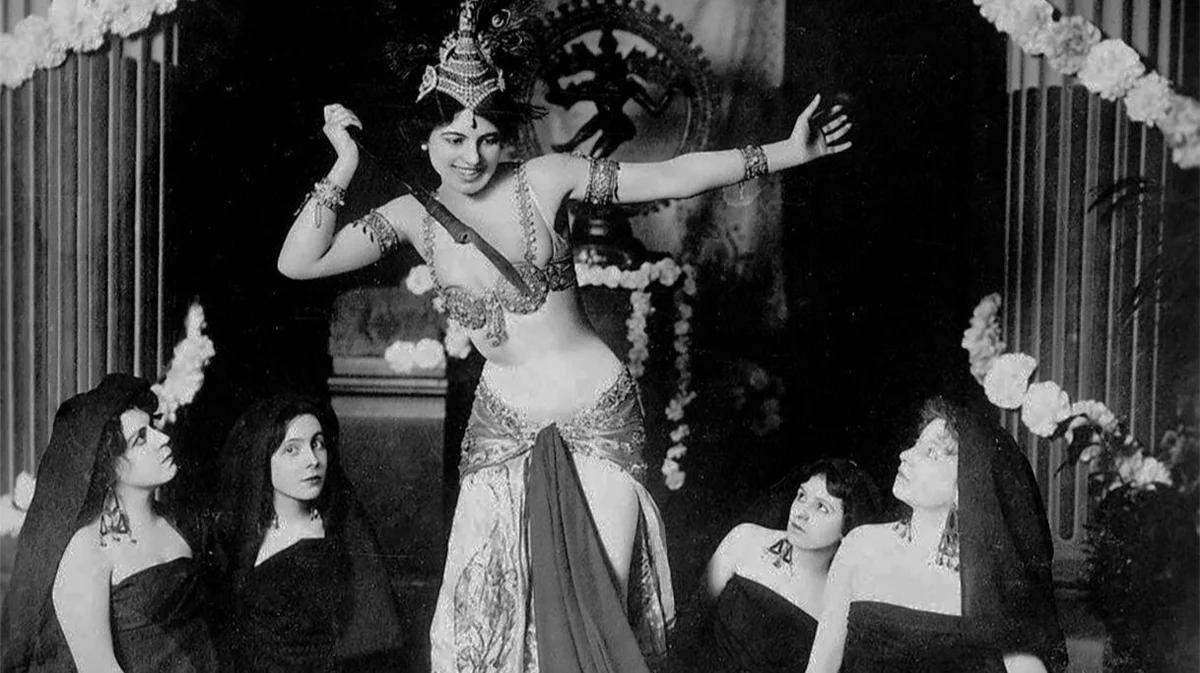
Speech by Mata Hari, 1905. Photo: Niday Picture Library / Vida Press
At the beginning of the 20th century, Margaret Gertrude Zele was considered one of the sexiest women in Paris. Her dances were literally crazy men, ready for everything for the night with her. But the dancer did not enter the story not as a cult courtesan, but as a spy. And her stage pseudonym "Mata Hari" became a household name for all spy in the future. However, recently, more and more often the involvement of the dancer in espionage is questioned. The story of the most famous spy is in the material of Novaya Gazeta Europe.
Margaret Gertrude Zelele was born on August 7, 1876 in Leuverden (Netherlands). Her father, Adam Zelele, was the owner of a hat store. The business did not bring a lot of money, but allowed to support a family in which there were four children. Margaret was the only girl, and therefore grew up the brothers spoiled by attention, who considered it their duty to protect his sister.
Five years after the birth of his daughter, Adam Zelele put his savings into a dubious (at that time) enterprise for processing raw oil. And he did not lose: the oil refinery developed so rapidly that in a couple of years, investments began to bring a very decent income. Therefore, Adam was able to arrange children in the most prestigious educational institutions.
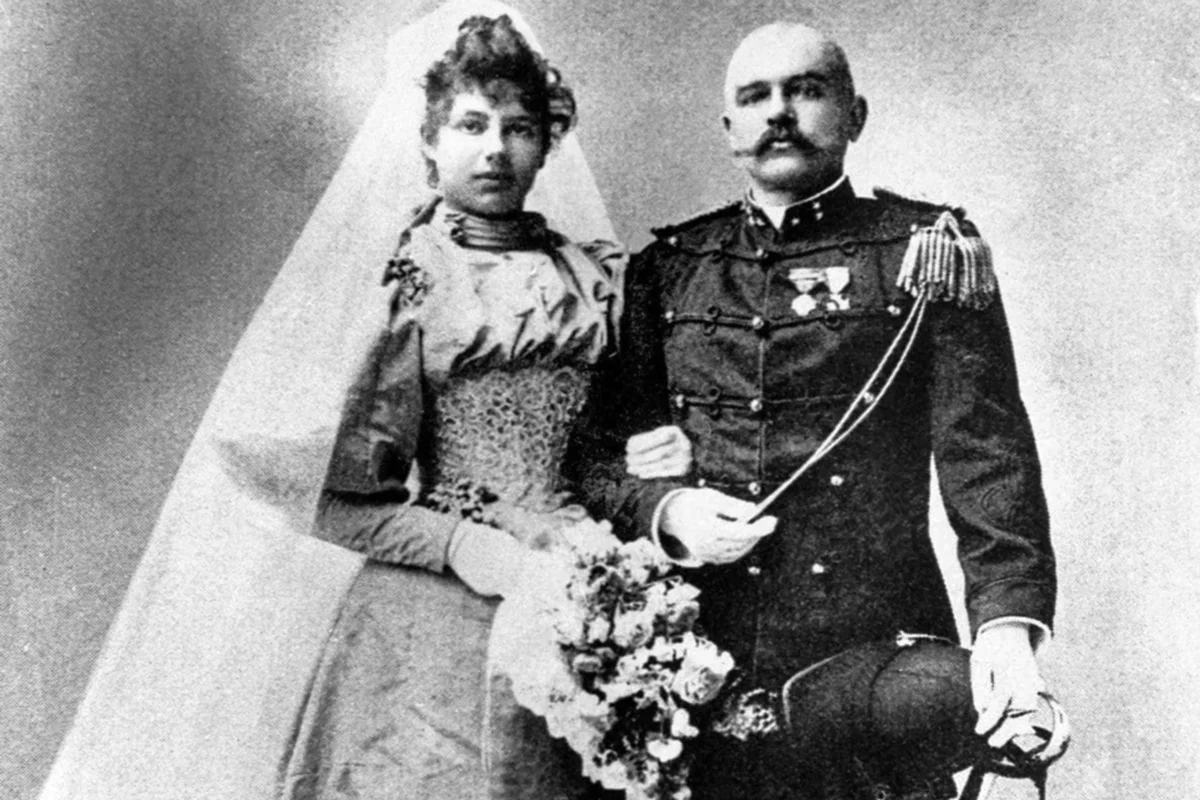
As the researchers of the life of the legendary spy later found out, Margaret from childhood was distinguished by incredible beauty and extravagant acts. In particular, she could appear at school in a defiant dress, and even without a corset. Or in literature lessons, she could quote frivolous excerpts from the works of Gi de Maupassant.
However, all these tricks did not prevent the girl from getting a good education. In addition to her native language, she knew German, French and English. Actively participated in the production of the school theater. I sorted out well in art, was interested in history and geography. She was especially attracted by the Dutch colonies in the Indian Ocean. There were many rumors about English India in those days, the Netherlands in the Indonesian region also had their own colonies. Margaret dreamed of visiting childhood.
In 1889, the father of the future spy climbed into a dubious exchange operation and became bankrupt overnight. Scandals began in the family, and the parents soon divorced. Margaret was forced to move to a much less prestigious school. And after the death of his mother in 1891, his father generally sent his daughter to keep her godfather in the city of Snack.
After graduation, Margaret entered the school for teachers of preschool education in Leiden. And almost immediately she started an affair with the director of the school. The godfather, having learned about this, immediately took Margaret and locked the house. But after a couple of months, she said that she did not intend to sit locked up, and went to her uncle in the Hague. There she learned in several courses, but did not acquire the profession. And the situation in the house of the uncle was very strict. The only way out of this situation was marriage.
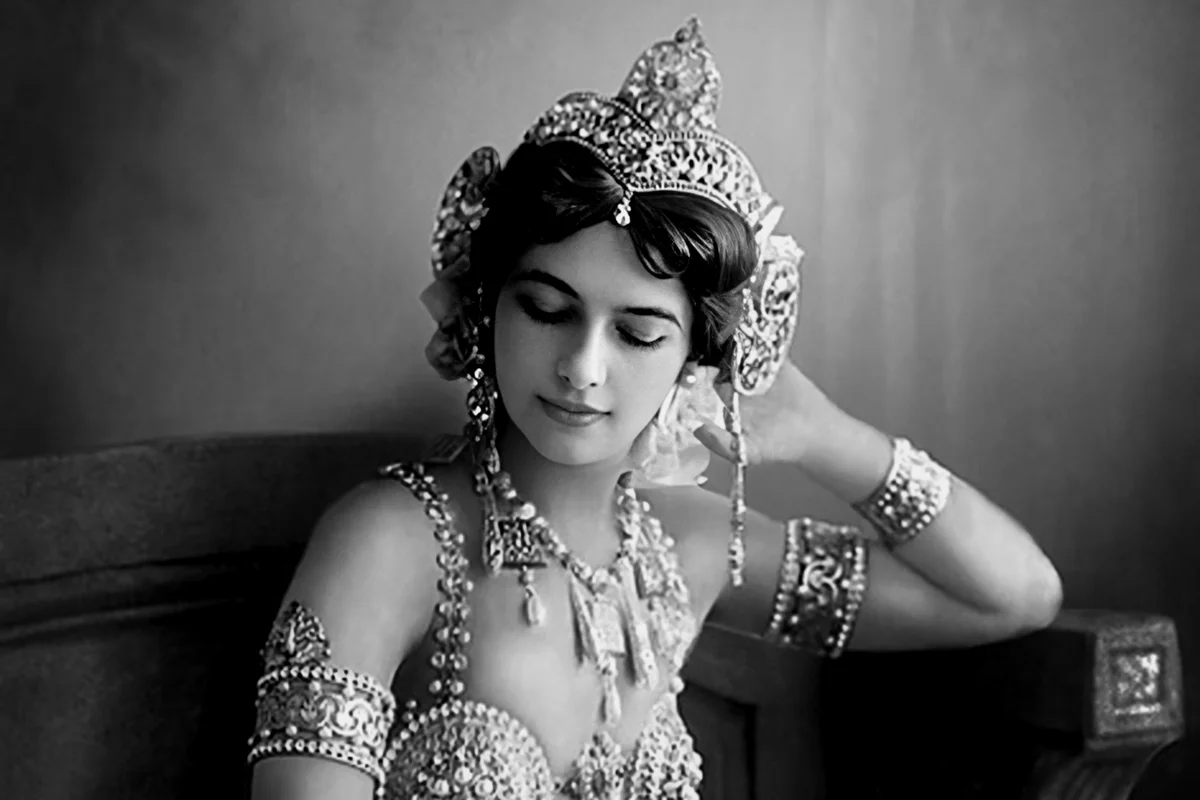
Margaret began to regularly view newspapers with marriage ads. In the spring of 1895, she stumbled upon an ad: the captain of the colonial corps located in East Indies (current Indonesia) is looking for a life partner. He was 20 years older than Margaret, but this did not stop the girl. I really wanted to break out of constant guardianship. She wrote to the captain, they met and the potential groom was fascinated by a young beauty. On July 11, 1895, a marriage between Margaret and Rudolf McC-Leod, subjects of the Netherlands of Scottish origin, was concluded .
A few months later, Captain McC-Leod, together with his wife, returned to the place of service to the island of Java. In 1897, their son was born, a year later - a daughter. However, family life was even more unbearable than the custody of relatives.
Rudolph, especially in feeding, was jealous of the beautiful wife for each pillar. He forbade her to wear luxurious dresses, rarely allowed one to go out into the street. At the same time, he almost openly kept his mistress.
In the end, Margaret could not stand it and escaped from her husband to his colleague Van Redes. And a little later she entered the local dance school and was carried away by Indonesian dances. Moreover, in just a few months, successes have achieved there, which were recognized by Indonesian dancers. There she chose the pseudonym "Mata Hari". Translated from Malay (which Margaret managed to study), this meant the "eye of the day" or "sun."
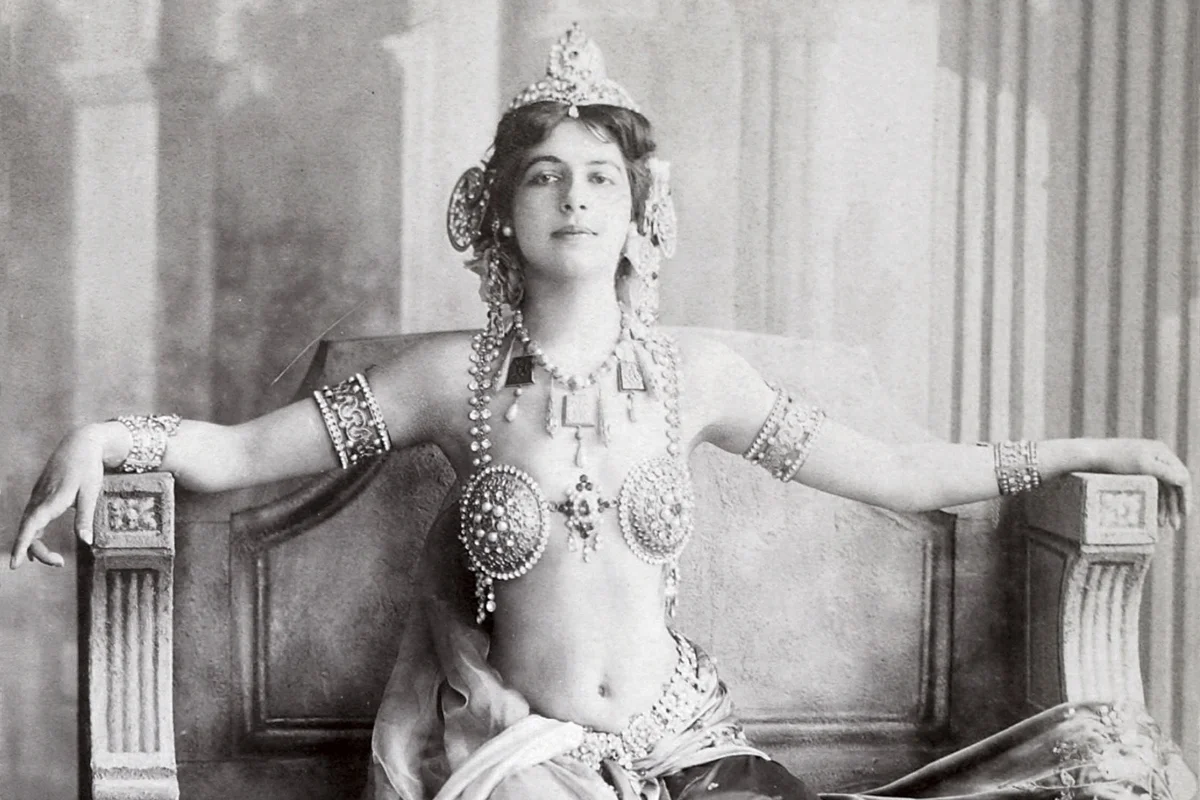
Her husband, realizing that she was losing, after a few months he began to seek Margaret to return to the family, promising that he would no longer limit his wife in free movement on the island and outfits that she likes. She returned, but continued classes in a dance school. And in 1899 their son died, and the established world again went wrong. But Margaret from the family no longer left. Most likely, because there was no one on the horizon who could take it for maintenance. And she could not return to Europe because of the lack of money.
After the end of the Rudolf contract in 1903 and the return of the family to Holland, Margaret immediately demanded a divorce. Rudolph easily agreed and sued her daughter, and therefore refused the maintenance of his ex -wife. Margaret did not burn for long and left for Paris. When she was later asked why she chose this particular city, she replied : “I don’t know, but I think that all wives who escaped from husbands are pulling to Paris.”
At first she tried herself as a model. But then the matter did not work out. According to Margaret herself, due to the fact that she had a small breast. But she managed to get in the circus, where she performed in the role of an exotic rider under the name "Lady Sin McCoad." Her number was interspersed with jumps and dances.
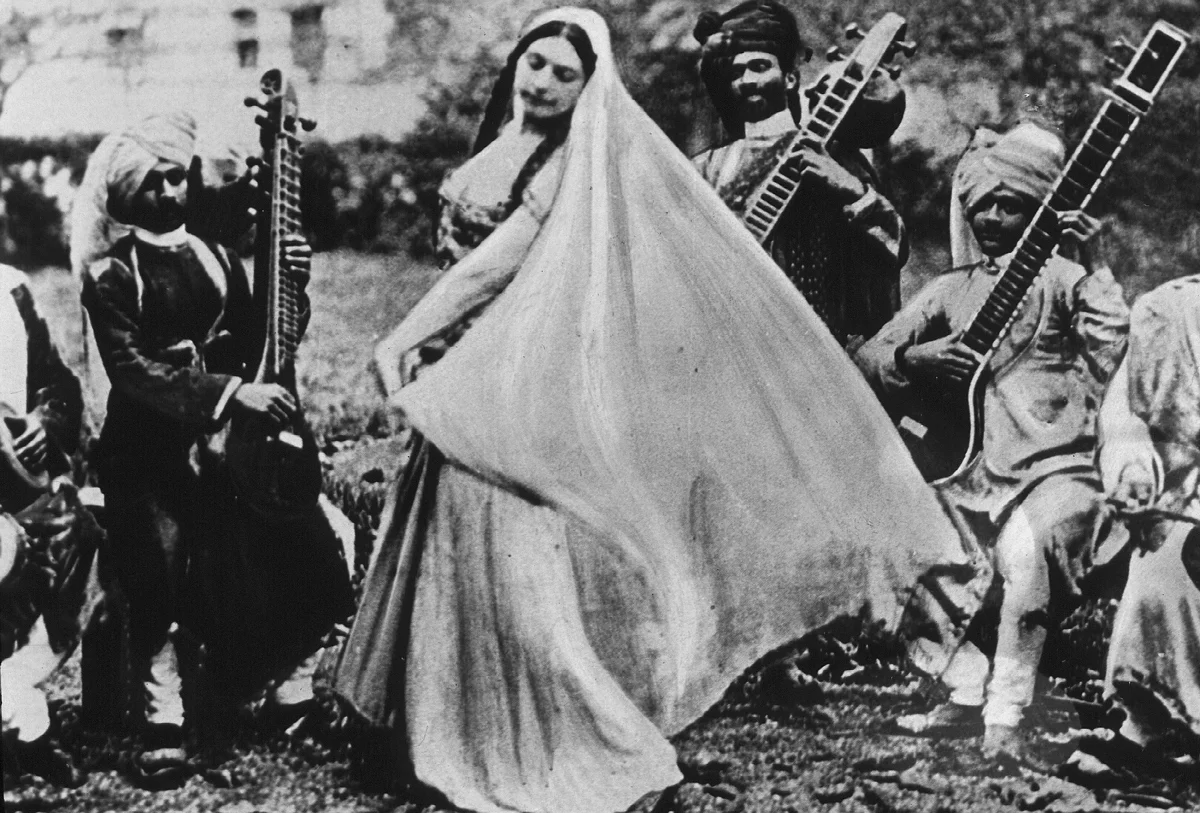
According to the memoirs of contemporaries, Mata Hari did not quite fit into the standards of beauty that existed at that time, but possessed simply stunning plastic. Now it helped her get rich lovers. One of them was an industrialist and philanthropist Emil Gima. He loved the theater and ballet, often visited institutions. Once a lover danced for him an Indonesian dance - and Gima immediately realized that he had met a real talent; Although in order to be a dancer, according to the then criteria, Margaret was “old” - she turned 27 years old. But Emil Gima convinced his mistress to dance at a closed auction in a private museum.
The performance took place on March 13, 1905 and made a splash. Here's how the newspaper La Vie Parisienne (Parisian Life) commented on this event:
“These absolutely genuine Brahman dances Madame Mata Hari learned in Java with the best priestesses of India. To our great joy and to enjoying the eyes of Mata Hari danced for us the dancing of the princess and the magic flower, the call of Shiva and the dance of Sumramaien. It has a very simplified bayader robe; In the end, like a apogee of simplicity, she stands in front of Shiva proudly and without a bedspread, only in a codes of bodily light, hiding nudity. To touch God, she represents herself to him. This is very impressive, very bold and very chaste. Mata Hari is a Dutchman, Scottish and Javan at the same time. From the northern races she has a high growth, a strong body, and on the Java where she grew up, she acquired the flexibility of the panther, the movement of the snake. Add to all this a fire, lit by the East in the eyes of his daughter, then you will get an idea of a new star that lit up last night above Paris. ”
Since that evening, Mata Hari (the real name was completely forgotten) became a celebrity. For 1905, she spoke a total of forty times. Her stages at first were fashionable salons, then theaters of Paris. Once she performed together with the famous singer-soprano Lina Kavalieri and performer of ancient Greek dances Isadora Duncan (wife of Sergey Yesenin in 1922-1924).
All European and then American newspapers wrote about it. Her name appeared on packs of cigarettes, mail cards, chocolate sweets and cookies. Mata Hari began to receive huge fees, deductions for advertising, fans threw it with jewelry. But the dancers did not delay the money: it was not only a trample, but also a passionate player. But her father faded in time and published the book "The Story of the Life of my daughter and my objections to her ex -wife." The book became a bestseller and brought the dancer to his father's solid money.
Mata Hari's concert numbers were very frank, and they were attracted. In addition, mysterious eastern exotic. Over the next few years, Mata Hari visited the theaters of not only France, but also Italy, Spain, Holland, Austria, Germany, where in 1906 she met Lieutenant Alfred Kipert. He took the dancer to Silesia, where military maneuvers were held at that time. There, Mata Hari was arrested by German counterintelligence. She was suspected of relations with Russian intelligence, since one of her permanent lovers at that time was the son of Russian Admiral Vadim Maslov.
When it was and which of the German intelligence officers was recruited by Mata Hari is still unknown. German documents of the First World War were destroyed by the Germans themselves during the revolution in 1918. And the Archive of Surt (the French Security Service) and the police archive were destroyed by the French in 1940, when the Germans approached Paris. It is only known that she was assigned the N-21 number, which signed the reports made by the spy.
“Despite the fact that the majority of documents regarding the Hari Matu were destroyed, something was left,” the historian Yitzhak Kazinski told the New-European. - In particular, the archive of the Parisian court survived almost completely. However, there are no special details there, because
In those days, it was not yet customary to conduct a stenography of court hearings, where every word is recorded. In court documents there are only references to some documents of the “surge” and the French police, which have not reached us.
But even by these indirect signs, one can understand that the peak of the activity of Mata Hari as a German spy falls on 1914-1915.
Until the outbreak of World War I, Mata Hari constantly moves around Europe. But its main route is Paris - Berlin and vice versa. The dancer met the beginning of the war in Berlin, from where she, oddly enough, was not released for quite some time. Later, Mata Hari will argue that all the time German counterintelligence “pricked” her, suspecting spying in favor of Russia and France. But in the end it is released into neutral Holland. From there, after some time, Mata Hari returns to Paris through Spain.
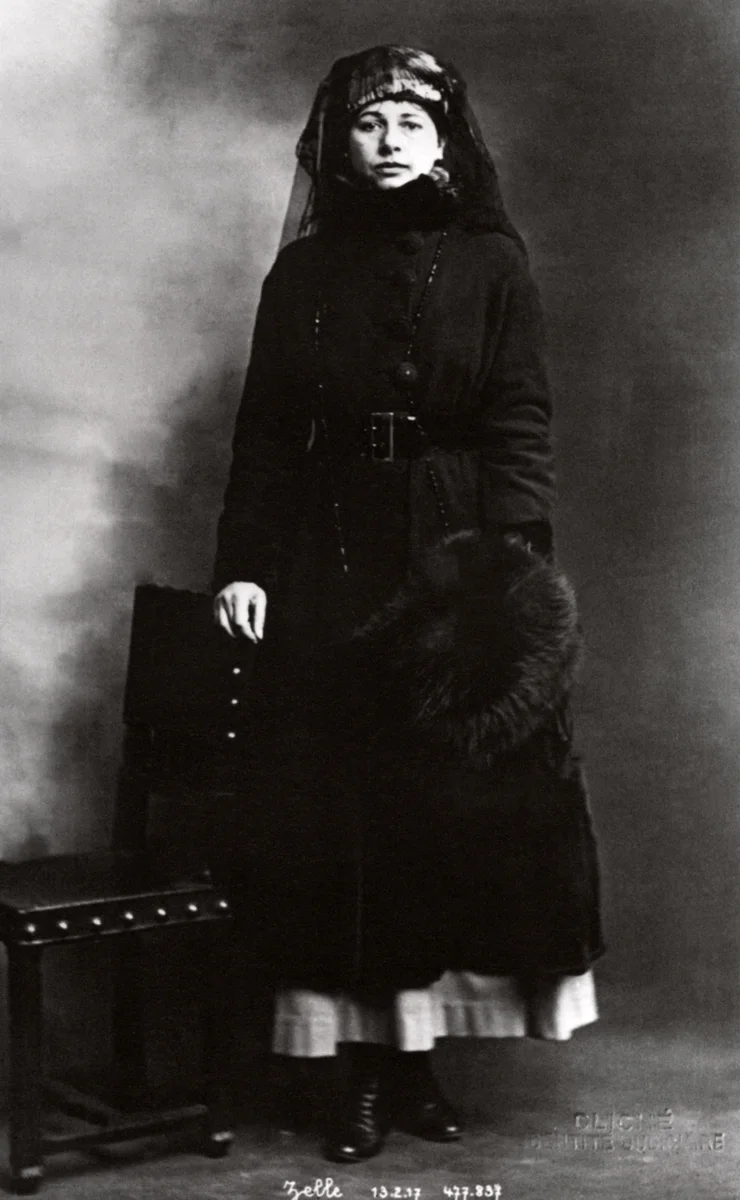
By the time the dancer returned to France, at the end of 1915, several espionage scandals burst out there. Therefore, almost all foreigners were taken under tight observation. Well, Mata Hari, who came from Germany, attracted the closest attention.
The spy sent her messages through the residency of German intelligence in Spain. As a subject of neutral Holland, Mata Hari had the opportunity to move around the warring Europe. And she was relentlessly followed by agents of the French special services, who recorded several suspicious contacts of the dancer with German subjects.
Apparently, Mata Hari felt surveillance or someone suggested her. One way or another, she decided to make a move with a horse. She herself came to French intelligence and offered them her services as an agent, saying from the threshold that she had never worked for some kind of intelligence, she was ready to try. After short thoughts, the French sent Matu Hari at the beginning of 1917 with a slight assignment to Madrid. And some time after the dancer arrived in Spain, French intelligence intercepted the radiogram of the German resident in Spain. This message said that the N-21 agent was turned by French intelligence, but is ready to continue working on Germany. According to some reports, this interception was organized by the Germans themselves to distract the attention of French intelligence from serious agents. On February 13, 1917, upon returning to Paris, Mata Hari was arrested by French intelligence and accused of espionage in favor of the enemy in wartime.
“The investigation in the case of a spy dancer lasted several months, which for that time is a rather rare phenomenon,” said Kazinsky. - But the French can also be understood:
The only enumeration of French lovers Mata Hari (if this list was published) could cause a lot of scandals and resignations in the highest political circles of France.
And for this reason, the process of the mother Hari, who first promised to be loud and public, passed behind closed doors.
The trial began on July 24, 1917. The accused flatly refused to recognize herself as a spy. "A prostitute - yes, a traitor - no!" But the state prosecutor Andre Morne pathetically stated :
- The harm done by this woman is indescribable. She is the greatest spy of our time.
At the same time, the well -known English counterintelligence of the early twentieth century Orest Pinto in his book “Hunter for Spies” wrote the following:
“I am not a wife, but I believe that, except for the“ maid of honor ”, there was no female spy or a woman-hunter behind the spies that could be compared with an outstanding male spy. Mata Hari, of course, won loud fame. In the eyes of the public, she became the personification of a charming spy woman. But Mata Hari was a stupid expansive creature. If she had not been executed, she would not have known a martyr and no one would even hear about her. ”
Be that as it may, but a day after the start of the court hearings, the court issued Mata Hari a death sentence for "espionage in favor of Germany, which led to the defeat of several French divisions." The convict filed an appeal that was rejected. A petition for pardon in the name of President Poincare was also rejected.
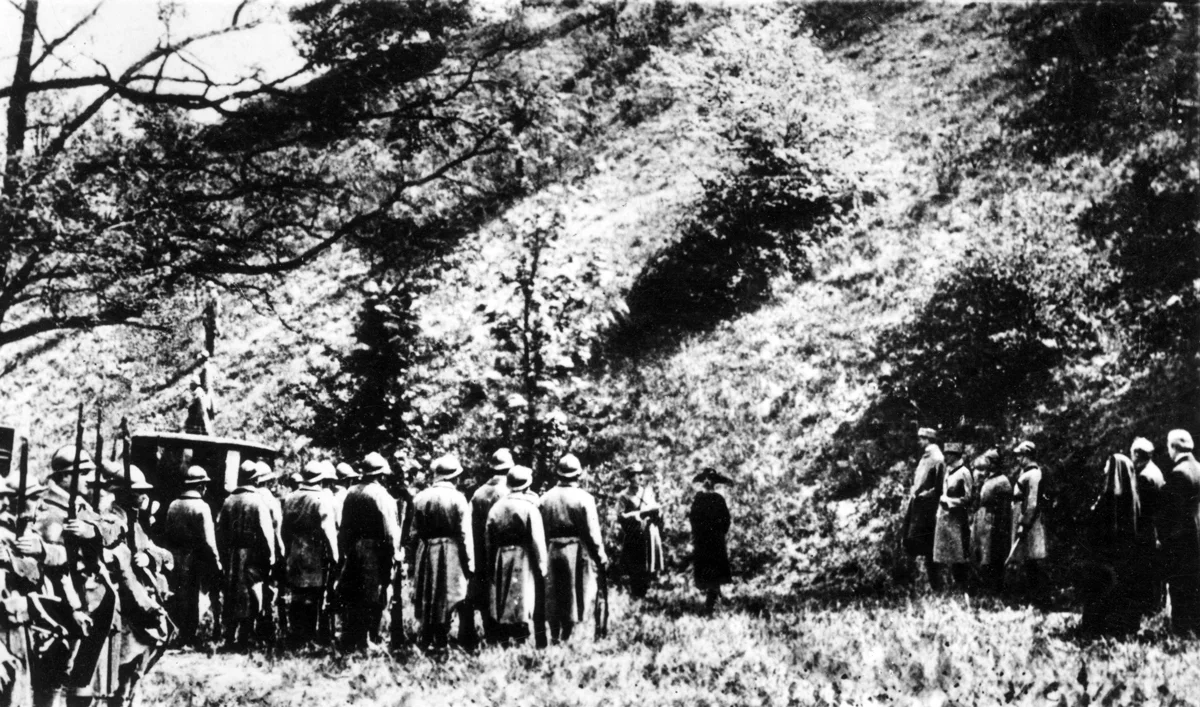
On the morning of October 15, 1917, Mata Hari put on her best dress and entered the courtyard of the Vincent Fortress in Paris. She refused to put on a bandage on her eyes and, with a proudly raised head, looked at 11 soldiers, preparing for execution. After the guns were aimed at her, she sent an air kiss to the executioners. A volley of 10 guns thundered (one young soldier fainted), then an officer who commanded the execution, went to the fallen body and made a control shot in the left temple. So the legend was born.
The body of Mata Hari was not in demand by none of her relatives, so it was transferred to the anatomical theater . Her head was embalmed and preserved in the Anatomy Museum in Paris. However, in 2000 it was discovered that the head disappeared; According to experts, the loss could occur back in 1954 when moving the museum. The reports dated 1918 show that the museum also received the rest of the Mata Hari body, but the data on their exact location was not preserved.