
Translated material
"Music is Esperanto"
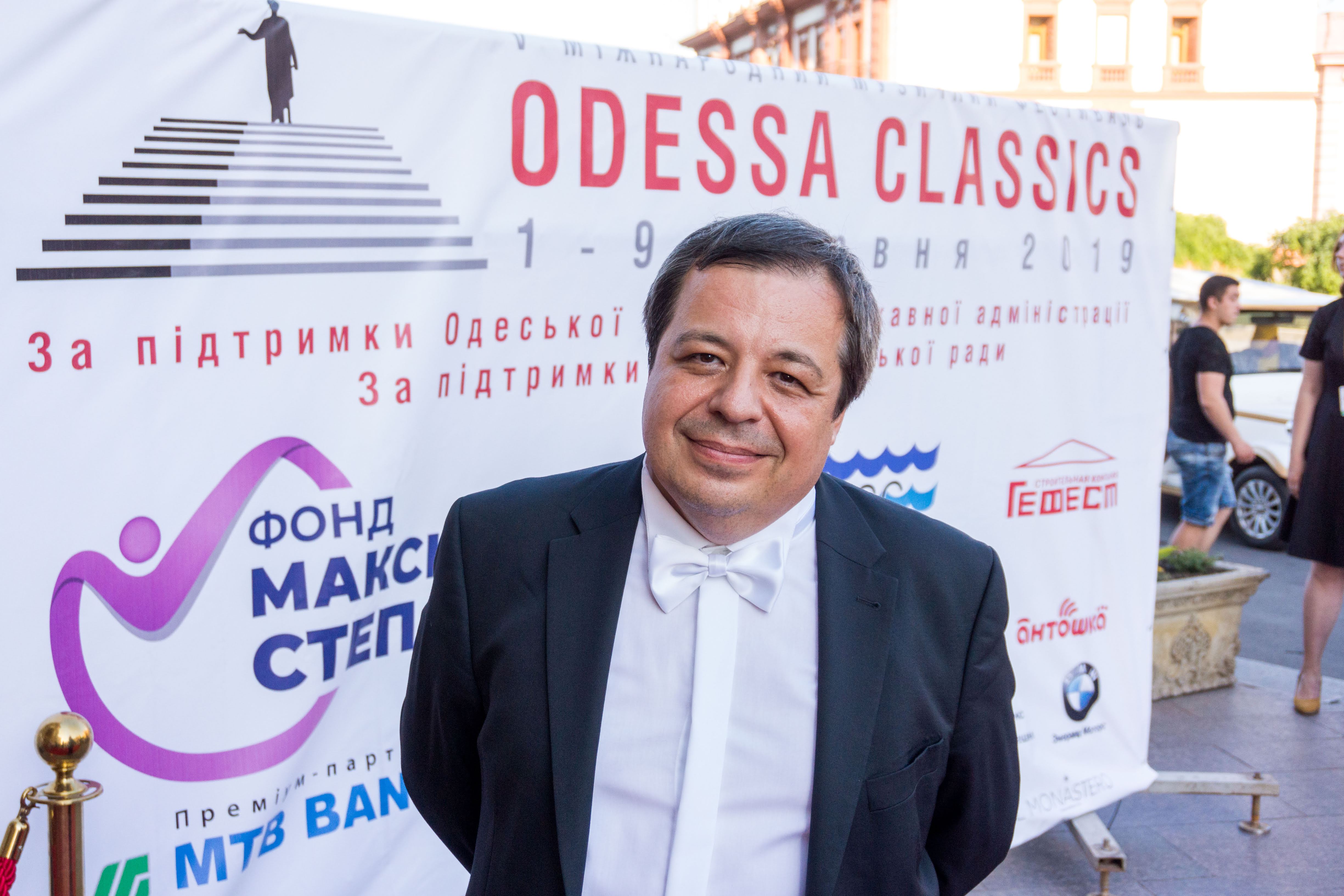
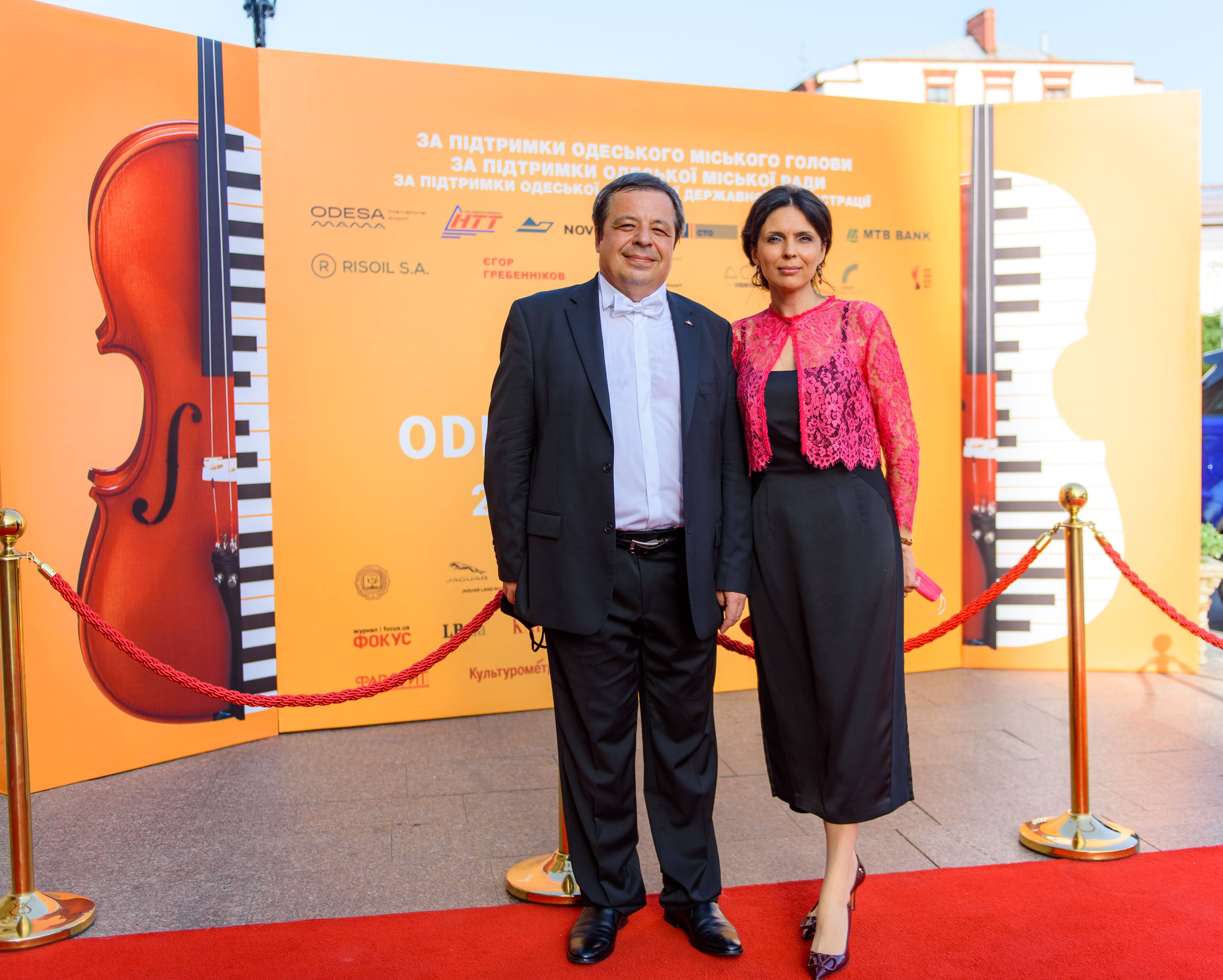
Karina Arzumanova talks with the founder of the Odessa Classics festival, pianist Alexey Botvinov and his wife Elena

How to bypass the blocking?
read >Karina Arzumanova: Pianist Alexey Botvinov and his wife Elena are the founders of the prestigious Odessa Classics music festival, which is already 10 years old.
Karina Arzumanova talks with the founder of the Odessa Classics festival, pianist Alexey Botvinov and his wife Elena
It's hard to imagine a city more suitable as a venue for a summer music festival than Odessa. Amazing beauty and acoustic qualities of the site, the sea, beautiful architecture, rich history, delicious cuisine with a unique flair and highly professional organizers in the person of Alexey and Elena. The world's best musicians came to the festival in Odessa. Since the beginning of the war in Ukraine, the festival began to be called Odessa Classics International or “Odessa Classics in exile.” Now his concerts are held annually in different European countries. Our conversation with Alexey and Elena took place in Lucerne after one of the festival concerts.
You are Russian-speaking Ukrainians, Odessa residents, Europeans, who are you? How have you defined yourself throughout your life, and how do you define yourself now?
I'm from Odessa, but I'm also a man of the world
Alexey Botvinov: I’m from Odessa, but I’m also a man of the world, that’s how I would define myself. Because music is Esperanto. I always felt like, first of all, a resident of Odessa, and secondly, a person of the world; I wanted to do something for all people, not just for one city or nation.
Karina Arzumanova: I can easily imagine that the war divided your life into two halves, maybe this is a simplified idea.
Alexey Botvinov: This is the absolute truth, divided: all life before and all life after.
Karina Arzumanova: If possible, how did you see the goals of your life, the main thing in your life before the disaster that broke out?
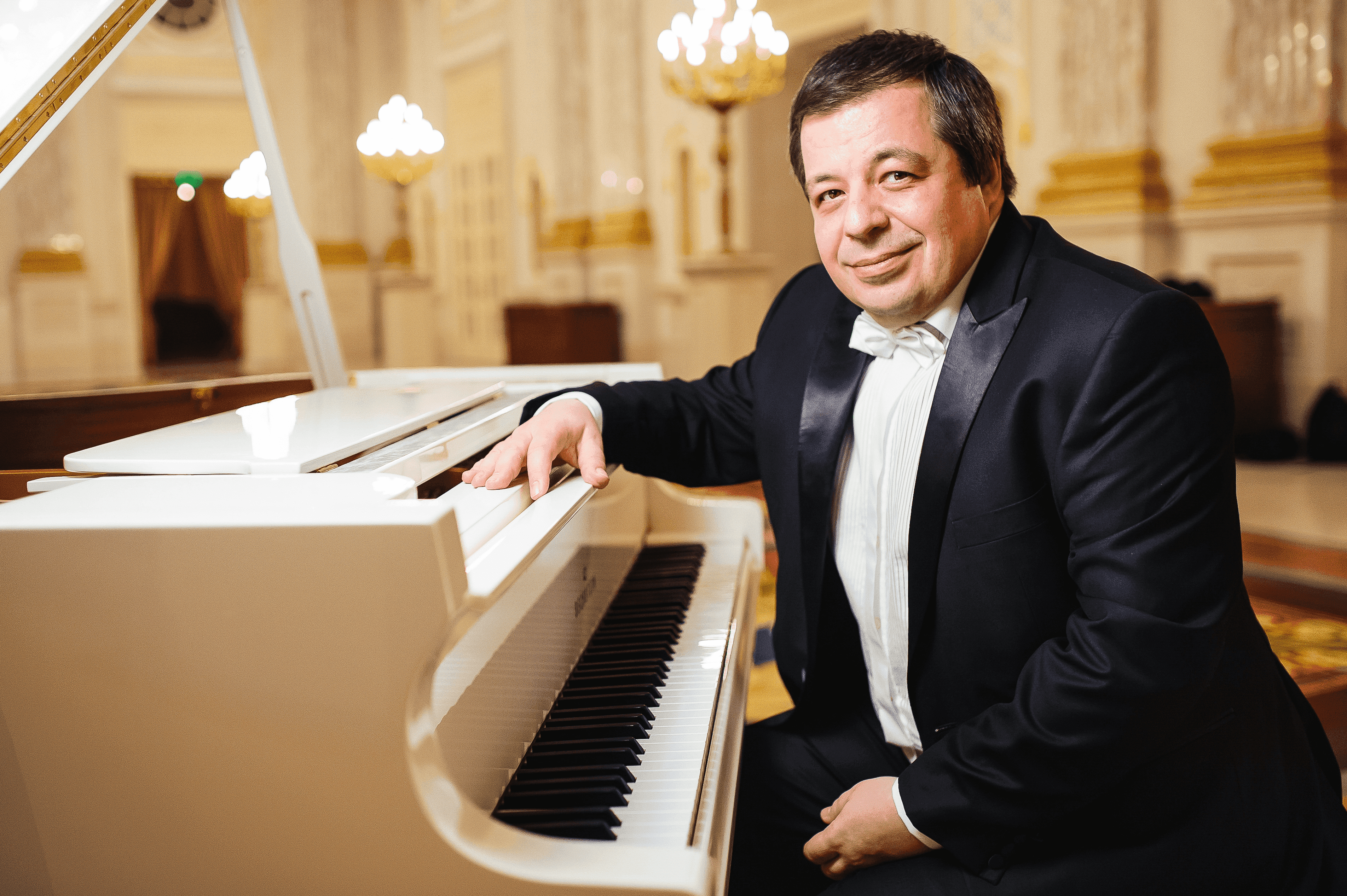
Alexey Botvinov: Before the disaster, I had a choice several times in my life: stay in Ukraine, stay in Odessa, or leave, as many of my talented colleagues did, realized their success in Europe or America. I had one attempt in the early 90s, when in Ukraine, in Odessa, in terms of culture, everything was so bad that it seemed that nothing would ever be restored. Then I went to Germany, was there for a year and a half, I was very tormented by nostalgia, it was simply unbearable, and I returned.
Karina Arzumanova: Nostalgia is a rather specific thing. What is nostalgia for, what was missing?
Alexey Botvinov: For me it was nostalgia specifically for the city, for Odessa. For myself, I then determined that this was a mental illness, because I could not understand why and what. I was sure that I wouldn't have it. Both then and now I love the European way of life, I love Germany, Switzerland, I think I understand. But this feeling of being uprooted, like a tree, of no nourishment from the soil, it grew and grew, and after a year it became completely unbearable, because I felt: I was already suffocating both in the creative sense and in the human sense.
Karina Arzumanova: Lena, are you from Odessa? Tell us about yourself and Odessa.
Elena Botvinova: I love my city very much, I am grateful to it for everything. Even in the most difficult times, in the 90s, when it was not easy for everyone, there were also difficult years in Odessa, I also never had the desire to leave. It was difficult, but I knew that Odessa would be good. I always felt good there. An atmosphere of goodwill, an atmosphere that you know that they will help you, if you feel bad, they will help you. Odessa courtyard, I grew up in the courtyard where all the doors were open, where everyone treated each other, where neighbors lived like one family, despite the fact that everyone was of different nationalities.
Humor is also very important
Alexey Botvinov: Humor is also very important. In those years, before the large waves of emigration from Odessa, the normal way of communication was when you ask a serious question, you first get black humor, a joke, and then the answer. And we really liked it, and this is not available anywhere else. After that, I decided to continue to live in Odessa, but to do my main activities in the world.
This changed in 2014, when Maidan happened, the annexation of Crimea, this whole story began here, the conflict with Russia. Because a few months after these difficult times began, I decided not to leave after all. The first impulse was to leave with my family to a safe place, to continue doing what I was doing before. And then somehow I wanted to do something to counter the attack of darkness, which had already begun, to do something, first of all, for the city, and, in principle, for the country too.
Lena came up with the slogan: “A European festival for a European city”
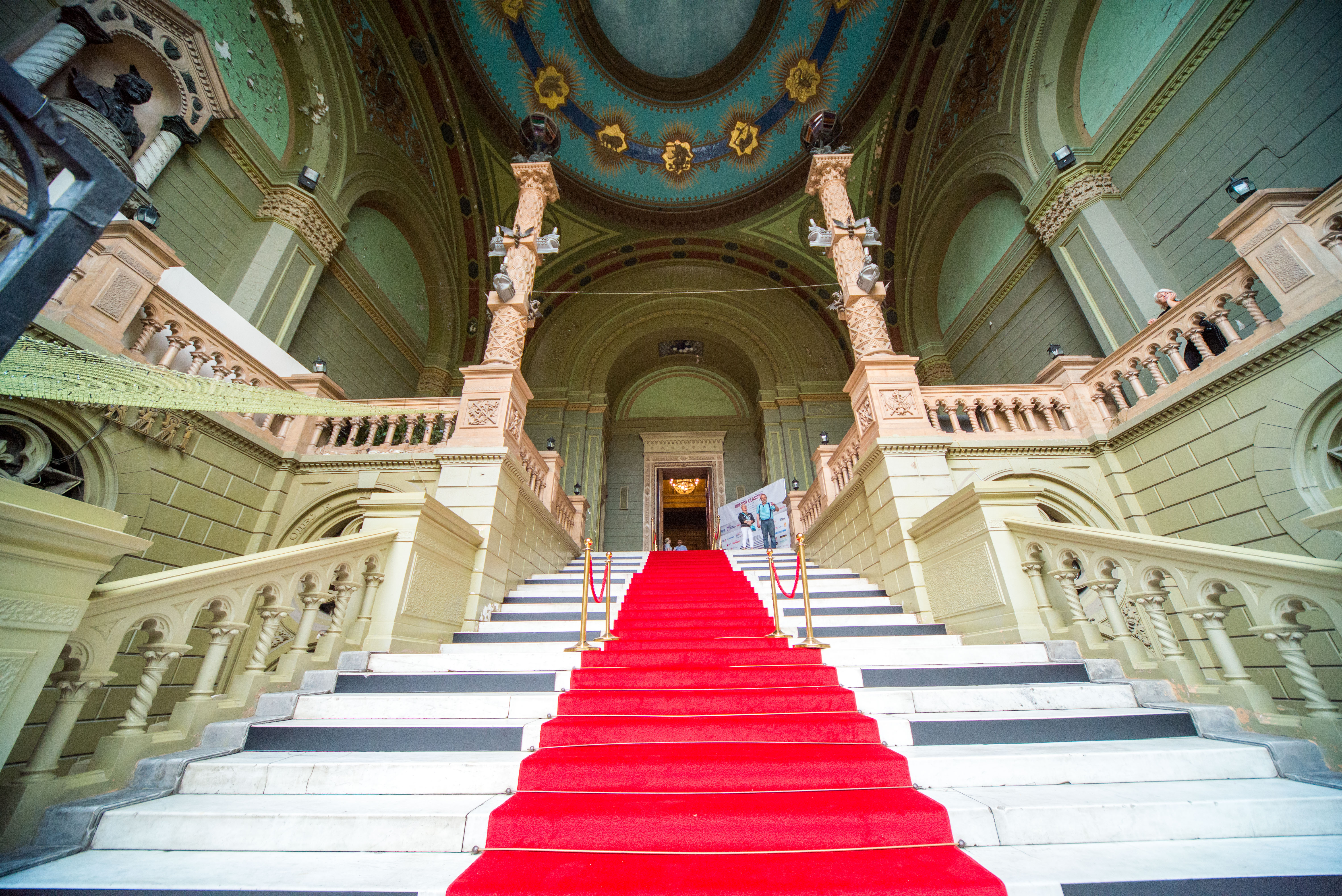
And Lena and I decided to try to make a festival. Lena came up with the slogan: “A European festival for a European city,” and this explains everything. When Odessa was at a crossroads, many people in Ukraine were at a crossroads, that is, someone still wanted to go to the “Russian world” because their native language was Russian, they were afraid that the connection with Russia would be severed, and so on. It was very important for us to show that in Odessa, too, there is not only our Odessa humor, not only Russian literature, the South Russian school, but there is also a very strong European vector, since Odessa was built as a European city, one might say, multicultural, all this is there, but simply in the public space, first of all, the capital of humor and cultural connections with Russia. We wanted to show our worldview that Odessa, like the whole country, belongs to Europe.
Then this festival appeared, we began to develop it. Literally two years later it became clear that the project took off, that is, it went very well, after that we decided that there were no more questions, we would live in Odessa all the time, we would not leave anywhere under any circumstances, because what we were doing was needed by both the city and the country, we saw the reaction of the people. We began to make a cultural product of a European high level, and it turned out to be in great demand. Indeed, people thanked us with tears in their eyes; we understood that this was necessary. And this became a matter of life for us, indeed, without exaggeration, with only a break for sleep and a short vacation a couple of weeks after the festival.
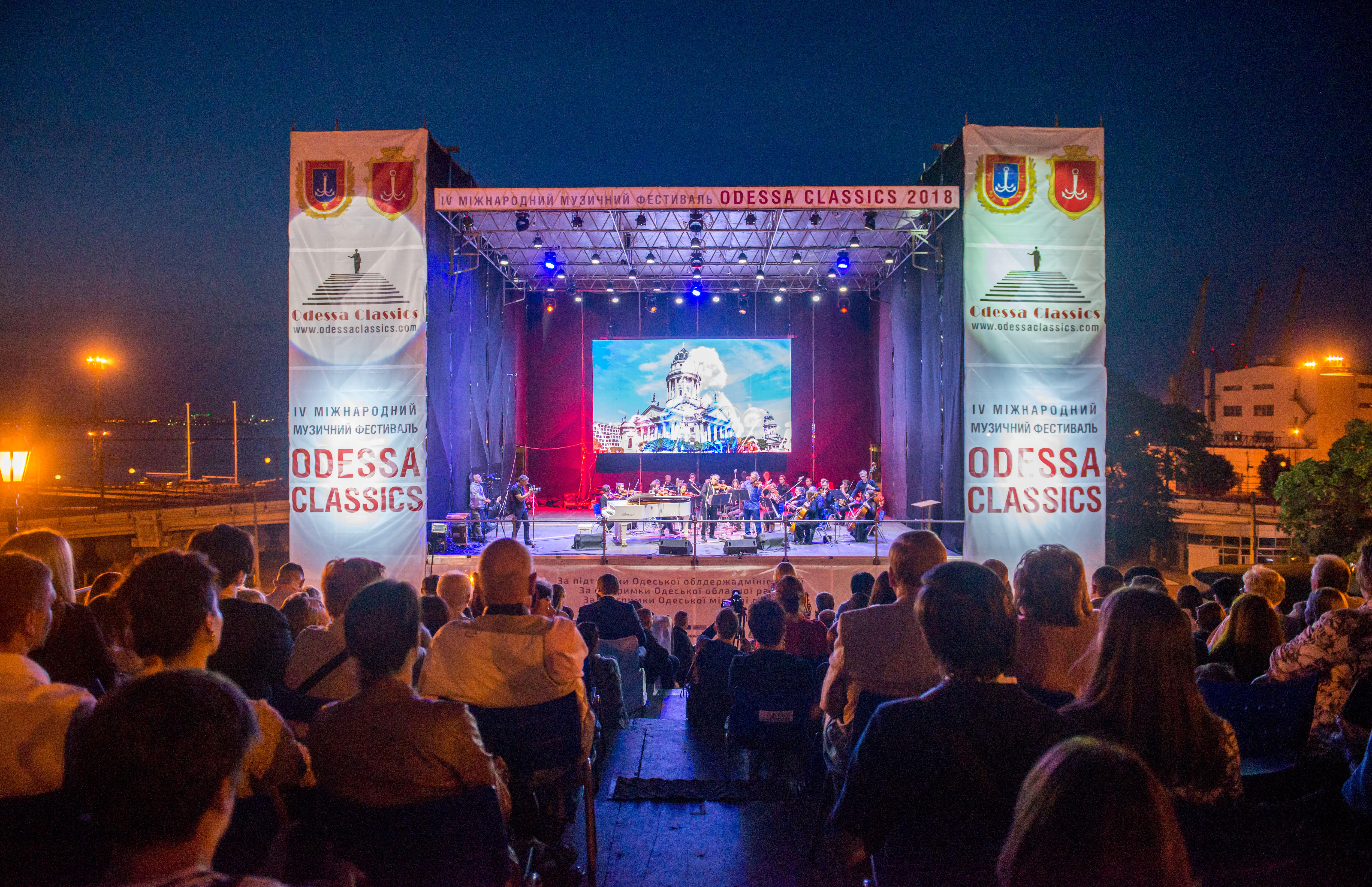
Karina Arzumanova: How old is the festival?
Alexey Botvinov: We started working in 2014, but the first festival was in 2015, that is, it’s been 10 years now. It really became a passion. The main goal was not financial profit, but to do as much as possible. That is, we contributed almost everything that we could get from our donors and patrons of the arts, maybe even too much, but due to this, the festival grew by leaps and bounds. We were terribly pleased with this, I was very happy, because our whole family had found their life’s work.
Elena Botvinova: What is most important for me is that I saw that the people who came, they also felt good in Odessa. In principle, in addition to what I naturally wanted for the people of Odessa, for my city, for our listeners, whom we loved, respected, and appreciated very much, I wanted them to hear all the best. Because not everyone has the opportunity to travel to Europe, not everyone has the opportunity to go to concerts of legendary performers. I wanted, as once upon a time, when Odessa was being founded, when it was a very prosperous city, a fast-growing port city, then there would be an opportunity for a huge number of outstanding performers to come. This tradition continued in the Soviet Union, then it began to collapse.
I wanted Odessa residents to listen to the best
I wanted Odessa residents to be able to listen to the best, so that they would not be cut off from European culture, from what is happening in the world, in Europe, so that they would be on the same wavelength with what is happening in the world. And it also seems to me that we have slightly revived the wave of the festival movement in our country. Such a boom in the festival movement that took place in Ukraine before the war, many continue, try to do something, I realized that the classics are important. Each country has its own national music, national songs, national dance - this is wonderful, this is the code of the nation. But there is something unifying - this is classical music, which is understandable to everyone. You don’t need to know the language for this, you don’t need anything at all, you just need to come and listen, open your ears, your heart, and you are happy. Even such a moment that in some huge decades, Wagner was performed for the first time at our festival by Matthias Gerne, after which a huge number of Wagner’s operas began to be staged in opera houses in Ukraine - this is wonderful.
Alexey Botvinov: This was not an accident - it was a deliberate policy to become trendsetters, which is what is missing in the cultural palette. There was no Wagner at all, I invited Gerne specifically to perform Wagner - it simply had the effect of a bomb exploding, and the process immediately began. Again with Gerne there was Schubert’s “Winterreise”, we have a wonderful vocal school in Ukraine, but the culture of “Deutsche Lied” (German song) is practically unpopular. A breakdown in the worldview of the vocalists, that this is really very interesting, worthy and cool. They just purposefully wanted to transfer the European vector fully into the cultural life of the country.
Karina Arzumanova: Work also went in the opposite direction with the goal of introducing the world to the best examples of Ukrainian music.
Elena Botvinova: We had modern Ukrainian music at every festival. We invited contemporary Ukrainian composers, or groups, or performers who performed contemporary living Ukrainian composers. There was a connection, a connection between the world-famous classics and this program. People went and listened to both concerts, they happened on the same day, they happened on different days. The music of modern Ukrainian composers has also been integrated into world music. I believe that now Alexey is doing a lot to show contemporary Ukrainian composers to the European public.
Karina Arzumanova: In 2022, Alexey Botvinov, together with violinist Daniel Hope, recorded a disc of music by Valentin Silvestrov, which was released by Deutsche Gramophon.
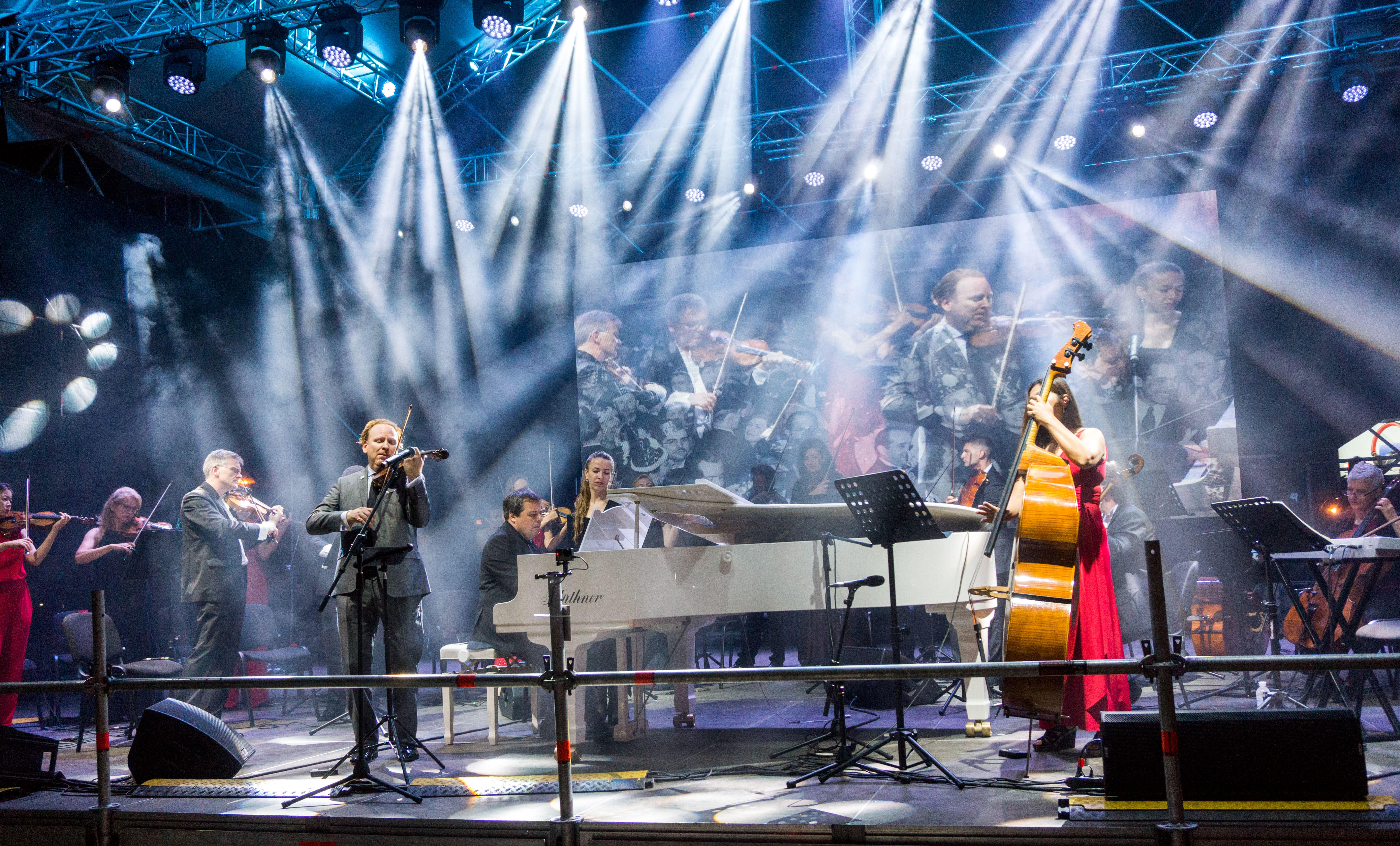
Elena Botvinova: The disc of works by Valentin Silvestrov was conceived before the war. This was agreed upon long ago with Valentin Vasilyevich, everything was discussed. Before the war, the idea was to introduce, thanks to such a world-famous label as Deutsche Gramophon, as many people as possible to Ukrainian music, to prove that modern Ukrainian composers are absolutely worthy representatives of European music. I think it was a success. We did another important thing - this is our project with the Bremen Choir, which we organized, it was 2015 when the project began. The non-governmental structure "City Choir of Bremen" is people who are actually unprofessional musicians, but who live by this work, who love it, about 60 choristers and plus their friends, another 20 people, came to Odessa, and we carried out a joint project in Odessa. They didn’t just sing, they were very interested in history, watched, met with people, there were discussions, there were meetings. After this project, our Odessa Chamber Orchestra of the Odessa Philharmonic went to Bremen.
Half of the choir was sure that Odessa was unsafe, that people who spoke Russian were beaten in the streets
Alexey Botvinov: It all started when they invited me just to get to know each other. I arrived, met with the choir, they talked to us. I was surprised: half of the choir was sure that it was unsafe in Odessa, that people who spoke Russian were beaten in the streets, that we were fascists, that is, what Russian propaganda was telling even then. I convinced them that it was absolutely safe, you come and see for yourself. After that, 20 people refused to go, they were simply afraid. Of the contingent that arrived, half were skeptical, to put it mildly.
Elena Botvinova: This was not a one-time project, it lasted three years, they came to Odessa three times. It wasn’t just people who came and met together - no, they communicated, shared something, got to know each other. They understood us and they accepted us.
Alexey Botvinov: The result of this: the Bremen Senate two years ago decided to partner with Odessa. And second: two years before the start of the war, the project of a large Holocaust memorial complex in Odessa was initiated - this is a direct result of our cultural project. But it all started simply with a cultural exchange.
Elena Botvinova: Everyone knows about the Babi Yar tragedy, they talk about it all the time, they remember it, a huge memorial complex is being built that attracts attention, they do not let people forget about this monstrous crime. But they simply began to hush up the fact that 25 thousand people were killed in Odessa.
Alexey Botvinov: How it passed past our memory, not to mention the fact that the Germans did not know about it.
Karina Arzumanova: I understand that you, of course, are patriots of Odessa, but can you call yourself patriots of Ukraine?
Alexey Botvinov: Yes. Why the war, why did Russia attack Ukraine? Because there is a fundamental difference. Still, Ukraine, immediately in the years of independence, more and more confidently chose this path to democracy, freedom of speech and freedom in general, and there, unfortunately, the path chosen was not to freedom, but to the king, preferably longer, so that he would live a hundred years. And here, despite all the flaws that were there, this is still the path to freedom. Therefore, of course, we are patriots of Ukraine as the idea of freedom, and not of the Ukrainian nation as such. Because Ukraine consists of many nations, different languages, different cultural traditions. The Ukrainian project should be a project of freedom, somewhat reminiscent of the American project, which was not built around one titular nation.
Karina Arzumanova: Now, of course, there is a war, it is difficult to talk about normal development at the moment, but are there any trends in this sense that you do not like in what is happening in Ukraine?
Alexey Botvinov: It’s not customary to talk about this now, because it’s war. I think it is necessary to talk about this, because the war has been going on for more than two years, society is developing strongly, and some processes are taking place. Some processes, in my opinion, are taking place that are alarming and, in my opinion, absolutely wrong in Ukraine. If initially the trend toward a national idea and rallying around nationalism was clear, it was a protective trend that protected Ukraine. Even they themselves did not expect that they were able to resist aggression so much.
Over time, if you build the entire ideological paradigm around hatred and rejection of others, then it will still acquire very dangerous and unpleasant features. It seems to me that if we believe that we will win, that Ukraine will become an independent prosperous country, we now need to say that there are things that are wrong. We cannot talk about a person who was born in Russia, speaks Russian, that he is initially a bad person, in general he needs to be erased from world civilization - this is wrong. Despite the fact that bombs are flying on our heads and all that, this is wrong.
We must be different, we must support European values
We must be different, we must still, despite this difficult state in which our society finds itself, support European values. Because the war is happening because we wanted to go to Europe, it’s not about NATO, NATO is a defensive instrument, but it’s about a value choice, we wanted freedom. Naturally, in Europe there is the concept of European values. If now we have a special situation, so we have a titular nation, the Russian language will be completely banned, we ban Tchaikovsky, Bulgakov, Rachmaninov and Chekhov, then we will never come to Europe, we will remain alone, isolated between a dangerous monster in the form of the Russian state and Europe, which simply will not accept us. We need to talk about this now. If we want to survive as a large European state, we must forget about the history of mono-ethnicity and the titular nation, forget that we only have the Ukrainian language, the Russian language is the language of the enemy. Firstly, this is wrong, and secondly, this is a path to nowhere.
Karina Arzumanova: In this regard, how do you feel about the attempts to rename the Kiev Conservatory, I mean, it was named after Tchaikovsky?
Alexey Botvinov: For now it remains. The fact is that Tchaikovsky is very connected with Ukraine. Indeed, he loved Ukraine very much, he came every summer, created on Ukrainian soil, used Ukrainian folklore.
Karina Arzumanova: I know that opinions were divided: when they proposed voting at the conservatory, if I’m not mistaken, the youth and students were mainly in favor of renaming, while the professors and the older generation wanted to keep the name of Tchaikovsky. Apparently, their opinion turned out to be decisive.
Alexey Botvinov: This is the opinion of the majority, the majority believes that it should be left. The conclusion was drawn that the professors and the old generation are retrogrades who are for Moscow, and the progressive youth are for Ukraine. This, it seems to me, is incorrect. The fact is that they chose the name of Tchaikovsky, not because the Tchaikovsky Conservatory is in Moscow, just to copy the Elder Brother, not at all, but because Tchaikovsky is really connected with Ukraine, his family is connected with Ukraine. That is, they chose to show the connection between Tchaikovsky’s music, which will never be canceled all over the world; this is a plus only for Kyiv, a plus for Ukraine, that the conservatory bears the name of Tchaikovsky. Wiser people wanted to leave it, because it is an asset, not a flaw. The point is not at all that these people want to focus on Moscow, they focus on culture and the understanding that it would be a plus for our state to keep Tchaikovsky in its sphere, most of it, and not simply throw everything out of the ship of modernity.
Karina Arzumanova: Who were your assistants, I mean financial, who helped organize the festival, who are these people, what are they like?
Alexey Botvinov: These are the patriots of Odessa. As it happens, we don’t have oligarchs in Odessa; our oligarchs were mainly in Kyiv, Donetsk, Dnepropetrovsk, and in Odessa there are more medium-sized businesses. Apparently, in Odessa there is a sense of patriotism, many of them, to whom I turned and who later became our regular sponsors, were initially not very interested in classical music, they helped a project that helps develop the brand of Odessa and the development of the brand as a European city. Then they liked the music, then they began to listen to the performers. It was our achievement that our main base was not public money, but private money.
Karina Arzumanova: I wonder if they now also remain structures that support you, support you with money?
Alexey Botvinov: Now we don’t ask for them, because many businesses are on the brink of survival. Many of them are connected with the Odessa port, you know how often the port has been bombed and continues to be bombed, how difficult it is for them to simply survive. Therefore, everything that is happening now in our country is all happening for the finances of businesses or some European government organizations.
Karina Arzumanova: How did the Europeans react to you? What were your first emotions when you stayed in Europe, after the start of the war, I mean? Did you react, I don’t mean personally, but to the desire to continue the festival? Have you encountered a response in this sense from people? How easy is it, how friendly have different countries been to you?

Elena Botvinova: More than friendly. There is such a very beautiful story here, it is true: when our friend, participant of our festival Simos Papanas, approached us, he himself approached us with a proposal that they were ready to host our festival in Thessaloniki. Why is this story beautiful? Because many years ago, once upon a time, Odessa hosted Greek fighters for independence, when they were persecuted, Odessa became a second home for them, they did not forget it. More than a hundred years have passed, but this is preserved in their memory.
Alexey Botvinov: In the history books of Greece it is said that Odessa was a refuge for Greek freedom fighters. When we received this offer, it was completely unexpected. Simos turned to the Greek Ministry of Culture, and the immediate answer was “yes.” Everything we proposed was fully financed by the Greek government. And they said this: we just want to repay the historical debt a little. This was the only project that was fully funded by the state. We turned to our friends who helped us, very long long-term relationships with friends in Estonia, in Lithuania, the Beethoven House in Bonn, now, this year, Bremen.
Karina Arzumanova: What does this festival mean to you now?
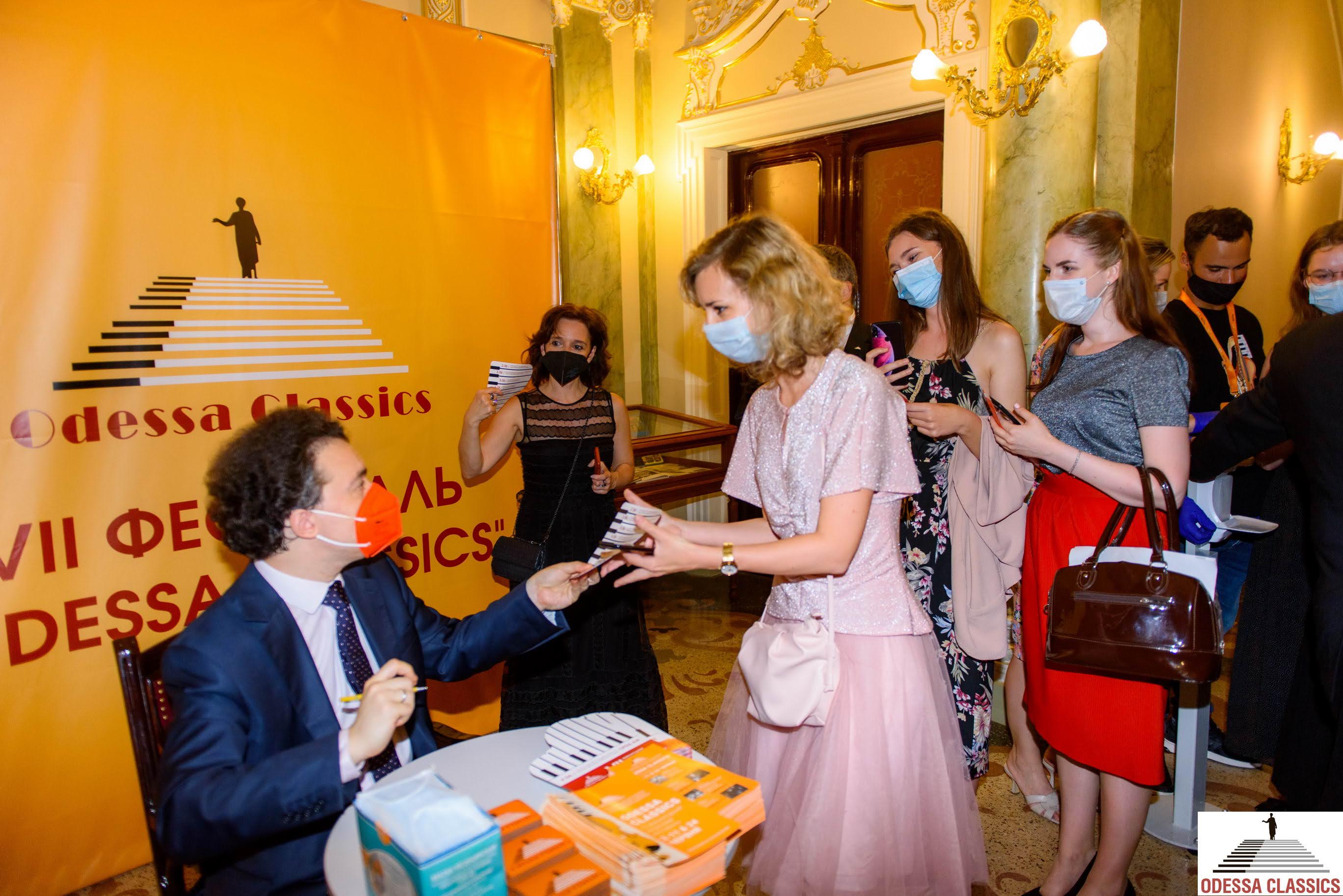
Elena Botvinova: Our festival is a private initiative of two people. We took full responsibility for holding the festival upon ourselves. Even when the covid year was very difficult, we took upon ourselves the responsibility to hold the festival in Odessa. Yes, it was, of course, truncated; unfortunately, orchestras were not able to take part, but at least chamber music was present. I understood that Covid could be dealt with by hygiene, this is what we did, ventilated, washed, cleaned, and, thank God, neither the artists nor the audience got sick, everything was fine. I understood that if I took all these measures, then we would be able to ensure the safety of our dear public, for whom we, in principle, do all this.
Now we will not take responsibility for holding a festival in Odessa, because we cannot be responsible for the actions of a terrorist country, an aggressor country that bombs our city every day, and I cannot provide them with security. Therefore, I cannot hold the festival in Odessa until it is safe for the public. Therefore, we took our festival, like a large grown tree, dug it up with roots, planted it in a pot and take this pot with us throughout Europe, watering, caring for, protecting, nurturing and cherishing.
Of course, we are waiting for the moment when we can return home and replant it in its native soil. While this is not possible, I will do what I can. You know, I generally believe that the Ukrainian people should forever, just as the Greek people remembered that they were accepted, a hundred years later they remember this, the Ukrainian people should always be grateful to Europe, which accepted people without any conditions, without any questions and continues to accept them. Doesn’t ask: what language do you speak? Do you know anything about this country? Who did you work for? They just accept and help – this is unprecedented.
Karina Arzumanova: What do you pin your hopes on now? Are there any hopes?
Alexey Botvinov: Now is a very difficult moment. Very dangerous trends are emerging that exist in my home country, I believe that they need to be talked about, they need to be stopped before it is too late. On the other hand, it is not clear how to stop this villain. We are people of culture, we try to do as much as we can in terms of high culture, because it helps people.
Elena Botvinova: I believe that there are so many people in all countries of the world on our side, on the side of good, on the side of Ukraine. And most importantly, we have a huge number of brilliant people on our side who support us. But brilliant people don’t appear in the world so easily - they are one hundred percent God’s messengers on this Earth. If such smart, such educated, such talented people support Ukraine, then I am sure that we have the strength and we will win. We would like to go faster, but we will definitely win.