
Translated material
“Entering the hut correctly is the tenth thing”: Oleg Orlov - about the Russian prison and the importance of resisting the regime
And also about how Memorial works now
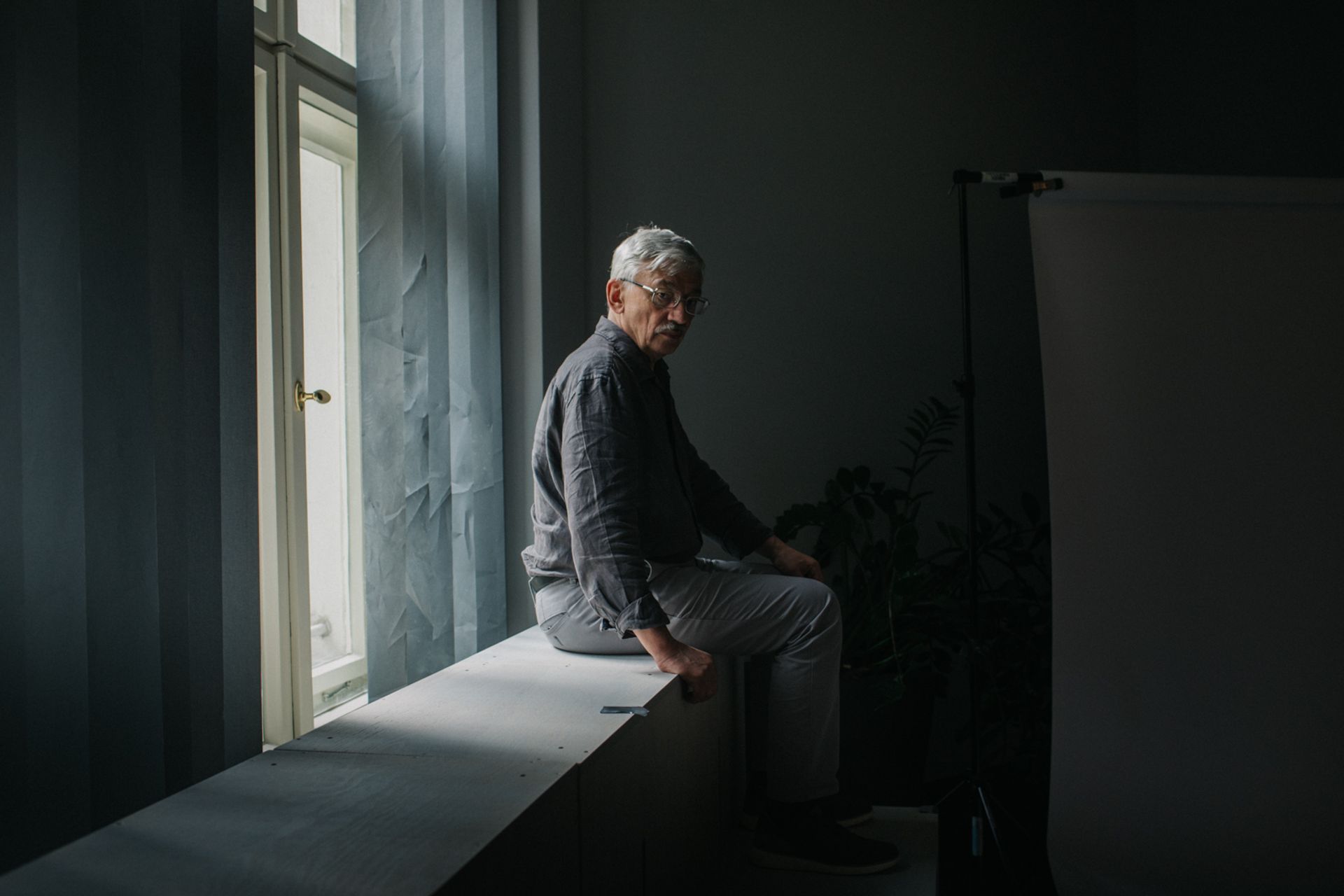
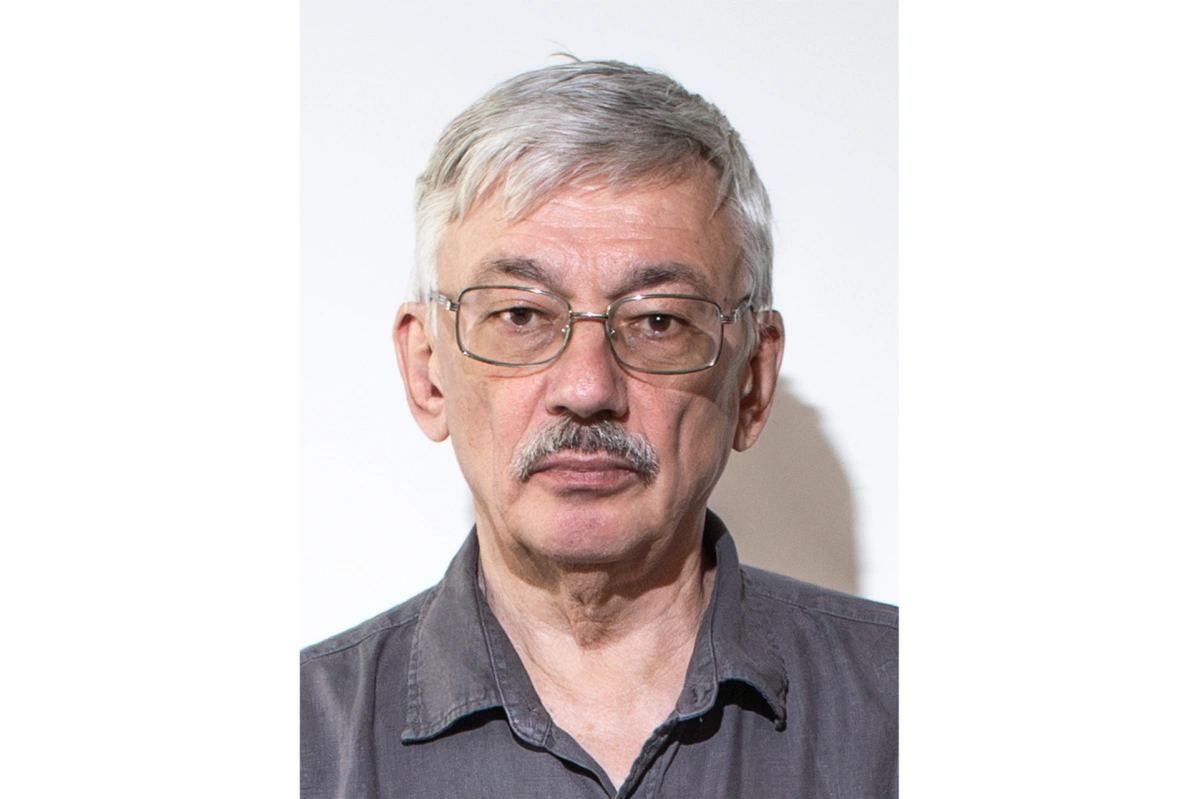
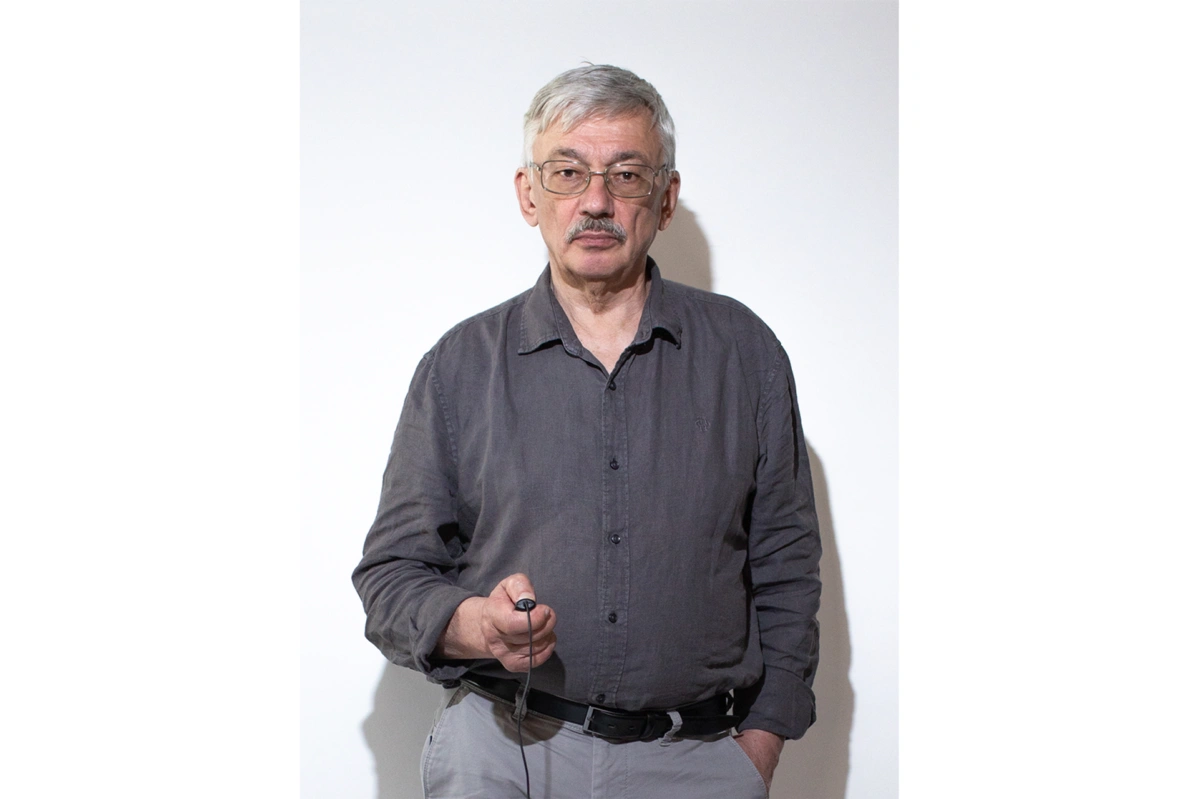
In the largest prisoner exchange in modern history between Russia, Belarus and the West, Memorial co-chairman Oleg Orlov was released from a Russian prison on August 1, 2024. In an interview with Vorstka, 71-year-old dissident Orlov spoke about who brought him his first glass after his release, and about how important it is to continue to resist the repressive regime within the country.
In order not to miss new texts from “Layout”, subscribe to our telegram channel
In February 2024, a Russian court sentenced 71-year-old human rights activist and co-chairman of Memorial Oleg Orlov to two and a half years in a general regime colony for “discrediting” the Russian army. The reason was Orlov’s anti-war article, which was called “They wanted fascism. They got it" and was published in French by Mediapart. The human rights activist posted a translation of the article into Russian on his Facebook page. In the article, Orlov condemned the war, calling it destructive not only for Ukraine, but also for the future of Russia.
“The country, which 30 years ago left communist totalitarianism, has slipped back into totalitarianism, but now fascist,” the human rights activist wrote about Russia. Orlov was tried for the second time: the first time the human rights activist was fined, the second time the prosecutor’s office demanded a real prison term for him. Since mid-April 2024, he has been in the Syzran pre-trial detention center .
On August 8, 2024, a “Vestka” correspondent asked Orlov in Berlin about his impressions of his cellmates and his plans for life.
— One released political prisoner, a very intelligent person, immediately upon leaving prison taught me the expression “drive into a stump,” explaining that it means “to make a mistake, to goof up.” I use it now, although it was definitely taken from the camera. Did something like that appear in your language?
“I thought that this would come in, and I would talk in prison jargon all the time.” It seems not. I stayed too long.
— How did the Memorial residents greet you? How is Memorial doing around the world in general? Because in recent years he has faced quite a lot of challenges.
“The Memorial people met me very quickly. They came to my hospital the very next day, as soon as they could. And, by the way, it was then that I drank my first glass. They brought it, and there was an opportunity to drink in the hospital. It was good. And then they kidnapped me and took me away. Of course, figuratively speaking, they “kidnapped” - everything was correct in relation to the hospital.
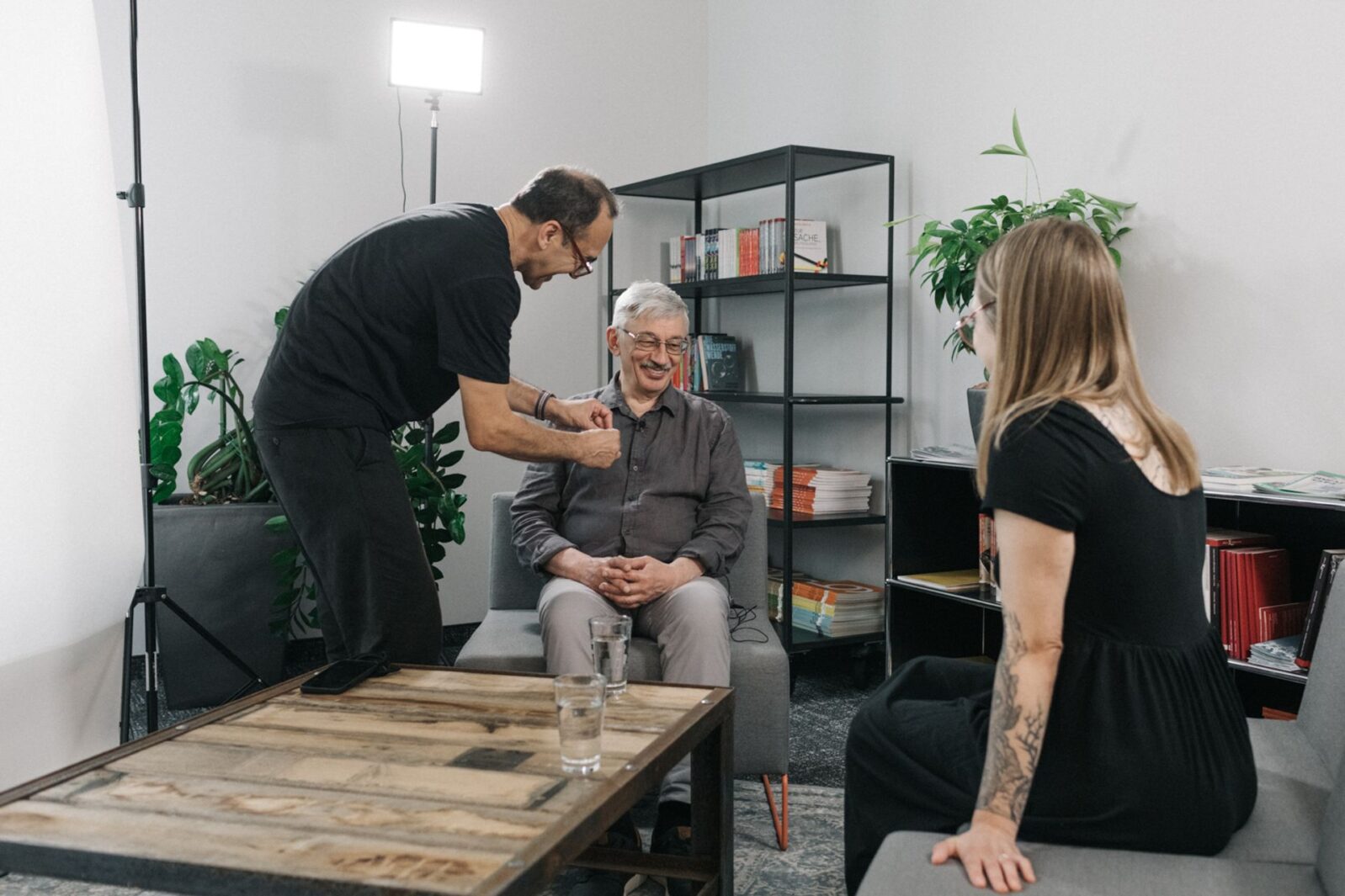
But the Memorial community remains and works. It’s difficult, difficult, difficult, because we are all now scattered across many countries. Communication is often via zoom. But Covid has taught us to do this. Thanks covid. Although it’s not nice to say so, Covid was a terrible thing. But, nevertheless, our remote communication continues constantly. And, being here, I see how the guys from the human rights center, from the historical “Memorials”, of which there are many, interact, work together.
My colleagues from all over Europe came specifically here to Berlin to organize my communication with the press here. And, of course, in prison I felt the support of Memorial. Transfers, parcels—Memorial organized everything well. They found a volunteer when I was in Syzran and helped my wife come on a date with me. Well, the correspondence we have with the Memorial residents is enormous. I felt support all the time and continuously.
“I didn’t have even a hint of a serious conflict with other prisoners”
— Oleg Petrovich, did any of the people you met in prison perhaps surprise, disappoint, amaze, or remember you? Who did you talk to there and what was your impression?
- Absolutely different people. And my reaction to them was different. Some surprised, some pleased, some disappointed. But the main thing is that I did not have even a hint of a serious conflict with other prisoners. What I feared most in prison was conflicts, exhausting sitting with the same people, prison boredom - well, all of this did not happen. There was normal, sometimes interesting communication with people whom I would never have met or talked to in freedom, with people who committed crimes.
God spared me from having close contact with people who committed serious violent crimes, although I crossed paths with them at various stages. But it was not necessary to be in the same hut or in the same compartment at the stage with such people, thank God. Or maybe unfortunately: it would be interesting to communicate with them, to see these people closer. I had the opportunity to communicate with criminals... I take this word back: it’s not good for me, who just sat there, to say the word “criminal.” I had a chance to talk in prison both with people who apparently committed some criminal acts, and with people who did not commit such actions against whom the case was fabricated. Or with people who have done something, but for whom there is no place there, for whom it would be entirely possible to take another measure of restraint and punishment. Unfortunately, I had few meetings with political prisoners.
But, I emphasize, I sat with a variety of people - including those who did not belong there at all. And everywhere I was most often interested. Interesting, normal and very often comfortable. We found a common language. This is the most important thing, it seems to me, in prison - to strive to make others feel comfortable with you.
“You weren’t even bored in prison, were you?”
- It wasn’t.
— Were you occupied with any intellectual activity or routine activities?
— I read, wrote, argued with my cellmates, played backgammon.
— Did you know how to play them before?
- No, I didn’t know how, but I learned! You know, this is an amazing story: there was almost never a dull moment in prison. Moreover, quite often I did not have time to do in a day what I had set out for myself. So I made a plan: tomorrow I need to work out physically, do exercises for my face, in order to somehow save my face and not come out looking like an old prisoner. These are physical exercises for the back, for the stomach, for the legs, if necessary. Or you need to read a book, because it will soon have to be given to another cell - they are waiting there. We need to write replies to letters. This is the most important thing. I have a stack of letters that I haven't had time to respond to. It is advisable to respond to each letter meaningfully. And, of course, the cellmate or cellmates offer to play backgammon - this is also an important thing for maintaining the psychological atmosphere in the cell.
And so evening comes, lights out, and I realize that I didn’t have time for one thing and didn’t have time for another, and it’s postponed until tomorrow - so there’s no time to be bored. Not in all pre-trial detention centers, but in some, at night a completely separate life begins, a purely prisoner’s life. The “road” began: the exchange of little things, letters, cargo, and so on. Candy, cigarettes, tea, coffee.
— With other convicts, were you just yourself, or did you still have to follow some rules, to “enter the house” correctly?
- No, I followed the rules. But going to the house correctly is the tenth thing. The main rule, by the way, which I developed for myself while there: in no way oppose yourself to everyone else. I did not have a special position: “I am a political prisoner. I haven't committed any crimes. And you are all basically criminals here.” God forbid you put yourself in this way - then you will receive a response towards you.
I was the same as all the other “respectable prisoners.” There is a community of respectable prisoners - and I am one of them. And it’s not for me now to judge people, what they did in freedom, what they didn’t do. Here we are comrades in misfortune. No wonder the main question here is: “What’s your problem?” Trouble is your article, what you are blamed for. This also shows the attitude towards condemnation not as some kind of retribution for what you have done, but as a misfortune, as a misfortune that has befallen you. This is probably wrong, and there is nothing close to re-education and correction here.
What am I talking about? It’s not for me to judge what a person has done. Here each of us has some kind of trouble. And while we are here together, our job is to help each other if possible, to make life acceptable for each other. This is the basis of the prison community. If you understand this, then everything else will come by itself: you will understand how to behave and how to sit at the table - they will teach you all this. And, indeed, these rules are for the most part reasonable and aimed, say, at hygiene. For example, they have a sacred attitude towards their dishes: no one should touch them. And you know, this is an absolutely correct approach in prison conditions.
“Especially considering the quality of medical care or the virtual absence of it in prison.
- That's right: lack of medical care! Because God forbid you get sick in prison. Because there is no medical care. At best, they will give you some kind of headache pill, and only one or two. And let your relatives send you the rest.
- That is, if they hand it over again. I am now writing about a resident of Saratov, a musician, who is in prison, being sent calls for terrorism, he has been in a pre-trial detention center for several months. At the same time, he has a second group disability, psoriasis, and is hospitalized twice a year to prevent exacerbations of a chronic disease. That is, now he is in pain, he is suffering, but his mother cannot give him anything, no drugs.
— The medical unit won’t let you through?
— It is impossible to make an appointment with a doctor.
- Oh, no, what kind of doctor is there! Make an appointment with a doctor, a specialist?! This is simply out of the realm of fantasy. But whether the pills that came from the outside will be handed over or not - this very much depends on this or that pre-trial detention center and on those who work there in the medical unit, it can be very different.
In order not to miss new texts from “Layout”, subscribe to our telegram channel
“Until February 24, 2022, the repressive machine had at least some restraining mechanisms”
— Samara pre-trial detention center number two, we say hello to you! And the question for you is this: all your life you have consistently adhered to an anti-war position, resisted dictatorship, and expressed this publicly. Why were you imprisoned only in 2024? You weren’t very convenient for the state before.
— Why weren’t they planted before 2022? Because 2022 was a milestone, a milestone of the most severe intensification of repression and new legislation. Until February 24, 2022, the repressive machine had at least some restraining mechanisms. But when these laws were adopted - on fakes, on discrediting, a huge set of laws - any restraining mechanisms on the repressive machine fell off, and it rolled downhill on its own, even regardless of the goals and tasks that were set for it. It is already moving autonomously and can only increase, increase, increase repression.
Therefore, it is not surprising that I was imprisoned after the age of 22. Yes, they imprisoned him in 2024, but they could have imprisoned him in 23rd. But until 2022, the situation in the country was still different. Yes, they did. But before that, they probably thought about me: “After all, a famous person, a human rights activist, not directly related to politics.” Well, they apparently thought that it was better not to contact me.
— Will there be too much noise?
— Yes, and before there was still some kind of rationality in repression. They knew there would be too much noise around me, so they looked at the pros and cons. For the time being, they thought that it was better not to touch me. And just in 2022 everything changed - I see this from my criminal case. I see that the Moscow Center E began to dig for me much earlier. From the moment of my first pickets, they had correspondence with the investigative committee, which is in my criminal case. They were already looking for something to complain about. They even found one publication on my Facebook, but something didn’t work out for them. The Investigative Committee told them that there were no grounds for initiating a criminal case “on fakes.” Yes, by the way, they first wanted me an article. Criminal Code of the Russian Federation 207.3, dissemination of fakes, sew, and not discredit, which, in general, would be much worse. So the investigative committee in 2022 told Center E, look further.
“They, of course, had amazing scrupulousness. Very strange guys.
— This is really interesting, and I will definitely publish this correspondence between SK and Center E.
“It will be possible to publish this as a play later.” I just respect such artistic ways of comprehending the nightmarish reality. You said that the investigators apparently considered you at first to be a human rights activist, not a politician, and therefore did not touch you. But if you remember, in the early 90s your work, when you wrote laws, when you were an assistant to a deputy, was completely political. Then, after the collapse of the USSR, didn’t it seem to you that politics was a dirty business that should not be approached at all and should not be dealt with?
- You see, I never considered politics a dirty business. Moreover, back in the early 2000s, I told people around me more than once at large human rights gatherings that the line between politics and non-politics was disappearing. And if we want to really promote our ideas in the field of human rights, we need to interact more closely with purely political structures and, perhaps, we need to unite with each other and also put forward some more politicized demands.
But then, the majority of the human rights community said that politics is one thing, but we are another, and let’s not touch politics. In the end, I also thought that politics is a struggle for power and direct participation in elections. I thought that our civic engagement is not all about politics.
But, in fact, as soon as the first version of the law on foreign agents began to work, it became clear that our opponents consider everything to be politics. Any statement in the public space about power, any assessment, anything, for them, in fact, is politics. And why shouldn’t we consider ourselves politicians then? Since our opponents think so, then it’s time for us to consider that we are all politicians. In a totalitarian state, any socially useful activity is essentially political.
— In the end, you and the politicians were flying on the same plane.
- That's it.
“I haven’t developed an image of the future”
— Returning to the plane. Yashin said at the first press conference that he did not really understand how to be a Russian politician outside of Russia. Perhaps now they have more clearly presented the image of their activities in exile, but their doubts are as clear as possible to me. I left a year and a half ago, and before that I had no idea how to be a Russian journalist outside of Russia. Have you already imagined how to do human rights work if you are not inside the country?
- Yes, by and large, I have no understanding. And I haven’t developed an image of the future. There are the first outlines. There are examples of my colleagues who have been working here for two years and are successfully engaged in human rights protection. It is clear that it is much more difficult to engage in specific protection of specific people from here. And my friends and colleagues are doing an excellent job protecting political prisoners from here, they are busy with this and work normally.
What about other areas of human rights protection? I don't know. For now, I need to adapt to this, build my work here, my vision of how to do it. By and large, we have been working in all directions for the last two years. Some are in Russia, some are here. Those in Russia collect information, those here can speak and report crimes more openly. There is the publicity of Memorial, there are words that we speak from here, outside of Russia. And there is a large group of, say, our non-public colleagues, friends, informants, participants in our movement, who are forced to work semi-underground there. Or maybe even completely underground.
Now it is very difficult for me to determine this for myself in advance. I never thought about myself in exile.
— You are 25 years old. You walk around Moscow and post political leaflets at bus stops and entrances . As I imagined it, I was completely overcome with heat, because two years ago I walked around Novosibirsk and glued small paper colored cranes onto all surfaces with double-sided tape. They either said “No to war” or something like that. And if in the first days of a full-scale invasion I thought that I had to do anything at all - green ribbons, pickets, anti-war statements and posts, and I did all of this - then they immediately made it clear that such antics would end badly, and that it was necessary, apparently, to act in a different way. How do you feel about partisanship? Let me clarify: we are talking about small things that allow a person to safely express his disagreement with war and dictatorship, but which do not seem to change anything in themselves.
“I feel very good about this course of action.” Well, should we advise everyone to sit down at any cost? Saying: “Guys, you are there, in Russia everyone must sit down! Either you are criminals and accomplices of the criminal regime” - wild and wrong.
Moreover, it seems to me very important that our like-minded people, and there are plenty of them in Russia, preserve themselves, so that there is some kind of community of people who do not accept. neither Putinism nor the war have been preserved until the moment when it is possible and time to act: talk, go out into the streets, put up leaflets. I'm sure that time will come. But if by this moment there is just a scorched field there, then nothing good will come of it. People must preserve themselves. It is very important to do something to preserve yourself. If you do the minimum, a small step, generally maintaining your safety, but at least do something, tie a ribbon or write to a political prisoner, that’s already good, because you’ve done a good job.
Do a little, but think that at the same time you need to maintain your mental health and remain free. In my opinion, this is correct and good. For example, people wrote letters to me from all over Russia, and they wrote quite harshly and frankly about this regime.
— You were offered in the pre-trial detention center to go to war with Ukraine, and you, of course, refused. But you were an observer in quite a significant number of military conflicts. Would you go to Ukraine now to do the same thing: write reports on the observance of human rights, record crimes? Or is war a matter for the young?
- What can I say? I came here. Now, perhaps, I will have such an opportunity. If there is such an opportunity, of course I will go. I will definitely go, because it is my sacred duty. And another thing is that for now this is impossible, and it is generally unclear where and how I am going. But, in general, yes, I would go.
— Oleg Petrovich, when you were young, when Memorial was just starting, did you somehow imagine your 70 years? And if so, do the expectations match?
- The Lord is with you! It was sad to think about it. In fact, I never expected that I would get so many new things at 70 years old. Although it’s impossible to say that this is a cheerful [old age]. You remember 2022 very well - both this time and this terrible war... Of course, I never thought that at the end of my life this would all fall on us. This is terrible! First of all, for our friends in Ukraine, but this burden also falls on us. Horror.
— Which news from outside made the strongest impression on you?
- In prison, or what? I can say: I was wildly impressed by the verdict of Berkovich and Petriychuk. I never expected such a verdict. They told me about this matter, I corresponded a lot about it. It seemed to me that such a wild, senseless, unsubstantiated accusation would discredit the authorities. Well, okay, I thought, you can’t justify it, someone will have to answer for this. Well, that means they’ll give you the minimum based on time served. And when I learned, somewhat belatedly, about this verdict, my eyes widened. I began to explain to my cellmate what kind of case it was and what the term was, and he was also amazed. It was then that I realized that the repressive machine had already acquired its own logic and did not pursue any rational goals. This is repression for the sake of repression, as under Stalin.
— I’ve read a number of your interviews, and you seem to say with all honesty that you were scared in life, just when you were putting up the first leaflets, and then as if everything that happened to you didn’t make such an impression on you. You either had no fear, or you really believed in what you were doing. How can you not be afraid?
- Don't know. Very simple, it seems to me. Choose some goal that is acceptable to you and go towards this goal. There will be obstacles and difficulties along the way. But if you want to achieve your goal, then this path will be much less scary. It’s scary when something falls on you, and it’s not your path: it’s not you who are going, but something terrible that’s someone else’s has fallen on you and grabbed you. And if you know that there is this monster on this path of yours, and you need to pass by it, and it may or may not grab you, then it’s not so scary.
Interviewed by Rita Loginova
Cover: Ksenia Galaktion
You can support “Layout” from any country in the world - it is still safe and very important. We really need your support now. How to help us →