
Translated material
"Thank you, you saved me"
How the Kursk point of issuing humanitarian aid works. Reportage
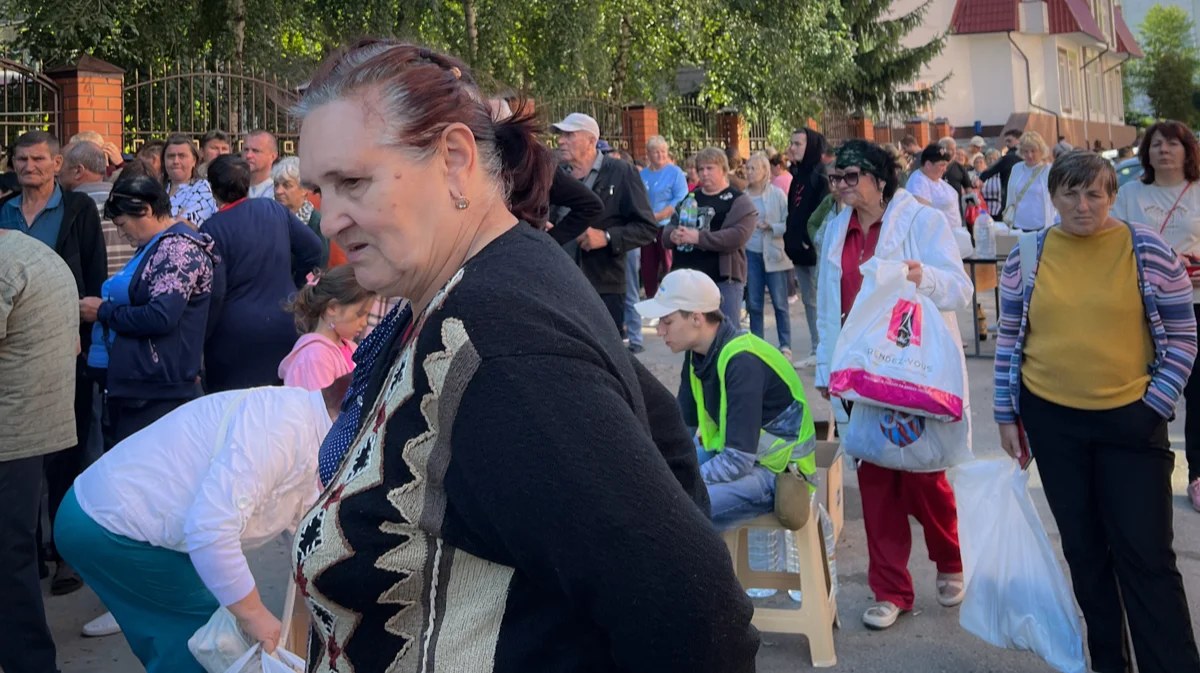
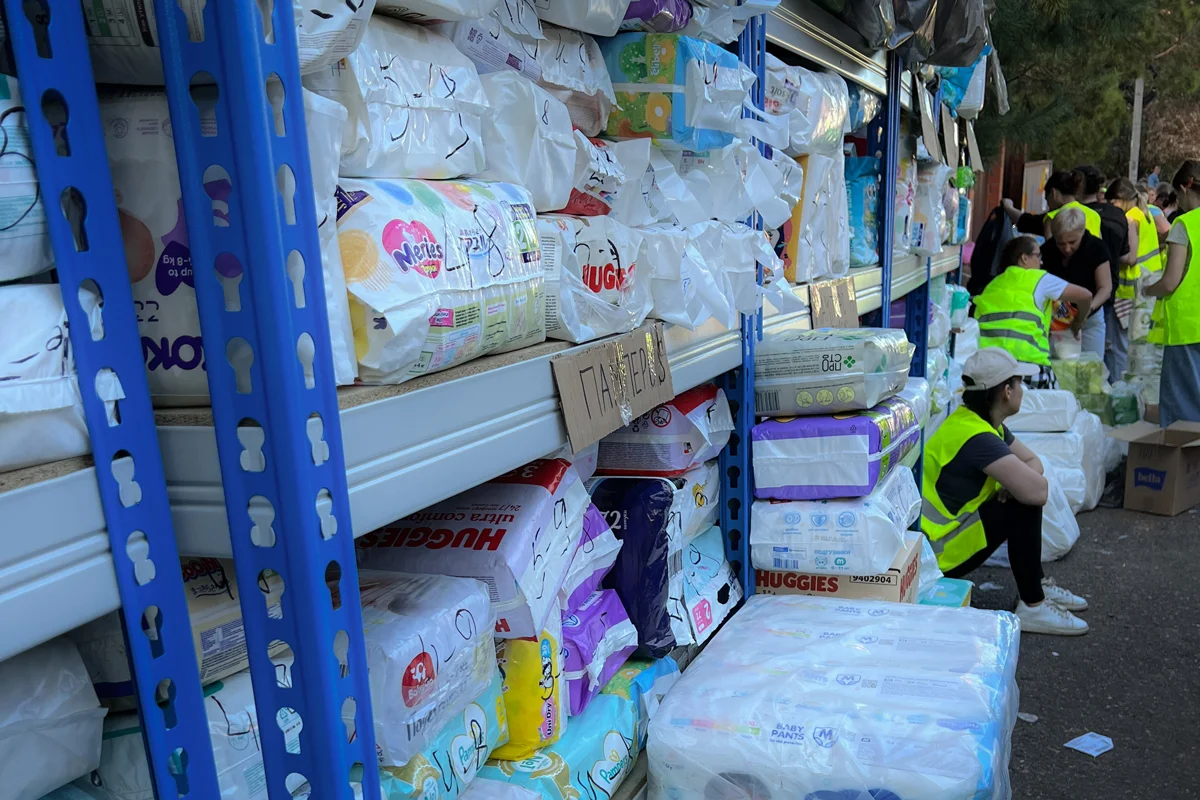
Humanitarian assistance point in Kursk. Photo: Angelina Ivanova
Kursk recovered from the first shock due to hostilities in the region. Now refugees are accepted there, and dozens of people who have become volunteers these days help to collect humanitarian aid for them. Our correspondent watched for several days what is happening at one of the points on the collection and distribution of humanitarian assistance.
"The item works the sixth day, I'm here - the fifth"
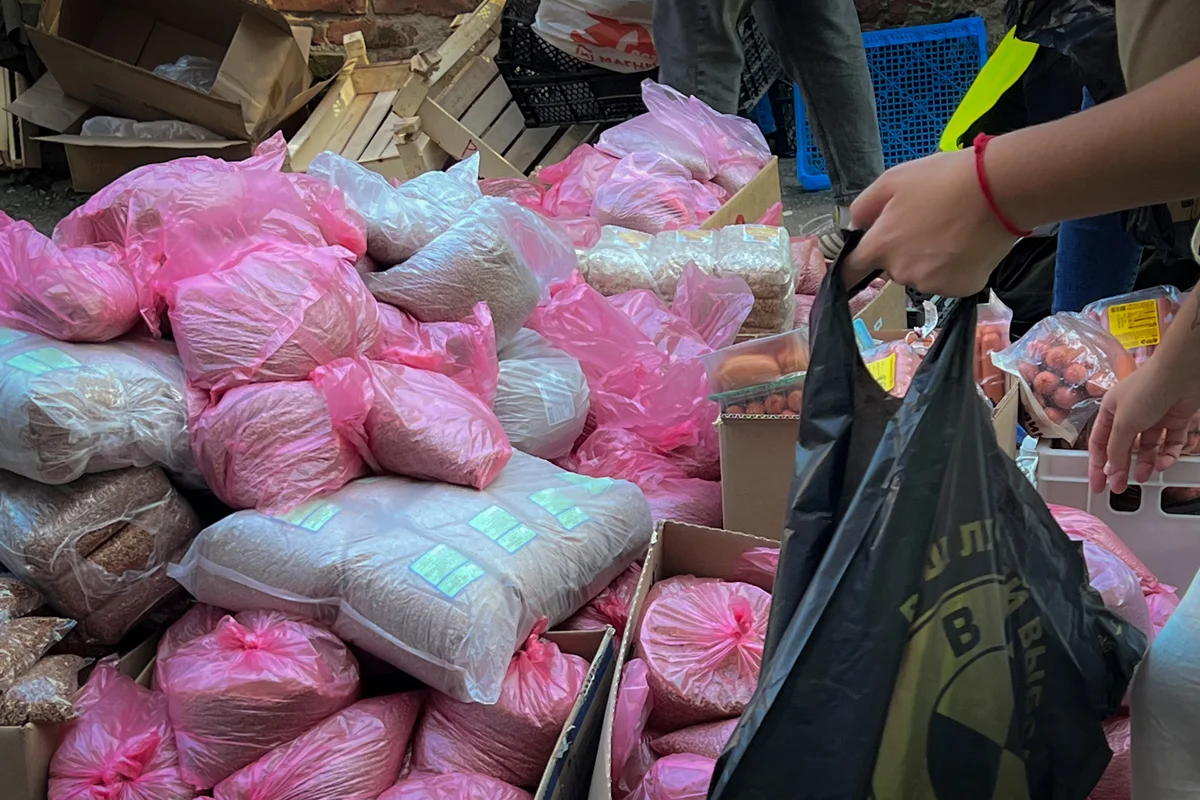
The blue “Volkswagen Golf” drives up to the “House of Good Deeds” on Belinsky Street in Kursk. A man and a woman come out of the car, they brought more than ten kilograms of stew, pasta, rice, sausage and dairy products.
In ordinary days, the “house” is a social service that helps homeless and in need of Kursk. But for more than a week in the daytime dozens of refugees gathered here.
Having unloaded the edible, the man takes a pillow and blankets from the trunk. “Thank you, you saved me, otherwise they would have killed me now,” says the volunteer who took the blankets.
“They are grabbed in a second. People can neither eat nor drink, the main thing is that the pillow with the blanket be ",
She adds.
Natalia (name changed) in appearance no more than twenty. She began to help refugees a few days ago. “We arrived, brought pillows, stayed,” she says. “The point works for six days, I am here - the fifth. The first days in general there was an ass, ”says Natalia.
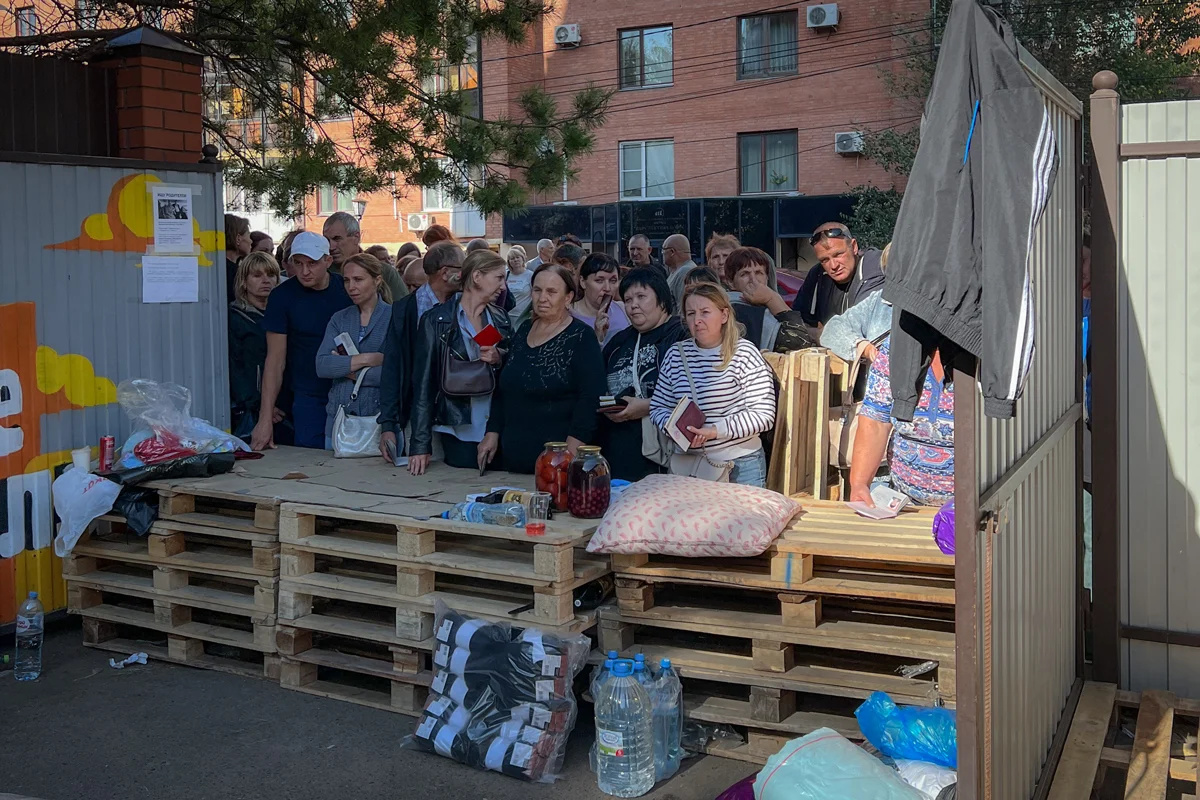
The “House of Good Deeds” was one of the first in Kursk to distribute food, hygiene items and clothes for those who fled from the border areas to the sounds of explosions: without things, money and documents. At first, people themselves went into the courtyard of the organization and took everything they needed. But since there were too many people who wanted to take food and other products, wooden pallets were put in front of the gate. “The volunteers themselves ask what is needed,” says Natalia. Thus, the item was divided into two zones: in one volunteers accept and sort goods, in the other - they are issued.
Oksana (the name changed) was evacuated to Kursk from the Glushkovsky district on the night of August 8. At the beginning of the war, her house was destroyed after shelling from Ukraine, so she lived in a rented apartment. For destroyed housing, according to the woman, the authorities issued her a certificate of 3 million rubles. For this money, Oksana bought an apartment in Kursk. Therefore, she had where to run after the start of the Armed Forces.
She said that two packages are issued on a person in the “House of Good Deeds”. One with household chemicals: there is a toothbrush, pasta, toilet paper and shampoo. The other is with pasta, tea, sugar, sausage and sausages. “We were told that you can come for help every two days,” adds Oksana.
"There are people who come in the second circle, deceive"
“A minute of attention! Is there any pregnant women with children under ten years old? Raise your hand! ”, The volunteer in a green vest interrupts Oksana’s story. “Pregnant women with children up to ten years old, you have a separate line, raise your hand to see you,” he repeats into the loudspeaker after he saw that no one raised his hand. “I am not pregnant, but I have 11 years old,” an elderly woman answers him. “But I say up to ten,” says the volunteer. But in order to stand in a separate queue, it is necessary to show documents that confirm the age of the children. After two refugees could not confirm the age of the children with documents, they were sent in the general queue. “We do not need documents, they need them for the crowd, so that you, excuse you, do not tear you,” the volunteer explains.
In the early days, in order to get drypikes, the refugees were distributed numbered coupons.
“But then we realized that it makes no sense, because the crowd is huge. There are people who come in the second circle, deceive ",
- says the volunteer Natalya. Therefore, they decided to divide the turn into two parts: pregnant women, disabled and women with young children are to the left of the gate, all the rest.
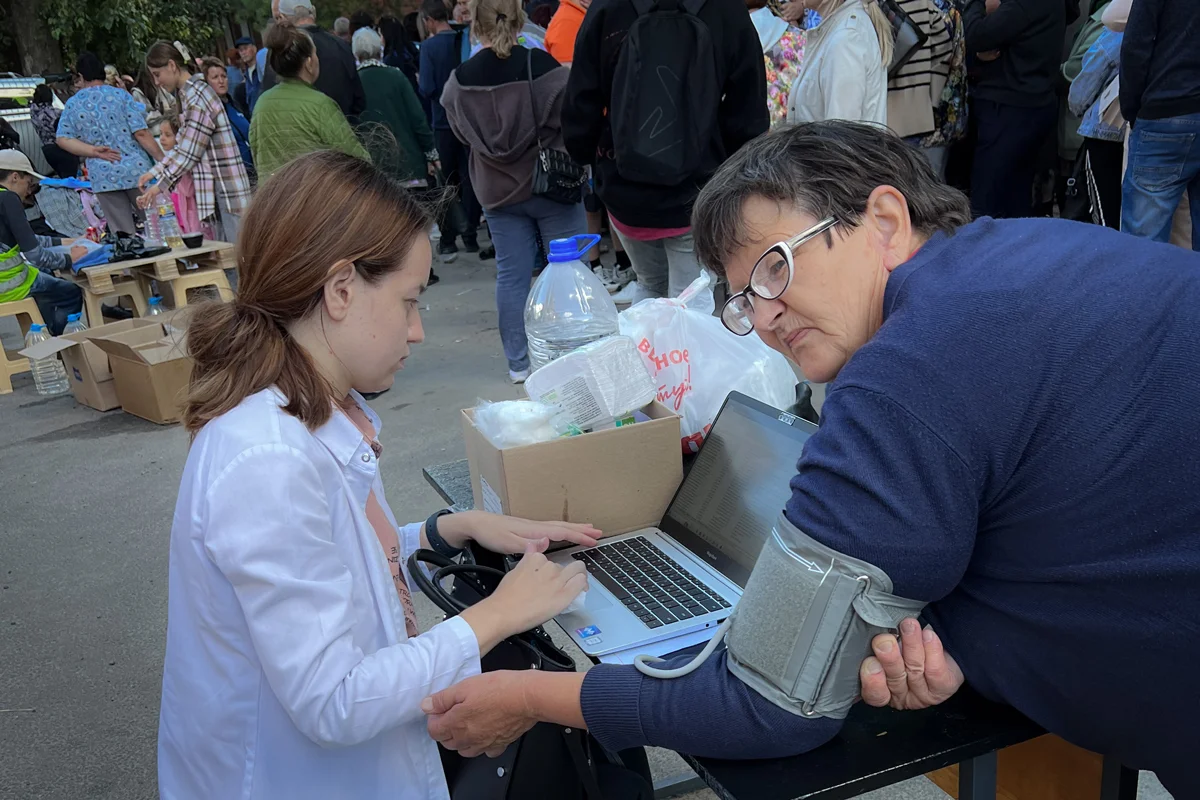
“Comrades! Who wants to drink? " - the guy in a green vest shouts a crowd of refugees. He goes to people with a package of six one and a half liter bottles. After 10 seconds, the young man does not have any water. He promises to those who were not enough now, soon bring a new party. At that moment, a young woman in a white robe sits to the medical care table, behind the young red -haired girl in a white coat. She sits down at the table and hands the girl a hand to measure the pressure. "Kolya, hello!" - A female voice is heard in the crowd. It seems that old acquaintances accidentally met.
"There are only volunteers here"
Since the opening of the point, the number of refugees has not decreased there - on the contrary, every day there were more and more people who wanted to receive humanitarian aid. At the height of the day in line, up to two hundred people can be in line for help.
A white truck drives up to the gates of the point. Two men of sports physique open sash, inside - several dozen pillows and blankets, the most popular things for refugees. All the help that is brought to the point on Belinsky is sent by ordinary people.
“Official unloading is in the Ministry of Emergencies, there are only volunteers,” one of the volunteers explains. Emires, clogged with foods and bedding, drive up on Belinsky almost every minute. “Guys, now another car will drive up, we have gathered everything on the list,” a man in white polo reports to the volunteers.
If you approach the crowd closer, you can hear how some call relatives to ask what needs to be taken from the point, others are divided by experiencing just a couple of days ago when they fled from their houses. And the others are silently stand and wait for the turn to reach them.
Journalists are trying to find out the details of the evacuation of a woman in a pink jacket. She says she was already tired of telling about it. Saying these words, she smiles. But a couple of seconds pass, and barely noticeable tears appear on her face. She, like Oksana, fled from the Glushkovsky district. But this woman was lucky. She and her family left the house in the village of Khodyakovka on August 5 - until the moment the Ukrainian military entered the Kursk region. She said that there were buses in the village on which people were evacuated. And this is a unique case, since most refugees talk about the opposite. They complain that no one evacuated them from the border areas, so they had to engage in “self -evidence”, as the authorities put it.
Oksana, says that no one warned of the impending attack of Ukrainian military local residents. They learned about what is happening on the border from telegram channels. “We have the entire leadership from the districts,” adds Oksana. She swears at the Russian military. He says that they only stuff their pockets, and "guide poorly."
The lines of refugees in a point on Belinsky are not only late at night. The volunteers said that the "House of Good Deeds" works to the last person.