
Translated material
AI dictatorship
How the Kremlin uses dipfaces and dopplegars to influence the elections in Europe, why now the traditional political forces of the EU adopt this practice
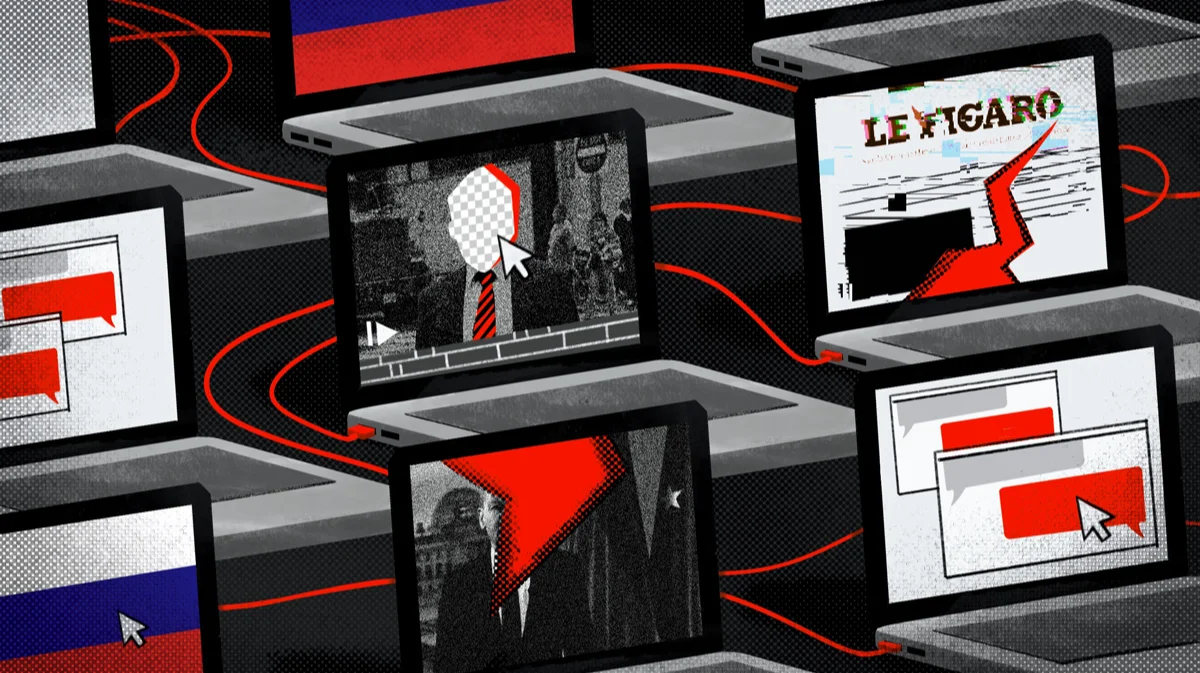
Illustration: Nastya Goltinsk / "New Gazeta Europe"
The pogroms that covered the UK in this August were caused by the spread in the social networks of Fake, which is associated with the Kremlin. Among the reasons for the online collection of Algerian boxers, Iman Helif during the Olympics in Paris is also called Russian influence. During the active phase of the elections in the European Parliament of such examples of Russian misinformation, there were hundreds.
Moreover, in recent years, the Kremlin’s information influence tools have been developing along with technology progress. Now the arsenal includes diphes, a fake voice and other derivatives of artificial intelligence. Which of the latest elections in Europe were under the misinformation blow of Moscow and why the political analyst Igor Imaglan was also sorted out for the ban on the use of AI for political purposes, specially for the New Evrop.
Day of silence
-Someone will throw the ballots right into the urns again?
- Do not worry about this, they have already decided everything.
- And I really will receive a good reward for participating in this, as agreed? Or what plan?
- Everyone will receive a reward for participation. About the amount and such a way of transferring money so that no one accuses you of bribery, we will take care ...
The two -minute audio recording with such a dialog spread on social networks on September 28, 2023, two days before the parliamentary elections in Slovakia. The questions are allegedly asked by the Slovak journalist Monica Todova, the leader of the liberal party "Progressive Slovakia" Michal Shimachchka answers. In addition to the procedure for throwing and remuneration for participating in falsification, interlocutors discuss how to ensure in the upcoming elections the bought out of the votes of representatives of the people of Roma - one of the ethnic minorities in Slovakia.
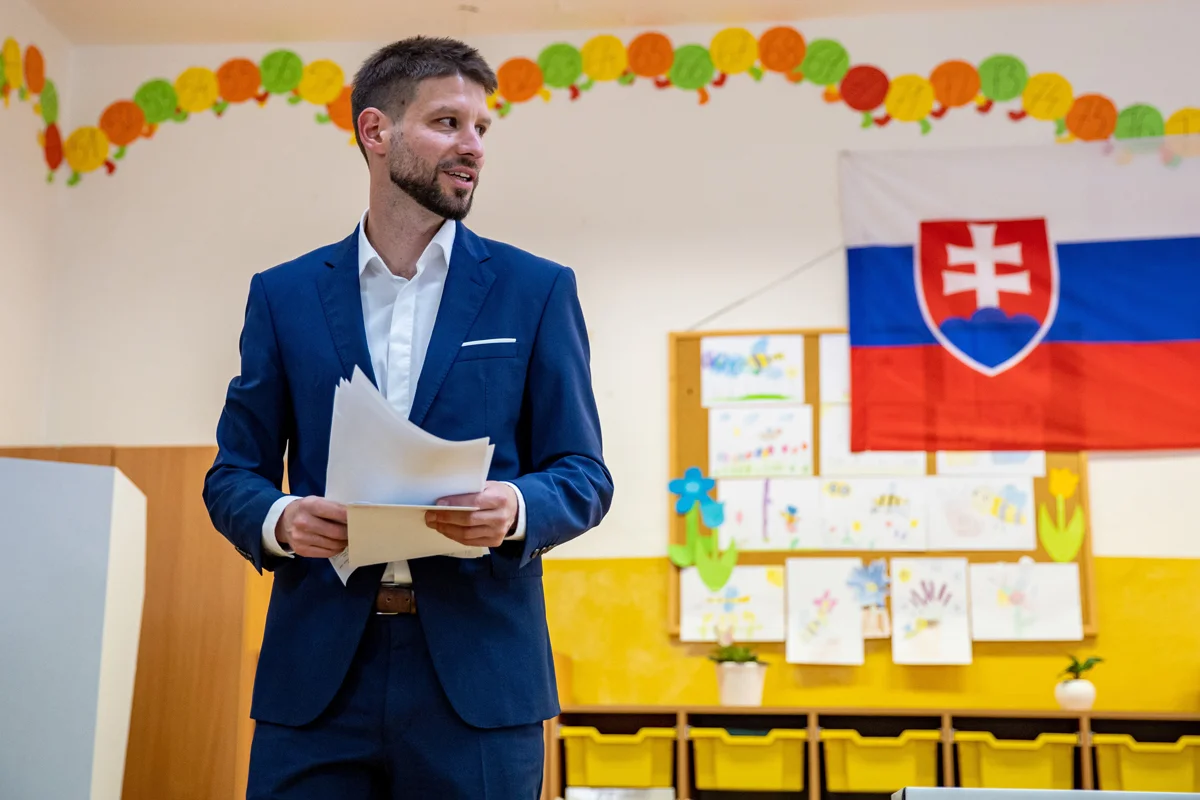
Despite the official ban on campaigning in the country on “Days of Silence” - less than 48 hours before the election, audio quickly diverged on social networks, including Telegram and Facebook. And although Todova and Shima immediately stated that the recording of fake, the police refused to conduct an investigation, since "the public would not be misleading this kind of fake audio." Only six months after the elections, in February 2024, the prosecutor decided to start the audit.
Meanwhile, the fake, apparently, influenced the preferences of voters, increasing the separation of the “course - social democracy” party (Smer), chaired by Robert Fitzo, known for his pro -Russian views from “progressive Slovakia”. If on polls on September 27 the difference was 3% (at 18% ready to vote for “progressive Slovakia” and 21% for Smer), then on September 30 it reached 5% (18% of progressives and 23% of the party).
According to the results of the elections, the progressives lost a fifth with a slight gap: 22.95% of Smer against 17.96% of the batch of a chimechka. Fitz returned to the chair of the Prime Minister of Slovakia, starting his board with resonant reports on the “use” of Ukraine by the West to weaken Russia.
The director of the Center for Slovakia for the Combating of Hybrid threats Daniel Milo said that the spread of such a fake coincides with the interests of Russia and could be organized by Russian agents.
In response, the head of the Russian Foreign Intelligence Service Sergei Naryshkin said that the United States instructed his European allies to use “pressure, blackmail, intimidation and bribery” to ensure the victory of “progressive Slovakia” in the elections. Following this statement, the Med of Slovakia called the Russian ambassador Igor Bratchikov, directly accusing Russia of interfering in the election. Russia rejected all the accusations.
The first fake
In June of this year, on the eve of the elections to the European Parliament, the Stratcom team is an operational group created in 2015 and engaged in the fight against disinformation in Europe under the start of the EU Foreign Ministry, - Russia has been conducting a disinformation campaign for several months. Moreover, this practice is not new, but this time is much more variable of fakes.
The history of Russia's information attacks on the elections using all available tools - from bots in social networks to hacks of voters' bases - began with elections in the United States in 2016. Then a large -scale campaign was held , which included the hacking of computer systems of the Democratic National Committee (DNC) and the campaign headquarters Hillary Clinton. The documents published after this hit the rating of the candidate from the Democrats and, according to the plan, were supposed to undermine confidence in the elections as a whole. In a smaller volume, the attack was held in Britain during a referendum on the country's exit from the EU.
In continental Europe, the first large recorded attempt to influence the results of voting through external information channels became previous elections to the European Parliament in 2019. The working group on strategic communications managed to prove 998 cases of disinformation by Russia in the first half of the 2019 election. According to the European Commission, the collected evidence does not allow us to talk about the “distinct” disinformation campaign, nevertheless, conclusions were drawn about the “unnecessary misinformation activities (from Russia) aimed at suppressing the turnout and the impact on the preferences of voters”.
The most famous cases of fakes during the 2019 election concerned migration issues - problems on which right -wing populists often gained votes. For example, on the Twitter social network under the hashtag #Euelections2019, a video was distributed in which a man - a native of Arab countries breaks a woman’s statue. The signature read : "Muslim immigrant destroys the statue in Italy." In fact, this turned out to be a video of protests in Algeria, shot in 2017. Some posts claimed that the statue of the Virgin Mary was shown, but, as reported by the AFP news agency, in reality it was a sculpture of nauda - creatures from ancient Greek mythology. Nevertheless, despite the refutations, the video scored 2.7 million views in Facebook social networks.
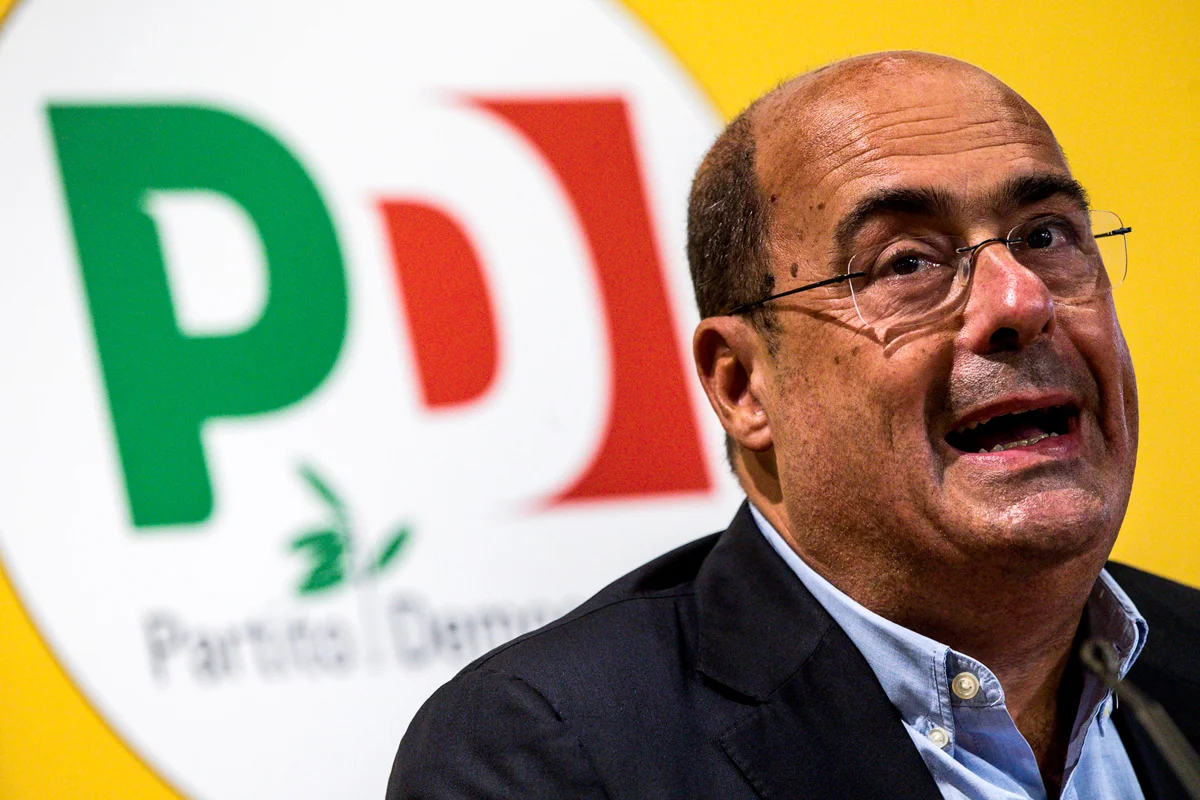
In addition, fake photos of ballots of the Italian Democratic Party Nikola Dzingretti, who reports his readiness to let 800 thousand Libyan refugees, were also distributed there. The Italian police, however, confirmed that the politician never made such statements.
According to the Stratcom team, in the European Parliament in 2024, Russia also used the previously tested circulation of conspiracy theories and the spread of false news, including through a vast network of bots in social networks.
According to the Maldita project, during the election campaign in 26 European countries, 1321 posts with fake information were identified. 20 of the most viral posts that were not remote platforms scored more than 1.5 million views each. The main themes of disinformation related to migration, honesty of elections, war in Ukraine, war in gas and pandemia.
However, according to representatives of Stratcom, now in the Kremlin arsenal there are more sophisticated methods that appeared as a result of the development of artificial intelligence, which allows plausible content on an industrial scale.

Translation difficulties
The entry of Finland in NATO in April 2023, chronologically coincided with parliamentary elections in the country, apparently, also intensified Russian trolls trying to show the discontent of the "simple Finns" the changed course of the country. But, unlike interference in the Slovak elections, during the Finnish campaign, which took place six months earlier, a much more modest arsenal of methods was used.
So, in February 2023, the post of supposedly Finnish user under the nickname Ulevi Alto with the words: “Nato Ei Voi Tallentaa Suomea” (NATO cannot keep Finland) began to spread . However, it seems that this phrase was translated by a foreign user using an online translator who did not cope with semantic shades. In the Finnish language there are two words with the meaning of “preserve”: tallentaa (in the sense of recording or storage, for example, a document) and Pelastaa (in the sense of salvation). As a result, Twit scored only a few tens of thousands of views and less than ten likes.
In addition to such “clumsy” bots, in the same Twitter social network, the performance distorted by artificial intelligence at that time was the Prime Minister of Finland Sanna Marin. In it, she allegedly called on Finland to the war against Russia.
However, this information campaign attributed to the Kremlin was unsuccessful both in relation to the parliamentary elections and the moods of the Finns about the country's entry into NATO.
In February 2023, the rating of the Social Democratic Party of Sanna Marin did not undergo changes, and the party lost its elections for internal reasons, and not because of external influence. For the most part of 2023, the Finns support the idea of joining NATO remained at 70%.
There were no comments on anyone's involvement from officials either Finland or Russia, unlike the case in Slovakia,. But, according to the employee of the Finnish Institute of International Relations of Minna Alander, it was "a very weak attempt to intervene in the elections by the Kremlin using trolls and bots that made funny mistakes in the Finnish language."
Commissars are response
In the spring of 2021, the European Commission began to develop a law regulating the use of artificial intelligence (AI) in the EU. The key change on which Brussels insisted was the introduction of a risk assessment scale in the development and use of any technology. The scale included four levels: unacceptable, tall, limited and minimal.
The political content created by AI was evaluated as a tall (targeted political advertising) and limited (chat bots) risks. This means that their use is not completely prohibited, but in order to obtain approval for development, you need to go through a difficult assessment of compliance with the standards of protection against threats.
However, the reaction of European officials so far is difficult to keep up with technology and cannot stop the use of AI in election campaigns, nor prevent the emergence of new methods of misinformation. Among the latter, including those tested by Russia in preparation for the elections to the European Parliament, are dopplengers and dipfaces.
Doplgangers are fake websites, which are in appearance identical to real sources of information and are almost not different in the domain name. As the New European Europe previously wrote , fake twins in the summer of 2023 appeared, for example, by Le Figaro and Le Monde sites-49 fake articles were published on them on the topic of the war in Ukraine and its consequences. They posted their specially created bots networks on Facebook and X. A similar fate befell the German publications last year, as well as the German Ministry of Internal Affairs: it posted a fake press release on the obligation of German citizens to accept Ukrainian refugees.
Dipfaces are realistic content created by artificial intelligence. He can vary from a fake audio or phone call to more and more realistic images or videos. It was the dipfix that turned out to be the telephone conversation of the leader of the “Progressive Slovakia” party Mikhala Shima with journalist Monik Todovo forged with the help of the neural network.
Fakes against democracy
At the end of May 2024, the news of the National News Agency of Poland appeared that on July 1, Prime Minister Donald Tusk plans to conduct partial mobilization in Poland. “Two hundred thousand Polish citizens, both former military and ordinary civilians, will be called up for compulsory military service. All mobilized will be sent to Ukraine, ”the material said .
Fake news was quickly removed, but the hackers repeated the attack, and the message appeared on the network again. The authorities of Poland directly stated the involvement in the attack of Russian hackers.

Despite the fact that since the beginning of a full -scale war, such stuffing has become almost everyday life, Polish Prime Minister Donald Tusk noted that it was a “very dangerous hacker attack” illustrating the “strategy of Russia's destabilization before the elections”. His deputy for digital development, Kshishtof Gavkovsky, also expressed the opinion that the purpose of the stuffing is “misinformation on the eve of the elections [in the European Parliament] and paralysis of society”.
In their statement, representatives of Stratcom focused on the fact that
A surge of misinformation on the eve of the pan -European voting day is only part of a wider campaign from Russia aimed at undermining the confidence in the national governments of the EU countries and elected procedures as a whole.
“Do we want to see strong Europe that fights for our values and our democracy? Or will we allow the democracy to seize autocracies? " - supported the same point of view, the chairman of the European Commission Ursula von der Lyain.
However, dipfaces, fake news and other disinformation methods have gained such popularity during election campaigns, which are now used not only by authoritarian regimes against democracies.
Fake premieres and nieces
In August 2023, a few weeks before the parliamentary elections in Poland, the Opposition Party “Civil Platform”, led by the same Donald Tupskoye, laid out in her social networks the performance of Prime Minister Mateusz Moravetsky, a member of the ruling at that time in Poland of the Party “Law and Justice”.
“They call themselves united right. But you probably know who they really are. What do you think of the prime minister? " - In these words, the video began . Further, excerpts of the genuine performances of Moravetsky and the generated audio with the voice of the Polish prime minister, who read fragments of letters from the hacked post of the former chief of staff of Prime Minister Michal Dvorchik, alternated. “Our coalition is firm as steel,” the prime minister publicly stated. At the same time, it became clear from the readings read out that there is a conflict between him and the Minister of Justice Zbignev Zebra, the leader of the Right Poland and the most significant ally of “Law and Justice” in the upcoming elections.

In the video posted by the opposition, it was not mentioned that the voice reading of letters was created using artificial intelligence. This information was included in the post only a few hours after publication under pressure from criticism in social networks. Fake had no legal consequences for the authors, however, as well as a noticeable influence on public opinion. The ratings of both the “civilian platform” and the ruling party after the scandal almost did not change .
Nevertheless, according to the results of the elections, “Law and Justice” lost the democratic coalition of Poland, which included the “Civil Platform” of Tusk.
However, the victory of the Polish opposition was overshadowed by the use of dipteum during the campaign. Perhaps this is the first time that the mainstream projeice for European forces resorted to such technology.
In November 2023, the German ultra -right party “Alternative for Germany” (AFD), known for its pro -Kremlin position, became the victim of the dipteum. In social networks, the performance of the Chancellor Olaf Sholts was published , who announces the ban on the AFD and asks citizens to help collecting evidence of the party anti -constitutional crimes. The Berlin court decided to delete the video, motivating this, including by the fact that “the voice and manner of the federal chancellor was imitated with almost frightening quality” and it was not obvious for an ordinary viewer that this was not genuine speech.
The dipteum with Scholts turned out to be a work of the independent left -wing association of artists Zentrum Für Politische Schönheit (literally: the Center for Political Beauty), opposing racism and anti -Semitism. The group itself calls itself “radical humanists” who go against extremism - the video became part of their “alternatives for Germany” launched in the same 2023 for the ban in Germany.
Despite the fact that the video did not have direct political consequences, it activated the discussion about the restrictions on the use of artificial intelligence in political advertising on the eve of the elections in the European Parliament. “Such diphes are not fun,” said the representative of the German government, Stefan Hebestraite. And the expert in cybersecurity from the Fraunhofer Aisec Institute, Nicholas Müller, proposed to go further and mark with water sign any real, rather than generated AI political content.

Наконец, в апреле 2024 года дипфейки добрались и до лидера ультраправого «Национального собрания» во Франции Марин Ле Пен. «Это платье, которое я надену для победы Жордана Барделла», — говорит в поддельном видео в TikTok одна из никогда не существовавших «племянниц» Ле Пен. «Мохамед — это парень, который оскорбляет «Национальное собрание», но пишет мне в личку», — якобы рассказывает другая.
После появления видео семья Ле Пен выразила недовольство, а партия «Национальное движение» подала жалобу в TikTok. Но несмотря на усилия по удалению видео, фейки быстро стали вирусными и набрали более 2 млн просмотров.

«Эти фейки не имели политической направленности. Рассматривайте это как социальный эксперимент, демонстрирующий опасность дезинформации», — рассказал в интервью каналу BFMTV человек, представившийся как автор поддельных аккаунтов племянниц Ле Пен.
Ирония заключается в том, что представители «Национального собрания» неоднократно выступали против европейских инициатив по регулированию дипфейков. Однако перед выборами в Европарламент, когда партия сама стала жертвой ИИ, ее руководитель Жордан Барделла резко изменил свою позицию.
Фейки никак не повлияли на электоральный расклад: 10 апреля за «Национальное собрание» были готовы отдать свои голоса 31%, 25 апреля — 32%. Тем не менее Барделла выступил за ужесточение регулирования контента, созданного ИИ.
Изменение позиции лидеров французских ультраправых по вопросу регулирования ИИ демонстрирует то, какой путь проделали эти технологии на европейской политической сцене. Теперь дипфейки и доппельгангеры используются уже не только как инструмент внешнего вмешательства и подрыва демократий, за которым можно увидеть руку диктатур, в том числе России, но и как средство внутриполитической борьбы в ЕС. Использование ИИ в политике нормализуется — причем не только против мейнстримных сил, но и против тех, кто ранее сам прибегал к этому методу, — популистов.