
Translated material
The Zumers came up with poverty
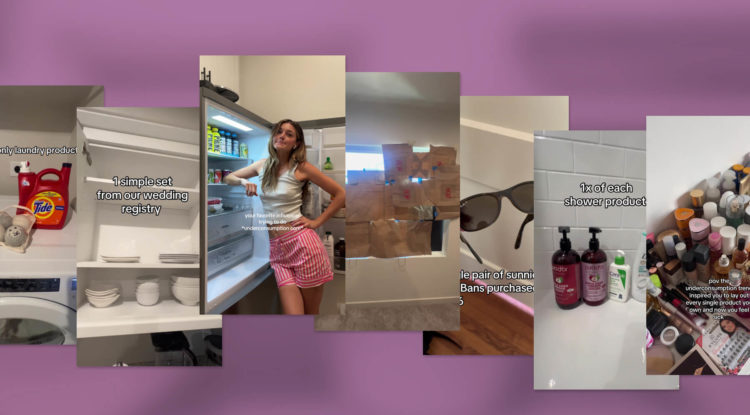
In Tiktoka, a new trend is “aesthetics of lack of substitution”. You can buy new things only if the old ones have completely deteriorated
Prepare the sandwiches at home, rather than buying them in a cafe, glue the sandals so that they do not fall apart, dwell holes on woolen socks, use the old, 12th iPhone-now it is not an ordinary life, but “aesthetics of lack of repayment”-or UnderConsumption Core, as Tiktok users call it. Heshtag videos #UNDERCONSUMPTIONCORE gain millions of views on social networks. "Cold" tells how the Zumers have re -random poverty.
In order not to miss the main materials of the "cold", subscribe to our Instagram and telegram .
The essence of the trend of “lack of substitution” is to extract maximum benefits from things and spend as little as possible. In response to the cult of consumption, the authors of Tiktok-Roliki urge to abandon unnecessary purchases, wear the same things until they deteriorate, buy only the necessary goods and not change what can still be used. As part of the trend, some are purchased with clothes in second-hand, while others do it with their own hands: for example, they paint old furniture, they make clothes to the desired size.
“I spend much less than last year, on material values and much more on impressions, travel, hobbies and pastime with loved ones,” says Janet, a Tiktoka user from New York, usually filming cosmetics. - I do not need branded things for everything. This applies to hair styles, household appliances and so on. If the thing works, then it works. ” Video Janet gained 1.6 million views.
User Tiktok Emily Grace lives in a house, which she went to her great -grandmother and great -grandfather. Many things have inherited her - and Emily is not going to change them to new ones. Under a video with a hashtag #UNDERCONSUMPTIONCORE (underpayment), Grace shows a collection of old mugs and plates, an old sewing machine, 30-year-olds for sewing and a 50-year-old colander with spars. According to Grace, she is not going to change them.
From the new one in her house there is only a mattress and a couple of things that Grace, according to her, bought with her hands: “Call more often in charitable stores, but do not buy something just because you liked it in the moment.” Grace explains his savings in a poor financial condition.
Why did the trend appear?
Brett House, a professor of economics of the School of Colombian University of the University of University, believes that the trend could appear due to the economic situation. Consumer expenses are cyclic costs - an average of 10 years is a decline, followed by fashion for savings. Like now, during the 2008 crisis, people did not value things more, but the emotions that it brings. Over time, financial well -being began to increase, the costs went up. Their peak fell on the period after the pandemic. Then the buyers spent intensively money - as if they wanted to regain the pleasure that they had not received during the time of self -isolation.
The situation changed in early 2022. The US GDP has declined in the first half of the year, inflation jumped - but the recession never occurred. Moreover, GDP soon began to grow again, and inflation managed to restrain. Nevertheless, consumer confidence remained low, which is often blamed for the media, which were increasingly focusing on negative news and pessimistic evaluated what was happening. Many people tried to spend less to postpone more for a rainy day - and now the videos with the hashtag #UnderConsumptioncore are gaining millions of views.
Only five branded handbags
Not all authors of the video experience economic difficulties - people who love branded things also upload videos about “lack of substitute”. True, they understand him in their own way.
“When you buy in a gross, you do not pay twice,” says April from Mexico. - From childhood, my mother taught me to choose high -quality things in charitable stores. So this is definitely not about mountains of money. “Cheap” will never be cheaper in long -term. ”
In his video, April shows Tiffany's glasses, which she was presented for her birthday two years ago - according to her, it is important that she still wears them every day. She bought the Yves Saint Laurent wallet five years ago for the tip received for the work of the barista.
The user of Tikniem Dianabxrosa has posted a post about “lack of transfer” for lovers of “luxurious minimalism”. In Tiktoka, Dianabxrosa showed three pairs of branded shoes and three Bucherer rings, two of which have been wearing 10 years. Diana also has five handbags, including Louis Vuitton and Yves Saint Laurent. Each is needed for their own goal - everyday, evening, summer, for travel and work.
However, in the comments, such "lack of consumption" was not appreciated. “Luxury and insufficient consumption cannot be in one sentence, I hope this will help,” other users wrote in the remarks.
"Do not buy Airpods Pro Max headphones"
The desire for minimalism did not begin with the "aesthetics of lack of consumption." The last time the refusal of consumption was actively discussed in 2018.
In October 2018, a report was released, which said that an increase in the average -IN temperature should be kept within 1.5 degrees Celsius to prevent disasters : floods, extreme precipitation or drought, mass extinction of species, deficiency of ceilings and hunger. After that, the media began to actively write about ecology - for its salvation, people were advised to reduce consumption. For example, CNN journalists told readers that they should switch to car sharing and electric cars, to abandon the aircraft in favor of trains. It was also recommended to eat less meat, because due to animal husbandry they cut forests and greenhouse gases it throws more than the entire transport sector.
On August 20, 2018, Greta Tunberg went to the parliament of Sweden with the poster “School strike for the climate”. The news of a 15-year-old girl with two pigtails, who is alone sitting by the walls of the parliament and tries to save humanity, parted through social networks and the media.
In 2019, Greta appeared on the cover of Time magazine, received a nomination for the Nobel Prize of the World and performed at the UN summit, where she said 60 world leaders that they "stole her dreams and childhood with their empty words." The “global week of climatic protests” was timed to the summit. According to the organizers, four million people participated in it - this is a world record.
In 2023, another trend in defense of ecology was popular in Tiktok - Deinfluensing. If the influents convinced users to buy something, then the “deinfluensers”, on the contrary,called for abandoning advertised goods-in their opinion, such things are useless and do not cost their money.
It all started with Tiktok , in which the user listed fashionable branded things: “I am here to stop influencing you. Do not buy UGG mini ugg boots. Do not buy a Dyson Airwrap styler. Do not buy a highbury wand highlighter. Do not buy Stanley thermal circles. Do not buy books Colin Hoover. Do not buy Airpods Pro Max headphones. ” By the end of 2023, the video under the hashtag #deinfluencing scored more than a billion views in Tiktok.
Ordinary life
At the same time, many users believe that the trend distorts ideas about the life of most people. “We so strongly normalized excessive consumption that everything that is below this immediately perceives as insufficient. However, no. This is fine. It is abnormally to spend thousands of dollars every week on skin care and cosmetics, ”says a user with the nickname @syleenlookalike, who recorded a separate video on this topic.
It turns out normal life ??
In response to the UnderConsumption trend, the hashtag #NormalConsumption appeared in Tiktock. Users still show their things and habits in the video, but they no longer try to hang on this label of “shortcomings” and poverty.
There are many approving comments under such videos:
"The way people call such things insufficient consumption makes me climb the wall, so thank you."
"Just have the things that your lifestyle is required and you yourself - this is enough"
“I love this trend, I used to be a very uncertain girl who has no heaps of girlfriends, now I know that I just have normal consumption, and that's good”
One of the examples of “aesthetics of normal consumption” is a student of a student named Maria, who tells in Tiktock that he is preparing at home, and in coffee houses and restaurants only go on occasion. She also makes a manicure herself and buys clothes from a basic wardrobe to make it easier to make images. Maria has one moisturizer at once for the face and body, one candle and only perfumes - all this will use to the last drop.
(But in general it is just a normal life)