
Translated material
So that everyone is to disappear one by one
How the closure of charitable foundations destroys the culture of assistance that has developed in Russia over the past ten years
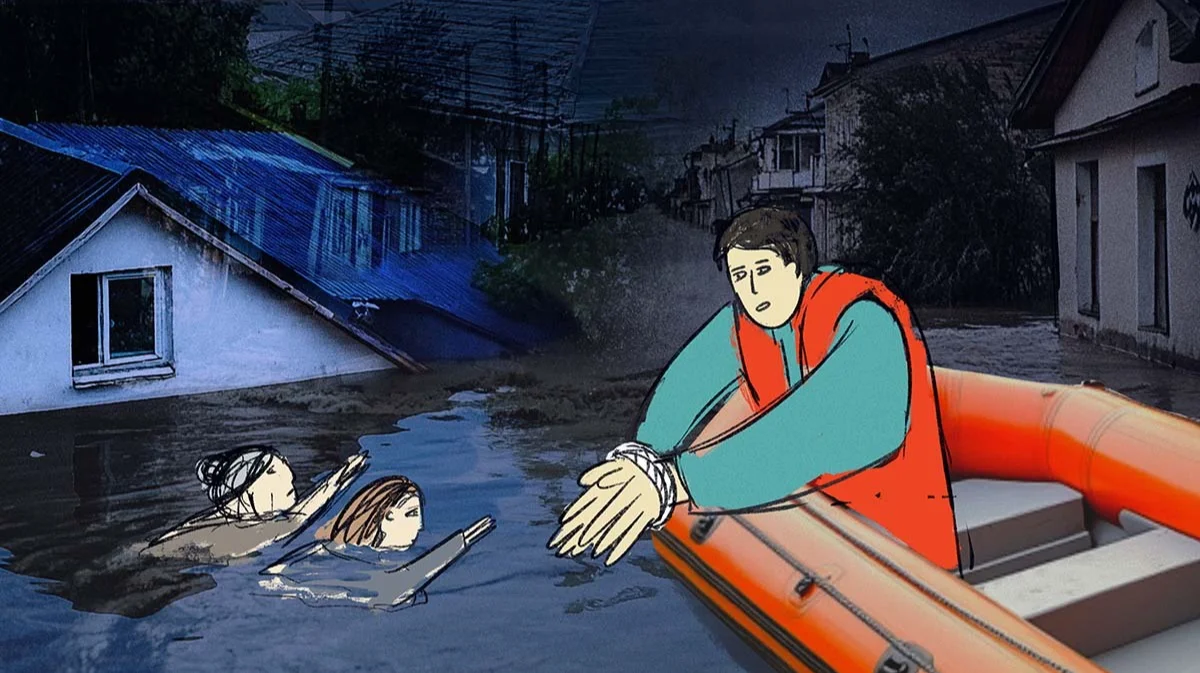
Illustration: Alisa Krasnikova / "New Gazeta Europe"
Among those who left, sometimes there are conversations that the remaining anti -war Russians gradually, imperceptibly for themselves, get used to war and tyranny, go to internal compromises. Probably, this happens, but far from everyone. What if there are no internal compromises, a person cannot leave or does not want to leave, but is not going to prison? Help, volunteering - this is what in such a situation becomes or remains for many the meaning of life. But the state also seeks to destroy this meaning.
Among my friends in Russia there are people who give most of their time to Ukrainian refugees. The most unprotected, elderly, with disabilities, with a difficult character. Those who were in a difficult situation before the war. Those who could not go to Europe, but are forced to wander around the country that destroyed their house, killed friends and relatives. Volunteers risk themselves: for their good deeds, Russia opens criminal cases on them. My friends help not only refugees. Teenagers in crisis. People with serious illnesses. Homeless. Families Roma. Take adoptive children. Everything is as before. Only becomes more and more difficult.
Assistance community
The boom of volunteering and mutual assistance in Russia began closer to the mid-2010s. Help suddenly came into fashion. There are many charitable foundations oriented to different problems. Volunteering has become for many a familiar activity, a way to share their energy, forces, time with people in a difficult situation.
After the destructive flood of 2012 in the Krasnodar Territory, during which Russia also provided humanitarian aid to Russia, the experience of coordinating volunteers in Krymsk led journalist Dmitry Aleshkovsky to create the project “Needing”. This project united journalists who wrote for free of “social heroes” who solve the problems of society. Gradually, a fund of funds, a large charity hub that helps large and small charitable organizations grew out of the project.
And after the “Law of the Plotsy” (2012), the boom of the reception parent began. It was previously believed that children from the orphanage were taken by special, holy people. Well, or barren couples - to raise as your own. Now foster parenthood is an ordinary life choice, motivated, including the desire to help. There is official Russian statistics:
The number of orphans located in organizations decreased by 66% in ten years (from 106 thousand in 2013 to 35 thousand in 2023).
At the same time, in the last three years, children began to take a little less often . Due to the war, rising prices and uncertainty, many can no longer help as they would like.
How many people were involved in this new way of life, in this economy of mutual assistance? Critics will say: an insignificant amount. I affirm: many. In 2021, 30% of the “need” founded by the Foundation regularly donated money to charitable funds, and 75% did it at least once ( adult Internet users living in cities with a population of 100 thousand people participated in the survey - approx. Ed. ).
But it is very difficult to calculate the number of involved, because it is not clear what exactly should be considered. The most important thing for me is the transition of people from an old image of thoughts to a new one.
Old: “I myself don’t have enough, why should I share?”, “Volunteers are some holy fools or saints”, “Why should our normal children suffer next to your disabled person?”
New: “I will donate three hundred rubles, even a little money is important”, “No altruism, I just do what it seems to me important”, “How is it better for us to communicate with your child, so that ordinary children and he was fine?”
That is, the old way of thinking is deficiency: their own position is perceived as insufficiently stable. It seems that a request for help is an attempt to drown me, to tear out a piece from my mouth. A new way of thinking is a public, unifying. Other people are no longer a threat to me. It doesn't seem to me anymore that I am alone. It’s not ashamed to ask, it’s not scary to give.
So in Russia the 2010s began to form a helping community.
The environment appeared - financial, informational, infrastructure - which helped to help . See who needs help. Understand what I can do, what are my possibilities. And give in a convenient way for me what I am ready to give: one hundred rubles or time of my own life.
I can say about myself: I am one of those in whose mental horizon there was no idea of helping others until it has become fashionable, it was not available until I saw examples next to me. And it is impossible to say how many of us are, how many Russians, thanks to the idea of help, gradually began to think of themselves as part of the community of help and society as a whole, to take part of the responsibility for its problems.
Under the root
When the war began, with my second thought, after horror about the bloodshed and the death of Ukrainians, it was this one: what a pity that another , helping Russia, will die.
The thought was premature. As Lydia Ginzburg wrote, in the imagination we always immediately jump to a bad end, but in reality the process usually develops gradually.
First, foreign cards, platforms and payment systems fell off . Large victorious companies left or closed. Then, the trust of people in NGOs, declared “foreign agents” and “undesirable organizations”, fell sharply. In February 2024, “foreign agents” were banned from advertising to advertise. In March, the “Inoagent” fund was announced to the Foundation “Needing Help”, which was supported by many Russian NPOs - and in August it closed. This is not the first, but very serious bad news.
Yes, many funds continue to raise funds. Volunteers do what they can. And, judging by their incredible resistance, they will do at all costs. But it will be harder and harder for them.
Someone will object: "Self-organization and a little of their own resources-that’s all you need." Such people will be wrong for several reasons.
Firstly, the infrastructure of assistance is critical. It allows you to effectively accumulate different types of resources, from information to financial. She reduces the reduction of the process of assisting, makes it more accessible to a wider audience. Most people are not ready to give a significant part of their resources. But many people want and can help once, pointily, a little bit. Together it turns out a lot. Only a large fund can collect a mountain on a penny, scoop up the sea with a spoon.
Secondly, large-scale social projects reach the goal only if professionals participate in them, together with volunteers, whose labor should be paid: for example, doctors, psychologists, special teachers.
Thirdly, transparency is important. Will we check ourselves, a fraudster in front of us or a real ward? Funds did it for us. The Russians learned to trust them. And now many will stop giving again: they are quite reasonably afraid that the money will fall into the wrong hands.
And finally, those who help, also need support. Take foster parents. My adoptive daughter took place for two years with an excellent specialist from the NPO "Institute for the Development of Family Staff". Services were paid by the fund. The more the foster family of opportunities to find help, the more successfully it overcomes difficulties.
The Russian state decided to cut down the economy of mutual assistance under the root. When you are left alone with your difficulties, you can’t help anymore.
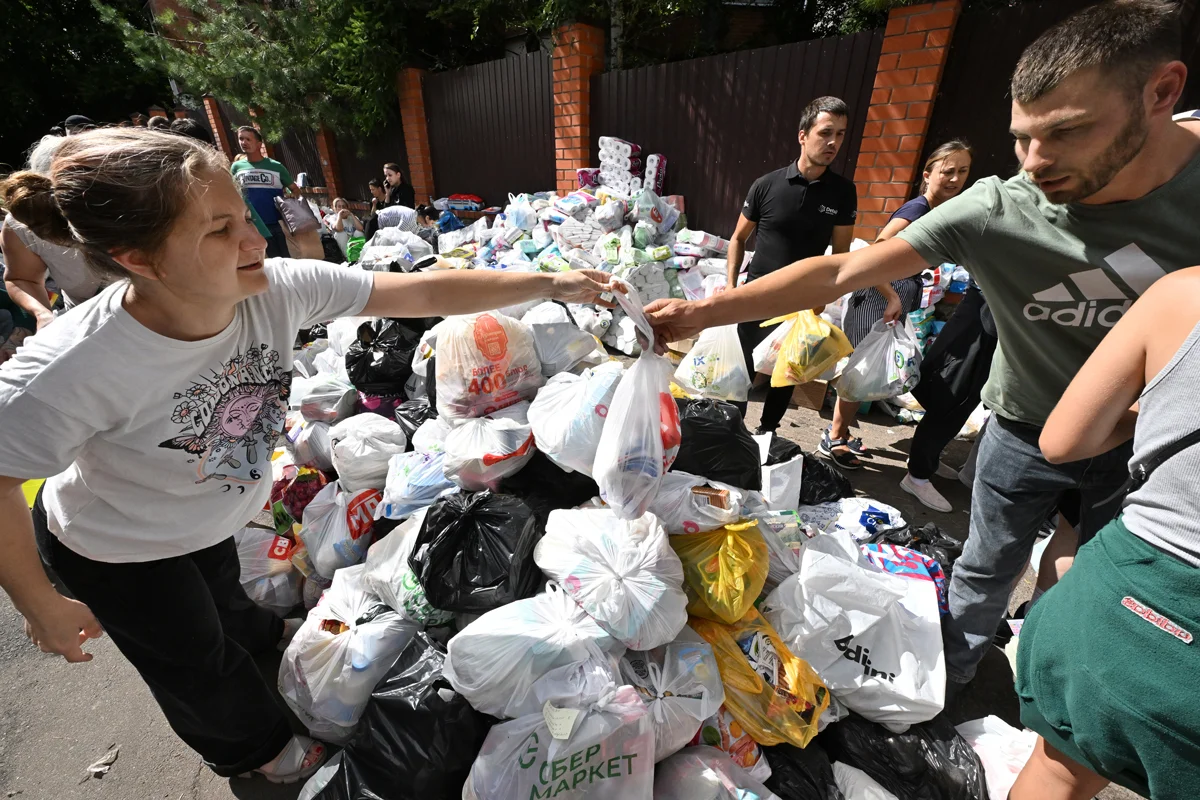
So far this has not happened. Facebook posts of helpers in Russia, my friends and acquaintances, are still full of vigor, calm, dignity, endurance. These are posts “on the other side of despair”, the posts of volunteers in spite of everything, at all costs.
But I'm worried about them. And I'm afraid that others, ordinary citizens like me, burdened with their own problems, will close their eyes to someone else's trouble. After all, what's the point of looking at her when you do not know what to do. When the money is inconvenient, or even dangerous. When it is not clear how to check who asks them from you. When you see that the parent of the adopted child with a serious illness collects for treatment in social networks.
The destruction of any meaningful activity is not a side, but the direct goal of the Putin state. The very idea of the helping community is hostile to him. It seeks to draw off the communications as much as possible, to deprive the Russians the opportunity to help and accept help. He needs a person to be left alone and stop being a man.
Do we have the strength not to stop?