
Translated material
It's time to disown Moscow
Kyiv approved the "cleaning" of the religious field from any influence of the Russian Orthodox Church. Why is the "main victim" of the law is silent - the Ukrainian Orthodox Church?
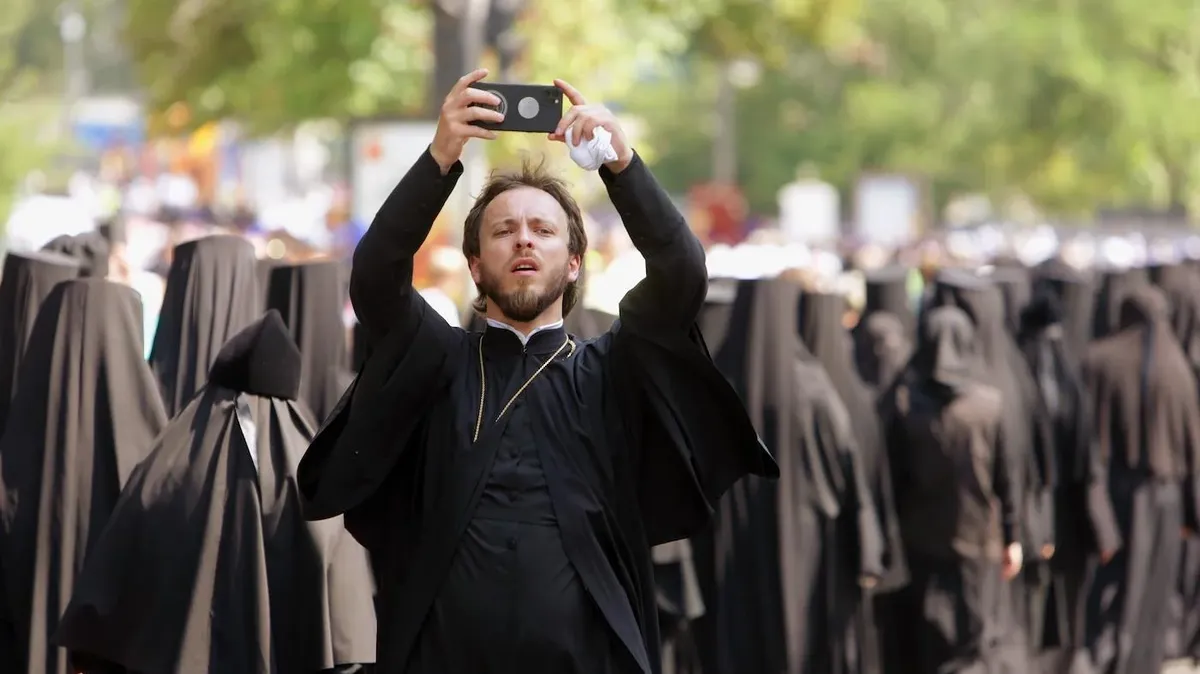
Photo: Ivan Kovalenko / Kommersant
Orthodox Russia is seething with indignation: "The Kyiv regime banned the canonical church!" But the alleged victim itself - the UOC, who was part of the Moscow Patriarchate - keeps silence. According to the official version, the law on the termination of the activities of organizations with the center in the aggressor state does not apply to it. Whom does he then concern and will “religious persecution” so many Moscow, who are so many in Ukraine? The observer of the "new" was versed.
The center of the UOC is not easy to find
A few days before the main national festival of Ukraine, August 20, the Verkhovna Rada finally adopted the long -suffering bill No. 8173 “On the Protection of the Constitutional Organization in the field of activity of religious organizations”. Its goal is a gradual (within 10 months) termination of the activities of communities, "having a leading center in a state that exercises armed aggression against Ukraine."
Russian experts assure that they mean the communities of the Ukrainian Orthodox Church (UOC), which was part of the Moscow Patriarchate until May 2022. Although the state religious examination conducted in Kyiv in the summer of 2022 revealed five faiths with such centers.
The UOC itself denies its relevant connection with the Russian Orthodox Church, so the adoption of the law does not officially comment on and does not report the presence of persecution by direct text.
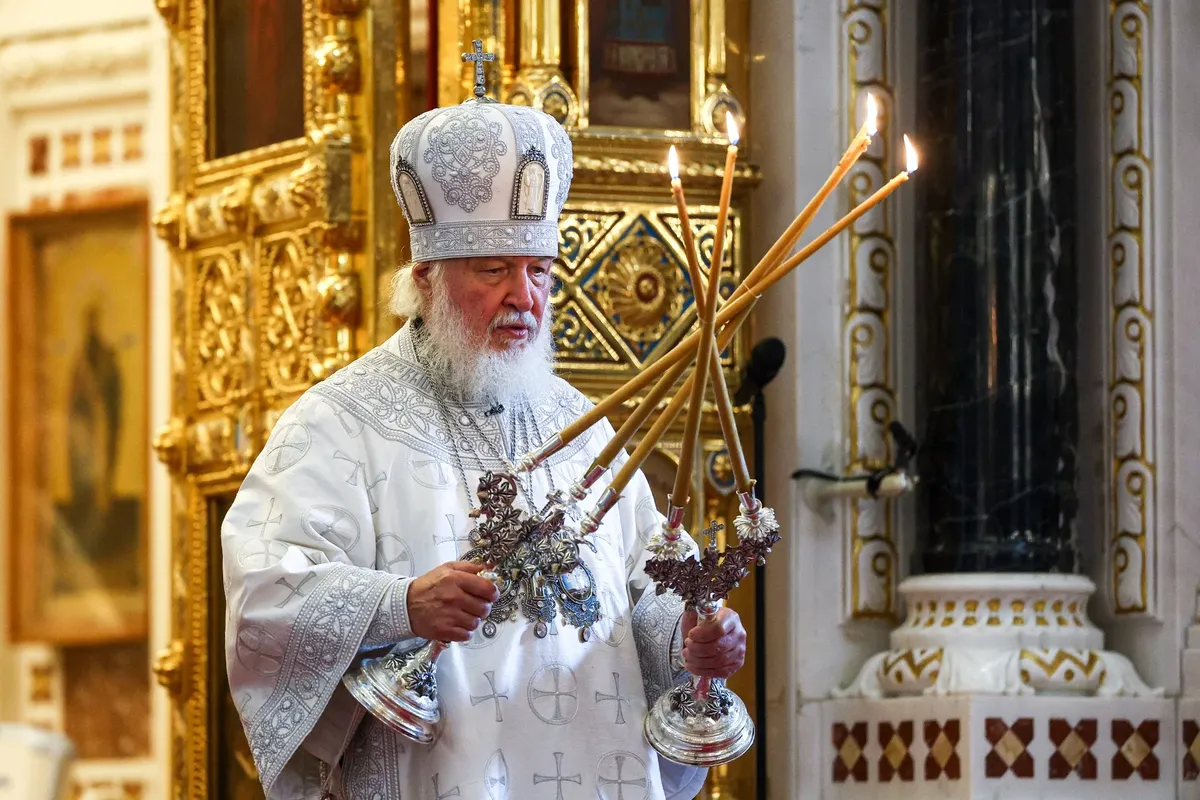
The Moscow Patriarchate is also refraining from comments, suggesting to adopt the corresponding resolution at the next meeting of the Synod, the date of which is not scheduled. Obviously, the Synod will fade the assessment of the actions of the Ukrainian authorities with the assessment of the canonical status of the UOC, which the Russian Orthodox Church either recognizes or does not recognize “its own”. Earlier, Patriarch Kirill was inclined to consider her “schismatic” (due to the “illegal” exit from his jurisdiction), but then it seemed to soften his position. However
Cyril never in two and a half years expressed the condolences of the UOC in connection with the death of its clergymen or the destruction of its temples from missile or artillery blows, which is clearly read as the non -recognition of the UOC of “his own”.
Procedural difficulties
For the law, which lay in the Ukrainian parliament almost without movement for more than a year and a half, 269 people's deputies voted (out of 401). There were only 24 parliamentarians against the “Platform for Life and Peace” (the successor of the “Opposition Platform for Life”, which in turn continued “Party of Regions”) and “Updating Ukraine”. The law has not yet been published in the official publication of Urorovy Kur'har, and it will enter into force only 30 days after such a publication, that is, at the end of September. But that's not all.
After, fulfilling the requirements of the new law, the civil service of Ukraine on ethnopolitics and freedom of conscience will conduct examinations and put claims to religious organizations falling under the ban, those will have 9 months to bring their charter documents in accordance with the law. But this is not the end.
If they do not comply with the order of the civil service, they will be able to appeal it in the courts, up to the constitutional and the ECHR. And such a procedure is likely to stretch for many years.
It is also important that, unlike the Russian Federation, in Ukraine there is no division into “centralized” and “local” religious organizations, therefore
The state cannot order all the dioceses, parishes and monasteries of the UOC with one piece of paper to immediately break off the connections with the Russian Orthodox Church (if it reveals them).
The instructions will have to be issued separately to each of the more than 9 thousand religious organizations of the UOC, and it is obvious that in the conditions of modern Ukraine the reaction of organizations will be different. Someone will go to the autocephalous (initially not dependent on Moscow) the Orthodox Church of Ukraine, where after the start of the UPCs has already passed, someone will try to organize a new structure (for example, in the format of the exarchate of the Patriarchate of Constantinople), someone will prefer “alternative” Orthodox jurisdictions or an autonomous status. There are a lot of options, and the authorities do not seem to impose a ready -made solution to the UOC - the main thing is to break with Moscow.
Europe gives good?
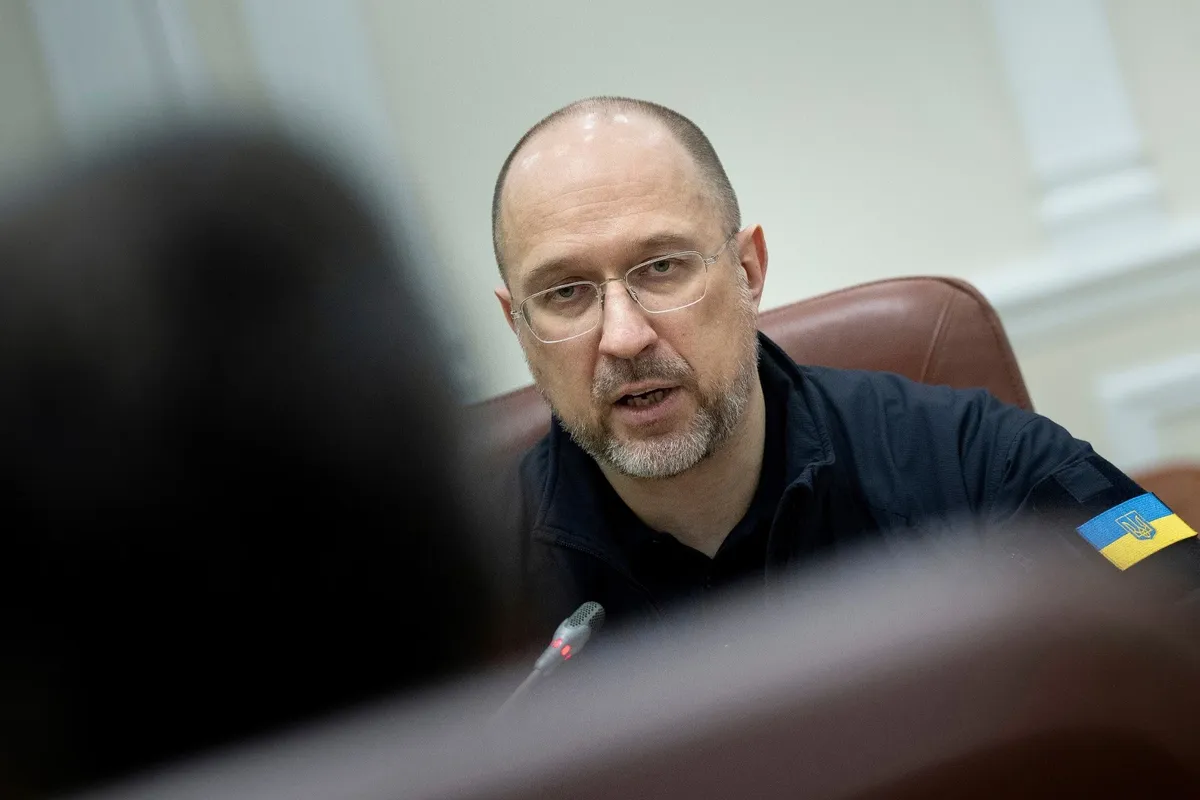
The bill was submitted to the parliament in January 2023, the subject of the legislative initiative was the Cabinet of Ministers of Ukraine, headed by Prime Minister Denis Shmygal. The Verkhovna Rada website has a huge number of documents accompanying the unhurried project of the project: comparative tables, tables of amendments to the second and third readings (more than 900 pages!), The conclusions of the budgetary commission and the European integration commission, numerous scientific examinations, repeated comments of the Main Legal Administration ...
The movement and, as a result, the adoption of this bill does not at all look like a cheap vaudeville, which represents Russian propaganda for its gullible audience.
For example, the European Convention on the Protection of Human Rights and Basic Freedoms recognized the European Integration Committee that Europe allows restrictions on the right to freedom of conscience, which are “necessary in a democratic society in the interests of public security and to protect public order”. Ukrainian parliamentary experts include, among these restrictions, a ban on conducting anti -Ukrainian propaganda or “justification of aggression” under the guise of religious activities. According to the relevant articles of the SBU, other law enforcement agencies of the country have already haunted more than 100 clergy of the UOC; Several clergy recognized themselves as prisoners of war and were exchanged for the Ukrainian military. In general, it is almost no secret in Ukraine that it was the UOC that was the place of concentration of pro -Russian elements, the propaganda of the “Russian world”, “triune Rus'”, etc., which began to play with completely new, bloody colors after February 24, 2022. The troubles in the Kiev Pechersk Lavra, for example, began after spiritual poems about the awakening of Russia in November 2022 solemnly performed there. It is clear that in Russia such songs and such propaganda are perceived differently, but Ukraine suffered the right to their perception.
On April 17 of this year, the Parliamentary Assembly of the Council of Europe adopted resolution No. 2540 "The death of Alexei Navalny and the need to resist the totalitarian regime of Vladimir Putin and his *** against democracy." PACE, in particular, called for the ROC to recognize the ROC with a tool of Russian influence, whose activity has nothing to do with the freedom of religion, and Patriarch Kirill and his employees accused of complicity of war crimes.
If we take into account this optics, then the question of the “leading center” will move from the plane of the right to freedom of conscience to a purely political and even military plane.
And the United States may not be given?
A flat picture with a “persecuted canonical church” and “triumphant schismatics”, which is sometimes drawn in Russia, of course, far from multidimensional reality. In many cases, the UOC manages to effectively defend their rights within the framework of the Ukrainian law enforcement system, despite the rejection of the complete breakdown of canonical ties with Moscow.
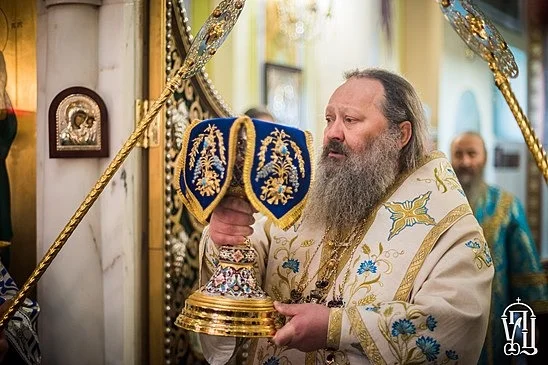
From the fresh - decision of the Shevchenkovsky District Court of Kyiv of August 9 on the recognition of the fact of a criminal offense committed by the acting Minister of Culture and Information Policy of Ukraine Rostislav Karandeev while trying to evict pro-Moscow monks from the Kiev-Pechersk Lavra. In the portfolio of the UOC lawyer Archpriest Nikita Chekman, there are many other successful cases-in particular, he achieved the transfer of one of the main preachers of the “Russian world” from the pre-trial detention center in the UOC and the real church oligarch, the governor of the Kiev Pechersk Lavra Metropolitan Paul (Lebidi), also known as Pasha-Mergedes.
According to the People’s Deputy of Ukraine, Maryana Zablotsky, who cite the Ukrainian media, on October 16 last year, the Kiev Metropolitan UPC signed an agreement with the American lobbyist from Amsterdam & Partners William Burke Uaite. According to the then Deputy Minister of Information Policy of Ukraine Dmitry Zolotukhin, Berk-White paid $ 1,400 per hour for working with the White House, the State Department, senators and congressmen in order to form public opinion against the bill and organize pressure on the Ukrainian leadership. The funds for payment of services were allegedly allocated by the disgraced Ukrainian billionaire of Russian descent, one of the leaders of the “Party of Regions” and, at the same time, the Protodiacon UPC Vadim Novinsky, who lives mainly in Switzerland. He uses Amsterdam & Partners also in the affairs of sanctions from his assets.
In the early 1990s, William Burk-White studied at Moscow State University, and then worked at MGIMO. As an international lawyer, he began his career in the International Tribunal in the Former Yugoslavia, and then entered the headquarters of political planning of US Secretary of State Hillary Clinton. Actually, the owner of Amsterdam & Partners, lawyer Robert Amsterdam, has long and consistently represent the interests of the UOC in international courts. Earlier, he threatened the people's deputies of Ukraine, who will vote for the bill, of various kinds of troubles in Western countries, and the other day he wrote a voluminous letter to Vladimir Zelensky, where he describes the “contradictions of international law” of the new law and the consequences for Ukraine in case of adoption. The letter is written in a very expressive manner, which affects its legal quality. For example, Amsterdam promises to achieve any restrictions on the UOC with “crimes against humanity”, which will result in the personal responsibility of Zelensky and people's deputies to the International Criminal Court. The demand for the disorder of the UOC with the Russian Orthodox Church Amsterdam equates to the "collective punishment of innocent citizens for religious motives." It is possible that many in the leadership of the Republican Party share this narrative and, in case of winning the election of Trump, the Ukrainian authorities will have to slow down with the implementation of the law.
In addition to threats, the lawyer is trying to prove once again that the UOC is in no way connected with the Russian Orthodox Church, although a link to the Patriarchal Tomos of the Russian Orthodox Church on the self -government of the UOC, which, in particular, refers to the subordination of one church of another, is contained directly in paragraph 1.1 of the current charter of the UOC. Robert Amsterdam claims that the Ukrainian government has a certain “secret plan” to enter the majority of the current structures of the UOC into the exarchate of the Patriarchate of Constantinople, created in Kyiv in 2018 and while consisting of one parish (St. Andrew's Church).
The geopolitical delicacy of the situation with Amsterdam is also that his company collaborated with the Erdogan government, and the Patriarchate of Constantinople, located in Turkey, is forced to reckon with this. Therefore, the project of the exarchate, which is scared by Amsterdam, is poorly realistic. In his evening video message, on August 20, Vladimir Zelensky pronounced the visit to Kyiv by the delegation of the Patriarchate of Constantinople, headed by the Archbishop of Vinnipeg Hilarion. The hierarchs will meet with the president, other officials, the leadership of the UOC and PCU in order to develop a compromise model of reorganization of church life in Ukraine with the cleansing of the last traces of the “Imperis-Stalinsky Pseudo-Orthodoxy”.
There are almost no protests
While the officials of the “persecuted” church are silent, the only noticeable Ukrainian speaker who opposed the UOC was the worldwide worldwide champion Vasily Lomachenko. He wrote in his social networks: “Athells think that they won ... Do not be deceived: God is not scolding. What a person sows is to reap. It is impossible to ridicule or deceive God, his church and his ministers. God will reward each time in his words and deeds. I am very happy to live at a time when true faith is checked. Peace to everyone. " Pious, but rather streamlined text.
On behalf of the official Russian Orthodox Church, not the head of the department of external church ties of the Patriarchate, Metropolitan Anthony (Sevryuk), a citizen of one of the EU countries, whom Patriarch Kirill protects from international sanctions. The new law was commented on by the assistant to the patriarch, Archpriest Nikolai Balashov, who, on a good chancellery, noted the “expansion of persecution of believers” and “violating religious freedoms” in Ukraine. The speaker of the Russian Foreign Church, which poured into the Russian Orthodox Church, turned out to be more creative only 16 years ago, Archpriest Seraphim Gan from New York. He compared the UOC with the holy Patriarch Tikhon (died in 1925), which was repressed by the Soviet government on the instruction of the “Red Popovs” - “livestocks”.
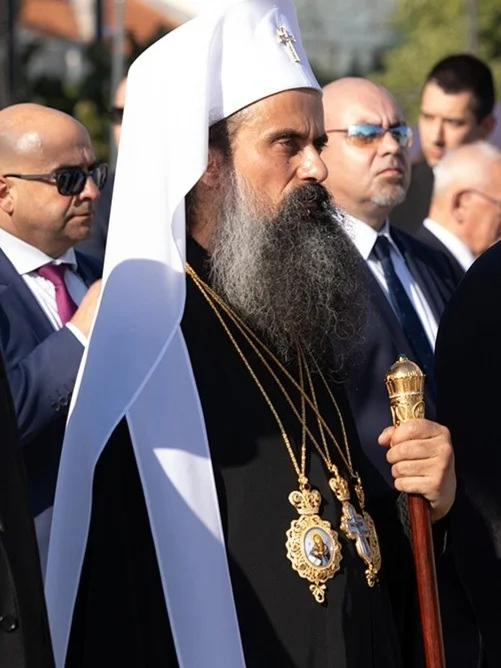
From the foreign Orthodox primary miners, only the Promoskov Patriarch Bulgarian Daniel managed to speak out so far. He complained to the US OSS in Bulgaria on “serious actual and legal restrictions in pastoral activity” of the UOC-“because of the discriminatory policy of certain factors in Ukraine”.
***
Before the beginning of his, February 21, Putin accused the Ukrainian authorities of “preparing reprisals” over the Church of the Moscow Patriarchate. Thus, the defense of the “canonical” jurisdiction has become one of the “religious” justifications of hostilities. However, the objectives of the operation were unattainable for Putin, so Moscow will have to accept the new religious landscape of the neighboring state, largely generated by its actions.
Such a subtext can be heard in the confused comments of the official representative of the Russian Foreign Ministry, Maria Zakharova, who on August 20 described the purpose of the law: “To destroy the canonical, true Orthodoxy in the root, and instead to bring ponto, this is the substantial, understandable only in this way.” The words “canonical”, “false”, “true” here, of course, are not used in a church, but in a purely political sense.
All the churches of world Orthodoxy in the modern world are equally recognized by both the Patriarchate of Constantinople and Moscow (although the latter and the latter unilaterally broke communication with Constantinople). It is not the matter of the Midovsky official to weigh their canonism, especially after the bet on the planting of this “canonicality” by the power of weapons did not fully justify itself. With all the shortcomings of the new Ukrainian law, he gives a chance to the former followers of the Moscow Patriarchate to draw that border between God and Kesarev, religious and political, to which Christ called for.